
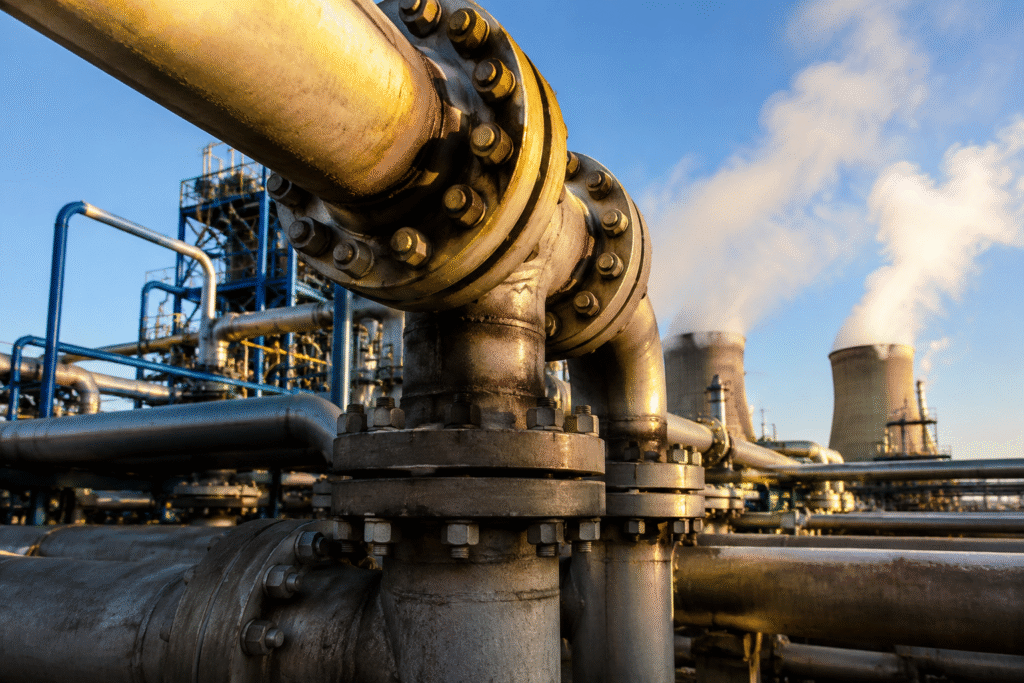
Flensa Pipa Baja Tahan Karat: Jenis, Standar dan Panduan Seleksi
Permintaan flensa pipa baja tahan karat terus meningkat karena sistem industri memerlukan ketahanan korosi yang lebih kuat, kinerja proses yang lebih bersih, dan masa pakai lebih lama. Menurut Penelitian Grand View (2024), pasar flensa industri global dihargai $5.8 miliar masuk 2023 dan diperkirakan akan tercapai $7.2 miliar oleh 2030, which makes flange selection a strategic purchasing decision rather than a simple commodity buy.
Untuk insinyur dan manajer pengadaan, the most common challenge is not finding flanges. It is choosing the right grade, kelas tekanan, menghadap, and standard for each pipe system. This guide explains the intriguing and often hidden advantages, jenis, and uses of stainless steel flanges, while showing how to choose products that meet technical and commercial goals.
Mengapa Permintaan Flange Pipa Stainless Steel Terus Meningkat di Industri Global
Industrial buyers increasingly specify stainless steel because downtime now costs more than initial material savings. Menurut Statista (2024), industri minyak dan gas menyumbang sekitar 35% konsumsi flensa global, which highlights how critical reliable piping connections remain in severe service.
Di tingkat manufaktur, supply concentration also matters. Menurut IBISWorld (2024), Asia-Pasifik menyumbang lebih dari itu 45% produksi flensa global, dengan Tiongkok sebagai produsen terbesar, so buyers often evaluate both production scale and export quality systems before issuing purchase orders.
This market shift favors suppliers that combine metallurgy knowledge with process control. Karena itu, ISO 9001:2015 dokumentasi, PED 2014/68/EU compliance, EN 10204 3.1 catatan inspeksi, and traceable heat numbers have become practical procurement requirements rather than optional extras.
Many end users now move from carbon steel to stainless grades in water treatment, petrokimia, dan sistem kelautan. Selain itu, life-cycle cost analysis often shows that corrosion-related failures, gasket leaks, and unplanned shutdowns outweigh the higher upfront price of stainless steel components.
Sebagai akibat, a stainless steel pipe flange is now specified not only for corrosion resistance, but also for hygiene, stabilitas termal, fabrication flexibility, dan pengurangan pemeliharaan. This is especially true where chlorides, bahan kimia pembersih, or fluctuating temperatures shorten the life of lower-grade materials.
Menurut Riset Pasar Masa Depan (2024), industrial process equipment demand in emerging economies continues to expand at a moderate single-digit CAGR, supporting steady consumption of flanges, perlengkapan palsu, and pipe accessories. Lebih-lebih lagi, water infrastructure upgrades and power generation retrofits are adding new demand outside traditional oil and gas sectors.
Untuk pembeli B2B, this means product selection should align with operating conditions, not generic catalog descriptions. A 304 slip on flange may be cost-effective in mild service, whereas 316L, 2205 rangkap, or 904L may be necessary in chloride-bearing or aggressive chemical environments.
Manufacturers with broad grade coverage can reduce sourcing complexity. Dengan ISO 9001:2015 dan sertifikasi PED 2014/68/EU, SASA FLANGE memasok flensa baja tahan karat, flensa baja karbon, flensa paduan, dan alat kelengkapan pipa di 304, 316, 316L, 904L, 2205, 2507, A182, tidak konel, Monel, Hastelloy, and Titanium grades for international industrial projects.
That breadth matters because many projects mix standards and materials in one package. Misalnya, a refinery expansion may require ASME B16.5 flensa leher las, ASME B16.9 siku, EN 1092 flensa pelat, and corrosion-resistant reducers with matching mill test reports.
Seperti John Reynolds, consulting materials engineer, negara bagian: “The hidden advantage of stainless steel flanges is not only corrosion resistance. It is process reliability under combined thermal, mekanis, and chemical stress.” That principle explains why experienced EPC contractors assess total system compatibility before confirming a flange vendor.
Jenis Flange Pipa Stainless Steel, Bahan, and Hidden Advantages for Industrial Use
The most common stainless steel pipe flange materials are ASTM A182 F304, F304L, F316, F316L, F321, F347, dupleks F51, and super duplex F53. Namun, the correct choice depends on temperature, komposisi sedang, metode pengelasan, kelas tekanan, dan akses pemeliharaan.
ASTM and ASME standards remain central to selection. ASTM A182 mencakup paduan tempa atau canai dan flensa pipa baja tahan karat, perlengkapan palsu, dan katup untuk layanan suhu tinggi, ketika ASME B16.5 mendefinisikan dimensi, toleransi, peringkat tekanan-suhu, and marking requirements for flanges from NPS 1/2 melalui 24 (ASME).
Stainless grade selection starts with corrosion behavior. 304 and 304L offer good general corrosion resistance and competitive cost, ketika 316 and 316L include molybdenum for better pitting resistance in chloride-containing environments. Karena itu, 316L is often preferred in offshore, kimia, dan aplikasi pengolahan air.
Higher alloy stainless grades solve more severe problems. 321 Dan 347 provide stabilization for elevated temperature service, while 904L improves resistance in sulfuric and phosphoric acid conditions. Sebaliknya, rangkap 2205 dan super dupleks 2507 deliver higher strength and improved chloride stress corrosion cracking resistance.
Menurut Intelijen Mordor (2024), demand for corrosion-resistant alloys in industrial fluid handling is rising as operators extend asset life and reduce maintenance costs. Selain itu, NACE guidance continues to influence material choices in sour service and corrosive hydrocarbon environments (NACE, 2024).
Buyers should also understand flange type because geometry affects installation cost, kualitas las, and service integrity. The most common flange designs include:
- Flensa leher las untuk tekanan tinggi, suhu tinggi, dan pemuatan siklik.
- Slip on flange for moderate pressure systems and easier alignment.
- Flensa buta untuk penghentian saluran, pengujian, dan titik ekspansi di masa depan.
- Flensa las soket untuk lubang kecil, pipa bertekanan tinggi.
- Threaded flange where welding is impractical or restricted.
- Flensa sambungan pangkuan untuk sistem yang sering memerlukan pembongkaran.
Each type has distinct engineering value. Misalnya, weld neck flanges transfer stress more effectively through the tapered hub, while slip on flanges reduce fabrication complexity and can lower installed labor cost in utility service.
Facing selection is equally important. Raised face is the most common in process plants, ring type joint is preferred in higher pressure hydrocarbon service, and flat face is often used where mating equipment or cast iron components require uniform compression.
Sebagai Dr. Helen Carter, ilmuwan material, negara bagian: “Procurement errors usually happen when buyers compare stainless grades by price alone, rather than by chloride level, suhu, and welding demands.” That observation is especially relevant in desalination, marine exhaust, and aggressive chemical service.
The hidden advantages of a well-selected stainless steel pipe flange include more than simple leak containment. They also include lower cleaning frequency, improved appearance in hygienic systems, easier passivation, better compatibility with stainless pipe fittings, and longer service intervals under thermal cycling.
Engineers should match material and flange style to the service envelope. A useful short checklist includes:
- Media proses: air, uap, hidrokarbon, asam, klorida, slurry.
- Suhu pengoperasian dan tekanan desain.
- Ukuran pipa, jadwal, and flange class such as 150, 300, 600, atau lebih tinggi.
- Welding requirement and available site fabrication controls.
- Standar yang berlaku seperti ASME B16.5, ASME B16.47, DIN, JIS, gost, atau EN 1092.
- Dokumen inspeksi seperti EN 10204 3.1, PMI, uji hidro, and NDT reports.
According to ISO guidance and common project specifications, traceability and repeatability are now essential for critical piping components (ISO, 2024). Akibatnya, quality assurance should include dimensional checks, verifikasi materi, inspeksi permukaan, menandai, and packing suitable for export logistics.
Didukung oleh permesinan CNC canggih dan pengujian kualitas yang komprehensif, SASA FLANGE menawarkan ukuran khusus dari 1/2 inci ke 60 inch across stainless, rangkap, paduan nikel, and carbon steel ranges. This helps EPC contractors consolidate sourcing for flanges, siku, kaos, reduksi, and caps under one supplier review process.
Untuk tim pembelian, this broader capability can reduce lead-time risk. It also simplifies technical alignment between flange and fitting materials, especially where complete line packages require the same heat treatment, tingkat pemeriksaan, and document set.
ASME, ASTM, DIN, and EN Requirements That Govern Stainless Steel Pipe Flange Quality
Standards determine whether a flange fits, segel, and performs under design conditions. Karena itu, buyers should confirm both dimensional standard and material standard before requesting quotations or approving drawings.
Dalam sistem ASME, B16.5 covers NPS 1/2 ke 24, while B16.47 addresses larger diameter flanges. ASTM A182 governs forged stainless flange materials, Dan ASTM A240 often supports plate material references used in related stainless components. Dalam proyek-proyek Eropa, EN 1092 is a key flange standard, while DIN legacy references may still appear in plant documentation.
Untuk efisiensi pengadaan, the following comparison is useful:
- ASME B16.5: peringkat tekanan-suhu, ukuran, toleransi, menghadap, marking for common process flanges.
- ASME B16.47: large-diameter flange dimensions for major pipeline and plant applications.
- ASTM A182: persyaratan bahan flensa stainless dan paduan yang ditempa.
- ASME B16.9: alat kelengkapan las butt tempa buatan pabrik yang digunakan dengan sistem yang terhubung dengan flensa.
- EN 1092: European flange dimensions and PN pressure classes.
- NACE MR0175: materials guidance for sour service environments.
Compliance is not only a paperwork issue. It directly affects interchangeability, bolt alignment, kompresi paking, and safe operation over time. Sebagai akibat, even a small mismatch in drilling pattern, menghadap, or pressure class can cause expensive field delays.
According to DNV project guidance and PED requirements, pressure equipment for regulated markets must demonstrate conformity, dokumentasi, and traceable production control (PED 2014/68/UE; DNV, 2024). That is why serious buyers ask for MTCs, catatan pemeriksaan dimensi, and third-party witness options before shipment.
Certification also influences supplier selection. Dengan ISO 9001:2015, PED 2014/68/UE, dan IKLAN 2000 kredensial, SASA FLANGE supports export-oriented industrial buyers who require structured quality systems for Oil & Gas, Petrokimia, Pembangkit Listrik, Pembuatan kapal, Pengolahan Air, dan sektor Konstruksi.
In stainless steel pipe flange procurement, quality details should be verified in writing. Recommended checkpoints include:
- Material grade and ASTM designation.
- Tipe flensa, menghadap, kelas tekanan, and size range.
- Standar yang berlaku seperti ASME B16.5 atau EN 1092.
- Testing scope including PMI, kekerasan, hydrostatic test, and NDT if required.
- Document package including EN 10204 3.1 certificate and heat traceability.
- Menandai, kemasan, and export preservation requirements.
Selain itu, buyers should confirm whether the flange is forged, potongan piring, or special machined. Forged stainless flanges usually offer superior grain flow and mechanical consistency for critical service, whereas plate flanges can be economical in selected low-pressure applications when project specifications allow them.
Seperti Mark Ellison, insinyur perpipaan senior, negara bagian: “Standards compliance is the first filter, but real quality comes from repeatable manufacturing and verification at every stage.” That is why capable flange manufacturers invest in CNC equipment, pengukur yang dikalibrasi, material traceability systems, and documented inspection workflows.
For teams comparing flange manufacturers or a flange vendor for long-term supply, the most useful question is simple. Can the supplier consistently deliver the same dimensions, metalurgi, permukaan akhir, and documents across repeat orders and multiple project locations?
Buyers can review more capabilities through SASA FLANGE sumber daya produk dan latar belakang perusahaan di profil pabrikan. That extra visibility helps qualify suppliers before RFQ release, especially for approved vendor list processes.
How to Choose the Most Common Flanges for Oil, Gas, Kimia, Kekuatan, dan Sistem Kelautan
Selection begins with service conditions, not catalog popularity. The most common flanges are weld neck, mengenakan, buta, las soket, berulir, dan sambungan pangkuan, but each one suits different pressure, pemeliharaan, and fabrication needs.
Dalam minyak dan gas, weld neck flanges often lead because they handle vibration, fluktuasi tekanan, and thermal cycling well. Menurut Statista (2024), minyak dan gas mewakili sekitar 35% konsumsi flensa global, which explains why API-related project requirements influence buying patterns across the market.
Di pabrik petrokimia dan kimia, stainless grade choice becomes more critical than flange shape alone. Misalnya, 316L, 904L, 2205, atau 2507 dapat dipilih di mana klorida, asam, or mixed chemical streams challenge standard 304 bahan.
Power generation applications often combine elevated temperature and pressure. Karena itu, engineers frequently evaluate 321, 347, baja paduan, atau ASTM A182 material options depending on steam service, thermal fatigue exposure, dan persyaratan kode.
Sistem kelautan dan pembuatan kapal menambah paparan garam, kelembaban, dan keterbatasan ruang. Dalam kasus ini, duplex stainless can offer an excellent balance of strength and chloride resistance, while compact dimensional control remains important for prefabricated piping modules.
The practical selection criteria below help reduce material mismatch and field rework:
- Match flange material to pipe and fitting metallurgy where galvanic and corrosion issues matter.
- Confirm pressure class against design pressure and temperature, not ambient operating assumptions.
- Choose facing type based on gasket design and leak-tightness requirement.
- Review flange type against weld access, inspection feasibility, and expected maintenance frequency.
- Meminta EN 10204 3.1 certificates for traceability in critical service.
- Specify dimensions and standards clearly for global projects using ASME, DIN, JIS, gost, or EN systems.
Size also influences purchasing behavior. Pencarian ukuran flensa pipa stainless steel, 4 flensa pipa baja tahan karat inci, Flensa Baja Tahan Karat 2, and Stainless Steel Threaded Pipe Flange typically reflect users moving from information gathering to product comparison and quoting.
Namun, unit price alone should not drive selection. Stainless steel pipe flange price varies by grade, penempaan rute, kelas tekanan, menghadap, kuantitas, ruang lingkup pengujian, and market nickel costs. Sebagai akibat, the lowest quote may not deliver the lowest installed cost.
Untuk paket khusus, buyers often need elbows, kaos, reduksi, and caps together with matching flanges. Offering custom manufacturing capabilities and a broad material portfolio, SASA FLANGE can support coordinated supply for standard and non-standard projects across 50+ negara.
That matters when projects require mixed sizes from 1/2 inci ke 60 inci, waktu tunggu yang singkat, or special grades like Inconel, Monel, Hastelloy, atau Titanium. It also supports OEMs and EPC contractors who prefer fewer vendors, clearer accountability, and more stable quality records.
When evaluating a flange manufacturer, procurement teams should also ask about MOQ, production capacity, Kemampuan pemesinan CNC, coating or pickling treatment, and document lead time. These details affect schedule performance as much as nominal manufacturing lead time.
Karena itu, a robust sourcing process combines engineering review, supplier qualification, perencanaan inspeksi, and logistics coordination. That approach is especially important when buying stainless steel flanges and fittings for shutdown windows, fabrikasi selip, or export projects with strict document submission milestones.
Prospek Masa Depan untuk Flensa Baja Tahan Karat dan Rekomendasi Pengadaan Strategis
The flange market will likely remain resilient because replacement demand, infrastructure upgrades, and corrosion-control spending continue to support industrial investment. Menurut Penelitian Grand View (2024), pasar diperkirakan akan tumbuh $5.8 miliar masuk 2023 ke $7.2 miliar oleh 2030, which signals stable long-term demand for qualified suppliers.
Pada saat yang sama, buyers are becoming more data-driven. They increasingly compare total cost of ownership, lead-time reliability, catatan kepatuhan, and failure risk rather than focusing only on spot pricing for the most common flanges.
Several trends are shaping future procurement. These include broader use of duplex and super duplex materials, stronger demand for PED-compliant documentation, and greater emphasis on traceability, PMI, and digital inspection records. Lebih-lebih lagi, projects now expect faster technical responses during the RFQ stage.
For sourcing managers, ada tiga rekomendasi yang menonjol:
- Standardize approved grades and flange types by service category to reduce specification drift.
- Prequalify flange manufacturers with proven CNC machining, kemampuan inspeksi, dan mengekspor dokumentasi.
- Compare quotes on total delivered value, including certification, pengujian, kemasan, and schedule confidence.
Untuk para insinyur, material selection should remain tied to corrosion mechanism, suhu, and operating pressure. Untuk tim pengadaan, supplier evaluation should include communication speed, technical clarity, and repeat-order consistency.
Companies planning upcoming refinery, pengolahan air, laut, or power projects can benefit from early technical discussion before finalizing the bill of materials. Dalam banyak kasus, this avoids costly overspecification in mild service and prevents dangerous underspecification in chloride-rich or high-temperature duty.
With manufacturing expertise in stainless steel pipe flange products, perlengkapan palsu, dan dimensi khusus, SASA FLANGE remains a practical partner for industrial buyers seeking traceable quality and factory-direct supply. Teams that need project support, technical clarification, or current production schedules can start the conversation through direct contact with SASA FLANGE.
Pertanyaan yang Sering Diajukan
Untuk apa flensa baja tahan karat??
●Flensa baja tahan karat digunakan untuk menyambung pipa, katup, pompa, dan peralatan dalam sistem yang membutuhkan kekuatan, ketahanan terhadap korosi, dan penyegelan yang andal di bawah tekanan.
●Menurut Statista (2024), minyak dan gas menyumbang sekitar 35% konsumsi flensa global, which shows how essential flanged connections remain in critical industrial service.
●Mereka banyak digunakan dalam pengolahan air, petrokimia, laut, pengolahan makanan, and power plants because grades such as 304, 316L, 2205, Dan 2507 can handle different chemical and temperature conditions.
●Common uses include line connection points, akses pemeliharaan, nozel peralatan, inspection spools, and blind ends for testing or future expansion.
●For projects requiring traceable materials, correct pressure class, and standards like ASME B16.5 atau EN 1092, bekerja dengan produsen mapan seperti SASA FLANGE helps ensure dependable performance.
Apakah mereka membuat alat kelengkapan pipa stainless steel?
●Ya, produsen memproduksi alat kelengkapan pipa stainless steel seperti siku, kaos, reduksi, and caps to match stainless flanges in the same piping system.
●ASME B16.9 adalah standar utama untuk alat kelengkapan las butt tempa buatan pabrik, and many industrial projects specify these fittings together with ASTM A182 stainless flanges for material consistency.
●Using matching stainless fittings and flanges improves corrosion compatibility, weld integrity, dan keterlacakan inspeksi, khususnya di bidang kimia, di lepas pantai, and hygienic process lines.
●Bahan umum meliputi 304, 316, 316L, 904L, 2205, Dan 2507, while the right choice depends on chloride level, suhu operasi, dan tekanan desain.
●For buyers who need flanges and fittings in one coordinated package, SASA FLANGE dapat menyederhanakan kontrol sumber dan dokumentasi.
Flensa apa yang terbuat dari baja tahan karat?
●Most major industrial flange types can be made from stainless steel, termasuk leher las, mengenakan, buta, las soket, berulir, dan desain sambungan pangkuan.
●ASTM A182 commonly covers forged stainless steel flange materials such as F304, F304L, F316, F316L, F321, F347, and duplex grades for more demanding service.
●The most common stainless choices are 304 dan 316L, but higher alloy materials like 904L, 2205, Dan 2507 are often selected where chloride resistance or higher strength is required.
●Buyers should also confirm facing type, kelas tekanan, and standard because a stainless flange must fit the full piping specification rather than just the material grade.
●For technical support on stainless steel flange types, ukuran, and mill certification requirements, it is advisable to work with an experienced flange vendor.
Sebutkan tiga jenis flensa?
●Tiga jenis flensa yang paling sering dirujuk dalam diskusi industri dasar adalah leher las, mengenakan, dan flensa buta.
●Weld neck flanges are preferred for high-pressure or high-temperature service, slip on flanges are popular for moderate-duty systems with easier installation, and blind flanges close the end of a piping line or vessel nozzle.
●Dalam praktiknya, insinyur juga menggunakan las soket, berulir, dan flensa sambungan pangkuan, so the final selection should reflect process conditions, kebutuhan pemeriksaan, dan strategi pemeliharaan.
●Menurut ASME B16.5, these flange types must meet strict dimensional and rating requirements to ensure interchangeability and sealing reliability.
●Untuk sistem kritis, it is best to review flange type selection with the manufacturer before ordering, especially when project standards, schedule numbers, and facing details are tightly controlled.
Apa Kode ASME untuk flensa baja tahan karat?
●The main ASME standard for most stainless steel pipe flange dimensions and ratings is ASME B16.5, ketika ASME B16.47 applies to many larger diameter flanges.
●Material specification is usually handled by ASTM A182 untuk flensa tahan karat palsu, so buyers should verify both the ASME dimensional standard and the ASTM material standard together.
●ASME B16.5 umumnya mencakup NPS 1/2 melalui 24 and includes pressure-temperature ratings, toleransi, menghadap, menandai, and bolt dimensions needed for proper fit-up.
●European or mixed-standard projects may also reference EN 1092 or DIN systems, so technical review is important before manufacturing begins.
●If your project requires PED documentation, EN 10204 3.1 sertifikasi, or custom machining beyond standard catalog items, a qualified supplier such as SASA FLANGE can help align the specification package.
Bagaimana cara memilih di antara keduanya 304 Dan 316 bahan flensa pipa stainless steel?
●Memilih 304 for general industrial service with moderate corrosion exposure, dan pilih 316 atau 316L ketika klorida, bahan kimia, or marine conditions increase the risk of pitting and crevice corrosion.
●316 mengandung molibdenum, which improves resistance in more aggressive environments, and that is why it is often preferred for coastal facilities, pemrosesan kimia, dan sistem pengolahan air.
●The price difference can be justified when reduced maintenance, lebih sedikit kebocoran, and longer equipment life lower total ownership cost over time.
●According to industry practice and materials guidance, 316L is especially valuable when welding is required because its lower carbon content helps reduce sensitization risk.
●For uncertain service conditions, buyers should submit process media, suhu, tekanan, and chloride data to the supplier before final material approval.
Posting Terkait
Selesai Wajah Flange: Penjelasan Gerigi Konsentris vs Spiral
Gerigi konsentris dan spiral keduanya merupakan penyelesaian permukaan flensa yang dikerjakan dengan mesin…
Rangkap 2205 vs Flensa 316L: Bahan Mana Yang Harus Anda Pilih?
Jawaban cepat: Rangkap 2205 flensa biasanya merupakan kandidat yang lebih kuat…

Definisi Flensa Lubang, Detail dan Ikhtisar Flensa ASME B16.36: Data Pasar, Panduan Seleksi dan Wawasan Kepatuhan
Pasar flensa industri global dihargai $5.8 miliar…

Panduan Pasar Flensa Pembuangan Hitam: Bahan, 3.5″ Kesesuaian, dan Data Sumber B2B untuk Flensa Wastafel Dapur
Permintaan flensa pembuangan hitam meningkat sebagai pembeli perlengkapan dapur…