
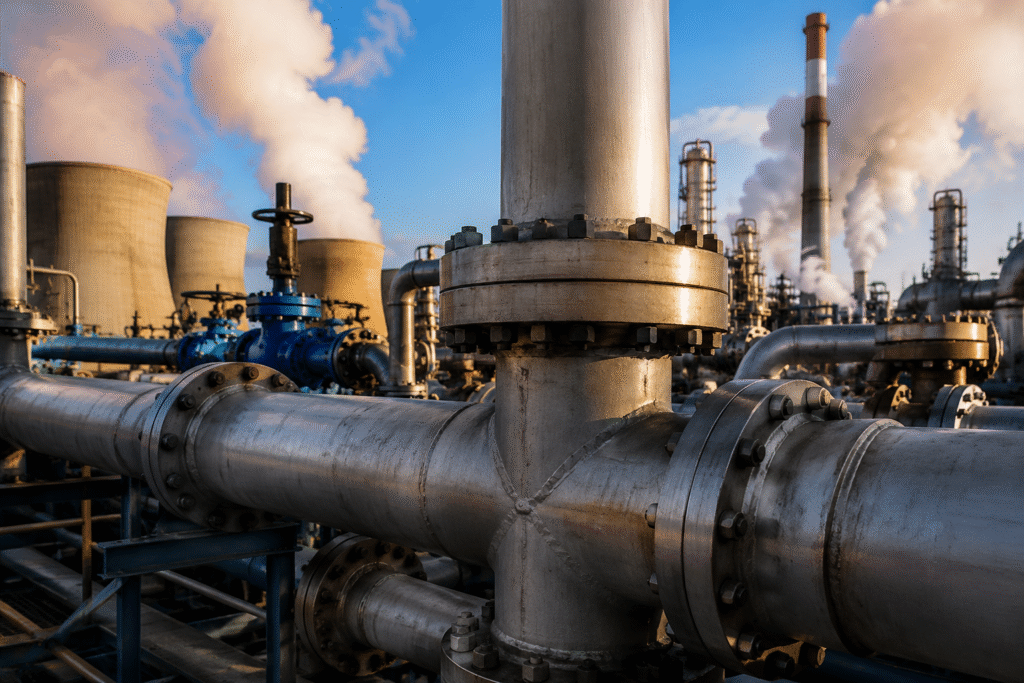
Insights do mercado de flanges de tubos de aço inoxidável: 7 Vantagens ocultas, Tipos, Guia de seleção de usos e ASME B16.5
O flange de tubo de aço inoxidável remains a critical component in modern process piping, especialmente como confiabilidade, resistência à corrosão, e conformidade rastreável tornam-se prioridades de aquisição. De acordo com a pesquisa Grand View (2024), o mercado global de flanges industriais foi avaliado em $5.8 bilhão em 2023 e está projetado para atingir $7.2 bilhão por 2030, which shows why buyers are focusing on material performance and lifecycle cost.
Para empreiteiros EPC, engenheiros de fábrica, e compradores industriais, the most intriguing question is not simply price. It is the hidden advantages, versatilidade, durabilidade, and compliance value that stainless steel flanges deliver across oil and gas, petroquímico, marinho, tratamento de água, e sistemas de geração de energia.
Tendências de demanda global moldando a aquisição de flanges para tubos de aço inoxidável
Demand for stainless steel flanges continues to rise because industrial operators are replacing short-life carbon steel connections in corrosive and cyclic service. De acordo com IBISWorld (2024), Ásia-Pacífico é responsável por mais de 45% da produção global de flanges, sendo a China o maior fabricante.
Essa concentração regional é importante para a estratégia de sourcing. Buyers increasingly compare factory capability, standard coverage, qualidade da documentação, and lead time stability before approving a flange vendor.
De acordo com Statista (2024), a indústria de petróleo e gás é responsável por aproximadamente 35% do consumo global de flanges. Como resultado, ASME-compliant stainless steel pipe flange products remain highly relevant for upstream gathering lines, refinarias, Terminais de GNL, and offshore modules.
Além disso, stricter plant maintenance targets are raising interest in premium grades such as 316L, 904eu, 2205, e 2507. These materials support better resistance to chlorides, corrosão, corrosão em fendas, and stress corrosion cracking in aggressive service.
De acordo com a Inteligência Mordor (2024), industrial piping component demand is being supported by expansion in water infrastructure, projetos de transição energética, and process plant modernization. Portanto, procurement teams are no longer treating flanges as low-value accessories.
They are evaluating them as engineered pressure-retaining parts that affect uptime, segurança, e custo total instalado. This is especially true for larger diameters, classes de pressão mais altas, and critical fluid systems.
ASME B16.5 e ASME B16.47 remain essential references for dimensional interchangeability in steel flanges. Enquanto isso, ASTM material specifications such as ASTM A182 for forged alloy and stainless flanges guide chemistry, propriedades mecânicas, tratamento térmico, e requisitos de teste.
According to ISO market reporting cited by industry analysts, quality traceability now influences bid selection in a growing share of international projects. Buyers often request EN 10204 3.1 certificados, PMI, registros de hidroteste, and dimensional inspection reports as standard documentation packages.
This shift creates an advantage for manufacturers with strong systems and broad material coverage. SASA FLANGE, por exemplo, supports stainless steel, aço carbono, liga, duplex, liga de níquel, and titanium flange supply for projects that require both standard and custom execution.
Com ISO 9001:2015 e certificações PED 2014/68/EU, SASA FLANGE aligns well with international project documentation needs. Além disso, a empresa atende Petróleo & Gás, Petroquímica, Geração de energia, Construção naval & Marinho, Tratamento de Água, and Construction markets from its Shanghai manufacturing base.
The hidden advantages of a properly specified stainless steel pipe flange often appear after commissioning. Lower maintenance frequency, stronger sealing reliability, and reduced unplanned shutdown exposure can offset a higher initial purchase price.
Como James Porter, Engenheiro de Tubulação Sênior, estados: “In corrosive service, the cheapest flange on day one is rarely the lowest-cost flange over a ten-year operating cycle.” That observation reflects how experienced buyers evaluate durability and lifecycle economics rather than unit price alone.
Vantagens Técnicas, Tipos de flange de aço inoxidável, and Material Selection Logic
The versatility of stainless steel flanges begins with material grade selection. Enquanto 304 and 304L remain common for general industrial service, 316 and 316L provide improved resistance in chloride-bearing environments because of molybdenum addition.
For more severe media, engineers frequently move to 904L, duplex 2205, superduplex 2507, or nickel alloys such as Inconel, Monel, e Hastelloy. Portanto, the right choice depends on pressure, temperatura, nível de cloreto, química de processo, e método de fabricação.
According to ASTM and ASME design practices, forged flanges are preferred for pressure boundary integrity in many critical applications (ASTM, 2024; ASME, 2024). É por isso ASTM A182 forged stainless grades remain standard for many ASME B16.5 and B16.47 flange classes.
Como Dr.. Elena Ruiz, Cientista de Materiais, estados: “The best stainless selection is service-specific; 304 works broadly, but chloride exposure, ciclagem de temperatura, and weld condition can quickly justify 316L or duplex.” Her point is especially relevant for marine, dessalinização, e sistemas químicos.
The main stainless steel flange types used in industrial piping include the following:
- Flanges de pescoço soldado para alta pressão, alta temperatura, e serviço cíclico.
- Slip on flanges for lower-pressure lines and easier field fit-up.
- Socket weld flanges for small-bore, sistemas de alta pressão.
- Threaded flanges for lines where welding is restricted.
- Blind flanges for line isolation, pontos de inspeção, and pressure closure.
- Lap joint flanges for systems requiring frequent dismantling.
Each design has different stress distribution behavior, velocidade de instalação, and alignment tolerance. Consequentemente, the three most referenced flange forms in many buyer searches are weld neck, escorregar, e flanges cegas.
When engineers compare 304 contra 420 stainless in flange contexts, the answer is usually straightforward. Austenítico 304 offers better corrosion resistance and weldability, while martensitic 420 offers higher hardness but is far less common for pressure flange service.
For industrial process lines, 304, 304eu, 316, and 316L are much more relevant than 420. In aggressive chloride, azedo, ou condições offshore, duplex and super duplex often become stronger candidates.
De acordo com a Pesquisa de Mercado Futuro (2024), demand for corrosion-resistant process components is rising at over 4% annually in sectors linked to water treatment and chemical processing. This trend supports the growing use of higher-alloy stainless steel pipe flange options beyond commodity grades.
Material selection should also consider flange facing, classe de pressão, and mating component compatibility. Rosto levantado, cara plana, and ring type joint configurations each suit different gasket systems and operating conditions.
Buyers should evaluate these specification points before ordering:
- Padrão: ASME B16.5, ASME B16.47, DIN, JIS, GOST, EN 1092.
- Material: 304, 316, 316eu, 904eu, 2205, 2507, A182 F304/F316, or specialty alloys.
- Classificação de pressão: Aula 150, 300, 600, 900, 1500, 2500, or PN series.
- Faixa de tamanho: de 1/2 polegada para 60 inch depending on standard and type.
- Enfrentando: RF, FF, RTJ, língua e sulco, or custom machined face.
- Teste: PMI, inspeção dimensional, dureza, hidroteste, EQM, e EN 10204 3.1.
According to NACE guidance for sour environments, materials must resist sulfide stress cracking and localized attack in applicable service conditions (NACE, 2024). Portanto, a stainless steel pipe flange for offshore or sour gas duty should never be selected by grade name alone.
It should be selected by full process data. Concentração de cloreto, pH, temperatura, velocidade do fluxo, conteúdo de sólidos, and shutdown cleaning chemistry all influence long-term durability.
SASA FLANGE fabrica flanges em 304, 316, 904eu, 2205, 2507 e outras notas premium, apoiado por usinagem CNC avançada e testes de qualidade abrangentes. The company also supplies matching pipe fittings such as elbows, camisetas, redutores, e tampas para pacotes completos de tubulação.
That integrated supply capability helps procurement managers reduce vendor fragmentation. It also supports dimensional consistency and documentation alignment across flanges and fittings in the same package.
According to DNV recommendations for offshore assets, component reliability and traceability are central to lifecycle integrity programs (DNV, 2024). Na prática, that means flange selection must balance immediate availability with long-term service assurance.
ASME, ASTM, DIN and EN Compliance for Stainless Steel Flanges
Compliance is one of the strongest differentiators in industrial flange sourcing. Um flange de tubo de aço inoxidável deve satisfazer, material, marcação, testando, and documentation requirements before it can be accepted for regulated or critical service.
ASME B16.5 cobre flanges de tubos e acessórios flangeados da NPS 1/2 através 24 in pressure classes from 150 para 2500. ASME B16.47 extends coverage to larger diameters, geralmente NPS 26 através 60, making it essential for major transmission, água, and process projects.
ASTM A182 is the most cited material standard for forged or rolled alloy and stainless steel pipe flanges, acessórios forjados, e válvulas para serviço em alta temperatura. Em contraste, ASTM A240 is associated more closely with plate products, so buyers should verify whether a flange is truly forged, plate-cut, ou fabricado.
European buyers also reference EN 1092 for dimensional and pressure framework requirements. In many export projects, DIN and EN markings remain important alongside ASME dimensions.
Os principais padrões e referências de conformidade incluem:
- ASME B16.5 for standard steel flanges to NPS 24.
- ASME B16.47 for large diameter flanges to NPS 60.
- ASME B16.9 for butt weld fittings used with flange-connected systems.
- ASTM A182 para materiais de flange forjados em aço inoxidável e liga.
- EN 1092 para dimensões de flange europeias e designações de pressão.
- PED 2014/68/EU for pressure equipment compliance in EU markets.
- ISO 9001:2015 for quality management systems.
- NACE MR0175 where sour service material resistance is required.
According to the Pressure Equipment Directive framework, traceability and conformity assessment are mandatory for covered pressure components in applicable EU projects (DEP, 2014/68/UE). Portanto, documentation quality can be as important as the flange itself.
Engineers should also distinguish between compliance by design and compliance by evidence. A drawing may match ASME dimensions, yet project approval still depends on MTCs, rastreabilidade do número de calor, Resultados do PMI, e registros de inspeção.
For buyers comparing standards, this simplified view is helpful:
- ASME B16.5: best for globally recognized process piping, refinaria, and plant applications.
- ASME B16.47: best for large diameter pipeline and utility flange systems.
- DIN e EN 1092: best for European equipment integration and metric project requirements.
- ASTM A182: best for verifying forged stainless material compliance.
Authoritative standard details can be reviewed directly at ASME. This external reference is valuable when buyers need dimensional verification for design review, QA planning, or supplier qualification.
Com ISO 9001:2015, PED 2014/68/EU, e ANÚNCIO 2000 credenciais, SASA FLANGE supports projects that require auditable quality systems and export-ready documentation. Além disso, the company can provide EN 10204 3.1 certification and project-specific testing based on technical agreements.
That matters in sectors where shutdown costs are significant. According to industry maintenance benchmarks cited by analysts, even short unplanned outages can cost large process plants tens of thousands of dollars per hour, which elevates the importance of dependable flange quality.
The most intriguing hidden advantage of a compliant stainless steel pipe flange is risk reduction. Fewer dimensional mismatches, better gasket seating, and stronger material traceability can simplify site installation and reduce costly NCRs.
How to Choose Stainless Steel Pipe Flange Types for Oil, Gás, Químico, Serviços de energia e marítimos
Application-based selection is the fastest route to correct specification. Although many buyers start with size and price, experienced engineers begin with process conditions and failure mode analysis.
Em petróleo e gás, weld neck flanges are common for high pressure and cyclic temperature service. De acordo com Statista (2024), oil and gas uses approximately 35% da produção global de flanges, o que explica por que a classe de pressão, resistência, and traceability dominate project specifications.
Para plantas petroquímicas e químicas, corrosion resistance usually leads the decision tree. 316L often works for moderate chloride exposure, enquanto 904L, 2205, ou 2507 are evaluated when pitting resistance and chloride stress corrosion become concerns.
Power generation systems may prioritize temperature resistance, pressure retention, e desempenho de fadiga. In these conditions, tipo de flange, projeto de junta, bolting system, and thermal expansion behavior must be reviewed together.
Marine and shipbuilding applications bring additional salt exposure and maintenance constraints. Portanto, duplex stainless and carefully verified surface finish can become more attractive than lower-cost alternatives.
Use this practical selection framework:
- Choose weld neck flanges for severe pressure, vibração, e ciclagem térmica.
- Choose slip on flanges for easier alignment in lower-pressure utility and water lines.
- Choose blind flanges for inspection points, test ends, e futuros vínculos.
- Choose threaded flanges where hot work restrictions apply.
- Choose duplex or super duplex for offshore, água do mar, and chloride-rich service.
- Choose 316L over 304L when better chloride resistance is needed.
Buyers also ask about common sizes such as 2 polegada e 4 produtos de flange de tubo de aço inoxidável de polegada. Those sizes are standard across many process lines, but final compatibility still depends on schedule, chato, enfrentando, e classe de pressão.
Price should be assessed against total value. A stainless steel pipe flange price varies with grade, rota de forjamento, complexidade de usinagem, nível de certificação, e volume de pedidos.
As Robert Chen, Analista de Compras Industriais, estados: “The most expensive flange is the one that delays startup because documents, dimensões, or metallurgy fail at inspection.” That quote highlights why approved vendor performance matters in B2B purchasing.
Para projetos de engenharia, buyers should request these commercial and technical details:
- Material grade and equivalent standard designation.
- Tipo de flange, enfrentando, tamanho, e classe de pressão.
- Padrão aplicável, como ASME B16.5 ou B16.47.
- Quantity split by heat number or production batch.
- Certificados necessários, testando, and marking format.
- Tempo de espera, packing method, and export destination.
Apoiado por usinagem CNC avançada e testes de qualidade abrangentes, SASA FLANGE oferece tamanhos personalizados de 1/2 polegada para 60 polegada com preços competitivos direto da fábrica. The company also supports OEM and project-based manufacturing for standard and non-standard flange requirements.
That flexibility is relevant for buyers needing metric DIN flanges, Aulas ASME, special facing tolerances, or corrosion-resistant alloys in one package. It also supports contractors managing mixed-standard projects across regions.
Perspectivas Futuras, Estratégia de Aquisições e Valor de Longo Prazo
The future outlook for stainless steel flanges remains positive because industries are investing in reliability, infraestrutura hídrica, cleaner fuels, and corrosion-resistant process systems. De acordo com a pesquisa Grand View (2024), espera-se que o mercado cresça a partir $5.8 bilhão em 2023 para $7.2 bilhão por 2030.
Em paralelo, buyers are demanding more digital traceability, tighter QA records, and faster response from flange manufacturers. Portanto, supplier evaluation is moving beyond catalog breadth toward process capability and documentation discipline.
De acordo com IBISWorld (2024), A China continua a ser a maior base industrial numa região responsável por mais de 45% da produção global. This gives buyers access to scale, but it also makes supplier qualification essential for consistent quality.
A strong sourcing strategy should include approved standards, target grades, documentation rules, and inspection checkpoints before RFQ release. That approach shortens review cycles and reduces back-and-forth during order execution.
Practical recommendations for procurement teams include:
- Standardize approved materials by service environment, not by habit alone.
- Especificar ASME B16.5, B16.47, ASTM A182, ou PT 1092 clearly on every RFQ.
- Solicitar EN 10204 3.1, PMI, and dimensional reports for critical lines.
- Compare lifecycle durability, não apenas o preço inicial do flange do tubo de aço inoxidável.
- Consolidate flanges and fittings with one qualified supplier where possible.
The hidden advantages of the right stainless steel pipe flange include longer service life, fewer maintenance interventions, and smoother audits. Além disso, proper material and standard selection strengthens plant safety and reduces operating risk.
Para projetos que exigem fabricação certificada, dimensões personalizadas, or mixed material packages, buyers can streamline technical review by discussing requirements early with SASA FLANGE. Servindo 50+ países em todo o petróleo & Gás, Petroquímica, Poder, e indústrias marítimas, the company supports practical, data-driven sourcing decisions.
Perguntas frequentes
Quais são os diferentes tipos de flanges de aço inoxidável?
●Os tipos de flange de aço inoxidável mais comuns são pescoço de solda, escorregar, cego, solda de soquete, rosqueado, e junta sobreposta, e ASME B16.5 covers many of these designs up to NPS 24.
●De acordo com a ASME (2024), correct flange type selection affects alignment, distribuição de tensão, and sealing integrity in pressure piping systems.
●Weld neck flanges suit high-pressure and high-temperature service because their tapered hub improves load transfer into the pipe wall.
●Slip on flanges are easier to align and often cost less to install, which makes them popular for lower-pressure utility and process lines.
●For projects requiring mixed flange types, documented material traceability, and sizes from 1/2 polegada para 60 polegada, trabalhando com fabricantes estabelecidos como SASA FLANGE helps ensure specification accuracy.
O que é melhor 304 ou 420 aço inoxidável?
●Para a maioria das aplicações industriais de flange, 304 stainless steel is better than 420 because it offers stronger corrosion resistance and much better weldability.
●Como Dr.. Elena Ruiz, Cientista de Materiais, estados: “Austenitic stainless grades such as 304 outperform 420 in most welded process piping environments where corrosion is the real failure driver.”
●Nota 420 is a martensitic stainless steel with higher hardness, but it is not the usual choice for ASME B16.5 forged process flanges because it is less suitable for corrosive service.
●Em termos práticos, buyers usually compare 304 contra 316 or 316L rather than 304 contra 420 when specifying stainless steel pipe flange products for water, químico, comida, or utility systems.
●For chloride exposure, offshore service, or stronger documentation requirements, it is wise to review 316L, 2205, ou 2507 options with SASA FLANGE before final purchase.
Quais são os três tipos de flanges?
●The three flange types most commonly referenced in industrial buying are weld neck, escorregar, e flanges cegas.
●According to procurement trends across oil and gas and process industries, these three designs cover a large share of standard maintenance and capital project demand.
●Weld neck flanges are selected for severe service, slip on flanges are chosen for easier installation in moderate duty, and blind flanges are used to close line ends or create inspection points.
●Although these are the three most familiar types, engineers also use socket weld, rosqueado, and lap joint flanges where small-bore pressure, hot-work restrictions, or dismantling frequency dictate another design.
●Para uma seleção confiável, os compradores devem combinar o tipo de flange com a classe de pressão, temperatura, mídia, e padrão como ASME B16.5 ou ASME B16.47 before ordering.
What are the industrial applications of stainless steel?
●Stainless steel is widely used in oil and gas, petroquímico, marinho, geração de energia, tratamento de água, farmacêutico, and food processing applications because it combines corrosion resistance with mechanical strength.
●De acordo com Statista (2024), só o petróleo e o gás representam aproximadamente 35% do consumo global de flanges, which shows how important stainless and alloy components are in critical piping systems.
●In piping projects, stainless steel supports flanges, cotovelos, camisetas, redutores, bonés, tanques, trocadores de calor, pump components, and structural hardware exposed to moisture, produtos químicos, ou temperatura elevada.
●Notas como 304 e 316 fit general industrial service, enquanto 904L, duplex 2205, e superduplex 2507 are considered for more aggressive media and chloride-rich environments.
●When applications require verified certificates, pressure-component compliance, and custom machining, sourcing from qualified industrial suppliers like SASA FLANGE reduces technical and commercial risk.
O que os compradores devem saber sobre a seleção de flanges deslizantes de aço inoxidável?
●A stainless steel slip on flange is typically chosen for lower-pressure service where easy fit-up and faster installation are more important than the highest fatigue strength.
●De acordo com ASME B16.5, slip on flanges are standardized by size, classe de pressão, e enfrentando, but proper bore match and weld procedure remain essential for performance.
●Porque o tubo desliza para dentro do flange antes da soldagem de ângulo, installation can be simpler than with weld neck designs, especially in utility, água, and non-severe process lines.
●No entanto, engineers generally prefer weld neck flanges for cyclic, vibration-prone, or high-pressure systems because stress distribution is superior.
●For projects involving 2 polegada, 4 polegada, or custom stainless steel slip on flange requirements in 304, 316, ou graus duplex, buyers should confirm dimensions, agendar, and documentation before issuing a PO.
How do I evaluate flange manufacturers and choose the right flange vendor?
●The best flange manufacturers combine standard compliance, rastreabilidade de materiais, qualidade de usinagem, capacidade de inspeção, and export documentation rather than competing on price alone.
●De acordo com a pesquisa Grand View (2024), o mercado global de flanges industriais atingiu $5.8 bilhão em 2023, which means buyers have many sourcing options and must use clear qualification criteria.
●A strong flange vendor should demonstrate experience with ASME B16.5, ASME B16.47, ASTM A182, EN 1092, and project documentation such as EN 10204 3.1 e relatórios PMI.
●Buyers should also verify actual manufacturing capability, faixa de tamanho, aulas de pressão, supported materials, lead time control, and responsiveness during technical clarification.
●For API-related projects, large-diameter orders, or corrosion-resistant stainless steel pipe flange packages, selecting a supplier with ISO 9001:2015 and PED-certified systems can improve inspection acceptance and delivery confidence.
Posts Relacionados
Acabamento da face do flange: Serrilhas concêntricas vs espirais explicadas
As serrilhas concêntricas e espirais são acabamentos de face de flange usinados…
Dúplex 2205 vs Flanges 316L: Qual material você deve escolher?
Resposta rápida: Dúplex 2205 flanges são geralmente o candidato mais forte…

Definição de flange de orifício, Detalhes e visão geral dos flanges ASME B16.36: Dados de mercado, Guia de seleção e insights de conformidade
O mercado global de flanges industriais foi avaliado em $5.8 bilhão…

Guia de mercado de flange de descarte preto: Materiais, 3.5″ Compatibilidade, e dados de fornecimento B2B para flanges de pia de cozinha
A demanda por flanges descartáveis pretos está aumentando à medida que os compradores de utensílios de cozinha…