
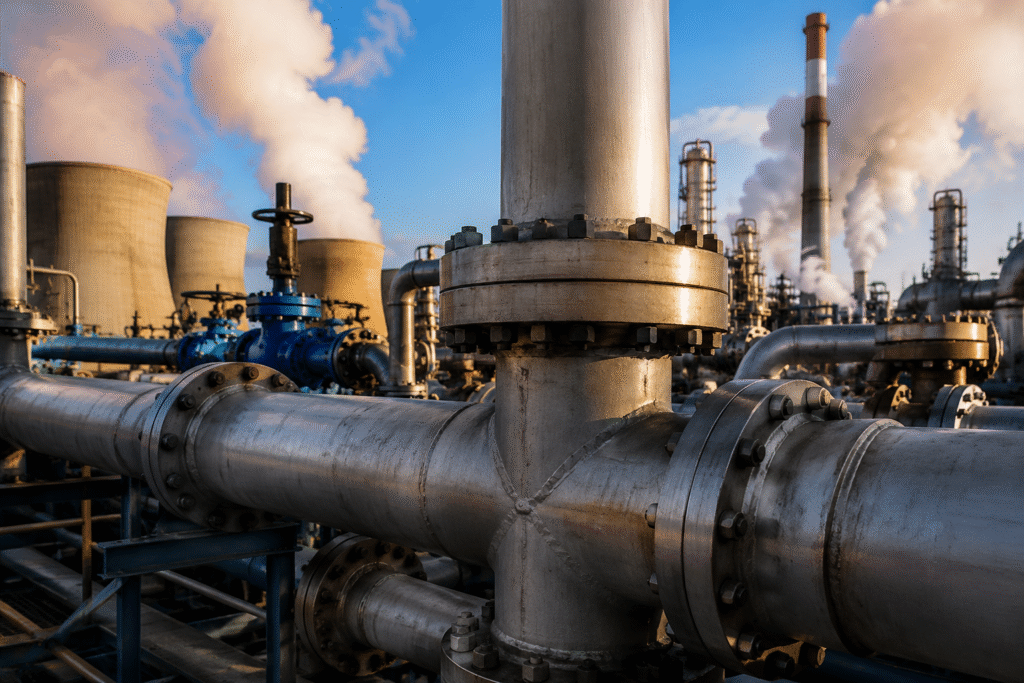
Thông tin chi tiết về thị trường mặt bích ống thép không gỉ: 7 Ưu điểm tiềm ẩn, Các loại, Hướng dẫn sử dụng và lựa chọn ASME B16.5
các mặt bích ống thép không gỉ remains a critical component in modern process piping, đặc biệt là độ tin cậy, chống ăn mòn, và sự tuân thủ có thể theo dõi trở thành ưu tiên mua sắm. Theo nghiên cứu của Grand View (2024), thị trường mặt bích công nghiệp toàn cầu được định giá ở mức $5.8 tỷ trong 2023 và dự kiến sẽ đạt $7.2 tỷ bởi 2030, which shows why buyers are focusing on material performance and lifecycle cost.
Đối với nhà thầu EPC, kỹ sư nhà máy, and industrial buyers, the most intriguing question is not simply price. It is the hidden advantages, tính linh hoạt, độ bền, and compliance value that stainless steel flanges deliver across oil and gas, hóa dầu, hàng hải, xử lý nước, và hệ thống phát điện.
Xu hướng nhu cầu toàn cầu Định hình việc mua sắm mặt bích ống thép không gỉ
Demand for stainless steel flanges continues to rise because industrial operators are replacing short-life carbon steel connections in corrosive and cyclic service. Theo IBISWorld (2024), Châu Á - Thái Bình Dương chiếm hơn 45% sản xuất mặt bích toàn cầu, với Trung Quốc là nhà sản xuất lớn nhất.
Sự tập trung khu vực đó có ý nghĩa quan trọng đối với chiến lược tìm nguồn cung ứng. Buyers increasingly compare factory capability, standard coverage, chất lượng tài liệu, and lead time stability before approving a flange vendor.
Theo Statista (2024), ngành dầu khí chiếm khoảng 35% tiêu thụ mặt bích toàn cầu. Kết quả là, ASME-compliant stainless steel pipe flange products remain highly relevant for upstream gathering lines, nhà máy lọc dầu, Trạm đầu cuối LNG, and offshore modules.
Ngoài ra, stricter plant maintenance targets are raising interest in premium grades such as 316L, 904L, 2205, Và 2507. These materials support better resistance to chlorides, rỗ, ăn mòn kẽ hở, and stress corrosion cracking in aggressive service.
Theo Mordor Intelligence (2024), industrial piping component demand is being supported by expansion in water infrastructure, dự án chuyển đổi năng lượng, and process plant modernization. Vì thế, procurement teams are no longer treating flanges as low-value accessories.
They are evaluating them as engineered pressure-retaining parts that affect uptime, sự an toàn, và tổng chi phí lắp đặt. This is especially true for larger diameters, lớp áp lực cao hơn, and critical fluid systems.
ASME B16.5 Và ASME B16.47 remain essential references for dimensional interchangeability in steel flanges. Trong khi đó, ASTM material specifications such as ASTM A182 for forged alloy and stainless flanges guide chemistry, tính chất cơ học, xử lý nhiệt, và yêu cầu kiểm tra.
According to ISO market reporting cited by industry analysts, quality traceability now influences bid selection in a growing share of international projects. Buyers often request EN 10204 3.1 giấy chứng nhận, PMI, hồ sơ thử thủy lực, and dimensional inspection reports as standard documentation packages.
This shift creates an advantage for manufacturers with strong systems and broad material coverage. SASA FLANGE, Ví dụ, supports stainless steel, thép cacbon, hợp kim, hai mặt, hợp kim niken, and titanium flange supply for projects that require both standard and custom execution.
Với ISO 9001:2015 và chứng nhận PED 2014/68/EU, SASA FLANGE aligns well with international project documentation needs. Hơn thế nữa, công ty phục vụ dầu & Khí đốt, hóa dầu, Phát điện, Đóng tàu & Hàng hải, Xử lý nước, and Construction markets from its Shanghai manufacturing base.
The hidden advantages of a properly specified stainless steel pipe flange often appear after commissioning. Lower maintenance frequency, độ tin cậy niêm phong mạnh mẽ hơn, and reduced unplanned shutdown exposure can offset a higher initial purchase price.
Như James Porter, Kỹ sư đường ống cao cấp, tiểu bang: “In corrosive service, the cheapest flange on day one is rarely the lowest-cost flange over a ten-year operating cycle.” That observation reflects how experienced buyers evaluate durability and lifecycle economics rather than unit price alone.
Technical Advantages, Các loại mặt bích thép không gỉ, và logic lựa chọn vật liệu
The versatility of stainless steel flanges begins with material grade selection. Trong khi 304 and 304L remain common for general industrial service, 316 and 316L provide improved resistance in chloride-bearing environments because of molybdenum addition.
For more severe media, engineers frequently move to 904L, hai mặt 2205, siêu song công 2507, hoặc hợp kim niken như Inconel, Monel, và Hastelloy. Vì thế, the right choice depends on pressure, nhiệt độ, mức độ clorua, quá trình hóa học, và phương pháp chế tạo.
According to ASTM and ASME design practices, forged flanges are preferred for pressure boundary integrity in many critical applications (ASTM, 2024; ASME, 2024). This is why ASTM A182 forged stainless grades remain standard for many ASME B16.5 and B16.47 flange classes.
Như Tiến sĩ. Elena Ruiz, Nhà khoa học vật liệu, tiểu bang: “The best stainless selection is service-specific; 304 works broadly, but chloride exposure, chu kỳ nhiệt độ, and weld condition can quickly justify 316L or duplex.” Her point is especially relevant for marine, khử muối, và hệ thống hóa chất.
The main stainless steel flange types used in industrial piping include the following:
- Hàn mặt bích cổ cho áp suất cao, nhiệt độ cao, và dịch vụ theo chu kỳ.
- Slip on flanges for lower-pressure lines and easier field fit-up.
- Socket weld flanges for small-bore, hệ thống áp suất cao.
- Threaded flanges for lines where welding is restricted.
- Mặt bích mù để cách ly đường dây, điểm kiểm tra, and pressure closure.
- Mặt bích ghép cho các hệ thống cần tháo dỡ thường xuyên.
Each design has different stress distribution behavior, tốc độ cài đặt, and alignment tolerance. Do đó, the three most referenced flange forms in many buyer searches are weld neck, trượt vào, và mặt bích mù.
When engineers compare 304 so với 420 stainless in flange contexts, the answer is usually straightforward. Austenit 304 offers better corrosion resistance and weldability, while martensitic 420 offers higher hardness but is far less common for pressure flange service.
For industrial process lines, 304, 304L, 316, and 316L are much more relevant than 420. In aggressive chloride, chua, or offshore conditions, duplex and super duplex often become stronger candidates.
Theo Nghiên cứu thị trường Tương lai (2024), demand for corrosion-resistant process components is rising at over 4% annually in sectors linked to water treatment and chemical processing. This trend supports the growing use of higher-alloy stainless steel pipe flange options beyond commodity grades.
Material selection should also consider flange facing, lớp áp lực, và khả năng tương thích thành phần giao phối. Mặt ngước lên, mặt phẳng, and ring type joint configurations each suit different gasket systems and operating conditions.
Buyers should evaluate these specification points before ordering:
- Tiêu chuẩn: ASME B16.5, ASME B16.47, DIN, JIS, GOST, EN 1092.
- Vật liệu: 304, 316, 316L, 904L, 2205, 2507, A182 F304/F316, or specialty alloys.
- Đánh giá áp suất: Lớp học 150, 300, 600, 900, 1500, 2500, or PN series.
- Phạm vi kích thước: từ 1/2 inch đến 60 inch depending on standard and type.
- Đối mặt: RF, FF, RTJ, lưỡi và rãnh, or custom machined face.
- Kiểm tra: PMI, kiểm tra chiều, độ cứng, thử thủy lực, NDE, Và EN 10204 3.1.
According to NACE guidance for sour environments, materials must resist sulfide stress cracking and localized attack in applicable service conditions (NACE, 2024). Vì thế, a stainless steel pipe flange for offshore or sour gas duty should never be selected by grade name alone.
It should be selected by full process data. nồng độ clorua, độ pH, nhiệt độ, vận tốc dòng chảy, hàm lượng chất rắn, and shutdown cleaning chemistry all influence long-term durability.
SASA FLANGE sản xuất mặt bích ở 304, 316, 904L, 2205, 2507 và các hạng cao cấp khác, được hỗ trợ bởi gia công CNC tiên tiến và kiểm tra chất lượng toàn diện. The company also supplies matching pipe fittings such as elbows, áo thun, bộ giảm tốc, and caps for complete piping packages.
That integrated supply capability helps procurement managers reduce vendor fragmentation. It also supports dimensional consistency and documentation alignment across flanges and fittings in the same package.
According to DNV recommendations for offshore assets, component reliability and traceability are central to lifecycle integrity programs (DNV, 2024). Trong thực tế, that means flange selection must balance immediate availability with long-term service assurance.
ASME, ASTM, Tuân thủ DIN và EN cho mặt bích bằng thép không gỉ
Compliance is one of the strongest differentiators in industrial flange sourcing. A stainless steel pipe flange must satisfy dimensional, vật liệu, đánh dấu, thử nghiệm, and documentation requirements before it can be accepted for regulated or critical service.
ASME B16.5 bao gồm mặt bích ống và phụ kiện mặt bích từ NPS 1/2 bởi vì 24 trong các lớp áp lực từ 150 ĐẾN 2500. ASME B16.47 mở rộng vùng phủ sóng đến đường kính lớn hơn, nói chung là NPS 26 bởi vì 60, making it essential for major transmission, Nước, and process projects.
ASTM A182 is the most cited material standard for forged or rolled alloy and stainless steel pipe flanges, phụ kiện giả mạo, và van cho dịch vụ nhiệt độ cao. Ngược lại, ASTM A240 is associated more closely with plate products, so buyers should verify whether a flange is truly forged, cắt tấm, hoặc bịa đặt.
European buyers also reference EN 1092 for dimensional and pressure framework requirements. In many export projects, DIN and EN markings remain important alongside ASME dimensions.
Các tiêu chuẩn chính và tài liệu tham khảo tuân thủ bao gồm:
- ASME B16.5 for standard steel flanges to NPS 24.
- ASME B16.47 for large diameter flanges to NPS 60.
- ASME B16.9 for butt weld fittings used with flange-connected systems.
- ASTM A182 cho vật liệu mặt bích không gỉ và hợp kim giả mạo.
- EN 1092 về kích thước mặt bích và ký hiệu áp suất của mặt bích Châu Âu.
- PED 2014/68/EU for pressure equipment compliance in EU markets.
- ISO 9001:2015 cho hệ thống quản lý chất lượng.
- NACE MR0175 where sour service material resistance is required.
According to the Pressure Equipment Directive framework, traceability and conformity assessment are mandatory for covered pressure components in applicable EU projects (PED, 2014/68/EU). Vì thế, documentation quality can be as important as the flange itself.
Engineers should also distinguish between compliance by design and compliance by evidence. A drawing may match ASME dimensions, yet project approval still depends on MTCs, truy xuất nguồn gốc số nhiệt, kết quả PMI, và biên bản kiểm tra.
For buyers comparing standards, this simplified view is helpful:
- ASME B16.5: best for globally recognized process piping, nhà máy lọc dầu, and plant applications.
- ASME B16.47: best for large diameter pipeline and utility flange systems.
- DIN và EN 1092: best for European equipment integration and metric project requirements.
- ASTM A182: best for verifying forged stainless material compliance.
Authoritative standard details can be reviewed directly at ASME. This external reference is valuable when buyers need dimensional verification for design review, QA planning, or supplier qualification.
Với ISO 9001:2015, PED 2014/68/EU, và AD 2000 thông tin xác thực, SASA FLANGE supports projects that require auditable quality systems and export-ready documentation. Ngoài ra, công ty có thể cung cấp EN 10204 3.1 certification and project-specific testing based on technical agreements.
That matters in sectors where shutdown costs are significant. According to industry maintenance benchmarks cited by analysts, even short unplanned outages can cost large process plants tens of thousands of dollars per hour, which elevates the importance of dependable flange quality.
The most intriguing hidden advantage of a compliant stainless steel pipe flange is risk reduction. Fewer dimensional mismatches, better gasket seating, and stronger material traceability can simplify site installation and reduce costly NCRs.
Cách chọn loại mặt bích ống thép không gỉ cho dầu, Khí đốt, Hóa chất, Power and Marine Service
Application-based selection is the fastest route to correct specification. Although many buyers start with size and price, experienced engineers begin with process conditions and failure mode analysis.
Trong dầu khí, weld neck flanges are common for high pressure and cyclic temperature service. Theo Statista (2024), oil and gas uses approximately 35% sản lượng mặt bích toàn cầu, điều này giải thích tại sao lớp áp lực, sự dẻo dai, and traceability dominate project specifications.
Đối với các nhà máy hóa dầu và hóa chất, corrosion resistance usually leads the decision tree. 316L often works for moderate chloride exposure, trong khi 904L, 2205, hoặc 2507 are evaluated when pitting resistance and chloride stress corrosion become concerns.
Power generation systems may prioritize temperature resistance, pressure retention, and fatigue performance. In these conditions, loại mặt bích, thiết kế đệm, bolting system, and thermal expansion behavior must be reviewed together.
Marine and shipbuilding applications bring additional salt exposure and maintenance constraints. Vì thế, duplex stainless and carefully verified surface finish can become more attractive than lower-cost alternatives.
Use this practical selection framework:
- Choose weld neck flanges for severe pressure, rung động, và chu trình nhiệt.
- Choose slip on flanges for easier alignment in lower-pressure utility and water lines.
- Choose blind flanges for inspection points, test ends, và những ràng buộc trong tương lai.
- Choose threaded flanges where hot work restrictions apply.
- Choose duplex or super duplex for offshore, nước biển, and chloride-rich service.
- Choose 316L over 304L when better chloride resistance is needed.
Buyers also ask about common sizes such as 2 inch và 4 sản phẩm mặt bích ống thép không gỉ inch. Those sizes are standard across many process lines, but final compatibility still depends on schedule, khoan, đối mặt, và lớp áp lực.
Price should be assessed against total value. A stainless steel pipe flange price varies with grade, tuyến đường rèn, độ phức tạp gia công, cấp độ chứng nhận, và khối lượng đặt hàng.
As Robert Chen, Nhà phân tích mua sắm công nghiệp, tiểu bang: “The most expensive flange is the one that delays startup because documents, kích thước, or metallurgy fail at inspection.” That quote highlights why approved vendor performance matters in B2B purchasing.
Đối với các dự án được thiết kế, buyers should request these commercial and technical details:
- Material grade and equivalent standard designation.
- Loại mặt bích, đối mặt, kích cỡ, và lớp áp lực.
- Tiêu chuẩn áp dụng như ASME B16.5 hoặc B16.47.
- Quantity split by heat number or production batch.
- Chứng chỉ bắt buộc, thử nghiệm, and marking format.
- thời gian dẫn, phương pháp đóng gói, and export destination.
Được hỗ trợ bởi gia công CNC tiên tiến và kiểm tra chất lượng toàn diện, SASA FLANGE cung cấp kích thước tùy chỉnh từ 1/2 inch đến 60 inch với giá cả cạnh tranh trực tiếp tại nhà máy. The company also supports OEM and project-based manufacturing for standard and non-standard flange requirements.
That flexibility is relevant for buyers needing metric DIN flanges, lớp học ASME, special facing tolerances, or corrosion-resistant alloys in one package. It also supports contractors managing mixed-standard projects across regions.
Triển vọng tương lai, Procurement Strategy and Long-Term Value
The future outlook for stainless steel flanges remains positive because industries are investing in reliability, cơ sở hạ tầng nước, cleaner fuels, and corrosion-resistant process systems. Theo nghiên cứu của Grand View (2024), thị trường dự kiến sẽ tăng trưởng từ $5.8 tỷ trong 2023 ĐẾN $7.2 tỷ bởi 2030.
Song song, buyers are demanding more digital traceability, tighter QA records, and faster response from flange manufacturers. Vì thế, supplier evaluation is moving beyond catalog breadth toward process capability and documentation discipline.
Theo IBISWorld (2024), Trung Quốc vẫn là cơ sở sản xuất lớn nhất trong khu vực chịu trách nhiệm về hơn 45% sản xuất toàn cầu. This gives buyers access to scale, but it also makes supplier qualification essential for consistent quality.
A strong sourcing strategy should include approved standards, target grades, documentation rules, and inspection checkpoints before RFQ release. That approach shortens review cycles and reduces back-and-forth during order execution.
Practical recommendations for procurement teams include:
- Standardize approved materials by service environment, not by habit alone.
- Chỉ định ASME B16.5, B16.47, ASTM A182, hoặc VN 1092 clearly on every RFQ.
- Lời yêu cầu EN 10204 3.1, PMI, and dimensional reports for critical lines.
- Compare lifecycle durability, không chỉ giá mặt bích ống thép không gỉ ban đầu.
- Consolidate flanges and fittings with one qualified supplier where possible.
The hidden advantages of the right stainless steel pipe flange include longer service life, fewer maintenance interventions, and smoother audits. Hơn thế nữa, proper material and standard selection strengthens plant safety and reduces operating risk.
For projects requiring certified manufacturing, thứ nguyên tùy chỉnh, hoặc gói vật liệu hỗn hợp, buyers can streamline technical review by discussing requirements early with SASA FLANGE. Phục vụ 50+ các quốc gia trên khắp dầu mỏ & Khí đốt, hóa dầu, Quyền lực, và ngành hàng hải, the company supports practical, data-driven sourcing decisions.
Câu hỏi thường gặp
Các loại mặt bích thép không gỉ khác nhau là gì?
●Các loại mặt bích inox phổ biến nhất là cổ hàn, trượt vào, mù, ổ cắm hàn, xâu chuỗi, và khớp nối, Và ASME B16.5 covers many of these designs up to NPS 24.
●Theo ASME (2024), correct flange type selection affects alignment, phân bố ứng suất, and sealing integrity in pressure piping systems.
●Weld neck flanges suit high-pressure and high-temperature service because their tapered hub improves load transfer into the pipe wall.
●Slip on flanges are easier to align and often cost less to install, which makes them popular for lower-pressure utility and process lines.
●For projects requiring mixed flange types, documented material traceability, and sizes from 1/2 inch đến 60 inch, làm việc với các nhà sản xuất có uy tín như SASA FLANGE helps ensure specification accuracy.
Cái nào tốt hơn 304 hoặc 420 thép không gỉ?
●Đối với hầu hết các ứng dụng mặt bích công nghiệp, 304 thép không gỉ tốt hơn 420 because it offers stronger corrosion resistance and much better weldability.
●Như Tiến sĩ. Elena Ruiz, Nhà khoa học vật liệu, tiểu bang: “Austenitic stainless grades such as 304 outperform 420 in most welded process piping environments where corrosion is the real failure driver.”
●Cấp 420 là thép không gỉ martensitic có độ cứng cao hơn, but it is not the usual choice for ASME B16.5 forged process flanges because it is less suitable for corrosive service.
●Về mặt thực tế, buyers usually compare 304 so với 316 or 316L rather than 304 so với 420 when specifying stainless steel pipe flange products for water, hóa chất, đồ ăn, or utility systems.
●For chloride exposure, dịch vụ hải ngoại, or stronger documentation requirements, it is wise to review 316L, 2205, hoặc 2507 options with SASA FLANGE before final purchase.
Ba loại mặt bích là gì?
●The three flange types most commonly referenced in industrial buying are weld neck, trượt vào, và mặt bích mù.
●According to procurement trends across oil and gas and process industries, these three designs cover a large share of standard maintenance and capital project demand.
●Weld neck flanges are selected for severe service, slip on flanges are chosen for easier installation in moderate duty, and blind flanges are used to close line ends or create inspection points.
●Although these are the three most familiar types, các kỹ sư cũng sử dụng mối hàn ổ cắm, xâu chuỗi, and lap joint flanges where small-bore pressure, hot-work restrictions, or dismantling frequency dictate another design.
●Để lựa chọn đáng tin cậy, buyers should match flange type to pressure class, nhiệt độ, phương tiện truyền thông, và tiêu chuẩn như ASME B16.5 hoặc ASME B16.47 before ordering.
Ứng dụng công nghiệp của thép không gỉ là gì??
●Stainless steel is widely used in oil and gas, hóa dầu, hàng hải, phát điện, xử lý nước, dược phẩm, and food processing applications because it combines corrosion resistance with mechanical strength.
●Theo Statista (2024), Riêng dầu khí đã chiếm khoảng 35% tiêu thụ mặt bích toàn cầu, which shows how important stainless and alloy components are in critical piping systems.
●In piping projects, stainless steel supports flanges, khuỷu tay, áo thun, bộ giảm tốc, mũ lưỡi trai, xe tăng, trao đổi nhiệt, pump components, and structural hardware exposed to moisture, hóa chất, or elevated temperature.
●Các lớp như 304 Và 316 fit general industrial service, trong khi 904L, hai mặt 2205, và siêu song công 2507 are considered for more aggressive media and chloride-rich environments.
●When applications require verified certificates, pressure-component compliance, and custom machining, sourcing from qualified industrial suppliers like SASA FLANGE reduces technical and commercial risk.
Người mua nên biết gì về việc lựa chọn mặt bích bằng thép không gỉ?
●A stainless steel slip on flange is typically chosen for lower-pressure service where easy fit-up and faster installation are more important than the highest fatigue strength.
●Theo ASME B16.5, slip on flanges are standardized by size, lớp áp lực, và đối mặt, but proper bore match and weld procedure remain essential for performance.
●Do ống trượt vào mặt bích trước khi hàn phi lê, installation can be simpler than with weld neck designs, especially in utility, Nước, and non-severe process lines.
●Tuy nhiên, engineers generally prefer weld neck flanges for cyclic, vibration-prone, or high-pressure systems because stress distribution is superior.
●For projects involving 2 inch, 4 inch, or custom stainless steel slip on flange requirements in 304, 316, hoặc lớp song công, buyers should confirm dimensions, lịch trình, and documentation before issuing a PO.
How do I evaluate flange manufacturers and choose the right flange vendor?
●The best flange manufacturers combine standard compliance, truy xuất nguồn gốc vật liệu, chất lượng gia công, khả năng kiểm tra, and export documentation rather than competing on price alone.
●Theo nghiên cứu của Grand View (2024), thị trường mặt bích công nghiệp toàn cầu đạt $5.8 tỷ trong 2023, which means buyers have many sourcing options and must use clear qualification criteria.
●A strong flange vendor should demonstrate experience with ASME B16.5, ASME B16.47, ASTM A182, EN 1092, và tài liệu dự án như EN 10204 3.1 and PMI reports.
●Buyers should also verify actual manufacturing capability, phạm vi kích thước, lớp áp lực, supported materials, lead time control, và khả năng đáp ứng trong quá trình làm rõ kỹ thuật.
●For API-related projects, large-diameter orders, or corrosion-resistant stainless steel pipe flange packages, selecting a supplier with ISO 9001:2015 and PED-certified systems can improve inspection acceptance and delivery confidence.
bài viết liên quan
Mặt bích hoàn thiện: Giải thích về răng cưa đồng tâm và xoắn ốc
Các răng cưa đồng tâm và xoắn ốc đều được gia công hoàn thiện mặt bích…
song công 2205 so với mặt bích 316L: Bạn nên chọn chất liệu nào?
Trả lời nhanh: song công 2205 mặt bích thường là ứng cử viên mạnh hơn…

Định nghĩa mặt bích lỗ, Chi tiết và tổng quan về mặt bích ASME B16.36: Dữ liệu thị trường, Hướng dẫn lựa chọn và thông tin chi tiết về tuân thủ
Thị trường mặt bích công nghiệp toàn cầu được định giá ở mức $5.8 tỷ…

Hướng dẫn thị trường mặt bích xử lý màu đen: Nguyên vật liệu, 3.5″ Khả năng tương thích, và dữ liệu tìm nguồn cung ứng B2B cho mặt bích bồn rửa nhà bếp
Nhu cầu mặt bích xử lý màu đen đang tăng lên khi người mua đồ đạc nhà bếp…