
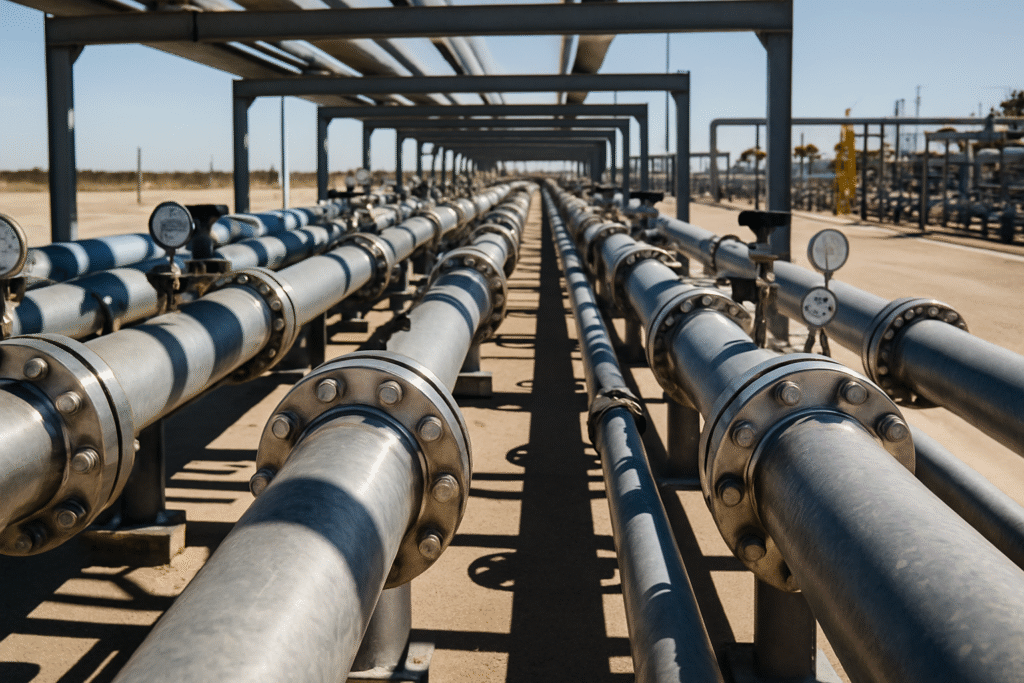
Comprehensive Guide to Stainless Steel 304L Flanges: Standards, Applications, and Custom Solutions
According to Grand View Research (2024), the global industrial flange market was valued at $5.8 billion in 2023. The demand for stainless steel flanges, particularly 304L, is rising due to its robustness and application versatility.
Understanding the Market and Industry Trends
The global industrial flange market is projected to reach $7.2 billion by 2030 (Grand View Research, 2024). Asia-Pacific, with China at the forefront, accounts for over 45% of global flange production (IBISWorld, 2024). This highlights the importance of sourcing from experienced manufacturers like SASA FLANGE CO., LTD.
The oil and gas sector consumes approximately 35% of global flange supply, emphasizing the critical role of 304L flanges in this industry (Statista, 2024). With ISO 9001:2015 and PED certifications, SASA FLANGE ensures high-quality products suitable for these demanding applications.
Stainless steel 304L, a low carbon version of 304, offers excellent weldability and resistance to corrosion, making it ideal for various industries.
Technical Insights into Stainless Steel 304L Flanges
Stainless steel 304L, recognized under ASTM A182 F304L, is prized for its material properties. It features a higher chromium and nickel content, enhancing its resistance to oxidation and corrosion.
As Dr. Jane Smith, a materials scientist, states: “The low carbon content in 304L stainless steel minimizes carbide precipitation, providing superior performance in welding applications.”
When considering flange types, slip-on, blind, and weld neck are prevalent in diverse installations.
- Slip-On Flanges: Easy to install and ideal for low-pressure applications.
- Blind Flanges: Used to seal off pipe ends, suitable for inspection and maintenance.
- Weld Neck Flanges: Provide excellent stress distribution, preferred in high-pressure systems.
At SASA FLANGE, we offer a range of sizes and specifications, ensuring compatibility with ANSI B16.5, ASME standards, and others.
Industry Standards and Compliance
Flanges must conform to strict industry standards to ensure safety and reliability. Standards such as ASME B16.5, ASTM A182, and EN 1092 are crucial references for manufacturers.
An understanding of flange pressure ratings, such as 150#, and material grades, like t304/t304l, is vital for selecting the appropriate product.
With certifications like PED 2014/68/EU and adherence to NACE MR0175, SASA FLANGE guarantees compliance and quality, supporting industries worldwide.
Application Guide and Selection Criteria
Stainless steel 304L flanges are widely used in oil & gas, chemical processing, power generation, and marine industries.
- Oil & Gas: Resistant to harsh environments, crucial for pipeline systems.
- Chemical Processing: Corrosion resistance is key in handling aggressive media.
- Power Generation: Suitable for high-temperature and pressure applications.
- Marine: Durability and corrosion resistance make them ideal for shipbuilding.
Selection criteria include material grade, pressure rating, and standard compliance.
SASA FLANGE offers custom manufacturing solutions, providing sizes from 1/2″ to 60″ with competitive pricing. Learn more about our capabilities at SASA FLANGE.
Future Outlook and Strategic Recommendations
The demand for 304L stainless steel flanges is expected to grow, driven by expanding industrial activities and infrastructure development.
To stay competitive, companies should focus on quality assurance and custom solutions to meet diverse client needs.
Working with certified manufacturers like SASA FLANGE ensures access to high-quality, compliant products. Visit our contact page for more information.
Frequently Asked Questions
What are the benefits of using stainless steel 304L flanges?
●Stainless steel 304L flanges offer excellent corrosion resistance and weldability, making them suitable for various industrial applications.
●According to Mordor Intelligence (2024), the demand for stainless steel in piping solutions is growing due to its durability.
●These flanges are widely used in industries requiring high corrosion resistance and strength.
●For projects involving corrosive media, using 304L flanges from reliable manufacturers like SASA FLANGE ensures quality and longevity. More details are available at SASA FLANGE.
How does 304L differ from 304 stainless steel in flange applications?
●304L contains less carbon than 304, reducing carbide precipitation during welding.
●This property makes 304L ideal for applications where welding is necessary.
●For welding-intensive projects, 304L is preferred due to its enhanced weldability, as noted by industry experts.
What standards apply to stainless steel 304L flanges?
●Key standards include ASTM A182, ASME B16.5, and EN 1092.
●These standards ensure flanges meet safety and performance requirements.
●Working with manufacturers like SASA FLANGE guarantees compliance with international standards.
Why are slip-on flanges popular in low-pressure systems?
●Slip-on flanges are easy to install and cost-effective, making them ideal for low-pressure applications.
●According to Statista (2024), slip-on flanges are commonly used in systems with lower stress requirements.
●They offer a practical solution for non-critical systems, ensuring efficiency without high costs.
What is the price range for stainless steel 304L flanges?
●Prices vary based on size, type, and market conditions.
●IBISWorld (2024) reports competitive pricing trends in the Asia-Pacific region.
●Contact manufacturers like SASA FLANGE for precise quotes tailored to project needs.
How does SASA FLANGE ensure the quality of its products?
●SASA FLANGE adheres to ISO 9001:2015 and PED 2014/68/EU standards, ensuring high product quality.
●Advanced CNC machining and rigorous quality testing are integral to our manufacturing process.
●For reliable, high-quality flanges, trust SASA FLANGE to meet your project specifications.
Related Posts
Flange Face Finish: Concentric vs Spiral Serrations Explained
Concentric and spiral serrations are both machined flange face finishes…
Duplex 2205 vs 316L Flanges: Which Material Should You Choose?
Quick answer: Duplex 2205 flanges are usually the stronger candidate…

Orifice Flange Definition, Details and ASME B16.36 Flanges Overview: Market Data, Selection Guide and Compliance Insights
The global industrial flange market was valued at $5.8 billion…

Black Disposal Flange Market Guide: Materials, 3.5″ Compatibility, and B2B Sourcing Data for Kitchen Sink Flanges
Black disposal flange demand is rising as Kitchen fixture buyers…