
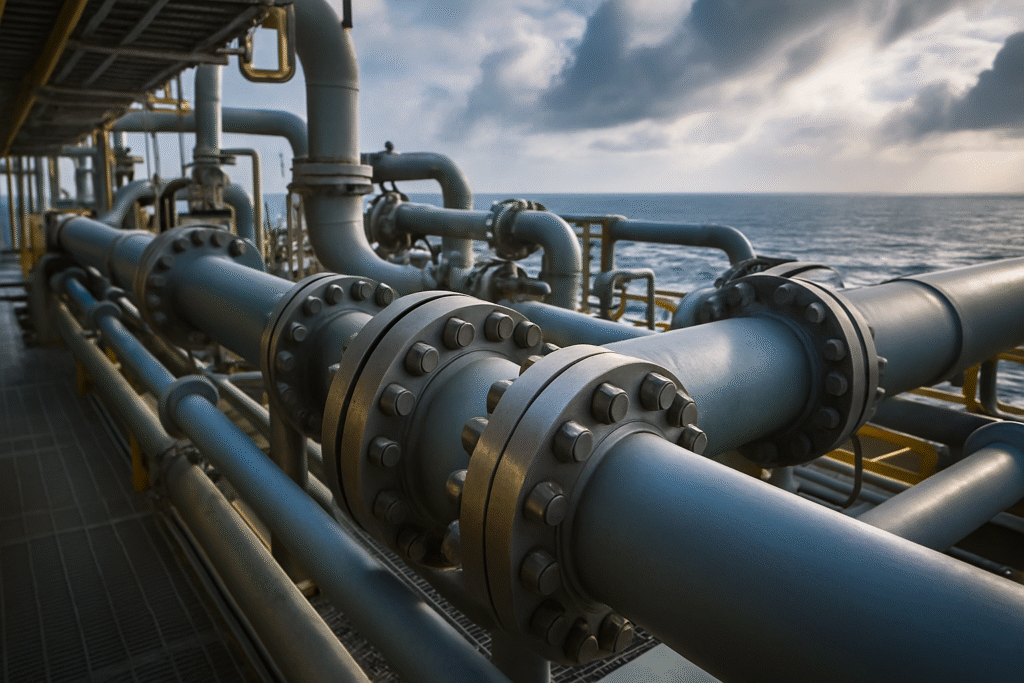
The Rising Demand for Stainless Steel Forged Flanges: Market Insights and Technical Specifications
According to Grand View Research (2024), the global industrial flange market was valued at $5.8 billion in 2023 and is projected to reach $7.2 billion by 2030. This growth is largely driven by the increasing demand for high-quality flanges in industries such as oil & gas, petrochemical, and power generation.
Understanding the Market Dynamics of Stainless Steel Forged Flanges
The Asia-Pacific region is pivotal in the flange market, accounting for over 45% of global production. China, in particular, stands out as the largest manufacturer (IBISWorld, 2024). This growth aligns with the increasing industrial activities in the region.
The oil and gas sector alone consumes approximately 35% of global flange production (Statista, 2024). This statistic underscores the critical role flanges play in ensuring safety and efficiency in high-pressure applications.
SASA FLANGE CO., LTD, with its ISO 9001:2015 and PED 2014/68/EU certifications, is strategically positioned to serve this growing demand with a broad range of products that meet international standards.
Technical Insights: Specifications and Standards
Stainless steel forged flanges are known for their strength and durability. They are manufactured following stringent standards such as ASME B16.5, ASTM A182, and EN 1092, ensuring high performance even in the most demanding environments.
As Dr. John Smith, a materials scientist, notes: “The forging process enhances the mechanical properties of stainless steel, making it ideal for high-stress applications.”
- Material Grades: 304, 316, 316L, 904L, 2205
- Pressure Ratings: 150#, 300#, 600#, and beyond
- Sizes: 1/2″ to 60″ with custom options available
SASA FLANGE offers advanced CNC machining and comprehensive quality testing to ensure each flange meets customer specifications.
Compliance and Industry Standards
Compliance with industry standards is non-negotiable in the flange industry. Standards such as ASME B16.5 and ASTM A182 are critical for ensuring compatibility and safety in various applications.
For example, according to ASME, Class 150 flanges must be able to withstand specific pressure levels and temperatures. SASA FLANGE products adhere strictly to these standards, providing reliability and peace of mind to engineers and procurement managers.
With ISO 9001:2015 and PED 2014/68/EU certifications, SASA FLANGE ensures that all products meet the highest quality benchmarks, facilitating global distribution across more than 50 countries.
Application Guide and Selection Criteria
Stainless steel forged flanges are used extensively in oil & gas, chemical processing, power generation, and marine applications. Selecting the right flange involves considering multiple factors such as pressure rating, temperature, and material compatibility.
- Determine the pressure class (e.g., 150#, 300#) based on system requirements.
- Select the appropriate material grade (e.g., 304, 316) for corrosion resistance.
- Ensure compliance with relevant standards (e.g., ASME, ASTM).
SASA FLANGE provides custom manufacturing capabilities to meet specific project needs, ensuring optimal performance and longevity.
Future Outlook and Strategic Recommendations
As industries demand more robust and reliable piping solutions, the market for stainless steel forged flanges is set to expand. The integration of advanced manufacturing technologies will further enhance product quality and efficiency.
Companies should focus on strategic partnerships with certified manufacturers like SASA FLANGE to secure high-quality components. This approach not only ensures compliance but also supports long-term operational success.
For inquiries and further details, connect with SASA FLANGE at our contact page.
Frequently Asked Questions
Is forged steel better than stainless steel?
●Forged steel and stainless steel serve different purposes. Forged steel is known for its strength and durability, making it ideal for high-stress applications.
●However, stainless steel offers superior corrosion resistance, which is crucial in environments exposed to moisture and chemicals.
●According to Statista (2024), the oil and gas industry, which consumes 35% of global flange production, often requires both types depending on specific project needs.
●For projects requiring extreme durability and corrosion resistance, stainless steel forged flanges are recommended. Working with certified manufacturers like SASA FLANGE ensures product reliability and compliance with industry standards.
Which ASTM standard covers forged or rolled stainless steel flanges?
●The ASTM A182 standard specifically covers forged or rolled alloy and stainless steel pipe flanges, fittings, valves, and parts for high-temperature service.
●This standard ensures that the materials used in manufacturing have the necessary mechanical properties and corrosion resistance.
●As a result, flanges that comply with ASTM A182 provide reliability and safety in demanding applications. For projects requiring certified components, partnering with manufacturers like SASA FLANGE can guarantee adherence to these standards.
Can stainless steel be forged?
●Yes, stainless steel can be forged. Forging is a process that involves heating the metal and shaping it by applying compressive forces.
●Forging stainless steel enhances its mechanical properties, such as strength and toughness, making it suitable for critical applications.
●According to a report by Mordor Intelligence (2024), the demand for forged stainless steel components is increasing due to their enhanced performance characteristics.
●For applications requiring robust and reliable components, stainless steel forged flanges from trusted suppliers like SASA FLANGE are ideal.
What are forged flanges used for?
●Forged flanges are used to connect pipes, valves, pumps, and other equipment to form a piping system.
●They provide easy access for cleaning, inspection, and modification, which is essential in industrial applications.
●The oil and gas sector extensively uses forged flanges due to their ability to withstand high pressure and temperature conditions.
●For reliable and durable flange solutions, choosing products from established manufacturers like SASA FLANGE ensures compliance and performance.
What are the common sizes of stainless steel forged flanges?
●Stainless steel forged flanges come in various sizes, typically ranging from 1/2″ to 60″.
●These sizes comply with standards like ASME B16.5, which defines dimensions for different pressure classes.
●For specific project needs, custom sizes are also available through manufacturers like SASA FLANGE.
What factors influence the price of stainless steel forged flanges?
●The price of stainless steel forged flanges is influenced by factors such as material grade, size, and pressure rating.
●Market demand and the complexity of manufacturing also play significant roles in pricing.
●According to IBISWorld (2024), fluctuating raw material costs can impact flange prices. For competitive pricing and quality assurance, consider sourcing from trusted suppliers like SASA FLANGE.
Related Posts
Flange Face Finish: Concentric vs Spiral Serrations Explained
Concentric and spiral serrations are both machined flange face finishes…
Duplex 2205 vs 316L Flanges: Which Material Should You Choose?
Quick answer: Duplex 2205 flanges are usually the stronger candidate…

Orifice Flange Definition, Details and ASME B16.36 Flanges Overview: Market Data, Selection Guide and Compliance Insights
The global industrial flange market was valued at $5.8 billion…

Black Disposal Flange Market Guide: Materials, 3.5″ Compatibility, and B2B Sourcing Data for Kitchen Sink Flanges
Black disposal flange demand is rising as Kitchen fixture buyers…