
The Rebirth of Steel: The Art and Industrial Poetry of Stainless Steel Products
Quick Answer
The “rebirth” of stainless steel is a controlled industrial cycle: alloy design, melting, casting, hot working, product forming, machining, verification, service and eventual recycling. For pressure flanges, the poetic image of glowing steel must be translated into an ordered grade, material specification, dimensional standard, pressure class, facing, inspection scope and traceable documentation.
Follow the stainless steel journey
The Stainless Steel Journey at a Glance
| Stage | What changes | What a flange buyer should verify |
|---|---|---|
| Alloy design | Chromium and other alloying elements establish the intended grade family and properties. | Exact grade or UNS designation, governing material specification and ordered edition. |
| Melting and refining | Raw materials and recycled metal are melted, refined and adjusted to the required chemistry. | Heat identity and chemical results on the material certificate. |
| Casting and hot working | Molten metal becomes an intermediate form, then is worked into plate, bar, billet, ring or forging stock. | Product form and whether the selected material specification covers that form. |
| Forging and heat treatment | Pressure-component stock is shaped and heat treated as required for the ordered grade. | Heat-treatment condition and mechanical-property results required by the purchase specification. |
| Machining and finishing | Bore, bolt pattern, thickness, hub and sealing face are produced to the dimensional order. | Flange standard, NPS/DN, class/PN, facing, schedule or bore, and dimensional report when required. |
| Verification and release | Identity, dimensions and ordered examinations are checked before shipment. | Marking, MTC traceability and only the supplementary tests actually required by the order. |
Chapter 1: Alloy Design Gives Steel Its Identity
Stainless steel is a family of alloys rather than one universal material. World Stainless identifies a minimum chromium content of 10.5% as the foundation of stainless behaviour. Nickel, molybdenum and other elements may be added to obtain different combinations of corrosion resistance, strength, formability and temperature performance.
This is where the industrial story begins, but chemistry alone does not select a flange. “304” or “316” should not be used as a complete purchase description. A buyer also needs the product specification, dimensions, pressure designation, facing and any project-specific examination requirements.
Chapter 2: From Melt to a Workable Product Form
During melting and refining, producers control composition and remove unwanted elements before the metal is cast into an intermediate form. That form may later be rolled, forged or otherwise worked into stock suitable for the intended product. Each route creates a different procurement question: a plate component, a bar-machined item and a forged pressure flange are not interchangeable merely because their nominal alloy names match.
Chapter 3: The Forged-Flange Transformation
For many alloy and stainless-steel pressure flanges, ASTM A182/A182M is a central material specification. Its public scope covers forged or rolled alloy and stainless-steel piping components for pressure systems, including flanges, fittings, valves and similar parts. It also addresses chemistry, heat treatment and mechanical-property requirements for the ordered grade.
Forging is only one part of the finished component. After forming and required heat treatment, machining establishes the functional geometry: outside diameter, bore, thickness, bolt circle, bolt holes, hub profile and sealing face. The drawing or dimensional standard—not a generic photograph—defines what must be supplied.
Chapter 4: Surface Finish Is Functional, Not Merely Decorative
Stainless steel can be polished, pickled, passivated or otherwise finished for different applications, but a pressure-flange sealing face has its own functional requirements. Surface condition, facing type and serration requirements must match the ordered flange standard, gasket system and project specification. A mirror-like appearance is not automatically the correct sealing finish.
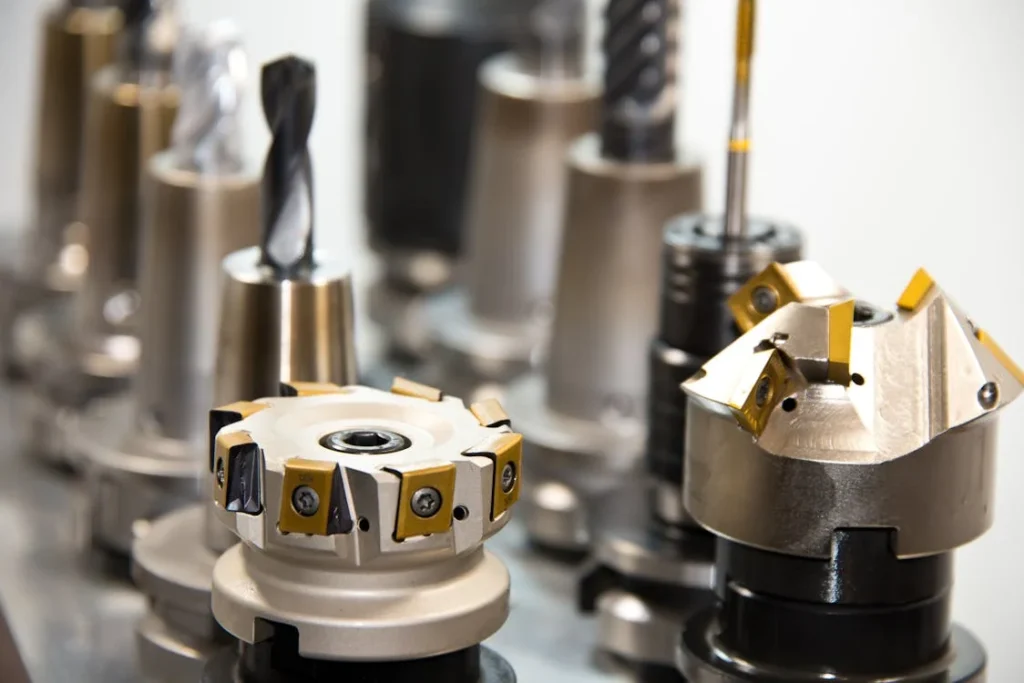
The existing featured image shows machining, an appropriate visual for this stage of the story. It is retained at 56,584 bytes so it does not add an oversized page asset.
Chapter 5: Quality Is a Chain of Evidence
A credible flange order does not rely on unnamed factory anecdotes or universal test claims. The evidence should connect the delivered part to the purchase order:
- legible grade, heat and manufacturer markings where required;
- an MTC that matches the heat and ordered specification;
- chemistry, mechanical properties and heat-treatment information required for the grade;
- dimensions and facing verified to the ordered standard;
- PMI, NDE or other supplementary examination only when specified by the purchaser.
Where 304 and 316 Flanges Enter the Story
304 and 316 are common austenitic stainless-steel families, but their suitability depends on the actual environment and specification. Molybdenum-bearing 316 grades are often considered where improved resistance to localized corrosion is needed, while 304 grades remain widely used in less aggressive conditions. Neither label replaces an engineering review of fluid chemistry, temperature, pressure, fabrication and standards.
Final Chapter: Return to the Material Cycle
Stainless steel’s story does not necessarily end after service. World Stainless reports that stainless steel can be recycled repeatedly and that most end-of-life stainless steel is collected for recycling. Its long service life also means that a large share remains in use for many years before it becomes available as scrap.
This circular potential is the practical meaning behind the article’s “rebirth” theme: recovered metal can return to production, but the next component must still be manufactured, specified and verified for its new duty.
Frequently Asked Questions
Is all stainless steel suitable for pressure flanges?
No. The alloy grade, product form, material specification, dimensions, pressure class and service conditions must all be compatible.
Does a bright surface prove a flange is high quality?
No. Appearance cannot replace material traceability, dimensional verification and the ordered inspection documents.
Should every flange receive every available test?
No. Base specification requirements apply, while supplementary examinations should be stated in the purchase order when the service or project requires them.
Primary References
- ASTM A182/A182M-26 — public scope for forged or rolled alloy and stainless-steel piping components.
- World Stainless: Stainless steels and CO₂ — stainless definition and alloying context.
- World Stainless: Recycling — lifecycle and recycling context.
Turn the Material Story Into a Complete RFQ
Send the flange type, NPS/DN, class/PN, material grade and specification, facing, bore or pipe schedule, quantity, required standard edition and any supplementary inspection or documentation requirements.
Related Posts
Flange Face Finish: Concentric vs Spiral Serrations Explained
Concentric and spiral serrations are both machined flange face finishes…
Duplex 2205 vs 316L Flanges: Which Material Should You Choose?
Quick answer: Duplex 2205 flanges are usually the stronger candidate…

Orifice Flange Definition, Details and ASME B16.36 Flanges Overview: Market Data, Selection Guide and Compliance Insights
The global industrial flange market was valued at $5.8 billion…

Black Disposal Flange Market Guide: Materials, 3.5″ Compatibility, and B2B Sourcing Data for Kitchen Sink Flanges
Black disposal flange demand is rising as Kitchen fixture buyers…
No Comments