
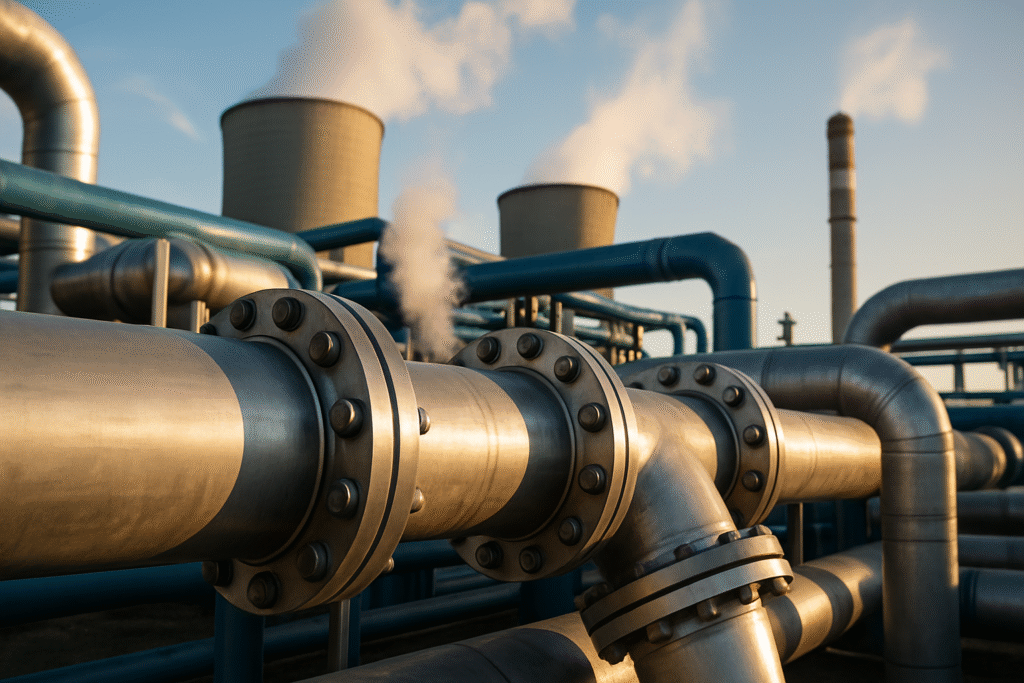
Paslanmaz Çelik Boru Flanş Piyasası Görünümü: Gizli Avantajlar, Türler, Kullanım Alanları, ve ASME B16.5 Nasıl Seçilir? & B16.47 Flanşlar
Grand View Araştırmasına göre (2024), küresel endüstriyel flanş pazarı şu şekilde değerlendi: $5.8 milyar 2023 ulaşılması öngörülüyor ve $7.2 milyar tarafından 2030. Bu büyüme, paslanmaz çelik boru flanşının neden korozyon direnci gerektiren endüstriyel Boru sistemleri için stratejik bir bileşen olarak kaldığını vurguluyor, kuvvet, ve uzun servis ömrü.
EPC yüklenicileri için, OEM'ler, ve satın alma ekipleri, Doğru Flanşın seçilmesi sızıntı kontrolünü etkiler, bakım maliyeti, ve uyumluluk. Dahası, projeler daha yüksek çalışma süresi hedeflerine doğru ilerledikçe, Paslanmaz Çeliğin Gizli Avantajları, ASME uyumluluğu, ve hassas malzeme seçimi her zamankinden daha önemli.
Paslanmaz çelik boru flanşı tedarikini şekillendiren endüstriyel talep eğilimleri
IBISWorld'e göre (2024), Asya-Pasifik'in hesapları 45% küresel flanş üretimi, Çin'in en büyük üretici olduğu. Öyleyse, Küresel alıcılar, tedarikçileri işleme kapasitesi açısından giderek daha fazla değerlendiriyor, izlenebilirlik, ve standartlara uygunluk, sadece fiyatla ilgili değil.
Statista'ya göre (2024), Petrol ve gaz endüstrisi yaklaşık olarak 35% küresel flanş tüketiminin. Bu tek istatistik, alıcıların neden yukarı yönde olduğunu açıklıyor, orta akıntı, ve alt pazarlar baskı sınıfı bütünlüğüne öncelik veriyor, PMI doğrulaması, ve malzeme dokümantasyonu.
Petrokimyada paslanmaz çelik flanş talebi de artıyor, su arıtma, deniz, ve enerji üretim projeleri. Bu sektörlerde, korozyon payı, klorüre maruz kalma, sıcaklık döngüsü, ve ortamın saflığı doğrudan etki edip etmediğini etkiler. 304, 316, 316L, 904L, 2205, veya 2507 en uygun olanıdır.
Projeler küreselleştikçe, standards alignment becomes a commercial advantage. Buyers often need ASME B16.5 for standard sizes, ASME B16.47 daha büyük çaplar için, ASME B16.9 bağlantı parçaları için, ve TR 1092 or DIN dimensions for regional compatibility.
Mordor İstihbaratına göre (2024), industrial infrastructure upgrades in energy and water sectors continue to support long-term demand for corrosion-resistant flow control components. Sonuç olarak, Stainless Steel Flanges are increasingly specified where lifecycle cost matters more than first-cost purchasing.
Manufacturers that support both commodity and engineered supply tend to outperform in B2B procurement cycles. Örneğin, clients often request weld neck, giymek, kör, soket kaynağı, kucak eklemi, and threaded designs in custom schedules, facing finishes, and non-standard dimensions.
SASA FLANGE serves this demand with stainless steel flanges, karbon çelik flanşlar, alaşım flanşlar, and pipe fittings for global industrial users. İle ISO 9001:2015 ve PED 2014/68/EU sertifikaları, the company supports buyers who need consistent quality, EN 10204 3.1 dokümantasyon, and practical export experience across 50+ ülkeler.
Ek olarak, modern kaynak bulma ekipleri hem Flanşları hem de bağlantı parçalarını destekleyebilecek bir tedarikçi istiyor. Alıcılar inceliyor ürün yetenekleri genellikle dirsekleri ararım, tişört, redüktörler, ve proje kontrolünü basitleştirmek için eşleşen flanş derecelerinin yanında kapaklar.
Teslim süresi güvenilirliği aynı zamanda bir satın alma ölçüsüdür. Pazar Araştırması Geleceğine Göre (2024), endüstriyel bileşen alıcıları, siparişlerini çok standartlı üretim ve daha hızlı lojistik koordinasyonu sunan üreticilerle giderek daha fazla birleştiriyor.
Bu eğilim CNC işlemeli tedarikçilerin lehinedir, dövme kontrolü, boyutsal muayene, ve basınca karşı hassasiyet. Aynı zamanda üretim yapabilen fabrikaları da destekliyor. 1/2 inç ila 60 inç, Sınıf gibi ortak derecelendirmelerde 150, 300, 600, 900, 1500, Ve 2500.
Paslanmaz çelik boru flanşı malzemelerine ilişkin teknik kılavuz, türleri, ve gizli avantajlar
Mühendislerin paslanmaz çelik boru flanşını belirtmesinin ana nedeni, aşındırıcı ve değişken sıcaklıktaki hizmetlere karşı dayanıklılıktır. Fakat, en iyi performans yalnızca malzeme kalitesi, flanş tipi, karşı karşıya, and pressure class are matched to the actual process conditions.
As John Barlow, Kıdemli Boru Mühendisi, eyaletler: “A flange selection mistake rarely appears at installation; it appears during operation, when corrosion, titreşim, or gasket mismatch shortens service life.” That is why experienced buyers compare alloy chemistry, basınç derecesi, and end connection as a complete system.
304 and 304L remain common choices for general industrial service. They offer strong formability and cost efficiency, although chloride-heavy media may push specifiers toward 316 veya çift yönlü kaliteler.
316 and 316L provide improved molybdenum-enhanced corrosion resistance. Öyleyse, kimyasal işlemlerde yaygın olarak kullanılırlar, offshore skid packages, tuzdan arındırma destek sistemleri, and pharmaceutical utility lines.
Agresif medya için, alıcılar 904L'yi düşünebilir, 2205, veya 2507. Tersine, nickel alloys such as Inconel, Monel, and Hastelloy may be required for severe corrosion, yüksek sıcaklık, or sour service conditions.
According to ASTM material frameworks, dövme paslanmaz çelik flanşlar genellikle tedarik edilir ASTM A182 notlar, while plate products may align with ASTM A240 depending on product form and design requirements (ASTM, 2024). For piping designers, that distinction matters because base material route affects mechanical properties, denetim planlaması, ve üretim yöntemi.
Common Stainless Steel Flange Types include:
- Weld neck Flange for high-pressure and high-temperature Pipe service.
- Slip on Flange for easier alignment and economical fabrication.
- Blind Flange for line ends, damar nozulları, ve bakım izolasyonu.
- Socket weld Flange for smaller bore, yüksek basınçlı uygulamalar.
- Threaded Flange where welding is undesirable or restricted.
- Lap joint Flange for systems requiring frequent dismantling.
The Hidden Advantages of stainless materials extend beyond corrosion resistance. Stainless grades reduce contamination risk, support cleaner surface finishes, and often lower total maintenance cost over long operating cycles.
According to NACE guidance and common industry practice, material selection in sour or chloride-bearing service must account for cracking resistance, sıcaklık, and process chemistry (NACE, 2024). Öyleyse, material upgrades can be a risk-control decision rather than a simple product upgrade.
Facing selection is equally important. Raised face remains standard for many ASME systems, while ring type joint designs support higher-pressure sealing integrity in critical services.
Dimensions and classes also drive performance. ASME B16.5 NPS'yi kapsar 1/2 başından sonuna kadar 24 for many common classes, sırasında ASME B16.47 extends larger diameter coverage, commonly from NPS 26 başından sonuna kadar 60 (ASME, 2024).
Dr. olarak. Emily Chen, Malzeme Bilimcisi, eyaletler: “The best alloy is not the most expensive alloy; it is the alloy that withstands the exact corrosion mechanism and temperature profile of the process.” That principle helps procurement teams avoid over-specification and under-performance at the same time.
For buyers comparing Types, Kullanım Alanları, and how to Choose Flanges, these checkpoints are practical:
- Confirm process media, klorür seviyesi, and design temperature.
- Verify flange standard such as ASME B16.5, ASME B16.47, DIN, veya TR 1092.
- Match material grade to piping material and corrosion allowance.
- Select facing type based on gasket design and pressure class.
- Review inspection documents, including heat number traceability and EN 10204 3.1.
- Check dimensional tolerances and machining quality before shipment.
SASA FLANGE flanşlar üretmektedir 304, 316, 316L, 904L, 2205, 2507 ve diğer birinci sınıf kaliteler, gelişmiş CNC işleme ve kapsamlı kalite testleri ile desteklenmektedir. Buyers who need project support can review the company background at about SASA FLANGE and align specifications before RFQ release.
Pratik satın almada, the right supplier should also support mixed-material packages. Many projects combine stainless steel pipe flange items with carbon steel backup systems, alloy headers, Ve ASME B16.9 bağlantı parçaları, so integrated manufacturing simplifies QA and logistics.
ISO kalite yönetim ilkelerine göre, repeatability and process control are central to defect prevention (ISO, 2024). That is particularly important for flange flatness, bolt-hole alignment, bevel accuracy, and PMI consistency.
ASME B16.5, B16.47, ASTM, DIN, and EN standards for stainless steel flanges
The standard for a stainless steel pipe flange depends on size, tasarım esası, and project geography. In many global industrial projects, ASME B16.5 Ve ASME B16.47 remain the primary dimensional references for imperial piping systems, IN iken 1092 and DIN standards are common in European or mixed-specification work.
ASME states that B16.5 covers pipe flanges and flanged fittings from NPS 1/2 ile 24, across pressure classes including 150 ile 2500 (ASME, 2024). Bu sırada, B16.47 covers large-diameter steel flanges from NPS 26 ile 60 and includes Series A and Series B dimensional options.
Material standards are separate from dimensional standards. ASTM A182 genellikle dövme paslanmaz ve alaşımlı çelik flanşları yönetir, sırasında ASTM A240 applies to stainless plate material used in related fabrication contexts (ASTM, 2024).
For buyers managing export or pressure equipment projects, PED 2014/68/EU documentation can be decisive. İle ISO 9001:2015, PED 2014/68/AB, ve AD 2000 sertifikalar, SASA FLANGE supports customers who require controlled manufacturing records and international compliance pathways.
Below is a practical standards comparison:
- ASME B16.5: Standard flanges and flanged fittings, NPS'ler 1/2 ile 24.
- ASME B16.47: Büyük çaplı çelik flanşlar, NPS'ler 26 ile 60.
- ASME B16.9: Fabrika yapımı dövme alın kaynağı bağlantı parçaları.
- ASTM A182: Forged or rolled alloy and stainless steel flange material.
- EN 1092: Avrupa flanş boyutları ve basınç tanımları.
- DIN: German dimensional standards used across industrial projects.
Testing and documentation are equally important. Procurement teams should request MTCs, ısı numarası izlenebilirliği, boyutlu raporlar, Gerektiğinde PMI, and surface condition verification for serrated faces and sealing areas.
According to DNV guidance for offshore and marine supply chains, documentation quality and material traceability directly affect component acceptance and operational risk control (DNV, 2024). Öyleyse, a compliant flange is not just dimensionally correct; it must also be fully traceable.
Corrosion-related maintenance remains a major cost center in processing industries. According to NACE International estimates frequently cited across the sector, corrosion costs can exceed 3% sanayileşmiş ekonomilerde GSYİH'nın, which reinforces why material and standards compliance should never be treated as an afterthought.
For offshore, ekşi servis, or corrosive chemical applications, NACE MR0175 or project-specific requirements may also influence alloy choice and hardness limitations. Üstelik, marine and energy clients may ask for third-party inspection, hidrotest koordinasyonu, or witness points before dispatch.
Global procurement teams should also compare bolt patterns, basınç sınıfları, and facing forms when substituting between standards. Tersine, assuming DIN, EN, and ASME interchangeability without dimensional review can cause installation delays and gasket mismatch.
For current specifications, engineers should consult official sources such as ASME. For project RFQs needing mixed standards and export documentation, buyers can also temas etmek SASA FLANGE for technical confirmation before production.
How to choose stainless steel pipe flange for oil and gas, kimyasal, güç, ve denizcilik uygulamaları
Choosing the right stainless steel pipe flange starts with application conditions. The same Flange that performs well in clean water service may fail quickly in chloride-rich, yüksek sıcaklık, or cyclic-pressure environments.
Petrol ve gazda, basınç sınıfı, ekşi hizmet maruziyeti, and vibration resistance dominate selection logic. Statista'ya göre (2024), petrol ve gaz yaklaşık olarak 35% küresel flanş tüketiminin, so the sector strongly shapes flange quality expectations worldwide.
Weld neck designs are often preferred for critical hydrocarbon lines. Their tapered hub supports stress distribution, and therefore they are commonly selected for high-pressure systems, process headers, and temperature cycling service.
Kimyasal işlemede, media chemistry is the first filter. 316L may suit many corrosive streams, 904L ise, 2205, veya 2507 may be required where pitting, çatlak korozyonu, or chloride stress corrosion cracking is a concern.
Enerji üretiminde, buhar, yoğunlaşma, and thermal cycling must be reviewed together. Flange facing finish, cıvata yükü kontrolü, and gasket compatibility are as important as alloy selection because leakage at temperature can escalate shutdown costs.
Marine and shipbuilding projects place extra emphasis on salt exposure and compact maintenance planning. Öyleyse, duplex stainless materials frequently gain attention where higher strength and chloride resistance improve lifecycle value.
Seçim kriterleri şunları içermelidir::
- Boru boyutu, takvim, and mating connection type.
- Pressure class and design code requirements.
- Operating temperature and upset conditions.
- İşlem ortamı, klorürler, ve korozyon mekanizması.
- Flanş tipi, karşı karşıya, ve conta uyumluluğu.
- Denetim düzeyi, MTC gereksinimleri, and third-party witness needs.
- Project geography and required standards such as ASME, DIN, veya TR.
Procurement teams should also compare total cost, not just unit cost. A cheaper grade may increase replacement frequency, aksama süresi, and inspection burden, while a better-matched alloy can lower lifecycle cost significantly.
Pazar Araştırması Geleceğine Göre (2024), buyers in industrial components increasingly favor suppliers that can deliver customization and documentation together. That matters when projects require non-standard drilling, özel kalınlık, large-diameter pieces, or mixed material packages.
SASA FLANGE özel boyutlar sunuyor 1/2 inç ila 60 inch with competitive factory-direct pricing and broad material options. Gelişmiş CNC işleme ve kapsamlı kalite testleri ile desteklenmektedir, the company supports project packages for Oil & Gaz, Petrokimya, Güç, ve Denizcilik sektörleri.
Örneğin, a water treatment skid may use 316L slip on flanges for corrosion resistance and cost balance. Buna karşılık, an offshore produced-water line may justify duplex weld neck flanges because the operating chemistry and maintenance access are more demanding.
Buyers should also confirm whether matching stainless steel fittings are available. Integrated sourcing of elbows, tişört, redüktörler, and caps helps avoid grade mismatch and shortens supplier qualification cycles.
When engineers need fast technical confirmation, supplier responsiveness matters. A manufacturer that can quickly review drawings, standartlar, malzeme ikameleri, and documentation requirements will usually reduce procurement friction and project risk.
Paslanmaz çelik boru flanşı tedariki ve stratejik satın alma önerileri için geleceğe bakış
The market outlook remains positive for corrosion-resistant piping components. Grand View Araştırmasına göre (2024), the industrial flange market is expected to rise from $5.8 milyar 2023 ile $7.2 milyar tarafından 2030, which reflects sustained investment in energy, altyapı, and processing industries.
Aynı zamanda, competition among global manufacturers will intensify. Öyleyse, procurement teams should move beyond simple price comparisons and assess machining quality, metallurgical consistency, documentation speed, ve ihracat tecrübesi.
As David Turner, Endüstriyel Pazar Analisti, eyaletler: “The next advantage in flange sourcing will come from supply chain transparency and specification accuracy, not from catalog volume alone.” That view aligns with how EPCs now qualify suppliers for mission-critical components.
Several trends will shape buying decisions over the next few years:
- Higher demand for duplex and super duplex in chloride service.
- More documentation requirements for PED, deniz, and energy projects.
- Greater preference for integrated flange and fitting supply.
- Closer review of lifecycle cost and maintenance risk.
- Faster RFQ turnaround expectations for custom-engineered items.
Alıcılar için, Stratejik öneri açık. Birinci, define media, sıcaklık, basınç, and applicable standards before requesting quotes. Saniye, compare suppliers on quality records, teknik destek, ve dokümantasyon disiplini, not just on nominal unit price.
Üçüncü, ask for traceability details early. This step prevents delays later, especially on projects requiring EN 10204 3.1, PMI, PED desteği, or third-party inspection coordination.
Nihayet, choose a manufacturing partner that understands both global standards and real application performance. For teams sourcing stainless steel pipe flange products, bağlantı parçaları, ve özel boyutlar, early technical consultation with SASA FLANGE can help streamline specification review and reduce total procurement risk.
Sıkça Sorulan Sorular
Paslanmaz çelik flanş ne için kullanılır??
●A stainless steel flange is used to connect Pipe sections, vanalar, pompalar, Güç gerektiren sistemlerde ekipman ve ekipmanlar, korozyon direnci, ve servis kolaylığı.
●Statista'ya göre (2024), petrol ve gaz yaklaşık olarak temsil eder 35% küresel flanş tüketiminin, which shows how essential flanged joints are in critical industrial networks.
●pratikte, stainless steel flanges support assembly, bakım erişimi, denetleme, and safe disconnection in petrochemical, deniz, su arıtma, ve güç uygulamaları.
●They are especially valuable where media purity, klorüre maruz kalma, or repeated maintenance make carbon steel less attractive over the asset lifecycle.
●For projects requiring material traceability and ASME or EN compliance, gibi yerleşik üreticilerle çalışmak SASA FLANGE helps ensure proper grade selection and documentation.
Paslanmaz çelik flanşlar için standart nedir?
●The most common dimensional standards are ASME B16.5 NPS için 1/2 başından sonuna kadar 24 Ve ASME B16.47 NPS için 26 başından sonuna kadar 60.
●ASME confirms these standards define dimensions, basınç sınıfları, toleranslar, ve işaretler, sırasında ASTM A182 genellikle dövme paslanmaz çelik flanş malzemelerini kapsar (ASME, 2024; ASTM, 2024).
●Avrupa projelerinde, EN 1092 and DIN standards are also widely used, so buyers must confirm interchangeability before ordering.
●The material standard and the dimensional standard are not the same, which is why engineers should review both before approving procurement.
●For mixed-standard projects, it is wise to request technical verification from SASA FLANGE before finalizing RFQs.
Paslanmaz çelik boru bağlantı parçaları yapıyorlar mı?
●Evet, üreticiler rutin olarak dirsek gibi paslanmaz çelik boru bağlantı parçaları üretiyor, tişört, redüktörler, and caps to match flange and Pipe system specifications.
●Pazar Araştırması Geleceğine Göre (2024), industrial buyers increasingly prefer suppliers that can provide multiple related flow components in one sourcing package.
●These fittings are commonly made to ASME B16.9 for buttwelding configurations and are available in grades such as 304, 316, 316L, 2205, Ve 2507.
●Using fittings and flanges from aligned material batches can reduce compatibility risk and simplify inspection records during project execution.
●For applications needing matched flanges and fittings, a manufacturer such as SASA FLANGE can support integrated supply and documentation.
Üç tip flanş nedir?
●Three of the most common flange types are weld neck, giymek, ve kör flanşlar.
●Kaynak boyunlu flanşlar yüksek basınç ve yüksek sıcaklıkta hizmete uygundur, slip on flanges offer easier installation, and blind flanges close line ends or nozzle openings for isolation.
●Buna göre ASME B16.5 practice, each type follows dimensional and pressure class requirements that must match the connected Pipe system (ASME, 2024).
●Although these three are common, soket kaynağı, dişli, and lap joint designs are also widely used in specialized services.
●Kritik sistemler için, engineers should choose flange type based on pressure, sıcaklık, bakım sıklığı, and weldability rather than initial cost alone.
arasında nasıl seçim yapabilirim? 304, 316, 904L, and duplex stainless steel flanges?
●304 genel hizmet için yaygın olarak kullanılır, sırasında 316 and 316L offer better resistance in chloride-containing environments due to molybdenum addition.
●Daha agresif medya için, 904L, 2205, veya 2507 may be preferred because they improve resistance to pitting, çatlak korozyonu, veya daha yüksek mekanik yükler.
●Dr. olarak. Emily Chen, Malzeme Bilimcisi, eyaletler: “Material selection should follow the corrosion mechanism, not the popularity of the grade.”
●According to NACE-aligned industry practice, klorür içeriği, sıcaklık, and stress state should all be reviewed before final alloy selection (NACE, 2024).
●The best approach is to compare process chemistry, tasarım sıcaklığı, and code requirements with your supplier before ordering production quantities.
Paslanmaz çelik boru flanşı fiyatını neler etkiler??
●Paslanmaz çelik boru flanşı fiyatı esas olarak alaşım derecesine bağlıdır, flanş tipi, boyut, basınç sınıfı, işleme karmaşıklığı, ve belge gereksinimleri.
●Grand View Araştırmasına göre (2024), the growth of the global flange market to a projected $7.2 milyar tarafından 2030 reflects steady demand pressure on raw materials and industrial manufacturing capacity.
●A 4 inç paslanmaz çelik boru flanşı 304 veya 316 may be relatively standard, while large-diameter ASME B16.47 items, dubleks kaliteler, or custom drilling patterns usually cost more.
●Inspection needs such as PMI, EN 10204 3.1 sertifikalar, PED desteği, or third-party witness services can also increase total procurement cost.
●To control budget without sacrificing reliability, buyers should compare total lifecycle value and request detailed quotations that break out grade, standart, test, and delivery scope.
İlgili Mesajlar
Flanş Yüzü Kaplaması: Eşmerkezli ve Spiral Tırtıkların Açıklaması
Eşmerkezli ve spiral tırtılların her ikisi de işlenmiş flanş yüzeyidir…
Dubleks 2205 316L Flanşlara Karşı: Hangi Malzemeyi Seçmelisiniz?
Hızlı cevap: Dubleks 2205 flanşlar genellikle daha güçlü adaydır…

Orifis Flanşı Tanımı, Ayrıntılar ve ASME B16.36 Flanşlara Genel Bakış: Piyasa Verileri, Seçim Kılavuzu ve Uyumluluk Bilgileri
Küresel endüstriyel flanş pazarı şu şekilde değerlendi: $5.8 milyar…

Siyah Bertaraf Flanşı Pazar Rehberi: Malzemeler, 3.5″ Uyumluluk, Mutfak Lavabo Flanşları için B2B Kaynak Verileri
Mutfak armatürü alıcıları nedeniyle siyah atık flanş talebi artıyor…