
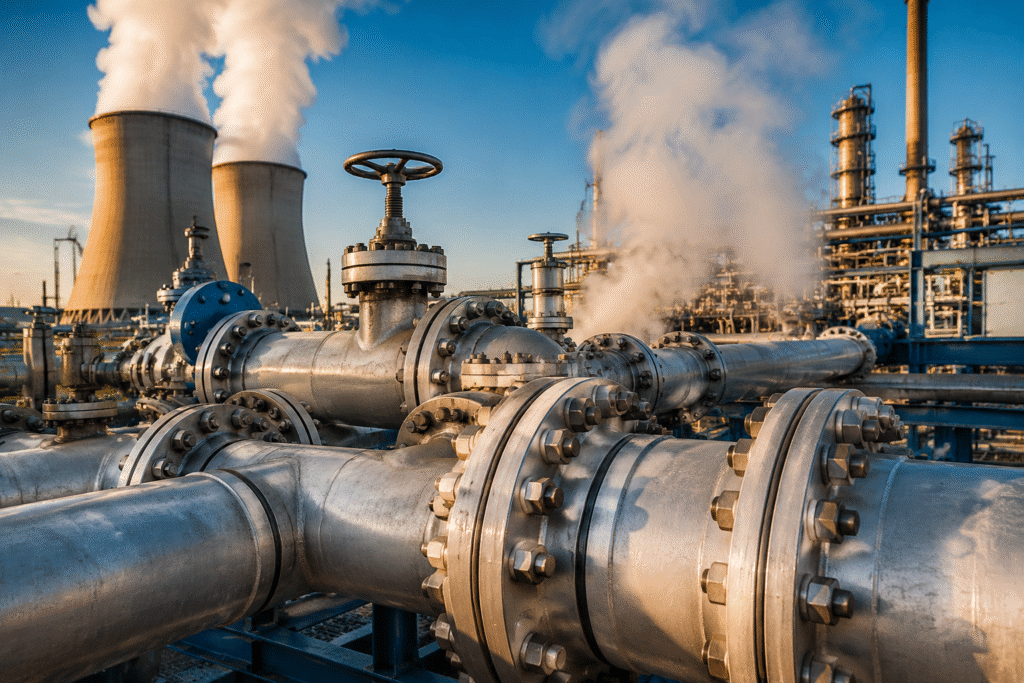
Endüstriye Göre Paslanmaz Çelik Flanş Tedariği, Hizmet ve Maliyet
Grand View Araştırmasına göre (2024), küresel endüstriyel flanş pazarı şu şekilde değerlendi: $5.8 milyar 2023 ulaşılması öngörülüyor ve $7.2 milyar tarafından 2030. That growth makes stainless steel pipe flange selection more strategic for EPC contractors, OEM'ler, and procurement teams focused on lifecycle cost, uyumluluk, and uptime.
Dahası, buyers no longer evaluate a Flange only by nominal size and pressure class. They now compare hidden advantages such as corrosion allowance, kaynaklanabilirlik, izlenebilirlik, EN 10204 3.1 dokümantasyon, and long-term durability across oil and gas, petrokimya, deniz, ve su arıtma sistemleri.
Why the Stainless Steel Pipe Flange Market Is Expanding Across Industrial Use
Endüstriyel talep geniş ve dirençli olmaya devam ediyor. IBISWorld'e göre (2024), Asya-Pasifik'in hesapları 45% küresel flanş üretimi, Çin'in en büyük üretici olduğu, which continues to reshape sourcing decisions for global buyers.
Paralel olarak, end users are consolidating suppliers to reduce risk and improve quality consistency. Öyleyse, manufacturers that combine machining capacity, metallurgical control, and export compliance hold a stronger position in technical bidding.
The oil and gas sector remains the single largest application base. Statista'ya göre (2024), Petrol ve gaz endüstrisi yaklaşık olarak 35% küresel flanş tüketiminin, driven by upstream gathering lines, refining units, LNG sistemleri, ve terminal altyapısı.
Ek olarak, corrosion-resistant stainless grades support longer service intervals in chloride-bearing and chemically aggressive environments. This is one reason stainless steel pipe flange demand stays strong in desalination, açık deniz platformları, and chemical processing plants.
Mordor İstihbaratına göre (2024), global spending on industrial process infrastructure continues to rise with energy transition investments and brownfield upgrades. Sonuç olarak, project engineers increasingly compare stainless, dubleks, alaşım, and carbon steel options by total installed cost rather than raw unit price.
Tedarik yöneticileri için, the decision is no longer only about stainless Flanges Types and Uses. It is also about supply chain reliability, inspection readiness, and whether the manufacturer can meet ASME B16.5, ANSI B16.47, DIN, JIS, GOST, ve TR 1092 dimensional requirements without delays.
David Kumar olarak, Kıdemli Boru Mühendisi, eyaletler: “A flange that meets dimensions but lacks material consistency can become the most expensive component in the line once shutdown risk is considered.” That view aligns with the growing emphasis on PMI, hidrotest desteği, and full traceability in engineered piping packages.
İle ISO 9001:2015 ve PED 2014/68/EU sertifikaları, SASA FLANGE supports this higher standard of procurement discipline. Şirket paslanmaz çelik flanşlar üretmektedir, karbon çelik flanşlar, alaşım flanşlar, and fittings in 304, 316, 316L, 904L, 2205, 2507, A105, A182, İnkonel, Monel, Hastelloy, and Titanium for projects requiring both compliance and versatility.
Buyers looking for qualified supply partners often review manufacturing depth before issuing a PO. On that point, SASA FLANGE combines advanced CNC machining, geniş malzeme kapsamı, and export experience across 50+ Petrol ülkeleri & Gaz, Petrokimya, Güç, ve Denizcilik endüstrileri.
Another market driver is replacement demand. Pazar Araştırması Geleceğine Göre (2024), maintenance-related piping replacement accounts for a substantial share of industrial component purchasing, especially in aging refineries and power assets where gasket face integrity and bolting loads directly influence leak prevention.
Sonuç olarak, even seemingly standard stainless steel pipe flange purchases now involve more technical review. Engineers want to Choose Pipe Flanges? based on design pressure, servis kimyası, bakan tip, and fabrication route, while procurement teams focus on lead time, MTC kullanılabilirliği, ve fabrikadan doğrudan değer.
Paslanmaz Çelik Boru Flanş Çeşitleri Teknik Kılavuzu, Kullanım Alanları, ve Gizli Avantajlar
The most effective way to Choose a stainless steel pipe flange is to match metallurgy, basınç sınıfı, karşı karşıya, and joining method to the actual duty cycle. Fakat, many project delays start when buyers specify only size and class without defining the medium, klorür seviyesi, or required inspection scope.
ASTM ve ASME uygulamalarına göre, flange performance depends on more than base alloy. Yüzey kalitesi, tolerance control, ısıl işlem, and flange-to-pipe alignment all affect gasket seating stress and long-term sealing performance (ASME, 2023).
Dr. olarak. Helen Morris, Malzeme Bilimcisi, eyaletler: “304 Ve 316 remain workhorse stainless grades, but chloride content and temperature quickly separate acceptable performance from premature corrosion risk.” Öyleyse, understanding the Hidden Advantages of each alloy family is essential for critical lines.
Genel endüstriyel hizmet için, 304 and 304L stainless Flanges offer balanced cost, kaynaklanabilirlik, ve korozyon direnci. They are widely selected for water, gıda işleme, and low-to-moderate corrosive services where molybdenum addition is not required.
For marine, kimyasal, and chloride-bearing environments, 316 and 316L are usually the preferred Stainless options. Their molybdenum content improves pitting and crevice corrosion resistance, which often lowers maintenance frequency in aggressive operating conditions.
Higher-alloy grades expand performance further. Örneğin, 904L improves resistance in strong acids, dubleks iken 2205 ve süper dubleks 2507 deliver higher strength and excellent resistance to chloride stress corrosion cracking.
According to NACE guidance and common project specifications, duplex materials can reduce wall thickness in some services because of higher yield strength, although welding control becomes more critical (NACE, 2023). That makes material selection a technical exercise rather than a simple commodity purchase.
Typical stainless steel pipe flange Types include the following:
- Weld neck flange for high-pressure and cyclic service where bore alignment matters.
- Slip-on flange for moderate pressure systems with easier installation and lower fabrication cost.
- Hat izolasyonu için kör flanş, basınç testi, ve gelecekteki sistem genişletmesi.
- Küçük çaplı yüksek basınçlı borular için soket kaynak flanşı.
- Threaded flange for low-pressure non-welded installations where code permits.
- Lap joint flange for systems requiring frequent dismantling and stub-end flexibility.
Each Flange type has a different stress profile. Kritik hizmette, weld neck designs usually provide the most favorable load transition from flange hub to pipe, which is why they are common in refinery, LNG, and power plant piping.
Face configuration also matters for sealing reliability. Raised face is common in ASME service, while flat face is often specified for cast iron mating equipment and some low-pressure applications to avoid uneven loading.
Ring Type Joint designs are used for higher pressure and temperature systems. Bu durumlarda, machining accuracy and surface quality directly affect seal integrity, özellikle termal bisiklet altında.
Buna göre ASME B16.5 and B16.47 requirements, flange dimensions vary by nominal pipe size, basınç sınıfı, and facing detail. Öyleyse, A 4 Sınıfta inç paslanmaz çelik boru flanşı 150 is not interchangeable with a Class 300 or Series B configuration even if the nominal size matches.
Procurement teams should compare these specification points before ordering:
- Material grade and ASTM forging standard, örneğin ASTM A182 F304, F316, F316L, F51, veya F53.
- Dimension standard, içermek ASME B16.5, ANSI B16.47, DIN, veya TR 1092-1.
- Basınç sınıfı veya PN derecesi, örneğin 150, 300, 600, PN16, veya PN40.
- Kaplama tipi, RF dahil, FF, RTJ, or custom machined finish.
- Muayene belgeleri, MTC dahil ve EN 10204 3.1.
- Testing scope, PMI gibi, sertlik, ferrit kontrolü, ve boyutsal muayene.
ISO ve PED uyumluluk uygulamalarına göre, documentation increasingly influences supplier approval in European projects (PED, 2014/68/AB). This is especially true where traceability from raw material to finished Flange is mandatory.
SASA FLANGE supports these requirements with custom sizes from 1/2″ 60'a kadar″, multiple standards, ve kapsamlı kalite testleri. Backed by advanced CNC machining and broad metallurgical capability, the company supplies stainless steel flanges and pipe fittings for both standard and engineered orders.
For buyers balancing cost and lifecycle value, the Hidden Advantages of quality manufacturing are significant. Better bore concentricity, smoother serration control, and tighter dimensional consistency reduce field rework and improve gasket seating during installation.
That is why many EPC buyers evaluate factory capability before final award. Teams needing technical support on material selection, facing configuration, or special dimensions can review options through SASA FLANGE product ranges and align the purchase with actual service conditions.
ASME, ASTM, DIN, and EN Compliance for Stainless Steel Pipe Flange Procurement
Endüstriyel borularda, compliance is a performance requirement. A stainless steel pipe flange that lacks the correct standard, test raporu, or dimensional tolerance can create installation mismatch, audit issues, and costly delays.
The most frequently referenced standards for forged stainless Flanges include ASME B16.5, ASME B16.47, ASTM A182, Ve ASME B16.9 for related fittings. European and international projects also specify DIN and EN 1092, while some end users require additional NACE, DNV, or NORSOK references depending on service.
ASME'ye göre (2023), B16.5 covers pipe flanges and flanged fittings from NPS 1/2 başından sonuna kadar 24. ASME B16.47 daha büyük çaplara hitap eder, bulaşmada yaygın olan, su, ve proses yardımcı sistemleri.
ASTM A182 is central for forged or rolled alloy and stainless steel pipe flanges, dövme bağlantı parçaları, ve yüksek sıcaklıkta servis için valfler. pratikte, buyers often request A182 F304/F304L, F316/F316L, F904L, F51, or F53 depending on corrosion and strength requirements.
EN 1092-1 remains important in Europe and export projects requiring PN-based dimensions. Bu sırada, DIN references still appear in replacement orders and legacy plant documentation, especially for older installations.
These are the most common compliance checkpoints:
- Boyutsal uygunluk ASME B16.5, B16.47, DIN, JIS, GOST, veya TR 1092.
- Malzeme uygunluğu ASTM A182 and related chemical and mechanical requirements.
- Pressure-temperature rating verification under applicable code rules.
- İşaretleme, izlenebilirlik, and heat number control.
- Inspection records and EN 10204 3.1 sertifikasyon.
- PED or project-specific documentation for regulated exports.
Ek olarak, the face finish and drilling pattern must match the mating equipment. A technically correct grade can still fail the project if the bolt circle, hub dimension, or raised face height differs from the drawing.
Tedarik açısından bakıldığında, standard comparison is often where hidden costs appear. In contrast to a simple domestic replacement order, international projects may combine ASME line classes with PED documentation and owner-specific inspection points.
ISO kalite yönetimi kriterlerine göre, document control and inspection repeatability are core indicators of supplier consistency (ISO, 2023). Öyleyse, quality systems are not just administrative credentials; they directly support project delivery performance.
İle ISO 9001:2015, PED 2014/68/AB, ve AD 2000 sertifikalar, SASA FLANGE aligns with these expectations for export and regulated applications. The company also supplies EN 10204 3.1 material documentation and supports demanding sectors such as Oil & Gaz, Petrokimya, Güç Üretimi, Gemi yapımı & Deniz, Su Arıtma, ve İnşaat.
Mühendisler için, the practical takeaway is clear. Always verify whether the required Flange standard governs dimensions, malzemeler, basınç sınıfı, and inspection scope together, rather than assuming one code reference covers the full supply package.
For a quick technical review or project-specific compliance check, buyers can connect with SASA FLANGE before finalizing specifications. That step often prevents costly revisions during drawing approval and pre-shipment inspection.
Endüstriye Göre Paslanmaz Çelik Boru Flanş Çözümleri Nasıl Seçilir?, Hizmet, and Cost
Selection should begin with service data, not catalog habit. Engineers should define fluid composition, çalışma basıncı, tasarım sıcaklığı, korozyon payı, döngüsel yük, and maintenance philosophy before choosing a Flange material and type.
Petrol ve gazda, weld neck and blind Flanges dominate critical systems because they handle pressure and maintenance isolation effectively. Since the sector represents approximately 35% küresel flanş tüketiminin (Devlet adamı, 2024), product availability and documentation requirements are generally well established.
For upstream sour service or offshore applications, duplex and super duplex grades may be justified. They offer strength and chloride resistance benefits, although welding procedure control and ferrite balance become essential for performance.
Petrokimya ve kimya tesislerinde, 316L, 904L, and nickel alloys often appear where corrosion risk outweighs initial material cost. The right Stainless grade can reduce unplanned replacement frequency and support safer process containment.
Enerji üretiminde, operators often focus on thermal cycling, basınç sınıfı, ve boyutsal kararlılık. Öyleyse, forged flange quality and proper facing selection become especially important in steam, yoğunlaşma, ve yardımcı proses hatları.
Marine and shipbuilding projects face continuous chloride exposure. Sonuç olarak, 316L, dubleks 2205, ve süper dubleks 2507 are commonly evaluated for seawater systems, balast hatları, and deck machinery piping where durability matters more than lowest upfront price.
Water treatment projects usually balance corrosion resistance with budget discipline. Burada, 304L and 316L remain common choices, but brine, tuzdan arındırma, or chemical dosing lines may require upgraded metallurgy.
Use these criteria when you Choose Pipe Flanges? for industrial procurement:
- Confirm the exact service medium, klorürler dahil, sülfürler, ve temizlik kimyasalları.
- Match material grade to corrosion risk and operating temperature.
- Select the correct pressure class, PN derecesi, ve bakan tip.
- Check whether welding, threading, or lap joint assembly best fits installation practice.
- MTC gerektir, PMI, ve kritik hizmet için boyutsal inceleme.
- Review delivery schedule, Adedi, and custom machining capability.
Mark Ellison olarak, Endüstriyel Pazar Analisti, eyaletler: “The cheapest flange on the RFQ sheet is rarely the lowest-cost flange over ten years of plant operation.” That is particularly true when gasket leakage, bakım işçiliği, and shutdown exposure are included.
Grand View Araştırmasına göre (2024), industrial infrastructure investments continue to favor durable components that reduce lifecycle maintenance. Öyleyse, procurement managers increasingly compare price per service year rather than price per piece.
Custom manufacturing also influences supplier selection. Projects often need non-standard bores, special facing details, drilled patterns, heavy-wall mating conditions, or mixed packages of flanges and fittings delivered together.
SASA FLANGE addresses these needs by offering custom sizes from 1/2″ 60'a kadar″ with factory-direct pricing and broad material availability. The company supplies elbows, tişört, redüktörler, and caps alongside Flanges, which helps buyers streamline package sourcing and vendor coordination.
For replacement and expansion projects, compatibility checks are essential. A stainless steel pipe flange for sale may match the nominal size, yet still fail the installation because the face type, sondaj programı, or drilling standard differs from the existing line.
That is why technical clarification before purchase saves time. Buyers managing mixed-standard plants or urgent shutdown orders can use SASA FLANGE as a practical point of contact for drawings, malzeme seçenekleri, and custom machining support.
Future Outlook for Stainless Steel Flanges, Stratejik Kaynak Kullanımı, ve Rekabet Avantajı
Piyasa görünümü olumlu olmaya devam ediyor. Grand View Araştırmasına göre (2024), endüstriyel flanş pazarının büyümesi bekleniyor $5.8 milyar 2023 ile $7.2 milyar tarafından 2030, reflecting continued demand from energy, su, kimyasal, ve altyapı sektörleri.
Aynı zamanda, supplier evaluation is becoming more rigorous. Buyers want certified quality systems, material diversity, daha kısa teslimat süreleri, and better digital responsiveness from flange manufacturers and flange vendor partners.
IBISWorld'e göre (2024), Asia-Pacific leads with more than 45% küresel flanş üretimi, ve Çin en büyük üretim üssü olmaya devam ediyor. Öyleyse, strategic sourcing now depends on choosing capable producers rather than simply choosing the lowest regional quote.
Several trends will shape procurement over the next few years:
- Greater use of duplex and high-alloy Stainless materials in chloride and aggressive chemical service.
- More owner emphasis on traceability, PED uyumluluğu, Ve EN 10204 3.1 dokümantasyon.
- Stronger preference for suppliers that can bundle flanges and fittings in one package.
- Higher demand for custom machining, fast-turn replacements, and drawing-based manufacturing.
- Closer scrutiny of total cost of ownership, not only initial stainless steel pipe flange price.
Tedarik ekipleri için, the recommendation is practical. Standardize approved materials, verify applicable dimensional codes early, and involve engineering before final price comparison so the selected Flange truly fits the duty.
For project engineers, build RFQs that specify material grade, basınç sınıfı, karşı karşıya, denetleme, and documentation requirements clearly. This reduces quote ambiguity and improves bid comparability across vendors.
For EPC and OEM buyers, working with manufacturers that combine compliance, işleme yeteneği, and export experience can lower sourcing friction. With certified systems, geniş dereceli kapsama, ve teknik destek, SASA FLANGE is well positioned for buyers seeking dependable stainless steel pipe flange supply for global industrial projects.
Sıkça Sorulan Sorular
Farklı paslanmaz çelik flanş türleri nelerdir??
●The most common stainless steel flange types in industrial piping are weld neck, bağcıksız, kör, soket kaynağı, dişli, and lap joint flanges under standards such as ASME B16.5 ve TR 1092-1.
●Each type serves a different duty because weld neck flanges suit high-pressure cyclic service, slip-on flanges simplify fabrication, and blind flanges isolate systems for testing or maintenance.
●Doğru tip seçimi gerektiren projeler için, malzeme izlenebilirliği, ve standartlara uygunluk, gibi yerleşik üreticilerle çalışmak SASA FLANGE helps ensure the flange matches both process conditions and dimensional requirements.
Hangisi daha iyi 304 veya 420 paslanmaz çelik?
●Çoğu paslanmaz çelik boru flanşı uygulaması için, 304 is usually the better choice because it provides stronger corrosion resistance and better weldability than 420 in process piping service.
●Seviye 420 Isıl işlemden sonra daha yüksek sertlik sunar, but it is less common for pressure piping flanges because its corrosion performance is generally weaker in wet and chemical environments.
●When comparing grades for industrial use, buyers should review ASTM material requirements and service chemistry first, ve gibi üreticiler SASA FLANGE can help match the alloy to actual operating conditions.
Paslanmaz çeliği en çok hangi endüstri kullanıyor??
●Statista'ya göre (2024), Petrol ve gaz endüstrisi yaklaşık olarak 35% küresel flanş tüketiminin, making it one of the largest users of stainless and alloy flanged piping components.
●Fakat, petrokimya, su arıtma, enerji üretimi, gıda işleme, and marine sectors also use large volumes of stainless steel because corrosion resistance and durability reduce maintenance frequency.
●Companies sourcing for these sectors should choose suppliers with broad material coverage, sertifikalar, ve ihracat belgeleri, which is why many buyers consult manufacturers like SASA FLANGE for project-specific recommendations.
Üç tip flanş nedir?
●The three most recognized flange types in general industrial discussions are weld neck, bağcıksız, and blind flange because they cover the majority of common piping connection and isolation needs.
●Weld neck flanges perform well in high-pressure service, slip-on flanges support economical installation, and blind flanges close off a line or nozzle for testing, Bakım, veya gelecekteki genişleme.
●If a project involves pressure class, korozyon riski, or mixed standards such as ASME and EN, buyers should confirm the exact application before ordering from a qualified flange manufacturer.
How do stainless steel pipe flange sizes and pressure ratings work?
●Stainless steel pipe flange sizes are defined by nominal pipe size and dimensional standards such as ASME B16.5 NPS için 1/2 başından sonuna kadar 24, while pressure capability depends on the applicable class rating and material group.
●A 4 inch stainless steel pipe flange can have very different outside dimensions, cıvata desenleri, and pressure limits depending on whether it is Class 150, Sınıf 300, PN16, or another standard configuration.
●To avoid installation mismatch, procurement teams should confirm the standard, bakan tip, program deliği, and inspection documents with an experienced supplier before placing the order.
How is stainless steel pipe flange price determined?
●Stainless steel pipe flange price mainly depends on alloy grade, boyut, basınç sınıfı, dövme rotası, işleme karmaşıklığı, muayene gereksinimleri, and market conditions for nickel and molybdenum-bearing raw materials.
●Grand View Araştırmasına göre (2024), the global flange market reached $5.8 milyar 2023, and growing demand has increased buyer focus on total lifecycle value instead of unit price alone.
●For accurate quotation and stronger cost control, buyers should submit complete specifications including material grade, standart, karşı karşıya, miktar, and certification requirements to a factory-capable supplier.
İlgili Mesajlar
Flanş Yüzü Kaplaması: Eşmerkezli ve Spiral Tırtıkların Açıklaması
Eşmerkezli ve spiral tırtılların her ikisi de işlenmiş flanş yüzeyidir…
Dubleks 2205 316L Flanşlara Karşı: Hangi Malzemeyi Seçmelisiniz?
Hızlı cevap: Dubleks 2205 flanşlar genellikle daha güçlü adaydır…

Orifis Flanşı Tanımı, Ayrıntılar ve ASME B16.36 Flanşlara Genel Bakış: Piyasa Verileri, Seçim Kılavuzu ve Uyumluluk Bilgileri
Küresel endüstriyel flanş pazarı şu şekilde değerlendi: $5.8 milyar…

Siyah Bertaraf Flanşı Pazar Rehberi: Malzemeler, 3.5″ Uyumluluk, Mutfak Lavabo Flanşları için B2B Kaynak Verileri
Mutfak armatürü alıcıları nedeniyle siyah atık flanş talebi artıyor…