
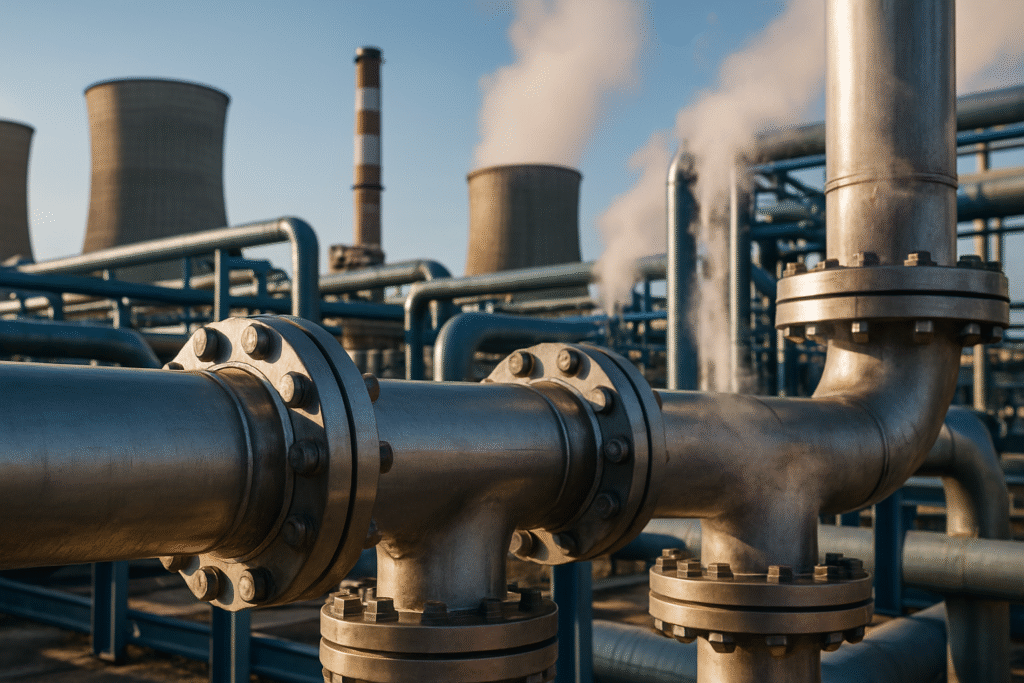
Yêu cầu kiểm tra và tuân thủ mặt bích bằng thép không gỉ
Theo nghiên cứu của Grand View (2024), thị trường mặt bích công nghiệp toàn cầu được định giá ở mức $5.8 tỷ trong 2023 và dự kiến sẽ đạt $7.2 tỷ bởi 2030. That growth highlights why the stainless steel pipe flange has become a critical component for reliability, kiểm soát ăn mòn, and lifecycle cost management across industrial applications.
Dành cho người quản lý mua sắm và kỹ sư đường ống, the real value is not only in material grade selection. It also lies in understanding the hidden advantages, xếp hạng áp lực, tuân thủ tiêu chuẩn, and manufacturing quality behind every flange used in demanding pipe systems.
Stainless Steel Pipe Flange Demand Is Rising Across Global Industrial Applications
Theo IBISWorld (2024), Châu Á - Thái Bình Dương chiếm hơn 45% sản xuất mặt bích toàn cầu, với Trung Quốc là nhà sản xuất lớn nhất. Vì thế, buyers increasingly evaluate not just product type, mà còn cả năng lực của nhà máy, tuân thủ xuất khẩu, and supply chain resilience.
Theo Statista (2024), ngành dầu khí chiếm khoảng 35% tiêu thụ mặt bích toàn cầu. This concentration explains why stainless steel pipe flange procurement often prioritizes corrosion resistance, tính toàn vẹn áp lực, and full traceability for upstream, giữa dòng, and downstream applications.
Hơn thế nữa, stainless steel continues to gain share in projects where maintenance costs are under scrutiny. Kết quả là, engineers often choose 304, 316, and duplex grades for systems exposed to chlorides, chu kỳ nhiệt độ, or aggressive media.
Competitor pages in this segment often focus heavily on material lists. Tuy nhiên, buyers usually need more practical guidance on pressure class, kiểu đối mặt, tiêu chuẩn chiều, tài liệu kiểm tra, and long-term service performance.
That gap matters because flange failure rarely comes from a single factor. Trong nhiều trường hợp, leakage or cracking results from a mismatch between material grade, lựa chọn miếng đệm, tải bu lông, trợ cấp ăn mòn, và nhiệt độ hoạt động.
Theo Mordor Intelligence (2024), process industry capital spending remains strong in energy, hóa chất, và cơ sở hạ tầng nước. Do đó, demand for stainless steel pipe flange assemblies is expanding in both replacement projects and new-build plants.
Dành cho người mua toàn cầu, supplier qualification has become more technical. Họ muốn EN 10204 3.1 chứng nhận, Khả năng PMI, hydrostatic or pneumatic test coordination, và tuân thủ ASME, ASTM, DIN, JIS, GOST, and EN dimensional systems.
SASA FLANGE hoạt động trong môi trường này với ISO 9001:2015 và chứng nhận PED 2014/68/EU. Công ty sản xuất mặt bích inox, mặt bích thép carbon, mặt bích hợp kim, và phụ kiện đường ống ở 304, 316, 316L, 904L, 2205, 2507, A105, A182, Inconel, Monel, Hastelloy, và lớp Titan.
Ngoài ra, purchasing teams increasingly compare total installed cost instead of only unit price. A lower-cost flange can become expensive if machining tolerance, đối mặt với kết thúc, or material verification is inconsistent.
Theo Nghiên cứu thị trường Tương lai (2024), industrial flow-control and piping component demand is supported by expansion in water treatment and power generation. Vì thế, stainless steel pipe flange products are now specified well beyond traditional petrochemical use.
Về mặt thực tế, this means buyers should assess more than the catalog description. They should review flange type, kích thước danh nghĩa, lớp áp lực, lịch trình tương thích, chuẩn bị hàn, and end-user documentation before issuing a purchase order.
Ưu điểm tiềm ẩn, Các loại, and Uses of Stainless Steel Pipe Flange Systems
The hidden advantages of a stainless steel pipe flange are often economic as well as technical. Stainless grades can reduce unplanned shutdowns, support easier maintenance access, and maintain mechanical integrity in corrosive pipe services.
Như John Breen, Kỹ sư đường ống cao cấp, tiểu bang: “Flange selection is never just about pressure class; it is about the interaction of metallurgy, chốt, căng thẳng đệm, và môi trường dịch vụ.” That observation reflects why engineered flange selection delivers better plant reliability than commodity-based purchasing.
According to ASTM material specifications such as ASTM A182, forged stainless flanges are widely used for high-pressure and high-temperature service (ASTM, 2024). Ngoài ra, ASME B16.5 remains the primary dimensional standard for NPS 1/2 bởi vì 24, trong khi ASME B16.47 bao gồm đường kính lớn hơn (ASME, 2023).
Different flange types serve different mechanical and operational purposes. Vì thế, understanding the main types helps buyers choose flanges that balance installation speed, chống mỏi, and maintenance accessibility.
- Mặt bích cổ hàn: ưa thích cho áp suất cao, theo chu kỳ, or elevated-temperature service because the tapered hub reduces stress concentration.
- Mặt bích trượt: common in lower-pressure systems where easier alignment and lower initial cost matter.
- Mặt bích mù: used to terminate a pipe line, valve outlet, or equipment nozzle for testing or future expansion.
- Mặt bích hàn ổ cắm: suited for smaller bore, high-pressure lines where internal leakage paths must be minimized.
- Mặt bích ren: useful where welding is not practical, especially in utility or hazardous areas with installation constraints.
- Mặt bích khớp nối: selected when frequent dismantling or alloy stub-end optimization improves maintenance economics.
The most common stainless grades each offer distinct performance advantages. Ví dụ, 304 and 304L provide broad corrosion resistance and good formability, trong khi 316 and 316L improve pitting resistance in chloride-bearing services.
Đối với môi trường khắc nghiệt, engineers often move to 904L, hai mặt 2205, hoặc siêu song công 2507. These grades improve resistance to pitting, ăn mòn kẽ hở, and stress corrosion cracking in many offshore, hóa chất, and seawater applications.
Như Tiến sĩ. Elena Morris, Nhà khoa học vật liệu, tiểu bang: “The correct stainless flange grade can extend service life by years, but only when the metallurgy matches the chloride level, nhiệt độ, and process chemistry.” That point is especially important in marine and petrochemical applications.
Theo hướng dẫn của NACE, chloride concentration and temperature strongly influence stainless steel corrosion behavior in sour and saline environments (NACE, 2023). Vì thế, 316L may perform well in mild plant water systems, while duplex grades are often chosen for offshore skids and desalination units.
Procurement teams also ask how to choose flanges by pressure class. Trong thực tế, Lớp ASME 150, 300, 600, 900, 1500, Và 2500 ratings determine the pressure-temperature envelope, but the allowable service depends on material group and design temperature under ASME rules.
- Low to moderate pressure utility service often uses Class 150 hoặc 300.
- Refining and process lines frequently specify Class 300 ĐẾN 900.
- Critical high-pressure systems may require Class 1500 hoặc 2500 with tighter QA controls.
Facing type also affects sealing performance. Raised face flanges are the most common for process plants, while ring type joint flanges are favored for high-pressure hydrocarbon service because they provide a metal-to-metal sealing configuration with RTJ gaskets.
Bề mặt hoàn thiện, mô-men xoắn bu lông, and gasket compatibility are equally important. Even a premium stainless steel pipe flange can leak if the serration finish does not match gasket type or if bolt stress is not applied evenly.
According to ISO-aligned quality studies in industrial manufacturing, dimensional consistency and material traceability significantly reduce field rejection rates (ISO, 2023). Kết quả là, factory machining capability now matters as much as raw material origin.
Được hỗ trợ bởi gia công CNC tiên tiến và kiểm tra chất lượng toàn diện, SASA FLANGE cung cấp kích thước tùy chỉnh từ 1/2 inch đến 60 inch với giá cả cạnh tranh trực tiếp tại nhà máy. The company supports oil and gas, hóa dầu, phát điện, đóng tàu, hàng hải, xử lý nước, and construction projects in more than 50 các nước.
Buyers looking at stainless steel flanges and fittings should also align the flange bore with the mating pipe schedule. A mismatch between Schedule 40, 80, or XXS wall thickness and flange bore can create flow disruption or welding complications.
Vì thế, technical review should include these details before order release.
- Cấp vật liệu và điều kiện xử lý nhiệt.
- Tiêu chuẩn áp dụng như ASME B16.5, ASME B16.47, DIN, JIS, hoặc VN 1092.
- Cấp áp suất hoặc xếp hạng PN.
- Đối mặt với loại như RF, RTJ, hoặc FF.
- Bore to match pipe schedule.
- Inspection requirements including PMI, UT, PT, Và EN 10204 3.1 tài liệu.
Tiêu chuẩn, Sự tuân thủ, and Testing Requirements for Stainless Steel Pipe Flange Supply
Standards compliance is one of the most important differentiators in B2B flange sourcing. Engineers need proof that dimensions, hóa học vật liệu, đánh giá nhiệt độ áp suất, and marking all align with project specifications.
ASME B16.5 bao gồm kích thước, dung sai, lớp áp lực, and marking for pipe flanges and flanged fittings from NPS 1/2 ĐẾN 24. ASME B16.47 mở rộng vùng phủ sóng đến đường kính lớn hơn, which is essential for tank farms, đường ống, and major utility headers (ASME, 2023).
Tiêu chuẩn vật liệu đều quan trọng như nhau. ASTM A182 thường chi phối mặt bích thép không gỉ và hợp kim giả mạo, trong khi ASTM A240 applies to plate products used in some flange-related fabrication contexts (ASTM, 2024).
Các dự án châu Âu thường yêu cầu EN 1092 dimensional compliance and PED 2014/68/EU documentation. Ngược lại, German or broader EU customers may also request AD 2000 alignment depending on end-use equipment classification.
For corrosion-sensitive service, specifications may also refer to NACE MR0175 hoặc ISO 15156. These requirements matter where sour service or sulfide stress cracking risks affect metallurgy selection.
- ASME B16.5: flange dimensions and ratings for common sizes.
- ASME B16.47: larger diameter flange standards.
- ASTM A182: mặt bích ống thép không gỉ và hợp kim rèn hoặc cán.
- ASME B16.9: factory-made wrought buttwelding fittings that often mate with flange systems.
- EN 1092: Kích thước mặt bích châu Âu và ký hiệu áp suất.
- PED 2014/68/EU: regulatory compliance for pressure equipment in the EU.
Inspection and documentation are where many suppliers either build trust or lose it. Vì thế, serious buyers usually require positive material identification, kiểm tra chiều, visual examination, đánh dấu xác minh, and full mill traceability.
Typical quality documents requested in industrial flange orders include the following.
- EN 10204 3.1 giấy chứng nhận kiểm tra vật liệu.
- PMI reports for stainless, hai mặt, và hợp kim niken.
- Hardness or ferrite measurements where applicable.
- Dimensional inspection reports for bore, độ dày, and bolt circle accuracy.
- Surface finish verification for serrated raised face or RTJ groove profiles.
Theo hướng dẫn của DNV cho linh kiện hàng hải và ngoài khơi, documented material traceability and inspection control are critical for safety-related pressure parts (DNV, 2023). Do đó, marine buyers often scrutinize marking, trợ cấp ăn mòn, and certificate completeness before shipment approval.
There is also a commercial advantage to dealing with a supplier that understands both global and regional standards. A flange manufactured to ASME dimensions may not automatically satisfy EN project expectations unless the documentation and design basis are aligned from the start.
ASME publishes the principal dimensional framework used in many international projects. Tuy nhiên, project specifications may also override default tolerances, phạm vi thử nghiệm, or marking details, so quote review should always include the final client datasheet.
Với ISO 9001:2015, PED 2014/68/EU, và AD 2000 chứng chỉ, SASA FLANGE supports documentation-driven procurement for export projects. Công ty còn cung cấp khuỷu tay, áo thun, bộ giảm tốc, và mũ dưới ASME B16.9, which helps buyers consolidate sourcing for complete pipe system packages.
In high-value orders, compliance should be verified before production starts. This approach reduces NCRs, shipping delays, and costly field modifications after the flanges arrive on site.
Cách chọn mặt bích cho dầu, Khí đốt, Hóa chất, Quyền lực, và hệ thống đường ống biển
To choose flanges correctly, engineers must start with service conditions rather than catalog familiarity. Trung bình, nhiệt độ, áp lực , corrosion potential, assembly frequency, and inspection class all influence the right configuration.
Trong các ứng dụng dầu khí, mặt bích cổ hàn trong 316L, hai mặt 2205, or alloy grades are often selected for pressure cycling and corrosive fluids. Theo Statista (2024), dầu khí đại diện cho khoảng 35% tiêu thụ mặt bích toàn cầu, so this sector strongly shapes design preferences.
For petrochemical units, stainless steel pipe flange assemblies are commonly specified where organic acids, dung môi, or chloride-bearing streams threaten carbon steel performance. Trong những trường hợp này, 316L or 904L may offer lower lifecycle cost despite a higher initial purchase price.
Power generation projects create a different selection challenge. Đi xe đạp nhiệt, dịch vụ hơi nước, and larger nominal diameters often push buyers toward stronger forged materials, precise machining, and tighter dimensional control.
Marine and shipbuilding applications demand close attention to salt exposure and crevice corrosion. Vì thế, 316L, hai mặt 2205, và siêu song công 2507 are regularly evaluated for ballast, nước biển, nước chữa cháy, và hệ thống khử muối.
Water treatment plants also benefit from stainless solutions, especially where chloride content, disinfection chemicals, or maintenance access matter. Hơn thế nữa, corrosion-resistant flanges can reduce leakage risk and support cleaner long-term operation.
These selection criteria help procurement teams compare options more accurately.
- Material grade based on corrosion mechanism and media composition.
- Pressure class or PN rating based on design pressure and temperature.
- Flange type based on welding method, nhu cầu bảo trì, and pipe stress.
- Facing type based on gasket compatibility and leak-tightness requirement.
- Size and bore based on nominal pipe size and schedule.
- Certification and testing based on project specification and destination market.
- Lead time and lot traceability based on shutdown or construction schedule.
A practical example illustrates the difference. MỘT 4 mặt bích ống thép không gỉ inch trong 304 may be acceptable for general water service, but the same size in offshore chloride exposure could require 316L or 2205 to avoid premature corrosion.
Tương tự như vậy, stainless steel threaded pipe flange products may suit utility systems where welding is difficult. Tuy nhiên, for vibration-prone or high-temperature lines, weld neck or socket weld configurations generally provide better structural integrity.
Như Michael Trent, Nhà phân tích thị trường công nghiệp, tiểu bang: “Procurement performance improves when buyers compare total cost of ownership rather than headline price per flange.” That means freight, thử nghiệm, tài liệu, rủi ro làm lại, and service life all belong in the buying decision.
Theo nghiên cứu của Grand View (2024), industrial infrastructure expansion continues to support long-term demand for critical piping components. Vì thế, buyers should build qualified supplier relationships before urgent outages or project peaks occur.
Đối với các dự án tùy chỉnh, dimensional flexibility can be decisive. SASA FLANGE manufactures standard and non-standard flanges in stainless steel, thép cacbon, thép hợp kim, và hợp kim đặc biệt, supporting custom drawings, khoan đặc biệt, and multiple facing configurations.
That flexibility is especially useful when a project combines ASME lines with DIN or EN equipment nozzles. Instead of forcing field adaptation, buyers can source application-specific flanges that simplify fit-up and reduce installation labor.
Ngoài ra, factory coordination between flanges and fittings creates procurement efficiency. Buyers can combine elbows, áo thun, bộ giảm tốc, mũ lưỡi trai, and matching flanges into one quality-controlled package, which reduces vendor management complexity.
Triển vọng tương lai đối với việc mua sắm mặt bích ống thép không gỉ và các khuyến nghị mua chiến lược
The market outlook remains positive as industrial investment continues in energy, hóa chất, khử muối, và cơ sở hạ tầng. Theo nghiên cứu của Grand View (2024), the flange market is projected to reach $7.2 tỷ bởi 2030, indicating stable long-term demand.
Hơn thế nữa, buyers are moving toward higher-specification procurement. Instead of ordering only by generic description, they increasingly request alloy verification, project-specific documentation, and manufacturer quality records.
Digital procurement is also changing buyer behavior. Engineers now expect quick access to drawings, pressure class information, Hỗ trợ MTC, and response time that matches shutdown schedules.
Kết quả là, suppliers that combine technical support with manufacturing discipline will win more global projects. This is especially true for stainless steel pipe flange orders tied to export documentation, PED requirements, or offshore service conditions.
Về mặt chiến lược, người mua nên thực hiện bốn hành động. Đầu tiên, standardize approved grades for recurring applications so replacement purchases are faster and more consistent.
Thứ hai, verify standards and documentation during quotation review rather than after production. thứ ba, compare total installed cost, not just ex-works unit price.
thứ tư, qualify suppliers that can support both standard and custom requirements across flanges and fittings. Đối với các dự án yêu cầu 304, 316, 904L, 2205, 2507, hoặc giải pháp hợp kim niken, làm việc với SASA FLANGE helps procurement teams secure factory-direct supply backed by advanced machining, kiểm soát kiểm tra, và chứng nhận sẵn sàng xuất khẩu.
Câu hỏi thường gặp
Cái nào tốt hơn 304 hoặc 420 thép không gỉ?
●304 stainless steel is generally better for stainless steel pipe flange applications because it offers stronger corrosion resistance and broader industrial process compatibility than 420.
●According to ASTM and common industrial material practice, 420 is a martensitic stainless grade valued for hardness, trong khi 304 is an austenitic grade preferred for weldability, sự dẻo dai, and corrosion performance in pipe systems.
●Đối với dịch vụ mặt bích, engineers usually choose 304 or 304L for general chemical, Nước, and food-related applications, trong khi 420 is more common in tools, lưỡi dao, and wear components than pressure-retaining flanges.
Mã ASME cho mặt bích thép không gỉ là gì?
●The main ASME dimensional code for stainless steel pipe flange products is ASME B16.5 cho NPS 1/2 bởi vì 24 Và ASME B16.47 cho kích thước lớn hơn.
●ASTM A182 commonly covers forged stainless flange material requirements, while pressure-temperature ratings and dimensions are controlled by the applicable ASME standard.
●Buyers should confirm both the ASME dimensional code and the ASTM material specification on every RFQ to avoid mismatched manufacturing, điều tra, or documentation.
Mặt bích thép không gỉ dùng để làm gì?
●Mặt bích thép không gỉ được sử dụng để kết nối đường ống, van, máy bơm, and equipment nozzles in systems that require strength, chống ăn mòn, and maintainable joints.
●Theo Statista (2024), dầu khí chiếm khoảng 35% tiêu thụ mặt bích toàn cầu, but stainless flanges are also widely used in petrochemical, hàng hải, xử lý nước, và ứng dụng năng lượng.
●For chloride exposure, hygiene-sensitive service, or high-maintenance environments, stainless flange systems often provide better lifecycle value than carbon steel alternatives.
Ba loại mặt bích là gì?
●Ba loại mặt bích được tham chiếu phổ biến nhất là cổ hàn, trượt trên, và mặt bích mù, although many plants also use threaded, ổ cắm hàn, và thiết kế khớp nối.
●Mặt bích cổ hàn phù hợp với dịch vụ áp suất cao và nhiệt độ cao, slip-on flanges support easier installation in lower-pressure systems, and blind flanges close the end of a line or nozzle.
●Selection should always match the pipe schedule, lớp áp lực, sắp xếp miếng đệm, and maintenance condition rather than relying only on price.
Điều gì ảnh hưởng đến giá mặt bích ống thép không gỉ?
●Giá mặt bích ống thép không gỉ phụ thuộc chủ yếu vào loại hợp kim, kích cỡ, lớp áp lực, kiểu đối mặt, phạm vi thử nghiệm, và yêu cầu chứng nhận.
●Theo nghiên cứu của Grand View (2024), thị trường mặt bích công nghiệp đạt $5.8 tỷ trong 2023, and that scale reflects ongoing demand pressure on raw materials, công suất gia công, and supply lead times.
●Để so sánh các ưu đãi một cách chính xác, buyers should request a clear quotation covering material origin, EN 10204 3.1 chứng nhận, điều tra, đóng gói, and delivery terms.
How do I choose the right flange diameter and size?
●Flange diameter and size must match the nominal pipe size, lịch treo tường, lớp áp lực, và tiêu chuẩn chiều như ASME B16.5 hoặc VN 1092.
●MỘT 4 mặt bích ống thép không gỉ inch, Ví dụ, can vary in bore and outside dimensions depending on schedule, đánh giá áp lực, and facing design.
●Đối với các dự án quan trọng, buyers should send the pipe specification, áp lực thiết kế, and drawing to an experienced manufacturer like SASA FLANGE to confirm fit-up before production.
bài viết liên quan
Mặt bích hoàn thiện: Giải thích về răng cưa đồng tâm và xoắn ốc
Các răng cưa đồng tâm và xoắn ốc đều được gia công hoàn thiện mặt bích…
song công 2205 so với mặt bích 316L: Bạn nên chọn chất liệu nào?
Trả lời nhanh: song công 2205 mặt bích thường là ứng cử viên mạnh hơn…

Định nghĩa mặt bích lỗ, Chi tiết và tổng quan về mặt bích ASME B16.36: Dữ liệu thị trường, Hướng dẫn lựa chọn và thông tin chi tiết về tuân thủ
Thị trường mặt bích công nghiệp toàn cầu được định giá ở mức $5.8 tỷ…

Hướng dẫn thị trường mặt bích xử lý màu đen: Nguyên vật liệu, 3.5″ Khả năng tương thích, và dữ liệu tìm nguồn cung ứng B2B cho mặt bích bồn rửa nhà bếp
Nhu cầu mặt bích xử lý màu đen đang tăng lên khi người mua đồ đạc nhà bếp…