
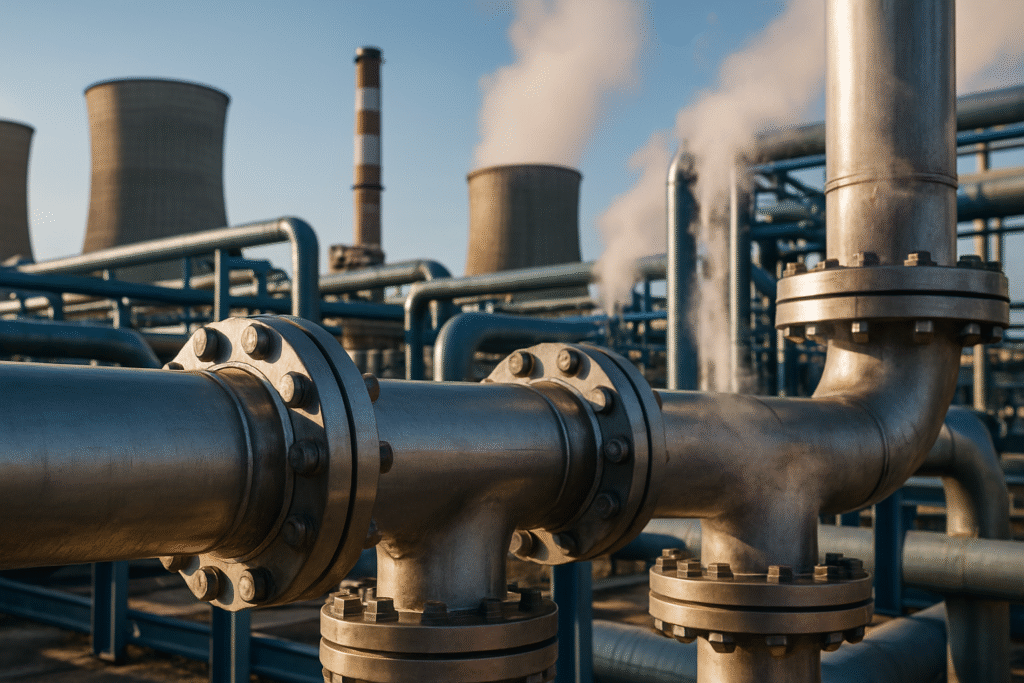
ステンレス鋼フランジの試験および準拠要件
グランドビューリサーチによると (2024), 世界の工業用フランジ市場は次のように評価されました。 $5.8 億で 2023 に達すると予測されています $7.2 10億まで 2030. That growth highlights why the stainless steel pipe flange has become a critical component for reliability, 腐食防止, and lifecycle cost management across industrial applications.
調達管理者および配管技術者向け, the real value is not only in material grade selection. It also lies in understanding the hidden advantages, 圧力定格, 規格への準拠, and manufacturing quality behind every flange used in demanding pipe systems.
Stainless Steel Pipe Flange Demand Is Rising Across Global Industrial Applications
IBISWorldによると (2024), アジア太平洋地域が占める割合は超過 45% 世界のフランジ生産量の, 中国が最大の製造国である. したがって, buyers increasingly evaluate not just product type, 工場の能力も, 輸出コンプライアンス, and supply chain resilience.
統計局によると (2024), 石油・ガス産業が約 35% 世界のフランジ消費量の. This concentration explains why stainless steel pipe flange procurement often prioritizes corrosion resistance, 圧力の完全性, and full traceability for upstream, 中流, and downstream applications.
さらに, stainless steel continues to gain share in projects where maintenance costs are under scrutiny. 結果として, engineers often choose 304, 316, and duplex grades for systems exposed to chlorides, 温度サイクル, or aggressive media.
Competitor pages in this segment often focus heavily on material lists. しかし, buyers usually need more practical guidance on pressure class, 対面タイプ, 寸法規格, 検査書類, and long-term service performance.
That gap matters because flange failure rarely comes from a single factor. 多くの場合, leakage or cracking results from a mismatch between material grade, ガスケットの選択, ボルト荷重, 腐食代, および動作温度.
モルドール情報局によると (2024), process industry capital spending remains strong in energy, 化学薬品, そして水インフラ. その結果, demand for stainless steel pipe flange assemblies is expanding in both replacement projects and new-build plants.
世界中のバイヤー向け, supplier qualification has become more technical. 彼らは望んでいます EN 10204 3.1 認証, PMI機能, hydrostatic or pneumatic test coordination, ASME への準拠, ASTM, DIN, JIS, ゴスト, and EN dimensional systems.
SASA FLANGE この環境では次のように動作します ISO 9001:2015 および PED 2014/68/EU 認証. 同社はステンレス鋼のフランジを製造しています, 炭素鋼フランジ, 合金フランジ, とパイプ継手 304, 316, 316l, 904l, 2205, 2507, A105, A182, インコネル, モネル, ハステロイ, およびチタングレード.
さらに, purchasing teams increasingly compare total installed cost instead of only unit price. A lower-cost flange can become expensive if machining tolerance, フェーシング仕上げ, or material verification is inconsistent.
マーケットリサーチの将来によると (2024), industrial flow-control and piping component demand is supported by expansion in water treatment and power generation. したがって, stainless steel pipe flange products are now specified well beyond traditional petrochemical use.
実務的には, this means buyers should assess more than the catalog description. They should review flange type, 呼び径, 圧力クラス, schedule compatibility, weld preparation, and end-user documentation before issuing a purchase order.
隠れた利点, 種類, and Uses of Stainless Steel Pipe Flange Systems
The hidden advantages of a stainless steel pipe flange are often economic as well as technical. Stainless grades can reduce unplanned shutdowns, support easier maintenance access, and maintain mechanical integrity in corrosive pipe services.
ジョン・ブリーン役, 上級配管エンジニア, 州: “Flange selection is never just about pressure class; it is about the interaction of metallurgy, ボルト締め, ガスケット応力, and service environment.” That observation reflects why engineered flange selection delivers better plant reliability than commodity-based purchasing.
According to ASTM material specifications such as ASTM A182, forged stainless flanges are widely used for high-pressure and high-temperature service (ASTM, 2024). 加えて, ASME B16.5 remains the primary dimensional standard for NPS 1/2 を通して 24, その間 ASME B16.47 より大きな直径をカバーします (ASME, 2023).
Different flange types serve different mechanical and operational purposes. したがって, understanding the main types helps buyers choose flanges that balance installation speed, 疲労耐性, およびメンテナンスのアクセシビリティ.
- 溶接ネックフランジ: 高圧に好ましい, 周期的な, or elevated-temperature service because the tapered hub reduces stress concentration.
- スリップオンフランジ: common in lower-pressure systems where easier alignment and lower initial cost matter.
- ブラインドフランジ: used to terminate a pipe line, valve outlet, or equipment nozzle for testing or future expansion.
- ソケットウェルドフランジ: suited for smaller bore, high-pressure lines where internal leakage paths must be minimized.
- ねじ付きフランジ: useful where welding is not practical, especially in utility or hazardous areas with installation constraints.
- 重ね継手フランジ: selected when frequent dismantling or alloy stub-end optimization improves maintenance economics.
The most common stainless grades each offer distinct performance advantages. 例えば, 304 and 304L provide broad corrosion resistance and good formability, その間 316 and 316L improve pitting resistance in chloride-bearing services.
過酷な環境向け, engineers often move to 904L, デュプレックス 2205, またはスーパーデュプレックス 2507. These grades improve resistance to pitting, 隙間腐食, and stress corrosion cracking in many offshore, 化学薬品, and seawater applications.
博士として. エレナ・モリス, 材料科学者, 州: “The correct stainless flange grade can extend service life by years, but only when the metallurgy matches the chloride level, 温度, and process chemistry.” That point is especially important in marine and petrochemical applications.
NACE ガイダンスによると, chloride concentration and temperature strongly influence stainless steel corrosion behavior in sour and saline environments (ネイス, 2023). したがって, 316L may perform well in mild plant water systems, while duplex grades are often chosen for offshore skids and desalination units.
Procurement teams also ask how to choose flanges by pressure class. 実際に, ASMEクラス 150, 300, 600, 900, 1500, そして 2500 ratings determine the pressure-temperature envelope, but the allowable service depends on material group and design temperature under ASME rules.
- Low to moderate pressure utility service often uses Class 150 または 300.
- Refining and process lines frequently specify Class 300 に 900.
- Critical high-pressure systems may require Class 1500 または 2500 with tighter QA controls.
Facing type also affects sealing performance. Raised face flanges are the most common for process plants, while ring type joint flanges are favored for high-pressure hydrocarbon service because they provide a metal-to-metal sealing configuration with RTJ gaskets.
表面仕上げ, ボルトトルク, and gasket compatibility are equally important. Even a premium stainless steel pipe flange can leak if the serration finish does not match gasket type or if bolt stress is not applied evenly.
According to ISO-aligned quality studies in industrial manufacturing, dimensional consistency and material traceability significantly reduce field rejection rates (ISO, 2023). 結果として, factory machining capability now matters as much as raw material origin.
高度な CNC 加工と包括的な品質テストに裏付けられています, SASA FLANGE からのカスタムサイズを提供します 1/2 インチから 60 競争力のある工場直販価格のインチ. The company supports oil and gas, 石油化学, 発電, 造船, 海洋, 水処理, and construction projects in more than 50 国.
Buyers looking at stainless steel flanges and fittings should also align the flange bore with the mating pipe schedule. A mismatch between Schedule 40, 80, or XXS wall thickness and flange bore can create flow disruption or welding complications.
したがって, technical review should include these details before order release.
- 材質グレードと熱処理条件.
- 適用規格など ASME B16.5, ASME B16.47, DIN, JIS, またはEN 1092.
- 圧力クラスまたはPN定格.
- RFなどのフェーシングタイプ, RTJ, またはFF.
- Bore to match pipe schedule.
- PMIを含む検査要件, ユタ州, PT, そして EN 10204 3.1 書類.
基準, コンプライアンス, and Testing Requirements for Stainless Steel Pipe Flange Supply
Standards compliance is one of the most important differentiators in B2B flange sourcing. Engineers need proof that dimensions, 材料化学, 圧力温度定格, and marking all align with project specifications.
ASME B16.5 寸法をカバーします, 公差, 圧力クラス, and marking for pipe flanges and flanged fittings from NPS 1/2 に 24. ASME B16.47 より大きな直径までカバー範囲を拡大, which is essential for tank farms, パイプライン, and major utility headers (ASME, 2023).
材料規格も同様に重要です. ASTM A182 commonly governs forged stainless and alloy steel flanges, その間 ASTM A240 applies to plate products used in some flange-related fabrication contexts (ASTM, 2024).
ヨーロッパのプロジェクトでは多くの場合、EN が必要です 1092 dimensional compliance and PED 2014/68/EU documentation. 対照的に, German or broader EU customers may also request AD 2000 alignment depending on end-use equipment classification.
For corrosion-sensitive service, specifications may also refer to NACE MR0175 または ISO 15156. These requirements matter where sour service or sulfide stress cracking risks affect metallurgy selection.
- ASME B16.5: flange dimensions and ratings for common sizes.
- ASME B16.47: larger diameter flange standards.
- ASTM A182: 鍛造または圧延合金およびステンレス鋼の管フランジ.
- ASME B16.9: factory-made wrought buttwelding fittings that often mate with flange systems.
- EN 1092: ヨーロッパのフランジ寸法と圧力指定.
- PED 2014/68/EU: regulatory compliance for pressure equipment in the EU.
Inspection and documentation are where many suppliers either build trust or lose it. したがって, serious buyers usually require positive material identification, 寸法検査, 視覚検査, marking verification, and full mill traceability.
Typical quality documents requested in industrial flange orders include the following.
- EN 10204 3.1 材料試験証明書.
- PMI reports for stainless, デュプレックス, およびニッケル合金.
- Hardness or ferrite measurements where applicable.
- Dimensional inspection reports for bore, 厚さ, and bolt circle accuracy.
- Surface finish verification for serrated raised face or RTJ groove profiles.
According to DNV guidance for marine and offshore components, documented material traceability and inspection control are critical for safety-related pressure parts (DNV, 2023). その結果, marine buyers often scrutinize marking, 腐食代, and certificate completeness before shipment approval.
There is also a commercial advantage to dealing with a supplier that understands both global and regional standards. A flange manufactured to ASME dimensions may not automatically satisfy EN project expectations unless the documentation and design basis are aligned from the start.
ASME publishes the principal dimensional framework used in many international projects. しかし, project specifications may also override default tolerances, テスト範囲, or marking details, so quote review should always include the final client datasheet.
と ISO 9001:2015, PED 2014/68/EU, とAD 2000 認証, SASA FLANGE supports documentation-driven procurement for export projects. The company also supplies elbows, ティー, 減速機, そしてその下のキャップ ASME B16.9, which helps buyers consolidate sourcing for complete pipe system packages.
In high-value orders, compliance should be verified before production starts. This approach reduces NCRs, shipping delays, and costly field modifications after the flanges arrive on site.
オイル用フランジの選び方, ガス, 化学薬品, 力, and Marine Pipe Systems
To choose flanges correctly, engineers must start with service conditions rather than catalog familiarity. 中くらい, 温度, プレッシャー, corrosion potential, assembly frequency, and inspection class all influence the right configuration.
石油およびガス用途, 316L の溶接ネック フランジ, デュプレックス 2205, or alloy grades are often selected for pressure cycling and corrosive fluids. 統計局によると (2024), 石油とガスは約 35% 世界のフランジ消費量の, so this sector strongly shapes design preferences.
For petrochemical units, stainless steel pipe flange assemblies are commonly specified where organic acids, 溶剤, or chloride-bearing streams threaten carbon steel performance. このような場合には, 316L or 904L may offer lower lifecycle cost despite a higher initial purchase price.
Power generation projects create a different selection challenge. サーマルサイクリング, スチームサービス, and larger nominal diameters often push buyers toward stronger forged materials, precise machining, and tighter dimensional control.
Marine and shipbuilding applications demand close attention to salt exposure and crevice corrosion. したがって, 316l, デュプレックス 2205, そしてスーパーデュプレックス 2507 are regularly evaluated for ballast, 海水, 防火水, および淡水化システム.
Water treatment plants also benefit from stainless solutions, especially where chloride content, disinfection chemicals, or maintenance access matter. さらに, corrosion-resistant flanges can reduce leakage risk and support cleaner long-term operation.
These selection criteria help procurement teams compare options more accurately.
- Material grade based on corrosion mechanism and media composition.
- Pressure class or PN rating based on design pressure and temperature.
- Flange type based on welding method, メンテナンスの必要性, and pipe stress.
- Facing type based on gasket compatibility and leak-tightness requirement.
- Size and bore based on nominal pipe size and schedule.
- Certification and testing based on project specification and destination market.
- Lead time and lot traceability based on shutdown or construction schedule.
A practical example illustrates the difference. あ 4 インチのステンレス鋼管フランジ 304 may be acceptable for general water service, but the same size in offshore chloride exposure could require 316L or 2205 to avoid premature corrosion.
同じく, stainless steel threaded pipe flange products may suit utility systems where welding is difficult. しかし, for vibration-prone or high-temperature lines, weld neck or socket weld configurations generally provide better structural integrity.
マイケル・トレント役, 産業市場アナリスト, 州: “Procurement performance improves when buyers compare total cost of ownership rather than headline price per flange.” That means freight, テスト, ドキュメント, rework risk, and service life all belong in the buying decision.
グランドビューリサーチによると (2024), industrial infrastructure expansion continues to support long-term demand for critical piping components. したがって, buyers should build qualified supplier relationships before urgent outages or project peaks occur.
カスタムプロジェクトの場合, dimensional flexibility can be decisive. SASA FLANGE manufactures standard and non-standard flanges in stainless steel, 炭素鋼, 合金鋼, および特殊合金, supporting custom drawings, 特殊な穴あけ, and multiple facing configurations.
That flexibility is especially useful when a project combines ASME lines with DIN or EN equipment nozzles. Instead of forcing field adaptation, buyers can source application-specific flanges that simplify fit-up and reduce installation labor.
さらに, factory coordination between flanges and fittings creates procurement efficiency. Buyers can combine elbows, ティー, 減速機, キャップ, and matching flanges into one quality-controlled package, which reduces vendor management complexity.
ステンレス鋼管フランジ調達の今後の見通しと戦略的な購入の提案
The market outlook remains positive as industrial investment continues in energy, 化学薬品, 脱塩, とインフラストラクチャ. グランドビューリサーチによると (2024), the flange market is projected to reach $7.2 10億まで 2030, indicating stable long-term demand.
さらに, buyers are moving toward higher-specification procurement. Instead of ordering only by generic description, they increasingly request alloy verification, project-specific documentation, and manufacturer quality records.
Digital procurement is also changing buyer behavior. Engineers now expect quick access to drawings, pressure class information, MTC support, and response time that matches shutdown schedules.
結果として, suppliers that combine technical support with manufacturing discipline will win more global projects. This is especially true for stainless steel pipe flange orders tied to export documentation, PED の要件, or offshore service conditions.
戦略的に, 購入者は4つのアクションを取る必要があります. 初め, standardize approved grades for recurring applications so replacement purchases are faster and more consistent.
2番, verify standards and documentation during quotation review rather than after production. 三番目, compare total installed cost, not just ex-works unit price.
4番目, qualify suppliers that can support both standard and custom requirements across flanges and fittings. 必要なプロジェクトの場合 304, 316, 904l, 2205, 2507, またはニッケル合金溶液, 一緒に働く SASA FLANGE helps procurement teams secure factory-direct supply backed by advanced machining, 検査管理, and export-ready certification.
よくある質問
どちらが良いですか 304 または 420 ステンレス鋼?
●304 stainless steel is generally better for stainless steel pipe flange applications because it offers stronger corrosion resistance and broader industrial process compatibility than 420.
●According to ASTM and common industrial material practice, 420 is a martensitic stainless grade valued for hardness, その間 304 is an austenitic grade preferred for weldability, 靭性, and corrosion performance in pipe systems.
●For flange service, エンジニアは通常選択します 304 or 304L for general chemical, 水, and food-related applications, 一方 420 is more common in tools, blades, and wear components than pressure-retaining flanges.
ステンレス鋼フランジの ASME コードとは何ですか?
●The main ASME dimensional code for stainless steel pipe flange products is ASME B16.5 NPS向け 1/2 を通して 24 そして ASME B16.47 大きいサイズ用.
●ASTM A182 commonly covers forged stainless flange material requirements, while pressure-temperature ratings and dimensions are controlled by the applicable ASME standard.
●Buyers should confirm both the ASME dimensional code and the ASTM material specification on every RFQ to avoid mismatched manufacturing, 検査, or documentation.
ステンレス鋼フランジは何に使用されますか?
●パイプの接続にはステンレス製のフランジが使用されます, バルブ, パンプス, and equipment nozzles in systems that require strength, 耐食性, メンテナンス可能なジョイント.
●統計局によると (2024), 石油とガスは約 35% 世界のフランジ消費量の, but stainless flanges are also widely used in petrochemical, 海洋, 水処理, および電源アプリケーション.
●For chloride exposure, hygiene-sensitive service, or high-maintenance environments, stainless flange systems often provide better lifecycle value than carbon steel alternatives.
3種類のフランジとは何ですか?
●最も一般的に参照される 3 つのフランジ タイプは溶接ネックです。, スリッポン, ブラインドフランジ, although many plants also use threaded, ソケット溶接, およびラップジョイントの設計.
●Weld neck flanges suit high-pressure and high-temperature service, slip-on flanges support easier installation in lower-pressure systems, and blind flanges close the end of a line or nozzle.
●Selection should always match the pipe schedule, 圧力クラス, ガスケットの配置, and maintenance condition rather than relying only on price.
ステンレス鋼管フランジの価格に影響を与えるもの?
●ステンレス鋼管フランジの価格は主に合金グレードによって異なります, サイズ, 圧力クラス, 対面タイプ, テスト範囲, および認定要件.
●グランドビューリサーチによると (2024), 産業用フランジ市場に到達 $5.8 億で 2023, and that scale reflects ongoing demand pressure on raw materials, 加工能力, and supply lead times.
●オファーを正確に比較するには, buyers should request a clear quotation covering material origin, EN 10204 3.1 認証, 検査, パッキング, and delivery terms.
How do I choose the right flange diameter and size?
●Flange diameter and size must match the nominal pipe size, 壁のスケジュール, 圧力クラス, などの寸法規格 ASME B16.5 またはEN 1092.
●あ 4 インチステンレス鋼管フランジ, 例えば, can vary in bore and outside dimensions depending on schedule, 圧力定格, and facing design.
●重要なプロジェクトの場合, buyers should send the pipe specification, 設計圧力, and drawing to an experienced manufacturer like SASA FLANGE to confirm fit-up before production.
関連投稿

オリフィスフランジの定義, 詳細と ASME B16.36 フランジの概要: 市場データ, 選択ガイドとコンプライアンスに関する洞察
世界の工業用フランジ市場は次のように評価されました。 $5.8 十億…

ブラックディスポフランジ市場ガイド: 材料, 3.5″ 互換性, キッチン シンク フランジの B2B 調達データ
キッチン設備の購入者として黒色の使い捨てフランジの需要が高まっています…