
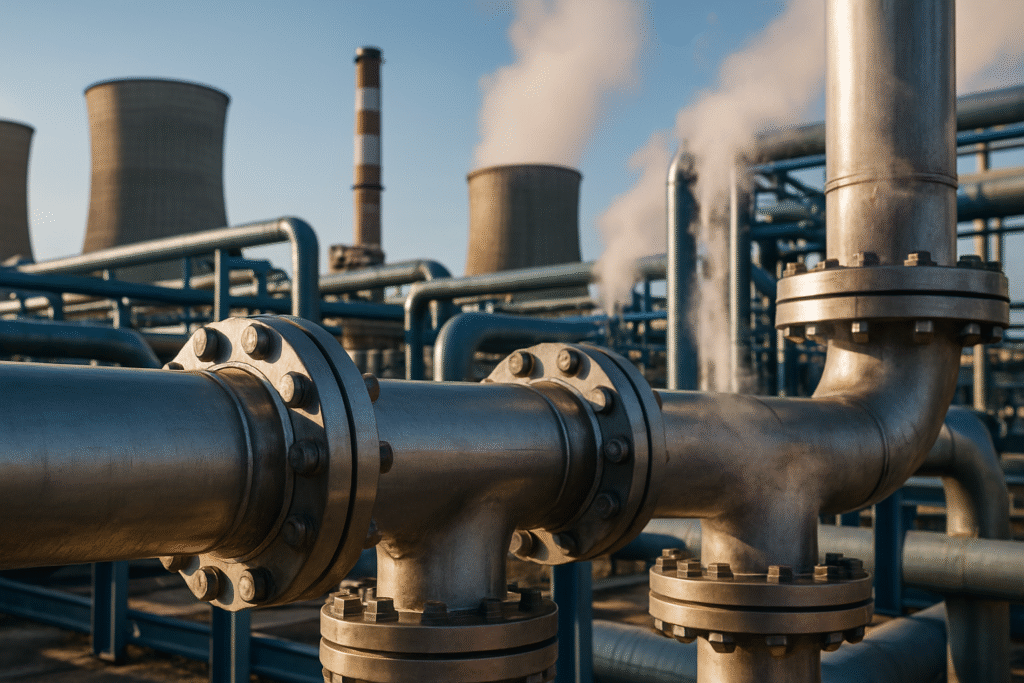
ข้อกำหนดการทดสอบและการปฏิบัติตามข้อกำหนดของหน้าแปลนสแตนเลส
จากการวิจัยของแกรนด์วิว (2024), ตลาดหน้าแปลนอุตสาหกรรมทั่วโลกมีมูลค่าอยู่ที่ $5.8 พันล้านใน 2023 และคาดว่าจะไปถึง $7.2 พันล้านโดย 2030. That growth highlights why the stainless steel pipe flange has become a critical component for reliability, การควบคุมการกัดกร่อน, and lifecycle cost management across industrial applications.
สำหรับผู้จัดการฝ่ายจัดซื้อและวิศวกรระบบท่อ, the real value is not only in material grade selection. It also lies in understanding the hidden advantages, การจัดอันดับความดัน, การปฏิบัติตามมาตรฐาน, and manufacturing quality behind every flange used in demanding pipe systems.
Stainless Steel Pipe Flange Demand Is Rising Across Global Industrial Applications
อ้างอิงจาก IBISWorld (2024), บัญชีเอเชียแปซิฟิกมีมากกว่า 45% ของการผลิตหน้าแปลนทั่วโลก, โดยจีนเป็นผู้ผลิตรายใหญ่ที่สุด. ดังนั้น, buyers increasingly evaluate not just product type, แต่ยังรวมถึงความสามารถของโรงงานด้วย, การปฏิบัติตามการส่งออก, and supply chain resilience.
ตามสถิติของสตาติสต้า (2024), อุตสาหกรรมน้ำมันและก๊าซมีสัดส่วนประมาณ 35% ของการบริโภคหน้าแปลนทั่วโลก. This concentration explains why stainless steel pipe flange procurement often prioritizes corrosion resistance, ความสมบูรณ์ของความดัน, and full traceability for upstream, กลางน้ำ, and downstream applications.
นอกจากนี้, stainless steel continues to gain share in projects where maintenance costs are under scrutiny. ส่งผลให้, engineers often choose 304, 316, and duplex grades for systems exposed to chlorides, การปั่นจักรยานตามอุณหภูมิ, or aggressive media.
Competitor pages in this segment often focus heavily on material lists. อย่างไรก็ตาม, buyers usually need more practical guidance on pressure class, หันหน้าไปทางประเภท, มาตรฐานมิติ, เอกสารการตรวจสอบ, and long-term service performance.
That gap matters because flange failure rarely comes from a single factor. ในหลายกรณี, leakage or cracking results from a mismatch between material grade, การเลือกปะเก็น, โหลดโบลต์, ค่าเผื่อการกัดกร่อน, และอุณหภูมิในการทำงาน.
ตามข้อมูลของ Mordor Intelligence (2024), process industry capital spending remains strong in energy, สารเคมี, และโครงสร้างพื้นฐานด้านน้ำ. เพราะเหตุนี้, demand for stainless steel pipe flange assemblies is expanding in both replacement projects and new-build plants.
สำหรับผู้ซื้อทั่วโลก, supplier qualification has become more technical. พวกเขาต้องการ EN 10204 3.1 การรับรอง, ความสามารถของพีเอ็มไอ, hydrostatic or pneumatic test coordination, และการปฏิบัติตาม ASME, ASTM, DIN, JIS, GOST, and EN dimensional systems.
SASA FLANGE ดำเนินงานในสภาพแวดล้อมนี้ด้วย ISO 9001:2015 และการรับรอง PED 2014/68/EU. ทางบริษัทผลิตหน้าแปลนสแตนเลส, หน้าแปลนเหล็กคาร์บอน, หน้าแปลนโลหะผสม, และข้อต่อท่อเข้า 304, 316, 316ล, 904ล, 2205, 2507, A105, A182, อินโคเนล, โมเนล, ฮาสเตลลอย, และเกรดไทเทเนียม.
นอกจากนี้, purchasing teams increasingly compare total installed cost instead of only unit price. A lower-cost flange can become expensive if machining tolerance, หันหน้าไปทางจบ, or material verification is inconsistent.
ตามการวิจัยตลาดอนาคต (2024), industrial flow-control and piping component demand is supported by expansion in water treatment and power generation. ดังนั้น, stainless steel pipe flange products are now specified well beyond traditional petrochemical use.
ในแง่การปฏิบัติ, this means buyers should assess more than the catalog description. They should review flange type, ขนาดที่กำหนด, ระดับความดัน, ความเข้ากันได้ของกำหนดการ, การเตรียมการเชื่อม, and end-user documentation before issuing a purchase order.
ข้อดีที่ซ่อนอยู่, ประเภท, and Uses of Stainless Steel Pipe Flange Systems
The hidden advantages of a stainless steel pipe flange are often economic as well as technical. Stainless grades can reduce unplanned shutdowns, support easier maintenance access, and maintain mechanical integrity in corrosive pipe services.
ดังเช่นจอห์น บรีน, วิศวกรท่ออาวุโส, รัฐ: “Flange selection is never just about pressure class; it is about the interaction of metallurgy, การโบลต์, ความเครียดของปะเก็น, และสภาพแวดล้อมการบริการ” That observation reflects why engineered flange selection delivers better plant reliability than commodity-based purchasing.
According to ASTM material specifications such as ASTM A182, forged stainless flanges are widely used for high-pressure and high-temperature service (ASTM, 2024). นอกจากนี้, ASME B16.5 remains the primary dimensional standard for NPS 1/2 ผ่าน 24, ในขณะที่ ASME B16.47 ครอบคลุมเส้นผ่านศูนย์กลางที่ใหญ่กว่า (ASME, 2023).
Different flange types serve different mechanical and operational purposes. ดังนั้น, understanding the main types helps buyers choose flanges that balance installation speed, ต้านทานความเหนื่อยล้า, และการเข้าถึงการบำรุงรักษา.
- หน้าแปลนคอเชื่อม: เหมาะสำหรับแรงดันสูง, วงจร, or elevated-temperature service because the tapered hub reduces stress concentration.
- หน้าแปลนแบบสลิปออน: common in lower-pressure systems where easier alignment and lower initial cost matter.
- หน้าแปลนตาบอด: used to terminate a pipe line, valve outlet, or equipment nozzle for testing or future expansion.
- หน้าแปลนเชื่อมซ็อกเก็ต: suited for smaller bore, high-pressure lines where internal leakage paths must be minimized.
- หน้าแปลนเกลียว: useful where welding is not practical, especially in utility or hazardous areas with installation constraints.
- หน้าแปลนร่วมตัก: selected when frequent dismantling or alloy stub-end optimization improves maintenance economics.
The most common stainless grades each offer distinct performance advantages. ตัวอย่างเช่น, 304 and 304L provide broad corrosion resistance and good formability, ในขณะที่ 316 and 316L improve pitting resistance in chloride-bearing services.
For severe environments, วิศวกรมักจะย้ายไปที่ 904L, ดูเพล็กซ์ 2205, หรือซูเปอร์ดูเพล็กซ์ 2507. These grades improve resistance to pitting, การกัดกร่อนของรอยแยก, and stress corrosion cracking in many offshore, เคมี, and seawater applications.
ในฐานะดร. เอเลนา มอร์ริส, นักวิทยาศาสตร์วัสดุ, รัฐ: “The correct stainless flange grade can extend service life by years, but only when the metallurgy matches the chloride level, อุณหภูมิ, and process chemistry.” That point is especially important in marine and petrochemical applications.
ตามคำแนะนำของ NACE, chloride concentration and temperature strongly influence stainless steel corrosion behavior in sour and saline environments (เนซ, 2023). ดังนั้น, 316L may perform well in mild plant water systems, while duplex grades are often chosen for offshore skids and desalination units.
Procurement teams also ask how to choose flanges by pressure class. ในทางปฏิบัติ, คลาส ASME 150, 300, 600, 900, 1500, และ 2500 ratings determine the pressure-temperature envelope, but the allowable service depends on material group and design temperature under ASME rules.
- Low to moderate pressure utility service often uses Class 150 หรือ 300.
- Refining and process lines frequently specify Class 300 ถึง 900.
- Critical high-pressure systems may require Class 1500 หรือ 2500 with tighter QA controls.
Facing type also affects sealing performance. Raised face flanges are the most common for process plants, while ring type joint flanges are favored for high-pressure hydrocarbon service because they provide a metal-to-metal sealing configuration with RTJ gaskets.
การตกแต่งพื้นผิว, แรงบิดของสายฟ้า, and gasket compatibility are equally important. Even a premium stainless steel pipe flange can leak if the serration finish does not match gasket type or if bolt stress is not applied evenly.
According to ISO-aligned quality studies in industrial manufacturing, dimensional consistency and material traceability significantly reduce field rejection rates (ISO, 2023). ส่งผลให้, factory machining capability now matters as much as raw material origin.
ได้รับการสนับสนุนจากเครื่องจักร CNC ขั้นสูงและการทดสอบคุณภาพที่ครอบคลุม, SASA FLANGE เสนอขนาดที่กำหนดเองจาก 1/2 นิ้วถึง 60 นิ้วด้วยราคาที่แข่งขันได้จากโรงงานโดยตรง. The company supports oil and gas, ปิโตรเคมี, การผลิตกระแสไฟฟ้า, การต่อเรือ, ทะเล, การบำบัดน้ำ, and construction projects in more than 50 ประเทศ.
Buyers looking at stainless steel flanges and fittings should also align the flange bore with the mating pipe schedule. A mismatch between Schedule 40, 80, or XXS wall thickness and flange bore can create flow disruption or welding complications.
ดังนั้น, technical review should include these details before order release.
- เกรดวัสดุและสภาวะการรักษาความร้อน.
- มาตรฐานที่ใช้บังคับเช่น ASME B16.5, ASME B16.47, DIN, JIS, หรือภาษาอังกฤษ 1092.
- ระดับแรงดันหรือพิกัด PN.
- ประเภทการหันหน้า เช่น RF, RTJ, หรือเอฟเอฟ.
- Bore to match pipe schedule.
- ข้อกำหนดการตรวจสอบรวมถึง PMI, ยูทาห์, ปตท, และ EN 10204 3.1 เอกสาร.
มาตรฐาน, การปฏิบัติตาม, and Testing Requirements for Stainless Steel Pipe Flange Supply
Standards compliance is one of the most important differentiators in B2B flange sourcing. Engineers need proof that dimensions, เคมีวัสดุ, ระดับความดันอุณหภูมิ, and marking all align with project specifications.
ASME B16.5 ครอบคลุมมิติข้อมูล, ความคลาดเคลื่อน, คลาสความดัน, and marking for pipe flanges and flanged fittings from NPS 1/2 ถึง 24. ASME B16.47 ขยายการครอบคลุมไปยังเส้นผ่านศูนย์กลางที่ใหญ่ขึ้น, which is essential for tank farms, ท่อ, and major utility headers (ASME, 2023).
มาตรฐานวัสดุก็มีความสำคัญไม่แพ้กัน. ASTM A182 โดยทั่วไปจะควบคุมหน้าแปลนเหล็กสแตนเลสและโลหะผสมปลอมแปลง, ในขณะที่ ASTM A240 applies to plate products used in some flange-related fabrication contexts (ASTM, 2024).
โครงการในยุโรปมักต้องมี EN 1092 dimensional compliance and PED 2014/68/EU documentation. ในทางตรงกันข้าม, German or broader EU customers may also request AD 2000 alignment depending on end-use equipment classification.
For corrosion-sensitive service, specifications may also refer to NACE MR0175 หรือ ISO 15156. These requirements matter where sour service or sulfide stress cracking risks affect metallurgy selection.
- ASME B16.5: flange dimensions and ratings for common sizes.
- ASME B16.47: larger diameter flange standards.
- ASTM A182: โลหะผสมปลอมแปลงหรือรีดและหน้าแปลนท่อสแตนเลส.
- ASME B16.9: factory-made wrought buttwelding fittings that often mate with flange systems.
- EN 1092: ขนาดหน้าแปลนยุโรปและการกำหนดแรงดัน.
- พีอีดี 2014/68/สหภาพยุโรป: regulatory compliance for pressure equipment in the EU.
Inspection and documentation are where many suppliers either build trust or lose it. ดังนั้น, serious buyers usually require positive material identification, การตรวจสอบมิติ, visual examination, marking verification, and full mill traceability.
Typical quality documents requested in industrial flange orders include the following.
- EN 10204 3.1 ใบรับรองการทดสอบวัสดุ.
- PMI reports for stainless, ดูเพล็กซ์, และโลหะผสมนิกเกิล.
- Hardness or ferrite measurements where applicable.
- Dimensional inspection reports for bore, ความหนา, and bolt circle accuracy.
- Surface finish verification for serrated raised face or RTJ groove profiles.
ตามคำแนะนำของ DNV สำหรับส่วนประกอบทางทะเลและนอกชายฝั่ง, documented material traceability and inspection control are critical for safety-related pressure parts (ดีเอ็นวี, 2023). เพราะเหตุนี้, marine buyers often scrutinize marking, ค่าเผื่อการกัดกร่อน, and certificate completeness before shipment approval.
There is also a commercial advantage to dealing with a supplier that understands both global and regional standards. A flange manufactured to ASME dimensions may not automatically satisfy EN project expectations unless the documentation and design basis are aligned from the start.
ASME publishes the principal dimensional framework used in many international projects. อย่างไรก็ตาม, project specifications may also override default tolerances, ขอบเขตการทดสอบ, or marking details, so quote review should always include the final client datasheet.
กับ ISO 9001:2015, พีอีดี 2014/68/สหภาพยุโรป, และโฆษณา 2000 การรับรอง, SASA FLANGE supports documentation-driven procurement for export projects. ทางบริษัทยังจัดหาข้อศอกให้อีกด้วย, เสื้อยืด, ตัวลด, และหมวกด้านล่าง ASME B16.9, which helps buyers consolidate sourcing for complete pipe system packages.
In high-value orders, compliance should be verified before production starts. This approach reduces NCRs, shipping delays, and costly field modifications after the flanges arrive on site.
วิธีการเลือกหน้าแปลนสำหรับน้ำมัน, แก๊ส, เคมี, พลัง, และระบบท่อทางทะเล
To choose flanges correctly, engineers must start with service conditions rather than catalog familiarity. ปานกลาง, อุณหภูมิ, ความดัน, corrosion potential, assembly frequency, and inspection class all influence the right configuration.
ในการใช้งานน้ำมันและก๊าซ, หน้าแปลนคอเชื่อมใน 316L, ดูเพล็กซ์ 2205, or alloy grades are often selected for pressure cycling and corrosive fluids. ตามสถิติของสตาติสต้า (2024), น้ำมันและก๊าซเป็นตัวแทนของ 35% ของการบริโภคหน้าแปลนทั่วโลก, so this sector strongly shapes design preferences.
For petrochemical units, stainless steel pipe flange assemblies are commonly specified where organic acids, ตัวทำละลาย, or chloride-bearing streams threaten carbon steel performance. ในกรณีเหล่านี้, 316L or 904L may offer lower lifecycle cost despite a higher initial purchase price.
Power generation projects create a different selection challenge. การปั่นจักรยานด้วยความร้อน, บริการอบไอน้ำ, and larger nominal diameters often push buyers toward stronger forged materials, precise machining, and tighter dimensional control.
Marine and shipbuilding applications demand close attention to salt exposure and crevice corrosion. ดังนั้น, 316ล, ดูเพล็กซ์ 2205, และซูเปอร์ดูเพล็กซ์ 2507 are regularly evaluated for ballast, น้ำทะเล, สุรา, และระบบแยกเกลือ.
Water treatment plants also benefit from stainless solutions, especially where chloride content, disinfection chemicals, or maintenance access matter. นอกจากนี้, corrosion-resistant flanges can reduce leakage risk and support cleaner long-term operation.
These selection criteria help procurement teams compare options more accurately.
- Material grade based on corrosion mechanism and media composition.
- Pressure class or PN rating based on design pressure and temperature.
- Flange type based on welding method, ความต้องการการบำรุงรักษา, and pipe stress.
- Facing type based on gasket compatibility and leak-tightness requirement.
- Size and bore based on nominal pipe size and schedule.
- Certification and testing based on project specification and destination market.
- Lead time and lot traceability based on shutdown or construction schedule.
A practical example illustrates the difference. ก 4 นิ้วหน้าแปลนท่อสแตนเลสใน 304 may be acceptable for general water service, but the same size in offshore chloride exposure could require 316L or 2205 to avoid premature corrosion.
เช่นเดียวกัน, stainless steel threaded pipe flange products may suit utility systems where welding is difficult. อย่างไรก็ตาม, for vibration-prone or high-temperature lines, weld neck or socket weld configurations generally provide better structural integrity.
ดังเช่นไมเคิล เทรนท์, นักวิเคราะห์ตลาดอุตสาหกรรม, รัฐ: “Procurement performance improves when buyers compare total cost of ownership rather than headline price per flange.” That means freight, การทดสอบ, เอกสารประกอบ, ความเสี่ยงในการทำงานซ้ำ, and service life all belong in the buying decision.
จากการวิจัยของแกรนด์วิว (2024), industrial infrastructure expansion continues to support long-term demand for critical piping components. ดังนั้น, buyers should build qualified supplier relationships before urgent outages or project peaks occur.
สำหรับโครงการที่กำหนดเอง, dimensional flexibility can be decisive. SASA FLANGE manufactures standard and non-standard flanges in stainless steel, เหล็กกล้าคาร์บอน, โลหะผสมเหล็ก, and special alloys, supporting custom drawings, การขุดเจาะพิเศษ, and multiple facing configurations.
That flexibility is especially useful when a project combines ASME lines with DIN or EN equipment nozzles. Instead of forcing field adaptation, buyers can source application-specific flanges that simplify fit-up and reduce installation labor.
นอกจากนี้, factory coordination between flanges and fittings creates procurement efficiency. Buyers can combine elbows, เสื้อยืด, ตัวลด, หมวกแก๊ป, and matching flanges into one quality-controlled package, which reduces vendor management complexity.
แนวโน้มในอนาคตสำหรับการจัดหาหน้าแปลนท่อสแตนเลสและคำแนะนำในการซื้อเชิงกลยุทธ์
The market outlook remains positive as industrial investment continues in energy, สารเคมี, การแยกเกลือออกจากน้ำ, และโครงสร้างพื้นฐาน. จากการวิจัยของแกรนด์วิว (2024), the flange market is projected to reach $7.2 พันล้านโดย 2030, indicating stable long-term demand.
นอกจากนี้, buyers are moving toward higher-specification procurement. Instead of ordering only by generic description, they increasingly request alloy verification, project-specific documentation, and manufacturer quality records.
Digital procurement is also changing buyer behavior. Engineers now expect quick access to drawings, pressure class information, MTC support, and response time that matches shutdown schedules.
ส่งผลให้, suppliers that combine technical support with manufacturing discipline will win more global projects. This is especially true for stainless steel pipe flange orders tied to export documentation, ข้อกำหนดพีอีดี, or offshore service conditions.
อย่างมีกลยุทธ์, ผู้ซื้อควรดำเนินการสี่ประการ. อันดับแรก, standardize approved grades for recurring applications so replacement purchases are faster and more consistent.
ที่สอง, verify standards and documentation during quotation review rather than after production. ที่สาม, compare total installed cost, not just ex-works unit price.
ที่สี่, qualify suppliers that can support both standard and custom requirements across flanges and fittings. สำหรับโครงการที่ต้องการ 304, 316, 904ล, 2205, 2507, หรือสารละลายโลหะผสมนิกเกิล, ทำงานกับ SASA FLANGE helps procurement teams secure factory-direct supply backed by advanced machining, การควบคุมการตรวจสอบ, and export-ready certification.
คำถามที่พบบ่อย
ซึ่งจะดีกว่า 304 หรือ 420 สแตนเลส?
●304 stainless steel is generally better for stainless steel pipe flange applications because it offers stronger corrosion resistance and broader industrial process compatibility than 420.
●According to ASTM and common industrial material practice, 420 is a martensitic stainless grade valued for hardness, ในขณะที่ 304 is an austenitic grade preferred for weldability, ความเหนียว, and corrosion performance in pipe systems.
●สำหรับบริการแปลน, วิศวกรมักจะเลือก 304 or 304L for general chemical, น้ำ, and food-related applications, ในทางตรงกันข้าม 420 is more common in tools, ใบมีด, and wear components than pressure-retaining flanges.
รหัส ASME สำหรับหน้าแปลนสแตนเลสคืออะไร?
●รหัสมิติ ASME หลักสำหรับผลิตภัณฑ์หน้าแปลนท่อสแตนเลสคือ ASME B16.5 สำหรับกรมอุทยานฯ 1/2 ผ่าน 24 และ ASME B16.47 สำหรับขนาดที่ใหญ่ขึ้น.
●ASTM A182 commonly covers forged stainless flange material requirements, while pressure-temperature ratings and dimensions are controlled by the applicable ASME standard.
●Buyers should confirm both the ASME dimensional code and the ASTM material specification on every RFQ to avoid mismatched manufacturing, การตรวจสอบ, or documentation.
หน้าแปลนสแตนเลสใช้ทำอะไร?
●หน้าแปลนสแตนเลสใช้สำหรับเชื่อมต่อท่อ, วาล์ว, ปั๊ม, and equipment nozzles in systems that require strength, ความต้านทานการกัดกร่อน, and maintainable joints.
●ตามสถิติของสตาติสต้า (2024), น้ำมันและก๊าซคิดเป็นประมาณ 35% ของการบริโภคหน้าแปลนทั่วโลก, but stainless flanges are also widely used in petrochemical, ทะเล, การบำบัดน้ำ, และการประยุกต์ใช้พลังงาน.
●สำหรับการสัมผัสคลอไรด์, hygiene-sensitive service, or high-maintenance environments, stainless flange systems often provide better lifecycle value than carbon steel alternatives.
หน้าแปลนสามประเภทคืออะไร?
●ประเภทหน้าแปลนที่ใช้อ้างอิงกันมากที่สุดสามประเภทคือคอเชื่อม, ลื่นบน, และหน้าแปลนตาบอด, although many plants also use threaded, เชื่อมซ็อกเก็ต, และการออกแบบข้อต่อตัก.
●Weld neck flanges suit high-pressure and high-temperature service, slip-on flanges support easier installation in lower-pressure systems, และหน้าแปลนปิดปลายเส้นหรือหัวฉีด.
●Selection should always match the pipe schedule, ระดับความดัน, gasket arrangement, and maintenance condition rather than relying only on price.
สิ่งที่ส่งผลต่อราคาหน้าแปลนท่อสแตนเลส?
●ราคาหน้าแปลนท่อสแตนเลสขึ้นอยู่กับเกรดโลหะผสมเป็นหลัก, ขนาด, ระดับความดัน, หันหน้าไปทางประเภท, ขอบเขตการทดสอบ, และข้อกำหนดการรับรอง.
●จากการวิจัยของแกรนด์วิว (2024), ถึงตลาดหน้าแปลนอุตสาหกรรมแล้ว $5.8 พันล้านใน 2023, and that scale reflects ongoing demand pressure on raw materials, กำลังการผลิตเครื่องจักร, and supply lead times.
●เพื่อเปรียบเทียบข้อเสนอได้อย่างแม่นยำ, buyers should request a clear quotation covering material origin, EN 10204 3.1 การรับรอง, การตรวจสอบ, การบรรจุ, and delivery terms.
How do I choose the right flange diameter and size?
●Flange diameter and size must match the nominal pipe size, กำหนดการติดผนัง, ระดับความดัน, และมาตรฐานมิติเช่น ASME B16.5 หรือภาษาอังกฤษ 1092.
●ก 4 หน้าแปลนท่อสแตนเลสนิ้ว, ตัวอย่างเช่น, can vary in bore and outside dimensions depending on schedule, ระดับความดัน, and facing design.
●สำหรับโครงการที่สำคัญ, buyers should send the pipe specification, แรงกดดันในการออกแบบ, and drawing to an experienced manufacturer like SASA FLANGE to confirm fit-up before production.
โพสต์ที่เกี่ยวข้อง
หน้าแปลนเสร็จสิ้น: อธิบาย Serrations แบบศูนย์กลางและแบบเกลียว
ฟันปลาแบบศูนย์กลางและแบบเกลียวมีทั้งการตกแต่งผิวหน้าแปลนด้วยเครื่องจักร…
ดูเพล็กซ์ 2205 เทียบกับหน้าแปลน 316L: คุณควรเลือกวัสดุใด?
ตอบด่วน: ดูเพล็กซ์ 2205 หน้าแปลนมักจะเป็นตัวเลือกที่แข็งแกร่งกว่า…

คำจำกัดความหน้าแปลนปาก, รายละเอียดและภาพรวมหน้าแปลน ASME B16.36: ข้อมูลการตลาด, คู่มือการคัดเลือกและข้อมูลเชิงลึกด้านการปฏิบัติตามข้อกำหนด
ตลาดหน้าแปลนอุตสาหกรรมทั่วโลกมีมูลค่าอยู่ที่ $5.8 พันล้าน…

คู่มือการตลาดหน้าแปลนการกำจัดสีดำ: วัสดุ, 3.5″ ความเข้ากันได้, และการจัดหาข้อมูล B2B สำหรับหน้าแปลนอ่างล้างจาน
ความต้องการหน้าแปลนกำจัดสีดำเพิ่มขึ้นเนื่องจากผู้ซื้ออุปกรณ์ติดตั้งในครัว…