
Description
Traceable alloy butt-weld fitting
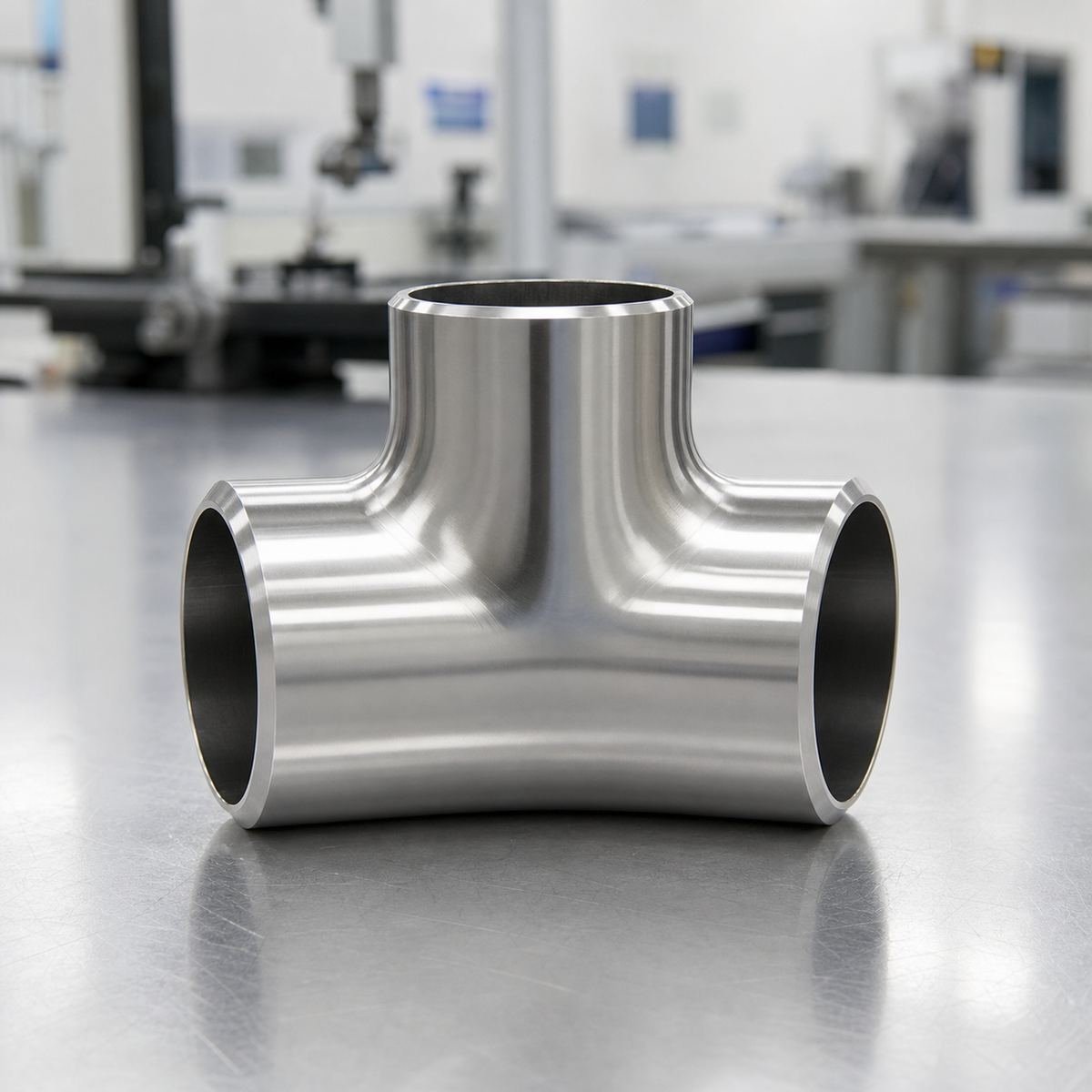
ASTM B366 Alloy 20 Reducing Tee
A procurement-ready reducing butt-weld tee in ASTM B366/B366M, UNS N08020 iron-nickel-chromium-molybdenum-copper alloy, supplied for sulfuric-acid, chemical, fertilizer and pharmaceutical service with project-defined dimensions, wall, construction and inspection.
What is a Alloy 20 reducing tee?
A reducing tee divides or combines flow through a 90-degree branch smaller than the main run. It reduces the need for a separate equal tee and reducer while retaining a compact factory-made branch connection.
Alloy 20 is the common commercial name for UNS N08020. It is considered in sulfuric-acid processing, fertilizer, chemical and pharmaceutical systems where its corrosion performance is verified for the actual concentration and temperature.
Technical specification
| Product type | Reducing butt-weld tee |
|---|---|
| Material | ASTM B366/B366M, UNS N08020 iron-nickel-chromium-molybdenum-copper alloy |
| Material family | Iron-nickel-chromium-molybdenum-copper alloy |
| Dimensional basis | ASME B16.9 for standard run/branch combinations |
| Configuration | Equal run × equal run × smaller 90-degree branch |
| Nominal size | Standard run × reduced-branch combinations; special combinations subject to drawing review |
| Wall thickness | Standard schedules, heavy wall and project-specific wall subject to manufacturing review |
| Construction | Seamless or welded as applicable, ordered and permitted by the material class |
| End preparation | Butt-weld bevel matched to connecting pipe wall and approved welding detail |
| Heat treatment | Solution treatment and final condition as required by ASTM B366 and the ordered class |
| Documentation | EN 10204 3.1 MTC, heat traceability, PMI, dimensions and additional NDE as ordered |
Available size and wall combinations depend on alloy, forming route, construction and quantity. Confirm the exact pipe outside diameter and wall in the RFQ.
Standards and technical references
Dimensional standard
ASME B16.9 covers standard factory-made wrought butt-weld reducing-tee dimensions, tolerances, marking and related requirements.
Material specification
ASTM B366/B366M covers factory-made wrought nickel and nickel-alloy pressure-piping fittings.
Why select Alloy 20?
UNS N08020 is considered for sulfuric-acid handling, fertilizer production, chemical processing, pharmaceuticals and food-process equipment exposed to compatible corrosive media.
| Selection point | Alloy 20 | Hastelloy C276 |
|---|---|---|
| Alloy family | Fe-Ni-Cr-Mo-Cu | Ni-Mo-Cr severe-service alloy |
| Typical focus | Selected sulfuric-acid environments | Broader severe chemical corrosion |
| Relative cost | Often more economical when suitable | Typically higher |
| Selection | Verify acid concentration and temperature | Verify full process chemistry |
Typical applications
| Industry | Typical fitting duty | Why this material is considered |
|---|---|---|
| Chemical processing | Reduced branch connection from a process header | Sulfuric-acid and compatible process systems |
| Fertilizer production | Compact distribution or collection point with a smaller branch | Acid transfer and process equipment |
| Pharmaceutical and food | Equipment take-off where the branch line is smaller than the run | Selected corrosive clean-process systems |
Application examples are selection context, not a design approval. Confirm process chemistry, pressure, temperature, weld procedure and governing code.
Manufacturing, inspection and documentation
Reducing-tee manufacture requires control of run and branch diameters, center-to-end dimensions, wall distribution, crotch profile, ovality and bevel geometry. N08020 orders commonly define PMI, solution treatment, surface finish and the applicable construction-class/NDE requirements.
Heat-number traceability and PMI when specified.
Run/branch OD, center-to-end dimensions, wall, crotch profile and bevel checked.
PT, MT where applicable, UT, RT or third-party witnessing to the ordered scope.
MTC, heat-treatment and inspection records compiled to project requirements.
RFQ checklist
- Complete material grade and UNS where applicable
- ASME B16.9 edition or approved project drawing
- Run, outlet and branch sizes
- Schedule or exact wall thickness at every end
- Seamless or welded construction/class
- Bevel detail and matching pipe dimensions
- Quantity, destination and required delivery date
- EN 10204 3.1, PMI, dimensional and NDE requirements
Frequently asked questions
What is a Alloy 20 reducing tee?
It is a Reducing butt-weld tee manufactured from ASTM B366/B366M, UNS N08020 iron-nickel-chromium-molybdenum-copper alloy. The two run ends are the same size and the 90-degree branch is smaller. The ordered material specification controls chemistry, mechanical properties, heat treatment and testing.
Which standard applies to this fitting?
ASME B16.9 covers standard factory-made wrought butt-weld reducing-tee dimensions, tolerances, marking and related requirements. The material basis is ASTM B366/B366M, UNS N08020 iron-nickel-chromium-molybdenum-copper alloy. The purchase order must state the required edition, construction, size, wall and supplementary examinations.
Where is Alloy 20 typically selected?
UNS N08020 is considered for sulfuric-acid handling, fertilizer production, chemical processing, pharmaceuticals and food-process equipment exposed to compatible corrosive media. Material suitability still depends on fluid chemistry, pressure, temperature, fabrication, corrosion allowance and the governing piping code.
Can heavy-wall and welded construction be supplied?
Yes, subject to manufacturing review. Provide the exact outside diameter, wall thickness or schedule, construction class, end preparation, quantity and NDE requirements so feasibility can be confirmed.
What should an RFQ include?
State the complete material grade, dimensional standard or approved drawing, run and branch sizes, schedule or exact wall, seamless or welded construction, bevel detail, quantity, destination, certification and inspection scope.
Product image is representative. Surface appearance varies by alloy, manufacturing route and finish.
Request a technical quotation
Send the material, size combination, wall, quantity, drawing or standard, and inspection requirements for review.