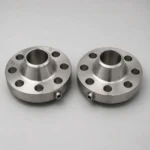
Description
Differential-pressure flange pair | ASME B16.36
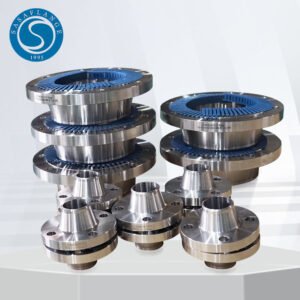
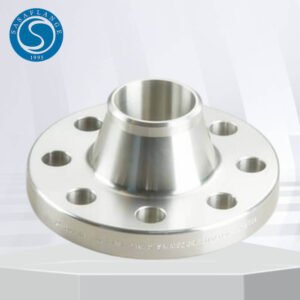
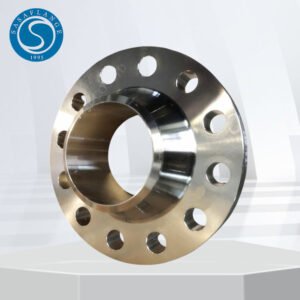
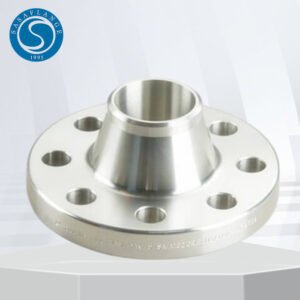
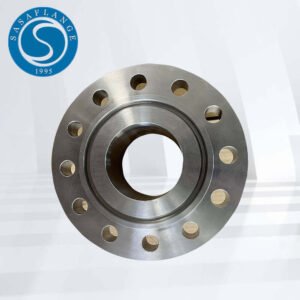
ASTM A182 F51 Duplex 2205 Weld Neck Orifice Flange
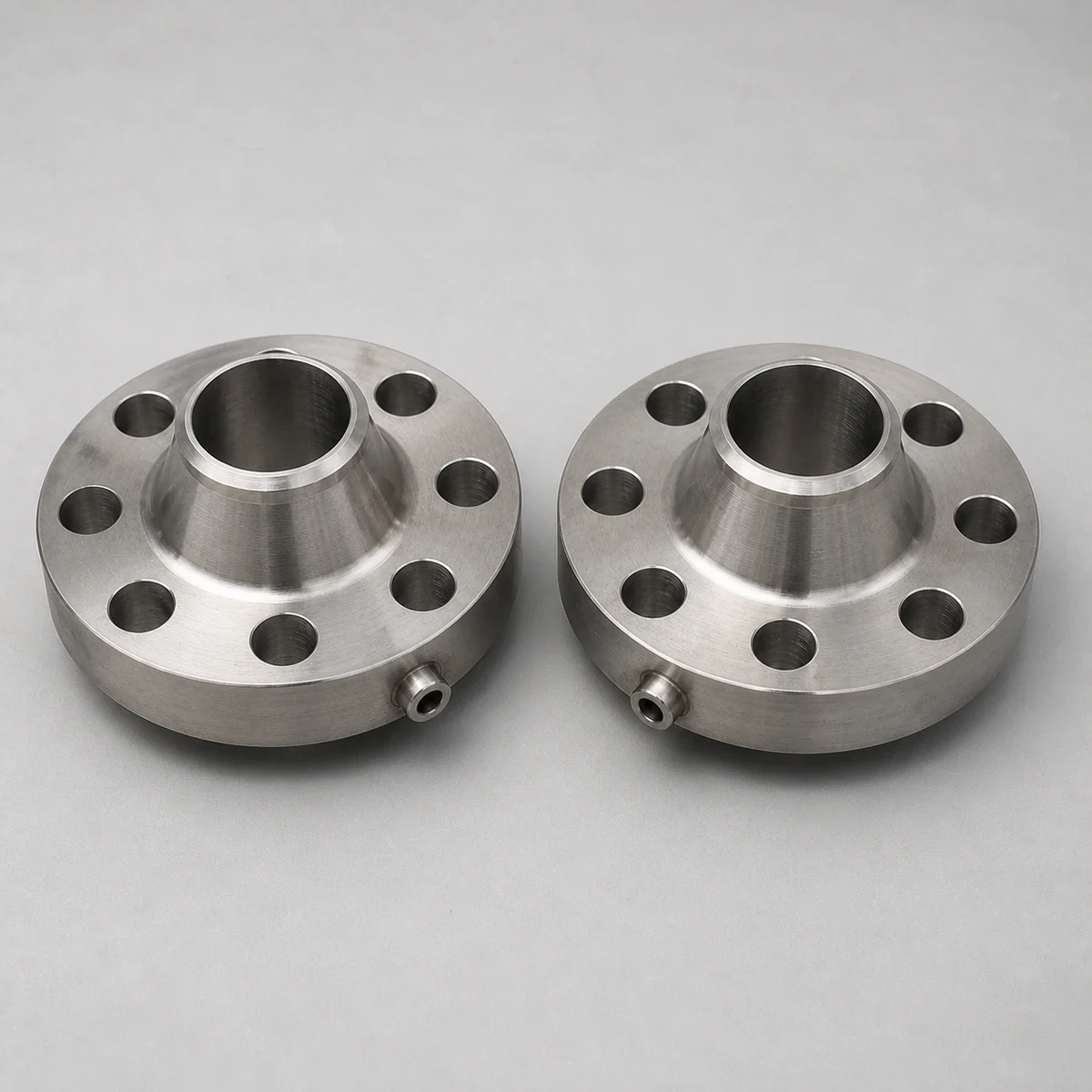
Matched ASME B16.36 weld neck orifice flange pair in ASTM A182 F51 / UNS S31803 for differential-pressure measurement. Available with project-specific dimensions, documentation and inspection.
Direct answer
What is a ASTM A182 F51 Duplex 2205 weld neck orifice flange?
A weld neck orifice flange is a matched flange pair with pressure-tap connections positioned on each side of an orifice plate. The differential pressure between the upstream and downstream taps supports flow measurement when the complete meter run is engineered, installed and commissioned correctly.
ASTM A182 F51 is a forged duplex stainless grade associated with UNS S31803 and commonly described as Duplex 2205. It combines useful strength with chloride resistance, but the final material choice depends on temperature, chloride level, fabrication, stress and the governing piping specification.
Unlike an ordinary weld neck flange, an orifice flange includes defined tap locations and is normally supplied as a coordinated pair. The tapered hubs support butt-welded installation, while the bore, flange facing, tap orientation and optional jack-screw arrangement must follow the approved piping and instrumentation documents. The flange pair alone does not establish measurement accuracy; the orifice plate, straight-run geometry, impulse piping and instrumentation are part of the complete system.
Technical specifications
| Product | Weld Neck Orifice Flange |
|---|---|
| Material specification | ASTM A182 F51 |
| UNS designation | UNS S31803 |
| Dimensional standard | ASME B16.36 |
| Size range | NPS 1 through NPS 24 where covered by the selected ASME B16.36 class and edition |
| Rating / schedule | Weld neck Classes 300, 400, 600, 900, 1500 and 2500 within ASME B16.36 limits |
| Configuration | Matched weld neck orifice flange pair with pressure-tap connections; RF or RTJ as ordered |
| Documentation | EN 10204 3.1 MTC, heat-number traceability, dimensional report and PMI when ordered |
| Optional inspection | PMI, PT, ferrite check, corrosion testing, dimensional inspection and third-party inspection when ordered |
Final dimensions, ratings, tests and acceptance criteria follow the purchase order, approved drawing, applicable code and specified standard edition.
Why specify ASTM A182 F51 Duplex 2205?
The duplex microstructure provides higher strength than common austenitic stainless steels and good resistance to chloride stress-corrosion cracking in many services. This can support compact corrosion-resistant piping components, but it does not eliminate the need for a documented corrosion review.
F51 components require controlled forging and solution heat treatment. Welding procedures should manage heat input and interpass temperature so that the completed joint maintains acceptable phase balance and corrosion performance.
Typical applications
These are selection examples, not universal suitability claims. Verify corrosion, temperature, pressure, fabrication and code requirements for the actual service.
Ordering and specification guidance
Specify the matched-pair requirement, material grade, NPS, class, pipe schedule, RF or RTJ facing, tap type and orientation, jack-screw requirement and whether the orifice plate, gaskets, plugs and bolting are included. Confirm the applicable ASME B16.36 edition before manufacture.
Write both ASTM A182 F51 and UNS S31803 on the RFQ, plus any ferrite, corrosion-test or project-specific supplementary requirements.
Engineering selection boundaries
Material grade, nominal size and pressure class are necessary purchasing inputs, but they do not prove suitability by themselves. The responsible piping engineer should verify the design code, design pressure and temperature, corrosion allowance, connected pipe dimensions, flange facing, gasket system, bolting, welding procedure and examination plan as one coordinated specification. Service chemistry, concentration, contaminants, velocity, shutdown conditions and cleaning media can change corrosion performance. Request written confirmation against the project datasheet and approved drawing before manufacture, especially where sour service, seawater exposure, cyclic loading, vacuum, lethal service or regulatory inspection applies.
Manufacturing, inspection and traceability
Inspection includes material traceability, flange dimensions, bore and weld-end geometry, facing finish, tap size and location, tap-thread gauging, bolt-hole orientation and pair matching. PMI, PT, UT and third-party inspection are available when ordered.
For duplex products, certificate review, heat-treatment records, PMI and optional ferrite or corrosion testing provide stronger evidence than grade wording alone.
Official standards and engineering references
Use the current project-approved editions. The following official scope pages help procurement teams separate dimensional requirements from material requirements.
Related weld neck orifice flange products
RFQ checklist
- Matched-pair or individual flange
- NPS, class and pipe schedule
- Material grade and UNS number
- RF or RTJ facing and finish
- Tap type, size and orientation
- Jack screws and plugs
- Orifice plate scope
- MTC, PMI, NDE and inspection
Frequently asked questions
How is an orifice flange different from a standard weld neck flange?
An orifice flange has defined pressure-tap connections for differential-pressure measurement and is normally used as a matched pair around an orifice plate.
Are weld neck orifice flanges supplied as a pair?
They are commonly ordered as a matched pair. The RFQ should state whether the scope includes two flanges, taps or plugs, jack screws, gaskets, bolting and the orifice plate.
Which pressure classes are covered for weld neck orifice flanges?
ASME B16.36 covers weld neck orifice flanges in Classes 300, 400, 600, 900, 1500 and 2500 within the size limits of the selected edition.
Is ASTM A182 F51 the same as UNS S32205?
No. F51 is normally associated with UNS S31803. S32205 is commonly ordered as ASTM A182 F60. Dual certification requires documented compliance with both ordered designations.
Can F51 be used in seawater service?
It is evaluated for selected chloride and seawater duties, but temperature, flow, crevices, chlorination, fabrication and project corrosion limits must be reviewed.
Request a technical quotation
Send the material grade, standard, size, rating or schedule, quantity and inspection requirements. SASA FLANGE will review the complete specification before quotation.