
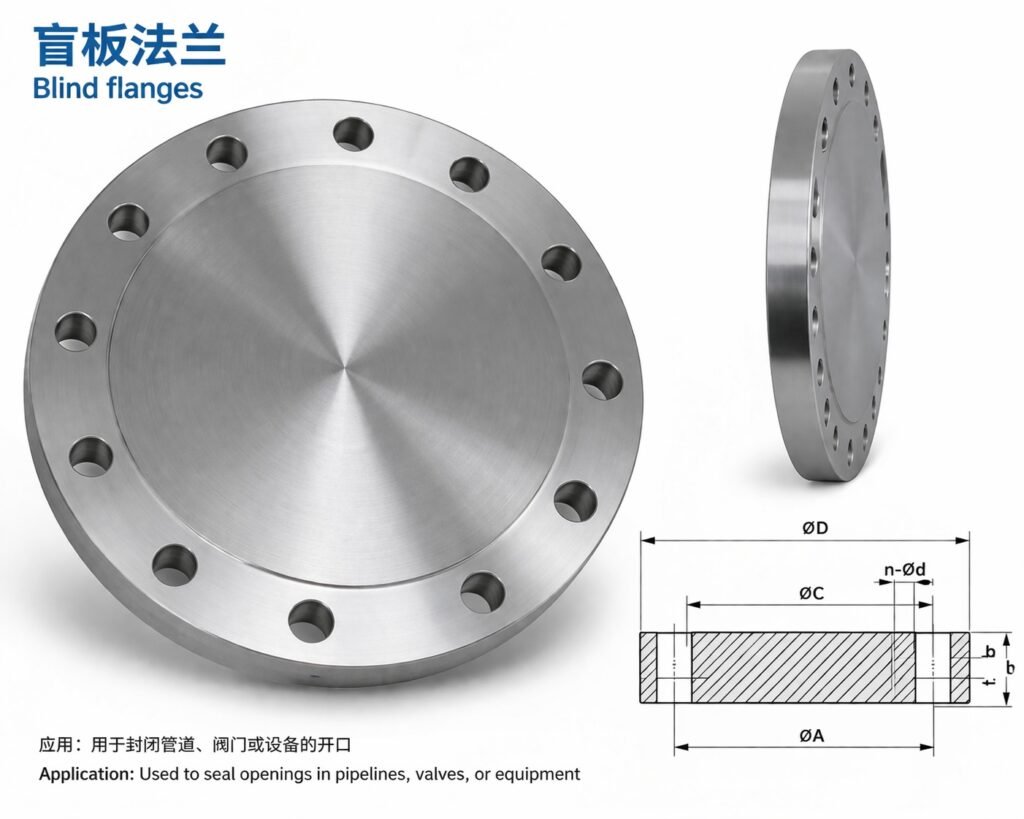
How to Protect Alloy Steel Flanges During Storage and Shipping
Direct answer
Protect alloy steel flanges by cleaning and drying them, applying an approved temporary preservative, sealing machined faces and weld ends, controlling moisture with suitable barrier materials and desiccant, and immobilizing the parts in export-grade packing. Storage areas should be dry, covered, ventilated and segregated from chloride contamination.
Key takeaways
- Chrome-moly alloy steel can rust; alloy content does not eliminate atmospheric corrosion.
- Preservation must protect sealing faces without contaminating later welding or service.
- Packing design should address both moisture and impact loads for the full logistics route.
Why new flanges rust before installation
Machined carbon and low-alloy steel surfaces are reactive when exposed to humidity, condensation, fingerprints, salts or acidic packaging. Ocean freight adds temperature cycling and salt-laden environments that can create condensation inside crates.
Rust on a noncritical exterior may be repairable, but corrosion or impact damage on gasket faces, RTJ grooves, bolt holes or weld preparations can cause rejection.
Preservation after final inspection
- Remove machining fluid, abrasive residue and moisture.
- Verify final marking and photograph the accepted condition.
- Apply a compatible temporary rust preventive to permitted surfaces.
- Install rigid protectors on sealing faces and weld ends.
- Use VCI or barrier wrap and calculated desiccant where specified.
- Seal the package and record preservation date and method.
Export packing and handling
Heavy flanges should be separated so faces cannot strike each other. Blocking and bracing must resist forklift, truck, port and vessel handling. Lifting points and gross weight should be marked clearly.
Wood packaging must satisfy destination phytosanitary requirements. Waterproof outer protection should not trap wet components inside an airtight package.
Warehouse and site storage
Store crates off the ground under cover and inspect for water ingress. Preserve identity by heat number and PO item. Use first-expiring preservation dates to plan reinspection and renewal.
Before installation, remove temporary coatings using an approved cleaner, inspect sealing faces and weld ends, and verify that no residue can affect gasket seating, welding or process cleanliness.
Frequently asked questions
Should flange faces be painted?
Do not apply permanent paint to sealing faces or RTJ grooves unless a project-approved removable protection system specifically allows it.
Is VCI enough for ocean shipment?
VCI can support preservation, but barrier integrity, dryness, desiccant, transit duration and crate design must be considered together.
Can light rust be accepted?
Acceptance depends on location, depth, dimensional impact and project criteria. Sealing faces and weld ends require careful engineering and quality review.
Primary standards referenced
- ASTM A182/A182M-26 — Forged or Rolled Alloy and Stainless Steel Piping Components
- ASME B16.5-2025 — Pipe Flanges and Flanged Fittings, NPS 1/2 Through NPS 24
Always verify the edition specified by the purchase order and obtain the complete controlled standard for design and acceptance.
Request an alloy steel flange quotation
Send the material grade, standard, NPS, pressure class, flange type, facing, pipe schedule, quantity and inspection requirements. SASA FLANGE will review the technical description before quotation.
Related Posts
C-2000 vs C22 Flanges: Material Selection and RFQ Checks
Compare C-2000 and C22 flange material identities, service conditions, forging…

What Should an EN 10204 3.1 Material Certificate Include?
A buyer’s checklist for reviewing EN 10204 3.1 certificates supplied…
NDT Inspection Methods for Forged Alloy Steel Flanges
A buyer-focused guide to non-destructive testing methods for forged alloy…

Hardness Testing Requirements for F11, F22 and F91 Flanges
A practical guide to specifying and interpreting hardness tests on…