
What Should an EN 10204 3.1 Material Certificate Include?
Direct answer
An EN 10204 type 3.1 inspection certificate provides a manufacturer’s declaration of compliance with the order plus specific inspection results. It is validated by the manufacturer’s authorized inspection representative who is independent of the manufacturing department. The certificate must trace the reported material and test results to the delivered flanges.
Key takeaways
- A 3.1 certificate is more than a chemical-composition sheet.
- Heat number, product description, specification, test results and authorization should form one traceable record.
- Type 3.1 is not the same as independent third-party validation under type 3.2.
Core information buyers should expect
- Manufacturer and certificate identification
- Purchaser, purchase order and item reference
- Product description, quantity, dimensions and material grade
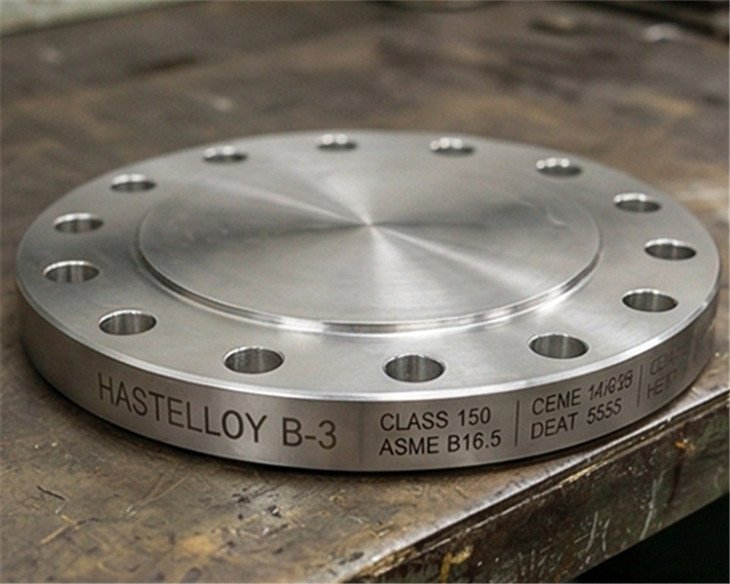
- Heat or cast number linked to flange marking
- Applicable material specification and edition
- Chemical and mechanical test results required for the order
- Heat treatment and supplementary test results where applicable
- Statement of compliance, authorized name/signature and issue date
Traceability is the central test
A technically complete certificate is still unusable if its heat number cannot be found on the product or packing records. Check that marking, quantity, dimensions and grade agree with the delivered items.
When a master heat is split across forging batches, the documentation should explain the relationship between raw material, heat treatment, test coupons and final flange identification.
3.1 versus 3.2 documentation
Type 3.1 validation comes from the manufacturer’s authorized inspection representative independent of manufacturing. Type 3.2 adds validation by the purchaser’s authorized representative or a designated official inspection representative, as applicable.
A third-party stamp placed on an incomplete 3.1 certificate does not automatically create a compliant 3.2 document. Define the required certificate type and witness scope before production.
Common certificate red flags
- Grade or standard does not match the purchase order
- Heat number missing from flange marking
- Generic “pass” statements where actual results are required
- Unexplained alteration, inconsistent fonts or duplicate certificate numbers
- Heat-treatment description inconsistent with the ordered grade
- No authorized validation or unclear relationship to the manufacturer
Resolve discrepancies with the manufacturer before material release; do not edit vendor certificates locally.
Frequently asked questions
Is an MTC the same as an EN 10204 3.1 certificate?
MTC is an informal term. The purchase order should state the exact EN 10204 document type and required test content.
Does a 3.1 certificate prove the flange dimensions?
Only if dimensional results are included or attached as required. Buyers often request a separate dimensional inspection report.
Can a stockist issue the original 3.1 certificate?
A stockist may transmit the manufacturer’s certificate and maintain traceability. Any revalidation, transfer or type 3.2 requirement must follow the applicable order and standard.
Primary standards referenced
- BS EN 10204:2004 — Metallic Products: Types of Inspection Documents
- ASTM A182/A182M-26 — Forged or Rolled Alloy and Stainless Steel Piping Components
Always verify the edition specified by the purchase order and obtain the complete controlled standard for design and acceptance.
Request an alloy steel flange quotation
Send the material grade, standard, NPS, pressure class, flange type, facing, pipe schedule, quantity and inspection requirements. SASA FLANGE will review the technical description before quotation.
Related Posts
NDT Inspection Methods for Forged Alloy Steel Flanges
A buyer-focused guide to non-destructive testing methods for forged alloy…

Hardness Testing Requirements for F11, F22 and F91 Flanges
A practical guide to specifying and interpreting hardness tests on…
How to Read ASTM A182 Flange Markings
A field guide to interpreting ASTM A182 and ASME B16.5…
Forged vs Cast Flanges: Which Is Safer for Critical Piping?
A balanced engineering comparison of forged and cast flanges for…