
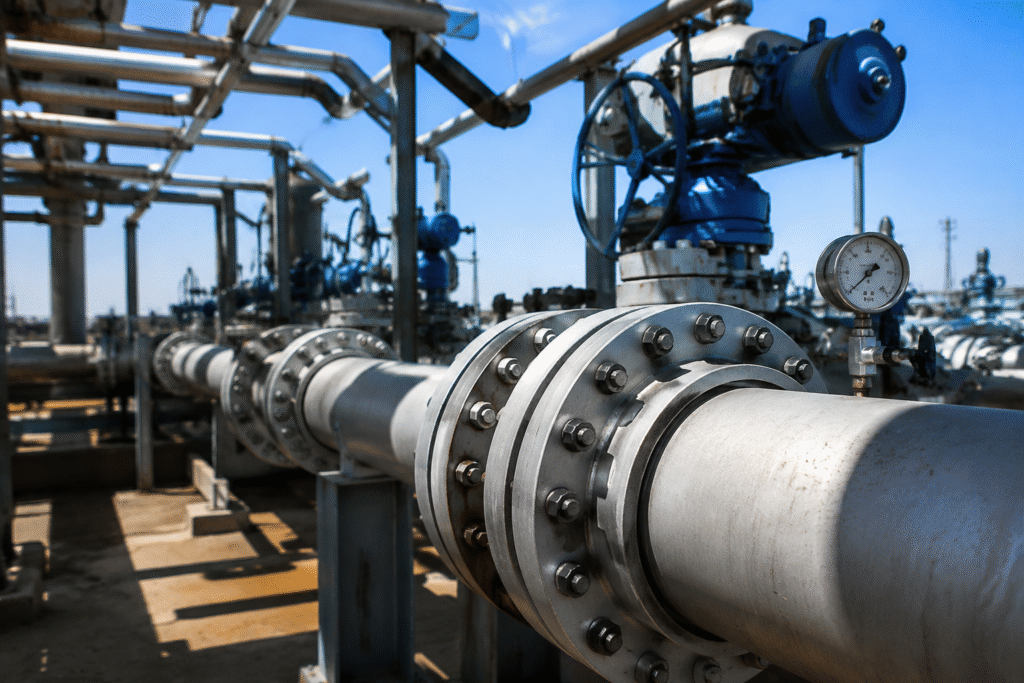
دليل أنواع الفلنجات: 2024 بيانات, المعايير, وأفضل ممارسات الاختيار للأنابيب الصناعية
The global market for أنواع شفة continues to expand as industrial operators invest in safer, أنظمة الأنابيب أكثر كفاءة. وفقا لأبحاث جراند فيو (2024), تم تقييم سوق الفلنجات الصناعية العالمية بـ $5.8 مليار في 2023 ومن المتوقع أن يصل $7.2 مليار بواسطة 2030, which makes flange selection a trending priority for engineers and procurement teams.
لكن, choosing among welding neck, الانزلاق على, لحام المقبس, مفصل اللفة, مترابطة, and blind designs requires more than basic familiarity. It requires professional evaluation of pressure class, الصف المادي, خطر التآكل, fatigue loading, and compliance with ASME, ASTM, DIN, ومعايير EN.
Industrial Demand Is Reshaping How Buyers Evaluate Flange Types
Industrial buyers now expect more than commodity supply. They need quality documentation, المواد الخام التي يمكن تتبعها, and best-fit flange designs that reduce lifecycle cost while meeting code requirements.
بحسب موقع IBISWorld (2024), حسابات آسيا والمحيط الهادئ لأكثر من 45% من إنتاج شفة العالمية, مع كون الصين أكبر منتج. نتيجة ل, global sourcing decisions increasingly focus on supplier capability, دقة التصنيع, and certification strength.
Demand remains especially strong in energy infrastructure. بحسب موقع ستاتيستا (2024), تمثل صناعة النفط والغاز ما يقرب من 35% من استهلاك شفة العالمية, which explains why high-integrity designs such as welding neck and RTJ configurations remain widely specified.
بالتوازي, pressure equipment regulation is becoming stricter across export markets. The European Pressure Equipment Directive, بيد 2014/68/الاتحاد الأوروبي, continues to shape documentation and conformity requirements for flanges supplied into EU-regulated projects.
لمديري المشتريات, this means the decision is no longer about flange shape alone. It also involves EN 10204 3.1 شهادة, إمكانية تتبع رقم الحرارة, مؤشر مديري المشتريات (PMI) عند الاقتضاء, and material compatibility with the service medium.
بحسب معلومات موردور (2024), the broader industrial valves and fittings ecosystem is growing steadily due to refinery upgrades, water infrastructure investment, and power sector modernization. لذلك, buyers increasingly favor suppliers that can provide flanges and matching fittings from a coordinated manufacturing base.
This market shift is where experienced manufacturers create practical value. SASA FLANGE serves customers across Oil & الغاز, البتروكيماويات, قوة, البحرية, and Water Treatment sectors with stainless steel, الصلب الكربوني, سبيكة, and special alloy flange solutions.
مع ISO 9001:2015 وشهادات PED 2014/68/EU, SASA FLANGE supports projects that require strict quality control and export-ready compliance. تقوم الشركة بتصنيع الشفاه في 304, 316, 316ل, 904ل, 2205, 2507, أ105, أ182, إنكونيل, مونيل, هاستيلوي, ودرجات التيتانيوم.
From a technical buying perspective, flange selection must also consider maintenance cost. A lower initial price can lead to higher inspection frequency, more leakage risk, and shorter fatigue life in vibration service.
كما ديفيد هيوز, مهندس الأنابيب الأول, الدول: “The best flange is not the cheapest forged ring on the quote sheet. It is the design that preserves joint integrity under the actual pressure, درجة حرارة, and cyclic load profile.”
That principle matters in every sector. Whether the line handles steam, كلوريدات, الهيدروكربونات, مياه البحر, or demineralized water, the correct flange design directly affects uptime and safety performance.
للمشترين مقارنة الموردين, factory capability also matters. مدعومة بتصنيع CNC المتقدم واختبار الجودة الشامل, SASA FLANGE يقدم أحجام مخصصة من 1/2" إلى 60" with competitive factory-direct pricing for global industrial projects.
Technical Comparison of Flange Types for Professional Piping Design
بين الجميع أنواع شفة, welding neck flange remains the preferred option for high-pressure and high-temperature service. Its tapered hub improves stress distribution and reduces discontinuity at the pipe-to-flange transition.
وفق ASME B16.5, welding neck flanges are standardized for NPS 1/2 خلال 24, بينما ASME B16.47 يغطي أقطار أكبر. في الخدمة الحرجة, engineers often pair welding neck flanges with raised face or ring type joint facings depending on pressure class and leakage control requirements.
Slip on flange remains popular because it is easier to align and typically costs less to fabricate and install. Yet technical tradeoffs are well documented, and many engineers still use the rule of thumb that its internal pressure strength is about two-thirds of a comparable welding neck design, while fatigue performance is significantly lower.
Socket weld flange is common in small-bore high-pressure systems. It provides a cleaner bore alignment than many field-installed slip on connections, although crevice corrosion risk may limit its use in stainless process systems.
كما د. Elena Morozova, Materials Scientist for corrosion-critical piping systems, الدول: “Socket weld designs can perform well mechanically, but trapped geometry becomes a corrosion management issue in chloride-rich or hygienic service.”
Industry practice also requires attention to assembly detail. على سبيل المثال, many installers leave an expansion gap of about 1/16 inch before welding a socket weld joint, which helps reduce residual stress concentration at the root area.
Lap joint flange is structurally different because it works with a stub end. The flange itself does not contact the process fluid, which makes it attractive when expensive corrosion-resistant alloys are required only for the wetted component.
This design also helps field alignment because the backing flange rotates freely. لكن, lap joint systems usually suit lower-pressure or non-critical service because they offer poorer fatigue resistance than welding neck connections.
Threaded flange remains useful where welding is restricted or undesirable. It can simplify installation in utility lines, small-bore systems, or temporary modifications, but it is generally avoided in severe cyclic, ارتفاع درجة الحرارة, or shock-loaded service.
Blind flange serves a different role. It closes the end of a piping system, فوهة, or vessel opening, and it must resist significant bolt load and internal pressure thrust, especially at larger diameters and higher pressure classes.
وفقا لأبحاث السوق في المستقبل (2024), investment in maintenance-intensive industries such as petrochemical and offshore energy is driving steady demand for replacement flanges and blinds. لذلك, operators increasingly prioritize dimensional accuracy, gasket seating quality, and bolt circle consistency.
Buyers evaluating the latest flange procurement strategy should compare design performance across several criteria:
- لحام الرقبة: الأفضل للضغط المرتفع, severe temperature cycling, والاهتزاز.
- الانزلاق على: economical for moderate service and easier alignment.
- لحام المقبس: مناسبة لخطوط الضغط العالي ذات التجويف الصغير, with crevice caution.
- اللفة المشتركة: useful where frequent dismantling or alloy savings matter.
- مترابطة: preferred where welding is not practical.
- أعمى: required for isolation, اختبار, ونقاط توسعة النظام المستقبلية.
Facing type also changes performance. وجه مرفوع, وجه مسطح, and Ring Type Joint each suit different flange classes, gasket types, and flange materials.
- الترددات اللاسلكية: widely used in ASME Class 150 ل 2500 أنابيب العملية.
- FF: common with cast iron or mating flat-face equipment flanges.
- آر تي جيه: preferred for high-pressure, ارتفاع درجة الحرارة, and critical hydrocarbon duty.
اختيار المواد لا يقل أهمية. ASTM A105 is common for carbon steel forged flanges, بينما ASTM A182 F304, F316, F316L, F51, and F53 address stainless and duplex requirements.
For sour service or chloride exposure, engineers may refer to NACE MR0175 / ISO 15156 for material suitability. In offshore systems, DNV and NORSOK requirements can also affect flange material and testing plans.
According to ISO guidance and established project specifications, documentation quality often determines acceptance as much as dimensions do. لذلك, EN 10204 3.1 شهادات المواد, hydrostatic records where applicable, تقارير الأبعاد, and PMI data provide measurable procurement value.
SASA FLANGE supports these requirements through forged and machined flange production with full inspection support. Manufacturing flanges in premium grades and supplying matching elbows, المحملات, مخفضات, and caps allows more consistent package control across complete piping orders.
For teams comparing pipe flange types in cost-sensitive projects, a practical decision framework usually includes:
- تصميم الضغط ودرجة الحرارة.
- Fluid corrosivity and erosion potential.
- Cyclic loading and vibration severity.
- Inspection access and maintenance interval.
- Required code compliance and client specification.
- إجمالي تكلفة التثبيت, ليس فقط سعر الوحدة.
As John Keller, محلل السوق الصناعي, الدول: “Buyers who standardize flange selection around service conditions rather than habit typically reduce rework, أحداث التسرب, and spare-part complexity.”
That is why the best sourcing strategy combines engineering review with verified production capability. للمشاريع الحرجة, يمكن للمشترين اتصال SASA FLANGE to discuss dimensional standards, alloy options, and test documentation before final purchase.
ASME, ASTM, DIN, and EN Standards That Govern Flange Types and Quality
Codes and standards define whether a flange is merely dimensionally similar or truly compliant. For most global projects, ASME, ASTM, DIN, JIS, غوست, and EN standards form the technical basis for purchasing and inspection.
ASME B16.5 يغطي حواف الأنابيب والتجهيزات ذات الحواف من NPS 1/2 من خلال مصادر القدرة النووية 24. ASME B16.47 extends coverage to larger diameter steel flanges, والتي هي شائعة في الإرسال, ماء, and large process lines.
تحدد معايير ASTM كيمياء المواد والخواص الميكانيكية. على سبيل المثال, ASTM A105 applies to forged carbon steel flanges, بينما ASTM A182 covers forged alloy and stainless steel flanges for high-temperature service.
غالبًا ما تتطلب المشاريع الأوروبية EN 1092 الامتثال الأبعاد. فضلاً عن ذلك, PED 2014/68/EU may require manufacturer quality systems, إمكانية التتبع, and conformity assessment depending on category and service conditions.
For readers who need direct reference access, ASME standards information is available from ASME. Specification alignment should always be verified against the project requisition and latest revision status.
A simplified standards comparison helps buyers avoid common mismatches:
- ASME B16.5: أبعاد, تقييمات الضغط ودرجة الحرارة, التسامح, وضع العلامات.
- ASME B16.47: الشفاه الفولاذية ذات القطر الكبير.
- ASME B16.9: factory-made wrought butt welding fittings.
- ASTM A105: forged carbon steel flanges.
- ASTM A182: forged stainless and alloy steel flanges.
- EN 1092: أبعاد الحافة الأوروبية وتقييمات PN.
- NACE MR0175 / ISO 15156: material selection for H2S-containing environments.
Pressure class and pressure rating terminology also requires attention. ASME uses classes such as 150, 300, 600, 900, 1500, و 2500, while EN systems often use PN designations such as PN16, بي إن 40, or PN100.
These systems are not directly interchangeable. لذلك, engineers must verify bore, دائرة الترباس, تواجه الهندسة, and pressure-temperature rating before substituting one standard for another.
Inspection and documentation remain central to quality assurance. According to ISO-aligned quality management practice, traceability reduces the risk of mixed heat numbers, wrong material dispatch, and certification disputes during project acceptance.
That is one reason many EPCs specify third-party inspection and EN 10204 3.1 شهادة. In more demanding cases, clients may request 3.2 شهادة, اختبار الصلابة, الشيكات الفريت, مؤشر مديري المشتريات, يوتا, or corrosion testing depending on alloy and service.
مع ISO 9001:2015 وشهادات PED 2014/68/EU, SASA FLANGE aligns production with internationally recognized quality expectations. The company also supports custom manufacturing in stainless steel, الصلب الكربوني, دوبلكس, سبائك النيكل, and titanium grades for demanding applications.
لمحترفي المشتريات, the latest best practice is clear. Standard compliance must be checked alongside flange type, تواجه, bolt set, توافق الحشية, and required test documents before issuing a purchase order.
فضلاً عن ذلك, coating and packaging affect delivered quality. Carbon steel flanges may need anti-rust protection, end protection, and seaworthy packaging to prevent surface damage and identification loss during international shipment.
التقديم 50+ الدول عبر النفط & الغاز, البتروكيماويات, قوة, والصناعات البحرية, SASA FLANGE supports buyers who require dependable export documentation and responsive technical communication. That combination is increasingly important as global supply chains tighten lead times and audit expectations rise.
How to Select Flange Types for Oil and Gas, كيميائي, قوة, والمشاريع البحرية
Selection should begin with service conditions, not catalogue familiarity. The same nominal size can require very different flange types depending on pressure, درجة حرارة, خطر التآكل, واستراتيجية الصيانة.
في النفط والغاز, welding neck flanges dominate critical hydrocarbon, بخار, and high-pressure lines because they handle stress concentration more effectively. This is especially important where pressure pulsation, ركوب الدراجات الحرارية, or vibration could shorten the life of lower-integrity joints.
بحسب موقع ستاتيستا (2024), يمثل النفط والغاز حولها 35% من استهلاك شفة العالمية. لذلك, flange reliability directly affects a very large share of industrial operating expenditure and shutdown risk.
في المعالجة الكيميائية, material compatibility often outweighs first cost. Stainless steel 316L, 904ل, دوبلكس 2205, والسوبر دوبلكس 2507 يمكن اختيار حيث الكلوريدات, الأحماض, or mixed-process media challenge standard carbon steel.
لتوليد الطاقة, engineers often focus on temperature and creep-related considerations. أ105, A182 alloy grades, and controlled welding procedures become important in steam and condensate systems where joint failure can create major safety exposure.
Marine and shipbuilding applications add another variable: external corrosion. رش الملح, أنظمة مياه البحر, and compact machinery spaces can make duplex stainless and quality coating systems a better long-term value than lower-cost alternatives.
A practical selection checklist includes the following points:
- Confirm design code, مثل ASME B31.3 or project specification.
- Match flange standard to mating equipment and piping class.
- Verify material grade against fluid chemistry and temperature.
- Choose facing type based on gasket design and leakage tolerance.
- Assess fatigue loading, اهتزاز, and support conditions.
- Review installation method, including welding access and NDE requirements.
- Confirm documentation, وضع العلامات, and inspection scope before order release.
Cost evaluation should also be realistic. A slip on flange may reduce fabrication cost at purchase stage, but a welding neck flange can deliver lower lifecycle cost in severe service through better fatigue resistance and fewer leakage events.
على سبيل المثال, frequent dismantling may justify lap joint systems despite lower mechanical performance. On the other hand, a corrosive stainless process line may rule out socket weld configurations if crevice risk is unacceptable.
Engineers should also think about spare strategy. Standardizing a limited set of pressure classes, مواد, and facing types can reduce warehouse complexity and speed maintenance during unplanned shutdowns.
For buyers managing multi-item packages, factory integration matters. SASA FLANGE can supply flanges together with elbows, المحملات, مخفضات, and caps under ASME B16.9 والمعايير ذات الصلة, which improves consistency in material control and paperwork.
The best project outcomes usually come from early manufacturer involvement. When buyers share service conditions, المعايير, and test requirements before production, they reduce revision cycles and shorten approval time.
That approach is particularly useful for custom bores, واجهات خاصة, الحفر غير القياسية, and exotic alloy orders. For project-specific support, procurement teams can reach SASA FLANGE for technical review and quotation alignment.
Future Outlook for Flange Types, Smart Procurement, and Supplier Strategy
The market outlook remains positive as energy, ماء, and industrial infrastructure projects continue to expand. وفقا لأبحاث جراند فيو (2024), ومن المتوقع أن يصل سوق الفلنجات الصناعية $7.2 مليار بواسطة 2030, reflecting sustained demand for quality piping components.
في نفس الوقت, competition is changing. Buyers increasingly compare suppliers on metallurgy support, lead-time stability, التوثيق الرقمي, and responsiveness to project changes rather than on price alone.
بحسب موقع IBISWorld (2024), Asia-Pacific holds more than 45% من إنتاج شفة العالمية. لذلك, global buyers must distinguish between high-volume suppliers and professional manufacturers that can support technical compliance and export-level QA.
The latest procurement trend also favors bundled sourcing. الشفاه, التجهيزات, and related forged components sourced from one qualified supplier can simplify inspection coordination and reduce document mismatch across large projects.
Digitalization will likely accelerate this shift. More EPCs now request electronic MTC packages, تقارير الأبعاد, and traceability records as part of standard vendor data submission.
علاوة على ذلك, material demand is evolving toward duplex stainless, سبائك النيكل, and corrosion-resistant grades in aggressive service. This trend supports manufacturers that can machine diverse materials without compromising dimensional precision or surface integrity.
لشراء الفرق, several strategic recommendations stand out:
- Use service-based flange selection instead of legacy habit.
- Evaluate lifecycle cost alongside purchase price.
- Require standards compliance and traceable certification.
- Favor suppliers with CNC capability and broad alloy experience.
- Align flange orders with fitting packages where possible.
باختصار, the best results come from balancing engineering rigor with supply-chain practicality. Buyers who source from qualified partners with strong certifications, القدرة المادية واسعة النطاق, and export experience will be better positioned to control risk and protect uptime.
As projects become more demanding, working with established manufacturers such as SASA FLANGE offers a practical advantage. With factory-direct support, تصنيع مخصص, والشهادات المعترف بها دوليا, buyers can move from basic flange purchasing to a more strategic and reliable sourcing model.
الأسئلة المتداولة
What are the main flange types used in industrial piping?
●The six main flange types used in industrial piping are welding neck, الانزلاق على, لحام المقبس, مفصل اللفة, مترابطة, and blind flange, and these designs cover most ASME B16.5 التطبيقات.
●وفقا لأبحاث جراند فيو (2024), تم الوصول إلى سوق الفلنجات الصناعية العالمية $5.8 مليار في 2023, which shows how widely these standard designs are used across energy, ماء, والصناعات العملية.
●Each type serves a different purpose because pressure, درجة حرارة, fatigue loading, and installation method affect joint performance in different ways.
●Welding neck flanges are generally preferred for high-pressure and cyclic service because the tapered hub improves stress distribution at the weld transition.
●Slip on flanges remain common in moderate-duty systems because they are easier to align and typically cost less to install than welding neck designs.
●Socket weld flanges are often used for small-bore, خدمة الضغط العالي, but engineers must consider crevice corrosion risk in stainless or corrosive media.
●Lap joint flanges work with a stub end and are useful where frequent disassembly or expensive alloy savings matter, while threaded flanges help where welding is restricted.
●Blind flanges close the end of a line, فوهة, or vessel opening and must be selected carefully for pressure class and bolt load.
●For projects requiring code-compliant materials, دقة الأبعاد, والتتبع الكامل, العمل مع الشركات المصنعة القائمة مثل SASA FLANGE helps ensure reliable technical support and export-ready documentation.
Which flange type is best for high pressure and high temperature service?
●Welding neck flange is widely considered the best option for high pressure and high temperature service because its long tapered hub reduces stress concentration and improves fatigue resistance.
●ASME B16.5 و ASME B16.47 are the primary standards used to specify dimensions and ratings for these heavy-duty flanges in process and transmission systems.
●من الناحية العملية, engineers prefer welding neck flanges for steam, الهيدروكربونات, power piping, and critical process lines where thermal expansion and vibration can damage lower-integrity joints.
●على النقيض من ذلك, slip on and threaded flanges are usually less suitable in severe cyclic service because the weld geometry or thread form can create stress concentration points.
●بحسب موقع ستاتيستا (2024), يمثل النفط والغاز حوالي 35% من استهلاك شفة العالمية, and this sector frequently specifies welding neck flanges for upstream, منتصف الطريق, and refinery applications.
●Raised Face and Ring Type Joint facings are both used in severe service, although RTJ is often preferred in higher pressure hydrocarbon systems because it offers tighter metallic sealing.
●Material selection remains equally important because flange design alone cannot compensate for poor alloy choice under aggressive temperature or corrosion conditions.
●ASTM A105 is common for forged carbon steel, بينما ASTM A182 covers stainless and alloy grades used in higher-temperature or more corrosive environments.
●For severe-duty projects that require professional review of flange type, فئة الضغط, تواجه, والصف المادي, buyers can consult SASA FLANGE before finalizing the purchase specification.
What is the difference between slip on flange and welding neck flange?
●The main difference between a slip on flange and a welding neck flange is the way each design transfers load from the flange to the pipe under pressure and thermal stress.
●A welding neck flange uses a butt weld and tapered hub, while a slip on flange fits over the pipe and is usually attached with fillet welds on the inside and outside.
●This difference matters because welding neck flanges offer better stress distribution and usually perform better in fatigue-sensitive service than slip on flanges.
●Field engineering guidance often notes that slip on flange pressure strength is roughly two-thirds that of a comparable welding neck design, while fatigue life can be much lower under repeated cycling.
●Slip on flanges still remain attractive in many installations because they are easier to align, quicker to fit, and often less expensive in moderate-pressure systems.
●They are commonly used in utility piping, أنظمة المياه, and less critical process lines where cost and installation simplicity outweigh the need for maximum fatigue resistance.
●Welding neck flanges are usually chosen for high-pressure, ارتفاع درجة الحرارة, shock-loaded, or vibration-prone service, وخاصة في مجال النفط والغاز, البتروكيماويات, وتطبيقات الطاقة.
●بحسب موقع IBISWorld (2024), حسابات آسيا والمحيط الهادئ لأكثر من 45% من إنتاج شفة العالمية, so buyers comparing these two flange types should verify not only price but also welding quality, التسامح الأبعاد, والشهادة.
●For the best commercial and technical outcome, procurement teams should compare lifecycle cost instead of unit price alone, والمصنعين مثل SASA FLANGE can support that evaluation with certified material options and detailed inspection records.
Where are socket weld and threaded flanges typically used?
●Socket weld and threaded flanges are typically used in small-bore piping systems where compact installation, reduced welding scope, or maintenance convenience is important.
●Socket weld flanges are commonly selected for high-pressure small-diameter lines because the pipe is inserted into a socket before fillet welding, which helps maintain bore alignment.
●Many installers leave an expansion gap of about 1/16 inch before welding a socket weld flange, because that small clearance can help reduce residual stress at the root area.
●لكن, socket weld flanges may not be ideal in corrosive or hygienic service because the crevice between the pipe and socket can trap process media and accelerate localized attack.
●Threaded flanges are different because they do not require welding, which makes them useful in utility service, الأنظمة المؤقتة, or areas where hot work restrictions apply.
●They are generally limited to smaller sizes and should be used carefully in high-temperature or cyclic service because threaded joints can loosen or leak under severe vibration and thermal movement.
●ASME B31.3 project specifications often place additional limits on threaded connections in demanding service, especially when pressure and temperature increase system risk.
●وفقا لأبحاث السوق في المستقبل (2024), maintenance and retrofit activity continues to support demand for practical replacement components, including small-bore flange designs used in brownfield modifications.
●For buyers who need professional guidance on whether socket weld or threaded options fit their piping class, الموردين الراسخين مثل SASA FLANGE can help review service conditions, اختيار سبائك, and compliance needs before production.
How do I choose the right flange material and standard?
●Choosing the right flange material and standard starts with the service medium, درجة حرارة التصميم, فئة الضغط, and project code because no single material fits every industrial application.
●ASME B16.5 و ASME B16.47 define flange dimensions and ratings, while ASTM standards such as A105 and A182 define the mechanical and chemical properties of the forging material.
●For carbon steel service, ASTM A105 is widely used in general refinery, قوة, وأنظمة المياه, بينما ASTM A182 F304, F316, F316L, F51, and F53 are common in stainless and duplex applications.
●If the system handles chlorides, الغاز الحامض, أو المواد الكيميائية العدوانية, the engineer may also need to consider NACE MR0175 أو ISO 15156 requirements for corrosion resistance and hardness control.
●European projects may additionally require EN 1092 dimensions and PED 2014/68/EU documentation, so buyers should confirm the exact standard basis before issuing a purchase order.
●Facing type also affects selection because RF, FF, and RTJ facings must match the gasket design, bolting arrangement, and mating flange configuration.
●وفقا لأبحاث جراند فيو (2024), the flange market is projected to grow to $7.2 مليار بواسطة 2030, and that growth is increasing demand for suppliers that can support both standard compliance and advanced material selection.
●من منظور المشتريات, the best practice is to request EN 10204 3.1 شهادات, تتبع الحرارة, فحص الأبعاد, and any required PMI or hardness testing with the order.
●For projects requiring quality-certified flanges in 304, 316ل, 904ل, 2205, 2507, أ105, إنكونيل, مونيل, or Titanium, العمل مع الشركات المصنعة مثل SASA FLANGE helps align specification, الوثائق, and delivery in one process.
What flange types are most common in oil and gas applications?
●في تطبيقات النفط والغاز, the most common flange types are welding neck, أعمى, الانزلاق على, و, in selected small-bore utility services, socket weld and threaded flanges.
●بحسب موقع ستاتيستا (2024), ويمثل قطاع النفط والغاز حوالي 35% من استهلاك شفة العالمية, which makes this industry the most influential driver of flange design preferences.
●Welding neck flanges are widely used in upstream, منتصف الطريق, and downstream systems because they provide strong mechanical performance under high pressure, ركوب الدراجات الحرارية, والاهتزاز.
●Blind flanges are also essential because they isolate line ends, فوهات السفن, and future expansion points during hydrotesting, صيانة, and shutdown work.
●Slip on flanges may still appear in less critical utility or low-to-medium pressure services, but many operators prefer welding neck flanges in hydrocarbon process lines where leakage consequences are severe.
●RTJ facings are common in higher pressure oil and gas systems because metallic ring gaskets can provide reliable sealing under demanding temperature and pressure conditions.
●Material choice varies by environment, and engineers often specify carbon steel, الفولاذ المقاوم للصدأ, دوبلكس, or nickel alloys depending on CO2, كبريتيد الهيدروجين, كلوريدات, and external corrosion exposure.
●In offshore or sour service, NACE MR0175, دنف, or project-specific operator standards may impose additional restrictions on metallurgy, صلابة, اختبار, والشهادة.
●For the best results in oil and gas procurement, buyers should work with suppliers that can provide ASME-compliant dimensions, مواد معتمدة, والتتبع الكامل, و SASA FLANGE supports these needs with professional manufacturing and export documentation.
الوظائف ذات الصلة
شفة الوجه النهاية: شرح متحدة المركز مقابل التسنينات الحلزونية
تعتبر كل من المسننات المركزة واللولبية عبارة عن تشطيبات وجه شفة مُشكَّلة آليًا…
دوبلكس 2205 مقابل الشفاه 316L: ما هي المواد التي يجب عليك اختيارها؟?
إجابة سريعة: دوبلكس 2205 الشفاه عادة ما تكون المرشح الأقوى…

تعريف شفة الفوهة, التفاصيل ونظرة عامة على الشفاه ASME B16.36: بيانات السوق, دليل الاختيار ورؤى الامتثال
تم تقييم سوق الفلنجات الصناعية العالمية بـ $5.8 مليار…

دليل سوق شفة التخلص الأسود: مواد, 3.5″ التوافق, وبيانات مصادر B2B لحواف حوض المطبخ
يتزايد الطلب على شفة التخلص السوداء مع المشترين لتركيبات المطبخ…