
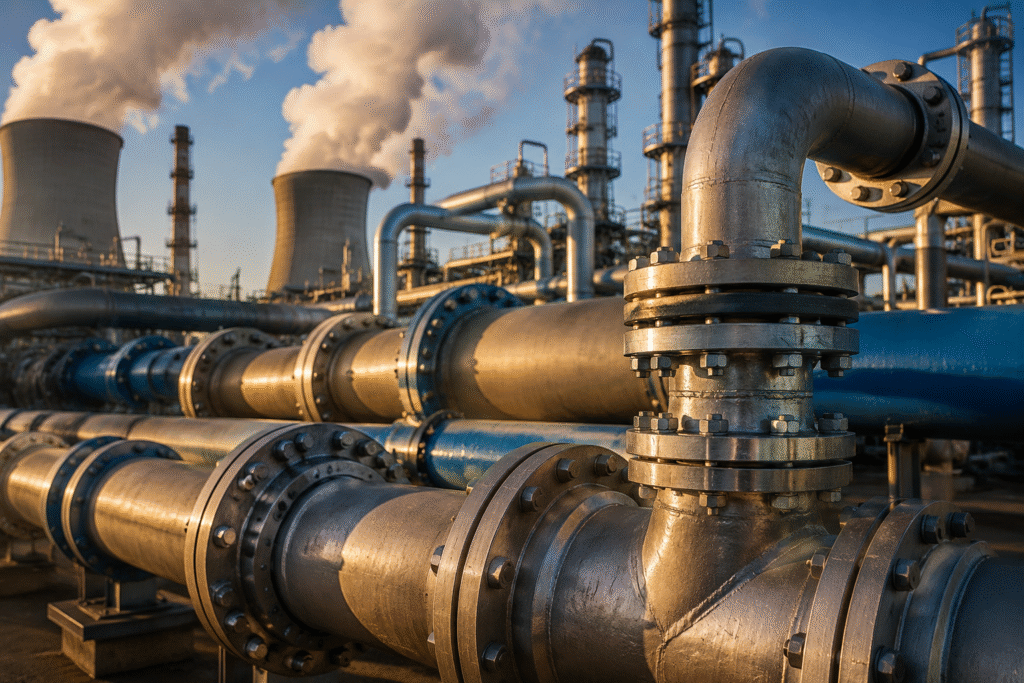
درجات شفة الفولاذ المقاوم للصدأ, المعايير وعوامل التسعير
وفقا لأبحاث جراند فيو (2024), تم تقييم سوق الفلنجات الصناعية العالمية بـ $5.8 مليار في 2023 ومن المتوقع أن يصل $7.2 مليار بواسطة 2030. هذا النمو يجعل شفة أنابيب الفولاذ المقاوم للصدأ sourcing more strategic for EPC contractors, مهندسي المصانع, and procurement teams seeking corrosion resistance, امتثال, وعمر الخدمة الطويل.
في الأنابيب الصناعية, hidden advantages often come from material grade selection, هندسة شفة, والامتثال للمعايير بدلاً من السعر وحده. لذلك, buyers who understand the most common flange types, فئات الضغط, and material limits can reduce lifecycle cost and avoid costly shutdowns.
اتجاهات الطلب الصناعي التي تشكل مشتريات شفة أنابيب الفولاذ المقاوم للصدأ
بحسب موقع IBISWorld (2024), حسابات آسيا والمحيط الهادئ لأكثر من 45% من إنتاج شفة العالمية, مع كون الصين أكبر منتج. نتيجة ل, global buyers increasingly evaluate Chinese suppliers on certification depth, دقة الآلات, إمكانية التتبع, وتجربة التصدير.
بحسب موقع ستاتيستا (2024), تمثل صناعة النفط والغاز ما يقرب من 35% من استهلاك شفة العالمية. علاوة على ذلك, البتروكيماويات, توليد الطاقة, البحرية, and water treatment projects continue to demand stainless and alloy flanges with tight dimensional tolerances.
This market environment rewards manufacturers that combine scale with standards discipline. SASA FLANGE supports this demand with ISO 9001:2015 وشهادات PED 2014/68/EU, أثناء تصنيع الشفاه في 304, 316, 316ل, 904ل, 2205, 2507, أ105, أ182, إنكونيل, مونيل, هاستيلوي, والتيتانيوم.
بحسب معلومات موردور (2024), industrial infrastructure upgrades in energy and water sectors are driving steady demand for corrosion resistant piping components. بالإضافة إلى, replacement cycles in refineries and offshore assets are increasing the need for premium stainless steel flange solutions.
That trend is especially relevant in chloride-rich, الخدمة الحامضة, and high-temperature systems. في هذه البيئات, the right stainless steel pipe flange can outperform carbon steel alternatives by reducing maintenance frequency and improving joint integrity.
The most common buying mistake is treating all stainless grades as equivalent. لكن, ASTM and ASME specifications differentiate chemistry, الخصائص الميكانيكية, المعالجة الحرارية, وشروط الخدمة المقصودة, which directly affect performance.
على سبيل المثال, ASTM A182 forged stainless flanges differ from plate-derived components governed by other material routes. لذلك, engineers should match the flange standard, المادة الأساسية, نوع المواجهة, and bolting system to actual design conditions.
As buyers compare vendors, they also assess size range, custom machining ability, ونوعية التوثيق. مدعومة بتصنيع CNC المتقدم واختبار الجودة الشامل, SASA FLANGE يقدم أحجام مخصصة من 1/2" إلى 60" for projects across Oil & الغاز, البتروكيماويات, قوة, والصناعات البحرية.
وفقا لأبحاث السوق في المستقبل (2024), global demand for stainless process equipment components is rising as asset owners prioritize durability and lower whole-life cost. بالتالي, stainless steel pipe flange procurement is no longer just a commodity purchase but a reliability decision.
Buyers also want shorter lead times and verified mill traceability. That is why manufacturers with EN 10204 3.1 الوثائق, قدرة مؤشر مديري المشتريات (PMI)., and export packaging controls are gaining preference in international tenders.
الدليل الفني لأنواع شفة أنابيب الفولاذ المقاوم للصدأ, الدرجات, والمزايا الخفية
A stainless steel pipe flange connects pipe, الصمامات, التجهيزات, and equipment through a bolted joint that allows assembly, تقتيش, والصيانة. Its performance depends on flange type, فئة الضغط, تواجه, الصف المادي, توافق الحشية, and installation quality.
مثل جون بيترسون, مهندس الأنابيب الأول, الدول: “The hidden advantage of a well-selected flange is not just pressure containment but maintenance predictability over decades of service.” That point is critical in process plants where unplanned leakage events carry safety and production risks.
وفق ASME B16.5, أبعاد شفة القياسية, حفر, واجهات, and pressure-temperature ratings govern most NPS 1/2 خلال 24 الشفاه (ASME, 2023). لأقطار أكبر, ASME B16.47 ينطبق, which is essential for transmission, صالة, and large process lines.
Forged stainless flanges are commonly supplied in ASTM A182 F304, F304L, F316, F316L, F321, F347, دوبلكس, and super duplex grades. بالإضافة إلى ذلك, exotic materials such as Inconel, مونيل, هاستيلوي, and Titanium are selected for aggressive media or elevated temperatures.
The most common stainless steel flange types each serve a different piping objective. لذلك, engineers must choose based on pressure, تعب, accessibility, خطر التآكل, وطريقة التصنيع.
- لحام الشفاه الرقبة: الأفضل للضغط المرتفع, واجب دوري, and severe temperature change because the tapered hub improves stress distribution.
- الانزلاق على الشفاه: Most common for moderate service where installation speed and lower cost matter.
- الشفاه العمياء: Used to terminate lines, isolate equipment, or prepare systems for future expansion.
- الشفاه لحام المقبس: مناسبة للحمل الصغير, high-pressure systems with clean internal alignment requirements.
- الشفاه مترابطة: مفيد عندما يكون اللحام مقيدًا, though they are less common in severe cyclic service.
- الشفاه المشتركة اللفة: Preferred when frequent dismantling or expensive alloy minimization is needed.
Among stainless grades, 304 و 316 remain the most common. لكن, 316 and 316L offer better pitting resistance in chloride environments because molybdenum improves corrosion performance.
According to ASTM material guidance and industry practice, 304/304L is widely selected for general industrial service, تجهيز الأغذية, and mildly corrosive environments (ASTM, 2023). في المقابل, 316/316L is often preferred for chemical processing, التعرض البحري, and more aggressive water systems.
كما د. إميلي تشين, عالم المواد, الدول: “Buyers often focus on initial flange price, but chloride pitting, تآكل الشق, and weld decay determine the real cost over time.” لذلك, lower-cost grades can become expensive if media chemistry and temperature are underestimated.
When engineers evaluate stainless steel pipe flange options, they should compare these technical variables:
- فئة الضغط مثل الطبقة 150, 300, 600, 900, 1500, أو 2500.
- تواجه نوع بما في ذلك الترددات اللاسلكية, FF, آر تي جيه, اللسان والأخدود, or Male and Female.
- Pipe schedule compatibility such as Sch 10, ش 40, ش 80, أو XS.
- الصف المادي بما في ذلك 304, 316ل, 904ل, 2205, أو 2507.
- Service conditions such as temperature, كلوريدات, كبريتيد الهيدروجين, تآكل, أو ركوب الدراجات الحرارية.
- Inspection requirements including PMI, hydrotest, صلابة, السيطرة على الفريت, و EN 10204 3.1.
وفق NACE MR0175 / ISO 15156, material selection in sour environments must account for sulfide stress cracking and environmental limits (NACE, 2023). نتيجة ل, duplex and nickel alloys are often chosen over standard austenitic stainless in severe upstream conditions.
For buyers asking how to choose flanges, the answer starts with the design basis. بعبارة أخرى, تكوين وسائل الإعلام, درجة حرارة, ضغط, بدل التآكل, نوع الحشية, and maintenance interval should all be defined before vendor comparison.
At the manufacturing level, dimensional consistency matters as much as material chemistry. With advanced CNC machining and full inspection workflows, SASA FLANGE supports standard and custom flange production for refinery, بناء السفن, ومشاريع معالجة المياه.
وفقًا لتوجيهات DNV الخارجية, flange joint reliability in marine and offshore systems depends heavily on correct material pairing and bolted connection control (دنف, 2023). لذلك, even the best stainless steel pipe flange can fail if assembly torque, اختيار طوقا, or flange alignment is poor.
Hidden advantages also include reduced downtime during maintenance. Flanged joints allow faster inspection and replacement than fully welded spool configurations in many service areas, which is why they remain indispensable across process industries.
ASME, ASTM, DIN, ومعايير EN الخاصة بالامتثال لشفة أنابيب الفولاذ المقاوم للصدأ
Standards are the language of industrial procurement. لذلك, buyers should verify not only the flange type but also the governing dimensional, مادة, اختبار, ومتطلبات الشهادة.
The primary standards for stainless steel pipe flange procurement typically include ASME B16.5, ASME B16.47, ASTM A182, DIN specifications, و إن 1092-1. بالإضافة إلى ذلك, project packages may call for API, NACE, بيد, إعلان 2000, or customer-specific supplementary requirements.
- ASME B16.5: أبعاد, التسامح, تقييمات الضغط ودرجة الحرارة, and facings for NPS 1/2 ل 24.
- ASME B16.47: Large diameter steel flanges from NPS 26 ل 60.
- ASTM A182: فلنجات الأنابيب المصنوعة من السبائك المطروقة أو المدرفلة والفولاذ المقاوم للصدأ والتجهيزات المطروقة.
- ASME B16.9: تجهيزات اللحام المطاوع المصنوعة في المصنع مثل المرفقين, المحملات, مخفضات, والقبعات.
- EN 1092-1: European flange dimensions and PN pressure system requirements.
- DIN / JIS / غوست: Regional dimensional systems used in export and retrofit projects.
وفقًا لتوجيهات معدات الضغط, pressure-retaining components sold into qualifying EU applications must meet essential safety requirements and conformity procedures (بيد 2014/68/الاتحاد الأوروبي). بالتالي, documentation quality and traceability are central to supplier qualification.
Procurement teams should also ask for heat numbers, شركات الاتصالات المتنقلة, وسجلات التفتيش. علاوة على ذلك, they should confirm whether flange markings include size, فصل, مادة, heat code, معيار, وتحديد هوية الشركة المصنعة.
A practical compliance review often includes the following checkpoints:
- Dimensional inspection against ASME B16.5 أو إن 1092-1.
- Material verification to ASTM A182 الدرجات.
- Surface finish and facing inspection for RF or RTJ sealing.
- PMI testing for critical alloy confirmation.
- EN 10204 3.1 certificates for traceable mill documentation.
- PED or AD 2000 support when required by project specification.
وفقًا لتوجيهات إدارة الجودة ISO, repeatable process control reduces nonconformity risk in serial production (ISO, 2023). لهذا السبب, ISO 9001:2015 remains a useful baseline when evaluating flange manufacturers.
مع ISO 9001:2015, بيد 2014/68/الاتحاد الأوروبي, و م 2000 أوراق اعتماد, SASA FLANGE aligns its production and quality systems with the documentation expectations of international buyers. بالإضافة إلى, the company supports stainless steel flanges, الشفاه من الصلب الكربوني, الشفاه سبيكة, و ASME B16.9 fittings for multi-material project packages.
Engineers should also distinguish between ASME pressure classes and EN PN ratings because they are not directly interchangeable. في المقابل, retrofit work often requires exact duplication of the installed standard to maintain fit-up and certification consistency.
For detailed company capability review, buyers can visit الملف الشخصي للشركة المصنعة and confirm export experience, production scope, and quality workflows. They can also review available product categories at صفحة المنتج before issuing RFQs.
External technical references should come directly from recognized bodies whenever possible. على سبيل المثال, buyers can review dimensional and rating guidance at ASME.org to validate project requirements before procurement.
How to Choose Stainless Steel Pipe Flange Solutions for Oil, الغاز, كيميائي, قوة, والخدمة البحرية
Choosing the right flange starts with application severity. لكن, the most common procurement error is selecting by nominal size and price without reviewing corrosion mechanism, فئة الضغط, and maintenance profile.
في أنظمة النفط والغاز, flange selection must consider pressure, الهيدروكربونات, كلوريدات, كبريتيد الهيدروجين, والدراجات الحرارية. لذلك, لحام الشفاه الرقبة في 316L, دوبلكس 2205, أو سوبر دوبلكس 2507 are often favored for higher reliability in demanding service.
بحسب موقع ستاتيستا (2024), يمثل النفط والغاز حوالي 35% من استهلاك شفة العالمية. That share shows why upstream, منتصف الطريق, and downstream buyers prioritize code compliance, إمكانية التتبع, وتوثيق المشروع.
في المعالجة الكيميائية, media compatibility drives material choice. على سبيل المثال, 904ل, هاستيلوي, or Titanium may outperform standard austenitic stainless when acids, كلوريدات, or mixed corrosive streams are present.
Power generation systems often face elevated temperatures and cyclic loading. نتيجة ل, forged flanges with stable metallurgy and precise bore matching help reduce fatigue risk in steam, المكثفات, and boiler auxiliary lines.
Marine and shipbuilding applications introduce chlorides, اهتزاز, وقيود المساحة. بالتالي, 316ل, الدرجات المزدوجة, and carefully selected gasket systems are common where corrosion resistance and mechanical reliability must work together.
Buyers can use the following selection checklist when they choose flanges for a new project:
- Confirm the piping code, ضغط التصميم, ودرجة حرارة التشغيل.
- Identify the process fluid, مستوى الكلوريد, وآلية التآكل.
- Match flange type to service severity and maintenance access.
- Verify material grade against ASTM, NACE, or project specification.
- Check flange facing, مادة طوقا, and bolting compatibility.
- Review NPS size, جدول الحائط, and required pressure class.
- Require MTCs, مؤشر مديري المشتريات, و EN 10204 3.1 when traceability matters.
- تقييم المهلة الزمنية, موك, تغليف الصادرات, and after-sales support.
مثل مايكل توريس, محلل السوق الصناعي, الدول: “The best flange supplier is the one that can translate a datasheet into consistent delivered quality, not just a low quote.” That insight reflects real-world procurement, where rework costs quickly exceed nominal savings.
Custom manufacturing can also be decisive in retrofit or OEM projects. Backed by advanced machining, SASA FLANGE يقدم أحجام مخصصة من 1/2" إلى 60" with competitive factory-direct pricing and support for standard or non-standard dimensions.
For projects combining flanges and fittings, integrated sourcing simplifies QA and logistics. بالإضافة إلى الشفاه, تقوم الشركة بتوريد الأكواع, المحملات, مخفضات, and caps in stainless steel, الصلب الكربوني, and alloy grades for coordinated package delivery.
Practical application examples show how specification choices differ by sector:
- زيت & الغاز: فصل 600 weld neck flange in F316L or duplex 2205 for sour or offshore service.
- البتروكيماويات: RF slip on or weld neck flange in 316L or 904L for corrosion resistance and maintenance access.
- قوة: High-class forged flanges matched to steam conditions and cyclic loading profiles.
- معالجة المياه: 304 أو 316 flanges selected by chloride content and disinfection chemistry.
- البحرية: 316L or duplex flanges with enhanced traceability and corrosion-focused material review.
التقديم 50+ الدول عبر النفط & الغاز, البتروكيماويات, قوة, والصناعات البحرية, SASA FLANGE supports procurement teams that need both standard catalog items and engineered supply. لذلك, buyers can align technical performance, امتثال, and cost within one sourcing workflow.
التوقعات المستقبلية لتوريد شفة أنابيب الفولاذ المقاوم للصدأ, التسعير, واستراتيجية المشتريات
وفقا لأبحاث جراند فيو (2024), من المتوقع أن ينمو سوق الفلنجات الصناعية من $5.8 مليار في 2023 ل $7.2 مليار بواسطة 2030. لذلك, buyers should expect continued competition around capacity, توافر سبائك, freight, and project-driven lead times.
بحسب موقع IBISWorld (2024), تظل الصين أكبر قاعدة تصنيعية داخل المنطقة المسؤولة عن أكثر من ذلك 45% من إنتاج شفة العالمية. نتيجة ل, supplier selection will increasingly depend on quality systems, export reliability, and value-added engineering support.
In the near term, stainless procurement strategy should focus on total cost of ownership rather than unit price alone. علاوة على ذلك, buyers should lock material standards, نطاق التفتيش, and documentation requirements before RFQ issuance to avoid ambiguity.
There are several strategic recommendations for procurement managers and piping engineers:
- Standardize approved grades such as 304, 316ل, 2205, و 2507 by service envelope.
- Prequalify suppliers with ISO 9001:2015, بيد, and traceable inspection workflows.
- Use framework agreements for common flange sizes to reduce lead-time volatility.
- Bundle flanges and fittings where possible to simplify logistics and QA.
- Request technical review before ordering non-standard bores, واجهات, or drilling patterns.
The hidden advantages of a strong sourcing strategy include fewer site delays, lower rework rates, and better lifecycle reliability. بالإضافة إلى, qualified partners can help engineers choose flange types, فئات الضغط, and material grades with greater confidence.
For buyers evaluating the most common stainless steel pipe flange options for new projects or replacements, early technical discussion usually saves time and cost. في كثير من الحالات, sharing the line class, design conditions, and standards list with an experienced manufacturer such as SASA FLANGE leads to faster and more accurate quotations.
الأسئلة المتداولة
ما هي الأنواع المختلفة من الفلنجات المصنوعة من الفولاذ المقاوم للصدأ?
●تشمل الأنواع المختلفة من الفلنجات المصنوعة من الفولاذ المقاوم للصدأ رقبة ملحومة, الانزلاق على, أعمى, لحام المقبس, مترابطة, وتصاميم اللفة المشتركة, و ASME B16.5 covers the most common dimensional requirements for NPS 1/2 خلال 24.
●Each type serves a different purpose because weld neck flanges suit high-pressure service, slip on flanges are common for moderate duty, and blind flanges isolate systems for maintenance.
●For reliable selection, buyers should match flange type to pressure class, الصف المادي, and piping service, and projects requiring traceability benefit from working with established manufacturers like SASA FLANGE.
أيهما أفضل 304 أو 420 الفولاذ المقاوم للصدأ?
●لمعظم تطبيقات الفلنجات الصناعية, 304 غير القابل للصدأ أفضل من 420 لأن 304 offers stronger corrosion resistance and is far more common in ASTM A182 إنتاج شفة.
●درجة 420 هو الفولاذ المقاوم للصدأ المارتنسيتي مع إمكانية صلابة أعلى, but it is less suitable for corrosive piping environments and is not the standard choice for most process flanges.
●When corrosion resistance, قابلية اللحام, and code familiarity matter, engineers usually choose 304 أو 316 ل, and buyers should confirm actual media chemistry before purchase.
ما هي الأنواع الثلاثة من الشفاه?
●The three most common flange types discussed in industrial piping are weld neck, الانزلاق على, and blind flanges because they cover a large share of plant construction and maintenance requirements.
●Weld neck flanges handle severe service, slip on flanges reduce fabrication cost in moderate duty lines, and blind flanges close piping ends or nozzle openings for testing and isolation.
●For most EPC procurement packages, using these three as the baseline selection simplifies engineering review before adding socket weld, مترابطة, or lap joint options.
ما هو رمز ASME للفلنجات المصنوعة من الفولاذ المقاوم للصدأ?
●The principal ASME code standard for stainless steel flanges is ASME B16.5 للأحجام NPS 1/2 ل 24, بينما ASME B16.47 applies to larger diameters up to NPS 60.
●Material requirements are commonly specified through ASTM A182 للشفاه الفولاذ المقاوم للصدأ مزورة, which works alongside ASME dimensional and pressure-temperature requirements.
●Buyers should always review the project specification because some jobs also require EN 1092-1, بيد 2014/68/الاتحاد الأوروبي, NACE MR0175, or customer-specific supplementary testing.
ما يؤثر على سعر شفة أنابيب الفولاذ المقاوم للصدأ?
●يعتمد سعر شفة الأنابيب الفولاذية المقاومة للصدأ بشكل أساسي على درجة السبائك, مقاس, فئة الضغط, نوع شفة, متطلبات الاختبار, والكمية, and higher-alloy grades such as 904L or 2507 cost significantly more than 304 أو 316 ل.
●وفقا لأبحاث جراند فيو (2024), يستمر سوق الحافة الأوسع في النمو, which means raw material volatility and project demand can influence quotations across regions.
●To control cost without compromising reliability, buyers should compare total delivered value including certification, دقة الآلات, and documentation rather than unit price alone.
كيف أختار شفة من الفولاذ المقاوم للصدأ أو شفة الأنابيب الملولبة?
●A stainless steel slip on flange is usually selected for moderate-pressure systems where fabrication efficiency matters, while a stainless steel threaded pipe flange is chosen where welding is restricted or undesirable.
●Slip on flanges are among the most common because they are economical and easy to align, but threaded designs require careful review in cyclic or vibration-prone service.
●The best approach is to confirm pressure class, وسائط, متطلبات الكود, and maintenance conditions before ordering, especially for projects that combine corrosion risk with mechanical stress.
الوظائف ذات الصلة
شفة الوجه النهاية: شرح متحدة المركز مقابل التسنينات الحلزونية
تعتبر كل من المسننات المركزة واللولبية عبارة عن تشطيبات وجه شفة مُشكَّلة آليًا…
دوبلكس 2205 مقابل الشفاه 316L: ما هي المواد التي يجب عليك اختيارها؟?
إجابة سريعة: دوبلكس 2205 الشفاه عادة ما تكون المرشح الأقوى…

تعريف شفة الفوهة, التفاصيل ونظرة عامة على الشفاه ASME B16.36: بيانات السوق, دليل الاختيار ورؤى الامتثال
تم تقييم سوق الفلنجات الصناعية العالمية بـ $5.8 مليار…

دليل سوق شفة التخلص الأسود: مواد, 3.5″ التوافق, وبيانات مصادر B2B لحواف حوض المطبخ
يتزايد الطلب على شفة التخلص السوداء مع المشترين لتركيبات المطبخ…