
ASTM A182 F51 vs F60 Flanges: S31803 vs S32205 Explained
Compare ASTM A182 F51 and F60 duplex flanges, including S31803/S32205 mapping, dual certification, MTC checks and RFQ requirements.
UNS S32750 vs S32760 Flanges: ASTM A182 F53 or F55?
Compare S32750 and S32760 super duplex flanges, including ASTM A182 F53/F55 mapping, chemistry differences, selection checks and RFQ details.

Can a PN16 Flange Mate With an ASME Class 150 Valve?
Can a PN16 flange bolt to an ASME Class 150 valve? Check the standard, drilling, facing, pressure-temperature rating and approved transition details.
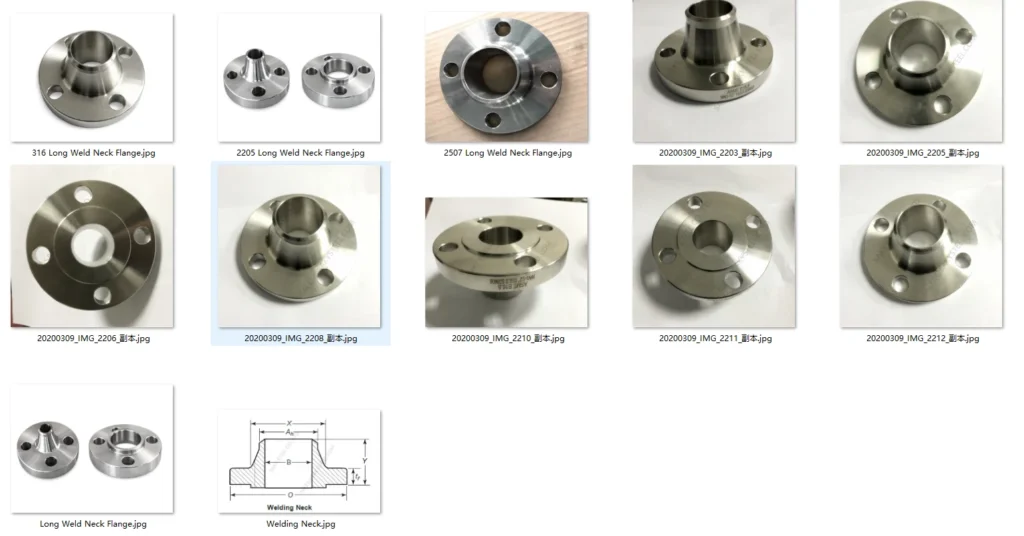
Can EN 1092-1 Type B1/B2 Mate With ASME Raised Face Flanges?
Can EN 1092-1 Type B1 or B2 mate with an ASME raised face flange? Compare the standards, geometry, gasket and RFQ checks before connecting.
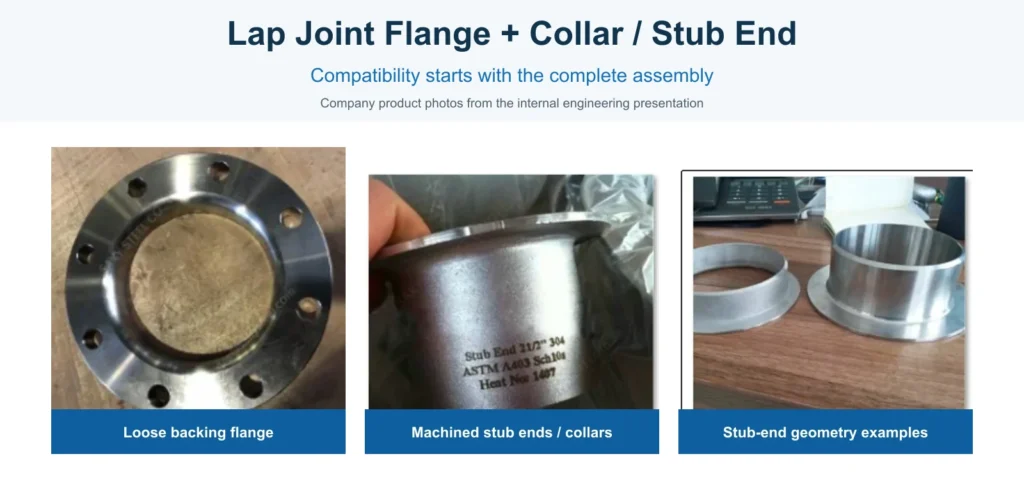
EN 1092-1 Lap Joint Flange and Collar Compatibility
Learn what must match between an EN 1092-1 loose flange and its collar or stub end: DN, PN, bore, contact geometry, facing and RFQ details.
Orifice Flange Tap Types: Flange Taps vs Corner Taps vs D-D/2
Compare flange, corner and D-D/2 pressure taps for orifice plates. Learn tap locations, standards, installation checks and orifice flange RFQ details.
Hastelloy B2 vs C276 Flanges: Which Is Better for Hydrochloric Acid?
Compare Hastelloy B2 and C276 flanges for hydrochloric acid service, including alloy differences, oxidizing contaminants, specifications and RFQ checks.
Alloy 20 vs 316L Flanges: Which Is Better for Sulfuric Acid Service?
Compare Alloy 20 and 316L flanges for sulfuric acid service, including material differences, corrosion limits, specifications and RFQ checks.
Marine Copper Nickel Pipe Marking: ISO 14726 vs Material Identification
Learn what ISO 14726 pipe colours identify, how to verify C70600 and C71500 copper-nickel, and what markings, MTC and PMI checks buyers need.
ASTM A182 F630 Flanges: 17-4 PH Heat Treatment Guide
Learn how ASTM A182 F630 identifies forged 17-4 PH flanges, how H900, H1150 and H1150M differ, and what buyers should state in an RFQ.