
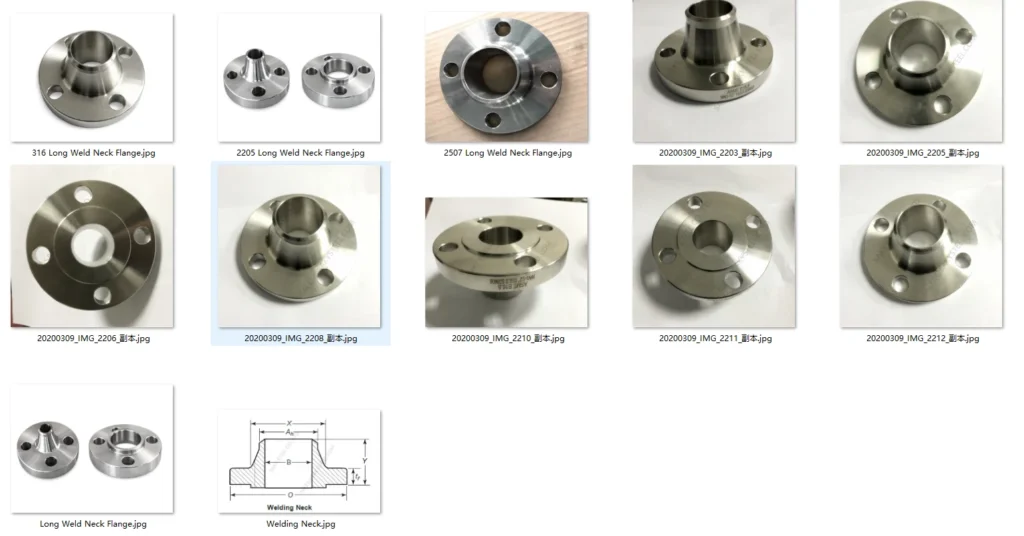
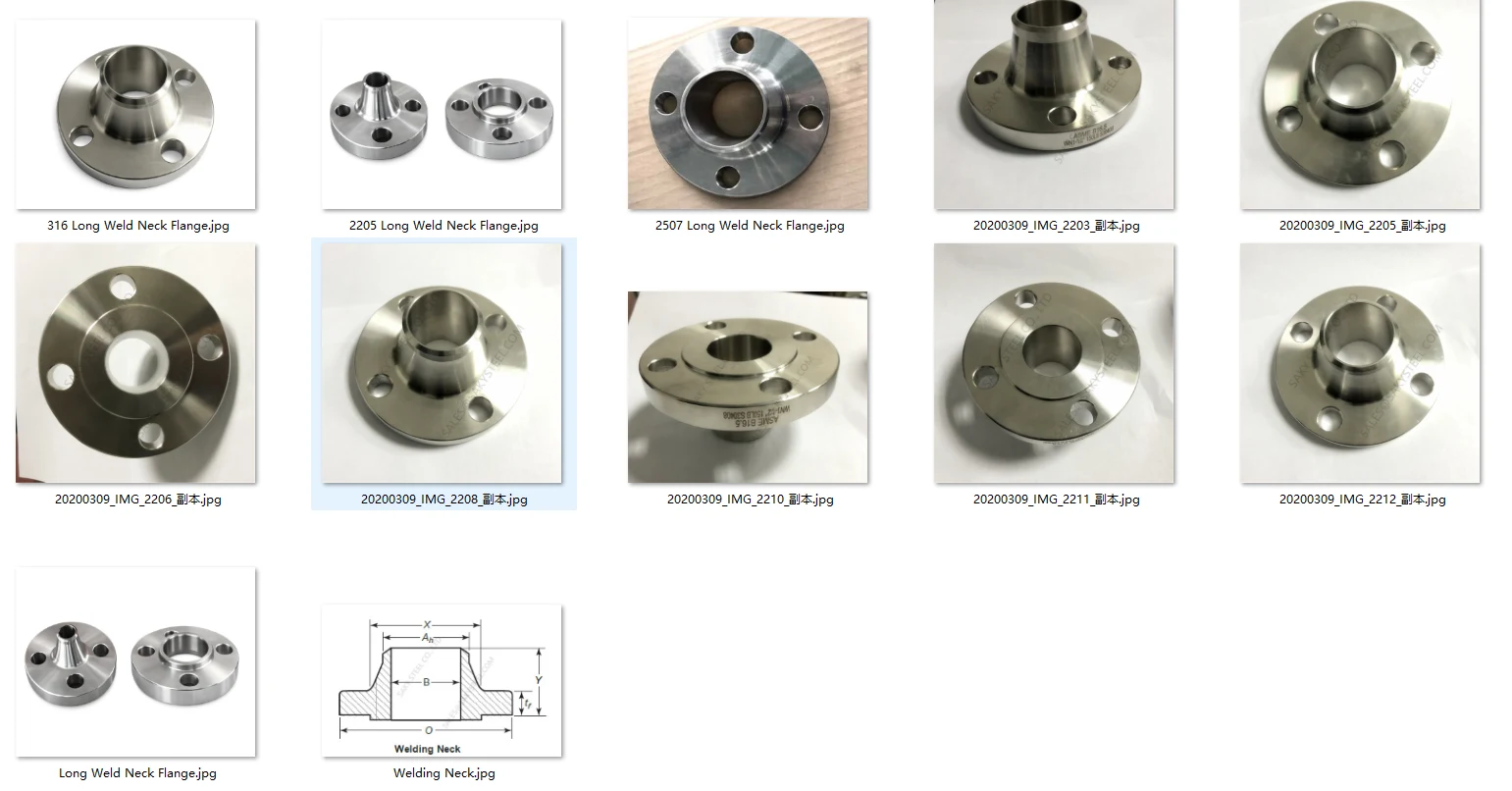
Can EN 1092-1 Type B1/B2 Mate With ASME Raised Face Flanges?
Quick answer: Do not assume that EN 1092-1 Type B1 or B2 will mate directly with an ASME B16.5 raised face. Both are raised-face concepts, but the standards use different designation systems and may differ in outside dimensions, drilling, raised-face geometry, surface finish, gasket practice and pressure-temperature basis. Approve the complete mating drawing before purchase or installation.
This question appears when a metric piping package, valve or imported skid must connect to an ASME line. The labels can look reassuring: both sides may show a raised face and a similar nominal pressure. Those similarities do not establish interchangeability. A bolted joint works only when the bolt pattern, contact geometry, gasket and design conditions agree.
What Type B1 and Type B2 Mean
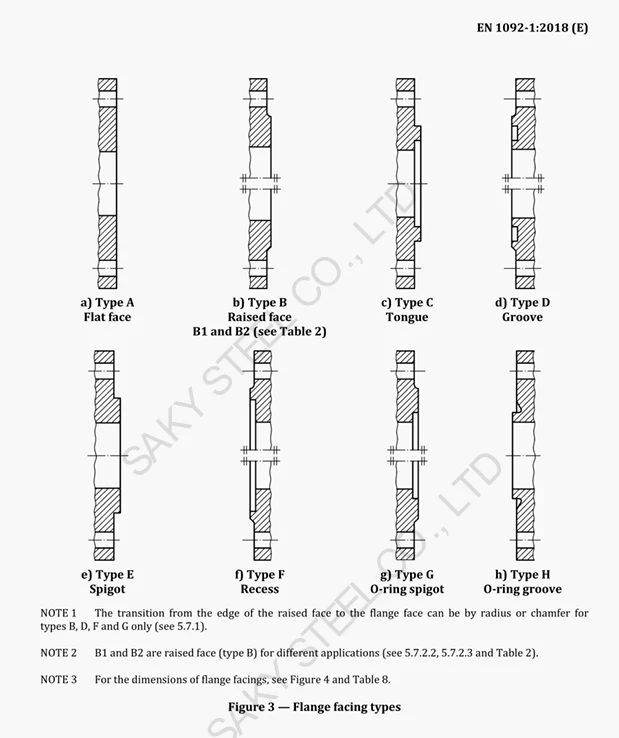
EN 1092-1 identifies flat face as Type A and raised face as Type B. The standard then distinguishes B1 and B2 for different applications. The designation belongs to the EN system. The project must identify the exact standard edition, DN, PN and facing variant rather than writing only “raised face.”
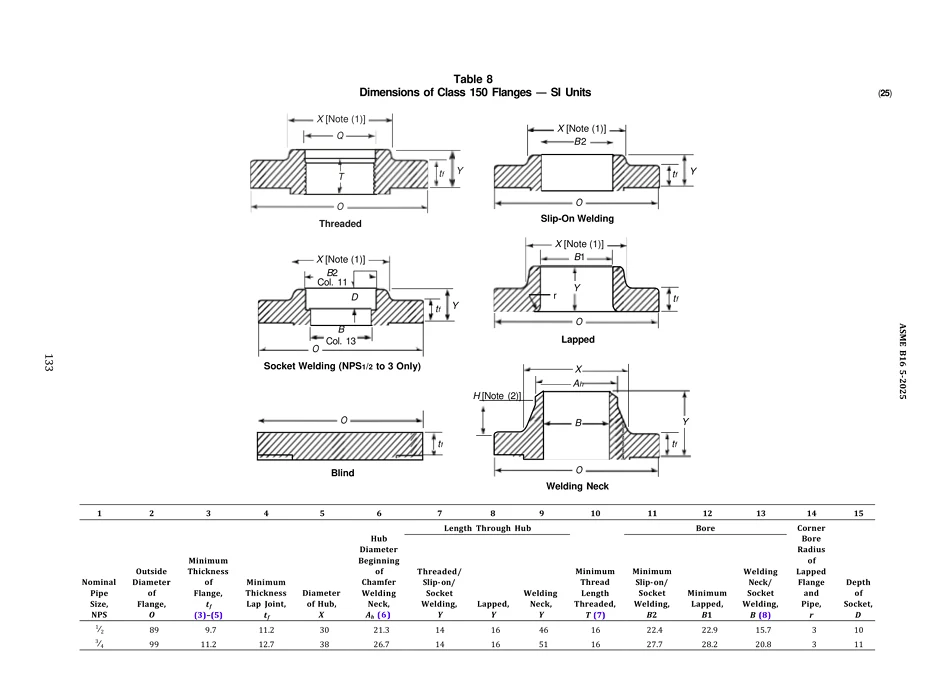
An ASME B16.5 RF designation also describes a raised face, but it belongs to an NPS and Class system. Similar names describe function, not a guarantee that the two faces share the same diameter, height, finish or bolt pattern.
Five Compatibility Checks Before Mating
| Check | Why the label is insufficient | Required evidence |
|---|---|---|
| Standard and edition | EN and ASME tables use different designation and dimensional systems. | State EN 1092-1 or ASME B16.5 plus the adopted edition. |
| DN/NPS and PN/Class | Nominal size and pressure names are not conversion rules. | Compare the two controlled drawings and pressure-temperature ratings. |
| Bolt circle and holes | A gasket cannot correct misaligned drilling. | Verify outside diameter, bolt circle, hole count, hole diameter and bolting. |
| Raised-face geometry | B1/B2 and ASME RF may use different face dimensions or application rules. | Confirm face diameter, height, transition and surface finish. |
| Gasket and assembly | Joint performance depends on the entire bolted connection. | Approve gasket type, dimensions, bolting, tightening procedure and allowable loads. |
Why “Both Are Raised Face” Is Not Enough
The gasket load path begins at the bolts and passes through both flanges into the gasket. If the drilling does not align, the joint cannot be assembled as designed. If the raised-face diameters or gasket contact areas differ, compression can become uneven. A face-finish mismatch can also change gasket friction and sealing behavior. A fabricated adapter or transition spool may solve an interface problem, but the project engineer must design and approve it.
Do not enlarge bolt holes, force bolts at an angle or select a gasket merely because it fits inside both bores. Those field changes can invalidate the intended joint geometry and documentation.
Product Selection and RFQ Boundary
For an ASME-side connection, the ASTM A182 F316L weld neck flange and ASTM A182 F316L slip-on raised face flange illustrate two product routes. The correct type still depends on piping design, welding details, material specification and the mating component. These links do not imply that an ASME product is automatically compatible with an EN Type B1 or B2 flange.
An RFQ for a mixed-standard interface should include the EN and ASME component drawings, standard editions, size, pressure designation, material, facing, gasket, bolting and design conditions. Mark any proposed adapter as a project-specific item.
Frequently Asked Questions
Is EN 1092-1 B1 the same as ASME raised face?
No automatic equivalence exists. The two labels come from different standards. Compare controlled dimensions, drilling, finish, gasket and ratings.
Can B1 and B2 be treated as the same facing?
No. EN 1092-1 identifies them for different applications. State the required variant and edition on the RFQ.
Can a custom gasket make two mismatched flanges compatible?
A gasket cannot correct incompatible drilling or uncontrolled face geometry. Any engineered transition needs design review and an approved drawing.
What should the supplier confirm?
Ask for the governing standards, dimensional drawings, facing finish, material specification, marking and documentation for each component.
Send Both Mating Drawings
Include the EN flange or valve drawing and the ASME companion-flange requirement. SASAFLANGE can review the requested flange scope and identify details that need project confirmation before quotation.
References and Image Source Index
- BSI Knowledge: BS EN 1092-1:2018 overview.
- ASME: B16.5 official scope page.
- Company internal presentation “ASME B16.5 Flange Important Matters”: company product photographs and direct technical excerpts identified as EN 1092-1:2018 and ASME B16.5-2025. The licensed standards govern.
Related Posts
ASTM A182 F51 vs F60 Flanges: S31803 vs S32205 Explained
Compare ASTM A182 F51 and F60 duplex flanges, including S31803/S32205…
UNS S32750 vs S32760 Flanges: ASTM A182 F53 or F55?
Compare S32750 and S32760 super duplex flanges, including ASTM A182…

Can a PN16 Flange Mate With an ASME Class 150 Valve?
Can a PN16 flange bolt to an ASME Class 150…
EN 1092-1 Lap Joint Flange and Collar Compatibility
Learn what must match between an EN 1092-1 loose flange…