
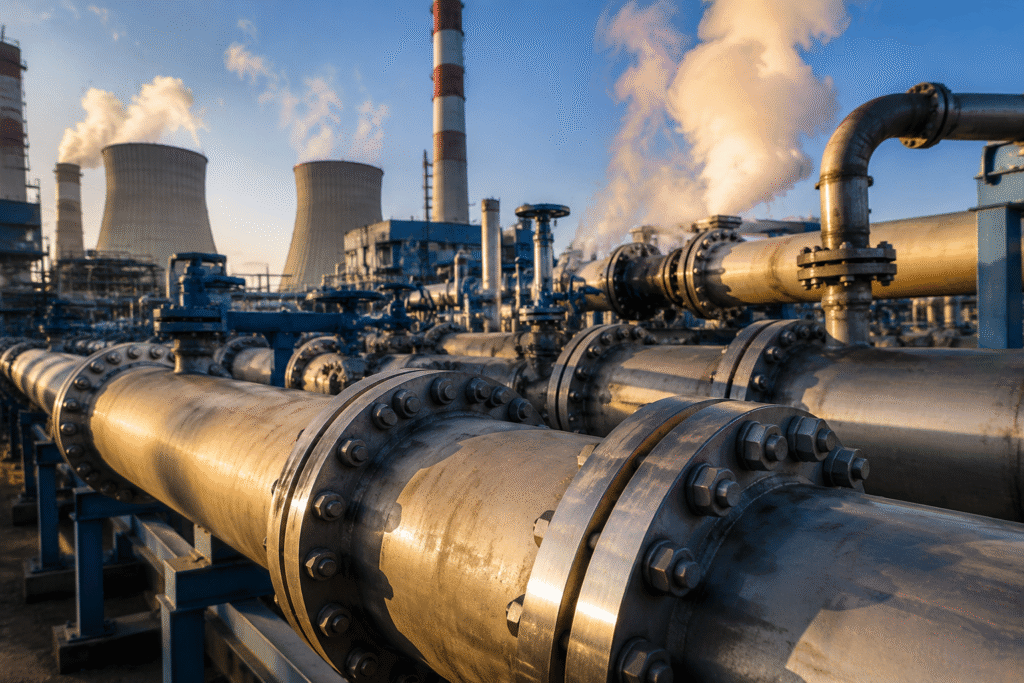
Markt für Edelstahlrohrflansche: 7 Datengestützte Einblicke in Typen, Verwendungsmöglichkeiten, und versteckte Vorteile
Der Rohrflansch aus Edelstahl bleibt ein entscheidender Bestandteil moderner Prozessrohrleitungen, vor allem als Zuverlässigkeit, Korrosionsbeständigkeit, und Compliance-Anforderungen steigen in der gesamten globalen Industrie. Laut Grand View Research (2024), Der globale Markt für Industrieflansche wurde mit bewertet $5.8 Milliarden in 2023 und wird voraussichtlich erreicht werden $7.2 Milliarden von 2030, which makes flange selection a strategic procurement decision rather than a routine commodity purchase.
Für Ingenieure und Einkäufer, the most intriguing stainless steel flange discussion is no longer just about material cost. It is about lifecycle value, Druckintegrität, weld performance, and how to choose the right flange for a specific pipe system, Standard, und Servicezustand.
Die industrielle Nachfrage nach Lösungen für Rohrflansche aus Edelstahl nimmt zu
Industrial operators continue to shift toward longer-life piping components because shutdowns are expensive and unplanned leakage creates direct operational risk. Laut Statista (2024), auf die Öl- und Gasindustrie entfallen ca 35% des weltweiten Flanschverbrauchs, which highlights how strongly critical-service sectors influence flange purchasing trends.
Regionale Produktionskapazitäten prägen auch die Beschaffungsstrategie. Laut IBISWorld (2024), Der asiatisch-pazifische Raum macht mehr als aus 45% der weltweiten Flanschproduktion, wobei China der größte Hersteller ist, which gives global buyers access to broad size ranges, kundenspezifische Bearbeitung, and competitive lead times.
These numbers explain why procurement teams increasingly compare not only price but also testing capability, Rückverfolgbarkeit der Rohstoffe, und Exportdokumentation. In high-consequence industries such as petrochemical and power generation, a flange failure can stop production lines and trigger costly reinspection programs.
Darüber hinaus, stainless steel continues to gain preference where chloride exposure, Hygieneservice, or elevated temperature performance matter. Mordor-Geheimdienst (2024) reports that demand for corrosion-resistant alloys in industrial processing is growing steadily as operators extend plant life and reduce maintenance intervals.
That trend supports the Hidden advantages of Stainless Steel over lower-cost alternatives. Rostfreie Güten wie z 304, 316, 316L, 904L, 2205, Und 2507 deliver a strong balance of corrosion resistance, Zähigkeit, and weldability when matched correctly to service media and temperature.
Als Materialwissenschaftler Dr. Helen Carter, a corrosion consultant, Staaten: “Selecting a flange only by initial cost ignores the full economics of corrosion, Ersatzarbeitskräfte, and process interruption.” Her point reflects what many EPC contractors already know. Material selection errors often cost far more than the original component price.
At the supplier level, capability matters as much as catalog breadth. SASA FLANGE serves buyers in Oil & Gas, Petrochemie, Leistung, Marine, Wasseraufbereitung, and Construction with stainless steel flanges and fittings produced to ANSI B16.5, ANSI B16.47, ASME B16.9, DIN, JIS, GOST, und EN 1092 Anforderungen.
Mit ISO 9001:2015 und PED 2014/68/EU-Zertifizierungen, SASA FLANGE supports export-oriented projects that require controlled quality systems and pressure-equipment compliance. Zusätzlich, the company offers materials from standard 304 und 316L zu Duplex, Nickellegierung, Titan, and specialty corrosion-resistant grades.
For buyers evaluating Flanges? supply partners, the market increasingly rewards manufacturers that combine CNC machining, PMI, Dimensionskontrolle, Und EN 10204 3.1 Dokumentation. daher, supplier assessment should include not only price and stock but also metallurgical consistency and responsiveness to custom drawings.
So wählen Sie Flanschtypen für Edelstahlrohre aus, Materialien, und Druckwerte
The best way to Choose a stainless steel pipe flange is to start with service conditions, not product category names. Druckklasse, Korrosionsmedium, Temperatur, Flanschverkleidung, Verbindungsmethode, and mating Pipe specification all influence which Flange design will actually perform.
Entsprechend ASME B16.5, Standardflanschabmessungen, Druck-Temperatur-Werte, Toleranzen, and marking requirements create the baseline for safe interchangeability in NPS 1/2 durch 24. Für größere Durchmesser, ASME B16.47 becomes the governing dimensional standard for many heavy industrial systems (ASME, 2023).
Material grade is the next selection gate. ASTM A182 umfasst geschmiedete oder gewalzte Rohrflansche aus Legierung und Edelstahl sowie geschmiedete Fittings für den Einsatz bei hohen Temperaturen, während ASTM A240 addresses plate, Blatt, und Streifen für Druckbehälter und allgemeine Anwendungen (ASTM, 2023).
Laut Market Research Future (2024), corrosion-related maintenance still accounts for billions of dollars in annual industrial spending worldwide. daher, correct grade selection is one of the clearest Hidden advantages available to owners seeking lower lifecycle cost.
Als Rohrleitungsingenieur Mark Ellison, PE, Staaten: “A 316L flange is not automatically the right answer; Chloridkonzentration, Spaltbedingungen, and weld procedure determine whether duplex or higher-alloy materials are more appropriate.” That quote captures the reality behind Stainless Steel selection in modern process plants.
The most common stainless steel flange Types include:
- Vorschweißflansch für Hochdruck, hohe Temperatur, und zyklischer Betrieb.
- Slip-on flange for moderate service where easier alignment and lower fabrication cost are preferred.
- Muffenschweißflansch für kleinere Bohrung, Hochdrucksysteme.
- Threaded flange for low-pressure or non-weld applications.
- Blind flange for isolation, Testen, und zukünftige Erweiterungspunkte.
- Überlappungsflansch für Systeme, die häufig demontiert werden müssen.
Material options also vary by corrosion environment and design code:
- 304 and 304L for general corrosion resistance and cost-effective utility service.
- 316 and 316L for better pitting resistance in chloride-bearing environments.
- 904L for aggressive acid service and enhanced corrosion resistance.
- 2205 duplex for higher strength and improved chloride stress corrosion cracking resistance.
- 2507 super duplex for severe offshore and seawater applications.
- Inconel, Monel, Hastelloy, and Titanium for specialized chemical and high-temperature service.
Pressure class selection requires equal discipline. Zu den gängigen ASME-Klassen gehören: 150, 300, 600, 900, 1500, Und 2500, but the allowable pressure depends on material group and temperature. Eine Klasse 300 stainless steel pipe flange does not perform identically across all alloys at elevated temperature, so buyers should verify pressure-temperature tables rather than rely on naming alone.
Facing style also affects leak integrity. Erhöhtes Gesicht, flaches Gesicht, and ring type joint geometries serve different gasket systems and bolt-loading strategies, especially in refinery and high-pressure hydrocarbon service.
Oberflächenbeschaffenheit, concentric serration, and dimensional tolerance directly influence gasket seating. According to NACE guidance and field experience, improper flange finish can accelerate leakage risk in corrosive environments even when the alloy itself is adequate (NACE, 2023).
In praktischer Beschaffungssprache, buyers should request the following before release:
- Materialprüfzeugnisse zu EN 10204 3.1.
- Rückverfolgbarkeit der Schmelzennummer und eindeutige Materialidentifizierung.
- Maßkontrollberichte.
- Pressure class and standard confirmation.
- Face finish verification and marking details.
- Any required NACE MR0175 or project-specific compliance.
SASA FLANGE supports these procurement requirements with manufacturing in 304, 316, 316L, 904L, 2205, 2507 und andere Premiumqualitäten. Unterstützt durch fortschrittliche CNC-Bearbeitung und umfassende Qualitätsprüfungen, the company can supply standard and custom Flanges from 1/2 Zoll zu 60 inch for international industrial projects.
Another intriguing point for buyers is that fittings and flanges should be sourced as a coordinated package when possible. Matching metallurgy, Maßstandard, and documentation across elbows, T-Shirts, Reduzierstücke, Kappen, and flanges reduces mismatch risk during fabrication and site installation.
Standards, Einhaltung, and Inspection Requirements for Stainless Steel Pipe Flange Procurement
Compliance is not paperwork after production. It is a design and manufacturing framework that begins with the specification stage and continues through forging, Bearbeitung, Inspektion, Markierung, Verpackung, and final shipment.
For most international projects, the core standards matrix includes ASME dimensional standards, ASTM-Materialstandards, and regional references such as DIN and EN 1092. In Europa, PED 2014/68/EU compliance often becomes essential for pressure equipment placed on the market within the EU.
The main standards relevant to stainless steel pipe flange procurement include:
- ASME B16.5 für Rohrflansche und Flanschverbindungen.
- ASME B16.47 für Stahlflansche mit großem Durchmesser.
- ASME B16.9 für werkseitig geschmiedete Stumpfschweißformstücke.
- ASTM A182 für geschmiedete Edelstahl- und Legierungsflansche.
- ASTM A240 for stainless steel plate products.
- EN 1092 für europäische Flanschabmessungen und Druckbezeichnungen.
- DIN and JIS standards for regional compatibility requirements.
- NACE MR0175 for sour service material considerations.
Laut ISO (2023), certified quality systems improve process consistency by standardizing control points from purchasing through final inspection. That is why many EPC firms prefer suppliers with ISO 9001:2015 certification and documented nonconformance procedures.
Für kritischen Service, buyers often compare standards and documentation in a structured way:
- ASME and ASTM dominate North American and many global energy projects.
- DIN and EN are common in European and export-driven process systems.
- JIS is frequently specified for Japanese industrial installations and related supply chains.
- NORSOK and DNV references may apply in offshore and marine environments.
Bild-Alternativtext-Empfehlung: stainless steel pipe flange dimensions and inspection under ASME standards.
Inspection scope should reflect service criticality. Standard checks usually include chemical composition review, mechanische Eigenschaften, Sichtprüfung, Dimensionsüberprüfung, and marking validation, while high-specification orders may also require PMI, Ferritprüfung, Härteprüfung, Ultraschallprüfung, or third-party witness inspection.
Gemäß DNV-Richtlinien für Offshore-Komponenten, documentation quality and traceability are as important as nominal material strength because offshore maintenance and replacement costs are disproportionately high (DNV, 2023). daher, marine and offshore buyers often specify enhanced traceability and corrosion-resistant grades such as 2205 oder 2507.
For chemical processing and sour service, NACE compatibility should be checked early. While not every stainless steel pipe flange falls directly under sour-service criteria, the environment can quickly eliminate otherwise common grades if chlorides, H2S, or temperature combine unfavorably.
SASA FLANGE integrates ISO 9001:2015, PED 2014/68/EU, und AD 2000 quality frameworks into export production. This supports procurement teams that need not only compliant Flanges but also inspection reports, MTCs, and technical responsiveness during project execution.
Because many competitor pages stop at general material descriptions, compliance depth becomes a real differentiator. A supplier that can discuss ASTM grades, flange pressure classes, welding implications, and EN shipment documentation adds measurable value during bid qualification and vendor approval.
Anwendungen, Verwendungsmöglichkeiten, und Auswahlkriterien für das gesamte Öl, Gas, Chemisch, Leistung, und Meeressysteme
Understanding actual Uses helps buyers avoid over-specification and under-specification at the same time. The strongest selection strategy links alloy grade, Flanschtyp, and standard to a specific process condition rather than treating all Stainless components as interchangeable.
Bei Öl und Gas, weld neck and blind flanges dominate critical service because they offer strong structural performance and reliable gasket loading. Laut Statista (2024), Dieser Sektor repräsentiert ca 35% des weltweiten Flanschverbrauchs, so lessons from upstream, Mittelstrom, and refining projects strongly shape best practices.
In petrochemischen Anlagen, 316L often becomes the starting point for moderate chloride service, während 904L, Duplex, or nickel alloys may be necessary for more aggressive media. Bei der Stromerzeugung, thermal cycling and pressure swings place a premium on forged quality, bolt loading consistency, and weld integrity.
Marine and shipbuilding projects create a different decision path. Seawater exposure, Spritzzonen, and high humidity can push buyers toward duplex or super duplex options where standard austenitic grades may suffer pitting or crevice corrosion over time.
Common application examples include:
- Oil and gas gathering lines, Trennzeichen, and process skids.
- Petrochemical transfer lines and reactor support systems.
- Power plant steam, Kondensat, und Hilfssysteme.
- Shipbuilding ballast, cooling, und Prozessleitungen.
- Water treatment and desalination systems.
- Construction and industrial utility piping.
When buyers ask what Hidden advantages stainless steel flanges offer, the answer usually includes reduced maintenance, cleaner internal surfaces, stable mechanical performance, and stronger resistance to oxidation or corrosion compared with carbon steel in the right service. Jedoch, the right service condition is the key qualifier.
Auswahlkriterien sollten Folgendes umfassen::
- Flüssigkeitschemie, einschließlich Chloride, Säuren, and sulfides.
- Betriebs- und Auslegungstemperatur.
- Betriebs- und Auslegungsdruck.
- Rohrgröße, Wandstärke, und Zeitplankompatibilität.
- Flanschklasse, gegenüber, and gasket system.
- Weld procedure and fabrication environment.
- Required standards, Zertifizierungen, und Inspektionsniveau.
- Target service life and maintenance philosophy.
Zum Beispiel, a 2-inch utility water line may only need a Class 150 slip-on stainless steel pipe flange in 304L. Im Gegensatz, an offshore chemical injection line may require a weld neck flange in 2205 oder 2507 with project-specific testing, PMI, und Zeugeninspektion durch Dritte.
Laut a 2024 industrial maintenance survey cited by Market Research Future, operators increasingly prioritize total cost of ownership over lowest bid price for corrosion-sensitive components. Infolge, procurement teams are more willing to specify premium alloys when downtime and replacement labor outweigh initial savings.
Custom manufacturing capability also affects project outcomes. SASA FLANGE offers custom sizes, spezielle Materialien, and coordinated supply of flanges plus buttweld fittings such as elbows, T-Shirts, Reduzierstücke, und Mützen, which simplifies sourcing for packaged systems and multi-line projects.
Portion 50+ Länder in ganz Öl & Gas, Petrochemie, Leistung, und Marineindustrie, SASA FLANGE supports both standard and drawing-based orders. That matters when buyers need non-standard bores, gebohrte Muster, spezielle Verkleidungen, or alloy combinations outside commodity stock programs.
Zukunftsausblick, Pricing Logic, and Strategic Buying Recommendations
The near-term outlook for stainless steel pipe flange demand remains positive because infrastructure renewal, energy investment, Entsalzung, and process modernization continue to support flange-intensive projects. Laut Grand View Research (2024), Der Markt wird voraussichtlich erreichen $7.2 Milliarden von 2030, which indicates sustained procurement activity across global industrial sectors.
Gleichzeitig, pricing will remain sensitive to nickel, Molybdän, and alloy surcharge fluctuations. daher, buyers should review not only the base quote but also material validity periods, substitute restrictions, Bearbeitungstoleranzen, and required certification scope.
As industry analyst Robert Hayes notes: “The most resilient sourcing programs combine qualified suppliers, clear standards, and early engineering review rather than waiting until fabrication is already delayed.” That recommendation is especially relevant for engineered Flanges where project deviations create costly rework.
Zu den strategischen Empfehlungen für Käufer gehören::
- Standardize preferred materials by service category.
- Prequalify suppliers by certification, Testen, and export capability.
- Bundle flange and fitting packages to reduce compatibility risk.
- Confirm standards and face types before PO release.
- Anfrage EN 10204 3.1 certificates and PMI for critical alloys.
- Consider lifecycle cost, not only ex-works price.
There is also a content lesson hidden in competitor analysis. Many suppliers discuss Stainless Steel broadly, but fewer explain how to Choose among flange Types, Druckklassen, and alloy grades in practical project terms. Buyers increasingly reward suppliers who provide technically credible guidance with fast commercial response.
For procurement managers seeking a reliable source of stainless steel pipe flange products, technical documentation, and custom manufacturing support, early engagement shortens sourcing cycles and reduces risk. For projects that require ASME, ASTM, DIN, or EN-compliant Flanges and fittings, kontaktieren SASA FLANGE during specification review can improve both technical clarity and purchasing efficiency.
Häufig gestellte Fragen
Wofür werden Edelstahlflansche verwendet??
●Zur Rohrverbindung werden Edelstahlflansche verwendet, Ventile, Pumps, und Druckgeräte in Systemen, die Korrosionsbeständigkeit erfordern, Druckintegrität, and reliable maintenance access.
●Laut Statista (2024), auf die Öl- und Gasindustrie entfallen ca 35% des weltweiten Flanschverbrauchs, which shows how important flanged joints are in critical process applications.
●They are commonly specified in petrochemical, Marine, Wasseraufbereitung, Lebensmittelverarbeitung, and power generation systems where carbon steel may corrode too quickly.
●Zu den häufigen Verwendungszwecken gehört die Leitungsverbindung, Geräteisolierung, blind end closure, Inspektionszugang, and transitions between piping components built to ASME B16.5 oder EN 1092 Abmessungen.
●Für Projekte, die zertifizierte Materialien erfordern, Dimensionskonsistenz, und Exportdokumentation, Zusammenarbeit mit etablierten Herstellern wie SASA FLANGE helps ensure the flange matches the service duty and applicable standard.
Welche Flansche bestehen aus Edelstahl??
●Die wichtigsten Edelstahlflanschtypen sind Vorschweißflansche, Slip-on, blind, Muffenschweißen, mit Gewinde, und Überlappungsflansche, and each serves a different mechanical or installation purpose.
●ASME B16.5 defines the dimensions and pressure-temperature framework for many stainless steel flanges from NPS 1/2 durch 24, während ASTM A182 commonly governs forged stainless materials.
●These flanges can be produced in 304, 304L, 316, 316L, 904L, 2205, 2507, and specialty alloys depending on corrosion level, Betriebstemperatur, and design pressure.
●Weld neck flanges are usually preferred for high-pressure or cyclic service, whereas slip-on flanges are often chosen for lower-cost fabrication in less severe conditions.
●If a project includes custom drilling, Nicht standardmäßige Bohrungen, or higher-alloy materials, sourcing from a manufacturer such as SASA FLANGE can simplify specification matching and quality control.
Stellen sie Rohrverbindungsstücke aus Edelstahl her??
●Ja, Hersteller produzieren Rohrverbindungsstücke aus Edelstahl, wie z. B. Winkelstücke, T-Shirts, Reduzierstücke, and caps to match piping systems that use stainless steel flanges and welded pipe.
●ASME B16.9 is the key dimensional standard for many factory-made wrought buttwelding fittings, and ASTM material standards define the applicable stainless grades for service conditions.
●Laut IBISWorld (2024), Der asiatisch-pazifische Raum macht mehr als aus 45% der weltweiten Flanschproduktion, and that same manufacturing ecosystem strongly supports large-scale stainless fitting supply as well.
●Coordinating fittings and flanges in the same alloy family reduces mismatch risk during welding, Herstellung, und Endkontrolle, especially on multi-line industrial packages.
●For buyers who need a combined supply of stainless steel flanges and fittings with EN 10204 3.1 Zertifikate, it is practical to work with integrated suppliers like SASA FLANGE.
Was ist die stärkste Art von Rohrleitungsflansch??
●In den meisten industriellen Rohrleitungssystemen, the weld neck flange is considered the strongest standard flange type because its tapered hub distributes stress more effectively than simpler designs.
●Its strength also depends on the material grade, Wandstärke, Schweißqualität, und Druckklasse, so a duplex weld neck flange can outperform an austenitic slip-on flange by a wide margin in demanding service.
●ASME B16.5 pressure classes such as 600, 900, 1500, Und 2500 are commonly used where elevated pressure and temperature require stronger flange construction and tighter bolting control.
●Als Rohrleitungsingenieur Mark Ellison, PE, Staaten: “Geometrie, Legierungsfestigkeit, and welding practice together determine flange reliability, not type name alone.”
●For critical hydrocarbon, Off-Shore-, or high-temperature duties, engineers should verify code compliance, Materialzertifizierung, and design calculations before selecting the strongest practical flange option.
Wie wähle ich zwischen 304, 316, 904L, und Duplex-Edelstahlflansche?
●Wählen 304 or 304L for general industrial service, 316 or 316L for better chloride resistance, 904L für aggressive chemische Umgebungen, and duplex grades for higher strength plus improved resistance to chloride stress corrosion cracking.
●Laut Market Research Future (2024), corrosion-related maintenance continues to drive significant industrial spending, so selecting the right alloy at the start often lowers total ownership cost.
●Factors such as chloride concentration, Prozesstemperatur, Säure, Spaltbedingungen, and fabrication method should guide final alloy choice rather than price alone.
●In seawater, Off-Shore-, or sour environments, Duplex-Sorten wie z 2205 Und 2507 are often more suitable than standard austenitic stainless steel, although project conditions must still be reviewed carefully.
●For specification support on alloy selection, Druckklasse, und Dokumentationspflichten, buyers should consult a qualified manufacturer before issuing the purchase order.
What standards and certificates should I request when buying stainless steel pipe flanges?
●Zumindest, buyers should request the applicable dimensional standard, Materialspezifikation, Druckklasse, Und EN 10204 3.1 material test certificate for each stainless steel pipe flange order.
●Common references include ASME B16.5, ASME B16.47, ASTM A182, ASTM A240, EN 1092, and project-specific requirements such as NACE MR0175 oder PED 2014/68/EU-Konformität.
●Laut ISO (2023), certified quality systems improve process consistency by standardizing inspection and traceability controls across production stages.
●Für kritischen Service, it is also wise to request PMI, Maßkontrollberichte, Rückverfolgbarkeit der Herdenzahl, and any third-party witness records required by the project or end user.
●When the application involves export compliance, saurer Service, or offshore duty, a certified supplier with ISO 9001:2015 and PED experience can reduce documentation risk and approval delays.
Verwandte Beiträge
Flanschoberflächenfinish: Konzentrische vs. spiralförmige Verzahnungen erklärt
Konzentrische und spiralförmige Verzahnungen sind beide bearbeitete Flanschflächenoberflächen…
Duplex 2205 vs. 316L-Flansche: Welches Material sollten Sie wählen??
Schnelle Antwort: Duplex 2205 Flansche sind normalerweise der stärkere Kandidat…

Definition des Öffnungsflansches, Details und Übersicht über ASME B16.36-Flansche: Marktdaten, Auswahlhilfe und Compliance-Einblicke
Der globale Markt für Industrieflansche wurde mit bewertet $5.8 Milliarde…

Marktführer für schwarze Entsorgungsflansche: Materialien, 3.5″ Kompatibilität, und B2B-Beschaffungsdaten für Küchenspülenflansche
Die Nachfrage nach schwarzen Entsorgungsflanschen steigt bei Käufern von Küchenarmaturen…