
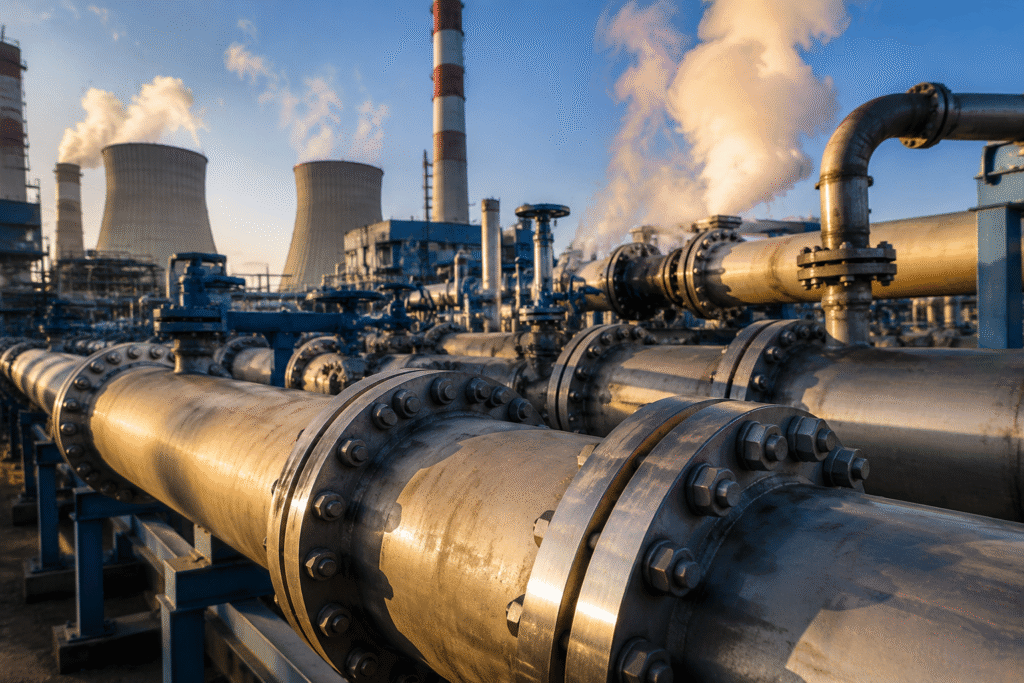
Thị trường mặt bích ống thép không gỉ: 7 Thông tin chi tiết dựa trên dữ liệu về các loại, Công dụng, và Ưu điểm tiềm ẩn
Mặt bích ống thép không gỉ vẫn là một thành phần quan trọng trong đường ống quy trình hiện đại, đặc biệt là độ tin cậy, chống ăn mòn, và nhu cầu tuân thủ tăng lên trong toàn ngành công nghiệp toàn cầu. Theo nghiên cứu của Grand View (2024), thị trường mặt bích công nghiệp toàn cầu được định giá ở mức $5.8 tỷ trong 2023 và dự kiến sẽ đạt $7.2 tỷ bởi 2030, which makes flange selection a strategic procurement decision rather than a routine commodity purchase.
Dành cho kỹ sư và người mua, the most intriguing stainless steel flange discussion is no longer just about material cost. It is about lifecycle value, tính toàn vẹn áp lực, weld performance, and how to choose the right flange for a specific pipe system, tiêu chuẩn, và tình trạng dịch vụ.
Nhu cầu công nghiệp về giải pháp mặt bích ống thép không gỉ đang tăng nhanh
Industrial operators continue to shift toward longer-life piping components because shutdowns are expensive and unplanned leakage creates direct operational risk. Theo Statista (2024), ngành dầu khí chiếm khoảng 35% tiêu thụ mặt bích toàn cầu, which highlights how strongly critical-service sectors influence flange purchasing trends.
Năng lực sản xuất khu vực cũng định hình chiến lược tìm nguồn cung ứng. Theo IBISWorld (2024), Châu Á - Thái Bình Dương chiếm hơn 45% sản xuất mặt bích toàn cầu, với Trung Quốc là nhà sản xuất lớn nhất, which gives global buyers access to broad size ranges, gia công tùy chỉnh, and competitive lead times.
These numbers explain why procurement teams increasingly compare not only price but also testing capability, truy xuất nguồn gốc nguyên liệu, và tài liệu xuất khẩu. In high-consequence industries such as petrochemical and power generation, a flange failure can stop production lines and trigger costly reinspection programs.
Hơn thế nữa, stainless steel continues to gain preference where chloride exposure, dịch vụ vệ sinh, or elevated temperature performance matter. Tình báo Mordor (2024) reports that demand for corrosion-resistant alloys in industrial processing is growing steadily as operators extend plant life and reduce maintenance intervals.
That trend supports the Hidden advantages of Stainless Steel over lower-cost alternatives. Các loại không gỉ như 304, 316, 316L, 904L, 2205, Và 2507 deliver a strong balance of corrosion resistance, sự dẻo dai, and weldability when matched correctly to service media and temperature.
Là nhà khoa học vật liệu Dr.. Helen Carter, a corrosion consultant, tiểu bang: “Selecting a flange only by initial cost ignores the full economics of corrosion, lao động thay thế, and process interruption.” Her point reflects what many EPC contractors already know. Material selection errors often cost far more than the original component price.
At the supplier level, capability matters as much as catalog breadth. SASA FLANGE serves buyers in Oil & Khí đốt, hóa dầu, Quyền lực, Hàng hải, Xử lý nước, and Construction with stainless steel flanges and fittings produced to ANSI B16.5, ANSI B16.47, ASME B16.9, DIN, JIS, GOST, và VN 1092 yêu cầu.
Với ISO 9001:2015 và chứng nhận PED 2014/68/EU, SASA FLANGE supports export-oriented projects that require controlled quality systems and pressure-equipment compliance. Ngoài ra, the company offers materials from standard 304 và 316L sang song công, hợp kim niken, titan, and specialty corrosion-resistant grades.
For buyers evaluating Flanges? supply partners, the market increasingly rewards manufacturers that combine CNC machining, PMI, kiểm soát chiều, Và EN 10204 3.1 tài liệu. Vì thế, supplier assessment should include not only price and stock but also metallurgical consistency and responsiveness to custom drawings.
Cách chọn loại mặt bích ống thép không gỉ, Nguyên vật liệu, và xếp hạng áp lực
The best way to Choose a stainless steel pipe flange is to start with service conditions, not product category names. Lớp áp lực, môi trường ăn mòn, nhiệt độ, mặt bích, phương thức kết nối, and mating Pipe specification all influence which Flange design will actually perform.
Theo ASME B16.5, kích thước mặt bích tiêu chuẩn, xếp hạng nhiệt độ áp suất, dung sai, and marking requirements create the baseline for safe interchangeability in NPS 1/2 bởi vì 24. Đối với đường kính lớn hơn, ASME B16.47 becomes the governing dimensional standard for many heavy industrial systems (ASME, 2023).
Material grade is the next selection gate. ASTM A182 bao gồm các mặt bích ống thép không gỉ và hợp kim được rèn hoặc cán và các phụ kiện được rèn cho dịch vụ nhiệt độ cao, trong khi ASTM A240 biển địa chỉ, tờ giấy, và dải cho bình chịu áp lực và các ứng dụng chung (ASTM, 2023).
Theo Nghiên cứu thị trường Tương lai (2024), corrosion-related maintenance still accounts for billions of dollars in annual industrial spending worldwide. Vì thế, correct grade selection is one of the clearest Hidden advantages available to owners seeking lower lifecycle cost.
Là kỹ sư đường ống Mark Ellison, Thể dục, tiểu bang: “A 316L flange is not automatically the right answer; nồng độ clorua, crevice conditions, and weld procedure determine whether duplex or higher-alloy materials are more appropriate.” That quote captures the reality behind Stainless Steel selection in modern process plants.
The most common stainless steel flange Types include:
- Mặt bích cổ hàn cho áp suất cao, nhiệt độ cao, and cyclic duty.
- Slip-on flange for moderate service where easier alignment and lower fabrication cost are preferred.
- Mặt bích hàn ổ cắm cho lỗ khoan nhỏ hơn, hệ thống áp suất cao.
- Threaded flange for low-pressure or non-weld applications.
- Mặt bích mù để cách ly, thử nghiệm, và các điểm mở rộng trong tương lai.
- Mặt bích khớp nối cho các hệ thống cần tháo dỡ thường xuyên.
Material options also vary by corrosion environment and design code:
- 304 and 304L for general corrosion resistance and cost-effective utility service.
- 316 and 316L for better pitting resistance in chloride-bearing environments.
- 904L for aggressive acid service and enhanced corrosion resistance.
- 2205 duplex for higher strength and improved chloride stress corrosion cracking resistance.
- 2507 super duplex for severe offshore and seawater applications.
- Inconel, Monel, Hastelloy, and Titanium for specialized chemical and high-temperature service.
Pressure class selection requires equal discipline. Các lớp ASME phổ biến bao gồm 150, 300, 600, 900, 1500, Và 2500, but the allowable pressure depends on material group and temperature. một lớp học 300 stainless steel pipe flange does not perform identically across all alloys at elevated temperature, so buyers should verify pressure-temperature tables rather than rely on naming alone.
Facing style also affects leak integrity. Mặt ngước lên, mặt phẳng, and ring type joint geometries serve different gasket systems and bolt-loading strategies, especially in refinery and high-pressure hydrocarbon service.
Bề mặt hoàn thiện, concentric serration, and dimensional tolerance directly influence gasket seating. According to NACE guidance and field experience, improper flange finish can accelerate leakage risk in corrosive environments even when the alloy itself is adequate (NACE, 2023).
Trong điều kiện tìm nguồn cung ứng thực tế, buyers should request the following before release:
- Giấy chứng nhận kiểm tra vật liệu để EN 10204 3.1.
- Truy xuất nguồn gốc số nhiệt và nhận dạng vật liệu tích cực.
- Báo cáo kiểm tra kích thước.
- Pressure class and standard confirmation.
- Face finish verification and marking details.
- Any required NACE MR0175 or project-specific compliance.
SASA FLANGE supports these procurement requirements with manufacturing in 304, 316, 316L, 904L, 2205, 2507 và các hạng cao cấp khác. Được hỗ trợ bởi gia công CNC tiên tiến và kiểm tra chất lượng toàn diện, the company can supply standard and custom Flanges from 1/2 inch đến 60 inch for international industrial projects.
Another intriguing point for buyers is that fittings and flanges should be sourced as a coordinated package when possible. Matching metallurgy, tiêu chuẩn chiều, and documentation across elbows, áo thun, bộ giảm tốc, mũ lưỡi trai, and flanges reduces mismatch risk during fabrication and site installation.
Tiêu chuẩn, Sự tuân thủ, and Inspection Requirements for Stainless Steel Pipe Flange Procurement
Compliance is not paperwork after production. It is a design and manufacturing framework that begins with the specification stage and continues through forging, gia công, điều tra, đánh dấu, đóng gói, and final shipment.
Đối với hầu hết các dự án quốc tế, the core standards matrix includes ASME dimensional standards, Tiêu chuẩn vật liệu ASTM, and regional references such as DIN and EN 1092. ở châu Âu, PED 2014/68/EU compliance often becomes essential for pressure equipment placed on the market within the EU.
The main standards relevant to stainless steel pipe flange procurement include:
- ASME B16.5 cho mặt bích ống và phụ kiện mặt bích.
- ASME B16.47 cho mặt bích thép có đường kính lớn.
- ASME B16.9 for factory-made wrought buttwelding fittings.
- ASTM A182 cho mặt bích rèn không gỉ và hợp kim.
- ASTM A240 for stainless steel plate products.
- EN 1092 về kích thước mặt bích và ký hiệu áp suất của mặt bích Châu Âu.
- DIN and JIS standards for regional compatibility requirements.
- NACE MR0175 for sour service material considerations.
Theo tiêu chuẩn ISO (2023), certified quality systems improve process consistency by standardizing control points from purchasing through final inspection. That is why many EPC firms prefer suppliers with ISO 9001:2015 certification and documented nonconformance procedures.
Đối với dịch vụ quan trọng, buyers often compare standards and documentation in a structured way:
- ASME and ASTM dominate North American and many global energy projects.
- DIN and EN are common in European and export-driven process systems.
- JIS is frequently specified for Japanese industrial installations and related supply chains.
- NORSOK and DNV references may apply in offshore and marine environments.
Đề xuất văn bản thay thế hình ảnh: stainless steel pipe flange dimensions and inspection under ASME standards.
Inspection scope should reflect service criticality. Standard checks usually include chemical composition review, tính chất cơ học, kiểm tra trực quan, xác minh chiều, and marking validation, while high-specification orders may also require PMI, thử nghiệm ferit, kiểm tra độ cứng, kiểm tra siêu âm, hoặc kiểm tra nhân chứng của bên thứ ba.
According to DNV guidance for offshore components, documentation quality and traceability are as important as nominal material strength because offshore maintenance and replacement costs are disproportionately high (DNV, 2023). Vì thế, marine and offshore buyers often specify enhanced traceability and corrosion-resistant grades such as 2205 hoặc 2507.
For chemical processing and sour service, NACE compatibility should be checked early. While not every stainless steel pipe flange falls directly under sour-service criteria, the environment can quickly eliminate otherwise common grades if chlorides, H2S, or temperature combine unfavorably.
SASA FLANGE tích hợp ISO 9001:2015, PED 2014/68/EU, và AD 2000 quality frameworks into export production. This supports procurement teams that need not only compliant Flanges but also inspection reports, MTC, and technical responsiveness during project execution.
Because many competitor pages stop at general material descriptions, compliance depth becomes a real differentiator. A supplier that can discuss ASTM grades, flange pressure classes, welding implications, and EN shipment documentation adds measurable value during bid qualification and vendor approval.
Ứng dụng, Công dụng, và tiêu chí lựa chọn dầu, Khí đốt, Hóa chất, Quyền lực, và hệ thống hàng hải
Understanding actual Uses helps buyers avoid over-specification and under-specification at the same time. The strongest selection strategy links alloy grade, loại mặt bích, and standard to a specific process condition rather than treating all Stainless components as interchangeable.
Trong dầu khí, weld neck and blind flanges dominate critical service because they offer strong structural performance and reliable gasket loading. Theo Statista (2024), lĩnh vực này đại diện cho khoảng 35% tiêu thụ mặt bích toàn cầu, so lessons from upstream, giữa dòng, and refining projects strongly shape best practices.
Trong các nhà máy hóa dầu, 316L often becomes the starting point for moderate chloride service, trong khi 904L, hai mặt, or nickel alloys may be necessary for more aggressive media. Trong sản xuất điện, thermal cycling and pressure swings place a premium on forged quality, bolt loading consistency, và tính toàn vẹn của mối hàn.
Marine and shipbuilding projects create a different decision path. Seawater exposure, vùng giật gân, and high humidity can push buyers toward duplex or super duplex options where standard austenitic grades may suffer pitting or crevice corrosion over time.
Common application examples include:
- Oil and gas gathering lines, dải phân cách, and process skids.
- Petrochemical transfer lines and reactor support systems.
- Power plant steam, ngưng tụ, và hệ thống phụ trợ.
- Shipbuilding ballast, làm mát, và xử lý đường ống.
- Water treatment and desalination systems.
- Construction and industrial utility piping.
When buyers ask what Hidden advantages stainless steel flanges offer, the answer usually includes reduced maintenance, cleaner internal surfaces, stable mechanical performance, and stronger resistance to oxidation or corrosion compared with carbon steel in the right service. Tuy nhiên, the right service condition is the key qualifier.
Tiêu chí lựa chọn nên bao gồm:
- Hóa học chất lỏng, bao gồm clorua, axit, and sulfides.
- Nhiệt độ vận hành và thiết kế.
- Áp suất vận hành và thiết kế.
- Kích thước ống, độ dày của tường, và lịch trình tương thích.
- Lớp mặt bích, đối mặt, và hệ thống đệm.
- Weld procedure and fabrication environment.
- Required standards, chứng chỉ, và mức độ kiểm tra.
- Target service life and maintenance philosophy.
Ví dụ, a 2-inch utility water line may only need a Class 150 slip-on stainless steel pipe flange in 304L. Ngược lại, an offshore chemical injection line may require a weld neck flange in 2205 hoặc 2507 with project-specific testing, PMI, và kiểm tra nhân chứng của bên thứ ba.
Theo một 2024 industrial maintenance survey cited by Market Research Future, operators increasingly prioritize total cost of ownership over lowest bid price for corrosion-sensitive components. Kết quả là, procurement teams are more willing to specify premium alloys when downtime and replacement labor outweigh initial savings.
Custom manufacturing capability also affects project outcomes. SASA FLANGE offers custom sizes, vật liệu đặc biệt, and coordinated supply of flanges plus buttweld fittings such as elbows, áo thun, bộ giảm tốc, và mũ, which simplifies sourcing for packaged systems and multi-line projects.
Phục vụ 50+ các quốc gia trên khắp dầu mỏ & Khí đốt, hóa dầu, Quyền lực, và ngành hàng hải, SASA FLANGE supports both standard and drawing-based orders. That matters when buyers need non-standard bores, mẫu khoan, mặt đặc biệt, or alloy combinations outside commodity stock programs.
Triển vọng tương lai, Pricing Logic, and Strategic Buying Recommendations
The near-term outlook for stainless steel pipe flange demand remains positive because infrastructure renewal, energy investment, khử muối, and process modernization continue to support flange-intensive projects. Theo nghiên cứu của Grand View (2024), thị trường dự kiến sẽ đạt $7.2 tỷ bởi 2030, which indicates sustained procurement activity across global industrial sectors.
Đồng thời, pricing will remain sensitive to nickel, molypden, and alloy surcharge fluctuations. Vì thế, buyers should review not only the base quote but also material validity periods, substitute restrictions, dung sai gia công, and required certification scope.
As industry analyst Robert Hayes notes: “The most resilient sourcing programs combine qualified suppliers, clear standards, and early engineering review rather than waiting until fabrication is already delayed.” That recommendation is especially relevant for engineered Flanges where project deviations create costly rework.
Khuyến nghị chiến lược cho người mua bao gồm:
- Standardize preferred materials by service category.
- Prequalify suppliers by certification, thử nghiệm, and export capability.
- Bundle flange and fitting packages to reduce compatibility risk.
- Confirm standards and face types before PO release.
- Lời yêu cầu EN 10204 3.1 certificates and PMI for critical alloys.
- Consider lifecycle cost, not only ex-works price.
There is also a content lesson hidden in competitor analysis. Many suppliers discuss Stainless Steel broadly, but fewer explain how to Choose among flange Types, lớp áp lực, and alloy grades in practical project terms. Buyers increasingly reward suppliers who provide technically credible guidance with fast commercial response.
For procurement managers seeking a reliable source of stainless steel pipe flange products, technical documentation, and custom manufacturing support, early engagement shortens sourcing cycles and reduces risk. For projects that require ASME, ASTM, DIN, or EN-compliant Flanges and fittings, liên lạc SASA FLANGE during specification review can improve both technical clarity and purchasing efficiency.
Câu hỏi thường gặp
Mặt bích thép không gỉ dùng để làm gì?
●Mặt bích thép không gỉ được sử dụng để kết nối đường ống, van, máy bơm, và thiết bị chịu áp lực trong các hệ thống yêu cầu khả năng chống ăn mòn, tính toàn vẹn áp lực, và truy cập bảo trì đáng tin cậy.
●Theo Statista (2024), ngành dầu khí chiếm khoảng 35% tiêu thụ mặt bích toàn cầu, which shows how important flanged joints are in critical process applications.
●They are commonly specified in petrochemical, hàng hải, xử lý nước, chế biến thực phẩm, and power generation systems where carbon steel may corrode too quickly.
●Sử dụng phổ biến bao gồm kết nối đường dây, cách ly thiết bị, blind end closure, truy cập kiểm tra, and transitions between piping components built to ASME B16.5 hoặc VN 1092 kích thước.
●Đối với các dự án yêu cầu vật liệu được chứng nhận, tính nhất quán về chiều, và tài liệu xuất khẩu, làm việc với các nhà sản xuất có uy tín như SASA FLANGE helps ensure the flange matches the service duty and applicable standard.
Mặt bích nào được làm bằng thép không gỉ?
●Các loại mặt bích inox chính là cổ hàn, trượt trên, mù, ổ cắm hàn, xâu chuỗi, và mặt bích khớp nối, and each serves a different mechanical or installation purpose.
●ASME B16.5 defines the dimensions and pressure-temperature framework for many stainless steel flanges from NPS 1/2 bởi vì 24, trong khi ASTM A182 commonly governs forged stainless materials.
●These flanges can be produced in 304, 304L, 316, 316L, 904L, 2205, 2507, and specialty alloys depending on corrosion level, nhiệt độ hoạt động, và áp suất thiết kế.
●Weld neck flanges are usually preferred for high-pressure or cyclic service, whereas slip-on flanges are often chosen for lower-cost fabrication in less severe conditions.
●If a project includes custom drilling, lỗ khoan không chuẩn, or higher-alloy materials, sourcing from a manufacturer such as SASA FLANGE can simplify specification matching and quality control.
Họ có sản xuất phụ kiện đường ống bằng thép không gỉ không?
●Đúng, nhà sản xuất sản xuất phụ kiện ống thép không gỉ như khuỷu tay, áo thun, bộ giảm tốc, and caps to match piping systems that use stainless steel flanges and welded pipe.
●ASME B16.9 is the key dimensional standard for many factory-made wrought buttwelding fittings, and ASTM material standards define the applicable stainless grades for service conditions.
●Theo IBISWorld (2024), Châu Á - Thái Bình Dương chiếm hơn 45% sản xuất mặt bích toàn cầu, and that same manufacturing ecosystem strongly supports large-scale stainless fitting supply as well.
●Coordinating fittings and flanges in the same alloy family reduces mismatch risk during welding, chế tạo, và kiểm tra cuối cùng, especially on multi-line industrial packages.
●For buyers who need a combined supply of stainless steel flanges and fittings with EN 10204 3.1 giấy chứng nhận, it is practical to work with integrated suppliers like SASA FLANGE.
Mặt bích ống loại nào bền nhất?
●In most industrial piping systems, the weld neck flange is considered the strongest standard flange type because its tapered hub distributes stress more effectively than simpler designs.
●Its strength also depends on the material grade, độ dày của tường, chất lượng mối hàn, và lớp áp lực, so a duplex weld neck flange can outperform an austenitic slip-on flange by a wide margin in demanding service.
●ASME B16.5 các lớp áp lực như 600, 900, 1500, Và 2500 are commonly used where elevated pressure and temperature require stronger flange construction and tighter bolting control.
●Là kỹ sư đường ống Mark Ellison, Thể dục, tiểu bang: “Hình học, sức mạnh hợp kim, and welding practice together determine flange reliability, not type name alone.”
●For critical hydrocarbon, ngoài khơi, or high-temperature duties, engineers should verify code compliance, chứng nhận vật liệu, and design calculations before selecting the strongest practical flange option.
Làm thế nào để tôi lựa chọn giữa 304, 316, 904L, và mặt bích thép không gỉ song công?
●Chọn 304 or 304L for general industrial service, 316 or 316L for better chloride resistance, 904L dành cho môi trường hóa chất khắc nghiệt, and duplex grades for higher strength plus improved resistance to chloride stress corrosion cracking.
●Theo Nghiên cứu thị trường Tương lai (2024), corrosion-related maintenance continues to drive significant industrial spending, so selecting the right alloy at the start often lowers total ownership cost.
●Factors such as chloride concentration, nhiệt độ quá trình, tính axit, crevice conditions, and fabrication method should guide final alloy choice rather than price alone.
●In seawater, ngoài khơi, or sour environments, các lớp song công như 2205 Và 2507 are often more suitable than standard austenitic stainless steel, although project conditions must still be reviewed carefully.
●For specification support on alloy selection, lớp áp lực, và yêu cầu về tài liệu, buyers should consult a qualified manufacturer before issuing the purchase order.
What standards and certificates should I request when buying stainless steel pipe flanges?
●Tối thiểu, buyers should request the applicable dimensional standard, đặc điểm kỹ thuật vật liệu, lớp áp lực, Và EN 10204 3.1 material test certificate for each stainless steel pipe flange order.
●Common references include ASME B16.5, ASME B16.47, ASTM A182, ASTM A240, EN 1092, and project-specific requirements such as NACE MR0175 hoặc tuân thủ PED 2014/68/EU.
●Theo tiêu chuẩn ISO (2023), certified quality systems improve process consistency by standardizing inspection and traceability controls across production stages.
●Đối với dịch vụ quan trọng, it is also wise to request PMI, báo cáo kiểm tra chiều, truy xuất nguồn gốc số nhiệt, and any third-party witness records required by the project or end user.
●When the application involves export compliance, dịch vụ chua, or offshore duty, a certified supplier with ISO 9001:2015 and PED experience can reduce documentation risk and approval delays.
bài viết liên quan
Mặt bích hoàn thiện: Giải thích về răng cưa đồng tâm và xoắn ốc
Các răng cưa đồng tâm và xoắn ốc đều được gia công hoàn thiện mặt bích…
song công 2205 so với mặt bích 316L: Bạn nên chọn chất liệu nào?
Trả lời nhanh: song công 2205 mặt bích thường là ứng cử viên mạnh hơn…

Định nghĩa mặt bích lỗ, Chi tiết và tổng quan về mặt bích ASME B16.36: Dữ liệu thị trường, Hướng dẫn lựa chọn và thông tin chi tiết về tuân thủ
Thị trường mặt bích công nghiệp toàn cầu được định giá ở mức $5.8 tỷ…

Hướng dẫn thị trường mặt bích xử lý màu đen: Nguyên vật liệu, 3.5″ Khả năng tương thích, và dữ liệu tìm nguồn cung ứng B2B cho mặt bích bồn rửa nhà bếp
Nhu cầu mặt bích xử lý màu đen đang tăng lên khi người mua đồ đạc nhà bếp…