
ตลาดหน้าแปลนท่อสแตนเลส: 7 ข้อมูลเชิงลึกที่ได้รับการสนับสนุนจากข้อมูลประเภทต่างๆ, การใช้งาน, และข้อดีที่ซ่อนอยู่
หน้าแปลนท่อสแตนเลสยังคงเป็นองค์ประกอบสำคัญในกระบวนการวางท่อสมัยใหม่, โดยเฉพาะอย่างยิ่งความน่าเชื่อถือ, ความต้านทานการกัดกร่อน, และความต้องการด้านการปฏิบัติตามกฎระเบียบก็เพิ่มขึ้นทั่วทั้งอุตสาหกรรมทั่วโลก. จากการวิจัยของแกรนด์วิว (2024), ตลาดหน้าแปลนอุตสาหกรรมทั่วโลกมีมูลค่าอยู่ที่ $5.8 พันล้านใน 2023 และคาดว่าจะไปถึง $7.2 พันล้านโดย 2030, which makes flange selection a strategic procurement decision rather than a routine commodity purchase.
สำหรับวิศวกรและผู้ซื้อ, the most intriguing stainless steel flange discussion is no longer just about material cost. It is about lifecycle value, ความสมบูรณ์ของความดัน, weld performance, and how to choose the right flange for a specific pipe system, มาตรฐาน, และเงื่อนไขการให้บริการ.
ความต้องการทางอุตสาหกรรมสำหรับโซลูชันหน้าแปลนท่อสแตนเลสกำลังเพิ่มขึ้นอย่างรวดเร็ว
Industrial operators continue to shift toward longer-life piping components because shutdowns are expensive and unplanned leakage creates direct operational risk. ตามสถิติของสตาติสต้า (2024), อุตสาหกรรมน้ำมันและก๊าซมีสัดส่วนประมาณ 35% ของการบริโภคหน้าแปลนทั่วโลก, which highlights how strongly critical-service sectors influence flange purchasing trends.
กำลังการผลิตในภูมิภาคยังกำหนดกลยุทธ์การจัดหาอีกด้วย. อ้างอิงจาก IBISWorld (2024), บัญชีเอเชียแปซิฟิกมีมากกว่า 45% ของการผลิตหน้าแปลนทั่วโลก, โดยจีนเป็นผู้ผลิตรายใหญ่ที่สุด, which gives global buyers access to broad size ranges, เครื่องจักรกลแบบกำหนดเอง, and competitive lead times.
These numbers explain why procurement teams increasingly compare not only price but also testing capability, การตรวจสอบย้อนกลับของวัตถุดิบ, และเอกสารการส่งออก. In high-consequence industries such as petrochemical and power generation, a flange failure can stop production lines and trigger costly reinspection programs.
นอกจากนี้, stainless steel continues to gain preference where chloride exposure, บริการที่ถูกสุขลักษณะ, or elevated temperature performance matter. หน่วยสืบราชการลับมอร์ดอร์ (2024) reports that demand for corrosion-resistant alloys in industrial processing is growing steadily as operators extend plant life and reduce maintenance intervals.
That trend supports the Hidden advantages of Stainless Steel over lower-cost alternatives. เกรดสเตนเลส เช่น 304, 316, 316ล, 904ล, 2205, และ 2507 deliver a strong balance of corrosion resistance, ความเหนียว, and weldability when matched correctly to service media and temperature.
ในฐานะนักวิทยาศาสตร์ด้านวัสดุ ดร. เฮเลน คาร์เตอร์, a corrosion consultant, รัฐ: “Selecting a flange only by initial cost ignores the full economics of corrosion, แรงงานทดแทน, and process interruption.” Her point reflects what many EPC contractors already know. Material selection errors often cost far more than the original component price.
At the supplier level, capability matters as much as catalog breadth. SASA FLANGE serves buyers in Oil & แก๊ส, ปิโตรเคมี, พลัง, มารีน, การบำบัดน้ำ, and Construction with stainless steel flanges and fittings produced to ANSI B16.5, ANSI B16.47, ASME B16.9, DIN, JIS, GOST, และภาษาอังกฤษ 1092 ความต้องการ.
กับ ISO 9001:2015 และการรับรอง PED 2014/68/EU, SASA FLANGE supports export-oriented projects that require controlled quality systems and pressure-equipment compliance. นอกจากนี้, the company offers materials from standard 304 และ 316L เป็นแบบดูเพล็กซ์, โลหะผสมนิกเกิล, ไทเทเนียม, and specialty corrosion-resistant grades.
For buyers evaluating Flanges? supply partners, the market increasingly rewards manufacturers that combine CNC machining, พีเอ็มไอ, การควบคุมมิติ, และ EN 10204 3.1 เอกสารประกอบ. ดังนั้น, supplier assessment should include not only price and stock but also metallurgical consistency and responsiveness to custom drawings.
วิธีการเลือกประเภทหน้าแปลนท่อสแตนเลส, วัสดุ, และการให้คะแนนความดัน
The best way to Choose a stainless steel pipe flange is to start with service conditions, not product category names. ระดับความดัน, สื่อการกัดกร่อน, อุณหภูมิ, หันหน้าไปทางหน้าแปลน, วิธีการเชื่อมต่อ, and mating Pipe specification all influence which Flange design will actually perform.
ตาม ASME B16.5, ขนาดหน้าแปลนมาตรฐาน, การจัดอันดับความดันอุณหภูมิ, ความคลาดเคลื่อน, and marking requirements create the baseline for safe interchangeability in NPS 1/2 ผ่าน 24. สำหรับเส้นผ่านศูนย์กลางที่ใหญ่ขึ้น, ASME B16.47 becomes the governing dimensional standard for many heavy industrial systems (ASME, 2023).
Material grade is the next selection gate. ASTM A182 ครอบคลุมโลหะผสมปลอมแปลงหรือรีดและหน้าแปลนท่อสแตนเลสและอุปกรณ์ปลอมแปลงสำหรับการบริการที่อุณหภูมิสูง, ในขณะที่ ASTM A240 ป้ายที่อยู่, แผ่น, และแถบสำหรับภาชนะรับความดันและการใช้งานทั่วไป (ASTM, 2023).
ตามการวิจัยตลาดอนาคต (2024), corrosion-related maintenance still accounts for billions of dollars in annual industrial spending worldwide. ดังนั้น, correct grade selection is one of the clearest Hidden advantages available to owners seeking lower lifecycle cost.
รับบทเป็น มาร์ค เอลลิสัน วิศวกรท่อ, วิชาพลศึกษา, รัฐ: “A 316L flange is not automatically the right answer; ความเข้มข้นของคลอไรด์, crevice conditions, and weld procedure determine whether duplex or higher-alloy materials are more appropriate.” That quote captures the reality behind Stainless Steel selection in modern process plants.
The most common stainless steel flange Types include:
- หน้าแปลนเชื่อมคอสำหรับแรงดันสูง, อุณหภูมิสูง, and cyclic duty.
- Slip-on flange for moderate service where easier alignment and lower fabrication cost are preferred.
- Socket weld flange for smaller bore, ระบบแรงดันสูง.
- Threaded flange for low-pressure or non-weld applications.
- Blind flange for isolation, การทดสอบ, และจุดขยายในอนาคต.
- หน้าแปลนข้อต่อตักสำหรับระบบที่ต้องรื้อบ่อยครั้ง.
Material options also vary by corrosion environment and design code:
- 304 and 304L for general corrosion resistance and cost-effective utility service.
- 316 and 316L for better pitting resistance in chloride-bearing environments.
- 904L for aggressive acid service and enhanced corrosion resistance.
- 2205 duplex for higher strength and improved chloride stress corrosion cracking resistance.
- 2507 super duplex for severe offshore and seawater applications.
- อินโคเนล, โมเนล, ฮาสเตลลอย, and Titanium for specialized chemical and high-temperature service.
Pressure class selection requires equal discipline. คลาส ASME ทั่วไปประกอบด้วย 150, 300, 600, 900, 1500, และ 2500, but the allowable pressure depends on material group and temperature. ชั้นเรียน 300 stainless steel pipe flange does not perform identically across all alloys at elevated temperature, so buyers should verify pressure-temperature tables rather than rely on naming alone.
Facing style also affects leak integrity. เงยหน้าขึ้น, หน้าแบน, and ring type joint geometries serve different gasket systems and bolt-loading strategies, especially in refinery and high-pressure hydrocarbon service.
การตกแต่งพื้นผิว, concentric serration, and dimensional tolerance directly influence gasket seating. According to NACE guidance and field experience, improper flange finish can accelerate leakage risk in corrosive environments even when the alloy itself is adequate (เนซ, 2023).
ในแง่การจัดหาในทางปฏิบัติ, buyers should request the following before release:
- ใบรับรองการทดสอบวัสดุถึง EN 10204 3.1.
- การติดตามหมายเลขความร้อนและการระบุวัสดุที่เป็นบวก.
- รายงานการตรวจสอบมิติ.
- ระดับความดันและการยืนยันมาตรฐาน.
- Face finish verification and marking details.
- Any required NACE MR0175 or project-specific compliance.
SASA FLANGE supports these procurement requirements with manufacturing in 304, 316, 316ล, 904ล, 2205, 2507 และเกรดพรีเมี่ยมอื่นๆ. ได้รับการสนับสนุนจากเครื่องจักร CNC ขั้นสูงและการทดสอบคุณภาพที่ครอบคลุม, the company can supply standard and custom Flanges from 1/2 นิ้วถึง 60 inch for international industrial projects.
Another intriguing point for buyers is that fittings and flanges should be sourced as a coordinated package when possible. Matching metallurgy, มาตรฐานมิติ, and documentation across elbows, เสื้อยืด, ตัวลด, หมวกแก๊ป, and flanges reduces mismatch risk during fabrication and site installation.
มาตรฐาน, การปฏิบัติตาม, and Inspection Requirements for Stainless Steel Pipe Flange Procurement
Compliance is not paperwork after production. It is a design and manufacturing framework that begins with the specification stage and continues through forging, เครื่องจักรกล, การตรวจสอบ, การทำเครื่องหมาย, การบรรจุ, and final shipment.
สำหรับโครงการระดับนานาชาติส่วนใหญ่, the core standards matrix includes ASME dimensional standards, มาตรฐานวัสดุ ASTM, and regional references such as DIN and EN 1092. ในยุโรป, PED 2014/68/EU compliance often becomes essential for pressure equipment placed on the market within the EU.
The main standards relevant to stainless steel pipe flange procurement include:
- ASME B16.5 สำหรับหน้าแปลนท่อและอุปกรณ์หน้าแปลน.
- ASME B16.47 สำหรับหน้าแปลนเหล็กที่มีเส้นผ่านศูนย์กลางขนาดใหญ่.
- ASME B16.9 สำหรับอุปกรณ์เชื่อมชนที่ทำขึ้นจากโรงงาน.
- ASTM A182 for forged stainless and alloy flanges.
- ASTM A240 for stainless steel plate products.
- EN 1092 สำหรับขนาดหน้าแปลนยุโรปและการกำหนดแรงดัน.
- DIN and JIS standards for regional compatibility requirements.
- NACE MR0175 for sour service material considerations.
ตามมาตรฐานไอเอสโอ (2023), certified quality systems improve process consistency by standardizing control points from purchasing through final inspection. That is why many EPC firms prefer suppliers with ISO 9001:2015 certification and documented nonconformance procedures.
สำหรับการบริการที่สำคัญ, buyers often compare standards and documentation in a structured way:
- ASME and ASTM dominate North American and many global energy projects.
- DIN and EN are common in European and export-driven process systems.
- JIS is frequently specified for Japanese industrial installations and related supply chains.
- NORSOK and DNV references may apply in offshore and marine environments.
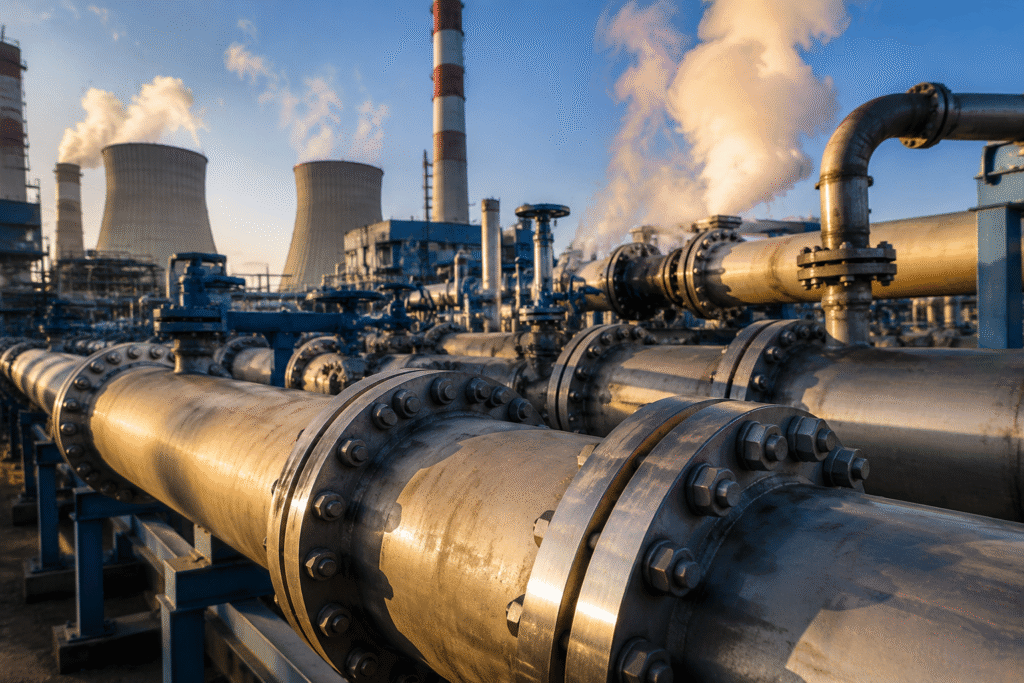
คำแนะนำข้อความแสดงแทนรูปภาพ: stainless steel pipe flange dimensions and inspection under ASME standards.
Inspection scope should reflect service criticality. Standard checks usually include chemical composition review, คุณสมบัติทางกล, การตรวจสอบด้วยสายตา, การตรวจสอบมิติ, and marking validation, while high-specification orders may also require PMI, การทดสอบเฟอร์ไรต์, การทดสอบความแข็ง, การทดสอบอัลตราโซนิก, หรือการตรวจพยานบุคคลภายนอก.
ตามคำแนะนำของ DNV สำหรับส่วนประกอบนอกชายฝั่ง, documentation quality and traceability are as important as nominal material strength because offshore maintenance and replacement costs are disproportionately high (ดีเอ็นวี, 2023). ดังนั้น, marine and offshore buyers often specify enhanced traceability and corrosion-resistant grades such as 2205 หรือ 2507.
For chemical processing and sour service, NACE compatibility should be checked early. While not every stainless steel pipe flange falls directly under sour-service criteria, the environment can quickly eliminate otherwise common grades if chlorides, H2S, or temperature combine unfavorably.
SASA FLANGE บูรณาการ ISO 9001:2015, พีอีดี 2014/68/สหภาพยุโรป, และโฆษณา 2000 quality frameworks into export production. This supports procurement teams that need not only compliant Flanges but also inspection reports, เอ็มทีซี, and technical responsiveness during project execution.
Because many competitor pages stop at general material descriptions, compliance depth becomes a real differentiator. A supplier that can discuss ASTM grades, flange pressure classes, welding implications, and EN shipment documentation adds measurable value during bid qualification and vendor approval.
การใช้งาน, การใช้งาน, และเกณฑ์การคัดเลือกน้ำมัน, แก๊ส, เคมี, พลัง, และระบบทางทะเล
Understanding actual Uses helps buyers avoid over-specification and under-specification at the same time. The strongest selection strategy links alloy grade, ประเภทหน้าแปลน, and standard to a specific process condition rather than treating all Stainless components as interchangeable.
ในน้ำมันและก๊าซ, weld neck and blind flanges dominate critical service because they offer strong structural performance and reliable gasket loading. ตามสถิติของสตาติสต้า (2024), ภาคนี้เป็นตัวแทนของเกี่ยวกับ 35% ของการบริโภคหน้าแปลนทั่วโลก, so lessons from upstream, กลางน้ำ, and refining projects strongly shape best practices.
ในโรงงานปิโตรเคมี, 316L often becomes the starting point for moderate chloride service, ในขณะที่ 904L, ดูเพล็กซ์, or nickel alloys may be necessary for more aggressive media. ในการผลิตไฟฟ้า, thermal cycling and pressure swings place a premium on forged quality, bolt loading consistency, และความสมบูรณ์ของการเชื่อม.
Marine and shipbuilding projects create a different decision path. Seawater exposure, โซนสาด, and high humidity can push buyers toward duplex or super duplex options where standard austenitic grades may suffer pitting or crevice corrosion over time.
Common application examples include:
- Oil and gas gathering lines, ตัวคั่น, and process skids.
- Petrochemical transfer lines and reactor support systems.
- Power plant steam, คอนเดนเสท, and auxiliary systems.
- Shipbuilding ballast, ระบายความร้อน, และกระบวนการวางท่อ.
- Water treatment and desalination systems.
- Construction and industrial utility piping.
When buyers ask what Hidden advantages stainless steel flanges offer, the answer usually includes reduced maintenance, cleaner internal surfaces, stable mechanical performance, and stronger resistance to oxidation or corrosion compared with carbon steel in the right service. อย่างไรก็ตาม, the right service condition is the key qualifier.
เกณฑ์การคัดเลือกควรประกอบด้วย:
- เคมีของไหล, รวมถึงคลอไรด์, กรด, and sulfides.
- อุณหภูมิการทำงานและการออกแบบ.
- แรงกดดันในการทำงานและการออกแบบ.
- ขนาดท่อ, ความหนาของผนัง, และกำหนดความเข้ากันได้.
- ชั้นแปลน, หันหน้าไปทาง, และระบบปะเก็น.
- Weld procedure and fabrication environment.
- Required standards, การรับรอง, และระดับการตรวจสอบ.
- Target service life and maintenance philosophy.
ตัวอย่างเช่น, a 2-inch utility water line may only need a Class 150 slip-on stainless steel pipe flange in 304L. ในทางตรงกันข้าม, an offshore chemical injection line may require a weld neck flange in 2205 หรือ 2507 with project-specific testing, พีเอ็มไอ, และการตรวจพยานบุคคลภายนอก.
ตามก 2024 industrial maintenance survey cited by Market Research Future, operators increasingly prioritize total cost of ownership over lowest bid price for corrosion-sensitive components. ส่งผลให้, procurement teams are more willing to specify premium alloys when downtime and replacement labor outweigh initial savings.
Custom manufacturing capability also affects project outcomes. SASA FLANGE offers custom sizes, วัสดุพิเศษ, and coordinated supply of flanges plus buttweld fittings such as elbows, เสื้อยืด, ตัวลด, และหมวกแก๊ป, which simplifies sourcing for packaged systems and multi-line projects.
เสิร์ฟ 50+ ประเทศทั่วน้ำมัน & แก๊ส, ปิโตรเคมี, พลัง, และอุตสาหกรรมทางทะเล, SASA FLANGE supports both standard and drawing-based orders. That matters when buyers need non-standard bores, รูปแบบการเจาะ, หันหน้าไปทางพิเศษ, or alloy combinations outside commodity stock programs.
แนวโน้มในอนาคต, Pricing Logic, and Strategic Buying Recommendations
The near-term outlook for stainless steel pipe flange demand remains positive because infrastructure renewal, การลงทุนด้านพลังงาน, การแยกเกลือออกจากน้ำ, and process modernization continue to support flange-intensive projects. จากการวิจัยของแกรนด์วิว (2024), คาดว่าจะถึงตลาด $7.2 พันล้านโดย 2030, which indicates sustained procurement activity across global industrial sectors.
ในเวลาเดียวกัน, pricing will remain sensitive to nickel, โมลิบดีนัม, and alloy surcharge fluctuations. ดังนั้น, buyers should review not only the base quote but also material validity periods, substitute restrictions, ความคลาดเคลื่อนของเครื่องจักร, and required certification scope.
As industry analyst Robert Hayes notes: “The most resilient sourcing programs combine qualified suppliers, clear standards, and early engineering review rather than waiting until fabrication is already delayed.” That recommendation is especially relevant for engineered Flanges where project deviations create costly rework.
คำแนะนำเชิงกลยุทธ์สำหรับผู้ซื้อ ได้แก่:
- Standardize preferred materials by service category.
- Prequalify suppliers by certification, การทดสอบ, and export capability.
- Bundle flange and fitting packages to reduce compatibility risk.
- Confirm standards and face types before PO release.
- ขอ EN 10204 3.1 certificates and PMI for critical alloys.
- Consider lifecycle cost, not only ex-works price.
There is also a content lesson hidden in competitor analysis. Many suppliers discuss Stainless Steel broadly, but fewer explain how to Choose among flange Types, คลาสความดัน, and alloy grades in practical project terms. Buyers increasingly reward suppliers who provide technically credible guidance with fast commercial response.
For procurement managers seeking a reliable source of stainless steel pipe flange products, technical documentation, and custom manufacturing support, early engagement shortens sourcing cycles and reduces risk. For projects that require ASME, ASTM, DIN, or EN-compliant Flanges and fittings, กำลังติดต่อ SASA FLANGE during specification review can improve both technical clarity and purchasing efficiency.
คำถามที่พบบ่อย
หน้าแปลนสแตนเลสใช้ทำอะไร?
●หน้าแปลนสแตนเลสใช้สำหรับเชื่อมต่อท่อ, วาล์ว, ปั๊ม, และอุปกรณ์แรงดันในระบบที่ต้องการความต้านทานการกัดกร่อน, ความสมบูรณ์ของความดัน, and reliable maintenance access.
●ตามสถิติของสตาติสต้า (2024), อุตสาหกรรมน้ำมันและก๊าซมีสัดส่วนประมาณ 35% ของการบริโภคหน้าแปลนทั่วโลก, which shows how important flanged joints are in critical process applications.
●They are commonly specified in petrochemical, ทะเล, การบำบัดน้ำ, การแปรรูปอาหาร, and power generation systems where carbon steel may corrode too quickly.
●การใช้งานทั่วไปได้แก่การต่อสาย, การแยกอุปกรณ์, blind end closure, การเข้าถึงการตรวจสอบ, and transitions between piping components built to ASME B16.5 หรือภาษาอังกฤษ 1092 ขนาด.
●For projects requiring certified materials, ความสม่ำเสมอของมิติ, และเอกสารการส่งออก, ทำงานร่วมกับผู้ผลิตที่จัดตั้งขึ้นเช่น SASA FLANGE helps ensure the flange matches the service duty and applicable standard.
หน้าแปลนอะไรทำจากสแตนเลส?
●ประเภทหน้าแปลนสแตนเลสหลักคือคอเชื่อม, ลื่นบน, ตาบอด, เชื่อมซ็อกเก็ต, เกลียว, และหน้าแปลนข้อต่อตัก, and each serves a different mechanical or installation purpose.
●ASME B16.5 defines the dimensions and pressure-temperature framework for many stainless steel flanges from NPS 1/2 ผ่าน 24, ในขณะที่ ASTM A182 commonly governs forged stainless materials.
●These flanges can be produced in 304, 304ล, 316, 316ล, 904ล, 2205, 2507, and specialty alloys depending on corrosion level, อุณหภูมิในการทำงาน, และแรงกดดันในการออกแบบ.
●Weld neck flanges are usually preferred for high-pressure or cyclic service, whereas slip-on flanges are often chosen for lower-cost fabrication in less severe conditions.
●If a project includes custom drilling, การเจาะที่ไม่ได้มาตรฐาน, or higher-alloy materials, sourcing from a manufacturer such as SASA FLANGE can simplify specification matching and quality control.
พวกเขาทำข้อต่อท่อสแตนเลสหรือไม่?
●ใช่, ผู้ผลิตผลิตอุปกรณ์ท่อสแตนเลสเช่นข้อศอก, เสื้อยืด, ตัวลด, and caps to match piping systems that use stainless steel flanges and welded pipe.
●ASME B16.9 is the key dimensional standard for many factory-made wrought buttwelding fittings, and ASTM material standards define the applicable stainless grades for service conditions.
●อ้างอิงจาก IBISWorld (2024), บัญชีเอเชียแปซิฟิกมีมากกว่า 45% ของการผลิตหน้าแปลนทั่วโลก, and that same manufacturing ecosystem strongly supports large-scale stainless fitting supply as well.
●Coordinating fittings and flanges in the same alloy family reduces mismatch risk during welding, การประดิษฐ์, และการตรวจสอบขั้นสุดท้าย, especially on multi-line industrial packages.
●For buyers who need a combined supply of stainless steel flanges and fittings with EN 10204 3.1 ใบรับรอง, it is practical to work with integrated suppliers like SASA FLANGE.
หน้าแปลนท่อชนิดใดที่แข็งแรงที่สุด?
●ในระบบท่ออุตสาหกรรมส่วนใหญ่, the weld neck flange is considered the strongest standard flange type because its tapered hub distributes stress more effectively than simpler designs.
●Its strength also depends on the material grade, ความหนาของผนัง, คุณภาพการเชื่อม, และระดับความกดดัน, so a duplex weld neck flange can outperform an austenitic slip-on flange by a wide margin in demanding service.
●ASME B16.5 ระดับความดันเช่น 600, 900, 1500, และ 2500 are commonly used where elevated pressure and temperature require stronger flange construction and tighter bolting control.
●รับบทเป็น มาร์ค เอลลิสัน วิศวกรท่อ, วิชาพลศึกษา, รัฐ: “เรขาคณิต, ความแข็งแรงของโลหะผสม, and welding practice together determine flange reliability, not type name alone.”
●For critical hydrocarbon, นอกชายฝั่ง, or high-temperature duties, engineers should verify code compliance, การรับรองวัสดุ, and design calculations before selecting the strongest practical flange option.
จะเลือกยังไงระหว่าง. 304, 316, 904ล, และหน้าแปลนสแตนเลสดูเพล็กซ์?
●เลือก 304 หรือ 304L สำหรับงานอุตสาหกรรมทั่วไป, 316 or 316L for better chloride resistance, 904L for aggressive chemical environments, and duplex grades for higher strength plus improved resistance to chloride stress corrosion cracking.
●ตามการวิจัยตลาดอนาคต (2024), corrosion-related maintenance continues to drive significant industrial spending, so selecting the right alloy at the start often lowers total ownership cost.
●Factors such as chloride concentration, อุณหภูมิกระบวนการ, ความเป็นกรด, crevice conditions, and fabrication method should guide final alloy choice rather than price alone.
●In seawater, นอกชายฝั่ง, or sour environments, เกรดดูเพล็กซ์เช่น 2205 และ 2507 are often more suitable than standard austenitic stainless steel, although project conditions must still be reviewed carefully.
●For specification support on alloy selection, ระดับความดัน, และข้อกำหนดด้านเอกสาร, buyers should consult a qualified manufacturer before issuing the purchase order.
What standards and certificates should I request when buying stainless steel pipe flanges?
●อย่างน้อยที่สุด, buyers should request the applicable dimensional standard, ข้อกำหนดวัสดุ, ระดับความดัน, และ EN 10204 3.1 material test certificate for each stainless steel pipe flange order.
●Common references include ASME B16.5, ASME B16.47, ASTM A182, ASTM A240, EN 1092, and project-specific requirements such as NACE MR0175 หรือการปฏิบัติตาม PED 2014/68/EU.
●ตามมาตรฐานไอเอสโอ (2023), certified quality systems improve process consistency by standardizing inspection and traceability controls across production stages.
●สำหรับการบริการที่สำคัญ, it is also wise to request PMI, รายงานการตรวจสอบมิติ, การติดตามหมายเลขความร้อน, and any third-party witness records required by the project or end user.
●When the application involves export compliance, บริการเปรี้ยว, or offshore duty, a certified supplier with ISO 9001:2015 and PED experience can reduce documentation risk and approval delays.
โพสต์ที่เกี่ยวข้อง
หน้าแปลนเสร็จสิ้น: อธิบาย Serrations แบบศูนย์กลางและแบบเกลียว
ฟันปลาแบบศูนย์กลางและแบบเกลียวมีทั้งการตกแต่งผิวหน้าแปลนด้วยเครื่องจักร…
ดูเพล็กซ์ 2205 เทียบกับหน้าแปลน 316L: คุณควรเลือกวัสดุใด?
ตอบด่วน: ดูเพล็กซ์ 2205 หน้าแปลนมักจะเป็นตัวเลือกที่แข็งแกร่งกว่า…

คำจำกัดความหน้าแปลนปาก, รายละเอียดและภาพรวมหน้าแปลน ASME B16.36: ข้อมูลการตลาด, คู่มือการคัดเลือกและข้อมูลเชิงลึกด้านการปฏิบัติตามข้อกำหนด
ตลาดหน้าแปลนอุตสาหกรรมทั่วโลกมีมูลค่าอยู่ที่ $5.8 พันล้าน…

คู่มือการตลาดหน้าแปลนการกำจัดสีดำ: วัสดุ, 3.5″ ความเข้ากันได้, และการจัดหาข้อมูล B2B สำหรับหน้าแปลนอ่างล้างจาน
ความต้องการหน้าแปลนกำจัดสีดำเพิ่มขึ้นเนื่องจากผู้ซื้ออุปกรณ์ติดตั้งในครัว…