
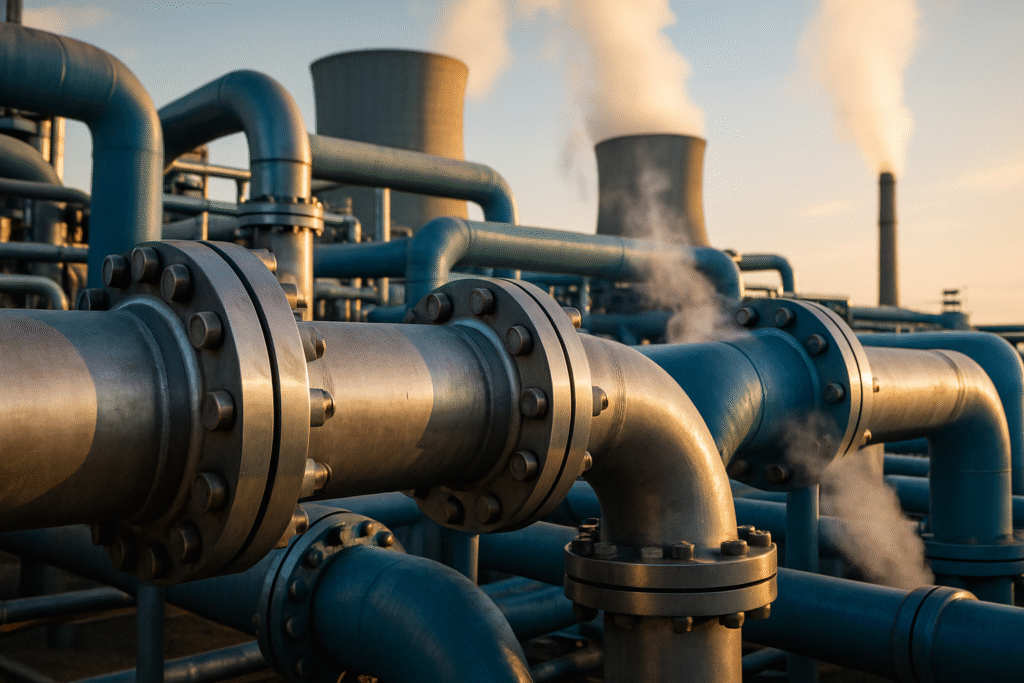
Guía de brida de tubería de acero inoxidable: 7 Ventajas ocultas respaldadas por datos, Tipos, Usos, y cómo elegir las bridas más comunes
Según la investigación de Grand View (2024), El mercado mundial de bridas industriales se valoró en $5.8 mil millones en 2023 y se prevé que alcance $7.2 mil millones por 2030. Ese crecimiento pone de relieve por qué brida de tubería de acero inoxidable has become one of the most intriguing, confiable, and commercially important components in modern piping systems.
Para ingenieros y gerentes de adquisiciones, the hidden advantages of stainless, acero, and alloy flanges go far beyond corrosion resistance. The right flange selection affects pressure integrity, intervalos de mantenimiento, costo del ciclo de vida, soldabilidad, y cumplimiento de ASME, ASTM, DIN, y normas EN.
Por qué el mercado de bridas para tuberías de acero inoxidable sigue expandiéndose
The industrial flange sector is growing because process plants need longer service life and tighter leak control. Según IBISWorld (2024), Asia-Pacífico representa más de 45% de la producción mundial de bridas, China sigue siendo la mayor base manufacturera.
That concentration matters for global buyers because sourcing strategy now influences cost, plazo de entrega, y aseguramiento de la calidad. Por lo tanto, buyers increasingly prefer manufacturers with documented quality systems, trazabilidad de materiales, y experiencia exportadora.
Demand is also highly concentrated in heavy industries. Según Statista (2024), La industria del petróleo y el gas representa aproximadamente 35% del consumo global de bridas, reflecting the sector’s dependence on pressure-rated piping joints.
Además, petroquímico, generación de energía, marina, and water treatment projects all require durable flange connections across varying temperatures and corrosive environments. En estos sectores, a stainless steel pipe flange often delivers the most balanced combination of strength, resistencia a la corrosión, y flexibilidad de fabricación.
Los grados de acero inoxidable más comunes siguen siendo 304, 316, and 316L because they fit a wide range of service conditions. Sin embargo, more demanding applications increasingly specify 904L, dúplex 2205, súper dúplex 2507, and nickel alloys for chloride exposure, servicio amargo, o temperaturas elevadas.
Como resultado, technical buyers now evaluate flanges more rigorously than before. They compare ASTM material grades, ASME pressure classes, tipos de cara, documentos de inspección, and machining tolerances instead of choosing on price alone.
Según la inteligencia de Mordor (2024), infrastructure expansion and refinery upgrades continue to support steady demand for industrial piping components worldwide. En paralelo, stricter environmental controls are pushing end users toward leak-resistant bolted connections and verified material performance.
Aquí es donde la capacidad del proveedor se vuelve decisiva. SASA FLANGE fabrica bridas de acero inoxidable, bridas de acero al carbono, bridas de aleación, y accesorios de tuberías en 304, 316, 316l, 904l, 2205, 2507, A105, A182, Inconel, Monel, Hastelloy, y grados de titanio.
Con ISO 9001:2015 y certificaciones PED 2014/68/UE, SASA FLANGE supports projects that require documented quality control and international compliance. Además, la empresa sirve petroleo & Gas, Petroquímico, Generación de energía, Construcción naval, Marina, Tratamiento de agua, and Construction markets in more than 50 países.
Para equipos de adquisiciones, that matters because the hidden advantage of a capable flange source is reduced project risk. Competitive factory-direct pricing helps, but consistent dimensional accuracy, EN 10204 3.1 documentación, and reliable production scheduling usually create greater long-term value.
Guía técnica sobre tipos de bridas para tuberías de acero inoxidable, Ventajas ocultas, y selección de materiales
The most intriguing part of flange engineering is that similar-looking products can perform very differently in service. A stainless steel pipe flange must match pressure class, cronograma de tuberías, perfil de corrosión, gasket arrangement, y método de instalación.
Como John Reynolds, ex especialista en corrosión y autor de la industria, estados: “Material selection failures often begin with small specification mismatches that seem harmless during procurement.” That observation is especially relevant when buyers substitute 304 for 316L or ignore crevice corrosion risk in chloride-bearing systems.
Según Market Research Future (2024), corrosion-related maintenance still accounts for a major share of operating cost in process industries, with unplanned downtime increasing total asset expense by double-digit percentages in severe environments. Por lo tanto, choosing the correct flange material is not just a technical decision but a financial one.
En términos prácticos, 304 and 304L are the most common choices for general industrial service. They offer good formability, strong availability, y precios competitivos, which makes them attractive for food processing, climatización, light chemical duty, and clean utility lines.
Sin embargo, 316 y 316L contienen molibdeno, so they perform better in chloride-containing media and marine atmospheres. Por esa razón, engineers frequently choose them for offshore skids, unidades desalinizadoras, sistemas farmaceuticos, and aggressive chemical lines.
Dúplex 2205 y súper dúplex 2507 deliver higher strength and improved resistance to chloride stress corrosion cracking. Como consecuencia, these grades can reduce wall thickness in selected systems while maintaining excellent pressure performance.
Common stainless steel pipe flange types include:
- Weld neck flange for high-pressure, alta temperatura, y servicio cíclico
- Slip-on flange for moderate service where easier alignment is beneficial
- Socket weld flange for small-bore, tubería de alta presión
- Threaded flange for low-pressure systems where welding is restricted
- Brida ciega para aislamiento, pruebas, o futuros puntos de expansión
- Brida de junta solapada para sistemas que requieren desmontaje frecuente
Each type has advantages, but the weld neck flange is often preferred for critical process lines. De acuerdo a ASME B16.5, proper hub geometry improves stress distribution and reduces the concentration of bending loads at the weld transition.
The three most common face configurations are also essential to performance:
- cara levantada (RF) for general industrial service and common gasket types
- Cara plana (FF) for low-pressure systems and cast iron mating equipment
- Junta tipo anillo (RTJ) para alta presión, high-temperature sealing integrity
Buyers should also compare pressure classes carefully. ANSI/ASME classes such as 150, 300, 600, 900, 1500, y 2500 define dimensional and pressure-temperature requirements, but allowable pressure still depends on material group and operating temperature.
Como Dr.. Doug Hall, ingeniero de materiales, estados: “Corrosion resistance must be evaluated alongside fabrication route, procedimiento de soldadura, and actual service chemistry.” En otras palabras, the hidden advantages of stainless steel only appear when the selected grade matches the full process environment.
According to ASTM and ASME references, forged stainless steel flanges are commonly supplied to ASTM A182 and dimensional standards such as ASME B16.5 y ASME B16.47. For fittings connected to those flange systems, ASME B16.9 remains a key standard for butt weld elbows, camisetas, reductores, y gorras.
Procurement teams often ask how to choose between 304 y 316. A practical comparison is useful:
- 304/304l: most common, económico, suitable for general corrosion resistance
- 316/316l: better pitting resistance, preferred for chlorides and marine exposure
- 904l: strong resistance in highly corrosive acidic service
- 2205 dúplex: higher strength and better SCC resistance than austenitic grades
- 2507 súper dúplex: premium option for severe chloride and offshore duty
Además, dimensions and custom machining capability affect fit-up quality during installation. SASA FLANGE ofrece tamaños personalizados desde 1/2 pulgada a 60 pulgada, with advanced CNC machining and comprehensive quality testing to support both standard and project-specific flange requirements.
Backed by forged and machined production expertise, SASA FLANGE can also supply matching pipe fittings such as elbows, camisetas, reductores, y gorras. That integrated supply model helps buyers streamline vendor qualification, document control, and logistics coordination.
For projects evaluating stainless steel flange types, the most common selection errors include:
- Ignoring chloride concentration and selecting 304 where 316L or duplex is needed
- Using slip-on flanges in severe cyclic service instead of weld neck flanges
- Overlooking gasket compatibility and facing finish requirements
- Specifying pressure class without confirming operating temperature derating
- Failing to request EN 10204 3.1 certificación de materiales
These mistakes are preventable. Por lo tanto, a structured guide that combines material science, estándares dimensionales, and application-specific requirements gives procurement teams a much stronger basis for purchase decisions.
ASME, ASTM, DIN, and EN Standards That Govern Flange Performance
Standards are the backbone of safe flange selection. sin ellos, buyers cannot verify interchangeability, clasificación de presión, metalurgia, alcance de la inspección, or dimensional accuracy.
The primary dimensional standards for industrial flanges include ASME B16.5 para NPS 1/2 a través de 24 y ASME B16.47 para tamaños más grandes. In European and international projects, DIN y EN 1092 specifications are also common, especially where metric piping systems are used.
Los estándares materiales son igualmente importantes. ASTM A182 covers forged or rolled alloy and stainless steel flanges, guarniciones, valvulas, y piezas para servicio de alta temperatura, mientras ASTM A240 placa de direcciones, hoja, y tiras para recipientes a presión y aplicaciones generales.
For corrosive production environments, NACE MR0175 / ISO 15156 may apply when sour service conditions are present. Además, PED 2014/68/EU affects equipment placed on the European market, particularly for pressure-retaining components in regulated applications.
Según ISO (2023), standardized documentation and traceability improve supply chain consistency and reduce nonconformance risk across international projects. Como resultado, reputable manufacturers increasingly align production control plans with ISO 9001:2015 frameworks and documented inspection checkpoints.
The most relevant standards for flange buyers include:
- ASME B16.5: Bridas de tubería y accesorios embridados.
- ASME B16.47: Bridas de acero de gran diámetro
- ASME B16.9: Accesorios forjados para soldar a tope fabricados en fábrica
- ASTM A182: Forged stainless and alloy flange material
- ASTM A240: Stainless plate and sheet material reference
- EN 1092: Dimensiones de bridas europeas y clases de presión.
- Normas DIN: Common metric flange requirements
- NACE MR0175 / ISO 15156: Materials for H2S-containing environments
Buyers should also assess compliance evidence, not just declared conformity. Typical project documents include mill test certificates, Informes PMI, registros de inspección dimensional, hydrotest or NDT reports where applicable, y EN 10204 3.1 proceso de dar un título.
Al evaluar a un proveedor, ask whether the flange was forged, mecanizado, tratado térmicamente, and inspected under a controlled quality system. You should also confirm whether markings include heat number, grado del material, tamaño, clase de presión, and standard reference.
For regulated export projects, certifications add tangible procurement value. Con ISO 9001:2015, DEP 2014/68/UE, y anuncio 2000 cartas credenciales, SASA FLANGE supports customers that need documented compliance for European and global markets.
An additional hidden advantage of standard-compliant sourcing is easier site acceptance. When flange dimensions, patrones de perforación, enfrentando tolerancias, and material test records align with project specifications, installation crews save time and avoid costly field modifications.
For deeper technical reference, buyers can review the official ASME standards portal at ASME.org. That is especially useful for confirming dimensional tables, clasificaciones de presión-temperatura, and terminology used across RFQs and purchase orders.
Guía de aplicación: Cómo elegir bridas para aceite & Gas, Químico, Fuerza, y sistemas marinos
El contexto de la aplicación debe impulsar cada decisión sobre bridas. A stainless steel pipe flange that performs well in clean water may fail rapidly in chloride-laden offshore duty or hot acidic service.
En sistemas de petróleo y gas., pressure containment and corrosion resistance are both critical. Debido a que el sector representa aproximadamente 35% del consumo global de bridas según Statista (2024), it remains the benchmark market for high-integrity flange design.
Para servicio upstream y midstream, engineers often specify weld neck flanges in 316L, dúplex 2205, o súper dúplex 2507 depending on chlorides, H2S exposure, y presión de diseño. RTJ facing may be preferred where leak-tight sealing under high load is required.
En plantas de procesamiento petroquímico y químico., corrosion mapping is essential before choosing the most common or lowest-cost grade. Por ejemplo, 316L may be sufficient for mildly aggressive media, mientras que 904L, Hastelloy, or Monel may be required for stronger acids or mixed halide environments.
Power generation applications introduce another set of variables. Steam service, ciclo térmico, and high pressure often favor weld neck flanges with controlled metallurgy and verified heat treatment records.
Marine and shipbuilding systems face continuous salt exposure, zonas de chapoteo, y humedad. Por lo tanto, 316l, dúplex, and super duplex are widely used because they offer better pitting resistance than standard 304 in chloride-rich conditions.
Los criterios de selección deben incluir:
- Fluid chemistry and chloride content
- Presión y temperatura de funcionamiento
- Tamaño de tubería, cronograma, and connection type
- Gasket material and facing compatibility
- Welding requirements and fabrication method
- Inspección, proceso de dar un título, and traceability level
- Lifecycle cost instead of purchase price alone
According to DNV guidance and offshore engineering practice, material selection errors in marine environments often stem from underestimating crevice corrosion near bolted joints. Como consecuencia, flange face design, bolt selection, and gasket compression control matter as much as nominal alloy grade.
Procurement managers also search for practical parameters such as stainless steel pipe flange sizes, 4 inch stainless steel pipe flange availability, and threaded stainless steel pipe flange options. Those details directly affect project schedules, especially when shutdown windows are short.
Typical buying questions include:
- Is the flange stocked in 2 pulgada, 4 pulgada, 6 pulgada, and larger sizes?
- Can the supplier machine special drilling or non-standard thickness?
- Son 150#, 300#, y 600# classes readily available?
- Can matching elbows, camisetas, reductores, and caps be bundled in one shipment?
- What certificates are included with export deliveries?
These commercial details are often where suppliers truly differentiate themselves. SASA FLANGE offers custom manufacturing in stainless, acero carbono, aleación, dúplex, aleación de níquel, y grados de titanio, supported by advanced CNC machining, control de inspección, and competitive factory-direct pricing.
Además, combining flanges with matching ASME B16.9 fittings can reduce procurement complexity and improve consistency across the piping package. That is particularly useful for EPC contractors and OEMs managing multiple project schedules at once.
For buyers deciding how to choose flanges, the best approach is simple. Start with the service condition, then narrow by standard, grado del material, clase de presión, tipo de cara, y requisitos de documentación.
Perspectivas futuras para bridas de acero inoxidable y recomendaciones de compra estratégica
The outlook for the flange market remains positive because industrial investment is shifting toward durability, cumplimiento, and lower maintenance risk. Según la investigación de Grand View (2024), Se espera que el mercado alcance $7.2 mil millones por 2030, which confirms continued demand for engineered flange solutions.
Al mismo tiempo, buyers face tighter project timelines and more volatile raw material pricing. Por lo tanto, strategic sourcing increasingly depends on suppliers that can combine technical guidance, broad material availability, and stable manufacturing control.
One important trend is the growing use of higher-performance materials in selective applications. Duplex stainless, aleaciones de níquel, and corrosion-resistant premium grades are no longer limited to extreme service because lifecycle economics often justify the upgrade.
Another trend is documentation intensity. End users now expect traceability, PMI, and conformity to ASME, ASTM, DEP, and NACE-related requirements, especially in regulated energy and process sectors.
Como María Chen, industrial procurement analyst, estados: “The most effective sourcing strategies balance delivered cost with failure prevention, documentation quality, and supplier responsiveness.” That is why technical support and manufacturing transparency are becoming decisive buying criteria.
To improve procurement outcomes, companies should follow several practical recommendations:
- Estandarizar los materiales de bridas aprobados según la condición de servicio.
- Pedido EN 10204 3.1 certificates for critical lines
- Verify ASME or EN dimensional compliance before PO release
- Bundle flanges and fittings to reduce interface risk
- Evaluar el costo del ciclo de vida, not only stainless steel pipe flange price
- Qualify suppliers with ISO 9001:2015 y capacidad de documentación de exportación
Para proyectos que requieren tamaños personalizados, grados premium, o suministro multiestándar, working with an experienced manufacturer improves schedule certainty. Buyers that need support on stainless steel flanges and fittings can contact SASA FLANGE for technical review, recomendaciones de materiales, and project-based quotations.
Preguntas frecuentes
¿Para qué se utilizan las bridas de acero inoxidable??
●Las bridas de acero inoxidable se utilizan para conectar tuberías., valvulas, zapatillas, y equipos a presión en sistemas que requieren resistencia, resistencia a la corrosión, y sellado confiable.
●Según Statista (2024), El sector del petróleo y el gas representa aproximadamente 35% del consumo global de bridas, que muestra cuán esenciales son las bridas en servicios industriales críticos.
●Son ampliamente utilizados en plantas petroquímicas., sistemas marinos, water treatment lines, instalaciones de procesamiento de alimentos, and power generation piping where long service life is important.
●Los usos comunes incluyen conexión de línea., aislamiento del equipo, acceso de mantenimiento, prueba de presión, and system expansion points in both low- and high-pressure applications.
●For projects requiring documented ASTM A182 material quality and ASME B16.5 cumplimiento dimensional, trabajando con fabricantes establecidos como SASA FLANGE helps ensure reliable performance and traceable certification.
¿Fabrican accesorios para tuberías de acero inoxidable??
●Sí, Los fabricantes suelen producir accesorios para tuberías de acero inoxidable, como codos., camisetas, reductores, and caps to match stainless steel flange systems.
●De acuerdo a ASME B16.9, butt weld fittings are standardized for dimensional consistency, which helps engineers integrate them with compatible pipe and flange assemblies.
●Stainless fittings are available in grades such as 304, 316, 316l, 904l, 2205, y 2507 for services ranging from clean water to aggressive chloride environments.
●Many EPC buyers prefer sourcing flanges and fittings from one supplier because this reduces documentation gaps, mejora la consistencia del material, and simplifies logistics planning.
●For projects that need complete stainless steel flanges and fittings packages, trabajando con fabricantes establecidos como SASA FLANGE ensures coordinated supply and quality control.
¿Cuál es el tipo de brida de tubería más resistente??
●La brida con cuello soldado generalmente se considera el tipo más fuerte de brida de tubería para alta presión., alta temperatura, y servicio cíclico.
●De acuerdo a ASME B16.5 design practice, its long tapered hub improves stress distribution and reduces localized loading at the weld junction.
●La resistencia también depende del grado del material., clase de presión, tipo de revestimiento, carga de perno, y temperatura de servicio, so the strongest flange is not determined by shape alone.
●In severe offshore or chemical service, duplex or super duplex weld neck flanges may outperform standard austenitic grades because they combine higher strength with improved corrosion resistance.
●For critical applications that require class 600, 900, or higher pressure ratings, trabajando con fabricantes establecidos como SASA FLANGE supports safer material and geometry selection.
¿Cuáles son los tres tipos de bridas??
●Los tres tipos de bridas más comunes son las de cuello soldado., deslizarse, y bridas ciegas, although socket weld, roscado, y las bridas para juntas traslapadas también se utilizan ampliamente.
●Weld neck flanges suit severe duty, slip-on flanges fit moderate service with easier alignment, and blind flanges close the end of a piping system for isolation or testing.
●De acuerdo a ASME B16.5, these flange types are standardized by dimensions, clases de presión, patrones de perforación, and facing options for broad industrial interchangeability.
●Choosing among them depends on pressure, temperatura, vibración, frecuencia de mantenimiento, and whether the line must be opened or permanently welded.
●For procurement teams comparing stainless steel flange types across multiple standards, trabajando con fabricantes establecidos como SASA FLANGE can simplify technical evaluation and purchasing.
¿Cómo elijo entre 304 y 316 materiales de brida de tubería de acero inoxidable?
●Elegir 304 for general service and choose 316 o 316L cuando la exposición al cloruro, atmósfera marina, or stronger chemical corrosion is expected.
●316 contains molybdenum, which improves pitting resistance, and that is why engineers commonly specify it for offshore, farmacéutico, y sistemas de procesamiento químico.
●According to industry material practice and ASTM A182 usage trends, 304 remains the most common stainless grade, pero 316 often delivers better lifecycle value in corrosive service.
●You should compare fluid chemistry, temperatura, productos quimicos de limpieza, and shutdown cost before selecting the lower-cost grade.
●For projects requiring quick review of 304, 316, 904l, 2205, o 2507 options, trabajando con fabricantes establecidos como SASA FLANGE helps align cost with actual service conditions.
What standards apply to stainless steel pipe flange sizes and certification?
●Stainless steel pipe flange sizes are commonly governed by ASME B16.5 for smaller ranges and ASME B16.47 para diámetros mayores, while EN 1092 and DIN standards apply in many metric projects.
●Material certification is typically linked to ASTM A182 para bridas de acero inoxidable forjado, and many industrial buyers also request EN 10204 3.1 documentation for traceability.
●Según la práctica de cumplimiento ISO y PED, documented quality systems reduce supply risk and improve acceptance in regulated international projects.
●Buyers should verify not only size and pressure class but also facing type, trazabilidad del número de calor, tolerancias dimensionales, and any NACE or PED-related project requirements.
●For orders involving mixed standards, tamaños personalizados, or export certification packages, trabajando con fabricantes establecidos como SASA FLANGE provides a clearer path to compliance.
Posts Relacionados
Acabado de la cara de la brida: Dentados concéntricos versus espirales explicados
Los dentados concéntricos y en espiral son acabados de cara de brida mecanizados.…
Dúplex 2205 frente a bridas 316L: ¿Qué material debería elegir??
respuesta rapida: Dúplex 2205 Las bridas suelen ser el candidato más fuerte.…

Definición de brida de orificio, Detalles y descripción general de bridas ASME B16.36: Datos de mercado, Guía de selección e información sobre cumplimiento
El mercado mundial de bridas industriales se valoró en $5.8 mil millones…

Guía del mercado de bridas de eliminación negras: Materiales, 3.5″ Compatibilidad, y datos de abastecimiento B2B para bridas de fregaderos de cocina
La demanda de bridas de eliminación negras está aumentando a medida que los compradores de accesorios de cocina…