
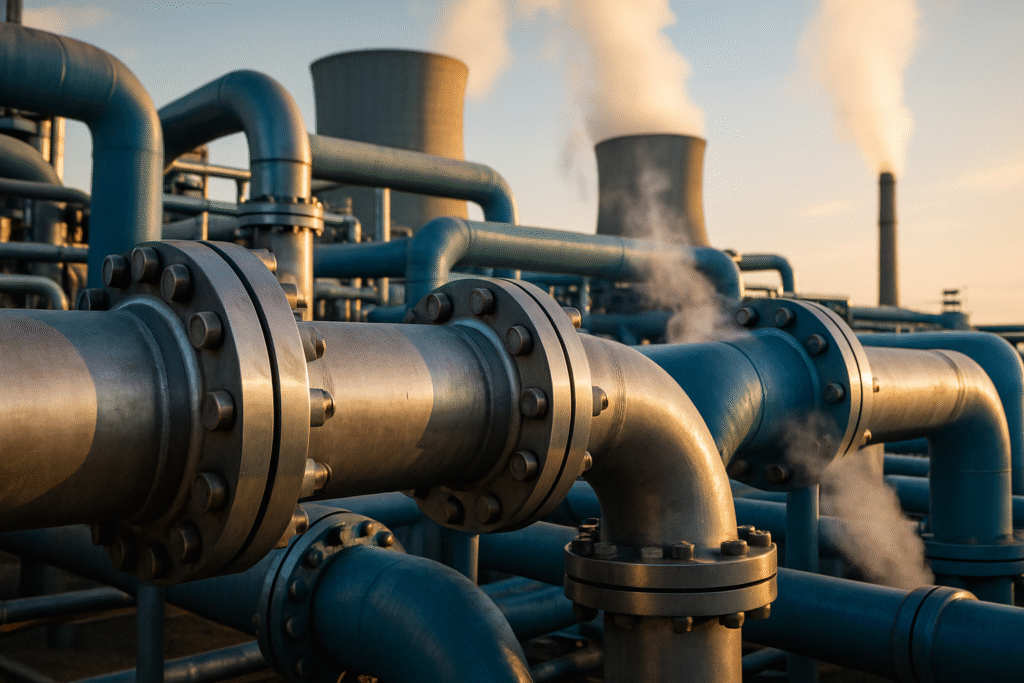
Направляющая фланца трубы из нержавеющей стали: 7 Скрытые преимущества, основанные на данных, Типы, Использование, и как выбрать наиболее распространенные фланцы
По данным исследования Grand View (2024), мировой рынок промышленных фланцев оценивался в $5.8 миллиард в 2023 и, по прогнозам, достигнет $7.2 миллиард на 2030. That growth highlights why the фланец трубы из нержавеющей стали has become one of the most intriguing, надежный, and commercially important components in modern piping systems.
Для инженеров и менеджеров по снабжению, the hidden advantages of stainless, сталь, and alloy flanges go far beyond corrosion resistance. The right flange selection affects pressure integrity, интервалы технического обслуживания, стоимость жизненного цикла, свариваемость, и соответствие ASME, ASTM, DIN, и стандарты EN.
Почему рынок фланцев для труб из нержавеющей стали продолжает расширяться
The industrial flange sector is growing because process plants need longer service life and tighter leak control. По данным IBISWorld (2024), На долю Азиатско-Тихоокеанского региона приходится более 45% мирового производства фланцев, при этом Китай остается крупнейшей производственной базой.
That concentration matters for global buyers because sourcing strategy now influences cost, Время выполнения, и гарантия качества. Поэтому, buyers increasingly prefer manufacturers with documented quality systems, отслеживаемость материалов, и экспортируем опыт.
Demand is also highly concentrated in heavy industries. По данным Статистики (2024), на долю нефтегазовой отрасли приходится около 35% мирового потребления фланцев, reflecting the sector’s dependence on pressure-rated piping joints.
Более того, нефтехимический, производство электроэнергии, морской, and water treatment projects all require durable flange connections across varying temperatures and corrosive environments. В этих секторах, a stainless steel pipe flange often delivers the most balanced combination of strength, коррозионная стойкость, and fabrication flexibility.
Наиболее распространенными марками нержавеющей стали остаются 304, 316, and 316L because they fit a wide range of service conditions. Однако, more demanding applications increasingly specify 904L, дуплекс 2205, супер дуплекс 2507, and nickel alloys for chloride exposure, кислое обслуживание, или повышенная температура.
Как результат, technical buyers now evaluate flanges more rigorously than before. They compare ASTM material grades, Классы давления ASME, типы лица, документы проверки, and machining tolerances instead of choosing on price alone.
По данным Мордорской разведки (2024), infrastructure expansion and refinery upgrades continue to support steady demand for industrial piping components worldwide. Параллельно, stricter environmental controls are pushing end users toward leak-resistant bolted connections and verified material performance.
Именно здесь возможности поставщика становятся решающими.. SASA FLANGE производит фланцы из нержавеющей стали, фланцы из углеродистой стали, фланцы из сплава, и трубопроводная арматура в 304, 316, 316л, 904л, 2205, 2507, А105, А182, Инконель, Монель, Хастеллой, и титановые сорта.
С ISO 9001:2015 и сертификаты PED 2014/68/ЕС., SASA FLANGE supports projects that require documented quality control and international compliance. Кроме того, компания обслуживает нефть & Газ, нефтехимическая, Производство электроэнергии, Судостроение, Морской, Очистка воды, and Construction markets in more than 50 страны.
Для отделов закупок, that matters because the hidden advantage of a capable flange source is reduced project risk. Competitive factory-direct pricing helps, but consistent dimensional accuracy, EN 10204 3.1 документация, and reliable production scheduling usually create greater long-term value.
Техническое руководство по типам фланцев для труб из нержавеющей стали, Скрытые преимущества, и выбор материала
The most intriguing part of flange engineering is that similar-looking products can perform very differently in service. A stainless steel pipe flange must match pressure class, график труб, профиль коррозии, расположение прокладок, и способ установки.
Как Джон Рейнольдс, бывший специалист по коррозии и отраслевой автор, государства: «Material selection failures often begin with small specification mismatches that seem harmless during procurement.» That observation is especially relevant when buyers substitute 304 for 316L or ignore crevice corrosion risk in chloride-bearing systems.
По данным Market Research Future (2024), corrosion-related maintenance still accounts for a major share of operating cost in process industries, with unplanned downtime increasing total asset expense by double-digit percentages in severe environments. Поэтому, choosing the correct flange material is not just a technical decision but a financial one.
В практическом плане, 304 and 304L are the most common choices for general industrial service. They offer good formability, strong availability, и конкурентоспособные цены, which makes them attractive for food processing, ОВиК, light chemical duty, and clean utility lines.
Однако, 316 и 316L содержат молибден, so they perform better in chloride-containing media and marine atmospheres. По этой причине, engineers frequently choose them for offshore skids, опреснительные установки, фармацевтические системы, and aggressive chemical lines.
Дуплекс 2205 и супер дуплекс 2507 deliver higher strength and improved resistance to chloride stress corrosion cracking. Следовательно, these grades can reduce wall thickness in selected systems while maintaining excellent pressure performance.
Common stainless steel pipe flange types include:
- Приварной фланец для высокого давления, высокотемпературный, и циклическое обслуживание
- Slip-on flange for moderate service where easier alignment is beneficial
- Фланец под приварку враструб для малого диаметра, трубопровод высокого давления
- Threaded flange for low-pressure systems where welding is restricted
- Blind flange for isolation, тестирование, или будущие точки расширения
- Фланец внахлестку для систем, требующих частого демонтажа
Each type has advantages, but the weld neck flange is often preferred for critical process lines. В соответствии с ASME B16.5, proper hub geometry improves stress distribution and reduces the concentration of bending loads at the weld transition.
The three most common face configurations are also essential to performance:
- Поднятое лицо (РФ) for general industrial service and common gasket types
- Плоское Лицо (ФФ) for low-pressure systems and cast iron mating equipment
- Кольцевое соединение типа (РТЖ) для высокого давления, high-temperature sealing integrity
Buyers should also compare pressure classes carefully. ANSI/ASME classes such as 150, 300, 600, 900, 1500, и 2500 define dimensional and pressure-temperature requirements, but allowable pressure still depends on material group and operating temperature.
Как доктор. Doug Hall, инженер по материалам, государства: «Corrosion resistance must be evaluated alongside fabrication route, процедура сварки, and actual service chemistry.» Другими словами, the hidden advantages of stainless steel only appear when the selected grade matches the full process environment.
According to ASTM and ASME references, forged stainless steel flanges are commonly supplied to ASTM A182 and dimensional standards such as ASME B16.5 и ASME B16.47. For fittings connected to those flange systems, ASME B16.9 remains a key standard for butt weld elbows, тройники, редукторы, и шапки.
Procurement teams often ask how to choose between 304 и 316. A practical comparison is useful:
- 304/304л: most common, экономичный, suitable for general corrosion resistance
- 316/316л: better pitting resistance, preferred for chlorides and marine exposure
- 904л: strong resistance in highly corrosive acidic service
- 2205 дуплекс: higher strength and better SCC resistance than austenitic grades
- 2507 супер дуплекс: premium option for severe chloride and offshore duty
Более того, dimensions and custom machining capability affect fit-up quality during installation. SASA FLANGE предлагает нестандартные размеры от 1/2 дюйм до 60 дюйм, with advanced CNC machining and comprehensive quality testing to support both standard and project-specific flange requirements.
Backed by forged and machined production expertise, SASA FLANGE can also supply matching pipe fittings such as elbows, тройники, редукторы, и шапки. That integrated supply model helps buyers streamline vendor qualification, document control, и координация логистики.
For projects evaluating stainless steel flange types, the most common selection errors include:
- Ignoring chloride concentration and selecting 304 where 316L or duplex is needed
- Using slip-on flanges in severe cyclic service instead of weld neck flanges
- Overlooking gasket compatibility and facing finish requirements
- Specifying pressure class without confirming operating temperature derating
- Failing to request EN 10204 3.1 сертификация материалов
These mistakes are preventable. Поэтому, a structured guide that combines material science, стандарты размеров, and application-specific requirements gives procurement teams a much stronger basis for purchase decisions.
ASME, ASTM, DIN, and EN Standards That Govern Flange Performance
Standards are the backbone of safe flange selection. Без них, buyers cannot verify interchangeability, номинальное давление, металлургия, объем проверки, or dimensional accuracy.
The primary dimensional standards for industrial flanges include ASME B16.5 для АПЛ 1/2 через 24 и ASME B16.47 для больших размеров. In European and international projects, ДИН и ЕН 1092 specifications are also common, especially where metric piping systems are used.
Стандарты материалов одинаково важны. ASTM A182 covers forged or rolled alloy and stainless steel flanges, арматура, клапаны, и детали для работы при высоких температурах, пока ASTM A240 адресная табличка, лист, и полоса для сосудов под давлением и общего применения.
For corrosive production environments, NACE MR0175 / ISO 15156 may apply when sour service conditions are present. Кроме того, PED 2014/68/EU affects equipment placed on the European market, particularly for pressure-retaining components in regulated applications.
По данным ИСО (2023), standardized documentation and traceability improve supply chain consistency and reduce nonconformance risk across international projects. Как результат, reputable manufacturers increasingly align production control plans with ISO 9001:2015 frameworks and documented inspection checkpoints.
The most relevant standards for flange buyers include:
- ASME B16.5: Фланцы труб и фланцевые фитинги
- ASME B16.47: Стальные фланцы большого диаметра
- ASME B16.9: Кованые фитинги для стыковой сварки заводского изготовления.
- ASTM A182: Forged stainless and alloy flange material
- ASTM A240: Stainless plate and sheet material reference
- EN 1092: European flange dimensions and pressure classes
- Стандарты DIN: Common metric flange requirements
- NACE MR0175 / ISO 15156: Materials for H2S-containing environments
Buyers should also assess compliance evidence, not just declared conformity. Typical project documents include mill test certificates, Отчеты PMI, протоколы проверки размеров, hydrotest or NDT reports where applicable, и EN 10204 3.1 сертификация.
При оценке поставщика, ask whether the flange was forged, обработанный, термообработанный, and inspected under a controlled quality system. You should also confirm whether markings include heat number, сорт материала, размер, класс давления, and standard reference.
For regulated export projects, certifications add tangible procurement value. С ISO 9001:2015, ПЭД 2014/68/ЕС, и АД 2000 реквизиты для входа, SASA FLANGE supports customers that need documented compliance for European and global markets.
An additional hidden advantage of standard-compliant sourcing is easier site acceptance. When flange dimensions, схемы сверления, допуски торцовки, and material test records align with project specifications, installation crews save time and avoid costly field modifications.
For deeper technical reference, buyers can review the official ASME standards portal at ASME.org. That is especially useful for confirming dimensional tables, номинальные значения давления и температуры, and terminology used across RFQs and purchase orders.
Руководство по применению: Как выбрать фланцы для масла & Газ, Химическая, Власть, и морские системы
Application context should drive every flange decision. A stainless steel pipe flange that performs well in clean water may fail rapidly in chloride-laden offshore duty or hot acidic service.
В нефтегазовых системах, pressure containment and corrosion resistance are both critical. Поскольку этот сектор представляет около 35% мирового потребления фланцев по данным Statista (2024), it remains the benchmark market for high-integrity flange design.
Для услуг разведки и добычи, engineers often specify weld neck flanges in 316L, дуплекс 2205, или супердуплекс 2507 depending on chlorides, Воздействие H2S, и расчетное давление. RTJ facing may be preferred where leak-tight sealing under high load is required.
На нефтехимических и химико-перерабатывающих предприятиях, corrosion mapping is essential before choosing the most common or lowest-cost grade. Например, 316L may be sufficient for mildly aggressive media, в то время как 904L, Хастеллой, or Monel may be required for stronger acids or mixed halide environments.
Power generation applications introduce another set of variables. Steam service, термоциклирование, and high pressure often favor weld neck flanges with controlled metallurgy and verified heat treatment records.
Marine and shipbuilding systems face continuous salt exposure, зоны брызг, и влажность. Поэтому, 316л, дуплекс, and super duplex are widely used because they offer better pitting resistance than standard 304 in chloride-rich conditions.
Критерии отбора должны включать:
- Fluid chemistry and chloride content
- Рабочее давление и температура
- Размер трубы, расписание, and connection type
- Gasket material and facing compatibility
- Welding requirements and fabrication method
- Инспекция, сертификация, and traceability level
- Lifecycle cost instead of purchase price alone
According to DNV guidance and offshore engineering practice, material selection errors in marine environments often stem from underestimating crevice corrosion near bolted joints. Следовательно, flange face design, bolt selection, and gasket compression control matter as much as nominal alloy grade.
Procurement managers also search for practical parameters such as stainless steel pipe flange sizes, 4 inch stainless steel pipe flange availability, and threaded stainless steel pipe flange options. Those details directly affect project schedules, especially when shutdown windows are short.
Typical buying questions include:
- Is the flange stocked in 2 дюйм, 4 дюйм, 6 дюйм, and larger sizes?
- Can the supplier machine special drilling or non-standard thickness?
- Являются 150#, 300#, и 600# classes readily available?
- Can matching elbows, тройники, редукторы, and caps be bundled in one shipment?
- What certificates are included with export deliveries?
These commercial details are often where suppliers truly differentiate themselves. SASA FLANGE offers custom manufacturing in stainless, углеродистая сталь, сплав, дуплекс, никелевый сплав, и титановые марки, supported by advanced CNC machining, инспекционный контроль, and competitive factory-direct pricing.
Более того, combining flanges with matching ASME B16.9 fittings can reduce procurement complexity and improve consistency across the piping package. That is particularly useful for EPC contractors and OEMs managing multiple project schedules at once.
For buyers deciding how to choose flanges, the best approach is simple. Start with the service condition, then narrow by standard, сорт материала, класс давления, тип лица, и требования к документации.
Перспективы развития фланцев из нержавеющей стали и рекомендации по стратегическим закупкам
The outlook for the flange market remains positive because industrial investment is shifting toward durability, согласие, and lower maintenance risk. По данным исследования Grand View (2024), ожидается, что рынок достигнет $7.2 миллиард на 2030, which confirms continued demand for engineered flange solutions.
В то же время, buyers face tighter project timelines and more volatile raw material pricing. Поэтому, strategic sourcing increasingly depends on suppliers that can combine technical guidance, широкая доступность материалов, and stable manufacturing control.
One important trend is the growing use of higher-performance materials in selective applications. Duplex stainless, никелевые сплавы, and corrosion-resistant premium grades are no longer limited to extreme service because lifecycle economics often justify the upgrade.
Another trend is documentation intensity. End users now expect traceability, PMI, and conformity to ASME, ASTM, ПЭД, and NACE-related requirements, especially in regulated energy and process sectors.
Как Мария Чен, industrial procurement analyst, государства: «The most effective sourcing strategies balance delivered cost with failure prevention, качество документации, and supplier responsiveness.» That is why technical support and manufacturing transparency are becoming decisive buying criteria.
To improve procurement outcomes, companies should follow several practical recommendations:
- Стандартизировать утвержденные материалы фланцев в зависимости от условий эксплуатации.
- Запрос EN 10204 3.1 certificates for critical lines
- Verify ASME or EN dimensional compliance before PO release
- Bundle flanges and fittings to reduce interface risk
- Оцените стоимость жизненного цикла, not only stainless steel pipe flange price
- Qualify suppliers with ISO 9001:2015 and export documentation capability
Для проектов, требующих нестандартных размеров, premium grades, или мультистандартная поставка, working with an experienced manufacturer improves schedule certainty. Buyers that need support on stainless steel flanges and fittings can contact SASA FLANGE for technical review, рекомендации по материалам, and project-based quotations.
Часто задаваемые вопросы
Для чего используются фланцы из нержавеющей стали?
●Фланцы из нержавеющей стали используются для соединения труб., клапаны, насосы, и оборудование, работающее под давлением, в системах, требующих прочности, коррозионная стойкость, и надежная герметизация.
●По данным Статистики (2024), на долю нефтегазового сектора приходится около 35% мирового потребления фланцев, который показывает, насколько важны фланцы в критически важных промышленных условиях..
●They are widely used in petrochemical plants, морские системы, water treatment lines, предприятия пищевой промышленности, and power generation piping where long service life is important.
●Обычное использование включает подключение к сети., изоляция оборудования, доступ для обслуживания, испытание давлением, and system expansion points in both low- и приложения высокого давления.
●For projects requiring documented ASTM A182 material quality and ASME B16.5 соответствие размеров, работа с известными производителями, такими как SASA FLANGE helps ensure reliable performance and traceable certification.
Делают ли они фитинги для труб из нержавеющей стали??
●Да, manufacturers commonly produce stainless steel pipe fittings such as elbows, тройники, редукторы, and caps to match stainless steel flange systems.
●В соответствии с ASME B16.9, butt weld fittings are standardized for dimensional consistency, which helps engineers integrate them with compatible pipe and flange assemblies.
●Stainless fittings are available in grades such as 304, 316, 316л, 904л, 2205, и 2507 for services ranging from clean water to aggressive chloride environments.
●Many EPC buyers prefer sourcing flanges and fittings from one supplier because this reduces documentation gaps, улучшает консистенцию материала, and simplifies logistics planning.
●For projects that need complete stainless steel flanges and fittings packages, работа с известными производителями, такими как SASA FLANGE ensures coordinated supply and quality control.
Какой тип фланца трубопровода самый прочный?
●The weld neck flange is generally considered the strongest type of piping flange for high-pressure, высокотемпературный, и циклическое обслуживание.
●В соответствии с ASME B16.5 design practice, its long tapered hub improves stress distribution and reduces localized loading at the weld junction.
●Прочность также зависит от марки материала., класс давления, тип облицовки, болтовая нагрузка, и рабочая температура, so the strongest flange is not determined by shape alone.
●In severe offshore or chemical service, duplex or super duplex weld neck flanges may outperform standard austenitic grades because they combine higher strength with improved corrosion resistance.
●For critical applications that require class 600, 900, or higher pressure ratings, работа с известными производителями, такими как SASA FLANGE supports safer material and geometry selection.
Какие три типа фланцев существуют??
●Три наиболее распространенных типа фланцев — приварная шейка., без шнуровки, и глухие фланцы, although socket weld, резьбовой, и фланцы внахлестку также широко используются.
●Weld neck flanges suit severe duty, slip-on flanges fit moderate service with easier alignment, and blind flanges close the end of a piping system for isolation or testing.
●В соответствии с ASME B16.5, these flange types are standardized by dimensions, классы давления, схемы сверления, and facing options for broad industrial interchangeability.
●Choosing among them depends on pressure, температура, вибрация, частота технического обслуживания, and whether the line must be opened or permanently welded.
●For procurement teams comparing stainless steel flange types across multiple standards, работа с известными производителями, такими как SASA FLANGE can simplify technical evaluation and purchasing.
Как мне выбрать между 304 и 316 Материалы фланцев труб из нержавеющей стали?
●Выбирать 304 for general service and choose 316 или 316L при воздействии хлоридов, морская атмосфера, or stronger chemical corrosion is expected.
●316 содержит молибден, which improves pitting resistance, and that is why engineers commonly specify it for offshore, фармацевтический, и системы химической обработки.
●According to industry material practice and ASTM A182 usage trends, 304 remains the most common stainless grade, но 316 often delivers better lifecycle value in corrosive service.
●You should compare fluid chemistry, температура, чистящие химикаты, and shutdown cost before selecting the lower-cost grade.
●For projects requiring quick review of 304, 316, 904л, 2205, или 2507 options, работа с известными производителями, такими как SASA FLANGE helps align cost with actual service conditions.
What standards apply to stainless steel pipe flange sizes and certification?
●Stainless steel pipe flange sizes are commonly governed by ASME B16.5 for smaller ranges and ASME B16.47 для больших диаметров, в то время как В 1092 and DIN standards apply in many metric projects.
●Material certification is typically linked to ASTM A182 для кованых фланцев из нержавеющей стали, and many industrial buyers also request EN 10204 3.1 documentation for traceability.
●Согласно практике соответствия ISO и PED, documented quality systems reduce supply risk and improve acceptance in regulated international projects.
●Buyers should verify not only size and pressure class but also facing type, отслеживание номера плавки, допуски на размеры, and any NACE or PED-related project requirements.
●For orders involving mixed standards, нестандартные размеры, or export certification packages, работа с известными производителями, такими как SASA FLANGE provides a clearer path to compliance.
Связанные Посты
Отделка торцевой поверхности фланца: Объяснение концентрических и спиральных зубцов
Концентрические и спиральные зубцы представляют собой обработанную поверхность фланца.…
Дуплекс 2205 по сравнению с фланцами 316L: Какой материал выбрать?
Быстрый ответ: Дуплекс 2205 flanges are usually the stronger candidate…

Определение фланца с диафрагмой, Подробности и обзор фланцев ASME B16.36: Рыночные данные, Руководство по выбору и анализ соответствия требованиям
Мировой рынок промышленных фланцев оценивался в $5.8 миллиард…

Руководство по рынку черных сливных фланцев: Материалы, 3.5″ Совместимость, и данные о поставщиках B2B для фланцев для кухонной мойки
Спрос на черные фланцы для утилизации растет благодаря покупателям кухонной техники…