
ステンレス鋼管フランジ市場: 7 型に関するデータに裏付けられた洞察, 用途, および ASME B16.5 の選択
グランドビューリサーチによると (2024), 世界の工業用フランジ市場は次のように評価されました。 $5.8 億で 2023 に達すると予測されています $7.2 10億まで 2030. その成長により、 ステンレス鋼管フランジ a strategic purchasing category for EPC contractors, プラントエンジニア, and industrial procurement teams seeking corrosion resistance, 規範への準拠, とライフサイクル価値.
さらに, stainless steel flanges support critical piping reliability in oil and gas, 石油化学, 発電, 海洋, および水処理システム. When buyers understand the Hidden Advantages, 種類, 用途, and how to Choose Flanges under ASME B16.5 およびB16.47, they reduce rework, 漏洩リスク, および総設置コスト.
Why the Stainless Steel Pipe Flange Market Matters for Industrial Buyers
The stainless steel pipe flange category sits at the intersection of safety, 保守性, and material performance. In high-consequence Pipe systems, the right Flange specification affects sealing integrity, 腐食寿命, 検査計画, and shutdown frequency.
IBISWorldによると (2024), アジア太平洋地域が占める割合は超過 45% 世界のフランジ生産量の, 中国が最大の製造国である. したがって, global buyers increasingly evaluate not only price, but also documentation quality, トレーサビリティ, 加工精度, および輸出コンプライアンス.
統計局によると (2024), 石油・ガス産業が約 35% 世界のフランジ消費量の. This demand concentration explains why ASME, ASTM, API, ネイス, and PED requirements have become central in flange procurement decisions.
しかし, many competitor pages focus only on material grades such as 304/304L or 316/316L. They often overlook pressure class selection, 対面タイプ, 腐食のメカニズム, 検査記録, and dimensional compatibility across ASME B16.5, ASME B16.47, DIN, JIS, ゴスト, とEN 1092 システム.
That gap creates procurement risk. A technically correct stainless steel pipe flange must align with media chemistry, 設計温度, ラインクラス, ガスケットの種類, ボルト荷重, および次のような文書要件 EN 10204 3.1 認証.
モルドール情報局によると (2024), global investment in industrial process infrastructure continues to expand across refining, 化学薬品, 脱塩, and energy transition projects. 結果として, demand is rising for premium Stainless and duplex Flanges that balance corrosion resistance with strength.
例えば, 304 そして 316 grades remain standard choices for many utility and process services. 対照的に, 904l, 2205, 2507, インコネル, モネル, ハステロイ, and Titanium are selected for chloride exposure, サワーサービス, 攻撃的な化学物質, or elevated-temperature conditions.
材料工学博士として. Helen Mercer states: “A flange is not a commodity when the service is corrosive, 周期的な, or safety-critical; metallurgy and dimensional accuracy directly influence leak prevention and service life.” That principle is especially relevant in offshore and chemical duty, where flange failure can trigger costly production losses.
SASA FLANGE ステンレス鋼フランジを産業用バイヤーに提供します, 炭素鋼フランジ, 合金フランジ, とパイプ継手 304, 316, 316l, 904l, 2205, 2507, A105, A182, インコネル, モネル, ハステロイ, とチタン. と ISO 9001:2015 および PED 2014/68/EU 認証, the company supports global projects that require dimensional consistency, 材料のトレーサビリティ, and factory-direct supply.
さらに, procurement teams increasingly expect more than a catalogue listing. They want clear information on sizes, 圧力クラス, 表面仕上げ, 加工公差, テスト範囲, PMIの利用可能性, packing methods, and realistic lead times.
That is why a data-driven selection process matters. It helps buyers move beyond Intriguing marketing claims and focus on measurable performance criteria, 規格準拠, and lifecycle economics.
技術的な詳細: 隠れた利点, 種類, and How to Choose Flanges for Demanding Service
A stainless steel pipe flange provides a detachable mechanical connection between Pipe sections, バルブ, パンプス, および装置のノズル. Its Hidden Advantages include easier maintenance, cleaner alignment control, stronger sealing reliability, and better long-term corrosion resistance than many carbon steel alternatives in wet or chemical service.
マーケットリサーチの将来によると (2024), corrosion-related maintenance can account for a significant share of lifecycle costs in industrial fluid systems, 特に海洋および化学用途において. したがって, material choice often has a larger financial impact than the initial flange price.
The most common Stainless grades are 304/304L and 316/316L. 学年 304 is widely used for general industrial service, その間 316 adds molybdenum for improved chloride and chemical resistance.
しかし, grade selection should never rely on popularity alone. Buyers should review chloride concentration, pH, 動作温度, 洗浄剤, 絶縁状態, and the possibility of crevice or pitting corrosion.
配管エンジニアのマーク・エリソンとして, PE, 州: “The best flange selection starts with the process medium and the gasket system, not with the cheapest available alloy.” This is why experienced manufacturers ask for line specifications before quoting a Flange.
Common stainless steel pipe flange Types include weld neck, スリップオン, 盲目, ソケット溶接, ねじ切りされた, そしてラップジョイント. Each design serves different pressure, 振動, メンテナンス, and fabrication needs under ASME B16.5 or B16.47 dimensional rules.
- ウェルドネックフランジ: 高圧に最適, 循環ロード, and severe temperature swings because the long hub improves stress distribution.
- スリップオンフランジ: Cost-effective for moderate service and easier alignment, but generally less fatigue-resistant than weld neck designs.
- ブラインドフランジ: 線の端を閉じるために使用されます, システムを分離する, or allow future expansion and hydrotest arrangements.
- ソケットウェルドフランジ: Common on smaller bore, higher-pressure utility and process lines.
- ねじ付きフランジ: 溶接が不可能な場合に役立ちます, especially for low-pressure services and retrofit work.
- 重ね継手フランジ: Suitable where frequent dismantling or expensive alloy pipe spools justify a stub-end configuration.
によると ASME B16.5, standard pipe flanges cover NPS 1/2 を通して 24 for many pressure classes. ASME B16.47 extends large-diameter Flanges, 通常は NPS 26 を通して 60, 水中でよく見られるもの, 海洋, and bulk process systems (ASME, 2023).
圧力クラスの選択も同様に重要です. クラス 150, 300, 600, 900, 1500, そして 2500 ratings determine dimensional thickness, ボルト締め, and pressure-temperature capability.
例えば, ある 4 クラスのインチステンレス鋼管フランジ 150 とは大きく異なります 4 インチクラス 600 unit. The outside diameter, ボルトサークル, stud size, and gasket seating loads all change, so interchangeability cannot be assumed.
さらに, facing style affects sealing performance. 盛り上がった顔, 平らな面, リングタイプジョイント, and tongue-and-groove configurations must match the gasket type and mating flange design.
によると ASTM A182/A182M, forged or rolled alloy and stainless steel pipe flanges for high-temperature service are supplied under strict chemical and mechanical property requirements (ASTM, 2024). This standard is particularly relevant for forged Stainless Steel Flange products used in refinery, 化学薬品, および電源アプリケーション.
The following selection factors help engineers Choose the right stainless steel pipe flange:
- Base material grade: 304, 316, 316l, 904l, 2205, 2507, またはニッケル合金.
- Pressure-temperature rating per ASME B16.5 またはB16.47.
- フランジタイプ: ウェルドネック, 盲目, スリップオン, ねじ切りされた, ラップジョイント, またはソケット溶接.
- フェーシングタイプ: RF, FF, RTJ, または特殊なフェーシング.
- パイプのスケジュールとボアの互換性.
- Corrosion allowance and expected process contaminants.
- 必要なテスト: PMI, 水圧試験のサポート, 硬度, フェライト, または臨死体験.
- ドキュメント: MTC, ヒートトレーサビリティ, EN 10204 3.1, PED, NACE MR0175 該当する場合.
さらに, buyers should evaluate manufacturing capability. 高度な CNC 加工と包括的な品質テストに裏付けられています, SASA FLANGE 1/2からのカスタムサイズを提供します" 60まで" with competitive factory-direct pricing for project and replacement demand.
同社はエルボも供給しています, ティー, 減速機, そしてその下のキャップ ASME B16.9, which helps buyers consolidate sourcing for piping packages. That integrated approach can reduce supplier management time and improve dimensional consistency across the system.
According to ISO guidance on quality management, process control and traceability improve repeatability in manufacturing environments (ISO, 2015). したがって, certified production systems matter when projects require repeat orders, 第三者による検査, または書類を輸出する.
実務的には, the Hidden Advantages of a well-specified stainless steel pipe flange are fewer leaks, メンテナンス頻度の低下, longer service intervals, and easier shutdown planning. Those benefits often outweigh a higher purchase price, especially in corrosive service or high-value production lines.
ASME, ASTM, DIN, EN, and PED Compliance for Stainless Steel Flanges
Standards compliance is one of the strongest differentiators in the industrial flange market. Engineers need assurance that dimensions, 冶金, 圧力定格, and inspection records align with the project specification.
For most North American and international process projects, ASME B16.5 そして ASME B16.47 are the key dimensional standards for Flanges. ヨーロッパおよび多くの輸出プロジェクトで, EN 1092 and PED requirements also influence design, material approval, とドキュメント.
ASTM 規格は材料化学と機械的特性を定義します, while ASME standards define dimensions and pressure-temperature relationships. This distinction matters because a flange can match the right size standard yet still fail the wrong material specification.
- ASME B16.5: NPS用管フランジおよびフランジ付継手 1/2 に 24.
- ASME B16.47: Large-diameter steel flanges for NPS 26 に 60.
- ASTM A182: Forged or rolled alloy and stainless steel pipe flange materials.
- ASME B16.9: エルボなどの工場製鍛突合せ溶接継手, ティー, と減速機.
- EN 1092: ヨーロッパのフランジの寸法と圧力クラス.
- NACE MR0175/ISO 15156: 厳しいサービス環境向けの材料ガイダンス.
According to the Pressure Equipment Directive 2014/68/EU, pressure components entering the EU market must satisfy safety and conformity requirements appropriate to their category (PED, 2014). 結果として, manufacturers serving Europe need robust material control, トレーサビリティ, and technical documentation.
Buyers should also verify certificate expectations early in the RFQ stage. Typical project packages may require EN 10204 3.1 材料証明書, PMIレポート, 硬度の結果, 寸法検査報告書, and third-party witness records.
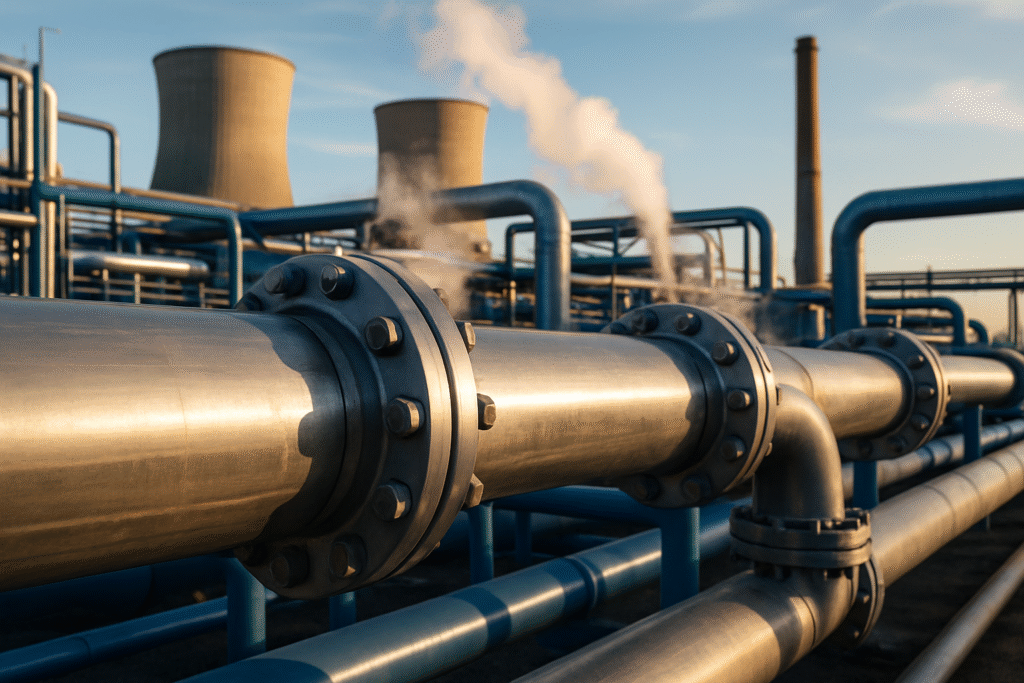
Image alt: stainless steel pipe flange inspection under ASME B16.5 and B16.47 standards
Here is a practical comparison of common standards used in global projects:
- ASME system: Common in oil and gas, 精製, 力, and EPC projects with inch-based piping systems.
- DIN/EN方式: Frequent in European process plants, water utilities, and OEM exports.
- JIS system: Often specified for Japanese equipment and regional industrial installations.
- GOST system: Still relevant in selected CIS and legacy infrastructure projects.
加えて, buyers should understand that not all standards are directly interchangeable. ボルトパターン, 圧力クラス, 細部に直面する, and thicknesses can differ, even where nominal size appears similar.
腐食の専門家として教授. ダニエル・リーブスのメモ: “Most flange problems in the field are specification mismatches, not machining defects.” That observation reinforces the need to align Pipe, ガスケット, ボルト, and Flange standards from the start.
ASME publishes the core dimensional references used by engineers worldwide. 同様に, ASTM and ISO standards provide the material and quality framework needed for repeatable supply.
と ISO 9001:2015, PED 2014/68/EU, とAD 2000 資格, SASA FLANGE supports buyers that need export-ready manufacturing and documented compliance. フランジの製造 304, 316, 904l, 2205, 2507 その他のプレミアムグレード, the company aligns supply with both standard and custom project requirements.
さらに, code compliance supports commercial performance. Many operators now treat documentation quality as a supplier qualification metric because poor traceability can delay installation, inspection release, and final payment.
申請ガイド: 用途, 選択基準, and Best Fit by Industry
The Uses of a stainless steel pipe flange vary by media, 圧力クラス, メンテナンスの理念, and regulatory environment. しかし, the core objective remains the same: achieve a safe, leak-resistant, serviceable connection point in a piping system.
石油とガスにおいて, stainless and duplex Flanges are widely used in produced water, utility water, 化学薬品注入, オフショアスキッド, および選択されたプロセスライン. 統計局によると (2024), 石油とガスは周囲を表します 35% 世界のフランジ消費量の, which underscores the sector’s influence on specification practices.
石油化学・化学プラントにおいて, 316/316L often serves mild to moderate corrosive duty, 一方904L, ハステロイ, モネル, and duplex grades cover more aggressive media. 耐隙間腐食性, ガスケットの互換性, and cleaning chemistry all matter in these environments.
発電において, stainless steel flanges support condensate systems, water treatment loops, instrument air, and selected high-temperature services. Thermal cycling and maintenance access frequently influence whether buyers Choose weld neck, 盲目, or slip on designs.
Marine and shipbuilding projects present a different challenge because chlorides accelerate corrosion. したがって, 316l, 2205, そして 2507 are often preferred where seawater splash, ballast service, or deck exposure can degrade lower-alloy materials.
Water treatment and desalination systems require long life with controlled maintenance budgets. 結果として, engineers often balance initial cost against expected pitting resistance, cleaning frequency, and replacement intervals.
Key criteria for choosing the right stainless steel pipe flange include:
- 流体組成, 塩化物含有量, 汚染リスクと.
- 動作温度範囲と設計温度範囲.
- Pressure class and surge conditions.
- 腐食のメカニズム, 孔食を含む, 隙間, galvanic, or SCC risk.
- Flange type and access needs for maintenance.
- パイプサイズ, スケジュール, and welding procedure compatibility.
- Regional standards such as ASME, DIN, EN, またはJIS.
- Required certifications, 点検ポイント, and end-user approvals.
例えば, a stainless steel threaded pipe flange may suit a low-pressure utility line where hot work is restricted. 対照的に, an Api weld neck flange or ASME weld neck design is usually more appropriate for severe service and high-integrity joints.
Buyers also ask about stainless steel pipe flange sizes and price. Size ranges typically start at 1/2 インチまで延長 60 インチ, while price depends on grade, 圧力クラス, 直面している, 鍛造ルート, machining hours, および認証範囲.
According to procurement benchmarks from industrial sourcing platforms and manufacturer quotations, premium alloys can cost several times more than standard 304 または 316 items. それにもかかわらず, lower failure rates and longer service life often justify the premium in corrosive duty.
Manufacturing flexibility matters as much as metallurgy. Offering custom manufacturing, 機械加工, 掘削, and matching fittings supply, SASA FLANGE supports project packages across Oil & ガス, 石油化学, 力, and Marine sectors in more than 50 国.
The company can help buyers compare standard Stainless options with duplex, ニッケル合金, or titanium alternatives based on service conditions. That consultative approach is especially useful when replacing legacy components or qualifying substitute materials during tight project schedules.
さらに, bundled sourcing improves consistency. When one supplier provides flanges, 肘, ティー, 減速機, and caps to coordinated standards, dimensional fit-up risk usually declines.
今後の展望: Strategic Recommendations for Buyers of Stainless Steel Pipe Flange Products
The industrial flange market will remain resilient because energy, 水, 化学薬品, and infrastructure sectors continue to invest in new and upgraded Pipe systems. グランドビューリサーチによると (2024), 市場は~から成長すると予想される $5.8 億で 2023 に $7.2 10億まで 2030.
同時に, buyer expectations are changing. Procurement managers now demand shorter lead times, clearer mill traceability, stronger QA records, and better support for multi-standard projects.
IBISWorldによると (2024), アジア太平洋地域では以上のものを生産しています 45% グローバルフランジ出力の, which means supplier selection in China remains strategically important for international sourcing. しかし, the winning supplier is not always the cheapest; it is the one that ships compliant products, complete documents, and consistent dimensions.
戦略的に, buyers should standardize their RFQ checklist. Include alloy grade, 標準, 圧力クラス, フランジタイプ, 直面している, 量, 検査の必要性, ドキュメントパッケージ, and delivery terms in every inquiry.
They should also qualify suppliers by manufacturing depth rather than website claims alone. Review CNC capacity, PMI control, 熱価トレーサビリティ, calibration records, and export packing methods before placing large or safety-critical orders.
さらに, project teams should compare lifecycle value instead of unit price only. A lower-priced Flange that corrodes early, arrives without documents, or fails fit-up can create far greater cost than an initially higher quote.
For global buyers evaluating stainless steel pipe flange supply, the most effective approach combines technical scrutiny with supplier reliability. For projects requiring ASME, ASTM, DIN, EN, PED, and custom alloy support, 連絡する SASA FLANGE early in the specification stage can improve both sourcing speed and engineering confidence.
よくある質問
ステンレス鋼フランジは何に使用されますか?
●パイプの接続にはステンレス製のフランジが使用されます, バルブ, パンプス, 耐食性が必要なシステムの圧力容器など, 保守性, and dimensional reliability.
●統計局によると (2024), the oil and gas sector alone accounts for approximately 35% 世界のフランジ消費量の, which shows how critical flange connections are in process infrastructure.
●They are commonly installed in petrochemical, 海洋, 水処理, 食品加工, and power applications because grades such as 304, 316, 316l, 2205, そして 2507 perform well in wet, 化学薬品, or chloride-bearing environments.
●The exact use depends on flange type, 圧力クラス, 直面している, and material standard, so buyers should match ASME B16.5 or B16.47 dimensions with ASTM A182 material requirements before ordering.
●耐食性が必要なプロジェクト向け, 追跡可能, and export-ready supply, のような確立されたメーカーと協力する SASA FLANGE helps ensure compliant material certificates and consistent machining quality.
ステンレス鋼製のフランジは何ですか?
●一般的なステンレス鋼フランジにはウェルドネックが含まれています, スリップオン, 盲目, ねじ切りされた, ソケット溶接, などのグレードで製造された重ね継手の設計 304, 304l, 316, 316l, 904l, 2205, そして 2507.
●によると ASTM A182/A182M (2024), forged stainless steel flanges for high-temperature and pressure service must meet controlled chemical and mechanical property limits, which is why ASTM grade verification matters.
●実際に, 304 そして 316 dominate general industrial service, 両面印刷中, スーパーデュプレックス, and nickel alloys are chosen for seawater, サワーサービス, or aggressive chemical duty.
●Large-diameter stainless steel flange products are typically made to ASME B16.47, while standard process sizes are usually specified to ASME B16.5, DIN, JIS, またはEN 1092 depending on project geography.
●Buyers should request flange type, サイズ, 圧力クラス, 直面している, and certificate scope in the RFQ so the manufacturer can supply the correct stainless configuration without specification gaps.
ステンレス鋼の管継手を製造していますか?
●はい, メーカーはエルボなどのステンレス鋼管継手を製造しています, ティー, 減速機, キャップ, スタブエンド, and custom buttweld components for use with stainless steel flange systems.
●によると ASME B16.9 (2023), factory-made wrought buttwelding fittings are standardized for dimensions and tolerances, which helps ensure fit-up consistency with matching piping and flange assemblies.
●These fittings are commonly manufactured in 304, 316, 316l, 904l, 2205, 2507, and other alloys to match process corrosion, プレッシャー, and welding requirements across industrial services.
●Procurement teams should align fitting material, 壁の厚さ, and inspection requirements with the flange specification because mixed standards can create weld mismatch and project delays.
●For integrated packages that include flanges and fittings under one quality system, などのサプライヤー SASA FLANGE can simplify sourcing and documentation control.
3種類のフランジとは何ですか?
●The three most commonly referenced flange types in basic industrial discussions are weld neck, スリップオン, ブラインドフランジ, ねじ込まれていますが, ラップジョイント, and socket weld types are also widely used.
●によると ASME B16.5 (2023), each flange type has standardized dimensions that affect bore, 厚さ, ボルト締め, そして対面ジオメトリ, so the selection changes both strength and sealing behavior.
●高圧または周期的なサービスにはウェルドネック フランジが推奨されます, slip on flanges are often selected for moderate-duty cost control, and blind flanges are used to isolate or terminate a line.
●Engineers should avoid selecting among these types by price alone because stress distribution, 疲労の露出, 溶接方法, and maintenance access strongly influence long-term performance.
●Where service conditions are severe or uncertain, buyers should consult a qualified manufacturer before finalizing the flange type, クラス, and alloy combination.
ステンレス鋼フランジの ASME コードとは何ですか?
●The principal ASME dimensional codes for stainless steel flanges are ASME B16.5 NPS向け 1/2 を通して 24 そして ASME B16.47 大径用, その間 ASTM A182 commonly governs forged stainless material.
●ASMEによると (2023), B16.5 defines pressure-temperature ratings, 寸法, 公差, マーキング, and testing expectations for pipe flanges and flanged fittings used in process industries.
●Buyers should understand that ASME standards define geometry and rating, whereas ASTM standards define chemical composition and mechanical properties, so both must appear in a technically complete specification.
●ヨーロッパへの輸出向け, PED 2014/68/EU and EN 1092 can also apply, especially when end users request CE-related conformity and EN 10204 3.1 ドキュメント.
●The safest procurement practice is to specify ASME size standard, ASTM材料グレード, 圧力クラス, 直面している, and certificate requirements in the same purchase order line.
How do I choose the right stainless steel pipe flange for price and performance?
●The right stainless steel pipe flange balances alloy cost, 耐食性, 圧力定格, 対面タイプ, and documentation requirements rather than focusing on lowest unit price.
●グランドビューリサーチによると (2024), 世界の工業用フランジ市場は、 $5.8 億で 2023 に $7.2 10億まで 2030, which indicates strong demand and continued buyer emphasis on reliable sourcing.
●例えば, a low-cost 304 flange may suit clean utility service, while a 316L, 2205, または 2507 option can deliver better lifecycle value in chloride-bearing, オフショア, または化学環境.
●Procurement teams should compare delivered scope including machining, PMI, EN 10204 3.1 証明書, パッキング, and lead time because these factors materially affect installed cost and project risk.
●クリティカルなアプリケーション向け, request a technical review from a manufacturer that can supply standard and custom sizes, multiple alloys, and complete quality documentation before you place the order.
関連投稿

オリフィスフランジの定義, 詳細と ASME B16.36 フランジの概要: 市場データ, 選択ガイドとコンプライアンスに関する洞察
世界の工業用フランジ市場は次のように評価されました。 $5.8 十億…

ブラックディスポフランジ市場ガイド: 材料, 3.5″ 互換性, キッチン シンク フランジの B2B 調達データ
キッチン設備の購入者として黒色の使い捨てフランジの需要が高まっています…