
Рынок фланцев для труб из нержавеющей стали: 7 Информация о типах на основе данных, Использование, и выбор ASME B16.5
По данным исследования Grand View (2024), мировой рынок промышленных фланцев оценивался в $5.8 миллиард в 2023 и, по прогнозам, достигнет $7.2 миллиард на 2030. Этот рост делает фланец трубы из нержавеющей стали a strategic purchasing category for EPC contractors, инженеры завода, and industrial procurement teams seeking corrosion resistance, соответствие кодексу, и ценность жизненного цикла.
Более того, stainless steel flanges support critical piping reliability in oil and gas, нефтехимический, производство электроэнергии, морской, и системы очистки воды. When buyers understand the Hidden Advantages, Типы, Использование, and how to Choose Flanges under ASME B16.5 и В16,47, they reduce rework, риск утечки, и общая стоимость установки.
Why the Stainless Steel Pipe Flange Market Matters for Industrial Buyers
The stainless steel pipe flange category sits at the intersection of safety, ремонтопригодность, and material performance. In high-consequence Pipe systems, the right Flange specification affects sealing integrity, коррозионная жизнь, планирование инспекций, и частота отключения.
По данным IBISWorld (2024), На долю Азиатско-Тихоокеанского региона приходится более 45% мирового производства фланцев, при этом Китай является крупнейшим производителем. Поэтому, global buyers increasingly evaluate not only price, but also documentation quality, прослеживаемость, точность обработки, и соблюдение экспортных требований.
По данным Статистики (2024), на долю нефтегазовой отрасли приходится около 35% мирового потребления фланцев. This demand concentration explains why ASME, ASTM, API, КДЕС, and PED requirements have become central in flange procurement decisions.
Однако, many competitor pages focus only on material grades such as 304/304L or 316/316L. They often overlook pressure class selection, типы облицовки, механизмы коррозии, протоколы проверок, and dimensional compatibility across ASME B16.5, ASME B16.47, DIN, JIS, ГОСТ, и RU 1092 системы.
That gap creates procurement risk. A technically correct stainless steel pipe flange must align with media chemistry, расчетная температура, класс линии, тип прокладки, болтовая нагрузка, and documentation requirements such as EN 10204 3.1 сертификация.
По данным Мордорской разведки (2024), global investment in industrial process infrastructure continues to expand across refining, химикаты, опреснение, and energy transition projects. Как результат, demand is rising for premium Stainless and duplex Flanges that balance corrosion resistance with strength.
Например, 304 и 316 grades remain standard choices for many utility and process services. В отличие, 904л, 2205, 2507, Инконель, Монель, Хастеллой, and Titanium are selected for chloride exposure, кислое обслуживание, агрессивные химикаты, or elevated-temperature conditions.
Как инженер-материаловед доктор. Helen Mercer states: «A flange is not a commodity when the service is corrosive, циклический, or safety-critical; metallurgy and dimensional accuracy directly influence leak prevention and service life.» That principle is especially relevant in offshore and chemical duty, where flange failure can trigger costly production losses.
SASA FLANGE обслуживает промышленных покупателей с фланцами из нержавеющей стали, фланцы из углеродистой стали, фланцы из сплава, и трубопроводная арматура в 304, 316, 316л, 904л, 2205, 2507, А105, А182, Инконель, Монель, Хастеллой, и Титан. С ISO 9001:2015 и сертификаты PED 2014/68/ЕС., the company supports global projects that require dimensional consistency, отслеживаемость материалов, and factory-direct supply.
Кроме того, procurement teams increasingly expect more than a catalogue listing. They want clear information on sizes, классы давления, обработка поверхности, machining tolerances, объем тестирования, Наличие PMI, packing methods, and realistic lead times.
That is why a data-driven selection process matters. It helps buyers move beyond Intriguing marketing claims and focus on measurable performance criteria, соответствие стандартам, and lifecycle economics.
Техническое погружение: Скрытые преимущества, Типы, and How to Choose Flanges for Demanding Service
A stainless steel pipe flange provides a detachable mechanical connection between Pipe sections, клапаны, насосы, и насадки для оборудования. Its Hidden Advantages include easier maintenance, cleaner alignment control, stronger sealing reliability, and better long-term corrosion resistance than many carbon steel alternatives in wet or chemical service.
По данным Market Research Future (2024), corrosion-related maintenance can account for a significant share of lifecycle costs in industrial fluid systems, особенно в морских и химических приложениях. Поэтому, material choice often has a larger financial impact than the initial flange price.
The most common Stainless grades are 304/304L and 316/316L. Оценка 304 is widely used for general industrial service, пока 316 adds molybdenum for improved chloride and chemical resistance.
Однако, grade selection should never rely on popularity alone. Buyers should review chloride concentration, рН, рабочая температура, чистящие химикаты, состояние изоляции, and the possibility of crevice or pitting corrosion.
Инженер по трубопроводам Марк Эллисон, ЧП, государства: «The best flange selection starts with the process medium and the gasket system, not with the cheapest available alloy.» This is why experienced manufacturers ask for line specifications before quoting a Flange.
Common stainless steel pipe flange Types include weld neck, надеть, слепой, раструбная сварка, резьбовой, и коленный сустав. Each design serves different pressure, вибрация, обслуживание, and fabrication needs under ASME B16.5 or B16.47 dimensional rules.
- Приварной фланец с шейкой: Предпочтительно для высокого давления., циклическая загрузка, and severe temperature swings because the long hub improves stress distribution.
- Наденьте фланец: Cost-effective for moderate service and easier alignment, но, как правило, менее усталостный, чем конструкции со сварной шейкой..
- Глухой фланец: Используется для закрытия концов строки, изолировать системы, or allow future expansion and hydrotest arrangements.
- Фланец под приварку враструб: Common on smaller bore, higher-pressure utility and process lines.
- Резьбовой фланец: Useful where welding is impractical, especially for low-pressure services and retrofit work.
- Фланец внахлестку: Suitable where frequent dismantling or expensive alloy pipe spools justify a stub-end configuration.
В соответствии с ASME B16.5, standard pipe flanges cover NPS 1/2 через 24 for many pressure classes. ASME B16.47 extends large-diameter Flanges, обычно NPS 26 через 60, which are common in water, морской, and bulk process systems (ASME, 2023).
Выбор класса давления не менее важен.. Сорт 150, 300, 600, 900, 1500, и 2500 ratings determine dimensional thickness, запирание, and pressure-temperature capability.
Например, а 4 дюймовый фланец трубы из нержавеющей стали класса 150 differs significantly from a 4 дюймовый класс 600 unit. The outside diameter, болт круг, stud size, and gasket seating loads all change, so interchangeability cannot be assumed.
Более того, facing style affects sealing performance. Поднятое лицо, плоское лицо, соединение кольцевого типа, and tongue-and-groove configurations must match the gasket type and mating flange design.
В соответствии с ASTM A182/A182M, forged or rolled alloy and stainless steel pipe flanges for high-temperature service are supplied under strict chemical and mechanical property requirements (ASTM, 2024). This standard is particularly relevant for forged Stainless Steel Flange products used in refinery, химический, и силовые приложения.
The following selection factors help engineers Choose the right stainless steel pipe flange:
- Base material grade: 304, 316, 316л, 904л, 2205, 2507, или никелевый сплав.
- Pressure-temperature rating per ASME B16.5 или Б16.47.
- Тип фланца: приварная шейка, слепой, надеть, резьбовой, коленный сустав, или раструбная сварка.
- Тип облицовки: РФ, ФФ, РТЖ, or special facing.
- Pipe schedule and bore compatibility.
- Corrosion allowance and expected process contaminants.
- Обязательные тесты: PMI, сопровождение гидроиспытаний, твердость, феррит, или ОСП.
- Документация: МТС, прослеживаемость тепла, EN 10204 3.1, ПЭД, NACE MR0175 если применимо.
Кроме того, buyers should evaluate manufacturing capability. Благодаря передовой обработке с ЧПУ и всестороннему тестированию качества., SASA FLANGE предлагает нестандартные размеры от 1/2" до 60" with competitive factory-direct pricing for project and replacement demand.
Компания также поставляет локти, тройники, редукторы, и колпачки под ASME B16.9, which helps buyers consolidate sourcing for piping packages. That integrated approach can reduce supplier management time and improve dimensional consistency across the system.
According to ISO guidance on quality management, process control and traceability improve repeatability in manufacturing environments (ISO, 2015). Поэтому, certified production systems matter when projects require repeat orders, проверка третьей стороной, или экспортную документацию.
В практическом плане, the Hidden Advantages of a well-specified stainless steel pipe flange are fewer leaks, более низкая частота технического обслуживания, longer service intervals, and easier shutdown planning. Those benefits often outweigh a higher purchase price, especially in corrosive service or high-value production lines.
ASME, ASTM, DIN, EN, and PED Compliance for Stainless Steel Flanges
Standards compliance is one of the strongest differentiators in the industrial flange market. Engineers need assurance that dimensions, металлургия, номинальное давление, and inspection records align with the project specification.
For most North American and international process projects, ASME B16.5 и ASME B16.47 are the key dimensional standards for Flanges. В Европе и во многих экспортных проектах, EN 1092 and PED requirements also influence design, material approval, и документация.
Стандарты ASTM определяют химический состав и механические свойства материалов., while ASME standards define dimensions and pressure-temperature relationships. This distinction matters because a flange can match the right size standard yet still fail the wrong material specification.
- ASME B16.5: Фланцы труб и фланцевые фитинги для АПЛ 1/2 к 24.
- ASME B16.47: Large-diameter steel flanges for NPS 26 к 60.
- ASTM A182: Forged or rolled alloy and stainless steel pipe flange materials.
- ASME B16.9: Factory-made wrought buttwelding fittings such as elbows, тройники, и редукторы.
- EN 1092: European flange dimensions and pressure classes.
- NACE MR0175/ISO 15156: Руководство по материалам для кислых сред эксплуатации.
В соответствии с Директивой по оборудованию, работающему под давлением 2014/68/ЕС., pressure components entering the EU market must satisfy safety and conformity requirements appropriate to their category (ПЭД, 2014). Как результат, manufacturers serving Europe need robust material control, прослеживаемость, and technical documentation.
Buyers should also verify certificate expectations early in the RFQ stage. Typical project packages may require EN 10204 3.1 сертификаты на материалы, Отчеты PMI, результаты твердости, отчеты о проверке размеров, and third-party witness records.
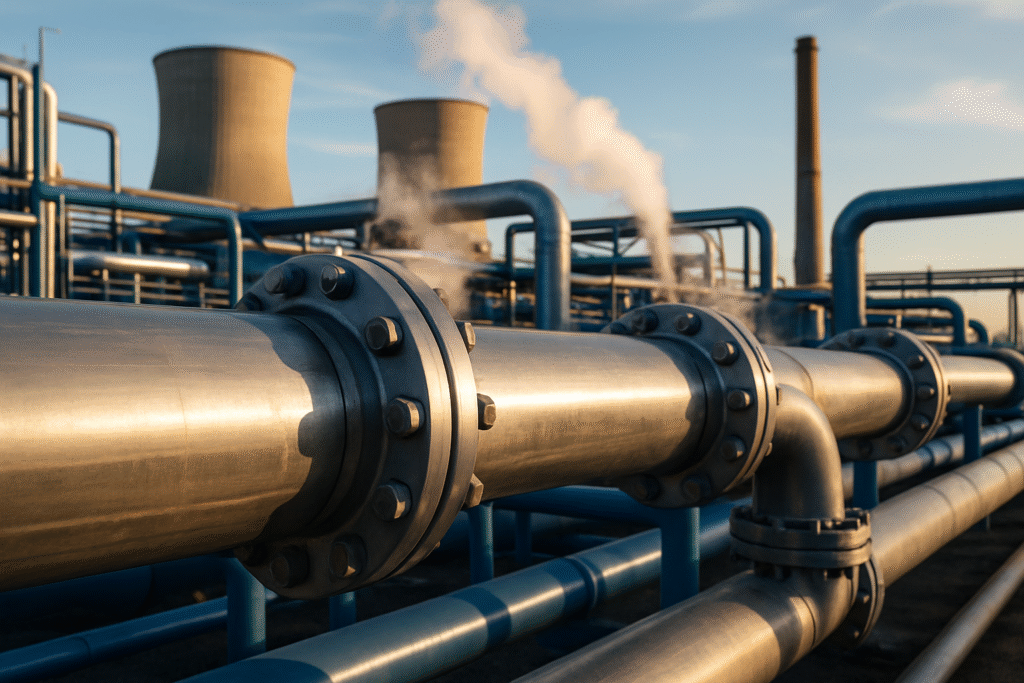
Image alt: stainless steel pipe flange inspection under ASME B16.5 и стандарты B16.47
Here is a practical comparison of common standards used in global projects:
- система ASME: Common in oil and gas, переработка, власть, and EPC projects with inch-based piping systems.
- DIN/EN system: Frequent in European process plants, water utilities, and OEM exports.
- JIS system: Often specified for Japanese equipment and regional industrial installations.
- GOST system: Still relevant in selected CIS and legacy infrastructure projects.
Кроме того, buyers should understand that not all standards are directly interchangeable. Bolt patterns, классы давления, детали облицовки, and thicknesses can differ, even where nominal size appears similar.
Как специалист по коррозии проф.. Дэниел Ривз отмечает: «Most flange problems in the field are specification mismatches, not machining defects.» That observation reinforces the need to align Pipe, прокладка, болты, and Flange standards from the start.
ASME publishes the core dimensional references used by engineers worldwide. Сходным образом, ASTM and ISO standards provide the material and quality framework needed for repeatable supply.
С ISO 9001:2015, ПЭД 2014/68/ЕС, и АД 2000 реквизиты для входа, SASA FLANGE supports buyers that need export-ready manufacturing and documented compliance. Изготовление фланцев в 304, 316, 904л, 2205, 2507 и другие премиум-классы, the company aligns supply with both standard and custom project requirements.
Более того, code compliance supports commercial performance. Many operators now treat documentation quality as a supplier qualification metric because poor traceability can delay installation, inspection release, and final payment.
Руководство по применению: Использование, Критерии выбора, and Best Fit by Industry
The Uses of a stainless steel pipe flange vary by media, класс давления, maintenance philosophy, and regulatory environment. Однако, the core objective remains the same: achieve a safe, leak-resistant, serviceable connection point in a piping system.
В нефти и газе, stainless and duplex Flanges are widely used in produced water, utility water, химическая инъекция, морские салазки, and selected process lines. По данным Статистики (2024), нефть и газ составляют около 35% мирового потребления фланцев, which underscores the sector’s influence on specification practices.
На нефтехимических и химических предприятиях, 316/316L often serves mild to moderate corrosive duty, в то время как 904L, Хастеллой, Монель, and duplex grades cover more aggressive media. Устойчивость к щелевой коррозии, совместимость прокладок, and cleaning chemistry all matter in these environments.
В производстве электроэнергии, stainless steel flanges support condensate systems, water treatment loops, instrument air, and selected high-temperature services. Thermal cycling and maintenance access frequently influence whether buyers Choose weld neck, слепой, or slip on designs.
Marine and shipbuilding projects present a different challenge because chlorides accelerate corrosion. Поэтому, 316л, 2205, и 2507 are often preferred where seawater splash, ballast service, or deck exposure can degrade lower-alloy materials.
Water treatment and desalination systems require long life with controlled maintenance budgets. Как результат, engineers often balance initial cost against expected pitting resistance, cleaning frequency, и интервалы замены.
Key criteria for choosing the right stainless steel pipe flange include:
- Состав жидкости, содержание хлоридов, and contamination risk.
- Диапазон рабочих и расчетных температур.
- Pressure class and surge conditions.
- Механизм коррозии, включая питтинг, расщелина, galvanic, or SCC risk.
- Flange type and access needs for maintenance.
- Размер трубы, расписание, and welding procedure compatibility.
- Regional standards such as ASME, DIN, EN, или JIS.
- Required certifications, контрольные точки, and end-user approvals.
Например, a stainless steel threaded pipe flange may suit a low-pressure utility line where hot work is restricted. В отличие, an Api weld neck flange or ASME weld neck design is usually more appropriate for severe service and high-integrity joints.
Buyers also ask about stainless steel pipe flange sizes and price. Size ranges typically start at 1/2 дюйм и продлить до 60 дюймы, while price depends on grade, класс давления, лицом к лицу, маршрут ковки, machining hours, и область сертификации.
According to procurement benchmarks from industrial sourcing platforms and manufacturer quotations, premium alloys can cost several times more than standard 304 или 316 items. Тем не менее, lower failure rates and longer service life often justify the premium in corrosive duty.
Manufacturing flexibility matters as much as metallurgy. Offering custom manufacturing, механическая обработка, бурение, and matching fittings supply, SASA FLANGE supports project packages across Oil & Газ, нефтехимическая, Власть, and Marine sectors in more than 50 страны.
The company can help buyers compare standard Stainless options with duplex, никелевый сплав, or titanium alternatives based on service conditions. That consultative approach is especially useful when replacing legacy components or qualifying substitute materials during tight project schedules.
Кроме того, bundled sourcing improves consistency. When one supplier provides flanges, локти, тройники, редукторы, and caps to coordinated standards, dimensional fit-up risk usually declines.
Перспективы на будущее: Strategic Recommendations for Buyers of Stainless Steel Pipe Flange Products
The industrial flange market will remain resilient because energy, вода, химикаты, and infrastructure sectors continue to invest in new and upgraded Pipe systems. По данным исследования Grand View (2024), Ожидается, что рынок вырастет с $5.8 миллиард в 2023 к $7.2 миллиард на 2030.
В то же время, buyer expectations are changing. Procurement managers now demand shorter lead times, clearer mill traceability, stronger QA records, and better support for multi-standard projects.
По данным IBISWorld (2024), Азиатско-Тихоокеанский регион производит более 45% глобальной производительности фланцев, which means supplier selection in China remains strategically important for international sourcing. Однако, the winning supplier is not always the cheapest; it is the one that ships compliant products, complete documents, and consistent dimensions.
Стратегически, buyers should standardize their RFQ checklist. Include alloy grade, стандартный, класс давления, тип фланца, лицом к лицу, количество, потребности в инспекциях, пакет документации, and delivery terms in every inquiry.
They should also qualify suppliers by manufacturing depth rather than website claims alone. Review CNC capacity, PMI control, прослеживаемость плавки, calibration records, and export packing methods before placing large or safety-critical orders.
Более того, project teams should compare lifecycle value instead of unit price only. A lower-priced Flange that corrodes early, arrives without documents, or fails fit-up can create far greater cost than an initially higher quote.
For global buyers evaluating stainless steel pipe flange supply, the most effective approach combines technical scrutiny with supplier reliability. For projects requiring ASME, ASTM, DIN, EN, ПЭД, and custom alloy support, контакт SASA FLANGE early in the specification stage can improve both sourcing speed and engineering confidence.
Часто задаваемые вопросы
Для чего используются фланцы из нержавеющей стали?
●Для соединения труб используются фланцы из нержавеющей стали., клапаны, насосы, и сосуды под давлением в системах, требующих коррозионной стойкости, исправность, и надежность размеров.
●По данным Статистики (2024), the oil and gas sector alone accounts for approximately 35% мирового потребления фланцев, which shows how critical flange connections are in process infrastructure.
●They are commonly installed in petrochemical, морской, очистка воды, пищевая промышленность, and power applications because grades such as 304, 316, 316л, 2205, и 2507 perform well in wet, химический, or chloride-bearing environments.
●The exact use depends on flange type, класс давления, лицом к лицу, and material standard, so buyers should match ASME B16.5 or B16.47 dimensions with ASTM A182 material requirements before ordering.
●For projects requiring corrosion-resistant, прослеживаемый, and export-ready supply, работа с известными производителями, такими как SASA FLANGE helps ensure compliant material certificates and consistent machining quality.
Какие фланцы делают из нержавейки?
●Обычные фланцы из нержавеющей стали включают приварную шейку., надеть, слепой, резьбовой, раструбная сварка, и конструкции соединений внахлестку, изготовленные из таких марок, как 304, 304л, 316, 316л, 904л, 2205, и 2507.
●В соответствии с ASTM A182/A182M (2024), forged stainless steel flanges for high-temperature and pressure service must meet controlled chemical and mechanical property limits, which is why ASTM grade verification matters.
●На практике, 304 и 316 dominate general industrial service, в режиме дуплекса, супер дуплекс, and nickel alloys are chosen for seawater, кислое обслуживание, or aggressive chemical duty.
●Large-diameter stainless steel flange products are typically made to ASME B16.47, while standard process sizes are usually specified to ASME B16.5, DIN, JIS, или RU 1092 depending on project geography.
●Buyers should request flange type, размер, класс давления, лицом к лицу, and certificate scope in the RFQ so the manufacturer can supply the correct stainless configuration without specification gaps.
Делают ли они фитинги для труб из нержавеющей стали??
●Да, производители производят фитинги для труб из нержавеющей стали, такие как колена, тройники, редукторы, кепки, заглушки, and custom buttweld components for use with stainless steel flange systems.
●В соответствии с ASME B16.9 (2023), factory-made wrought buttwelding fittings are standardized for dimensions and tolerances, which helps ensure fit-up consistency with matching piping and flange assemblies.
●These fittings are commonly manufactured in 304, 316, 316л, 904л, 2205, 2507, and other alloys to match process corrosion, давление, and welding requirements across industrial services.
●Procurement teams should align fitting material, толщина стенки, and inspection requirements with the flange specification because mixed standards can create weld mismatch and project delays.
●For integrated packages that include flanges and fittings under one quality system, поставщики, такие как SASA FLANGE может упростить контроль поставок и документации.
Какие три типа фланцев существуют??
●В основных промышленных дискуссиях чаще всего упоминаются три типа фланцев: приварная шейка., надеть, и глухие фланцы, хотя и с резьбой, коленный сустав, and socket weld types are also widely used.
●В соответствии с ASME B16.5 (2023), each flange type has standardized dimensions that affect bore, толщина, запирание, и геометрия облицовки, so the selection changes both strength and sealing behavior.
●Фланцы с приварной шейкой предпочтительны для работы при высоком давлении или в циклическом режиме., slip on flanges are often selected for moderate-duty cost control, and blind flanges are used to isolate or terminate a line.
●Engineers should avoid selecting among these types by price alone because stress distribution, fatigue exposure, метод сварки, and maintenance access strongly influence long-term performance.
●Where service conditions are severe or uncertain, buyers should consult a qualified manufacturer before finalizing the flange type, сорт, and alloy combination.
Что такое код ASME для фланцев из нержавеющей стали??
●The principal ASME dimensional codes for stainless steel flanges are ASME B16.5 для АПЛ 1/2 через 24 и ASME B16.47 для больших диаметров, пока ASTM A182 commonly governs forged stainless material.
●Согласно ASME (2023), B16.5 defines pressure-temperature ratings, размеры, допуски, маркировка, and testing expectations for pipe flanges and flanged fittings used in process industries.
●Buyers should understand that ASME standards define geometry and rating, whereas ASTM standards define chemical composition and mechanical properties, so both must appear in a technically complete specification.
●Для европейского экспорта, PED 2014/68/EU and EN 1092 can also apply, especially when end users request CE-related conformity and EN 10204 3.1 документация.
●The safest procurement practice is to specify ASME size standard, Класс материала ASTM, класс давления, лицом к лицу, and certificate requirements in the same purchase order line.
How do I choose the right stainless steel pipe flange for price and performance?
●The right stainless steel pipe flange balances alloy cost, коррозионная стойкость, номинальное давление, тип облицовки, and documentation requirements rather than focusing on lowest unit price.
●По данным исследования Grand View (2024), the global industrial flange market is projected to grow from $5.8 миллиард в 2023 к $7.2 миллиард на 2030, which indicates strong demand and continued buyer emphasis on reliable sourcing.
●Например, a low-cost 304 flange may suit clean utility service, while a 316L, 2205, или 2507 option can deliver better lifecycle value in chloride-bearing, оффшорный, or chemical environments.
●Procurement teams should compare delivered scope including machining, PMI, EN 10204 3.1 сертификаты, упаковка, and lead time because these factors materially affect installed cost and project risk.
●Для критически важных приложений, request a technical review from a manufacturer that can supply standard and custom sizes, multiple alloys, and complete quality documentation before you place the order.
Связанные Посты
Отделка торцевой поверхности фланца: Объяснение концентрических и спиральных зубцов
Концентрические и спиральные зубцы представляют собой обработанную поверхность фланца.…
Дуплекс 2205 по сравнению с фланцами 316L: Какой материал выбрать?
Быстрый ответ: Дуплекс 2205 flanges are usually the stronger candidate…

Определение фланца с диафрагмой, Подробности и обзор фланцев ASME B16.36: Рыночные данные, Руководство по выбору и анализ соответствия требованиям
Мировой рынок промышленных фланцев оценивался в $5.8 миллиард…

Руководство по рынку черных сливных фланцев: Материалы, 3.5″ Совместимость, и данные о поставщиках B2B для фланцев для кухонной мойки
Спрос на черные фланцы для утилизации растет благодаря покупателям кухонной техники…