
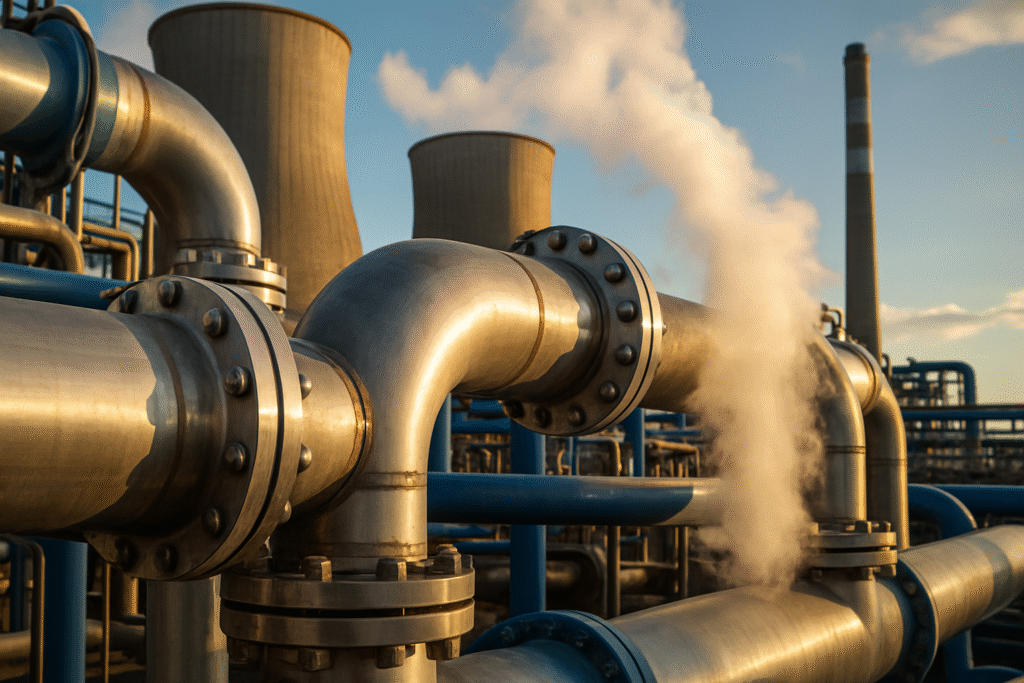
ステンレス鋼管フランジガイド: 市場データ, ASME B16.5/B16.47 タイプ, 隠れた利点と用途
グランドビューリサーチによると (2024), 世界の工業用フランジ市場は次のように評価されました。 $5.8 億で 2023 に達すると予測されています $7.2 10億まで 2030. That growth is one reason the stainless steel pipe flange remains a critical component for engineers who need corrosion resistance, 強さ, and reliable sealing in demanding Pipe systems.
調達チーム向け, the real challenge is not simply finding Flanges. It is learning how to Choose the right Flange material, 圧力クラス, 直面している, and standard for project life, コンプライアンス, および総設置コスト.
This guide explains the Hidden Advantages, 種類, and Uses of stainless steel pipe flange products across Oil & ガス, 石油化学, 力, 海兵隊, および水処理プロジェクト. It also shows how suppliers such as SASA FLANGE support international buyers with ASME, ASTM, DIN, and EN compliant manufacturing.
世界の需要動向に合わせたステンレス鋼管フランジの調達
The industrial flange business is expanding because global process industries continue to invest in new capacity, メンテナンス, and plant upgrades. IBISWorldによると (2024), アジア太平洋地域が占める割合は超過 45% 世界のフランジ生産量の, 中国が最大の製造国である.
That regional scale matters for buyers seeking stable output, 幅広い材料の入手可能性, and shorter lead times. It also helps explain why China-based manufacturers increasingly serve EPC contractors, OEM, and distributors worldwide.
最終用途の需要は依然として重工業に集中している. 統計局によると (2024), 石油・ガス産業が約 35% 世界のフランジ消費量の.
さらに, 石油化学, 発電, 脱塩, and shipbuilding keep specification requirements high. これらの分野では, flange failure can create unplanned shutdowns, 安全上のインシデント, and expensive rework.
A stainless steel pipe flange is often chosen where corrosion resistance and lifecycle value outweigh a lower upfront carbon steel cost. などのグレード 304, 316, 316l, 904l, 2205, そして 2507 support different chloride levels, 温度, and pressure conditions.
モルドール情報局によると (2024), global water treatment infrastructure spending continues to rise as municipalities upgrade aging assets and industrial reuse systems. 結果として, demand for corrosion-resistant Stainless components, including Flange and fitting assemblies, is increasing in saline and chemically treated services.
Industry standards also shape purchasing behavior. ASME B16.5 NPS のパイプ フランジとフランジ付き継手をカバーします 1/2 NPSを通じて 24, その間 ASME B16.47 addresses larger sizes from NPS 26 NPSを通じて 60 (ASME, 2023).
これらの規格は寸法を定義します, 公差, 掘削, フェーシング, および圧力温度定格. したがって, engineers rely on them to maintain interchangeability across global projects.
As supply chains become more quality-driven, buyers look for manufacturers that combine scale with traceability. と ISO 9001:2015 および PED 2014/68/EU 認証, SASA FLANGE aligns production with documented quality control and export-oriented compliance.
さらに, modern buyers want more than a catalog. They want machining accuracy, EN 10204 3.1 検査書類, PMI, 水圧試験のサポート, and material traceability from raw stock to final dispatch.
That is where experienced manufacturers create value beyond simple production. 高度な CNC 加工と包括的な品質テストに裏付けられています, SASA FLANGE supplies stainless steel flanges and fittings in standard and custom configurations for projects across more than 50 国.
サプライヤーを比較するバイヤー向け, the key is to assess total procurement risk. 価格が重要, しかし, ドキュメントの品質, 寸法の一貫性, and delivery reliability often determine the real project outcome.
ステンレス鋼管フランジの種類の選び方, 材料, and Ratings
The most effective way to Choose Flanges is to begin with process conditions, not price. 培地の組成, 設計温度, 圧力クラス, 腐食代, 溶接方法, and inspection scope should drive the final selection.
ジョン・レイノルズ役, 腐食の専門家および元主任技術者, 州: “Material selection errors usually start when teams focus on nominal alloy names instead of the actual service environment.” That principle is especially relevant when comparing 304, 316l, デュプレックス, and nickel alloy options.
多くの産業システムで, 304 and 304L are the most common starting grades because they offer solid general corrosion resistance and good fabrication performance. しかし, 316 and 316L are often preferred for chloride-bearing media because molybdenum improves pitting resistance.
ASTM および ASME の材料慣行に準拠, 鍛造ステンレス鋼フランジは通常、次の場所で供給されます。 ASTM A182 requirements when pressure-containing performance is required (ASTM, 2023). 実際の調達用語では, ASTM A182 F304, F304L, F316, and F316L remain standard choices for many refinery, food process, と水システム.
Where chloride stress, サワーサービスのリスク, or aggressive seawater exposure exists, duplex grades may offer better performance. NACE ガイダンスによると, higher alloyed stainless and duplex materials can significantly improve resistance in corrosive environments when correctly matched to service conditions (ネイス, 2023).
博士として. Frank Cheng, 材料科学者, 州: “Duplex stainless is often selected because it balances strength and corrosion resistance, which can reduce wall thickness and weight in engineered piping systems.” したがって, デュプレックス 2205 そしてスーパーデュプレックス 2507 can be strategic choices in offshore and desalination projects.
The most common Flange Types include the following.
- 高圧用ウェルドネックフランジ, 周期的な, 高温サービス.
- Slip-on flange for lower pressure systems and easier alignment during installation.
- Blind flange for line blanking, 分離, そして今後の拡張ポイント.
- Socket weld flange for small-bore high-pressure applications.
- Threaded flange for non-welded assembly in certain utility or hazardous areas.
- 頻繁な分解と調整の柔軟性が必要なシステム用の重ねジョイント フランジ.
Each Flange type has a different installation logic. 例えば, a weld neck flange provides smooth stress transition from flange hub to Pipe wall, while a slip-on flange can reduce fabrication complexity in less severe service.
圧力クラスの選択も同様に重要です. ASME B16.5 stainless flanges are commonly available in Class 150, 300, 600, 900, 1500, そして 2500, depending on size and design requirements (ASME, 2023).
Facing selection also affects sealing performance. Raised face is common in industrial piping, ring type joint is preferred in severe pressure service, and flat face is used where mating components require uniform contact.
Buyers should also review wall schedule and bore compatibility. A mismatch between flange bore and Pipe schedule can increase turbulence, welding difficulty, and inspection issues.
When comparing materials for industrial use, the following summary is useful.
- 304/304l: economical and versatile for general process service.
- 316/316l: stronger resistance to chlorides, 塩水, および化学物質への曝露.
- 904l: enhanced resistance in sulfuric and highly corrosive media.
- 2205: higher strength and improved pitting resistance for offshore and chemical plants.
- 2507: premium super duplex option for severe seawater and chloride conditions.
- インコネル, モネル, ハステロイ, チタン: selected for extreme temperature or highly aggressive chemistry.
マーケットリサーチの将来によると (2024), corrosion-related maintenance and replacement costs remain a major driver for alloy upgrades in process industries. 結果として, engineers increasingly evaluate lifecycle value rather than only initial material cost.
That shift creates Hidden Advantages for stainless steel pipe flange adoption. より長い耐用年数, メンテナンスの軽減, cleaner internal surfaces, and stronger media compatibility often lower total ownership cost over time.
Manufacturing capability matters just as much as alloy choice. カスタムサイズを提供 1/2 インチから 60 競争力のある工場直販価格のインチ, SASA FLANGE supports standard ANSI, DIN, JIS, ゴスト, and EN projects as well as tailored dimensional requirements.
加えて, buyers should assess available documentation before issuing a PO. MTC, 硬さチェック, PMI, 寸法レポート, and third-party inspection support can reduce acceptance risk at site.
ASME, ASTM, DIN, およびステンレス鋼管フランジの準拠に関する EN 規格
Standards define whether a flange fits, シール, and performs as intended. したがって, any serious stainless steel pipe flange sourcing plan should start with the applicable code, 材料規格, and inspection document requirements.
ASME B16.5 is the core dimensional standard for flanges and flanged fittings from NPS 1/2 NPSへ 24. ASME B16.47 NPS からの大口径をカバー 26 NPSへ 60 and is commonly referenced in large-bore pipeline and terminal systems (ASME, 2023).
材料規格も同様に重要です. ASTM A182 鍛造または圧延合金およびステンレス鋼の管フランジをカバーします。, 鍛造継手, および高温用バルブ, while ASME material specifications often mirror ASTM requirements for design code integration (ASTM, 2023).
European projects frequently require DIN or EN compliance. EN 1092-1 フランジ寸法を提供します, 圧力定格, facing forms, and designation structures used across many EU-regulated installations.
For PED-governed equipment in Europe, compliance documentation is not optional. The Pressure Equipment Directive 2014/68/EU establishes conformity obligations for pressure-containing equipment placed on the EU market (欧州委員会, 2024).
実際に, procurement teams often compare the following standards during technical review.
- ASME B16.5: standard for NPS 1/2 に 24 フランジと継手.
- ASME B16.47: standard for NPS 26 に 60 large-diameter flanges.
- ASME B16.9: standard for factory-made wrought buttwelding fittings.
- ASTM A182: forged stainless and alloy flange material specification.
- EN 1092-1: ヨーロッパのフランジ寸法と圧力指定.
- DIN and JIS standards: region-specific dimensional systems for international compatibility.
Engineers should also note that dimensional compatibility is not always interchangeable across ASME, DIN, およびENシステム. ボルト円直径, 掘削, フランジの厚さ, and facing details can differ even when nominal pipe size appears similar.
As Peter Bock, シニア配管エンジニア, 州: “Most field fit-up problems come from standard mismatches rather than obvious material defects.” That is why cross-checking mating dimensions before procurement is essential.
Documentation should be defined in the purchase order. 一般的なリクエストには次のようなものがあります。 EN 10204 3.1 認証, 確実な物質識別, ferrite testing where required, and hydro or pneumatic test records for assembled systems.
Stainless flange compliance often extends into corrosion and service-specific rules. NACE MR0175 または ISO 15156 may apply in sour environments, while DNV or NORSOK requirements can influence offshore and marine projects.
From a quality perspective, certified production systems create consistency. と ISO 9001:2015, PED 2014/68/EU, とAD 2000 資格, SASA FLANGE supports buyers who need traceable manufacturing and export-ready compliance for critical service applications.
さらに, many projects combine flange and fitting supply to simplify sourcing. Through its broader range of elbows, ティー, 減速機, and caps manufactured to ASME B16.9 および関連規格, SASA FLANGE helps buyers consolidate procurement and inspection activities.
For deeper standard verification, engineers can also review the official ASME reference pages at ASME.org. That step is useful when project specifications call for the latest edition or add code case references.
申請ガイド: Stainless Steel Pipe Flange Selection for Oil, 化学薬品, 力, および海洋システム
Application-based selection prevents overengineering and underperformance. The best flange is not simply the highest alloy grade, but the one that matches pressure, 温度, メディア, and maintenance expectations.
油中 & ガス, stainless steel pipe flange assemblies often appear in utility lines, オフショアモジュール, 生産された水システム, and selected process services. 統計局によると (2024), このセクターは約を表します 35% 世界のフランジ消費量の, so reliability and standard compliance remain decisive.
For offshore or coastal installations, chloride exposure pushes many projects toward 316L, 2205, または 2507. 対照的に, low-corrosion utility service may still justify 304L when the process envelope is controlled.
石油化学・化学プラントにおいて, メディア互換性ドライブの選択. 酸, 溶剤, 塩化物, and elevated temperatures can quickly eliminate general-purpose grades from consideration.
Typical chemical industry priorities include the following.
- Pitting and crevice corrosion resistance.
- Weldability and post-fabrication inspection access.
- Compatibility with gaskets and bolting materials.
- Resistance to intergranular attack after welding.
- Availability of forged ASTM A182 material in project sizes.
Power generation creates a different profile. 蒸気システム, condensate lines, FGDユニット, and cooling water applications require a balance of pressure rating, temperature endurance, and long-term maintenance control.
According to the International Energy Agency trend reporting cited by market analysts in 2024, grid modernization and plant efficiency upgrades continue to support replacement demand for high-integrity piping components. したがって, utilities increasingly prioritize suppliers with repeatable machining quality and documented heat traceability.
Marine and shipbuilding sectors favor corrosion-resistant materials because salt-laden atmospheres accelerate degradation. Stainless and duplex Flanges are frequently chosen for ballast systems, scrubber lines, 海水冷却, そしてデッキパイピング.
Water treatment is another strong growth area. モルドール情報局によると (2024), municipal and industrial water reuse investments are increasing globally, which supports demand for stainless pipe flange products in desalination, filtration, and chemical dosing systems.
Engineers evaluating a project should review these selection criteria before issuing drawings or RFQs.
- メディア構成, 塩化物を含む, H2S, and acid content.
- 動作温度および設計温度.
- System pressure and required flange class.
- 適用される規格など ASME B16.5, B16.47, DIN, またはEN 1092-1.
- パイプスケジュールとフランジボアが一致.
- フェーシングタイプ, ガスケットの選択, ボルト締めの互換性.
- 必要な検査書類など EN 10204 3.1.
- Need for custom drilling, 規格外の厚さ, or special alloy sourcing.
Procurement managers should also consider packaging, マーキング, および輸出サポート. Poor preservation during transit can compromise machined surfaces and create installation delays at destination.
Manufacturing flexibility is often the deciding factor on complex projects. フランジの製造 304, 316, 904l, 2205, 2507 その他のプレミアムグレード, SASA FLANGE supports custom dimensions, 特殊なフェーシング, and integrated fitting packages for EPC and MRO orders.
For large or mixed-material packages, supplier experience matters. Buyers can review production capabilities and company background at SASA FLANGE before moving into detailed technical discussion.
さらに, custom manufacturing can reduce field modification risk. That advantage becomes significant when projects require non-standard drilling, oversized bores, special bevels, or matching to legacy site equipment.
ステンレス鋼管フランジのサプライチェーンの将来展望と戦略的購入決定
Over the next several years, the stainless steel pipe flange market should benefit from infrastructure renewal, エネルギー転換プロジェクト, and stricter corrosion management standards. グランドビューリサーチによると (2024), 市場は~から拡大すると予想される $5.8 億で 2023 に $7.2 10億まで 2030.
That projected growth suggests continued competition for high-spec alloy capacity and machining resources. したがって, strategic buyers should build approved vendor lists before urgent shutdown or expansion projects begin.
Another major trend is the shift toward total lifecycle thinking. マーケットリサーチの将来によると (2024), asset owners increasingly favor materials that reduce corrosion-driven downtime, 特に化学処理においては, 海洋, そして水インフラ.
Digital procurement is also changing supplier selection. Buyers now compare lead times, 認証の準備状況, 寸法管理, and responsiveness with the same intensity once reserved for pricing.
実務的には, engineers and sourcing teams should follow a few actions.
- Standardize flange specifications by service category.
- Prequalify suppliers for material traceability and inspection reporting.
- Request clear confirmation of ASME, ASTM, DIN, or EN dimensional compliance.
- ライフサイクルコストを評価する, not just initial unit price.
- Bundle flanges and fittings where quality consistency is critical.
As industry projects become more demanding, the Hidden Advantages of strong supplier partnerships become clearer. Faster technical clarification, consistent machining quality, and complete documentation often save more money than a marginally lower quoted rate.
For buyers seeking ASME B16.5, B16.47, and custom stainless steel pipe flange solutions, working with an experienced manufacturer can reduce both technical and commercial risk. For detailed project support, 材料に関する推奨事項, or a formal quotation, 調達チームは連絡できます SASA FLANGE アプリケーション固有のガイダンス用.
よくある質問
ステンレスフランジとは何に使用されますか?
●A stainless steel flange is used to connect Pipe sections, バルブ, パンプス, and equipment while creating a secure and maintainable joint in pressurized systems.
●統計局によると (2024), 石油とガスが約 35% 世界のフランジ消費量の, which shows how essential flanged connections are in critical industrial infrastructure.
●Engineers typically select stainless steel flanges when they need corrosion resistance, 寸法安定性, and long service life in water, 化学薬品, 海洋, 食べ物, および電源アプリケーション.
●Common Uses include line isolation with blind flanges, equipment tie-ins with weld neck or slip-on Flanges, and small-bore utility connections with threaded or socket weld designs.
●Material grade determines suitability for service because 304 and 304L handle many general media, その間 316 and 316L perform better in chloride-containing environments.
●Standards also matter because ASME B16.5 governs dimensions and ratings for many flanges from NPS 1/2 を通して 24, which helps buyers maintain interchangeability across systems (ASME, 2023).
●ジョン・レイノルズ役, corrosion specialist, 州: “A flange joint is not just a connector, it is a pressure boundary that must match both chemistry and mechanics.” That is why material choice, 対面タイプ, ガスケットの選択, and bolting must be reviewed together.
●調達チーム向け, the practical value of stainless steel is lower maintenance and better media compatibility over time. 多くの場合, that creates lower lifecycle cost than repeated replacement of lower-grade alternatives.
●Buyers should also confirm bore size, クラス評価, and inspection documents before ordering. For projects requiring traceable stainless Flange supply and technical support, のような確立されたメーカーと協力する SASA FLANGE helps ensure compliance and fit-up reliability.
ステンレス鋼フランジの規格は何ですか?
●The main standard for stainless steel flanges in many industrial projects is ASME B16.5, その間 ASME B16.47 covers larger diameter Flanges used in major pipeline and terminal applications.
●ASME B16.5 applies to flanges and flanged fittings from NPS 1/2 NPSへ 24, そして ASME B16.47 applies from NPS 26 NPSへ 60, ASMEによると (2023).
●These standards define key dimensional requirements such as outside diameter, フランジの厚さ, bolt hole layout, フェーシング, および圧力温度定格. したがって, they are central to fit-up, 封印, and replacement planning.
●Material compliance is usually addressed separately through ASTM specifications, 特に ASTM A182 鍛造ステンレスおよび合金鋼フランジ用. Buyers commonly specify grades such as F304, F304L, F316, and F316L under this standard.
●ヨーロッパのプロジェクトではENも必要になる場合があります 1092-1, while some legacy or regional jobs still reference DIN, JIS, またはGOST寸法. 対照的に, these systems are not automatically interchangeable with ASME dimensions, so engineers must verify mating compatibility.
●Where sour service, オフショア, or PED-regulated applications are involved, additional requirements can apply. These may include NACE MR0175 または ISO 15156, PED 2014/68/EU conformity, そして EN 10204 3.1 検査証明書.
●As Peter Bock, シニア配管エンジニア, 州: “A flange standard is only complete when the dimensional code, 材質グレード, and inspection scope are aligned.” That guidance reflects real field experience.
●For purchasing, the safest approach is to state the flange type, サイズ, クラス, 直面している, 材質グレード, 通常版, and documentation package in one RFQ. For projects needing certified ASME, ASTM, DIN, or EN compliant supply, などのメーカー SASA FLANGE can help confirm the full specification before production.
ステンレス鋼の管継手を製造していますか?
●はい, メーカーはあらゆる種類のステンレス鋼管継手を製造しています, 肘も含めて, ティー, 減速機, キャップ, and stub ends for welded and fabricated piping systems.
●によると ASME B16.9, factory-made wrought buttwelding fittings are standardized for dimensions and tolerances, which helps maintain consistency across engineered Pipe installations (ASME, 2023).
●These fittings are often supplied in the same grades used for flanges, のような 304, 304l, 316, 316l, 904l, 2205, そして 2507. 結果として, buyers can match fittings and Flanges for corrosion resistance and welding compatibility.
●In process industries, stainless steel fittings are selected for many of the same reasons as stainless flanges. They resist corrosion, support hygienic or clean service, and perform well in moisture, 塩化, and chemical exposure when the correct grade is specified.
●モルドール情報局によると (2024), water treatment and industrial reuse investment is rising worldwide, which supports growing demand for corrosion-resistant stainless piping components beyond just Flange products.
●Procurement teams usually prefer sourcing flanges and fittings from the same supplier when dimensions, MTC, and inspection records must align. This approach simplifies quality control and can reduce coordination issues during fabrication.
●Available fitting forms generally include 45-degree and 90-degree elbows, equal and reducing tees, concentric and eccentric reducers, and end caps. Wall thicknesses and schedules should match the connected Pipe to avoid weld mismatch and turbulence.
●For demanding projects, buyers should request ASTM material compliance, EN 10204 3.1 認証, PMI where needed, and clear marking on each item. If a project needs flanges and fittings in one package, サプライヤーのような SASA FLANGE can support coordinated manufacturing and documentation.
3種類のフランジとは何ですか?
●最も一般的に参照される 3 つのフランジ タイプはウェルド ネック フランジです。, スリップオンフランジ, およびブラインドフランジ, ねじ込まれていますが, ラップジョイント, and socket weld designs are also widely used.
●Weld neck flanges are preferred for high-pressure and high-temperature service because the tapered hub improves stress distribution at the weld transition. This makes them a strong choice for critical process lines and cyclic service.
●Slip-on flanges are easier to align and can reduce fabrication cost in lower severity applications. しかし, they are usually not the first choice for severe pressure, 振動, or thermal cycling conditions.
●Blind flanges seal the end of a Pipe, ノズル, または容器の開口部. They are widely used for future system expansion, 水圧試験, and line isolation.
●によると ASME B16.5 (2023), これらのフランジタイプは寸法によって標準化されています, 圧力クラス, フェーシング, and tolerances for NPS 1/2 を通して 24. That standardization helps engineers replace components without custom redesign in many systems.
●博士として. Frank Cheng, 材料科学者, 州: “The best flange type depends on the joint stress profile and maintenance strategy, not only on the media.” That is why type selection should consider process duty and inspection accessibility.
●実際の調達では, buyers should compare installation complexity, 溶接要件, access for maintenance, and total lifecycle performance. A low-cost slip-on choice may not be economical if the system later experiences fatigue or leakage problems.
●When projects require help choosing among standard or custom Flanges, it is wise to share the line class, 中くらい, プレッシャー, 温度, and Pipe schedule with the manufacturer. For technical support on weld neck, 盲目, スリッポン, ねじ切りされた, or custom stainless designs, 購入者は相談できます SASA FLANGE.
How do I choose the right stainless steel pipe flange size and pressure class?
●You choose the right stainless steel pipe flange by matching nominal Pipe size, スケジュール, 直面している, 圧力クラス, and applicable standard to the actual process design conditions.
●ASME B16.5 covers standard dimensions and pressure classes for NPS 1/2 を通して 24, クラスを含む 150, 300, 600, 900, 1500, そして 2500, ASMEによると (2023).
●Size selection starts with the connected Pipe outside diameter and schedule because the flange bore must match the piping geometry for proper welding and flow transition. A mismatch can complicate installation and increase turbulence.
●Pressure class should be selected from the design pressure and temperature, not from line size alone. Stainless material grade also matters because pressure-temperature ratings vary with alloy and code tables.
●例えば, ある 4 クラスのインチステンレス鋼管フランジ 150 may suit a moderate-pressure utility line, while a critical hydrocarbon or steam service may require Class 300 以上. Buyers should always confirm the exact rating tables in the applicable code edition.
●グランドビューリサーチによると (2024), the flange market is expanding as industrial modernization continues, which means buyers have many sourcing options. しかし, dimensional accuracy and documentation quality still determine whether the product will fit and pass inspection.
●Engineers should also confirm facing type, ガスケットのスタイル, and bolting compatibility before ordering. 盛り上がった顔, 平らな面, and ring type joint options each serve different sealing conditions.
●A practical RFQ should list size, クラス, 標準, 材質グレード, 直面している, 量, and required certification. For projects needing custom sizes from 1/2 インチから 60 inch or guidance on B16.5 and B16.47 selection, などのメーカー SASA FLANGE can help verify the specification before production.
ステンレス鋼管フランジの価格に影響を与えるもの?
●ステンレス鋼管フランジの価格は主に合金グレードに影響されます, サイズ, 圧力クラス, 加工の複雑さ, 検査範囲, 量, and current raw material market conditions.
●グランドビューリサーチによると (2024), 世界の工業用フランジ市場に到達 $5.8 億で 2023, and rising demand across energy and infrastructure sectors continues to influence procurement competition and pricing.
●Material grade is usually the biggest cost driver. A 316L flange typically costs more than 304L, 両面印刷中 2205, 2507, and nickel alloys can be significantly higher because of alloy chemistry and production complexity.
●Size and pressure class also matter because larger diameters and higher classes require more material, tighter machining, and stricter dimensional control. あ 4 インチクラス 150 flange will not be priced like a 24 インチクラス 600 フランジ.
●Additional requirements can raise the final quote. These include PMI, 第三者による検査, EN 10204 3.1 または 3.2 ドキュメント, 特殊なフェーシング, カスタム穴あけ, 輸出梱包, and urgent lead times.
●IBISWorldによると (2024), アジア太平洋地域が占める割合は、 45% 世界のフランジ生産量の, with China as the largest manufacturer. This concentration often creates competitive sourcing advantages for buyers who work directly with capable factories.
●しかし, the lowest unit price is not always the best value. 手直し, late delivery, or incomplete certification can make an initially cheap Flange far more expensive at site.
●最も正確な価格設定をするには, buyers should submit a complete inquiry with grade, サイズ, 標準, クラス, 直面している, 量, そして配達先. For projects that need factory-direct quotations and traceable documentation, のような老舗メーカーから調達 SASA FLANGE can improve both price clarity and procurement reliability.
関連投稿

オリフィスフランジの定義, 詳細と ASME B16.36 フランジの概要: 市場データ, 選択ガイドとコンプライアンスに関する洞察
世界の工業用フランジ市場は次のように評価されました。 $5.8 十億…

ブラックディスポフランジ市場ガイド: 材料, 3.5″ 互換性, キッチン シンク フランジの B2B 調達データ
キッチン設備の購入者として黒色の使い捨てフランジの需要が高まっています…