
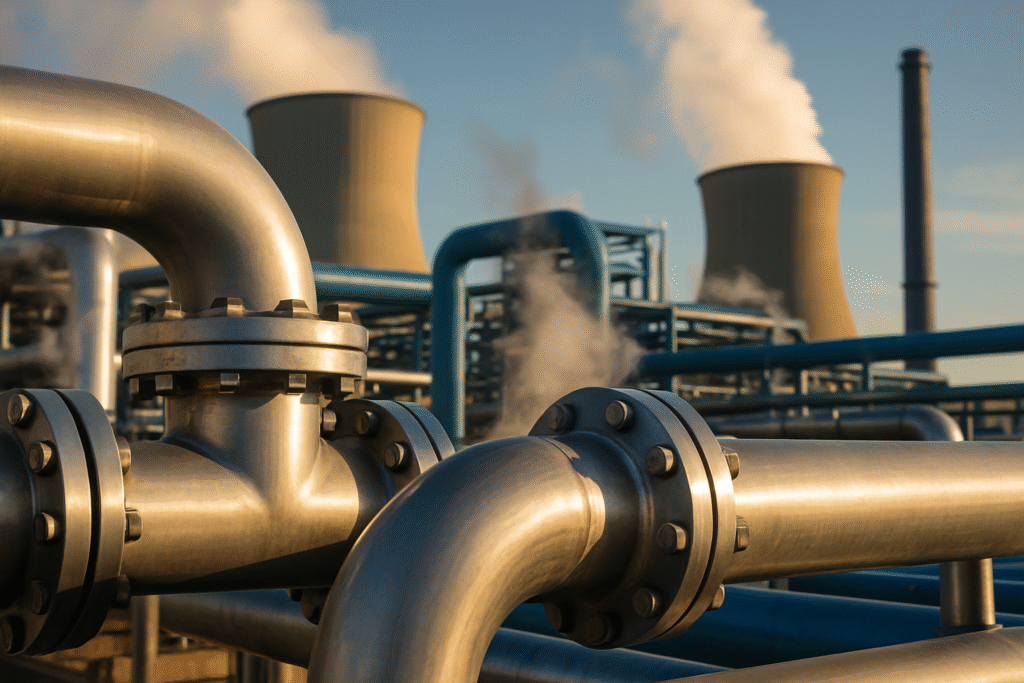
ステンレス鋼管フランジ: 7 データに裏付けられた利点, 種類, 用途, とプレミアムオプションの選択方法
ステンレス鋼のパイプフランジは、漏れの完全性のため、依然として産業用配管の重要なコンポーネントです。, 耐食性, 単純な購入価格よりもライフサイクルコストが重要視されるようになりました. グランドビューリサーチによると (2024), 世界の工業用フランジ市場は次のように評価されました。 $5.8 億で 2023 に達すると予測されています $7.2 10億まで 2030.
That growth reflects a Hidden shift in procurement priorities. Engineers and buyers increasingly focus on Premium materials, verified standards, and long-term durability when they Choose Flanges for demanding service.
ステンレス鋼管フランジ市場が拡大し続ける理由
Industrial buyers are no longer selecting flanges as commodity items. その代わり, they evaluate total system performance, corrosion margins, 検査トレーサビリティ, and compatibility with welded and threaded Pipe systems.
IBISWorldによると (2024), アジア太平洋地域が占める割合は超過 45% 世界のフランジ生産量の, 中国が最大の製造国である. 結果として, global sourcing strategies now depend on manufacturers that can combine cost efficiency with documented quality compliance.
Demand is also heavily concentrated in process industries. 統計局によると (2024), 石油・ガス産業が約 35% 世界のフランジ消費量の, which explains why ASME pressure classes, alloy verification, and mill test certification remain central to purchasing decisions.
さらに, corrosion-related failures continue to drive replacement cycles and specification upgrades. NACE has long emphasized that material mismatch in corrosive service can sharply reduce asset life, especially where chlorides, サワーメディア, or cyclic temperatures are present (ネイス, 2023).
This is where the Intriguing value of Stainless and alloy-based systems becomes clear. Compared with unprotected carbon steel, stainless solutions offer strong Advantages in cleanliness, 耐食性, and maintenance reduction across water treatment, 化学処理, and marine lines.
モルドール情報局によると (2024), global investment in water and wastewater infrastructure is increasing steadily, supporting higher demand for corrosion resistant flanges, 継手, とバルブ. したがって, stainless steel pipe flange selection is now closely tied to lifecycle reliability rather than only capex control.
Procurement teams also want broader material and size flexibility. A supplier that can support 304, 316, 316l, 904l, 2205, 2507, A182グレード, and specialty alloys reduces qualification delays during multi-site projects.
SASA FLANGE supports these requirements with stainless steel flanges, 炭素鋼フランジ, 合金フランジ, and pipe fittings for global EPC, OEM, and distributor customers. と ISO 9001:2015 および PED 2014/68/EU 認証, その会社は石油を供給しています & ガス, 石油化学, 発電, 造船 & 海兵隊, 水処理, および建設アプリケーション.
Buyers also assess manufacturer responsiveness and technical depth before issuing RFQs. For project support, dimensional review, and certified supply planning, procurement teams can connect with SASA FLANGE 仕様の初期段階で.
加えて, digital sourcing has changed how engineers compare suppliers. Search behavior increasingly includes long-tail queries such as stainless steel pipe flange sizes, stainless steel flange Types, stainless steel threaded pipe flange, そして 4 インチステンレス鋼管フランジ.
That trend makes structured technical content more important than ever. A manufacturer must explain materials, 標準, 用途, 圧力クラス, and quality documents in clear terms that support both SEO and engineering evaluation.
ステンレス鋼管フランジの種類, 隠れた利点, および技術的な選択要素
A stainless steel pipe flange is not one product but a family of connection designs. Its Versatility comes from matching flange geometry, 対面タイプ, 圧力クラス, and material grade to the actual process duty.
As John Bremer, 上級配管エンジニア, 州: “The best flange selection is the one that balances corrosion allowance, gasket seating performance, and inspection traceability across the full operating envelope.” That principle explains why experienced buyers compare more than nominal size and price.
によると ASME B16.5, common flange pressure-temperature ratings depend on material group, class designation, および使用温度 (ASME, 2023). したがって, クラス 150 flange in A182 F316L does not behave identically to a Class 150 flange in carbon steel at elevated temperature.
Material choice also changes long-term maintenance economics. マーケットリサーチの将来によると (2024), industrial asset owners are increasing spending on corrosion-resistant piping components as unplanned shutdown costs continue to rise across refining and chemical sectors.
The most common stainless steel flange Types include the following:
- Weld neck flanges for high pressure, 周期的な, and severe temperature service.
- Slip-on flanges for moderate pressure systems where installation economy matters.
- Blind flanges for line isolation, テスト, そして今後の拡張ポイント.
- Socket weld flanges for small bore high-pressure piping.
- Threaded flanges for low-pressure or non-weld applications.
- Lap joint flanges for systems requiring frequent dismantling.
The face design is equally important. 盛り上がった顔, 平らな面, and ring type joint options determine gasket seating behavior and sealing reliability under load.
例えば, raised face flanges remain common in refinery and petrochemical service. Ring type joint flanges, しかし, are preferred for higher pressure applications where metal-to-metal sealing performance is critical.
Standard material grades each bring different performance profiles:
- 304 and 304L provide strong general corrosion resistance and good fabrication performance.
- 316 316Lにモリブデンを添加, which improves pitting resistance in chloride-bearing environments.
- 904L supports more aggressive chemical media and higher corrosion demands.
- 2205 duplex combines strength and chloride resistance with good weight efficiency.
- 2507 super duplex delivers higher PREN values for severe offshore and marine exposure.
- チタン, インコネル, モネル, and Hastelloy support highly specialized corrosive or temperature-critical service.
博士として. エレナ・モリス, 材料科学者, メモ: “316L is often the practical baseline for chloride service, but duplex grades frequently provide a better strength-to-corrosion ratio when design conditions intensify.” This is especially relevant in seawater systems, 脱塩, and offshore skid packages.
The Hidden Advantages of a Premium stainless steel pipe flange often appear after installation. Lower rust contamination, easier hygiene maintenance, better media compatibility, and reduced coating dependence can all improve plant uptime.
さらに, weldability matters in fabrication shops. Low-carbon grades such as 304L and 316L help limit sensitization after welding, which supports corrosion performance in heat-affected zones under the right procedure controls.
Key specification factors should be reviewed before ordering:
- 呼びパイプサイズから 1/2 インチから 60 inch or project-specific custom dimensions.
- などの圧力クラス 150, 300, 600, 900, 1500, または 2500.
- RFを含むフェーシングタイプ, FF, またはRTJ.
- Material standard such as ASTM A182 or EN equivalent grades.
- Wall schedule and matching pipe specification.
- Corrosion environment including chlorides, H2S, 酸, or caustic media.
- Inspection and documentation requirements such as EN 10204 3.1.
SASA FLANGE でフランジを製造します 304, 316, 904l, 2205, 2507 その他のプレミアムグレード, 高度なCNC加工と包括的な品質テストに裏付けられています. That capability helps project teams control tolerances, フェーシング仕上げ, and documentation consistency across repeat orders.
実務的には, engineers often compare stainless versus alloy or carbon steel on total installed risk. Although stainless may carry a higher initial material cost, the durability and reduced maintenance burden often improve lifecycle value.
According to ISO guidance for quality management and process control, documented production consistency reduces nonconformance risks in critical industrial supply chains (ISO, 2023). That is one reason certified manufacturers with stable QA systems remain preferred for export and regulated projects.
For buyers evaluating custom dimensions, 穴あけパターン, and non-standard requirements, it helps to review supplier capabilities early. You can explore manufacturing scope and project support via SASA FLANGE product resources and align specification details before procurement closes.
基準, コンプライアンス, and Quality Documents for Stainless Steel Pipe Flange Procurement
Standards are the language of dependable flange procurement. Without clear compliance to ASME, ASTM, DIN, JIS, ゴスト, or EN requirements, even a visually correct flange can create fit-up, プレッシャー, or inspection problems.
ほとんどの産業プロジェクトの場合, ASME B16.5 NPS 用のパイプ フランジとフランジ付き継手をカバーします。 1/2 を通して 24. ASME B16.47 extends coverage to large diameter steel flanges, which are common in water, 海洋, and terminal applications (ASME, 2023).
Material standards are just as important. ASTM A182 鍛造または圧延合金およびステンレス鋼の管フランジを管理します, 鍛造継手, および高温用バルブ, その間 ASTM A240 applies to stainless plate, シート, and strip products used in broader fabrication contexts (ASTM, 2023).
European and international buyers often specify EN 1092 および PED 要件. したがって, exporters serving pressure equipment projects must understand dimensional compliance, マーキング, トレーサビリティ, and document retention expectations.
The most referenced standards in flange sourcing include:
- ASME B16.5 for standard dimensional and pressure class requirements.
- ASME B16.47 for large diameter flanges.
- ASME B16.9 関連する突合せ溶接継手用.
- ASTM A182 鍛造ステンレスおよび合金フランジ材料用.
- EN 1092 for European flange dimensions and pressure systems.
- NACE MR0175 for sour service material selection where applicable.
- PED 2014/68/EU for pressure equipment compliance in the EU market.
Comparison points that buyers should verify include:
- Dimensional standard and drilling compatibility.
- Pressure-temperature rating basis.
- Forged versus plate flange manufacturing route.
- Heat number traceability and PMI requirements.
- 表面仕上げ, 鋸歯状, and facing tolerances.
- Third-party inspection needs such as DNV or customer-appointed agencies.
画像代替テキストの推奨: stainless steel pipe flange inspection and dimensional verification under ASME standards.
According to DNV guidance for marine and offshore components, traceable documentation and verified material properties are essential to reduce operational and safety risk in critical systems (DNV, 2023). That matters even more when flanges operate in vibration, 塩水噴霧, and fluctuating pressure environments.
マーク・エリソン役, Global Supply Chain Analyst, 州: “Procurement failures in piping projects usually begin with incomplete specifications, not with machining errors.” His point reflects a common issue in international sourcing where buyers request stainless flanges without defining grade, 直面している, クラス, テスト, or certificates.
SASA FLANGE addresses this challenge through documented quality systems and export-oriented compliance support. と ISO 9001:2015, PED 2014/68/EU, とAD 2000 資格, the company helps customers align technical, regulatory, and commercial requirements in one sourcing workflow.
加えて, many project owners now request EN 10204 3.1 認証, PMI, hydrotest records where relevant, および寸法検査レポート. These documents are no longer optional in many EPC and MRO programs because they simplify receiving inspection and audit readiness.
Procurement teams should also confirm whether the project requires corrosion testing, 硬さの検証, フェライト制御, or NACE-related restrictions. These details can change both cost and lead time, especially for duplex, ニッケル合金, or titanium-based flanges.
Manufacturer background also influences risk management. Reviewing engineering support, quality controls, and production history through の SASA FLANGE 会社概要 can help buyers shortlist qualified suppliers faster.
さらに, outbound technical reference sources remain valuable during specification work. Buyers can review official standard guidance directly from ASME to confirm dimensional and code-related requirements before finalizing procurement packages.
申請ガイド: 用途, サイズ設定, and How to Choose the Right Stainless Steel Pipe Flange
The right stainless steel pipe flange depends on process chemistry, 圧力クラス, 温度, mechanical loading, とメンテナンス戦略. Engineers should evaluate the entire piping loop rather than selecting flanges in isolation.
石油とガスにおいて, flange selection often focuses on pressure containment, サワーサービスのリスク, and fire-safe system integrity. Because this sector represents about 35% 世界のフランジ消費量の (政治家, 2024), specification rigor is usually high from the first RFQ.
石油化学プラント向け, 316l, 904l, and alloy materials are often reviewed for media compatibility and chloride exposure. さらに, weld neck designs remain common where thermal cycling and vibration create higher fatigue demand.
発電において, temperature and pressure swings drive the selection process. 高圧蒸気, 凝縮水, and auxiliary chemical lines may require different material strategies within the same facility.
Marine and shipbuilding projects often prioritize chloride resistance and weight efficiency. したがって, などの二重グレード 2205 そして 2507 can offer an Intriguing balance of strength, 耐食性, and footprint reduction.
Water treatment and desalination projects typically favor stainless and duplex materials for long service life. モルドール情報局によると (2024), sustained investment in water infrastructure is increasing demand for corrosion-resistant piping systems worldwide.
Selection criteria should include the following checks:
- Confirm media type, 集中, and contamination profile.
- Match flange material to pipe, フィッティング, ボルト, ガスケットの互換性.
- Verify ASME or EN dimensional standard before issuing the PO.
- Check pressure class against the full operating temperature range.
- ウェルドネックを選択してください, スリッポン, ねじ切りされた, 盲目, or lap joint based on service duty.
- Specify facing type and gasket style together, not separately.
- Define testing and documentation requirements in advance.
- Review lead time for special grades such as titanium, ハステロイ, またはモネル.
Buyers also ask about flange width, flange chart data, and stainless steel pipe flange sizes. 実際に, dimensional decisions should always be checked against the governing standard table because bolt circle, ハブの形状, and thickness vary by class and standard family.
例えば, ある 4 インチのステンレス鋼管フランジ ASME B16.5 クラス 150 differs significantly from a 4 インチクラス 600 option. したがって, engineers should never purchase by nominal size alone.
Price is another important factor, but price alone can mislead. ステンレス鋼管フランジの価格はグレードにより異なります, 鍛造ルート, サイズ, 圧力クラス, 加工の複雑さ, テスト範囲, そして配送スケジュール.
According to industry procurement benchmarks summarized by IBISWorld (2024), raw material volatility remains one of the largest cost drivers in industrial component sourcing. 結果として, buyers should compare landed value, not only ex-works quotations.
Custom manufacturing is increasingly important for global projects. SASA FLANGE からのカスタムサイズを提供します 1/2 インチから 60 競争力のある工場直販価格のインチ, helping EPC contractors and distributors consolidate sourcing across standard and non-standard requirements.
That matters when projects need mixed packages of flanges, 肘, ティー, 減速機, そしてキャップ. A supplier able to deliver matching materials and dimensional consistency simplifies inspection, warehousing, and installation sequencing.
画像代替テキストの推奨: premium stainless steel pipe flange types for oil and gas, 海洋, および水処理用途.
調達管理者向け, a practical evaluation sequence works best. 初め, lock material and standard. 次, verify pressure class and facing. Then, confirm documents, テスト, quantity breaks, and logistics support before final approval.
When project timelines are tight, early communication reduces change orders and field mismatches. Buyers seeking technical clarification, MTC support, or custom quotation planning can contact SASA FLANGE to streamline specification review.
ステンレス鋼管フランジの供給見通しと戦略的購入の推奨
The next phase of the flange market will be shaped by reliability, トレーサビリティ, and material optimization. グランドビューリサーチによると (2024), 市場は~から成長すると予想される $5.8 億で 2023 に $7.2 10億まで 2030, signaling continued demand across energy, インフラストラクチャー, and industrial processing.
同時に, buyers will face more pressure to reduce total cost of ownership. したがって, Premium sourcing decisions will increasingly favor flanges with proven durability, stronger QA systems, and better documentation support.
IBISWorldによると (2024), Asia-Pacific already contributes more than 45% 世界のフランジ生産量の. This means procurement teams can access scale and pricing advantages, but they must also screen suppliers carefully for standards compliance, lead-time reliability, and export documentation quality.
Digital procurement will also become more technical. Engineers now expect quick access to flange chart data, material comparisons, EN 10204 証明書, and clear guidance on how to Choose between stainless, デュプレックス, ニッケル合金, チタン, and F11 flanges for specific service conditions.
購入者に対する戦略的な推奨事項には次のものがあります。:
- Standardize approved material grades for repeat applications.
- Use lifecycle cost models when comparing stainless and coated carbon steel.
- サプライヤーを事前に認定する ISO 9001:2015 and PED capabilities.
- Request dimensional, 化学薬品, and mechanical traceability before order release.
- Consolidate flanges and fittings under fewer qualified suppliers where possible.
- Engage manufacturers early for custom drilling, 厚さ, and machining requests.
加えて, specification clarity remains the simplest way to control risk. A complete RFQ should define standard, サイズ, クラス, 直面している, 材質グレード, 量, マーキング, 証明書, 検査範囲, そして配達先.
The Hidden advantage of working with a technically capable manufacturer is speed with confidence. 給仕 50+ 石油を巡る国々 & ガス, 石油化学, 力, 海洋産業, SASA FLANGE combines broad material coverage with export-ready documentation and responsive engineering support.
As projects become more global and compliance-driven, supplier quality will matter as much as material quality. For buyers planning upcoming flange and fittings packages, an early discussion with SASA FLANGE can help align standards, 材料, and lead times before procurement pressure builds.
よくある質問
ステンレス鋼フランジは何に使用されますか?
●パイプの接続にはステンレス製のフランジが使用されます, バルブ, パンプス, 耐食性が必要なシステムの圧力機器など, 機械的強度, 確実な密閉性と.
●統計局によると (2024), 石油・ガス部門が約 35% 世界のフランジ消費量の, which shows how essential flanges are in high-demand industrial piping networks.
●Common Uses include water treatment lines, 石油化学ユニット, 船舶用配管, 食品グレードのシステム, 製薬工場, and power generation facilities where cleanliness and durability are critical.
●They also simplify maintenance because bolted joints allow inspection, 分離, and equipment replacement without cutting long sections of pipe.
●For chloride-bearing service, buyers often Choose 316L or duplex grades rather than 304 because molybdenum and improved metallurgy support better pitting resistance.
●ASME B16.5 そして ASTM A182 are the most common references for dimensional and material compliance in forged stainless flanges, IN中に 1092 is widely used in European-oriented projects.
●実際の調達用語では, the right stainless steel pipe flange should match pipe size, 圧力クラス, 対面タイプ, ガスケットシステム, and the actual process chemistry.
●As John Bremer, 上級配管エンジニア, 州: “A flange only performs as well as the system it is matched to,” which is why material compatibility and standards alignment matter so much.
●For projects requiring verified documentation, EN 10204 3.1 certificates and PMI can add confidence during receiving inspection and quality audits.
●When buyers need standard or custom stainless steel flanges and fittings with ISO 9001:2015 and PED-backed support, 一緒に働く SASA FLANGE helps reduce sourcing risk and specification errors.
ステンレス鋼フランジの ASME コードとは何ですか?
●The most widely used ASME code standard for stainless steel flanges is ASME B16.5, which covers pipe flanges and flanged fittings for NPS 1/2 を通して 24.
●より大きな直径の場合, ASME B16.47 当てはまる, and both standards define dimensions, 掘削, 直面する選択肢, 圧力クラス, and temperature-related rating frameworks.
●ASMEによると (2023), flange ratings are material-dependent, so a stainless steel flange and a carbon steel flange in the same class may have different allowable pressure-temperature performance.
●That is why procurement teams should avoid asking only for a Class 150 またはクラス 300 flange without specifying material grade such as ASTM A182 F304, F304L, F316, またはF316L.
●ASTM A182 is the key material standard for forged stainless and alloy steel flanges, その間 ASME B16.5 or B16.47 controls the dimensional side of the purchase requirement.
●ヨーロッパのプロジェクトでは, EN 1092 may replace ASME dimensions, so cross-standard substitution should never happen unless the bolt pattern, 厚さ, and gasket interface have been checked carefully.
●DNVによると (2023), documentation and traceability are especially important in marine and offshore piping, where standard mismatches can create serious installation and safety issues.
●Buyers should also define facing type such as RF, FF, or RTJ because the code standard alone does not complete the sealing design decision.
●マーク・エリソン役, Global Supply Chain Analyst, 州: “Incomplete flange specifications are one of the most preventable causes of project delay in piping procurement.”
●For projects that require ASME-compliant stainless steel flanges with clear material traceability, 寸法管理, and export-ready certification, procurement teams can consult SASA FLANGE アプリケーション固有のガイダンス用.
3種類のフランジとは何ですか?
●The three most commonly referenced flange types in general industrial discussion are weld neck flanges, スリップオンフランジ, ブラインドフランジ.
●Weld neck flanges are preferred for high-pressure and high-temperature service because their tapered hub improves stress distribution and fatigue resistance.
●Slip-on flanges are often selected for moderate service because they are easier to align and usually cost less to install, although they generally provide lower fatigue strength than weld neck designs.
●Blind flanges are used to close line ends, 機器を隔離する, and create future tie-in points during plant expansion or maintenance planning.
●によると ASME B16.5 (2023), these flange types are available across multiple pressure classes and dimensions, which means the same basic type can perform very differently depending on size, 材料, and rating.
●In real procurement, engineers should also consider socket weld, ねじ切りされた, ラップジョイント, and ring type joint configurations because many systems need more specialized connection designs than the basic three.
●グランドビューリサーチによると (2024), the global industrial flange market is projected to reach $7.2 10億まで 2030, reflecting continued demand for fit-for-purpose connection types across energy and infrastructure sectors.
●The best type depends on operating pressure, 振動, 腐食にさらされる, maintenance strategy, and whether the line will be welded, ねじ切りされた, or frequently dismantled.
●例えば, a stainless steel threaded pipe flange may suit low-pressure utility service, while a weld neck flange is usually better for critical process lines.
●For projects needing help comparing flange types, 材料グレード, and standard dimensions, などの老舗メーカー SASA FLANGE can support faster and more accurate selection.
どちらが良いですか 304 または 420 ステンレス鋼?
●ほとんどのステンレス鋼管フランジ用途に対応, 304 通常よりも優れています 420 because it offers stronger corrosion resistance and better weldability for piping service.
●タイプ 420 is a martensitic stainless steel that can achieve higher hardness, but it is generally not the preferred material for standard industrial flanges exposed to corrosive fluids or welded fabrication requirements.
●対照的に, 304 is an austenitic grade widely used in pipe flanges, 継手, タンク, and process lines because it balances formability, 可用性, and lifecycle durability.
●According to ASTM and common industry practice, forged stainless flanges are often supplied in ASTM A182 F304 or F304L for general service, その間 420 is more commonly associated with components requiring wear resistance rather than broad corrosion performance.
●For chloride environments, しかし, 316L is often better than both 304 そして 420 because molybdenum improves pitting resistance in more aggressive media.
●博士として. エレナ・モリス, 材料科学者, 州: “304 is a practical workhorse, but the right answer always depends on chloride content, 温度, and fabrication route.”
●マーケットリサーチの将来によると (2024), corrosion-resistant material demand is rising as operators work to lower shutdown and maintenance costs across process industries.
●That trend reinforces why material selection should focus on service conditions rather than simple grade familiarity.
●Buyers comparing 304, 316, デュプレックス, チタン, or specialty alloy flanges should review corrosion risk, 圧力クラス, and welding procedures together before making a final decision.
●For technical support on selecting the right stainless or alloy flange grade for your application, procurement teams can contact SASA FLANGE for engineering-backed recommendations.
How do I choose stainless steel pipe flange sizes and flange chart details?
●You should choose stainless steel pipe flange sizes by matching nominal pipe size, 壁のスケジュール, 圧力クラス, and dimensional standard rather than relying on diameter alone.
●A flange chart is essential because thickness, ボルトサークル, ボルト穴数, ハブの寸法, and facing measurements change significantly between ASME B16.5 classes and EN 1092 圧力指定.
●例えば, ある 4 クラスのインチステンレス鋼管フランジ 150 has different dimensions and pressure capability than a 4 クラスのインチフランジ 300 またはクラス 600.
●によると ASME B16.5 (2023), pressure-temperature ratings also depend on the material group, so dimensional selection and pressure verification must be reviewed together.
●Buyers should also define whether the flange is weld neck, スリッポン, 盲目, ねじ切りされた, ラップジョイント, or socket weld because geometry and installation method affect final dimensions.
●Flange width is not a standalone purchasing term in most industrial standards, so engineers should refer to flange outside diameter, 厚さ, ハブの寸法, and facing details listed in the governing table.
●IBISWorldによると (2024), アジア太平洋地域が占める割合は超過 45% 世界のフランジ生産量の, which means many buyers compare suppliers internationally and must be especially careful about standard compatibility.
●A common sourcing mistake is requesting a stainless steel flange by pipe size only without specifying ASME, DIN, JIS, ゴスト, またはEN寸法.
●That can lead to bolt mismatch, gasket seating problems, or field rework during installation.
●For accurate flange chart interpretation and custom sizing support from 1/2 インチから 60 インチ, buyers can work with SASA FLANGE to confirm dimensions before release.
What affects stainless steel pipe flange price and where can I find a reliable manufacturer?
●ステンレス鋼管フランジの価格は主に材料グレードに影響されます, サイズ, 圧力クラス, 鍛造ルート, 加工の複雑さ, テスト要件, そして配送スケジュール.
●Standard F304 or F316 flanges usually cost less than 904L, 2205, 2507, チタン, モネル, インコネル, or Hastelloy options because alloy content and manufacturing controls are more demanding.
●Large diameters, RTJフェーシング, 特殊な穴あけ, NACE 準拠, 第三者による検査, and urgent shipment can also increase total project cost.
●グランドビューリサーチによると (2024), the industrial flange market is forecast to reach $7.2 10億まで 2030, and that continuing demand keeps price sensitivity high across global procurement channels.
●しかし, the lowest unit quote is not always the best commercial decision because documentation quality, 寸法の一貫性, and on-time delivery directly affect installation efficiency and project risk.
●Reliable stainless steel flange manufacturers should provide clear compliance with ASME B16.5, ASME B16.47, ASTM A182, EN 1092, and project-specific certification requirements such as EN 10204 3.1.
●They should also offer traceability, PMIサポート, quality management credentials, and enough manufacturing flexibility to handle both standard and custom orders.
●ISOによると (2023), robust quality systems improve process consistency and reduce nonconformance risks in industrial supply chains.
●That is why buyers often shortlist suppliers with ISO 9001:2015 and PED 2014/68/EU certification before RFQ evaluation begins.
●For companies seeking a reliable Stainless Steel Flange manufacturer with broad material coverage, custom production capability, 輸出に対応した高品質の文書, SASA FLANGE is a strong option to evaluate.
関連投稿

オリフィスフランジの定義, 詳細と ASME B16.36 フランジの概要: 市場データ, 選択ガイドとコンプライアンスに関する洞察
世界の工業用フランジ市場は次のように評価されました。 $5.8 十億…

ブラックディスポフランジ市場ガイド: 材料, 3.5″ 互換性, キッチン シンク フランジの B2B 調達データ
キッチン設備の購入者として黒色の使い捨てフランジの需要が高まっています…