
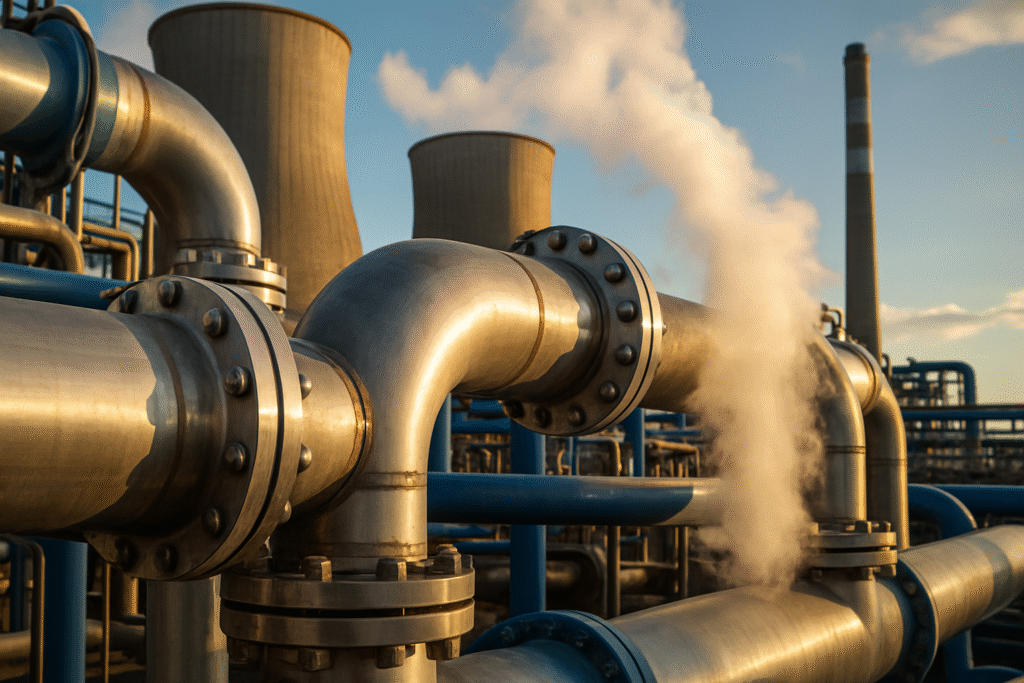
Guía de brida de tubería de acero inoxidable: Datos de mercado, Tipos ASME B16.5/B16.47, Ventajas y usos ocultos
Según la investigación de Grand View (2024), El mercado mundial de bridas industriales se valoró en $5.8 mil millones en 2023 y se prevé que alcance $7.2 mil millones por 2030. That growth is one reason the stainless steel pipe flange remains a critical component for engineers who need corrosion resistance, fortaleza, and reliable sealing in demanding Pipe systems.
Para equipos de adquisiciones, the real challenge is not simply finding Flanges. It is learning how to Choose the right Flange material, clase de presión, frente a, and standard for project life, cumplimiento, y costo total instalado.
This guide explains the Hidden Advantages, Tipos, and Uses of stainless steel pipe flange products across Oil & Gas, Petroquímico, Fuerza, Marina, y proyectos de tratamiento de agua. It also shows how suppliers such as SASA FLANGE support international buyers with ASME, ASTM, DIN, and EN compliant manufacturing.
Tendencias de la demanda global que dan forma a la adquisición de bridas para tuberías de acero inoxidable
The industrial flange business is expanding because global process industries continue to invest in new capacity, mantenimiento, and plant upgrades. Según IBISWorld (2024), Asia-Pacífico representa más de 45% de la producción mundial de bridas, siendo China el mayor fabricante.
That regional scale matters for buyers seeking stable output, broad material availability, and shorter lead times. It also helps explain why China-based manufacturers increasingly serve EPC contractors, OEM, and distributors worldwide.
End-use demand remains concentrated in heavy industry. Según Statista (2024), La industria del petróleo y el gas representa aproximadamente 35% del consumo global de bridas.
Además, petroquímico, generación de energía, desalinización, and shipbuilding keep specification requirements high. En estos sectores, flange failure can create unplanned shutdowns, incidentes de seguridad, and expensive rework.
A stainless steel pipe flange is often chosen where corrosion resistance and lifecycle value outweigh a lower upfront carbon steel cost. Grados como 304, 316, 316l, 904l, 2205, y 2507 support different chloride levels, temperaturas, and pressure conditions.
Según la inteligencia de Mordor (2024), global water treatment infrastructure spending continues to rise as municipalities upgrade aging assets and industrial reuse systems. Como resultado, demand for corrosion-resistant Stainless components, including Flange and fitting assemblies, is increasing in saline and chemically treated services.
Industry standards also shape purchasing behavior. ASME B16.5 Cubre bridas de tuberías y accesorios bridados de NPS. 1/2 a través de NPS 24, mientras ASME B16.47 addresses larger sizes from NPS 26 a través de NPS 60 (ASME, 2023).
Estos estándares definen dimensiones, tolerancias, perforación, vueltas, y clasificaciones de presión y temperatura. Por lo tanto, engineers rely on them to maintain interchangeability across global projects.
As supply chains become more quality-driven, buyers look for manufacturers that combine scale with traceability. Con ISO 9001:2015 y certificaciones PED 2014/68/UE, SASA FLANGE aligns production with documented quality control and export-oriented compliance.
Además, modern buyers want more than a catalog. They want machining accuracy, EN 10204 3.1 documentos de inspección, PMI, soporte de hidrotest, and material traceability from raw stock to final dispatch.
That is where experienced manufacturers create value beyond simple production. Respaldado por mecanizado CNC avanzado y pruebas de calidad integrales, SASA FLANGE supplies stainless steel flanges and fittings in standard and custom configurations for projects across more than 50 países.
Para compradores que comparan proveedores, the key is to assess total procurement risk. El precio importa, sin embargo, documentation quality, consistencia dimensional, and delivery reliability often determine the real project outcome.
Cómo elegir tipos de bridas para tuberías de acero inoxidable, Materiales, and Ratings
The most effective way to Choose Flanges is to begin with process conditions, not price. Composición media, temperatura de diseño, clase de presión, tolerancia a la corrosión, método de soldadura, and inspection scope should drive the final selection.
Como John Reynolds, especialista en corrosión y ex ingeniero jefe, estados: “Material selection errors usually start when teams focus on nominal alloy names instead of the actual service environment.” That principle is especially relevant when comparing 304, 316l, dúplex, and nickel alloy options.
En muchos sistemas industriales, 304 and 304L are the most common starting grades because they offer solid general corrosion resistance and good fabrication performance. Sin embargo, 316 and 316L are often preferred for chloride-bearing media because molybdenum improves pitting resistance.
Según la práctica de materiales ASTM y ASME., Las bridas de acero inoxidable forjado se suministran comúnmente bajo ASTM A182 requirements when pressure-containing performance is required (ASTM, 2023). En términos prácticos de contratación, ASTM A182 F304, F304L, F316, and F316L remain standard choices for many refinery, food process, y sistemas de agua.
Where chloride stress, riesgo de servicio amargo, or aggressive seawater exposure exists, duplex grades may offer better performance. Según la guía NACE, higher alloyed stainless and duplex materials can significantly improve resistance in corrosive environments when correctly matched to service conditions (NACE, 2023).
Como Dr.. Frank Cheng, científico de materiales, estados: “Duplex stainless is often selected because it balances strength and corrosion resistance, which can reduce wall thickness and weight in engineered piping systems.” Por lo tanto, dúplex 2205 y súper dúplex 2507 can be strategic choices in offshore and desalination projects.
The most common Flange Types include the following.
- Brida con cuello soldado para alta presión, cíclico, y servicio de alta temperatura.
- Slip-on flange for lower pressure systems and easier alignment during installation.
- Blind flange for line blanking, aislamiento, y futuros puntos de expansión.
- Socket weld flange for small-bore high-pressure applications.
- Threaded flange for non-welded assembly in certain utility or hazardous areas.
- Lap joint flange for systems requiring frequent dismantling and alignment flexibility.
Each Flange type has a different installation logic. Por ejemplo, a weld neck flange provides smooth stress transition from flange hub to Pipe wall, while a slip-on flange can reduce fabrication complexity in less severe service.
La selección de la clase de presión es igualmente importante. ASME B16.5 stainless flanges are commonly available in Class 150, 300, 600, 900, 1500, y 2500, depending on size and design requirements (ASME, 2023).
Facing selection also affects sealing performance. Raised face is common in industrial piping, ring type joint is preferred in severe pressure service, and flat face is used where mating components require uniform contact.
Buyers should also review wall schedule and bore compatibility. A mismatch between flange bore and Pipe schedule can increase turbulence, welding difficulty, and inspection issues.
When comparing materials for industrial use, the following summary is useful.
- 304/304l: economical and versatile for general process service.
- 316/316l: stronger resistance to chlorides, salmuera, y exposición química.
- 904l: enhanced resistance in sulfuric and highly corrosive media.
- 2205: higher strength and improved pitting resistance for offshore and chemical plants.
- 2507: premium super duplex option for severe seawater and chloride conditions.
- Inconel, Monel, Hastelloy, Titanio: selected for extreme temperature or highly aggressive chemistry.
Según Market Research Future (2024), corrosion-related maintenance and replacement costs remain a major driver for alloy upgrades in process industries. Como resultado, engineers increasingly evaluate lifecycle value rather than only initial material cost.
That shift creates Hidden Advantages for stainless steel pipe flange adoption. Vida útil más larga, mantenimiento reducido, superficies internas más limpias, and stronger media compatibility often lower total ownership cost over time.
Manufacturing capability matters just as much as alloy choice. Ofreciendo tamaños personalizados desde 1/2 pulgada a 60 pulgadas con precios competitivos directos de fábrica, SASA FLANGE supports standard ANSI, DIN, JIS, GOST, and EN projects as well as tailored dimensional requirements.
Además, buyers should assess available documentation before issuing a PO. MTC, controles de dureza, PMI, informes dimensionales, and third-party inspection support can reduce acceptance risk at site.
ASME, ASTM, DIN, y normas EN para el cumplimiento de bridas de tuberías de acero inoxidable
Standards define whether a flange fits, sellos, and performs as intended. Por lo tanto, any serious stainless steel pipe flange sourcing plan should start with the applicable code, estándar de materiales, and inspection document requirements.
ASME B16.5 is the core dimensional standard for flanges and flanged fittings from NPS 1/2 a NPS 24. ASME B16.47 Cubre diámetros mayores desde NPS. 26 a NPS 60 and is commonly referenced in large-bore pipeline and terminal systems (ASME, 2023).
Los estándares materiales son igualmente importantes. ASTM A182 Cubre bridas de tubos de acero inoxidable y aleación forjada o laminada., accesorios forjados, y válvulas para servicio de alta temperatura, while ASME material specifications often mirror ASTM requirements for design code integration (ASTM, 2023).
European projects frequently require DIN or EN compliance. EN 1092-1 provides flange dimensions, clasificaciones de presión, facing forms, and designation structures used across many EU-regulated installations.
For PED-governed equipment in Europe, compliance documentation is not optional. The Pressure Equipment Directive 2014/68/EU establishes conformity obligations for pressure-containing equipment placed on the EU market (Comisión Europea, 2024).
En la práctica, procurement teams often compare the following standards during technical review.
- ASME B16.5: standard for NPS 1/2 a 24 bridas y accesorios.
- ASME B16.47: standard for NPS 26 a 60 large-diameter flanges.
- ASME B16.9: standard for factory-made wrought buttwelding fittings.
- ASTM A182: forged stainless and alloy flange material specification.
- EN 1092-1: Dimensiones de bridas europeas y designaciones de presión.
- DIN and JIS standards: region-specific dimensional systems for international compatibility.
Engineers should also note that dimensional compatibility is not always interchangeable across ASME, DIN, y sistemas EN. Diámetro del círculo de pernos, perforación, espesor de brida, and facing details can differ even when nominal pipe size appears similar.
As Peter Bock, ingeniero de tuberias senior, estados: “Most field fit-up problems come from standard mismatches rather than obvious material defects.” That is why cross-checking mating dimensions before procurement is essential.
Documentation should be defined in the purchase order. Las solicitudes comunes incluyen EN 10204 3.1 proceso de dar un título, identificación positiva del material, ferrite testing where required, and hydro or pneumatic test records for assembled systems.
Stainless flange compliance often extends into corrosion and service-specific rules. NACE MR0175 o ISO 15156 may apply in sour environments, while DNV or NORSOK requirements can influence offshore and marine projects.
From a quality perspective, certified production systems create consistency. Con ISO 9001:2015, DEP 2014/68/UE, y anuncio 2000 cartas credenciales, SASA FLANGE supports buyers who need traceable manufacturing and export-ready compliance for critical service applications.
Además, many projects combine flange and fitting supply to simplify sourcing. Through its broader range of elbows, camisetas, reductores, y tapas fabricadas para ASME B16.9 y normas relacionadas, SASA FLANGE helps buyers consolidate procurement and inspection activities.
Para una verificación estándar más profunda, engineers can also review the official ASME reference pages at ASME.org. That step is useful when project specifications call for the latest edition or add code case references.
Guía de aplicación: Stainless Steel Pipe Flange Selection for Oil, Químico, Fuerza, y sistemas marinos
Application-based selection prevents overengineering and underperformance. The best flange is not simply the highest alloy grade, but the one that matches pressure, temperatura, medios de comunicación, and maintenance expectations.
en aceite & Gas, stainless steel pipe flange assemblies often appear in utility lines, módulos costa afuera, sistemas de agua producida, and selected process services. Según Statista (2024), este sector representa aproximadamente 35% del consumo global de bridas, so reliability and standard compliance remain decisive.
For offshore or coastal installations, chloride exposure pushes many projects toward 316L, 2205, o 2507. En contraste, low-corrosion utility service may still justify 304L when the process envelope is controlled.
En plantas petroquímicas y químicas., media compatibility drives selection. Ácidos, disolventes, cloruros, and elevated temperatures can quickly eliminate general-purpose grades from consideration.
Typical chemical industry priorities include the following.
- Pitting and crevice corrosion resistance.
- Weldability and post-fabrication inspection access.
- Compatibility with gaskets and bolting materials.
- Resistance to intergranular attack after welding.
- Availability of forged ASTM A182 material in project sizes.
Power generation creates a different profile. Sistemas de vapor, condensate lines, unidades FGD, and cooling water applications require a balance of pressure rating, temperature endurance, and long-term maintenance control.
According to the International Energy Agency trend reporting cited by market analysts in 2024, grid modernization and plant efficiency upgrades continue to support replacement demand for high-integrity piping components. Por lo tanto, utilities increasingly prioritize suppliers with repeatable machining quality and documented heat traceability.
Marine and shipbuilding sectors favor corrosion-resistant materials because salt-laden atmospheres accelerate degradation. Stainless and duplex Flanges are frequently chosen for ballast systems, scrubber lines, refrigeración por agua de mar, y tuberías de cubierta.
Water treatment is another strong growth area. Según la inteligencia de Mordor (2024), municipal and industrial water reuse investments are increasing globally, which supports demand for stainless pipe flange products in desalination, filtration, and chemical dosing systems.
Engineers evaluating a project should review these selection criteria before issuing drawings or RFQs.
- Composición de los medios, incluyendo cloruros, H2S, and acid content.
- Temperatura de funcionamiento y diseño..
- System pressure and required flange class.
- Applicable standards such as ASME B16.5, B16.47, DIN, o ES 1092-1.
- Pipe schedule and flange bore match.
- Tipo de revestimiento, selección de juntas, y compatibilidad con tornillos.
- Documentos de inspección requeridos, como EN 10204 3.1.
- Need for custom drilling, espesor no estándar, or special alloy sourcing.
Procurement managers should also consider packaging, calificación, and export support. Poor preservation during transit can compromise machined surfaces and create installation delays at destination.
Manufacturing flexibility is often the deciding factor on complex projects. Fabricación de bridas en 304, 316, 904l, 2205, 2507 y otros grados premium, SASA FLANGE supports custom dimensions, revestimientos especiales, and integrated fitting packages for EPC and MRO orders.
For large or mixed-material packages, supplier experience matters. Buyers can review production capabilities and company background at SASA FLANGE before moving into detailed technical discussion.
Además, custom manufacturing can reduce field modification risk. That advantage becomes significant when projects require non-standard drilling, oversized bores, special bevels, or matching to legacy site equipment.
Future Outlook for Stainless Steel Pipe Flange Supply Chains and Strategic Buying Decisions
Over the next several years, the stainless steel pipe flange market should benefit from infrastructure renewal, proyectos de transición energética, and stricter corrosion management standards. Según la investigación de Grand View (2024), Se espera que el mercado se expanda desde $5.8 mil millones en 2023 a $7.2 mil millones por 2030.
That projected growth suggests continued competition for high-spec alloy capacity and machining resources. Por lo tanto, strategic buyers should build approved vendor lists before urgent shutdown or expansion projects begin.
Another major trend is the shift toward total lifecycle thinking. Según Market Research Future (2024), asset owners increasingly favor materials that reduce corrosion-driven downtime, especially in chemical processing, marina, e infraestructura hídrica.
Digital procurement is also changing supplier selection. Buyers now compare lead times, preparación para la certificación, control dimensional, and responsiveness with the same intensity once reserved for pricing.
En términos prácticos, engineers and sourcing teams should follow a few actions.
- Standardize flange specifications by service category.
- Prequalify suppliers for material traceability and inspection reporting.
- Request clear confirmation of ASME, ASTM, DIN, or EN dimensional compliance.
- Evaluar el costo del ciclo de vida, no solo el precio unitario inicial.
- Bundle flanges and fittings where quality consistency is critical.
As industry projects become more demanding, the Hidden Advantages of strong supplier partnerships become clearer. Faster technical clarification, consistent machining quality, and complete documentation often save more money than a marginally lower quoted rate.
For buyers seeking ASME B16.5, B16.47, and custom stainless steel pipe flange solutions, working with an experienced manufacturer can reduce both technical and commercial risk. Para soporte detallado del proyecto, recomendaciones de materiales, or a formal quotation, procurement teams can contact SASA FLANGE para obtener orientación específica de la aplicación.
Preguntas frecuentes
¿Para qué se utiliza una brida de acero inoxidable??
●A stainless steel flange is used to connect Pipe sections, valvulas, zapatillas, and equipment while creating a secure and maintainable joint in pressurized systems.
●Según Statista (2024), El petróleo y el gas representan aproximadamente 35% del consumo global de bridas, which shows how essential flanged connections are in critical industrial infrastructure.
●Engineers typically select stainless steel flanges when they need corrosion resistance, estabilidad dimensional, and long service life in water, químico, marina, alimento, y aplicaciones de energía.
●Common Uses include line isolation with blind flanges, equipment tie-ins with weld neck or slip-on Flanges, and small-bore utility connections with threaded or socket weld designs.
●Material grade determines suitability for service because 304 and 304L handle many general media, mientras 316 and 316L perform better in chloride-containing environments.
●Standards also matter because ASME B16.5 governs dimensions and ratings for many flanges from NPS 1/2 a través de 24, which helps buyers maintain interchangeability across systems (ASME, 2023).
●Como John Reynolds, corrosion specialist, estados: “A flange joint is not just a connector, it is a pressure boundary that must match both chemistry and mechanics.” That is why material choice, tipo de revestimiento, selección de juntas, and bolting must be reviewed together.
●Para equipos de adquisiciones, the practical value of stainless steel is lower maintenance and better media compatibility over time. En muchos casos, that creates lower lifecycle cost than repeated replacement of lower-grade alternatives.
●Buyers should also confirm bore size, calificación de clase, and inspection documents before ordering. For projects requiring traceable stainless Flange supply and technical support, trabajando con fabricantes establecidos como SASA FLANGE helps ensure compliance and fit-up reliability.
¿Cuál es el estándar para bridas de acero inoxidable??
●The main standard for stainless steel flanges in many industrial projects is ASME B16.5, mientras ASME B16.47 covers larger diameter Flanges used in major pipeline and terminal applications.
●ASME B16.5 applies to flanges and flanged fittings from NPS 1/2 a NPS 24, y ASME B16.47 applies from NPS 26 a NPS 60, según ASME (2023).
●These standards define key dimensional requirements such as outside diameter, espesor de brida, bolt hole layout, vueltas, y clasificaciones de presión y temperatura. Por lo tanto, they are central to fit-up, caza de focas, and replacement planning.
●Material compliance is usually addressed separately through ASTM specifications, especialmente ASTM A182 para bridas de acero inoxidable y aleado forjado. Buyers commonly specify grades such as F304, F304L, F316, and F316L under this standard.
●Los proyectos europeos también pueden requerir EN 1092-1, while some legacy or regional jobs still reference DIN, JIS, o dimensiones GOST. En contraste, these systems are not automatically interchangeable with ASME dimensions, so engineers must verify mating compatibility.
●Where sour service, costa afuera, or PED-regulated applications are involved, additional requirements can apply. These may include NACE MR0175 o ISO 15156, PED 2014/68/EU conformity, y EN 10204 3.1 certificados de inspección.
●As Peter Bock, ingeniero de tuberias senior, estados: “A flange standard is only complete when the dimensional code, grado del material, and inspection scope are aligned.” That guidance reflects real field experience.
●For purchasing, the safest approach is to state the flange type, tamaño, clase, frente a, grado del material, edición estándar, and documentation package in one RFQ. For projects needing certified ASME, ASTM, DIN, or EN compliant supply, fabricantes como SASA FLANGE can help confirm the full specification before production.
¿Fabrican accesorios para tuberías de acero inoxidable??
●Sí, manufacturers produce a full range of stainless steel pipe fittings, incluyendo codos, camisetas, reductores, gorras, and stub ends for welded and fabricated piping systems.
●De acuerdo a ASME B16.9, Los accesorios forjados para soldar a tope fabricados en fábrica están estandarizados en cuanto a dimensiones y tolerancias., which helps maintain consistency across engineered Pipe installations (ASME, 2023).
●These fittings are often supplied in the same grades used for flanges, como 304, 304l, 316, 316l, 904l, 2205, y 2507. Como resultado, buyers can match fittings and Flanges for corrosion resistance and welding compatibility.
●In process industries, stainless steel fittings are selected for many of the same reasons as stainless flanges. They resist corrosion, support hygienic or clean service, and perform well in moisture, cloruro, and chemical exposure when the correct grade is specified.
●Según la inteligencia de Mordor (2024), water treatment and industrial reuse investment is rising worldwide, which supports growing demand for corrosion-resistant stainless piping components beyond just Flange products.
●Procurement teams usually prefer sourcing flanges and fittings from the same supplier when dimensions, MTC, and inspection records must align. This approach simplifies quality control and can reduce coordination issues during fabrication.
●Available fitting forms generally include 45-degree and 90-degree elbows, equal and reducing tees, concentric and eccentric reducers, and end caps. Wall thicknesses and schedules should match the connected Pipe to avoid weld mismatch and turbulence.
●For demanding projects, buyers should request ASTM material compliance, EN 10204 3.1 proceso de dar un título, PMI where needed, and clear marking on each item. If a project needs flanges and fittings in one package, suppliers like SASA FLANGE can support coordinated manufacturing and documentation.
¿Cuáles son los tres tipos de bridas??
●Los tres tipos de bridas a los que se hace referencia más comúnmente son bridas con cuello soldado., brida deslizante, y brida ciega, aunque roscado, junta de regazo, and socket weld designs are also widely used.
●Weld neck flanges are preferred for high-pressure and high-temperature service because the tapered hub improves stress distribution at the weld transition. This makes them a strong choice for critical process lines and cyclic service.
●Slip-on flanges are easier to align and can reduce fabrication cost in lower severity applications. Sin embargo, they are usually not the first choice for severe pressure, vibración, or thermal cycling conditions.
●Blind flanges seal the end of a Pipe, boquilla, o apertura del vaso. They are widely used for future system expansion, hidroprueba, y aislamiento de línea.
●De acuerdo a ASME B16.5 (2023), these flange types are standardized by dimensions, clase de presión, vueltas, and tolerances for NPS 1/2 a través de 24. That standardization helps engineers replace components without custom redesign in many systems.
●Como Dr.. Frank Cheng, científico de materiales, estados: “The best flange type depends on the joint stress profile and maintenance strategy, not only on the media.” That is why type selection should consider process duty and inspection accessibility.
●En la contratación práctica, buyers should compare installation complexity, welding requirements, access for maintenance, and total lifecycle performance. A low-cost slip-on choice may not be economical if the system later experiences fatigue or leakage problems.
●When projects require help choosing among standard or custom Flanges, it is wise to share the line class, medio, presión, temperatura, and Pipe schedule with the manufacturer. For technical support on weld neck, ciego, deslizarse, roscado, or custom stainless designs, los compradores pueden consultar SASA FLANGE.
¿Cómo elijo el tamaño de brida de tubería de acero inoxidable y la clase de presión adecuados??
●You choose the right stainless steel pipe flange by matching nominal Pipe size, cronograma, frente a, clase de presión, and applicable standard to the actual process design conditions.
●ASME B16.5 covers standard dimensions and pressure classes for NPS 1/2 a través de 24, incluyendo clase 150, 300, 600, 900, 1500, y 2500, según ASME (2023).
●Size selection starts with the connected Pipe outside diameter and schedule because the flange bore must match the piping geometry for proper welding and flow transition. A mismatch can complicate installation and increase turbulence.
●Pressure class should be selected from the design pressure and temperature, not from line size alone. Stainless material grade also matters because pressure-temperature ratings vary with alloy and code tables.
●Por ejemplo, a 4 Brida de tubería de acero inoxidable en pulgadas en clase 150 may suit a moderate-pressure utility line, while a critical hydrocarbon or steam service may require Class 300 o superior. Buyers should always confirm the exact rating tables in the applicable code edition.
●Según la investigación de Grand View (2024), the flange market is expanding as industrial modernization continues, which means buyers have many sourcing options. Sin embargo, dimensional accuracy and documentation quality still determine whether the product will fit and pass inspection.
●Engineers should also confirm facing type, estilo de junta, and bolting compatibility before ordering. cara levantada, cara plana, and ring type joint options each serve different sealing conditions.
●A practical RFQ should list size, clase, estándar, grado del material, frente a, cantidad, and required certification. For projects needing custom sizes from 1/2 pulgada a 60 inch or guidance on B16.5 and B16.47 selection, fabricantes como SASA FLANGE can help verify the specification before production.
¿Qué afecta el precio de la brida de tubería de acero inoxidable??
●El precio de la brida de tubería de acero inoxidable se ve afectado principalmente por el grado de aleación., tamaño, clase de presión, complejidad del mecanizado, alcance de la inspección, cantidad, and current raw material market conditions.
●Según la investigación de Grand View (2024), El mercado mundial de bridas industriales alcanzó $5.8 mil millones en 2023, and rising demand across energy and infrastructure sectors continues to influence procurement competition and pricing.
●Material grade is usually the biggest cost driver. A 316L flange typically costs more than 304L, mientras duplex 2205, 2507, and nickel alloys can be significantly higher because of alloy chemistry and production complexity.
●Size and pressure class also matter because larger diameters and higher classes require more material, tighter machining, and stricter dimensional control. A 4 clase de pulgadas 150 flange will not be priced like a 24 clase de pulgadas 600 brida.
●Additional requirements can raise the final quote. These include PMI, inspección de terceros, EN 10204 3.1 o 3.2 documentación, revestimientos especiales, perforación personalizada, embalaje de exportación, and urgent lead times.
●Según IBISWorld (2024), Asia-Pacífico representa más de 45% de la producción mundial de bridas, con China como el mayor fabricante. This concentration often creates competitive sourcing advantages for buyers who work directly with capable factories.
●Sin embargo, the lowest unit price is not always the best value. Rehacer, late delivery, or incomplete certification can make an initially cheap Flange far more expensive at site.
●Para obtener los precios más precisos, buyers should submit a complete inquiry with grade, tamaño, estándar, clase, frente a, cantidad, y destino de entrega. For projects that need factory-direct quotations and traceable documentation, abastecimiento de fabricantes establecidos como SASA FLANGE can improve both price clarity and procurement reliability.
Posts Relacionados
Acabado de la cara de la brida: Dentados concéntricos versus espirales explicados
Los dentados concéntricos y en espiral son acabados de cara de brida mecanizados.…
Dúplex 2205 frente a bridas 316L: ¿Qué material debería elegir??
respuesta rapida: Dúplex 2205 Las bridas suelen ser el candidato más fuerte.…

Definición de brida de orificio, Detalles y descripción general de bridas ASME B16.36: Datos de mercado, Guía de selección e información sobre cumplimiento
El mercado mundial de bridas industriales se valoró en $5.8 mil millones…

Guía del mercado de bridas de eliminación negras: Materiales, 3.5″ Compatibilidad, y datos de abastecimiento B2B para bridas de fregaderos de cocina
La demanda de bridas de eliminación negras está aumentando a medida que los compradores de accesorios de cocina…