
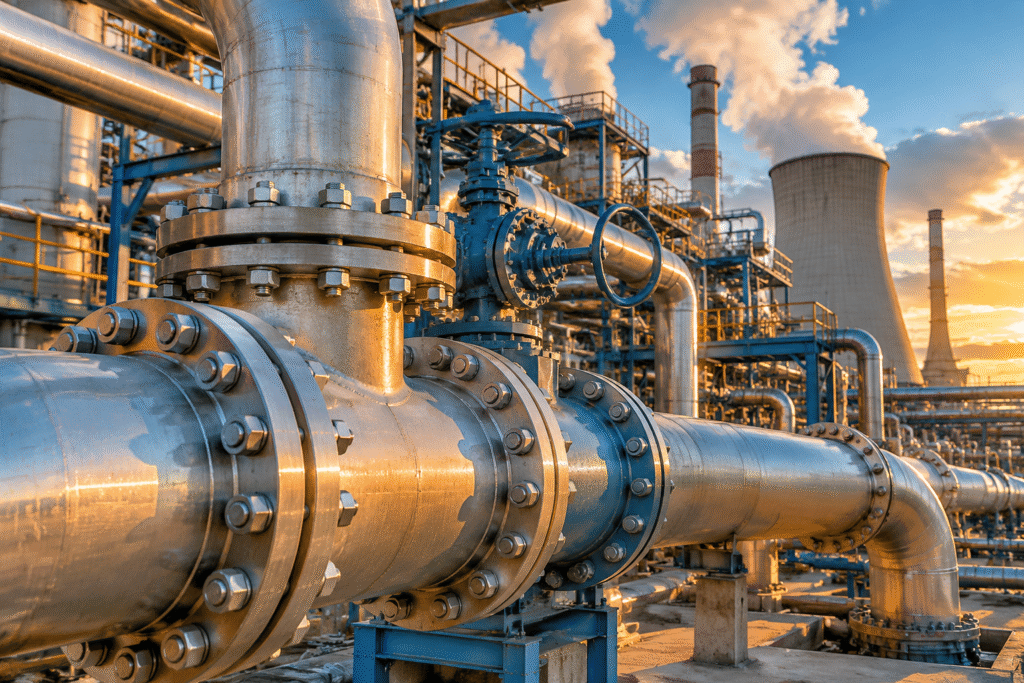
Цепочки поставок фланцев из нержавеющей стали и приоритеты закупок
The фланец трубы из нержавеющей стали market is expanding with industrial capex, модернизация завода, и более строгие цели по надежности. По данным исследования Grand View (2024), мировой рынок промышленных фланцев оценивался в $5.8 миллиард в 2023 и, по прогнозам, достигнет $7.2 миллиард на 2030, which makes stainless steel pipe flange sourcing a strategic decision for engineers and procurement teams.
For buyers comparing the most common materials, hidden advantages often come from corrosion performance, свариваемость, inspection traceability, and standards compliance rather than unit price alone. Поэтому, this guide explains intriguing stainless steel pipe flange types, использует, selection criteria, and compliance requirements for industrial service.
Спрос на фланцы для труб из нержавеющей стали, Market Growth, and Procurement Priorities
Global demand remains strong because flanges sit at every critical junction of pressure piping, rotating equipment, and field assembly. По данным IBISWorld (2024), На долю Азиатско-Тихоокеанского региона приходится более 45% мирового производства фланцев, при этом Китай является крупнейшим производителем.
That supply concentration matters for B2B buyers because lead time, mill source stability, and testing capability directly affect project schedules. Как результат, qualified manufacturers with export experience and documented quality systems are gaining share.
End-use concentration is equally important. По данным Статистики (2024), на долю нефтегазовой отрасли приходится около 35% мирового потребления фланцев, в то время как нефтехимическая, производство электроэнергии, морской, and water treatment remain major buyers.
В этих секторах, downtime is expensive and leakage risk is unacceptable. Следовательно, engineers usually prioritize correct pressure class, совместимость прокладок, and material chemistry over the lowest quote.
The most common stainless grades for a stainless steel pipe flange are 304, 304л, 316, и 316Л. Однако, aggressive chloride, кислый, or high-temperature service often pushes specifications toward 904L, дуплекс 2205, супер дуплекс 2507, или никелевые сплавы, такие как Inconel, Монель, и Хастеллой.
По данным Market Research Future (2024), corrosion-resistant alloy demand in process industries is increasing at over 5% annually due to harsher media and longer design life targets. Более того, покупатели все чаще просят EN 10204 3.1 документация, PMI, and third-party inspection before release.
Standards also shape buying behavior. ASME B16.5 охватывает НПС 1/2 через 24, пока ASME B16.47 подходит для больших диаметров, и ASTM A182 defines forged alloy and stainless flange materials for high-temperature service (ASME; ASTM, 2023).
Because project teams work across global specifications, many RFQs now include ANSI, DIN, JIS, ГОСТ, и RU 1092 requirements in the same package. Поэтому, suppliers need machining flexibility and strong document control.
С ISO 9001:2015 и сертификаты PED 2014/68/ЕС., SASA FLANGE supports international buyers that need stainless steel flanges, фланцы из углеродистой стали, фланцы из сплава, and pipe fittings under recognized compliance frameworks. Кроме того, компания производит в 304, 316, 316л, 904л, 2205, 2507, А105, А182, титан, и другие премиальные сорта нефти & Газ, нефтехимическая, Власть, Морской, и проекты по очистке воды.
Для менеджеров по закупкам, this means supplier evaluation should go beyond brochures. It should include machining capacity, прослеживаемость тепла, NDT availability, проверка размеров, and responsiveness on custom drawings.
Техническое руководство по типам фланцев для труб из нержавеющей стали, Материалы, и скрытые преимущества
The most intriguing aspect of a stainless steel pipe flange is that the visible geometry tells only part of the story. The hidden advantages usually come from metallurgy, flange facing accuracy, bore finish, and how well the flange matches the actual process condition.
Как Джон Брин, Старший инженер по трубопроводам, государства: «A flange that is correct on paper can still fail in service if material selection ignores chlorides, термоциклирование, or bolt load retention.» That is why serious buyers compare pressure class, alloy chemistry, конструкция прокладки, and installation method together.
Among the most common types, weld neck flanges provide superior stress distribution because the tapered hub transitions load into the pipe wall. Slip on flanges reduce fabrication cost and simplify alignment, while blind flanges isolate systems for testing, обслуживание, or future tie-ins.
Threaded flanges remain useful where welding is restricted, especially on small-bore utility lines. Socket weld flanges are also common in high-pressure small-diameter piping, although crevice-sensitive services may require careful review.
- Сварная шейка: предпочтителен для высокого давления, циклическая загрузка, и критические технологические линии.
- Наденьте: economical for low to moderate pressure systems and easier field fit-up.
- Слепой: используется для замыкания линии, гидроиспытания, и будущие точки расширения.
- Резьбовой: suitable for non-weld installations on small sizes.
- Муфтовая сварка: selected for small-bore high-pressure service.
- коленный сустав: useful where frequent dismantling and rotational alignment are required.
Material selection drives long-term performance. Оценка 304 and 304L remain the most common austenitic options for general industrial service because they balance cost, формуемость, и коррозионная стойкость.
Оценка 316 and 316L add molybdenum, which improves pitting resistance in chloride environments. Поэтому, 316L is often preferred for coastal plants, установки водоочистки, пищевая промышленность, and many chemical services.
For more aggressive conditions, 904L improves resistance to reducing acids and chlorides. Дуплекс 2205 и супер дуплекс 2507 deliver higher strength and better chloride stress corrosion resistance, which can reduce wall thickness in selected services.
По данным Мордорской разведки (2024), stainless and duplex materials are gaining share in desalination and offshore systems due to longer maintenance intervals and corrosion control benefits. Кроме того, NACE MR0175 и ISO 15156 remain key references where sour service is involved (NACE/ISO, 2023).
Surface finish and sealing face matter as much as alloy choice. Raised face is the most common facing in ASME B16.5 технологический трубопровод, while RTJ is selected for high-pressure, высокотемпературный, and hydrocarbon containment duties.
Flat face flanges are used where mating equipment, such as cast iron valves or pumps, cannot tolerate bending loads from raised face assembly. Следовательно, the wrong facing can create leakage or equipment stress even when the metal grade is correct.
According to ASME guidance and industry field data, bolted joint integrity issues account for a significant portion of fugitive emissions events in process plants (ASME, 2023). Поэтому, точность размеров, serration finish, and proper bolt preload are critical quality attributes.
Как доктор. Елена Моррис, Материаловед, государства: «The best flange choice is not the highest alloy by default; it is the alloy that matches chloride content, температура, рН, and fabrication method without overengineering the asset.» That principle helps buyers control lifecycle cost instead of simply chasing premium grades.
Благодаря передовой обработке с ЧПУ и всестороннему тестированию качества., SASA FLANGE предлагает нестандартные размеры от 1/2" до 60" across ANSI B16.5, АНСИ Б16.47, DIN, JIS, ГОСТ, и RU 1092 требования. Более того, компания поддерживает локти, тройники, редукторы, and caps for buyers who prefer consolidated piping packages.
For project teams comparing types and uses, the following technical checkpoints usually determine whether a flange will perform as intended:
- Класс давления и расчетная температура.
- Pipe schedule and bore matching.
- Corrosion allowance and media composition.
- Тип облицовки: РФ, ФФ, РТЖ, или специальная отделка.
- Welding procedure compatibility and HAZ sensitivity.
- Inspection scope including PMI, ЮТ, ПТ, и проверка размеров.
- Документация, такая как EN 10204 3.1, МТС, and hydrotest records.
Согласно практике соответствия ISO и PED, traceability and material identification become more important as service severity rises (ISO; ПЭД, 2024). Как результат, established manufacturers that can manage heat numbers, протоколы испытаний, and export packaging reduce project risk substantially.
ASME, ASTM, DIN, and EN Standards That Define Stainless Steel Pipe Flange Quality
A stainless steel pipe flange should never be purchased on dimensions alone. It must align with the applicable manufacturing, материал, давление-температура, инспекция, and certification standards for the intended service.
ASME B16.5 is the primary dimensional standard for flanges from NPS 1/2 через 24. ASME B16.47 расширяет зону покрытия до больших диаметров, пока ASME B16.9 governs many associated butt weld fittings used in the same piping package.
Material compliance often starts with ASTM A182 for forged stainless and alloy flanges. In plate-based or fabricated applications, specifications may also reference ASTM A240 or project-specific mill requirements.
Европейские проекты часто требуют EN 1092 flange dimensions and PED 2014/68/EU conformity. В отличие, mixed international projects may combine ASME design with EN documentation and customer-specific QA plans.
- ASME B16.5: dimensional standard for most common flange sizes and classes.
- ASME B16.47: large diameter flange dimensions.
- ASTM A182: forged or rolled alloy and stainless materials for flanges.
- ASME B16.9: butt weld fitting dimensions for elbows, тройники, редукторы, и шапки.
- EN 1092: European flange standard for PN-rated systems.
- NACE MR0175 / ISO 15156: sour service material requirements.
According to ASTM and ASME standard frameworks, размерный допуск, маркировка, and material traceability are not optional extras. They are core compliance requirements that affect fit-up, безопасность, and client acceptance (ASTM; ASME, 2023).
Для оффшоров, морской, и энергетическая инфраструктура, additional owner specifications may invoke DNV, НОРВЕГИЯ, or project-specific corrosion allowances. Поэтому, procurement teams should verify the full data sheet before comparing quotations.
When evaluating vendors, engineers should request clear confirmation of these items:
- Класс материала и двойная сертификация, например 304/304L или 316/316L.
- Класс давления, тип облицовки, и скучный график.
- Heat treatment and corrosion testing scope where required.
- PMI availability for stainless, дуплекс, и никелевые сплавы.
- EN 10204 3.1 или 3.2 документы проверки.
- Маркировка, упаковка, и соблюдение экспортных требований.
В роли Майкла Трента, Аналитик промышленного рынка, государства: «The quality gap between flange suppliers is rarely visible in a catalog; it appears in documentation discipline, постоянство размеров, and response to nonconformance.» That observation aligns with how EPC buyers actually score vendors.
С ISO 9001:2015, ПЭД 2014/68/ЕС, и АД 2000 реквизиты для входа, SASA FLANGE is positioned for buyers that need documented quality assurance and export-ready support. Более того, serving 50+ страны по нефти & Газ, нефтехимическая, Власть, and Marine industries demonstrates familiarity with international specifications and third-party inspection expectations.
Buyers can also review supplier capability directly through SASA FLANGE contact support when RFQs include nonstandard drilling, custom forgings, or mixed-material packages. Во многих проектах, that early technical review prevents costly mismatches between flange class, тип прокладки, and actual operating envelope.
Для авторитетной справки, engineers can consult the applicable dimensions and pressure-temperature rules at ASME. Однако, the final procurement decision should always align with the project piping class, client specification, and approved vendor list.
Как выбрать фланцы для нефти и газа, Химическая, Власть, Морской, и водные системы
Choosing the right stainless steel pipe flange starts with the service condition, не каталожное фото. Давление, температура, содержание хлоридов, maintenance philosophy, and installation method determine whether the most common option is also the correct one.
In oil and gas facilities, weld neck and RTJ flanges dominate critical hydrocarbon service because they handle pressure, термоциклирование, and sealing integrity well. По данным Статистики (2024), this sector uses about 35% общего объема фланца, so specification discipline remains especially important.
На нефтехимических и химических предприятиях, 316л, 904л, or alloy grades may be needed where media includes chlorides, кислоты, or mixed-phase streams. Поэтому, corrosion review should include upset conditions and cleaning chemicals, not only normal operation.
Power generation systems often require high-pressure classes, controlled bolting, and repeatable gasket seating. In steam or thermal cycling service, flange alignment and weld quality can affect long-term reliability as much as base material selection.
Marine and shipbuilding applications demand strong resistance to seawater exposure, зоны брызг, and atmospheric corrosion. Следовательно, 316л, дуплекс 2205, и супер дуплекс 2507 frequently appear in desalination, балласт, оффшорный, и системы палубных трубопроводов.
Water treatment systems may use slip on, резьбовой, or weld neck flanges depending on pipe size, доступ для обслуживания, and media chemistry. Although the process pressure may be lower, chloride concentration and disinfection chemistry can still drive alloy upgrades.
- Choose 304/304L for general utility and mild corrosive service.
- Choose 316/316L for chloride exposure, coastal environments, and broader chemical resistance.
- Choose 904L for stronger acid and chloride resistance in specialized plants.
- Выбирать 2205 или 2507 when higher strength and SCC resistance are required.
- Choose weld neck for critical process piping and cyclic service.
- Choose slip on where economy and easier installation are priorities.
- Choose blind flanges for isolation, тестирование, and expansion planning.
По данным исследования Grand View (2024), industrial investment in energy, вода, and process infrastructure continues to support flange demand across both replacement and greenfield projects. Как результат, buyers increasingly seek suppliers that can deliver flanges and fittings together, reducing interface risk.
SASA FLANGE supports custom manufacturing for unusual drilling patterns, специальная толщина, and project-specific dimensions, while also supplying elbows, тройники, редукторы, and caps in matching materials. Кроме того, the company can support 304, 316, 316л, 904л, 2205, 2507, А182, титан, and other alloys for integrated package procurement.
For buyers comparing price, the cheapest flange may become the costliest if it causes weld repairs, утечка, or delayed inspection release. Поэтому, total installed cost should include machining quality, протоколы испытаний, logistics reliability, and after-sales technical response.
When RFQs involve custom sizes from 1/2" до 60" с конкурентоспособными ценами напрямую с завода, early discussion improves manufacturability and lead time. Procurement teams can coordinate directly through SASA FLANGE to align dimensions, стандарты, and documentation before order placement.
Перспективы на будущее цепочек поставок фланцев для труб из нержавеющей стали и стратегических закупок
The outlook for the stainless steel pipe flange market remains positive because industrial operators continue to replace aging piping assets and invest in corrosion-resistant systems. По данным исследования Grand View (2024), Ожидается, что рынок вырастет с $5.8 миллиард в 2023 к $7.2 миллиард на 2030.
В то же время, supply chains are becoming more selective. Buyers now expect shorter lead times, stronger QA documentation, and better visibility into raw material sourcing.
По данным IBISWorld (2024), Азиатско-Тихоокеанский регион производит более 45% глобальной производительности фланцев, which means supplier qualification in China and the wider region will remain strategically important. Однако, procurement teams should balance price advantage with verification of certification scope, качество обработки, и экспортируем опыт.
Digital procurement is also changing vendor evaluation. More RFQs now request full technical submittals, drawing confirmation, Отчеты PMI, and shipping milestones before payment approval.
For engineering-led buyers, several recommendations stand out:
- Standardize approved flange types by service category.
- Use lifecycle cost instead of piece price as the comparison basis.
- Требовать EN 10204 3.1 and heat traceability for stainless and alloy orders.
- Audit suppliers on machining, инспекция, and packaging practices.
- Bundle flanges and fittings where possible to reduce interface errors.
Более того, hidden advantages increasingly come from supplier responsiveness and technical clarity. A manufacturer that flags a bore mismatch or facing conflict before production can save weeks of rework at site.
That is why experienced exporters remain valuable partners, especially for EPC packages and shutdown-critical replacements. For projects requiring certified stainless steel pipe flange supply, custom forgings, or mixed material packages, engaging with SASA FLANGE early can support faster technical alignment and cleaner procurement execution.
Часто задаваемые вопросы
Какие существуют типы фланцев из нержавеющей стали??
●The different types of stainless steel flanges include weld neck, надеть, слепой, резьбовой, раструбная сварка, и конструкции коленчатых соединений, с ASME B16.5 covering the most common industrial dimensions.
●Weld neck flanges suit high-pressure and cyclic service, while slip on flanges are often chosen for easier alignment and lower fabrication cost in moderate-duty pipe systems.
●For projects requiring the right mix of types, стандарты, and material grades such as 304, 316, 316л, 2205, или 2507, работа с известными производителями, такими как SASA FLANGE helps ensure dimensional accuracy and traceable documentation.
Что лучше 304 или 420 нержавеющая сталь?
●Оценка 304 is generally better for stainless steel pipe flange applications because it offers stronger corrosion resistance and weldability than 420 in most industrial piping environments.
●Оценка 420 is a martensitic stainless steel that provides higher hardness, but it is far less common for process flanges because bolted piping service usually values corrosion resistance over blade-like wear properties.
●Для покупателей фланцев, 304 или 316 grades are the most common choices under ASTM A182 and related specifications, and material selection should be confirmed against media, температура, и требования к изготовлению.
В какой отрасли промышленности больше всего используется нержавеющая сталь?
●Process industries and infrastructure sectors consume very large stainless volumes, but oil and gas remains the biggest flange end-user, accounting for about 35% мирового потребления фланцев по данным Statista (2024).
●Stainless steel is also widely used in petrochemical, пищевая промышленность, очистка воды, морской, фармацевтический, and power generation applications because it combines corrosion resistance with good fabricability.
●If your project serves corrosive or regulated environments, selecting a supplier that can provide EN 10204 3.1 отчеты, PED support, and correct flange facing options is the most practical approach.
Какие три типа фланцев существуют??
●The three types of flanges most commonly referenced in general industrial discussions are weld neck, надеть, and blind flanges because they cover most pressure piping assembly needs.
●Приварные фланцы с шейкой предпочтительнее для тяжелых условий эксплуатации., slip on flanges are used for easier installation and cost control, and blind flanges are installed to close line ends or isolate equipment during testing.
●In actual procurement, engineers should also review threaded, раструбная сварка, and lap joint options because the correct stainless steel pipe flange type depends on service pressure, доступ для обслуживания, и требования к коду.
Что влияет на цену фланца трубы из нержавеющей стали?
●Stainless steel pipe flange price is mainly affected by alloy grade, размер, класс давления, тип облицовки, затраты на сырье, machining time, и сертификационные требования, такие как EN 10204 3.1 or PED documentation.
●Например, фланец с приварной шейкой из 316L обычно стоит дороже, чем 304 slip on flange because molybdenum alloying, более тяжелая обработка, and more demanding service conditions increase total production cost.
●To get an accurate quotation, buyers should provide size, расписание, стандартный, сорт, материал, лицом к лицу, количество, и требования к тестированию, и они могут связаться SASA FLANGE для ценообразования в зависимости от проекта.
How do I choose a flange manufacturer or flange vendor for industrial projects?
●A reliable flange manufacturer should demonstrate ISO 9001:2015 контроль качества, standards compliance such as ASME B16.5 или RU 1092, and documented capability in the materials your piping class requires.
●По данным IBISWorld (2024), Азиатско-Тихоокеанский регион производит более 45% глобальной производительности фланцев, so vendor selection should focus on traceability, инспекционная дисциплина, экспортная упаковка, and lead-time reliability rather than geography alone.
●Для критически важных проектов, choose a vendor that can supply flanges and fittings together, support custom sizes from 1/2 дюйм до 60 дюйм, and respond quickly to technical clarifications before production starts.
Связанные Посты
Отделка торцевой поверхности фланца: Объяснение концентрических и спиральных зубцов
Концентрические и спиральные зубцы представляют собой обработанную поверхность фланца.…
Дуплекс 2205 по сравнению с фланцами 316L: Какой материал выбрать?
Быстрый ответ: Дуплекс 2205 flanges are usually the stronger candidate…

Определение фланца с диафрагмой, Подробности и обзор фланцев ASME B16.36: Рыночные данные, Руководство по выбору и анализ соответствия требованиям
Мировой рынок промышленных фланцев оценивался в $5.8 миллиард…

Руководство по рынку черных сливных фланцев: Материалы, 3.5″ Совместимость, и данные о поставщиках B2B для фланцев для кухонной мойки
Спрос на черные фланцы для утилизации растет благодаря покупателям кухонной техники…