
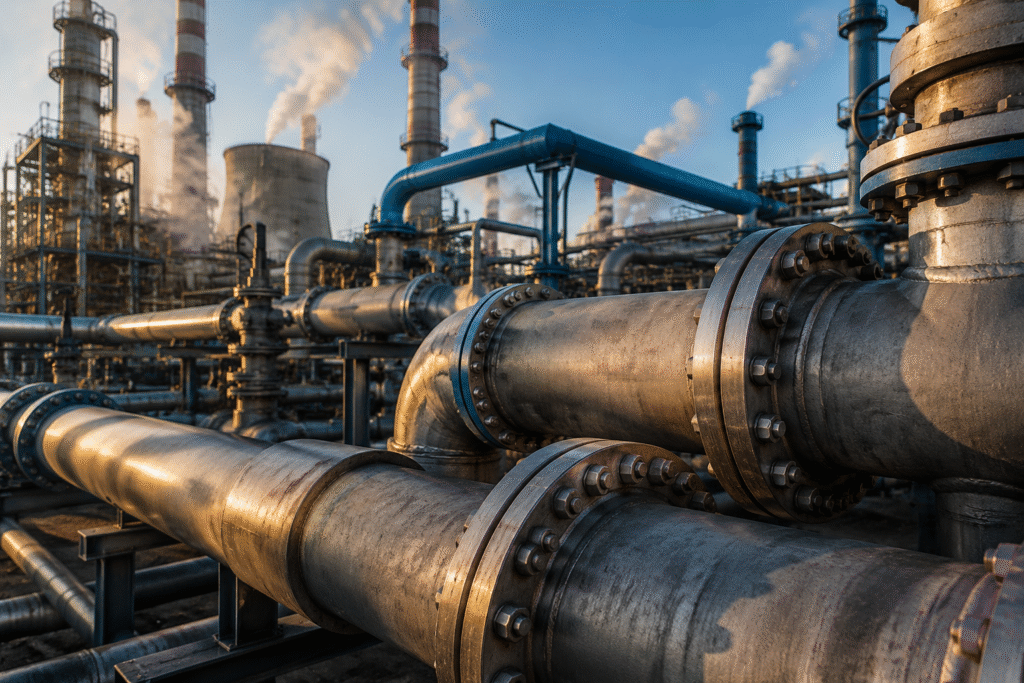
ステンレス鋼管フランジガイド: 種類, 用途, 58 億ドルの市場でフランジを選択する方法
産業用システムではより強力な耐食性が求められるため、ステンレス鋼管フランジの需要は増加し続けています, より緊密なシール性能, そしてより長い耐用年数. グランドビューリサーチによると (2024), 世界の工業用フランジ市場は次のように評価されました。 $5.8 億で 2023 に達すると予測されています $7.2 10億まで 2030, which highlights how critical flanges are for modern piping infrastructure.
エンジニアおよび調達マネージャー向け, 最も一般的な課題はフランジを見つけられないことです, but choosing the right stainless steel pipe flange for pressure class, 腐食環境, 製造方法, およびコードコンプライアンス. したがって, this guide explains the intriguing material options, 一般的なフランジのタイプ, 用途, 標準, and buying criteria that matter in real projects.
市場の需要, Manufacturing Trends, and Why Stainless Steel Pipe Flange Selection Matters
Industrial buyers are sourcing more stainless steel components because downtime costs continue to increase across oil and gas, 化学処理, 力, および海洋部門. 統計局によると (2024), 石油・ガス産業が約 35% 世界のフランジ消費量の, which makes flange reliability a direct operational priority.
Regional supply dynamics also influence sourcing strategy. IBISWorldによると (2024), アジア太平洋地域が占める割合は超過 45% 世界のフランジ生産量の, 中国が最大の製造国である, so buyers increasingly evaluate supplier quality systems alongside price and lead time.
These numbers matter because flange failure is rarely an isolated event. A wrong material grade, poor facing finish, or incorrect pressure-temperature rating can trigger leakage, 計画外のシャットダウン, and expensive maintenance work.
結果として, purchasing teams now ask deeper technical questions about ASTM grades, EN compatibility, 検査書類, とトレーサビリティ. This shift favors manufacturers that combine material range, 加工精度, および輸出コンプライアンス.
SASA FLANGE operates in this quality-focused segment with stainless steel flanges, 炭素鋼フランジ, 合金フランジ, and pipe fittings for demanding industrial systems. と ISO 9001:2015 および PED 2014/68/EU 認証, the company supplies projects that require verified dimensional accuracy, 材料のトレーサビリティ, and international code alignment.
さらに, stainless grades remain attractive because they support a wide range of service conditions. 一般的な材料としては、 304, 316, 316l, 904l, デュプレックス 2205, スーパーデュプレックス 2507, and high-performance nickel alloys for aggressive media.
モルドール情報局によると (2024), global investment in water treatment and process infrastructure continues to expand, increasing demand for corrosion-resistant piping assemblies. In contrast to commodity carbon steel components, stainless steel pipe flange products often reduce lifecycle cost in wet, 塩化物含有, or hygienic applications.
Procurement professionals should also consider the broader cost equation. Initial unit price is important; しかし, 交換頻度, メンテナンスの手間, media compatibility, and inspection burden often have a greater long-term impact.
That is why the most common specification packages now include flange standard, 材料規格, 対面タイプ, 圧力クラス, テスト要件, and certificate level. 例えば, 多くの購入者のリクエスト EN 10204 3.1 証明書, PMI, 水圧試験記録, そして NACE MR0175 compliance for sour service projects.
Manufacturing capability is another differentiator. 高度な CNC 加工と包括的な品質テストに裏付けられています, SASA FLANGE 1/2からのカスタムサイズをサポートします" 60まで" across ANSI B16.5, ANSI B16.47, DIN, JIS, ゴスト, とEN 1092 構成.
サプライヤーを比較するバイヤー向け, this means fewer sourcing gaps between design intent and delivered product. It also means faster alignment when projects require mixed standards, 特殊な穴あけ, または標準外の寸法.
ステンレス鋼管フランジの種類, 材料, and Uses Engineers Most Commonly Compare
The most common buying question is simple: which flange type and grade fit the service conditions best. 実際に, the answer depends on pressure, 温度, 流体化学, パイプスケジュール, 溶接方法, およびメンテナンスアクセス.
As John Rezai, 上級配管エンジニア, 州: “A flange should never be selected by material alone; the sealing face, 圧力クラス, and joint design are just as important as corrosion resistance.” This is why engineers evaluate the entire joint assembly, not only the stainless designation.
Material selection starts with understanding environment severity. ASTM A182 F304 and F304L are widely used for general process service, while F316 and F316L are preferred where chlorides, mild acids, or marine exposure increase corrosion risk.
マーケットリサーチの将来によると (2024), stainless and alloy flanges are gaining share in high-spec process systems due to stricter safety and maintenance standards. さらに, duplex and super duplex materials continue to expand in offshore and desalination applications where high strength and chloride resistance matter.
For many projects, these are the stainless steel pipe flange material options buyers most often compare:
- 304 and 304L for general corrosion resistance, 良好な溶接性, and broad availability.
- 316 and 316L for improved pitting resistance due to molybdenum addition.
- 904L for severe chemical service with enhanced resistance in acidic environments.
- 2205 duplex for higher strength and better chloride stress corrosion cracking resistance.
- 2507 super duplex for aggressive offshore, 海水, 高塩化物条件.
- インコネル, モネル, ハステロイ, and Titanium for highly specialized process duties.
The intriguing part of stainless selection is that higher alloy content does not automatically mean better value. その代わり, the correct grade is the one that meets corrosion allowance, 規範への準拠, and service life targets without unnecessary cost escalation.
Engineers also compare flange designs based on connection type and maintenance strategy. Slip-on flanges are common in lower-pressure systems because they are easier to align, while weld neck flanges are preferred for cyclic loading, 熱衝撃, and high-pressure service.
ソケットウェルド, ねじ切りされた, ラップジョイント, and blind flanges serve more specific uses. したがって, understanding the mechanical behavior of each design is essential before final procurement.
- ウェルドネックフランジ: 高圧に最適, 高温, 重要なプロセスライン.
- スリップオンフランジ: economical for moderate service and easier shop fit-up.
- ブラインドフランジ: used to terminate, 隔離する, or future-proof line ends.
- ソケットウェルドフランジ: suitable for small-bore high-pressure piping.
- ねじ付きフランジ: practical where welding is restricted or field work is limited.
- 重ね継手フランジ: useful when frequent dismantling and stub end rotation are needed.
によると ASME B16.5, フランジ寸法, 公差, 圧力温度定格, and facing requirements must align with designated class and material groups (ASME, 2023). 結果として, the same nominal size can perform very differently depending on class 150, 300, 600, 以上の評価.
博士として. ミーラ・カンナ, Materials Consultant, 州: “塩化物含有システム内, moving from 304L to 316L or duplex can dramatically improve reliability, but only if fabrication and welding controls are equally robust.” That observation is especially relevant for water treatment, 海洋, とケミカルライン.
SASA FLANGE でフランジを製造します 304, 316, 904l, 2205, 2507 and other premium grades for industrial users that need consistency across large procurement packages. さらに, the company can match flange supply with elbows, ティー, 減速機, and caps to simplify sourcing and inspection.
Procurement teams should also verify dimensional series and mating compatibility before ordering. A stainless steel pipe flange built to EN 1092 may not directly interchange with an ASME B16.5 mating flange without careful review of drilling, 厚さ, 圧力指定.
For buyers handling mixed-project requirements, SASA FLANGE 製品の機能 support standard and custom manufacturing for oil and gas, 石油化学, 発電, 造船, 海洋, 水処理, そして建設. This flexibility helps engineers choose flanges based on service conditions rather than supplier limitations.
ASME, ASTM, DIN, and EN Standards That Define Stainless Steel Flanges Compliance
Standards determine whether a flange is acceptable for design, 検査, and plant operation. したがって, every serious purchase order should reference both dimensional and material standards, not just a generic stainless description.
The most common dimensional standards include ASME B16.5 NPS向け 1/2 を通して 24 そして ASME B16.47 より大きな直径用. ヨーロッパおよび多くの輸出プロジェクトで, EN 1092 and DIN flange standards remain common, while JIS and GOST apply in specific regional markets.
材料規格も同様に重要です. ASTM A182 鍛造または圧延合金およびステンレス鋼の管フランジをカバーします。, 鍛造継手, バルブ, および高温サービス用部品, その間 ASTM A240 covers stainless plate, シート, 圧力容器および一般用途向けのストリップ (ASTM, 2024).
In corrosive upstream service, buyers may also require NACE MR0175 または ISO 15156 compliance for sour environments. さらに, PED 2014/68/EU may apply where pressure equipment enters regulated European markets.
Below is a practical comparison of the most common standards engineers review:
- ASME B16.5: 寸法, 評価, 公差, and facings for common flange sizes.
- ASME B16.47: large-diameter flanges for larger pipeline systems.
- ASME B16.9: dimensions for buttweld pipe fittings used with flange-connected systems.
- ASTM A182: stainless and alloy forged flange material specification.
- EN 1092-1: ヨーロッパのフランジ寸法と圧力指定.
- DIN規格: legacy and application-specific metric flange systems.
- NACE MR0175: H2S を含む環境の材料要件.
- EN 10204 3.1: inspection certificate confirming test results and traceability.
ISOによると (2023), traceability and documented quality controls are central to risk reduction in pressure equipment supply chains. That is why top-tier projects increasingly request heat number traceability, PMI, hardness reports, and third-party inspection releases.
Facing type is another critical area that buyers sometimes underestimate. 盛り上がった顔, 平らな面, リングタイプジョイント, and tongue-and-groove arrangements all influence gasket performance and bolt load distribution.
As Michael Turner, Piping Systems Analyst, 州: “Most flange leakage events are not caused by one defect; they result from small errors in standard selection, ガスケットの選択, and installation torque stacking together.” その結果, technical review before ordering often prevents expensive commissioning delays.
SASA FLANGE この要件をサポートするのは ISO 9001:2015, PED 2014/68/EU, とAD 2000 aligned manufacturing documentation for export-oriented projects. さらに, buyers can request material certificates, 寸法検査報告書, and other quality records based on project scope.
調達管理者向け, a useful rule is to specify at least these data points on every RFQ:
- Flange type and nominal size.
- 圧力クラスまたはPN定格.
- Material grade and standard.
- Facing type and surface finish requirement.
- 量, application medium, and design temperature.
- Required certificates such as EN 10204 3.1, PED, or NACE.
- Testing such as PMI, 水圧試験のサポート, 硬度, or dye penetrant when applicable.
Detailed specifications reduce quotation ambiguity. They also help manufacturers provide the correct stainless steel pipe flange solution without repeated clarification cycles.
より詳細な標準のリファレンスについては、, engineers can review official dimensional requirements directly at ASME.org. しかし, many buyers prefer working with suppliers that can interpret those standards and convert them into production-ready deliverables.
オイル用フランジの選び方 & ガス, 化学薬品, 力, 海兵隊, and Water Treatment Projects
Choosing flanges begins with the process environment, not the catalog page. The right selection balances corrosion resistance, 圧力の完全性, fabrication practicality, 検査の必要性, とライフサイクルコスト.
石油およびガスシステムにおいて, 高圧, 振動, and sour media often push designers toward weld neck flanges in ASTM A182 F316L, デュプレックス 2205, or higher alloy grades. 統計局によると (2024), this sector represents around 35% 世界のフランジ需要の, so proven reliability under cyclic service remains a top concern.
In petrochemical and chemical service, fluid chemistry usually drives grade selection. 316L works well in many moderate chloride environments, 一方904L, ハステロイ, or other high-performance alloys may be necessary for more aggressive acids or mixed chemical streams.
Power generation projects often prioritize thermal stability and pressure capability. したがって, engineers frequently choose forged flanges with controlled metallurgy and strict dimensional tolerances for steam, 凝縮水, および補助プロセスライン.
Marine and shipbuilding applications bring a different challenge because seawater exposure increases the risk of pitting and crevice corrosion. In these uses, 2205 そして 2507 duplex grades often deliver a stronger strength-to-corrosion-resistance balance than standard austenitic stainless options.
Water treatment plants typically need dependable corrosion resistance, 洗浄性, とコスト効率. 結果として, 304l, 316l, and duplex materials are common depending on chloride content, 消毒化学, and system pressure.
Buyers should evaluate these criteria before they choose flanges:
- 使用圧力, 温度, and pressure cycling frequency.
- 流体組成, 塩化物濃度, pH, 汚染リスクと.
- 必要なフランジのタイプ, 直面している, and mating component compatibility.
- Pipe schedule and welding procedure compatibility.
- 検査, 認証, and regional compliance requirements.
- Maintenance access and disassembly frequency.
- リードタイム, total installed cost, および予想耐用年数.
According to DNV guidance for marine and offshore systems (DNV, 2023), material selection should account for both nominal design conditions and upset scenarios. This is important because localized corrosion often accelerates when actual operating chemistry differs from design assumptions.
例えば, ある 4 クラスのインチステンレス鋼管フランジ 150 may suit a utility water header, while the same line in a chloride-rich marine skid may require 316L or duplex with a different facing and gasket arrangement. 同様に, a large-diameter process line may demand ASME B16.47 dimensions rather than B16.5.
Custom manufacturing becomes especially valuable when projects combine non-standard drilling, special wall thickness transitions, or mixed international standards. SASA FLANGE 1/2からのカスタムサイズをサポートします" 60まで" with factory-direct supply for projects that need tailored dimensions, alloy matching, or special documentation.
さらに, combining flanges and fittings from one source can reduce mismatch risk during site assembly. Buyers handling EPC packages often prefer this approach because it simplifies quality control, ロジスティクス, そして最終検査.
For companies comparing stainless steel flange price against lifecycle performance, the best decision is usually evidence-based rather than purely budget-based. A slightly higher-grade flange can reduce replacement frequency and leakage exposure, which often delivers a stronger total cost position over time.
That is why many project teams involve engineering, QA, and procurement in the same supplier evaluation. When material expertise and manufacturing capability are aligned, the flange selection process becomes faster and more accurate.
ステンレス鋼フランジの将来の見通しと戦略的な購入の推奨事項
The market outlook remains positive as infrastructure renewal, energy projects, and water treatment investment continue to expand. グランドビューリサーチによると (2024), 産業用フランジ市場は、 $5.8 億で 2023 に $7.2 10億まで 2030, indicating sustained purchasing activity across multiple sectors.
同時に, specification complexity is increasing. Buyers now expect traceability, global standard compatibility, and material options that can handle more aggressive process conditions with fewer maintenance events.
モルドール情報局によると (2024), industrial processing growth in Asia and the Middle East is increasing demand for corrosion-resistant piping components. したがって, suppliers that offer broad material coverage, 輸出書類, and precision machining will gain a larger share of high-value projects.
戦略的に, buyers should standardize approved flange grades and dimensions wherever possible. This reduces spare part complexity, improves installation consistency, and shortens future procurement cycles.
It is also wise to qualify suppliers beyond unit price alone. Review certification scope, 加工能力, inspection resources, 配送の信頼性, and responsiveness to technical deviations.
For many procurement teams, the most common mistake is under-specifying critical details during RFQ release. 対照的に, detailed technical inquiry packages improve quote accuracy and make supplier comparison much easier.
SASA FLANGE 奉仕する 50+ 石油を巡る国々 & ガス, 石油化学, 力, and Marine industries with stainless steel flanges and fittings built for international project requirements. For buyers seeking a dependable manufacturing partner with premium grades, global standard coverage, and responsive technical support, とつながる SASA FLANGE early in the design or bidding stage can simplify both selection and supply planning.
よくある質問
ステンレス鋼フランジにはどのような種類がありますか?
●によると ASME B16.5 (ASME, 2023), the most common stainless steel flange designs include weld neck, スリッポン, 盲目, ソケット溶接, ねじ切りされた, とラップジョイントのタイプ.
●Each type serves a different mechanical purpose, because weld neck flanges suit high-pressure and thermal cycling service while slip-on flanges are often chosen for easier alignment and lower-cost fabrication.
●For projects requiring exact type selection, pressure class review, そして EN 10204 3.1 ドキュメント, のような確立されたメーカーと協力する SASA FLANGE helps ensure the flange matches the piping duty and standard requirement.
どちらが良いですか 304 または 420 ステンレス鋼?
●For flange applications, 304 stainless steel is usually the better option because it offers stronger corrosion resistance and broader use in process piping than 420, which is a martensitic grade more often selected for hardness.
●ASTM 材料分類および一般的な業界慣行による, ASTM A182 F304 is widely used in flange manufacturing, その間 420 is less common for pressure piping flanges due to lower corrosion performance in many wet industrial environments.
●If the service includes moisture, 化学薬品, または野外露出, buyers should generally specify 304, 316, or duplex grades rather than 420, and they should confirm suitability with a qualified supplier such as SASA FLANGE.
3種類のフランジとは何ですか?
●The three flange types most commonly referenced in basic piping discussions are weld neck, スリッポン, and blind flanges because they cover the majority of standard connection and isolation needs.
●Weld neck flanges perform best in critical service, slip-on flanges are common in moderate-duty lines, and blind flanges are used to close pipe ends or provide future expansion points.
●Although these three are the most common, エンジニアはソケット溶接も考慮する必要があります, ねじ切りされた, and lap joint designs when operating pressure, メンテナンスの頻度, or installation restrictions make another option more suitable.
ステンレス鋼フランジの ASME コードとは何ですか?
●ステンレス鋼フランジの主な ASME 寸法コードは次のとおりです。 ASME B16.5 NPSサイズ用 1/2 を通して 24, その間 ASME B16.47 covers many larger-diameter flange dimensions.
●Material compliance is usually specified separately through ASTM standards such as ASTM A182 鍛造ステンレス鋼フランジ用, so buyers should reference both the ASME and ASTM standards on the purchase order.
●To avoid mismatch between dimensions, 圧力クラス, and material grade, procurement teams should request complete technical quotations from manufacturers that understand ASME, ASTM, DIN, およびEN要件.
産業プロジェクトで最も一般的なステンレス鋼管フランジのサイズはどれですか?
●Industrial projects most commonly use stainless steel pipe flange sizes from 1/2 インチから 24 インチ下 ASME B16.5, although larger sizes are widely used in transmission, ユーティリティ, and process systems under ASME B16.47.
●According to ASME standard scope and common market demand, small and mid-size flanges dominate facility maintenance and skid fabrication, while larger diameters are more common in water, 海洋, and major process infrastructure.
●Buyers should always confirm nominal pipe size, 圧力クラス, and facing type together, なぜなら 4 inch stainless steel pipe flange can vary significantly in thickness, ボルトパターン, and weight depending on the governing standard.
How do I choose the right stainless steel pipe flange for corrosive service?
●Choosing the right flange for corrosive service starts with fluid chemistry, 塩化物濃度, 動作温度, そしてプレッシャー, because these factors determine whether 304L, 316l, 904l, 2205, または 2507 適切です.
●DNVによると (2023) and common materials engineering guidance, chloride-rich and marine environments often require 316L or duplex grades instead of 304L to reduce pitting and crevice corrosion risk.
●For corrosive applications, buyers should request material traceability, 規格準拠, and quality documents such as EN 10204 3.1, and they should consult an experienced manufacturer before finalizing the grade and flange type.
関連投稿

オリフィスフランジの定義, 詳細と ASME B16.36 フランジの概要: 市場データ, 選択ガイドとコンプライアンスに関する洞察
世界の工業用フランジ市場は次のように評価されました。 $5.8 十億…

ブラックディスポフランジ市場ガイド: 材料, 3.5″ 互換性, キッチン シンク フランジの B2B 調達データ
キッチン設備の購入者として黒色の使い捨てフランジの需要が高まっています…