
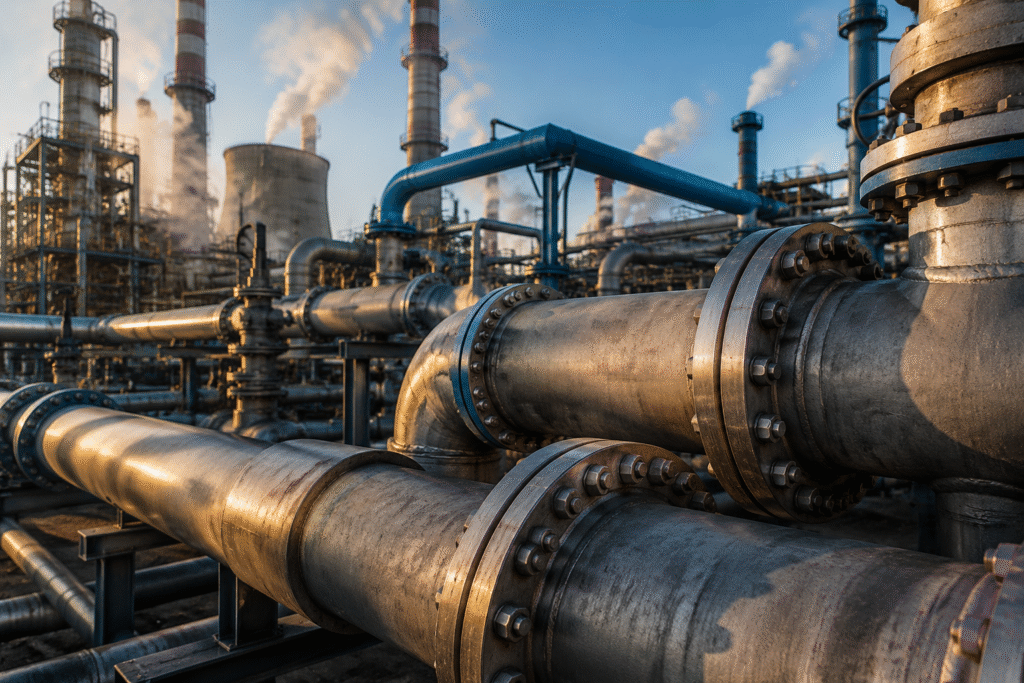
Направляющая фланца трубы из нержавеющей стали: Типы, Использование, Как выбрать фланцы на рынке стоимостью 5,8 миллиарда долларов
Спрос на фланцы для труб из нержавеющей стали продолжает расти, поскольку промышленные системы требуют более высокой коррозионной стойкости., более плотная герметизация, и более длительный срок службы. По данным исследования Grand View (2024), мировой рынок промышленных фланцев оценивался в $5.8 миллиард в 2023 и, по прогнозам, достигнет $7.2 миллиард на 2030, which highlights how critical flanges are for modern piping infrastructure.
Для инженеров и менеджеров по снабжению, самая распространенная проблема – не найти фланцы, but choosing the right stainless steel pipe flange for pressure class, коррозионная среда, метод изготовления, и соответствие нормам. Поэтому, this guide explains the intriguing material options, распространенные типы фланцев, использует, стандарты, and buying criteria that matter in real projects.
Рыночный спрос, Manufacturing Trends, and Why Stainless Steel Pipe Flange Selection Matters
Industrial buyers are sourcing more stainless steel components because downtime costs continue to increase across oil and gas, химическая обработка, власть, и морской сектор. По данным Статистики (2024), на долю нефтегазовой отрасли приходится около 35% мирового потребления фланцев, which makes flange reliability a direct operational priority.
Regional supply dynamics also influence sourcing strategy. По данным IBISWorld (2024), На долю Азиатско-Тихоокеанского региона приходится более 45% мирового производства фланцев, при этом Китай является крупнейшим производителем, so buyers increasingly evaluate supplier quality systems alongside price and lead time.
These numbers matter because flange failure is rarely an isolated event. A wrong material grade, poor facing finish, or incorrect pressure-temperature rating can trigger leakage, unplanned shutdowns, and expensive maintenance work.
Как результат, purchasing teams now ask deeper technical questions about ASTM grades, EN compatibility, инспекционная документация, и отслеживаемость. This shift favors manufacturers that combine material range, точность обработки, и соблюдение экспортных требований.
SASA FLANGE operates in this quality-focused segment with stainless steel flanges, фланцы из углеродистой стали, фланцы из сплава, and pipe fittings for demanding industrial systems. С ISO 9001:2015 и сертификаты PED 2014/68/ЕС., the company supplies projects that require verified dimensional accuracy, отслеживаемость материалов, and international code alignment.
Кроме того, stainless grades remain attractive because they support a wide range of service conditions. Общие материалы включают в себя 304, 316, 316л, 904л, дуплекс 2205, супер дуплекс 2507, and high-performance nickel alloys for aggressive media.
По данным Мордорской разведки (2024), global investment in water treatment and process infrastructure continues to expand, increasing demand for corrosion-resistant piping assemblies. In contrast to commodity carbon steel components, stainless steel pipe flange products often reduce lifecycle cost in wet, хлоридсодержащий, or hygienic applications.
Procurement professionals should also consider the broader cost equation. Initial unit price is important; однако, частота замены, работа по техническому обслуживанию, media compatibility, and inspection burden often have a greater long-term impact.
That is why the most common specification packages now include flange standard, стандарт материала, тип облицовки, класс давления, требования к тестированию, and certificate level. Например, many buyers request EN 10204 3.1 сертификаты, PMI, протоколы гидростатических испытаний, и NACE MR0175 compliance for sour service projects.
Manufacturing capability is another differentiator. Благодаря передовой обработке с ЧПУ и всестороннему тестированию качества., SASA FLANGE supports custom sizes from 1/2" до 60" across ANSI B16.5, АНСИ Б16.47, DIN, JIS, ГОСТ, и RU 1092 конфигурации.
Для покупателей, сравнивающих поставщиков, this means fewer sourcing gaps between design intent and delivered product. It also means faster alignment when projects require mixed standards, специальное бурение, или нестандартные размеры.
Типы фланцев для труб из нержавеющей стали, Материалы, and Uses Engineers Most Commonly Compare
The most common buying question is simple: which flange type and grade fit the service conditions best. На практике, the answer depends on pressure, температура, жидкая химия, график труб, метод сварки, и доступ для обслуживания.
As John Rezai, Старший инженер по трубопроводам, государства: «A flange should never be selected by material alone; the sealing face, класс давления, and joint design are just as important as corrosion resistance.» This is why engineers evaluate the entire joint assembly, not only the stainless designation.
Material selection starts with understanding environment severity. ASTM A182 F304 and F304L are widely used for general process service, while F316 and F316L are preferred where chlorides, mild acids, or marine exposure increase corrosion risk.
По данным Market Research Future (2024), stainless and alloy flanges are gaining share in high-spec process systems due to stricter safety and maintenance standards. Более того, duplex and super duplex materials continue to expand in offshore and desalination applications where high strength and chloride resistance matter.
For many projects, these are the stainless steel pipe flange material options buyers most often compare:
- 304 and 304L for general corrosion resistance, good weldability, and broad availability.
- 316 and 316L for improved pitting resistance due to molybdenum addition.
- 904L for severe chemical service with enhanced resistance in acidic environments.
- 2205 duplex for higher strength and better chloride stress corrosion cracking resistance.
- 2507 super duplex for aggressive offshore, морская вода, и условия с высоким содержанием хлора.
- Инконель, Монель, Хастеллой, and Titanium for highly specialized process duties.
The intriguing part of stainless selection is that higher alloy content does not automatically mean better value. Вместо, the correct grade is the one that meets corrosion allowance, соответствие кодексу, and service life targets without unnecessary cost escalation.
Engineers also compare flange designs based on connection type and maintenance strategy. Slip-on flanges are common in lower-pressure systems because they are easier to align, while weld neck flanges are preferred for cyclic loading, тепловой удар, and high-pressure service.
Раструбная сварка, резьбовой, коленный сустав, and blind flanges serve more specific uses. Поэтому, understanding the mechanical behavior of each design is essential before final procurement.
- Приварной фланец с шейкой: лучше всего для высокого давления, высокая температура, и критические технологические линии.
- Накидной фланец: economical for moderate service and easier shop fit-up.
- Глухой фланец: used to terminate, изолировать, or future-proof line ends.
- Фланец под приварку враструб: suitable for small-bore high-pressure piping.
- Резьбовой фланец: practical where welding is restricted or field work is limited.
- Фланец внахлестку: useful when frequent dismantling and stub end rotation are needed.
В соответствии с ASME B16.5, размеры фланца, допуски, номинальные значения давления и температуры, and facing requirements must align with designated class and material groups (ASME, 2023). Как результат, the same nominal size can perform very differently depending on class 150, 300, 600, или более высокий рейтинг.
Как доктор. Мира Кханна, Materials Consultant, государства: «В хлоридсодержащих системах, moving from 304L to 316L or duplex can dramatically improve reliability, but only if fabrication and welding controls are equally robust.» That observation is especially relevant for water treatment, морской, и химические линии.
SASA FLANGE производит фланцы в 304, 316, 904л, 2205, 2507 and other premium grades for industrial users that need consistency across large procurement packages. Более того, the company can match flange supply with elbows, тройники, редукторы, and caps to simplify sourcing and inspection.
Procurement teams should also verify dimensional series and mating compatibility before ordering. A stainless steel pipe flange built to EN 1092 may not directly interchange with an ASME B16.5 mating flange without careful review of drilling, толщина, and pressure designation.
For buyers handling mixed-project requirements, SASA FLANGE возможности продукта support standard and custom manufacturing for oil and gas, нефтехимический, производство электроэнергии, судостроение, морской, очистка воды, и строительство. This flexibility helps engineers choose flanges based on service conditions rather than supplier limitations.
ASME, ASTM, DIN, and EN Standards That Define Stainless Steel Flanges Compliance
Standards determine whether a flange is acceptable for design, инспекция, and plant operation. Поэтому, every serious purchase order should reference both dimensional and material standards, not just a generic stainless description.
The most common dimensional standards include ASME B16.5 для АПЛ 1/2 через 24 и ASME B16.47 для больших диаметров. В Европе и во многих экспортных проектах, EN 1092 and DIN flange standards remain common, while JIS and GOST apply in specific regional markets.
Стандарты материалов одинаково важны. ASTM A182 покрывает фланцы труб из кованых или катаных сплавов и нержавеющей стали., кованые фитинги, клапаны, и детали для работы при высоких температурах, пока ASTM A240 covers stainless plate, лист, и полоса для сосудов под давлением и общего применения (ASTM, 2024).
In corrosive upstream service, buyers may also require NACE MR0175 или ISO 15156 compliance for sour environments. Кроме того, PED 2014/68/EU may apply where pressure equipment enters regulated European markets.
Below is a practical comparison of the most common standards engineers review:
- ASME B16.5: размеры, рейтинги, допуски, and facings for common flange sizes.
- ASME B16.47: large-diameter flanges for larger pipeline systems.
- ASME B16.9: dimensions for buttweld pipe fittings used with flange-connected systems.
- ASTM A182: stainless and alloy forged flange material specification.
- EN 1092-1: Европейские размеры фланцев и обозначения давления.
- Стандарты DIN: legacy and application-specific metric flange systems.
- NACE MR0175: material requirements for H2S-containing environments.
- EN 10204 3.1: inspection certificate confirming test results and traceability.
По данным ИСО (2023), traceability and documented quality controls are central to risk reduction in pressure equipment supply chains. That is why top-tier projects increasingly request heat number traceability, PMI, hardness reports, and third-party inspection releases.
Facing type is another critical area that buyers sometimes underestimate. Поднятое лицо, плоское лицо, соединение кольцевого типа, and tongue-and-groove arrangements all influence gasket performance and bolt load distribution.
As Michael Turner, Piping Systems Analyst, государства: «Most flange leakage events are not caused by one defect; they result from small errors in standard selection, gasket choice, and installation torque stacking together.» Следовательно, technical review before ordering often prevents expensive commissioning delays.
SASA FLANGE поддерживает это требование с помощью ISO 9001:2015, ПЭД 2014/68/ЕС, и АД 2000 aligned manufacturing documentation for export-oriented projects. Более того, buyers can request material certificates, отчеты о проверке размеров, and other quality records based on project scope.
Для менеджеров по закупкам, a useful rule is to specify at least these data points on every RFQ:
- Flange type and nominal size.
- Класс давления или номинал PN.
- Material grade and standard.
- Facing type and surface finish requirement.
- Количество, application medium, and design temperature.
- Required certificates such as EN 10204 3.1, ПЭД, or NACE.
- Testing such as PMI, сопровождение гидроиспытаний, твердость, or dye penetrant when applicable.
Detailed specifications reduce quotation ambiguity. They also help manufacturers provide the correct stainless steel pipe flange solution without repeated clarification cycles.
For deeper standards reference, engineers can review official dimensional requirements directly at ASME.org. Однако, many buyers prefer working with suppliers that can interpret those standards and convert them into production-ready deliverables.
Как выбрать фланцы для масла & Газ, Химическая, Власть, Морской, and Water Treatment Projects
Choosing flanges begins with the process environment, not the catalog page. The right selection balances corrosion resistance, целостность давления, fabrication practicality, потребности в инспекциях, и стоимость жизненного цикла.
В нефтегазовых системах, высокое давление, вибрация, and sour media often push designers toward weld neck flanges in ASTM A182 F316L, дуплекс 2205, or higher alloy grades. По данным Статистики (2024), this sector represents around 35% мирового спроса на фланцы, so proven reliability under cyclic service remains a top concern.
In petrochemical and chemical service, fluid chemistry usually drives grade selection. 316L works well in many moderate chloride environments, в то время как 904L, Хастеллой, or other high-performance alloys may be necessary for more aggressive acids or mixed chemical streams.
Power generation projects often prioritize thermal stability and pressure capability. Поэтому, engineers frequently choose forged flanges with controlled metallurgy and strict dimensional tolerances for steam, конденсат, и вспомогательные технологические линии.
Marine and shipbuilding applications bring a different challenge because seawater exposure increases the risk of pitting and crevice corrosion. In these uses, 2205 и 2507 duplex grades often deliver a stronger strength-to-corrosion-resistance balance than standard austenitic stainless options.
Water treatment plants typically need dependable corrosion resistance, очищаемость, и экономическая эффективность. Как результат, 304л, 316л, and duplex materials are common depending on chloride content, дезинфицирующая химия, and system pressure.
Buyers should evaluate these criteria before they choose flanges:
- Рабочее давление, температура, and pressure cycling frequency.
- Состав жидкости, уровень хлоридов, рН, and contamination risk.
- Требуемый тип фланца, лицом к лицу, and mating component compatibility.
- Pipe schedule and welding procedure compatibility.
- Инспекция, сертификация, and regional compliance requirements.
- Maintenance access and disassembly frequency.
- Время выполнения, total installed cost, и ожидаемый срок службы.
According to DNV guidance for marine and offshore systems (ДНВ, 2023), material selection should account for both nominal design conditions and upset scenarios. This is important because localized corrosion often accelerates when actual operating chemistry differs from design assumptions.
Например, а 4 дюймовый фланец трубы из нержавеющей стали класса 150 may suit a utility water header, while the same line in a chloride-rich marine skid may require 316L or duplex with a different facing and gasket arrangement. Сходным образом, a large-diameter process line may demand ASME B16.47 dimensions rather than B16.5.
Custom manufacturing becomes especially valuable when projects combine non-standard drilling, special wall thickness transitions, or mixed international standards. SASA FLANGE supports custom sizes from 1/2" до 60" with factory-direct supply for projects that need tailored dimensions, alloy matching, or special documentation.
Кроме того, combining flanges and fittings from one source can reduce mismatch risk during site assembly. Buyers handling EPC packages often prefer this approach because it simplifies quality control, логистика, и окончательная проверка.
For companies comparing stainless steel flange price against lifecycle performance, the best decision is usually evidence-based rather than purely budget-based. A slightly higher-grade flange can reduce replacement frequency and leakage exposure, which often delivers a stronger total cost position over time.
That is why many project teams involve engineering, контроль качества, and procurement in the same supplier evaluation. When material expertise and manufacturing capability are aligned, the flange selection process becomes faster and more accurate.
Перспективы развития фланцев из нержавеющей стали и рекомендации по стратегическим закупкам
The market outlook remains positive as infrastructure renewal, energy projects, and water treatment investment continue to expand. По данным исследования Grand View (2024), Ожидается, что рынок промышленных фланцев вырастет с $5.8 миллиард в 2023 к $7.2 миллиард на 2030, indicating sustained purchasing activity across multiple sectors.
В то же время, specification complexity is increasing. Buyers now expect traceability, global standard compatibility, and material options that can handle more aggressive process conditions with fewer maintenance events.
По данным Мордорской разведки (2024), industrial processing growth in Asia and the Middle East is increasing demand for corrosion-resistant piping components. Поэтому, suppliers that offer broad material coverage, экспортная документация, and precision machining will gain a larger share of high-value projects.
Стратегически, buyers should standardize approved flange grades and dimensions wherever possible. This reduces spare part complexity, improves installation consistency, and shortens future procurement cycles.
It is also wise to qualify suppliers beyond unit price alone. Review certification scope, возможность механической обработки, inspection resources, надежность доставки, and responsiveness to technical deviations.
For many procurement teams, the most common mistake is under-specifying critical details during RFQ release. В отличие, detailed technical inquiry packages improve quote accuracy and make supplier comparison much easier.
SASA FLANGE служит 50+ страны по нефти & Газ, нефтехимическая, Власть, and Marine industries with stainless steel flanges and fittings built for international project requirements. For buyers seeking a dependable manufacturing partner with premium grades, global standard coverage, and responsive technical support, соединяясь с SASA FLANGE early in the design or bidding stage can simplify both selection and supply planning.
Часто задаваемые вопросы
Какие существуют типы фланцев из нержавеющей стали??
●В соответствии с ASME B16.5 (ASME, 2023), the most common stainless steel flange designs include weld neck, без шнуровки, слепой, раструбная сварка, резьбовой, и типы нахлесточных соединений.
●Each type serves a different mechanical purpose, because weld neck flanges suit high-pressure and thermal cycling service while slip-on flanges are often chosen for easier alignment and lower-cost fabrication.
●Для проектов, требующих точного выбора типа, pressure class review, и EN 10204 3.1 документация, работа с известными производителями, такими как SASA FLANGE helps ensure the flange matches the piping duty and standard requirement.
Что лучше 304 или 420 нержавеющая сталь?
●For flange applications, 304 stainless steel is usually the better option because it offers stronger corrosion resistance and broader use in process piping than 420, which is a martensitic grade more often selected for hardness.
●В соответствии с классификацией материалов ASTM и общепринятой отраслевой практикой., ASTM A182 F304 is widely used in flange manufacturing, пока 420 is less common for pressure piping flanges due to lower corrosion performance in many wet industrial environments.
●If the service includes moisture, химикаты, or outdoor exposure, buyers should generally specify 304, 316, или дуплексные оценки, а не 420, and they should confirm suitability with a qualified supplier such as SASA FLANGE.
Какие три типа фланцев существуют??
●The three flange types most commonly referenced in basic piping discussions are weld neck, без шнуровки, and blind flanges because they cover the majority of standard connection and isolation needs.
●Weld neck flanges perform best in critical service, slip-on flanges are common in moderate-duty lines, and blind flanges are used to close pipe ends or provide future expansion points.
●Although these three are the most common, engineers should also consider socket weld, резьбовой, and lap joint designs when operating pressure, частота технического обслуживания, or installation restrictions make another option more suitable.
Что такое код ASME для фланцев из нержавеющей стали??
●Основной размерный код ASME для фланцев из нержавеющей стали: ASME B16.5 for sizes NPS 1/2 через 24, пока ASME B16.47 covers many larger-diameter flange dimensions.
●Material compliance is usually specified separately through ASTM standards such as ASTM A182 для кованых фланцев из нержавеющей стали, so buyers should reference both the ASME and ASTM standards on the purchase order.
●To avoid mismatch between dimensions, класс давления, и марка материала, procurement teams should request complete technical quotations from manufacturers that understand ASME, ASTM, DIN, и требования EN.
What stainless steel pipe flange sizes are most common in industrial projects?
●Industrial projects most commonly use stainless steel pipe flange sizes from 1/2 дюйм до 24 дюймов под ASME B16.5, although larger sizes are widely used in transmission, полезность, and process systems under ASME B16.47.
●According to ASME standard scope and common market demand, small and mid-size flanges dominate facility maintenance and skid fabrication, while larger diameters are more common in water, морской, and major process infrastructure.
●Buyers should always confirm nominal pipe size, класс давления, and facing type together, потому что 4 inch stainless steel pipe flange can vary significantly in thickness, разболтовка, and weight depending on the governing standard.
How do I choose the right stainless steel pipe flange for corrosive service?
●Choosing the right flange for corrosive service starts with fluid chemistry, концентрация хлоридов, рабочая температура, и давление, because these factors determine whether 304L, 316л, 904л, 2205, или 2507 is appropriate.
●По данным ДНВ (2023) and common materials engineering guidance, chloride-rich and marine environments often require 316L or duplex grades instead of 304L to reduce pitting and crevice corrosion risk.
●For corrosive applications, buyers should request material traceability, соответствие стандартам, and quality documents such as EN 10204 3.1, and they should consult an experienced manufacturer before finalizing the grade and flange type.
Связанные Посты
Отделка торцевой поверхности фланца: Объяснение концентрических и спиральных зубцов
Концентрические и спиральные зубцы представляют собой обработанную поверхность фланца.…
Дуплекс 2205 по сравнению с фланцами 316L: Какой материал выбрать?
Быстрый ответ: Дуплекс 2205 flanges are usually the stronger candidate…

Определение фланца с диафрагмой, Подробности и обзор фланцев ASME B16.36: Рыночные данные, Руководство по выбору и анализ соответствия требованиям
Мировой рынок промышленных фланцев оценивался в $5.8 миллиард…

Руководство по рынку черных сливных фланцев: Материалы, 3.5″ Совместимость, и данные о поставщиках B2B для фланцев для кухонной мойки
Спрос на черные фланцы для утилизации растет благодаря покупателям кухонной техники…