
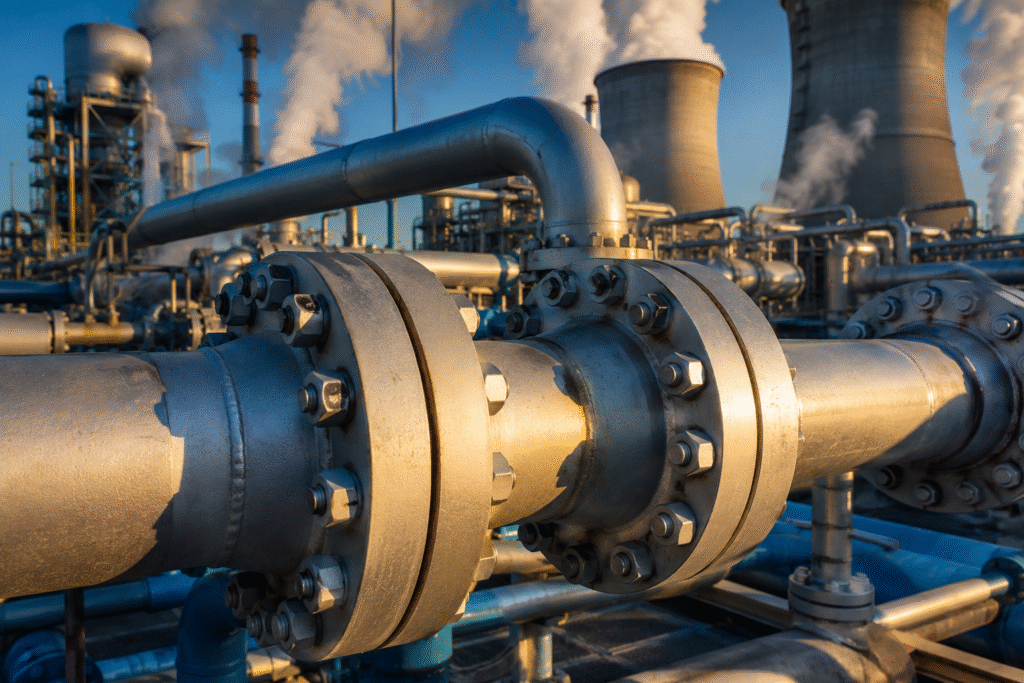
ステンレス鋼管フランジのグローバル調達ガイド
グランドビューリサーチによると (2024), 世界の工業用フランジ市場は次のように評価されました。 $5.8 億で 2023 に達すると予測されています $7.2 10億まで 2030. その成長により、 ステンレス鋼管フランジ 耐食性を必要とするエンジニアとバイヤーのための戦略的コンポーネント, トレーサビリティ, and long service life in critical piping systems.
調達チーム向け, the most intriguing question is not only which stainless, 鋼鉄, and flange grade to buy. It is how to uncover the hidden advantages, 種類, 用途, and selection factors that help choose the most common flanges for oil and gas, 石油化学, 力, 海洋, および水処理プロジェクト.
Global Market Demand Is Reshaping Stainless Steel Pipe Flange Sourcing
The industrial piping supply chain remains highly active across energy and infrastructure sectors. IBISWorldによると (2024), アジア太平洋地域が占める割合は超過 45% 世界のフランジ生産量の, 中国が最大の製造国である.
That concentration matters for project planning because manufacturing scale affects lead time, cost stability, および原材料の入手可能性. 結果として, buyers increasingly evaluate suppliers on machining capacity, metallurgy expertise, and documentation control rather than price alone.
End-use demand also explains why stainless steel pipe flange products receive sustained attention. 統計局によると (2024), 石油・ガス産業が約 35% 世界のフランジ消費量の.
しかし, demand is no longer limited to upstream plants. 水処理, 海洋システム, 食品加工, and power generation continue to adopt stainless flanges because they resist corrosion better than many carbon steel options in wet or chemically aggressive environments.
モルドール情報局によると (2024), industrial stainless steel demand is rising steadily in desalination and chemical processing applications due to lifecycle cost advantages. したがって, many EPC contractors now prioritize total cost of ownership over initial purchase price.
実務的には, that means a lower maintenance frequency, fewer shutdowns, and stronger reliability under cyclic temperature and pressure conditions. For flange assemblies, gasket performance and bolting integrity also improve when the mating materials suit the operating media.
Standards remain central to buying decisions. ASME B16.5 NPS のパイプ フランジとフランジ付き継手をカバーします 1/2 NPSを通じて 24, その間 ASME B16.47 extends dimensional requirements for larger diameters (ASME, 2023).
Material compliance is equally important. ASTM A182 commonly governs forged stainless steel flanges, IN中に 1092 and DIN flange systems remain widely specified across European and export projects (ASTM, 2023; EN, 2022).
ここでサプライヤーの能力が商業的に重要になります。. SASA FLANGE でフランジと継手を製造しています 304, 316, 316l, 904l, 2205, 2507, A182グレード, and other premium alloys for industrial service.
と ISO 9001:2015 および PED 2014/68/EU 認証, the company supports projects that require dimensional accuracy, 材料のトレーサビリティ, および輸出対応ドキュメント. さらに, its production range covers stainless steel flanges, 炭素鋼フランジ, 合金フランジ, 肘, ティー, 減速機, 一体型配管パッケージ用のキャップ.
マーケットリサーチの将来によると (2024), infrastructure modernization and process-industry expansion are expected to sustain flange demand growth above 3% annually through the decade. したがって, long-term sourcing strategies should include qualified manufacturers that can support both standard and custom flange dimensions.
For buyers comparing vendors, the real issue is not simply who offers flanges for sale. It is who can deliver the right stainless steel pipe flange standard, 直面している, 圧力クラス, and inspection documents on time for project-critical installation windows.
ステンレス鋼管フランジの種類, 材料, and Hidden Advantages in Industrial Service
The phrase stainless steel pipe flange covers a wide range of designs. これらにはウェルドネックが含まれます, スリップオン, 盲目, ソケット溶接, ねじ切りされた, ラップジョイント, and ring type joint configurations, each suited to different loads, 温度, とメンテナンスの実践.
ジョン・ブリーン役, 上級配管エンジニア, 州: “Flange selection fails when teams focus only on price and ignore fatigue loading, 腐食代, and bolt load retention.” That point is especially relevant in plants where vibration, 熱サイクル, or chloride exposure accelerate failure mechanisms.
ASME ガイダンスによると, weld neck flanges are preferred for severe service because the tapered hub improves stress distribution (ASME, 2023). 対照的に, slip on flanges often support lower-pressure systems where simpler alignment and lower fabrication cost are priorities.
Material grade has equal importance. 304 and 304L remain the most common stainless options for general service, その間 316 and 316L provide better resistance in chloride-bearing environments because of molybdenum content.
According to ASTM material data and common industry practice, low-carbon grades such as 304L and 316L reduce sensitization risk after welding. したがって, they are widely used in fabricated spool systems, 衛生的なライン, and field-welded process piping.
攻撃的なメディア向け, buyers may consider 904L, デュプレックス 2205, またはスーパーデュプレックス 2507. These grades improve pitting resistance, 耐応力腐食割れ性, and strength-to-weight performance in seawater, サワーサービス, およびオフショアアプリケーション.
- 304/304L型ステンレス鋼管フランジ: 費用対効果の高い, 多用途, and widely used in water, 食べ物, and general industrial systems.
- 316/316L型ステンレス鋼管フランジ: Better chloride and chemical resistance for marine, 化学薬品, and pharmaceutical lines.
- 904Lフランジ: Suitable for highly corrosive acids and demanding chemical process duty.
- 2205 二重フランジ: Higher strength and improved chloride resistance compared with standard austenitic grades.
- 2507 スーパーデュプレックスフランジ: Used in offshore, 脱塩, and severe corrosion environments.
According to NACE and industry corrosion studies, chloride stress corrosion cracking remains a key risk in warm saline service (ネイス, 2023). 結果として, material upgrades often deliver measurable savings by reducing leaks, 交換サイクル, 計画外のダウンタイム.
博士として. Lena Hoffmann, 材料科学者, 州: “The hidden advantages of duplex and super duplex flanges are not only corrosion resistance but also higher mechanical strength, which can reduce wall thickness and weight.” That insight matters in marine skids and offshore modules where weight reduction supports broader design efficiency.
Facing type also affects performance. Raised face flanges remain the most common in ASME B16.5 システム, while ring type joint faces are preferred in high-pressure and high-temperature service where tighter sealing is required.
Buyers should also review pressure class and pipe schedule compatibility. A flange rated Class 150, 300, 600, or higher must align with system design pressure, ガスケットの選択, ボルト締め, and actual operating temperature.
- Most common flange types: ウェルドネック, スリップオン, 盲目.
- Most common ASME pressure classes: 150, 300, 600, 900, 1500, 2500.
- Common stainless standards: ASTM A182 F304/F304L, F316/F316L, F51, F53.
- Common sizes: 1/2 インチから 24 インチ下 ASME B16.5, with larger sizes under B16.47.
ISOおよびPED要件に準拠, documentation and traceability are increasingly critical for pressure equipment exports (ISO, 2023; PED, 2014/68/欧州連合). したがって, many B2B buyers now request EN 10204 3.1 材料証明書, PMIテスト, and dimensional inspection reports as standard deliverables.
SASA FLANGE supports these requirements with advanced CNC machining, forged and machined flange production, および包括的な品質テスト. Backed by ISO 9001:2015, PED 2014/68/EU, とAD 2000 資格, the company supplies custom sizes from 1/2 インチから 60 inch across stainless, 合金, and duplex grades.
For projects comparing intriguing material options, the right guide should explain more than generic uses. It should help engineers choose the most common flanges based on corrosion mechanism, 圧力クラス, 溶接方法, メンテナンスアクセス, and lifetime cost.
ASME, ASTM, DIN, ステンレス鋼管フランジの調達に関する EN および EN 準拠要件
Industrial buyers rarely approve a flange order on dimensions alone. They review standard compliance, raw material origin, テスト範囲, 圧力温度定格, and required inspection documents before issuing purchase orders.
For ASME projects, B16.5 and B16.47 define key dimensions, 掘削, 厚さ, and tolerances for flanges. その間, ASTM A182 鍛造または圧延合金およびステンレス鋼の管フランジを定義します, 鍛造継手, および高温用バルブ (ASTM, 2023).
European and export projects may specify EN 1092-1 or DIN flange systems instead of ASME dimensions. 対照的に, mixed-specification projects require extra control because bolt patterns, 圧力定格, and facing details may not interchange directly.
The practical result is clear. A stainless steel pipe flange that appears similar on paper can become unusable if the standard, 顔のタイプ, or drilling pattern does not match the connected equipment.
- ASME B16.5: NPS 1/2 に 24 フランジおよびフランジ付き継手.
- ASME B16.47: 大径鋼製フランジ.
- ASTM A182: Forged stainless and alloy steel flange material specification.
- ASME B16.9: 工場製鍛突合せ溶接継手.
- EN 1092-1: ヨーロッパのフランジ寸法と圧力指定.
- DIN/JIS/GOST: Regional flange systems for specific project requirements.
Pressure equipment compliance adds another layer. PED 2014/68/EU applies to many products entering the European market, and supporting documents often include material traceability, 寸法チェック, and test records.
Corrosion-sensitive sectors may also request NACE MR0175 または ISO 15156 alignment for sour service materials. したがって, procurement teams should verify whether the flange material, 熱処理, and hardness limits match the service environment before approval.
The table below summarizes common procurement checkpoints for engineers and buyers.
- 材質検証: ASTMグレード, 熱数, PMI, そして EN 10204 3.1 証明書.
- 寸法コンプライアンス: ASME, DIN, EN, or JIS standard confirmation.
- 機械的性質: 抗張力, 降伏強さ, 硬度, and impact test if required.
- 圧力クラス: クラス 150 に 2500 or PN rating verification.
- Facing inspection: RF, FF, RTJ, 舌と溝, or male and female details.
- Surface and NDT: ビジュアル, PT, ユタ州, or additional project-specific testing.
海洋および海洋コンポーネントに関する DNV ガイダンスによる, documentation quality is a major part of supplier qualification (DNV, 2023). 結果として, manufacturers with controlled quality systems are better positioned for approved vendor lists and international EPC frameworks.
SASA FLANGE integrates these compliance expectations into production and export workflows. フランジの製造 304, 316, 904l, 2205, 2507 その他のプレミアムグレード, 当社は寸法検査をサポートします, 材料証明書, and project documentation for global buyers.
For technical reference, buyers can also review published standards directly through ASME. That step helps engineering teams validate rating tables, 寸法, and scope before issuing final data sheets.
In competitive sourcing, compliance is often the difference between a usable component and a costly delay. したがって, standard alignment should be confirmed before pricing comparisons begin.
申請ガイド: 油用ステンレス鋼管フランジ ソリューションの選び方, ガス, 力, 海兵隊, および給水システム
Application context drives proper flange selection. あ 4 inch stainless steel pipe flange in a clean water line may work well in 304L, while the same nominal size in offshore splash zones may require 316L, デュプレックス 2205, or even super duplex 2507.
Oil and gas projects often prioritize pressure integrity, 酸っぱいサービスの適性, and resistance to chlorides and H2S-related damage. したがって, weld neck and RTJ flanges frequently appear in upstream, 中流, and refinery units.
統計局によると (2024), 石油とガスは約 35% 世界のフランジ消費量の. That share explains why buyers in this sector pay close attention to ASTM grades, ASME の寸法, and NACE-related material considerations.
Chemical and petrochemical plants face another challenge. Corrosion can vary greatly based on acid concentration, 温度, 塩化物濃度, and cleaning cycle frequency.
そういった場合には, material selection should not rely on generic stainless assumptions. Engineers should compare actual media compatibility against 304, 316l, 904l, and higher-alloy alternatives before finalizing the bill of materials.
Power generation systems often involve elevated temperatures, 熱サイクル, and strict maintenance windows. 結果として, flange face finish, ボルトのプリロード, and gasket compatibility become just as important as basic flange type.
Marine and shipbuilding applications add salinity, 湿度, and galvanic corrosion concerns. したがって, flange selection should consider duplex materials, external coating interfaces, and drainage or maintenance access where crevice corrosion may develop.
- 石油・ガス用: Consider weld neck or RTJ flanges, NACEのレビュー, とクラス 600+ ratings where required.
- 化学処理用: Prioritize media compatibility, low-carbon grades, and documented corrosion performance.
- 発電所向け: Match temperature rating, ボルト荷重, and gasket design to operating cycles.
- For marine systems: 耐塩化物性を評価する, 隙間腐食のリスク, および両面印刷オプション.
- 水処理用: Balance corrosion resistance, 予算, およびメンテナンス間隔.
Selection also depends on connection method. Stainless steel threaded pipe flange designs are useful where welding is impractical, while slip on flanges can reduce fabrication complexity in lower-pressure systems.
Blind flanges serve a different use. They terminate or isolate piping sections, and they are common in maintenance planning because they allow future expansion or inspection access.
価格は依然として重要である, but it should be interpreted correctly. Stainless steel pipe flange price varies with raw material grade, サイズ, スケジュールの互換性, 圧力クラス, 加工の複雑さ, および認証範囲.
According to procurement benchmarks cited by industry analysts, documentation-heavy export orders can cost more initially but reduce rejection risk and project delay exposure. したがって, the apparent cheapest flange vendor may not deliver the best landed cost.
Buyers should evaluate these commercial and technical points together.
- 必要な規格: ASME B16.5, B16.47, DIN, EN 1092, またはJIS.
- 材質グレード: 304/304l, 316/316l, 904l, 2205, 2507, またはニッケル合金.
- サイズ範囲: from small bore to large diameter, including custom drilling.
- 圧力定格: クラス 150 に 2500 or project-specific PN values.
- 認証: ISO 9001:2015, PED, 広告 2000, EN 10204 3.1.
- 検査: PMI, ユタ州, PT, 水圧試験のサポート, および寸法レポート.
- リードタイム: stock, made-to-order, or project lot manufacturing.
SASA FLANGE offers custom manufacturing for stainless steel flanges and pipe fittings across oil and gas, 石油化学, 力, 造船, および水処理部門. 給仕 50+ 国, the company supports factory-direct sourcing with forged, 機械加工された, and inspection-ready products for project and distributor buyers.
For engineering teams that need stainless steel flanges and fittings in one package, integrated sourcing can improve coordination. 肘, ティー, 減速機, and caps manufactured to ASME B16.9 standards help maintain consistency across the piping system.
ステンレス鋼管フランジの需要の将来予測と戦略的な購入の推奨事項
市場の見通しは引き続き明るい. グランドビューリサーチによると (2024), 産業用フランジ市場は、 $5.8 億で 2023 に $7.2 10億まで 2030.
That growth will likely favor suppliers with stronger quality systems, broader material portfolios, and better export documentation. さらに, buyers will continue shifting toward lifecycle-based sourcing rather than lowest-price purchasing.
IBISWorldによると (2024), アジア太平洋地域はすでに以上のものを代表しています 45% 世界のフランジ生産量の. したがって, qualification of Chinese manufacturers will remain a key procurement activity for EPC firms, 販売代理店, and OEMs.
Digital sourcing will also influence the market. Buyers increasingly compare flange manufacturers by certificate availability, technical response speed, and custom machining capability before requesting formal quotations.
マーク・エリソン役, 産業市場アナリスト, 州: “In industrial components, trust is built when suppliers answer technical questions with standards, 検査データ, and realistic lead times.” That is particularly true for stainless steel pipe flange projects where deviations can affect plant safety and schedule performance.
戦略的に, procurement teams should take four actions. 初め, standardize approved materials by service environment. 2番, qualify suppliers on compliance and documentation. 三番目, compare total installed cost instead of unit price. 4番目, lock in technical reviews early for custom or mixed-standard projects.
多くの購入者にとって, the most intriguing hidden advantage is simplicity. When flange type, 学年, 認証, and fitting package come from a capable manufacturer, coordination risk falls and project execution improves.
For current RFQs involving 304, 316l, デュプレックス, or custom stainless steel pipe flange requirements, engineers and sourcing managers can review options through SASA FLANGE. 高度な CNC 加工と包括的な品質テストを備えています, the company supports specification-driven supply for demanding industrial service.
よくある質問
ステンレス鋼フランジは何に使用されますか?
●パイプの接続にはステンレス製のフランジが使用されます, バルブ, パンプス, 強度を必要とするシステムの設備や機器, 耐食性, と保守性.
●統計局によると (2024), 石油・ガス産業が約 35% 世界のフランジ消費量の, which shows how critical flanged joints are in process piping.
●石油やガスで広く使用されています, 石油化学, 海洋, 水処理, 食品加工, and power generation because they allow easier inspection and maintenance than permanent welded closures.
●一般的な用途には回線接続が含まれます, equipment nozzle attachment, end closure with blind flanges, and transition points between piping sections with different maintenance needs.
●実際に, engineers select a stainless steel pipe flange when corrosion resistance, 衛生, or lifecycle cost is more important than the lower initial cost of carbon steel.
ステンレス鋼の管継手を製造していますか?
●はい, メーカーはエルボなどのステンレス鋼管継手を製造しています, ティー, 減速機, and caps for pressure piping systems.
●ASME B16.9 is the most common dimensional standard for factory-made wrought butt welding fittings in industrial piping systems (ASME, 2023).
●These fittings are available in grades such as 304, 304l, 316, 316l, 904l, 2205, そして 2507 to match corrosion, 強さ, and fabrication requirements.
●Using compatible fittings and flanges in the same grade helps reduce galvanic mismatch, simplifies welding procedure qualification, and improves traceability across the piping package.
●For projects requiring stainless steel flanges and fittings under one source, のような確立されたメーカーと協力する SASA FLANGE supports consistent quality documents and dimensional control.
ステンレス鋼製のフランジは何ですか?
●多くのフランジタイプはステンレス鋼製です, ウェルドネックを含む, スリップオン, 盲目, ソケット溶接, ねじ切りされた, およびラップジョイントの設計.
●によると ASME B16.5 (2023), these flanges cover common dimensional requirements from NPS 1/2 NPSを通じて 24 for many industrial systems.
●They are commonly manufactured in ASTM A182 F304/F304L, F316/F316L, デュプレックス 2205, スーパーデュプレックス 2507, and higher-alloy stainless grades for severe service.
●Raised face flanges are the most common in general service, while ring type joint flanges are preferred in higher-pressure applications that demand stronger sealing performance.
●Selection should align the flange type, stainless grade, and pressure class with actual media, 温度, and maintenance requirements rather than appearance alone.
配管フランジの中で最も強度が高いのは何ですか?
●Weld neck flange is generally considered the strongest common piping flange because its tapered hub distributes stress effectively under pressure and thermal cycling.
●ASME design practice consistently favors weld neck flanges for severe service, 特に振動のある場所では, 高圧, or repeated temperature changes are expected (ASME, 2023).
●しかし, actual strength also depends on material grade, 壁の厚さ, ボルト荷重, ガスケットの選択, and whether the assembly is properly installed and aligned.
●例えば, a duplex weld neck flange can outperform a standard austenitic slip on flange in both mechanical strength and chloride resistance under the right service conditions.
●重要なシステム向け, buyers should request engineering review of pressure class, 対面タイプ, and material specification before finalizing the flange design.
どちらかを選択するにはどうすればよいですか 304 そして 316 ステンレス鋼管フランジのグレード?
●304 is the most common stainless choice for general service, その間 316 usually performs better in chloride-containing or chemically aggressive environments.
●According to ASTM and standard industry corrosion data, 中のモリブデン 316 improves resistance to pitting and crevice corrosion compared with 304 in many saline conditions.
●That means 304 often fits indoor water, 食べ物, and light industrial applications, 一方 316 is preferred for marine, 製薬, and coastal process systems.
●Price differences should be weighed against maintenance cost because a lower-cost 304 flange may fail earlier if the medium contains chlorides or cleaning chemicals.
●For projects requiring a documented material recommendation, suppliers with metallurgy and application experience like SASA FLANGE can help match grade selection to service conditions.
What standards apply to stainless steel pipe flange sizes and specifications?
●ASME B16.5, ASME B16.47, ASTM A182, EN 1092-1, DIN, JIS, and project-specific specifications are the main standards used for stainless steel pipe flange sizing and compliance.
●ASMEによると (2023), B16.5 covers dimensions, 公差, 材料, マーキング, and pressure-temperature ratings for many common flange applications.
●ASTM A182 governs forged stainless material, IN中に 1092-1 and DIN systems are widely used in European and export markets with different dimensional conventions.
●Buyers should confirm standard, 圧力クラス, 対面タイプ, and drilling pattern together because similar-looking flanges from different systems are often not interchangeable.
●For export and pressure equipment projects, it is also wise to require EN 10204 3.1 certification and verify whether PED or other regulatory documentation is needed.
関連投稿

オリフィスフランジの定義, 詳細と ASME B16.36 フランジの概要: 市場データ, 選択ガイドとコンプライアンスに関する洞察
世界の工業用フランジ市場は次のように評価されました。 $5.8 十億…

ブラックディスポフランジ市場ガイド: 材料, 3.5″ 互換性, キッチン シンク フランジの B2B 調達データ
キッチン設備の購入者として黒色の使い捨てフランジの需要が高まっています…