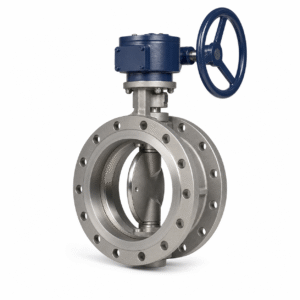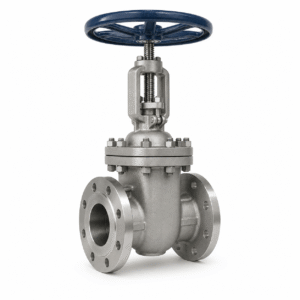
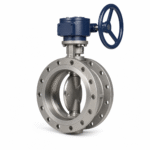
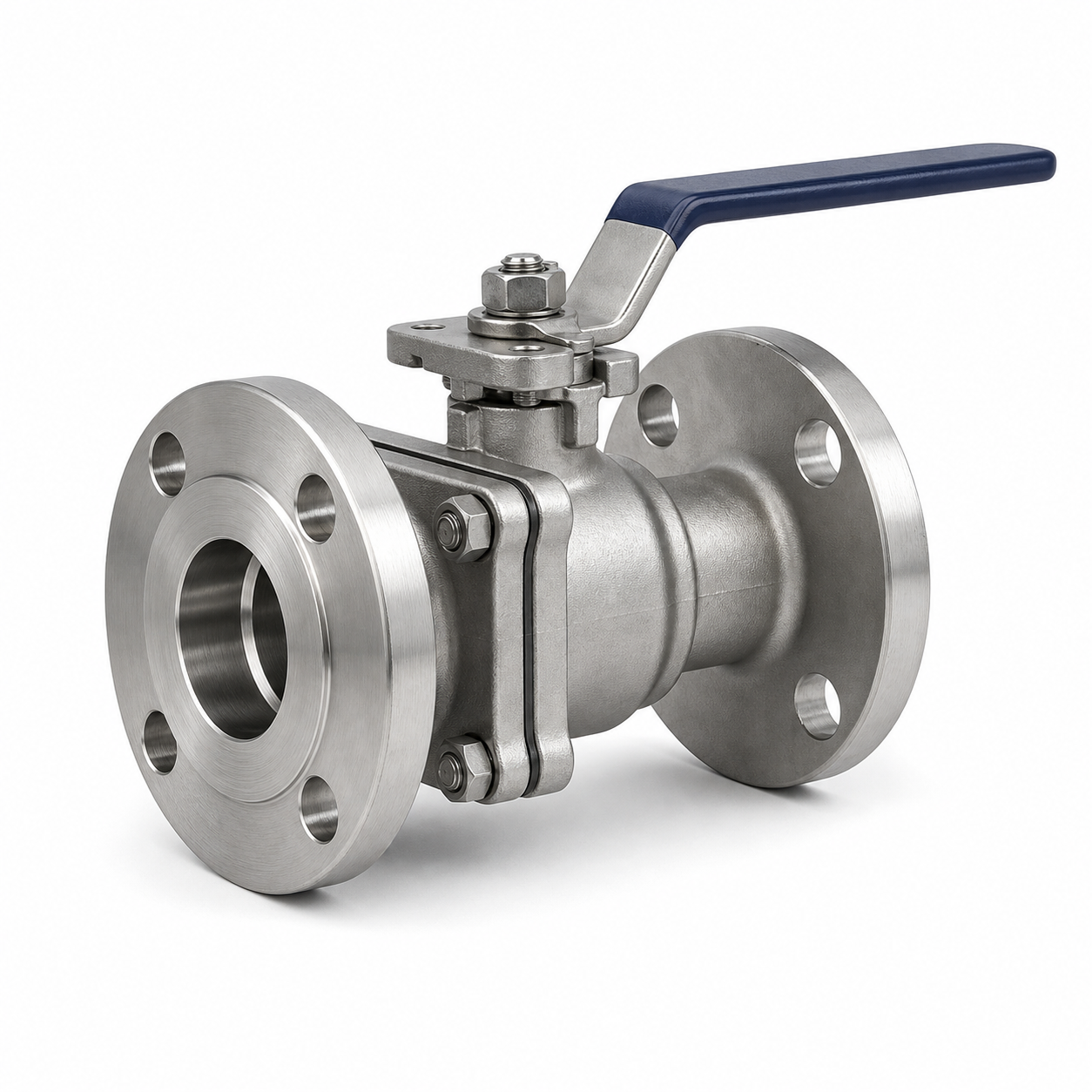
Description
Austenitic stainless steel industrial valve
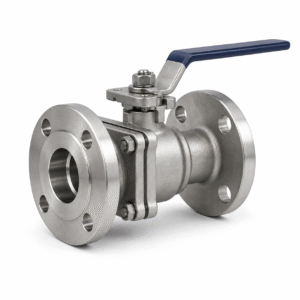
304 Stainless Steel Floating Ball Valve
A practical general-purpose stainless steel choice for non-marine process, water, food and utility service. The floating ball valve configuration is engineered for fast on-off isolation in process and utility piping.
What is a 304 Stainless Steel Floating Ball Valve?
A 304 Stainless Steel Floating Ball Valve combines a chromium-nickel austenitic stainless steel family offering general corrosion resistance, cleanability and broad fabrication experience with a compact quarter-turn isolation design in which line pressure loads the floating ball against the downstream seat.
304 is often the commercial material name, while pressure-containing cast bodies are normally ordered by a casting grade such as CF8 or CF3 rather than simply as 304. Floating-ball suitability depends on size, differential pressure, seat load, operating torque and cavity-pressure behavior.
304 Stainless Steel Floating Ball Valve specifications
| Product | 304 Stainless Steel Floating Ball Valve |
|---|---|
| Valve construction | One-, two- or three-piece floating-ball construction; full or reduced bore |
| Nominal material | 304 Stainless Steel |
| UNS / EN reference | UNS S30400/S30403; EN 1.4301/1.4307 |
| Product forms | Wrought ASTM A182 F304/F304L; cast ASTM A351 CF8/CF3; exact component specification stated on order |
| Design standards | API 608, ISO 17292 and ASME B16.34; API 6D only when specifically designed and ordered |
| Pressure testing | API 598 or project-specified shell and closure testing |
| Pressure rating | ASME Class or PN rating verified against exact material, size, construction and design temperature |
| End connections | RF/RTJ flanged, threaded, socket-weld or butt-weld according to design |
| Operation | Lever, gearbox, pneumatic or electric actuator |
| Documentation | EN 10204 3.1 material records, pressure test report, GA drawing and project inspection records as ordered |
This is an engineered inquiry product, not a universal stock specification. Final availability depends on valve size, pressure class, material form, trim, seat system, operator, quantity and required code edition.
304 Stainless Steel material selection
| Selection point | Engineering guidance |
|---|---|
| Material profile | a chromium-nickel austenitic stainless steel family offering general corrosion resistance, cleanability and broad fabrication experience |
| Why it is selected | Broad availability, good fabrication and useful corrosion resistance in many mild industrial environments. |
| Typical service | Fresh water, food and beverage, non-chloride chemicals, clean utilities and general process duties. |
| Limitations to check | Chloride pitting, crevice corrosion and stress-corrosion cracking must be assessed; it is not the default choice for seawater or aggressive reducing acids. |
| Specification route | Wrought ASTM A182 F304/F304L; cast ASTM A351 CF8/CF3; exact component specification stated on order |
| Verification | MTC review, heat traceability and PMI when required; low-carbon grade confirmed where welding and sensitization control matter. |
Floating Ball Valve design and standards
API 608 / ISO 17292
Common design bases for industrial metal ball valves; exact scope and edition must be stated.
ASME B16.34
Pressure-temperature, material, design, examination, testing and marking requirements within scope.
API 598
Common shell and closure pressure-testing basis when specified.
API 607 / API 6FA
Fire-test qualification applies only to the exact offered seat, seal and valve configuration.
Seat polymer or metal, ball/stem alloy, packing, anti-static device, blowout-resistant stem, cavity relief and actuator torque must be selected together.
Fire-safe, fugitive-emission, sour-service, oxygen, cryogenic, chlorine and PED requirements apply only when explicitly defined and supported for the exact offered configuration.
Typical applications
| Industry | Material service context | Valve selection focus |
|---|---|---|
| Food and beverage | Clean water, product transfer and utility systems with compatible cleaning chemistry | Seat compatibility, differential pressure, cavity relief, torque and fire-safe/emissions requirements |
| Water treatment | Fresh-water and low-chloride treatment stages | Seat compatibility, differential pressure, cavity relief, torque and fire-safe/emissions requirements |
| General chemical | Mild oxidizing and non-halide process media after compatibility review | Seat compatibility, differential pressure, cavity relief, torque and fire-safe/emissions requirements |
| Building and utility | Clean utility, HVAC and non-marine industrial services | Seat compatibility, differential pressure, cavity relief, torque and fire-safe/emissions requirements |
Application examples are not a corrosion or design approval. The end user must verify process chemistry, contaminants, pressure, temperature, velocity, cycling, emissions and regulatory requirements.
Quality, testing and traceability
Heat-number traceability and EN 10204 3.1 records matched to the ordered component specifications.
MTC review, heat traceability and PMI when required; low-carbon grade confirmed where welding and sensitization control matter.
API 598 or project-specified shell and closure testing, with acceptance and leakage criteria stated on the order.
GA drawing, dimensions, marking, operation, pressure test and specified NDE/third-party records.
RFQ checklist
- Valve design standard and required edition
- Nominal size and ASME Class or PN rating
- Exact material specifications for pressure boundary, trim, seats, packing and bolting
- Full or reduced bore, seat material, cavity relief, anti-static/fire-safe and actuator requirements
- End connection, facing and face-to-face requirement
- Fluid composition, concentration, contaminants and solids
- Design and operating pressure/temperature
- PMI, corrosion testing, NDE, witnessing and document requirements
Frequently asked questions
Is CF8 the same as 304 stainless steel?
CF8 is a cast austenitic stainless steel commonly associated with wrought 304 chemistry, but casting and wrought specifications have different requirements. The purchase order should state the governing ASTM grade.
When should 316 be selected instead of 304?
316/CF8M is often considered when molybdenum is beneficial for chloride pitting resistance, but neither grade is automatically suitable for seawater or every chemical service.
Can 304L components be welded?
304L is widely used for welded fabrication because of its lower carbon limit, but the approved welding procedure, filler metal, heat input and post-fabrication condition still control performance.
How does a floating ball valve achieve shutoff?
Line pressure moves the ball slightly toward the downstream seat, producing pressure-assisted sealing. Seat material and geometry control leakage and operating torque.
When should a trunnion-mounted design be considered?
Trunnion mounting is commonly evaluated as size, pressure, torque, seat-load control or pipeline-service requirements increase.
Can 304 Stainless Steel be used for every component in this floating ball valve?
Not automatically. Pressure-boundary, trim, stem or shaft, seating, packing, gasket and bolting materials have different mechanical and corrosion duties. The complete bill of materials must be engineered for the service.
Related 304 Stainless Steel valve products
Need a broader comparison? View the general stainless steel and alloy ball valves guide or browse all Ball Valves.
Request a 304 Stainless Steel Floating Ball Valve quotation
Send the valve specification, exact material grades, size, pressure class, operating conditions, quantity and inspection requirements for technical review.