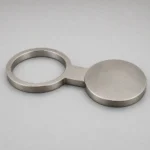
Description
Operational line blank | ASME B16.48
Hastelloy C276 Spectacle Blind – UNS N10276
ASME B16.48 corrosion-resistant line blank in UNS N10276 for aggressive chemical isolation service. Available with project-specific dimensions, documentation and inspection.
Direct answer
What is a Hastelloy C276 spectacle blind?
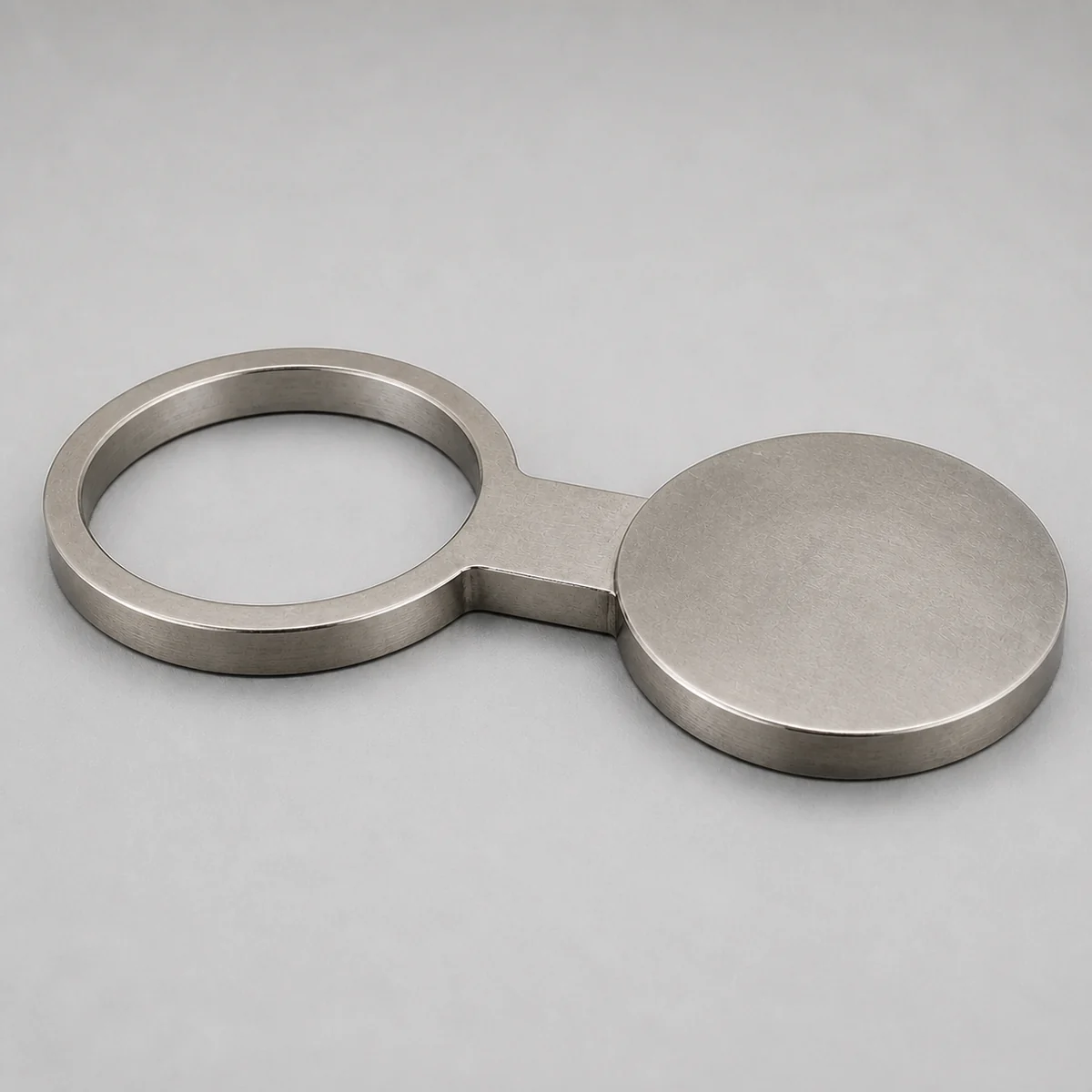
A spectacle blind is a positive-isolation line blank installed between matching pipe flanges. Its solid end blocks flow, while its open ring restores the flow path after the bolted joint is opened and the component is rotated. The visible position gives operators a direct indication of whether the line is open or isolated.
UNS N10276 is a nickel-molybdenum-chromium alloy commonly known as Hastelloy C276. Forged flanges and similar components are commonly specified to ASTM B462; wrought butt-weld fittings use ASTM B366.
The figure-8 profile keeps the blind and spacer together, reducing the risk of losing a separate spacer during maintenance. Thickness, outside diameter, bore, bridge geometry, sealing surfaces and marking must match the ordered ASME B16.48 class and flange joint. The piping designer remains responsible for isolation philosophy, gasket selection, bolting, operating procedure and code compliance.
Technical specifications
| Product | Spectacle Blind |
|---|---|
| Material specification | ASTM B462, UNS N10276 |
| UNS designation | UNS N10276 |
| Dimensional standard | ASME B16.48 |
| Size range | NPS 1/2 through NPS 24 within the pressure-class limits of ASME B16.48 |
| Rating / schedule | ASME Classes 150, 300, 600, 900, 1500 and 2500, subject to size and material limits |
| Configuration | One-piece figure-8 line blank with one solid blind end and one open spacer end |
| Documentation | EN 10204 3.1 MTC, heat-number traceability, dimensional report and PMI when ordered |
| Optional inspection | PMI, PT, UT where applicable, corrosion testing and third-party inspection when specified |
Final dimensions, ratings, tests and acceptance criteria follow the purchase order, approved drawing, applicable code and specified standard edition.
Why specify Hastelloy C276?
N10276 is selected for resistance to many aggressive chemical environments, including selected reducing and oxidizing media. Its high molybdenum content supports localized-corrosion resistance, while chromium contributes in oxidizing conditions.
Clean fabrication, controlled thermal practice and compatible filler selection are important. Iron contamination and poor surface preparation should be avoided for corrosion-critical equipment.
Typical applications
These are selection examples, not universal suitability claims. Verify corrosion, temperature, pressure, fabrication and code requirements for the actual service.
Ordering and specification guidance
Specify the material route, NPS, pressure class, mating flange facing, surface finish and required line-blank type. Do not order by nominal size alone: a Class 150 spectacle blind and a Class 600 spectacle blind differ materially in thickness and outside dimensions.
Define the product form, heat treatment, PMI, PT, corrosion test and any low-iron contamination controls required by the project.
Engineering selection boundaries
Material grade, nominal size and pressure class are necessary purchasing inputs, but they do not prove suitability by themselves. The responsible piping engineer should verify the design code, design pressure and temperature, corrosion allowance, connected pipe dimensions, flange facing, gasket system, bolting, welding procedure and examination plan as one coordinated specification. Service chemistry, concentration, contaminants, velocity, shutdown conditions and cleaning media can change corrosion performance. Request written confirmation against the project datasheet and approved drawing before manufacture, especially where sour service, seawater exposure, cyclic loading, vacuum, lethal service or regulatory inspection applies.
Manufacturing, inspection and traceability
Inspection focuses on material identity, thickness, bore, outside profile, bridge dimensions, flatness, sealing-face finish and permanent marking. PMI, dimensional reports and liquid-penetrant examination can be added when stated in the purchase order.
Certificate review and PMI verify alloy identity; PT helps screen machined surfaces for relevant indications before release.
Official standards and engineering references
Use the current project-approved editions. The following official scope pages help procurement teams separate dimensional requirements from material requirements.
Related spectacle blind products
RFQ checklist
- Line-blank type
- NPS and pressure class
- Mating flange standard and facing
- Material grade and UNS number
- Required thickness or drawing
- Surface finish and gasket details
- Quantity and marking
- MTC, PMI and inspection requirements
Frequently asked questions
What is the difference between a spectacle blind and a paddle blind?
A spectacle blind combines the blind and spacer in one figure-8 component. A paddle blind and paddle spacer are separate components. The selected form must match the operating and maintenance procedure.
Is a spectacle blind the same as a blind flange?
No. A spectacle blind is installed between two mating flanges and can be rotated between open and closed positions. A blind flange terminates a flanged connection.
Which standard controls spectacle blind dimensions?
ASME B16.48 is commonly specified for operational line blanks used between ASME B16.5 flanges. The ordered edition, size, class and facing must be stated.
What is the UNS number for Hastelloy C276?
The UNS designation is N10276.
Which ASTM specifications cover C276 components?
ASTM B462 commonly covers forged flanges and fittings, while ASTM B366 covers factory-made wrought welding fittings. Match the specification to the product form.
Request a technical quotation
Send the material grade, standard, size, rating or schedule, quantity and inspection requirements. SASA FLANGE will review the complete specification before quotation.