Description
Commercially pure titanium welding fitting
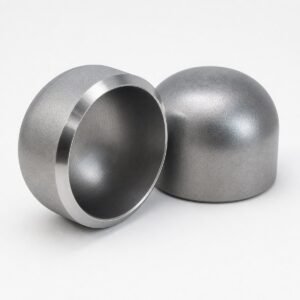
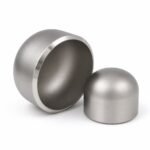
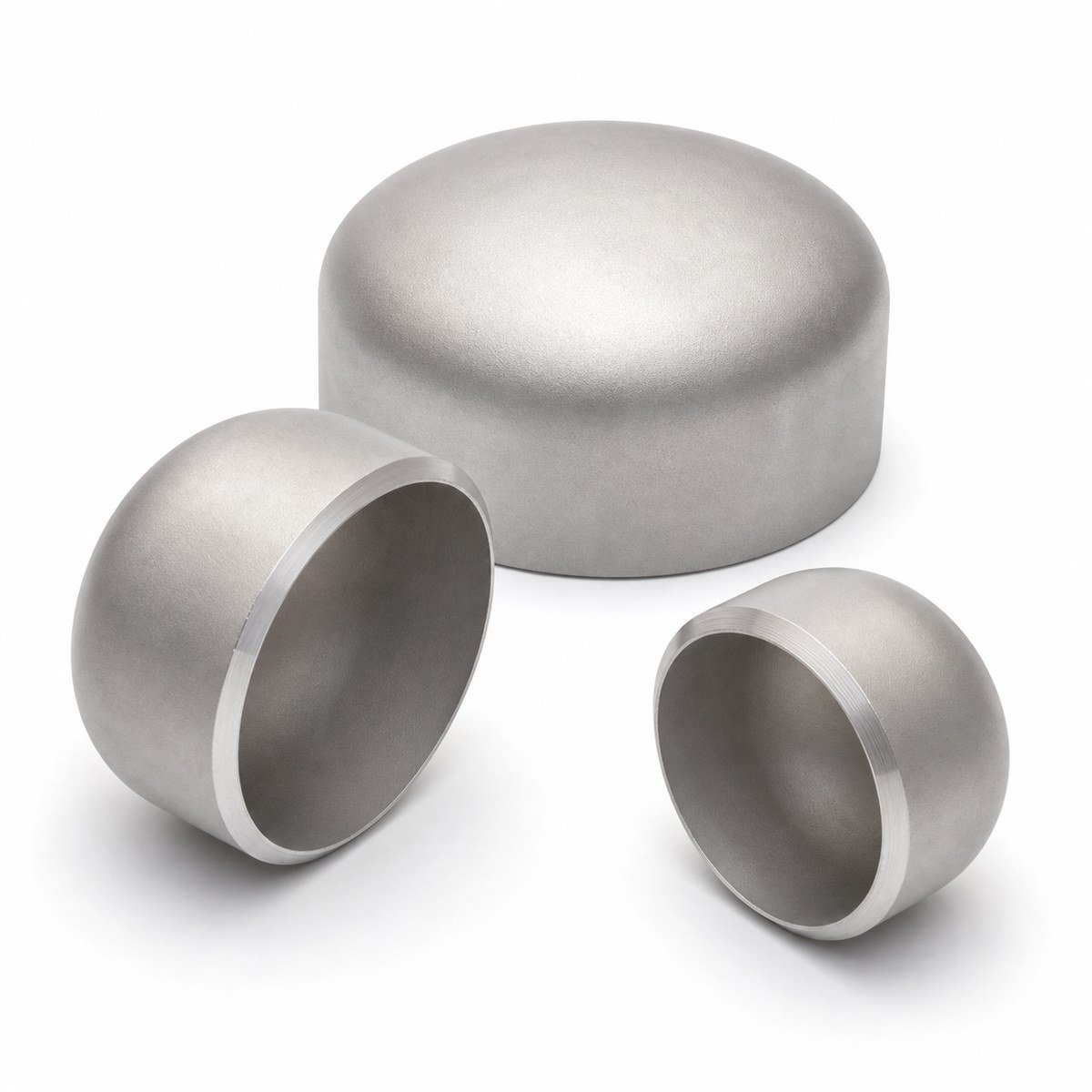
Titanium Grade 2 Pipe End Cap
A lightweight corrosion-resistant butt-weld closure for seawater, desalination, chemical, pulp-and-paper and heat-transfer systems.
What is a Titanium Grade 2 pipe end cap?
A Titanium Grade 2 pipe end cap is a factory-made unalloyed titanium welding fitting used to close the end of a pipe. ASTM B363 covers seamless and welded titanium and titanium-alloy welding fittings, including caps.
UNS R50400 is commercially pure titanium with moderate strength, good formability and weldability. Its protective oxide film gives excellent performance in many seawater and chloride-bearing environments. Titanium is not universally resistant: fluoride media, strong reducing acids and anhydrous chlorine require particular caution.
Titanium Grade 2 pipe end cap specifications
| Product | Titanium butt weld pipe end cap / BW cap |
|---|---|
| ASTM material | ASTM B363 Grade 2 |
| Material designations | UNS R50400; W.Nr. 3.7035; commercially pure Titanium Grade 2 |
| Dimensional standards | ASME B16.9 or MSS SP-43 dimensional basis when specified and applicable |
| Nominal size | NPS 1/2–48 / DN15–DN1200, subject to titanium plate/pipe and forming capability |
| Wall thickness | Sch 5S–Sch 160, XXS and custom wall subject to size and forming review |
| Construction | Seamless or welded as ordered and technically available |
| End preparation | Butt-weld bevel end (BE), protected from contamination before welding |
| Surface / cleanliness | Pickled, cleaned or project-specific finish; iron contamination controlled |
| Documentation | EN 10204 3.1 MTC, PMI/alloy verification and dimensional report; NDE as ordered |
ASME B16.9 covers factory-made wrought butt-welding fitting dimensions, tolerances, ratings, testing and marking. Material acceptance follows the ordered ASTM specification. Availability at NPS 1/2–48 and heavy walls is subject to alloy, size, quantity and manufacturing route.
ASME B16.9 and MSS SP-43 supply options
ASME B16.9
ASME B16.9 may be used as the ordered dimensional basis for Grade 2 titanium butt-welding caps, with ASTM B363 controlling material and manufacturing requirements.
MSS SP-43
MSS SP-43 dimensions may be specified for applicable corrosion-resistant fitting service when permitted by the design. Confirm wall matching and pressure-design basis.
Titanium Grade 2 vs 316L pipe end cap
| Selection point | Titanium Grade 2 / R50400 | 316L / S31603 |
|---|---|---|
| Density | Low, approximately 60% of stainless steel density | Higher density and familiar fabrication |
| Seawater behavior | Excellent in many aerated seawater/chloride systems | May be vulnerable to localized corrosion in demanding chlorides |
| Fabrication control | Requires excellent shielding and contamination control | Well-established stainless welding practice |
| Cost basis | Higher initial cost but strong lifecycle potential | Lower initial cost and broad availability |
Typical applications
| Industry | Typical service | Selection reason |
|---|---|---|
| Desalination | Seawater transport, RO auxiliaries and brine systems | Chloride corrosion resistance and low lifecycle maintenance |
| Marine / offshore | Seawater cooling and platform utility systems | Low weight and resistance to seawater |
| Chemical processing | Oxidizing chloride, nitric acid and wet chlorine duties where compatible | Stable protective oxide film |
| Pulp and paper | Chloride-containing bleaching support systems | Resistance in selected bleaching environments |
Application examples are not a design approval. The piping materials engineer must confirm corrosion compatibility, temperature, pressure, weld procedure and applicable code requirements.
Manufacturing, inspection and EN 10204 documentation
Titanium caps require strict cleanliness during forming and welding. Iron contamination, moisture, grease and inadequate inert-gas shielding can damage weld quality. Inspection requirements should include surface condition and fabrication controls appropriate to titanium.
Grade 2 chemistry, mechanical data and heat traceability linked to the fitting.
PMI or alloy-verification method agreed for commercially pure titanium.
OD, length, wall, ovality and BE geometry checked against the order.
Surface contamination control plus PT, RT/UT or third-party inspection as specified.
RFQ checklist
- ASTM grade and UNS number
- ASME B16.9 or MSS SP-43 edition
- NPS or DN size
- Schedule or exact wall thickness
- Seamless or welded construction/class
- BE bevel detail and matching pipe
- Quantity and delivery destination
- EN 10204 3.1, PMI, dimensional and NDE requirements
Frequently asked questions
Which ASTM standard covers Titanium Grade 2 pipe caps?
ASTM B363 covers seamless and welded unalloyed titanium and titanium-alloy welding fittings, including caps. Grade 2 corresponds to UNS R50400.
What is the European material number for Grade 2 titanium?
The commonly referenced Werkstoff number is 3.7035. The purchase order should still identify ASTM B363 Grade 2 and UNS R50400 when that is the governing basis.
Is Grade 2 titanium suitable for seawater?
It performs very well in many aerated seawater and chloride systems, but every design must consider temperature, crevices, deposits, flow, galvanic coupling and contaminants.
Why must titanium welding be kept clean?
Heated titanium reacts readily with oxygen, nitrogen and hydrogen. Clean surfaces and effective inert-gas shielding are essential to avoid embrittlement and contaminated welds.
Are heavy-wall titanium caps available?
They can be manufactured in selected sizes, but availability depends on starting material, forming strain, heat treatment, exact wall and quantity. Submit pipe dimensions for review.
Request a Titanium Grade 2 cap quotation
Provide ASTM B363 Grade 2, size, wall, construction, bevel, cleanliness, quantity and inspection requirements.