
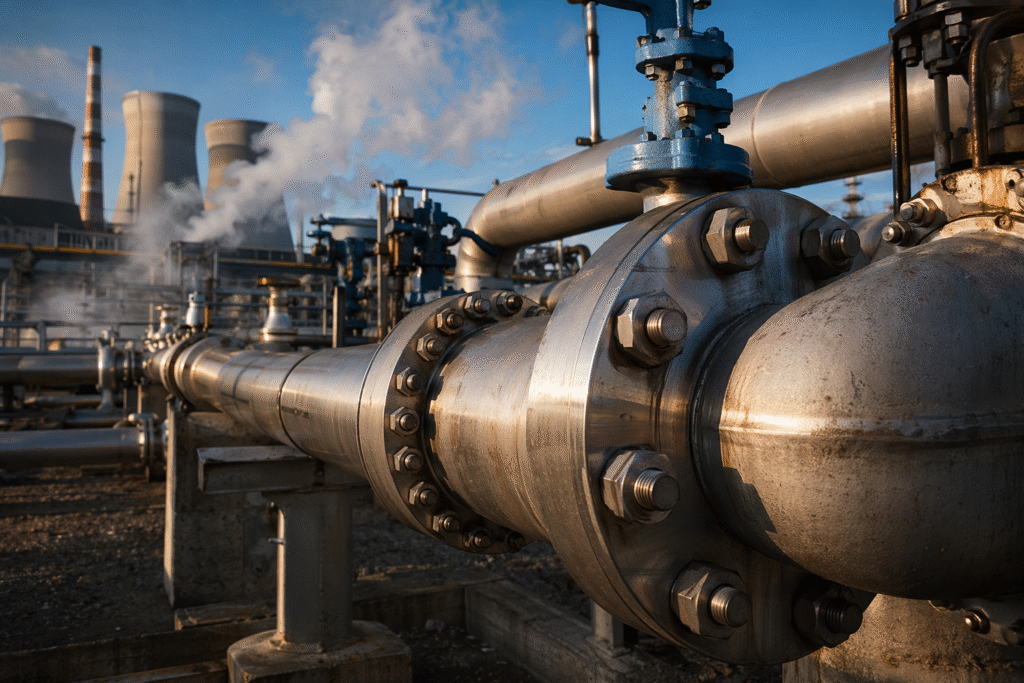
Insights do mercado de flanges de tubos de aço inoxidável: Vantagens ocultas, Tipos, Usos, e como escolher as opções mais comuns
De acordo com a pesquisa Grand View (2024), o mercado global de flanges industriais foi avaliado em $5.8 bilhão em 2023 e está projetado para atingir $7.2 bilhão por 2030. Esse crescimento faz com que flange de tubo de aço inoxidável um componente estratégico para engenheiros e compradores que necessitam de resistência à corrosão, integridade de pressão, and reliable lifecycle value.
Para equipes de compras, the intriguing part is not only price. The hidden advantages of stainless steel flanges include lower maintenance frequency, compatibilidade de mídia mais ampla, and stronger long-term performance in aggressive industrial service.
Por que o mercado de flanges para tubos de aço inoxidável continua em expansão
Industrial buyers are under pressure to reduce downtime and control total installed cost. Portanto, stainless steel pipe flange demand continues to rise across oil and gas, petroquímico, tratamento de água, marinho, e geração de energia.
De acordo com IBISWorld (2024), Ásia-Pacífico é responsável por mais de 45% da produção global de flanges, sendo a China o maior fabricante. This matters because buyers increasingly compare lead time, consistência metalúrgica, suporte de certificação, and machining capability before placing orders.
De acordo com Statista (2024), a indústria de petróleo e gás é responsável por aproximadamente 35% do consumo global de flanges. Como resultado, materials such as ASTM A182 F304, F304L, F316, F316L, duplex 2205, e superduplex 2507 remain among the most specified grades for corrosive and pressure-sensitive systems.
Many buyers still focus on the most common materials only. No entanto, project requirements often call for deeper review of chloride exposure, serviço azedo, face de flange, classe de pressão, compatibilidade da junta, e temperatura de operação.
ASME B16.5 rege as dimensões, tolerâncias, classificações de pressão-temperatura, e marcação para flanges até NPS 24, enquanto ASME B16.47 cobre diâmetros maiores. ASTM A182 define flanges de tubos de liga forjada ou laminada e aço inoxidável, acessórios forjados, e válvulas para serviço em alta temperatura (ASTM, 2024).
That standards framework helps buyers compare suppliers on objective criteria rather than sales language. Além disso, it gives EPC contractors and end users a clear basis for technical approval and inspection.
Como ASME notas, dimensional conformity and pressure rating compliance are essential to safe piping system performance. Em termos práticos, even a strong material grade can fail commercial expectations if machining accuracy, planicidade, or facing finish does not meet code.
This is where manufacturer capability becomes important. SASA FLANGE supports global B2B projects with ISO 9001:2015 e certificações PED 2014/68/EU, amplas opções de materiais, and factory-based production control.
For buyers sourcing stainless steel flanges and fittings in 304, 316, 316eu, 904eu, 2205, e 2507, consistency is often more valuable than lowest unit price. Apoiado por usinagem CNC avançada e testes de qualidade abrangentes, SASA FLANGE helps reduce dimensional deviation, documentation risk, and rework at site.
De acordo com a Inteligência Mordor (2024), industrial infrastructure investment in energy and water sectors is one of the strongest growth drivers for pipe connection components worldwide. Consequentemente, the most common flange specifications now appear in both replacement MRO demand and large greenfield capital projects.
That shift also changes what buyers ask. Instead of simply requesting a flange catalogue, they increasingly ask for EN 10204 3.1 documentos, Capacidade PMI, coordenação de hidroteste, NACE MR0175 material suitability, and custom drilling or facing options.
Hidden Advantages of Stainless Steel Flanges: Tipos, Materiais, e fatores de desempenho
The intriguing value of a stainless steel pipe flange lies in performance over time. While carbon steel may offer a lower initial price, stainless grades often reduce replacement cycles, coating needs, and service interruptions in wet, químico, or marine conditions.
De acordo com a Pesquisa de Mercado Futuro (2024), corrosion-related maintenance can account for a significant share of total asset management cost in process industries, muitas vezes excedendo 15% of annual maintenance spend in harsh environments. Portanto, hidden advantages become visible when buyers evaluate lifecycle cost rather than purchase price alone.
Como Dr.. Helen Morris, Materials Scientist and corrosion consultant, estados: “Em ambientes contendo cloreto, the wrong flange grade can turn a low-cost purchase into a shutdown event.” Her point is especially relevant for offshore, dessalinização, e sistemas de processamento químico.
The most common stainless steel flange materials include 304, 304eu, 316, e 316L. No entanto, many severe-duty applications demand 904L, duplex 2205, superduplex 2507, or nickel alloys such as Inconel, Monel, e Hastelloy.
- 304/304eu: Boa resistência geral à corrosão, strong formability, and competitive pricing for water, comida, e serviço de química leve.
- 316/316eu: Better pitting and crevice corrosion resistance due to molybdenum addition, often preferred in marine and chloride environments.
- 904eu: Enhanced resistance in sulfuric acid and aggressive chemical service.
- 2205 Dúplex: Maior resistência e melhor resistência à corrosão sob tensão por cloretos do que as classes austeníticas.
- 2507 Superduplex: Premium option for high-chloride and offshore conditions.
Flange types also affect performance. Engineers must choose not only the material but also the correct geometry, enfrentando, e classe de pressão.
- Flange de pescoço soldado: Melhor para alta pressão, ciclagem térmica, and critical service due to smooth stress transition.
- Deslizar no flange: Easier to align and often more economical for lower-pressure systems.
- Flange de solda de soquete: Common in small-bore high-pressure piping.
- Flange roscada: Útil onde a soldagem é restrita.
- Flange cega: Usado para encerrar, isolar, ou testar sistemas de tubulação.
- Flange de junta sobreposta: Selected when frequent dismantling is required.
De acordo com ASME B16.5, as classificações de pressão-temperatura variam de acordo com o grupo de material e classe de flange. Como resultado, uma aula 150 flange in F316 does not carry the same selection logic as a Class 600 weld neck in duplex 2205.
Como James Porter, Engenheiro de Tubulação Sênior, estados: “The strongest type of flange is not always the most expensive grade; it is the one that matches load, mecanismo de corrosão, and fabrication practice.” This is why experienced buyers compare schedule compatibility, precisão do furo, welding procedure qualification, and service medium before final approval.
Por exemplo, um 4 inch stainless steel pipe flange for marine cooling water may justify 316L or duplex. Em contraste, a similar size in low-chloride clean water may perform well with 304L, depending on design temperature and pressure.
Many projects now require mixed packages of flanges and fittings. Portanto, manufacturers that can supply elbows, camisetas, redutores, and caps in matching metallurgy create purchasing efficiency and reduce traceability gaps.
SASA FLANGE manufactures flanges and pipe fittings in stainless steel, aço carbono, liga de aço, e ligas de níquel de alto desempenho. Oferecendo tamanhos personalizados de 1/2" para 60" com preços competitivos direto da fábrica, the company supports both standard and project-specific procurement.
The company also works with ANSI B16.5, ANSI B16.47, ASME B16.9, DIN, JIS, GOST, e PT 1092 padrões. That range is valuable for EPC contractors managing multi-region projects with mixed design codes.
According to ISO guidance and common quality practice, rastreabilidade total, controle de número de calor, and test documentation are central to pressure component quality assurance (ISO, 2024). Consequentemente, buyers should request EN 10204 3.1 certificados, PMI records where needed, and dimensional inspection reports for critical applications.
Padrões, Teste, and Compliance for Stainless Steel Flanges and Fittings
Compliance is a commercial issue as much as a technical one. If a flange fails documentation review, it can delay construction, customs clearance, or final handover even when the material itself is acceptable.
The core standards for a stainless steel pipe flange package usually include ASME, ASTM, DIN, and EN references. Além disso, many oil and gas projects require alignment with API and NACE expectations for specific service conditions.
- ASME B16.5: Flanges de tubos e acessórios flangeados para NPS 1/2 através 24.
- ASME B16.47: Flanges de aço de grande diâmetro para NPS 26 através 60.
- ASME B16.9: Acessórios para soldagem de topo forjados feitos na fábrica.
- ASTM A182: Flanges de tubos de liga forjada ou laminada e aço inoxidável, acessórios forjados, e válvulas.
- EN 1092: Padrão europeu de flange amplamente utilizado em projetos de exportação.
- DIN e JIS: Important for regional compatibility and replacement demand.
De acordo com a estrutura PED 2014/68/UE da Comissão Europeia, pressure equipment placed on the EU market must meet essential safety requirements and conformity assessment procedures. Portanto, PED compliance is not optional for qualifying projects aimed at Europe.
NACE MR0175 also becomes important in sour service. Although not every stainless grade is suitable in every H2S environment, the standard gives buyers a recognized basis for evaluating cracking risk and material restrictions (NACE, 2024).
Below is a practical compliance comparison for industrial buyers.
- Documentação: EN 10204 3.1 CTM, rastreabilidade térmica, verificação de marcação.
- Teste: PMI, dureza, inspeção dimensional, inspeção visual, and optional NDT.
- Usinagem: Acabamento frontal, bolt hole alignment, concentricidade, e precisão do furo.
- Project approvals: DEP, ANÚNCIO 2000, ISO 9001:2015, and customer-specific ITP requirements.
De acordo com a orientação da DNV para sistemas offshore (DNV, 2024), integridade material, controle de documentação, and corrosion allowance planning directly affect long-term reliability in marine service. That is why marine and offshore buyers often ask for stricter review than general utility projects.
SASA FLANGE apoia esses requisitos com ISO 9001:2015, PED 2014/68/EU, e ANÚNCIO 2000 certificações. Servindo 50+ países em todo o petróleo & Gás, Petroquímica, Poder, e indústrias marítimas, the company aligns manufacturing and documentation with international project expectations.
Buyers should also distinguish between standards compliance and actual execution quality. A supplier may quote ASTM A182 F316L, yet poor forging practice, inadequate solution annealing control, or inconsistent machining can still create field issues.
Como Mark Ellison, Analista de mercado industrial, estados: “In pressure components, quality escapes are usually expensive because discovery happens late, often during fit-up or hydrotest.” Portanto, experienced procurement managers evaluate inspection planning before they compare freight terms.
Por esse motivo, stainless steel flanges and fittings should be reviewed as a complete quality package. Grau do material, dimension, acabamento superficial, classe de pressão, and certification must all align with the service specification.
How to Choose the Most Common Stainless Steel Pipe Flange for Real Industrial Uses
A seleção começa com as condições de serviço. Engineers need to confirm medium, nível de cloreto, pressão de projeto, faixa de temperatura, tamanho da linha, tolerância à corrosão, and whether frequent dismantling will occur.
Em petróleo e gás, weld neck flanges remain a common choice for high-pressure and cyclic service. De acordo com Statista (2024), that sector represents approximately 35% do consumo global de flanges, so durability and code compliance heavily influence buying behavior.
No processamento petroquímico, 316L is often selected where chlorides or aggressive cleaning chemicals are present. No entanto, stronger or more corrosion-resistant grades such as 904L, 2205, ou 2507 may be preferable in severe media.
Na geração de energia, thermal cycling is a critical factor. Portanto, flange geometry and weld configuration can matter as much as the alloy itself.
In shipbuilding and marine service, crevice corrosion and splash-zone exposure drive material upgrades. Como resultado, duplex stainless becomes attractive where long service life and reduced maintenance justify a higher upfront investment.
Para tratamento de água e dessalinização, 316L can work in many systems, but duplex grades often provide stronger resistance in high-chloride streams. According to industry corrosion studies cited by NACE (2024), chloride concentration is one of the most important triggers for pitting and crevice attack in austenitic stainless steels.
Buyers should review these criteria before ordering.
- Material grade versus process media.
- Flange type versus stress and maintenance needs.
- Pressure class versus operating and design pressure.
- Tipo de revestimento como RF, FF, RTJ, ou usinagem personalizada.
- Cronograma de tubulação e correspondência de furo.
- Documentation requirements including EN 10204 3.1.
- Tratamento de superfície, marcação, e embalagens para exportação.
- Tempo de espera, rastreabilidade de lote, and inspection witness options.
The most common purchasing mistake is overgeneralization. A buyer may ask for a stainless steel slip on flange because it is familiar, while the application actually requires a weld neck flange to handle bending stress and thermal expansion safely.
Another frequent issue is using 304 where 316L is the practical minimum. In mild indoor service, 304 performs well. Em contraste, marinho, químico, and coastal environments often require higher molybdenum or duplex performance to avoid premature corrosion.
Cost evaluation should include more than the flange price. Buyers should compare welding time, maintenance burden, replacement interval, risco de desligamento, e qualidade da documentação.
De acordo com a pesquisa Grand View (2024), the flange market will continue expanding through 2030. Consequentemente, long-term supplier relationships matter more as buyers seek stable quality, flexible batch sizes, and fast response for project changes.
For custom drilling, espessura fora do padrão, grandes diâmetros, or mixed flange-and-fitting packages, working with an experienced manufacturer reduces coordination risk. SASA FLANGE provides custom manufacturing support across stainless steel, duplex, liga, and nickel-based grades for EPC, distribuidor, and OEM requirements.
Future Outlook for Stainless Steel Flanges and Strategic Sourcing Recommendations
The outlook for stainless steel flanges remains positive because industrial infrastructure spending is broadening across energy, água, GNL, e fabricação de processos. Além disso, replacement demand in mature plants continues to support steady order flow for standard and custom flange types.
De acordo com a pesquisa Grand View (2024), the market is projected to increase from $5.8 bilhão em 2023 para $7.2 bilhão por 2030. That indicates a meaningful growth path for suppliers with strong quality systems, capacidade de exportação, e conformidade com o código.
Ao mesmo tempo, procurement standards are becoming stricter. Buyers now expect faster MTC turnaround, melhor rastreabilidade, and clearer comparison between the most common stainless grades and advanced duplex or nickel alloys.
Estrategicamente, buyers should standardize approved grades by service class. They should also prequalify suppliers for testing capability, precisão da documentação, and dimensional consistency before urgent project demand arises.
Adicionalmente, distributors and EPC firms benefit from suppliers that can deliver both flanges and buttweld fittings in one package. This approach simplifies vendor management and improves metallurgy consistency across the line class.
Engineers should also revisit older material assumptions. Em muitos casos, the hidden advantages of upgraded stainless or duplex flanges become clear when corrosion failures, mão de obra de manutenção, and lost production are included in the calculation.
For companies comparing flange manufacturers globally, the best decision usually combines technical suitability, conformidade com padrões, and dependable production execution. For projects requiring certified, personalizado, and export-ready stainless steel pipe flange solutions, it is practical to discuss specifications early with SASA FLANGE.
Perguntas frequentes
Para que são usados os flanges de aço inoxidável?
●Flanges de aço inoxidável são usadas para conectar tubos, válvulas, bombas, and vessels in systems that require strength, resistência à corrosão, and reliable maintenance access.
●De acordo com Statista (2024), petróleo e gás representam aproximadamente 35% do consumo global de flanges, which shows how important flanged joints are in critical process piping.
●They are widely specified in petrochemical, marinho, tratamento de água, processamento de alimentos, and power generation service where welded or threaded connections alone may not provide the same flexibility for inspection and replacement.
●Os usos comuns incluem terminação de linha com flanges cegos, rotating equipment connections, isolation points, and transitions between piping sections of different pressure classes or maintenance needs.
●Para projetos que exigem materiais certificados, precisão dimensional, e EN 10204 3.1 documentação, trabalhando com fabricantes estabelecidos como SASA FLANGE helps reduce quality and traceability risk.
Quais flanges são feitas de aço inoxidável?
●Most standard flange designs can be produced in stainless steel, incluindo pescoço de solda, escorregar, cego, solda de soquete, rosqueado, e tipos de juntas sobrepostas.
●ASTM A182 commonly covers forged stainless steel flanges in grades such as F304, F304L, F316, F316L, F321, F347, duplex 2205, and other corrosion-resistant alloys.
●De acordo com ASME B16.5 e B16,47, these flanges are available across multiple sizes, tipos de frente, and pressure classes for industrial piping systems.
●The most common stainless options are 304 e 316 notas, while chloride-heavy or offshore service may require 2205, 2507, or 904L to improve pitting and stress corrosion performance.
●If buyers need stainless steel flanges and fittings in matching metallurgy and custom dimensions, it is advisable to confirm code standard, classe de pressão, and facing details with SASA FLANGE before production.
Eles fazem acessórios para tubos de aço inoxidável?
●Sim, stainless steel pipe fittings are routinely manufactured for industrial systems, incluindo cotovelos, camisetas, redutores, bonés, pontas de esboço, and custom buttweld components.
●ASME B16.9 is the key standard for factory-made wrought buttwelding fittings, and matching fittings are often ordered with flanges to maintain metallurgy consistency across the piping line.
●De acordo com a Inteligência Mordor (2024), integrated sourcing of piping components is increasing as EPC contractors seek fewer vendors and better documentation control.
●Notas como 304, 316eu, 904eu, 2205, 2507, Inconel, Monel, Hastelloy, and titanium are selected based on corrosion mechanism, temperatura, and pressure requirement.
●For procurement efficiency, buyers should request one supplier to provide flanges and fittings together when possible, especially for projects that require traceability, Documentação PED, and coordinated inspection.
Qual é o tipo mais resistente de flange de tubulação?
●The strongest type of piping flange for most high-pressure and cyclic services is usually the weld neck flange because its tapered hub distributes stress more effectively than flat-hub designs.
●ASME B16.5 pressure-temperature ratings and the selected material grade both influence actual strength, so geometry alone does not determine performance.
●Como James Porter, Engenheiro de Tubulação Sênior, estados: “A weld neck flange usually gives the best structural behavior, but only when the material, fósforo chato, and welding procedure suit the service.”
●In severe applications, um flange de pescoço soldado em duplex 2205, 2507, or alloy steel may outperform a lower-grade stainless option, especially under thermal cycling or dynamic loading.
●Buyers should evaluate pressure class, meio de serviço, and fabrication method together rather than assuming the most expensive flange is automatically the strongest choice.
Como faço para escolher entre 304 e 316 flanges de aço inoxidável?
●Escolher 304 stainless steel flanges for general water, mild chemical, and indoor industrial service, e escolha 316 ou 316L quando cloretos, exposição marinha, or more aggressive chemicals are present.
●316 contém molibdênio, which improves pitting and crevice corrosion resistance, and that difference often justifies the higher cost in coastal or process environments.
●De acordo com as orientações da NACE (2024), chloride concentration is a major factor in localized corrosion risk for austenitic stainless steels used in piping systems.
●Do ponto de vista de compras, the correct choice depends on total lifecycle cost rather than first cost because early corrosion failure can create shutdowns, mão de obra de substituição, and inspection expense.
●Para projetos críticos, buyers should review process fluid, temperatura, produtos químicos de limpeza, and maintenance interval with a qualified flange manufacturer before confirming the grade.
What standards apply to stainless steel pipe flange sizes and pricing?
●Stainless steel pipe flange sizes are primarily governed by ASME B16.5 para NPS 1/2 através 24 e ASME B16.47 para tamanhos maiores, while pricing depends on grade, tamanho, classe de pressão, usinagem, e quantidade.
●UM 2 polegada ou 4 inch stainless steel pipe flange may look simple, but cost changes significantly when the project requires 316L instead of 304, RTJ instead of RF, or PED-compliant documentation.
●De acordo com a pesquisa Grand View (2024), the industrial flange market is growing steadily, and this supports continued demand across standard stock items and custom-engineered orders.
●Os projetos europeus também podem exigir EN 1092 conformidade, while replacement work in legacy systems may involve DIN or JIS dimensions that affect production method and lead time.
●Para obter uma cotação precisa, buyers should provide size, aula, enfrentando, material, padrão, quantidade, and certification requirement rather than asking only for a generic stainless steel flange price.
Posts Relacionados
Acabamento da face do flange: Serrilhas concêntricas vs espirais explicadas
As serrilhas concêntricas e espirais são acabamentos de face de flange usinados…
Dúplex 2205 vs Flanges 316L: Qual material você deve escolher?
Resposta rápida: Dúplex 2205 flanges são geralmente o candidato mais forte…

Definição de flange de orifício, Detalhes e visão geral dos flanges ASME B16.36: Dados de mercado, Guia de seleção e insights de conformidade
O mercado global de flanges industriais foi avaliado em $5.8 bilhão…

Guia de mercado de flange de descarte preto: Materiais, 3.5″ Compatibilidade, e dados de fornecimento B2B para flanges de pia de cozinha
A demanda por flanges descartáveis pretos está aumentando à medida que os compradores de utensílios de cozinha…