
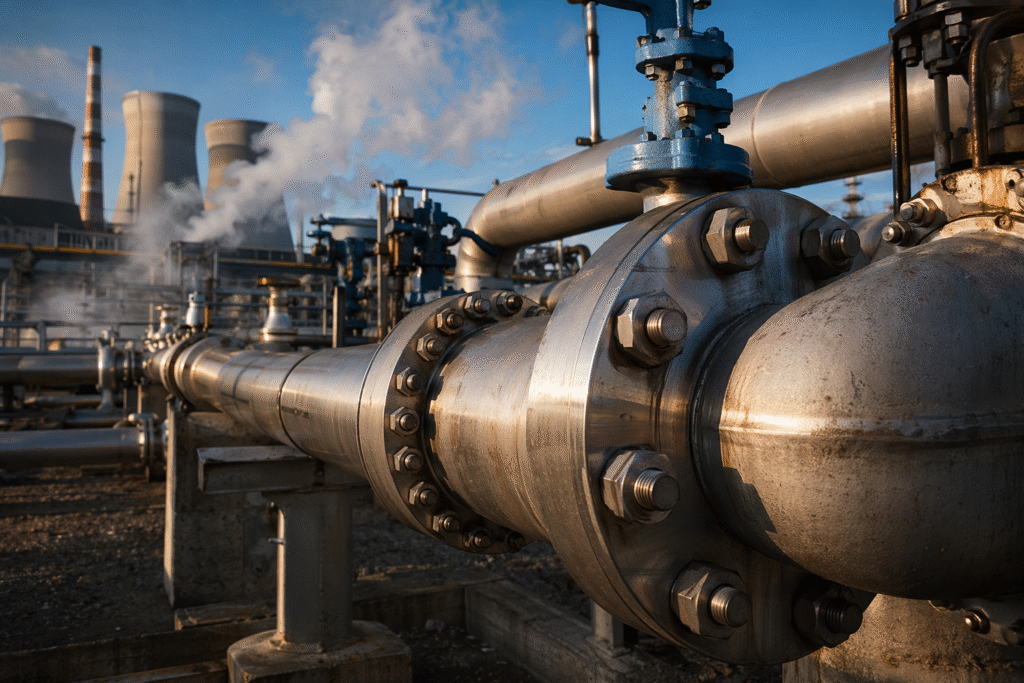
Thông tin chi tiết về thị trường mặt bích ống thép không gỉ: Ưu điểm tiềm ẩn, Các loại, Công dụng, và Cách chọn các tùy chọn phổ biến nhất
Theo nghiên cứu của Grand View (2024), thị trường mặt bích công nghiệp toàn cầu được định giá ở mức $5.8 tỷ trong 2023 và dự kiến sẽ đạt $7.2 tỷ bởi 2030. Sự tăng trưởng đó làm cho mặt bích ống thép không gỉ một thành phần chiến lược dành cho các kỹ sư và người mua cần khả năng chống ăn mòn, tính toàn vẹn áp lực, and reliable lifecycle value.
Đối với các nhóm mua sắm, the intriguing part is not only price. The hidden advantages of stainless steel flanges include lower maintenance frequency, broader media compatibility, and stronger long-term performance in aggressive industrial service.
Tại sao thị trường mặt bích ống thép không gỉ tiếp tục mở rộng
Industrial buyers are under pressure to reduce downtime and control total installed cost. Vì thế, stainless steel pipe flange demand continues to rise across oil and gas, hóa dầu, xử lý nước, hàng hải, và phát điện.
Theo IBISWorld (2024), Châu Á - Thái Bình Dương chiếm hơn 45% sản xuất mặt bích toàn cầu, với Trung Quốc là nhà sản xuất lớn nhất. This matters because buyers increasingly compare lead time, tính nhất quán luyện kim, certification support, and machining capability before placing orders.
Theo Statista (2024), ngành dầu khí chiếm khoảng 35% tiêu thụ mặt bích toàn cầu. Kết quả là, materials such as ASTM A182 F304, F304L, F316, F316L, hai mặt 2205, và siêu song công 2507 remain among the most specified grades for corrosive and pressure-sensitive systems.
Many buyers still focus on the most common materials only. Tuy nhiên, project requirements often call for deeper review of chloride exposure, dịch vụ chua, mặt bích, lớp áp lực, khả năng tương thích đệm, và nhiệt độ hoạt động.
ASME B16.5 chi phối kích thước, dung sai, xếp hạng nhiệt độ áp suất, và đánh dấu cho mặt bích lên đến NPS 24, trong khi ASME B16.47 bao gồm đường kính lớn hơn. ASTM A182 xác định mặt bích ống thép không gỉ và hợp kim rèn hoặc cán, phụ kiện giả mạo, và van cho dịch vụ nhiệt độ cao (ASTM, 2024).
That standards framework helps buyers compare suppliers on objective criteria rather than sales language. Hơn thế nữa, it gives EPC contractors and end users a clear basis for technical approval and inspection.
BẰNG ASME ghi chú, dimensional conformity and pressure rating compliance are essential to safe piping system performance. Về mặt thực tế, even a strong material grade can fail commercial expectations if machining accuracy, độ phẳng, or facing finish does not meet code.
This is where manufacturer capability becomes important. SASA FLANGE supports global B2B projects with ISO 9001:2015 và chứng nhận PED 2014/68/EU, tùy chọn vật liệu rộng, and factory-based production control.
For buyers sourcing stainless steel flanges and fittings in 304, 316, 316L, 904L, 2205, Và 2507, consistency is often more valuable than lowest unit price. Được hỗ trợ bởi gia công CNC tiên tiến và kiểm tra chất lượng toàn diện, SASA FLANGE helps reduce dimensional deviation, documentation risk, and rework at site.
Theo Mordor Intelligence (2024), industrial infrastructure investment in energy and water sectors is one of the strongest growth drivers for pipe connection components worldwide. Do đó, the most common flange specifications now appear in both replacement MRO demand and large greenfield capital projects.
That shift also changes what buyers ask. Instead of simply requesting a flange catalogue, they increasingly ask for EN 10204 3.1 tài liệu, Khả năng PMI, phối hợp thủy thử, NACE MR0175 material suitability, and custom drilling or facing options.
Hidden Advantages of Stainless Steel Flanges: Các loại, Nguyên vật liệu, và các yếu tố hiệu suất
The intriguing value of a stainless steel pipe flange lies in performance over time. While carbon steel may offer a lower initial price, stainless grades often reduce replacement cycles, coating needs, and service interruptions in wet, hóa chất, or marine conditions.
Theo Nghiên cứu thị trường Tương lai (2024), corrosion-related maintenance can account for a significant share of total asset management cost in process industries, thường xuyên vượt quá 15% of annual maintenance spend in harsh environments. Vì thế, hidden advantages become visible when buyers evaluate lifecycle cost rather than purchase price alone.
Như Tiến sĩ. Helen Morris, Materials Scientist and corrosion consultant, tiểu bang: “Trong môi trường chứa clorua, the wrong flange grade can turn a low-cost purchase into a shutdown event.” Her point is especially relevant for offshore, khử muối, và hệ thống xử lý hóa chất.
The most common stainless steel flange materials include 304, 304L, 316, và 316L. Tuy nhiên, many severe-duty applications demand 904L, hai mặt 2205, siêu song công 2507, hoặc hợp kim niken như Inconel, Monel, và Hastelloy.
- 304/304L: Khả năng chống ăn mòn chung tốt, strong formability, and competitive pricing for water, đồ ăn, và dịch vụ hóa chất nhẹ.
- 316/316L: Better pitting and crevice corrosion resistance due to molybdenum addition, often preferred in marine and chloride environments.
- 904L: Enhanced resistance in sulfuric acid and aggressive chemical service.
- 2205 song công: Độ bền cao hơn và khả năng chống ăn mòn ứng suất clorua tốt hơn so với các loại austenit.
- 2507 siêu song công: Premium option for high-chloride and offshore conditions.
Flange types also affect performance. Engineers must choose not only the material but also the correct geometry, đối mặt, và lớp áp lực.
- Mặt bích cổ hàn: Tốt nhất cho áp suất cao, đạp xe nhiệt, and critical service due to smooth stress transition.
- Trượt trên mặt bích: Easier to align and often more economical for lower-pressure systems.
- Mặt bích hàn ổ cắm: Common in small-bore high-pressure piping.
- Mặt bích ren: Hữu ích khi hàn bị hạn chế.
- Mặt bích mù: Dùng để chấm dứt, cô lập, hoặc thử nghiệm hệ thống đường ống.
- Mặt bích khớp nối: Selected when frequent dismantling is required.
Theo ASME B16.5, xếp hạng áp suất-nhiệt độ khác nhau tùy theo nhóm vật liệu và loại mặt bích. Kết quả là, một lớp học 150 flange in F316 does not carry the same selection logic as a Class 600 weld neck in duplex 2205.
Như James Porter, Kỹ sư đường ống cao cấp, tiểu bang: “The strongest type of flange is not always the most expensive grade; it is the one that matches load, cơ chế ăn mòn, and fabrication practice.” This is why experienced buyers compare schedule compatibility, độ chính xác khoan, welding procedure qualification, and service medium before final approval.
Ví dụ, Một 4 inch stainless steel pipe flange for marine cooling water may justify 316L or duplex. Ngược lại, a similar size in low-chloride clean water may perform well with 304L, depending on design temperature and pressure.
Many projects now require mixed packages of flanges and fittings. Vì thế, manufacturers that can supply elbows, áo thun, bộ giảm tốc, and caps in matching metallurgy create purchasing efficiency and reduce traceability gaps.
SASA FLANGE manufactures flanges and pipe fittings in stainless steel, thép cacbon, thép hợp kim, và hợp kim niken hiệu suất cao. Cung cấp kích thước tùy chỉnh từ 1/2" đến 60" với giá cả cạnh tranh trực tiếp tại nhà máy, the company supports both standard and project-specific procurement.
The company also works with ANSI B16.5, ANSI B16.47, ASME B16.9, DIN, JIS, GOST, và VN 1092 tiêu chuẩn. That range is valuable for EPC contractors managing multi-region projects with mixed design codes.
According to ISO guidance and common quality practice, truy xuất nguồn gốc đầy đủ, heat number control, and test documentation are central to pressure component quality assurance (ISO, 2024). Do đó, người mua nên yêu cầu EN 10204 3.1 giấy chứng nhận, PMI records where needed, and dimensional inspection reports for critical applications.
Tiêu chuẩn, Kiểm tra, and Compliance for Stainless Steel Flanges and Fittings
Compliance is a commercial issue as much as a technical one. If a flange fails documentation review, it can delay construction, customs clearance, or final handover even when the material itself is acceptable.
The core standards for a stainless steel pipe flange package usually include ASME, ASTM, DIN, and EN references. Ngoài ra, many oil and gas projects require alignment with API and NACE expectations for specific service conditions.
- ASME B16.5: Mặt bích ống và phụ kiện mặt bích cho NPS 1/2 bởi vì 24.
- ASME B16.47: Mặt bích thép đường kính lớn cho NPS 26 bởi vì 60.
- ASME B16.9: Phụ kiện hàn mông rèn do nhà máy sản xuất.
- ASTM A182: Mặt bích ống thép không gỉ và hợp kim rèn hoặc cán, phụ kiện giả mạo, và van.
- EN 1092: Tiêu chuẩn mặt bích Châu Âu được sử dụng rộng rãi trong các dự án xuất khẩu.
- DIN và JIS: Important for regional compatibility and replacement demand.
Theo khuôn khổ PED 2014/68/EU của Ủy ban Châu Âu, pressure equipment placed on the EU market must meet essential safety requirements and conformity assessment procedures. Vì thế, PED compliance is not optional for qualifying projects aimed at Europe.
NACE MR0175 also becomes important in sour service. Although not every stainless grade is suitable in every H2S environment, the standard gives buyers a recognized basis for evaluating cracking risk and material restrictions (NACE, 2024).
Below is a practical compliance comparison for industrial buyers.
- Tài liệu: EN 10204 3.1 MTC, truy xuất nguồn gốc nhiệt, đánh dấu xác minh.
- Kiểm tra: PMI, độ cứng, kiểm tra chiều, kiểm tra trực quan, and optional NDT.
- Gia công: Đối mặt với kết thúc, căn chỉnh lỗ bu lông, độ đồng tâm, and bore accuracy.
- Phê duyệt dự án: PED, QUẢNG CÁO 2000, ISO 9001:2015, and customer-specific ITP requirements.
Theo hướng dẫn của DNV cho hệ thống ngoài khơi (DNV, 2024), tính toàn vẹn của vật chất, documentation control, and corrosion allowance planning directly affect long-term reliability in marine service. That is why marine and offshore buyers often ask for stricter review than general utility projects.
SASA FLANGE hỗ trợ các yêu cầu này với ISO 9001:2015, PED 2014/68/EU, và AD 2000 chứng chỉ. Phục vụ 50+ các quốc gia trên khắp dầu mỏ & Khí đốt, hóa dầu, Quyền lực, và ngành hàng hải, the company aligns manufacturing and documentation with international project expectations.
Buyers should also distinguish between standards compliance and actual execution quality. A supplier may quote ASTM A182 F316L, yet poor forging practice, inadequate solution annealing control, or inconsistent machining can still create field issues.
Như Mark Ellison, Industrial market analyst, tiểu bang: “In pressure components, quality escapes are usually expensive because discovery happens late, often during fit-up or hydrotest.” Vì thế, experienced procurement managers evaluate inspection planning before they compare freight terms.
Vì lý do đó, stainless steel flanges and fittings should be reviewed as a complete quality package. Lớp vật liệu, dimension, bề mặt hoàn thiện, lớp áp lực, and certification must all align with the service specification.
How to Choose the Most Common Stainless Steel Pipe Flange for Real Industrial Uses
Lựa chọn bắt đầu với điều kiện dịch vụ. Engineers need to confirm medium, mức độ clorua, áp lực thiết kế, phạm vi nhiệt độ, kích thước dòng, trợ cấp ăn mòn, and whether frequent dismantling will occur.
Trong dầu khí, weld neck flanges remain a common choice for high-pressure and cyclic service. Theo Statista (2024), that sector represents approximately 35% tiêu thụ mặt bích toàn cầu, so durability and code compliance heavily influence buying behavior.
In petrochemical processing, 316L is often selected where chlorides or aggressive cleaning chemicals are present. Tuy nhiên, stronger or more corrosion-resistant grades such as 904L, 2205, hoặc 2507 may be preferable in severe media.
Trong sản xuất điện, thermal cycling is a critical factor. Vì thế, flange geometry and weld configuration can matter as much as the alloy itself.
In shipbuilding and marine service, crevice corrosion and splash-zone exposure drive material upgrades. Kết quả là, duplex stainless becomes attractive where long service life and reduced maintenance justify a higher upfront investment.
Để xử lý nước và khử muối, 316L can work in many systems, but duplex grades often provide stronger resistance in high-chloride streams. According to industry corrosion studies cited by NACE (2024), chloride concentration is one of the most important triggers for pitting and crevice attack in austenitic stainless steels.
Buyers should review these criteria before ordering.
- Material grade versus process media.
- Flange type versus stress and maintenance needs.
- Pressure class versus operating and design pressure.
- Đối mặt với loại như RF, FF, RTJ, or custom machining.
- Lịch trình đường ống và trận đấu khoan.
- Yêu cầu về tài liệu bao gồm EN 10204 3.1.
- Surface treatment, đánh dấu, và đóng gói xuất khẩu.
- thời gian dẫn, truy xuất nguồn gốc lô hàng, and inspection witness options.
The most common purchasing mistake is overgeneralization. A buyer may ask for a stainless steel slip on flange because it is familiar, while the application actually requires a weld neck flange to handle bending stress and thermal expansion safely.
Another frequent issue is using 304 where 316L is the practical minimum. In mild indoor service, 304 performs well. Ngược lại, hàng hải, hóa chất, and coastal environments often require higher molybdenum or duplex performance to avoid premature corrosion.
Cost evaluation should include more than the flange price. Buyers should compare welding time, maintenance burden, replacement interval, nguy cơ tắt máy, và chất lượng tài liệu.
Theo nghiên cứu của Grand View (2024), the flange market will continue expanding through 2030. Do đó, long-term supplier relationships matter more as buyers seek stable quality, flexible batch sizes, and fast response for project changes.
For custom drilling, độ dày không chuẩn, đường kính lớn, or mixed flange-and-fitting packages, working with an experienced manufacturer reduces coordination risk. SASA FLANGE provides custom manufacturing support across stainless steel, hai mặt, hợp kim, and nickel-based grades for EPC, nhà phân phối, and OEM requirements.
Triển vọng tương lai cho mặt bích thép không gỉ và các đề xuất tìm nguồn cung ứng chiến lược
The outlook for stainless steel flanges remains positive because industrial infrastructure spending is broadening across energy, Nước, LNG, and process manufacturing. Hơn thế nữa, replacement demand in mature plants continues to support steady order flow for standard and custom flange types.
Theo nghiên cứu của Grand View (2024), thị trường dự kiến sẽ tăng từ $5.8 tỷ trong 2023 ĐẾN $7.2 tỷ bởi 2030. That indicates a meaningful growth path for suppliers with strong quality systems, khả năng xuất khẩu, và tuân thủ quy tắc.
Đồng thời, procurement standards are becoming stricter. Buyers now expect faster MTC turnaround, better traceability, and clearer comparison between the most common stainless grades and advanced duplex or nickel alloys.
Về mặt chiến lược, buyers should standardize approved grades by service class. They should also prequalify suppliers for testing capability, documentation accuracy, and dimensional consistency before urgent project demand arises.
Ngoài ra, distributors and EPC firms benefit from suppliers that can deliver both flanges and buttweld fittings in one package. This approach simplifies vendor management and improves metallurgy consistency across the line class.
Engineers should also revisit older material assumptions. Trong nhiều trường hợp, the hidden advantages of upgraded stainless or duplex flanges become clear when corrosion failures, lao động bảo trì, and lost production are included in the calculation.
For companies comparing flange manufacturers globally, the best decision usually combines technical suitability, tuân thủ tiêu chuẩn, and dependable production execution. For projects requiring certified, phong tục, and export-ready stainless steel pipe flange solutions, it is practical to discuss specifications early with SASA FLANGE.
Câu hỏi thường gặp
Mặt bích thép không gỉ dùng để làm gì?
●Mặt bích inox được dùng để nối các đường ống, van, máy bơm, and vessels in systems that require strength, chống ăn mòn, and reliable maintenance access.
●Theo Statista (2024), dầu khí chiếm khoảng 35% tiêu thụ mặt bích toàn cầu, điều này cho thấy tầm quan trọng của các mối nối mặt bích trong đường ống quy trình quan trọng.
●They are widely specified in petrochemical, hàng hải, xử lý nước, chế biến thực phẩm, and power generation service where welded or threaded connections alone may not provide the same flexibility for inspection and replacement.
●Sử dụng phổ biến bao gồm chấm dứt đường dây với mặt bích mù, rotating equipment connections, điểm cách ly, and transitions between piping sections of different pressure classes or maintenance needs.
●Đối với các dự án yêu cầu vật liệu được chứng nhận, độ chính xác chiều, Và EN 10204 3.1 tài liệu, làm việc với các nhà sản xuất có uy tín như SASA FLANGE helps reduce quality and traceability risk.
Mặt bích nào được làm bằng thép không gỉ?
●Most standard flange designs can be produced in stainless steel, bao gồm cả cổ hàn, trượt vào, mù, ổ cắm hàn, xâu chuỗi, và các loại khớp nối.
●ASTM A182 commonly covers forged stainless steel flanges in grades such as F304, F304L, F316, F316L, F321, F347, hai mặt 2205, and other corrosion-resistant alloys.
●Theo ASME B16.5 và B16.47, these flanges are available across multiple sizes, đối mặt với các loại, and pressure classes for industrial piping systems.
●The most common stainless options are 304 Và 316 điểm, while chloride-heavy or offshore service may require 2205, 2507, or 904L to improve pitting and stress corrosion performance.
●If buyers need stainless steel flanges and fittings in matching metallurgy and custom dimensions, it is advisable to confirm code standard, lớp áp lực, and facing details with SASA FLANGE before production.
Họ có sản xuất phụ kiện đường ống bằng thép không gỉ không?
●Đúng, stainless steel pipe fittings are routinely manufactured for industrial systems, bao gồm cả khuỷu tay, áo thun, bộ giảm tốc, mũ lưỡi trai, kết thúc sơ khai, and custom buttweld components.
●ASME B16.9 is the key standard for factory-made wrought buttwelding fittings, and matching fittings are often ordered with flanges to maintain metallurgy consistency across the piping line.
●Theo Mordor Intelligence (2024), integrated sourcing of piping components is increasing as EPC contractors seek fewer vendors and better documentation control.
●Các lớp như 304, 316L, 904L, 2205, 2507, Inconel, Monel, Hastelloy, and titanium are selected based on corrosion mechanism, nhiệt độ, and pressure requirement.
●Để đạt được hiệu quả mua sắm, buyers should request one supplier to provide flanges and fittings together when possible, especially for projects that require traceability, Tài liệu PED, and coordinated inspection.
Mặt bích ống loại nào bền nhất?
●The strongest type of piping flange for most high-pressure and cyclic services is usually the weld neck flange because its tapered hub distributes stress more effectively than flat-hub designs.
●ASME B16.5 pressure-temperature ratings and the selected material grade both influence actual strength, so geometry alone does not determine performance.
●Như James Porter, Kỹ sư đường ống cao cấp, tiểu bang: “A weld neck flange usually gives the best structural behavior, but only when the material, trận đấu khoan, and welding procedure suit the service.”
●In severe applications, mặt bích cổ hàn ở dạng song công 2205, 2507, or alloy steel may outperform a lower-grade stainless option, especially under thermal cycling or dynamic loading.
●Buyers should evaluate pressure class, phương tiện dịch vụ, and fabrication method together rather than assuming the most expensive flange is automatically the strongest choice.
Làm thế nào để tôi lựa chọn giữa 304 Và 316 mặt bích thép không gỉ?
●Chọn 304 stainless steel flanges for general water, mild chemical, and indoor industrial service, và chọn 316 hoặc 316L khi clorua, tiếp xúc với biển, hoặc có nhiều hóa chất mạnh hơn.
●316 chứa molypden, which improves pitting and crevice corrosion resistance, and that difference often justifies the higher cost in coastal or process environments.
●Theo hướng dẫn của NACE (2024), chloride concentration is a major factor in localized corrosion risk for austenitic stainless steels used in piping systems.
●Từ góc độ mua sắm, the correct choice depends on total lifecycle cost rather than first cost because early corrosion failure can create shutdowns, lao động thay thế, and inspection expense.
●Đối với các dự án quan trọng, buyers should review process fluid, nhiệt độ, hóa chất tẩy rửa, and maintenance interval with a qualified flange manufacturer before confirming the grade.
Những tiêu chuẩn nào áp dụng cho kích thước và giá mặt bích ống thép không gỉ?
●Stainless steel pipe flange sizes are primarily governed by ASME B16.5 cho NPS 1/2 bởi vì 24 Và ASME B16.47 cho kích thước lớn hơn, trong khi giá cả phụ thuộc vào cấp, kích cỡ, lớp áp lực, gia công, và số lượng.
●MỘT 2 inch hoặc 4 inch stainless steel pipe flange may look simple, but cost changes significantly when the project requires 316L instead of 304, RTJ instead of RF, or PED-compliant documentation.
●Theo nghiên cứu của Grand View (2024), the industrial flange market is growing steadily, and this supports continued demand across standard stock items and custom-engineered orders.
●Các dự án châu Âu cũng có thể yêu cầu EN 1092 Tuân thủ, while replacement work in legacy systems may involve DIN or JIS dimensions that affect production method and lead time.
●Để có được báo giá chính xác, buyers should provide size, lớp học, đối mặt, vật liệu, tiêu chuẩn, Số lượng, and certification requirement rather than asking only for a generic stainless steel flange price.
bài viết liên quan
Mặt bích hoàn thiện: Giải thích về răng cưa đồng tâm và xoắn ốc
Các răng cưa đồng tâm và xoắn ốc đều được gia công hoàn thiện mặt bích…
song công 2205 so với mặt bích 316L: Bạn nên chọn chất liệu nào?
Trả lời nhanh: song công 2205 mặt bích thường là ứng cử viên mạnh hơn…

Định nghĩa mặt bích lỗ, Chi tiết và tổng quan về mặt bích ASME B16.36: Dữ liệu thị trường, Hướng dẫn lựa chọn và thông tin chi tiết về tuân thủ
Thị trường mặt bích công nghiệp toàn cầu được định giá ở mức $5.8 tỷ…

Hướng dẫn thị trường mặt bích xử lý màu đen: Nguyên vật liệu, 3.5″ Khả năng tương thích, và dữ liệu tìm nguồn cung ứng B2B cho mặt bích bồn rửa nhà bếp
Nhu cầu mặt bích xử lý màu đen đang tăng lên khi người mua đồ đạc nhà bếp…