
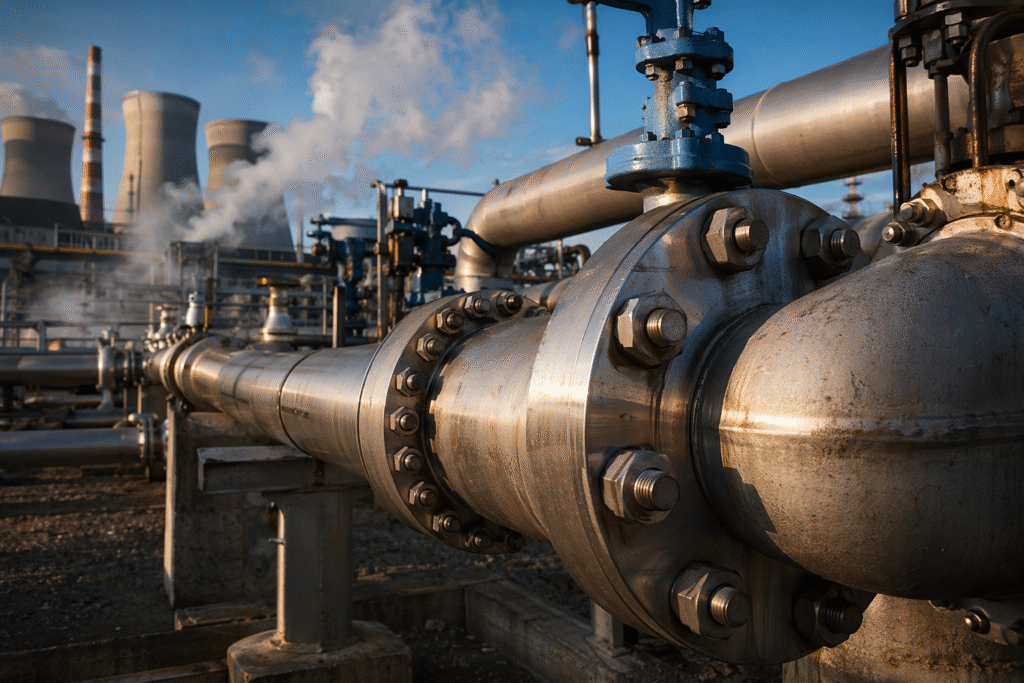
Обзор рынка фланцев для труб из нержавеющей стали: Скрытые преимущества, Типы, Использование, и как выбрать наиболее распространенные варианты
По данным исследования Grand View (2024), мировой рынок промышленных фланцев оценивался в $5.8 миллиард в 2023 и, по прогнозам, достигнет $7.2 миллиард на 2030. That growth makes the фланец трубы из нержавеющей стали a strategic component for engineers and buyers who need corrosion resistance, pressure integrity, and reliable lifecycle value.
For procurement teams, the intriguing part is not only price. The hidden advantages of stainless steel flanges include lower maintenance frequency, broader media compatibility, and stronger long-term performance in aggressive industrial service.
Why the Stainless Steel Pipe Flange Market Keeps Expanding
Industrial buyers are under pressure to reduce downtime and control total installed cost. Therefore, stainless steel pipe flange demand continues to rise across oil and gas, нефтехимический, очистка воды, морской, и производство электроэнергии.
По данным IBISWorld (2024), На долю Азиатско-Тихоокеанского региона приходится более 45% мирового производства фланцев, при этом Китай является крупнейшим производителем. This matters because buyers increasingly compare lead time, metallurgical consistency, certification support, and machining capability before placing orders.
По данным Статистики (2024), на долю нефтегазовой отрасли приходится около 35% мирового потребления фланцев. Как результат, materials such as ASTM A182 F304, F304L, Ф316, F316L, дуплекс 2205, and super duplex 2507 remain among the most specified grades for corrosive and pressure-sensitive systems.
Many buyers still focus on the most common materials only. Однако, project requirements often call for deeper review of chloride exposure, sour service, flange facing, класс давления, gasket compatibility, and operating temperature.
ASME B16.5 governs dimensions, допуски, номинальные значения давления и температуры, and marking for flanges up to NPS 24, пока ASME B16.47 covers larger diameters. ASTM A182 defines forged or rolled alloy and stainless steel pipe flanges, кованые фитинги, and valves for high-temperature service (ASTM, 2024).
That standards framework helps buyers compare suppliers on objective criteria rather than sales language. Более того, it gives EPC contractors and end users a clear basis for technical approval and inspection.
As ASME notes, dimensional conformity and pressure rating compliance are essential to safe piping system performance. In practical terms, even a strong material grade can fail commercial expectations if machining accuracy, flatness, or facing finish does not meet code.
This is where manufacturer capability becomes important. SASA FLANGE supports global B2B projects with ISO 9001:2015 и сертификаты PED 2014/68/ЕС., broad material options, and factory-based production control.
For buyers sourcing stainless steel flanges and fittings in 304, 316, 316л, 904л, 2205, и 2507, consistency is often more valuable than lowest unit price. Благодаря передовой обработке с ЧПУ и всестороннему тестированию качества., SASA FLANGE helps reduce dimensional deviation, documentation risk, and rework at site.
According to Mordor Intelligence (2024), industrial infrastructure investment in energy and water sectors is one of the strongest growth drivers for pipe connection components worldwide. Следовательно, the most common flange specifications now appear in both replacement MRO demand and large greenfield capital projects.
That shift also changes what buyers ask. Instead of simply requesting a flange catalogue, they increasingly ask for EN 10204 3.1 documents, PMI capability, hydrotest coordination, NACE MR0175 material suitability, and custom drilling or facing options.
Hidden Advantages of Stainless Steel Flanges: Типы, Материалы, and Performance Factors
The intriguing value of a stainless steel pipe flange lies in performance over time. While carbon steel may offer a lower initial price, stainless grades often reduce replacement cycles, coating needs, and service interruptions in wet, химический, or marine conditions.
По данным Market Research Future (2024), corrosion-related maintenance can account for a significant share of total asset management cost in process industries, часто превышающий 15% of annual maintenance spend in harsh environments. Therefore, hidden advantages become visible when buyers evaluate lifecycle cost rather than purchase price alone.
Как доктор. Helen Morris, Materials Scientist and corrosion consultant, государства: «In chloride-bearing environments, the wrong flange grade can turn a low-cost purchase into a shutdown event.» Her point is especially relevant for offshore, опреснение, and chemical processing systems.
The most common stainless steel flange materials include 304, 304л, 316, and 316L. Однако, many severe-duty applications demand 904L, дуплекс 2205, супер дуплекс 2507, or nickel alloys such as Inconel, Монель, and Hastelloy.
- 304/304л: Good general corrosion resistance, strong formability, and competitive pricing for water, еда, and light chemical service.
- 316/316л: Better pitting and crevice corrosion resistance due to molybdenum addition, often preferred in marine and chloride environments.
- 904л: Enhanced resistance in sulfuric acid and aggressive chemical service.
- 2205 Дуплекс: Higher strength and better chloride stress corrosion cracking resistance than austenitic grades.
- 2507 Супер Дуплекс: Premium option for high-chloride and offshore conditions.
Flange types also affect performance. Engineers must choose not only the material but also the correct geometry, лицом к лицу, and pressure class.
- Приварной фланец с шейкой: Лучше всего для высокого давления, термоциклирование, and critical service due to smooth stress transition.
- Наденьте фланец: Easier to align and often more economical for lower-pressure systems.
- Фланец под приварку враструб: Common in small-bore high-pressure piping.
- Резьбовой фланец: Useful where welding is restricted.
- Глухой фланец: Used to terminate, isolate, or test piping systems.
- Фланец внахлестку: Selected when frequent dismantling is required.
В соответствии с ASME B16.5, pressure-temperature ratings vary by material group and flange class. Как результат, a Class 150 flange in F316 does not carry the same selection logic as a Class 600 weld neck in duplex 2205.
As James Porter, Старший инженер по трубопроводам, государства: «The strongest type of flange is not always the most expensive grade; it is the one that matches load, механизм коррозии, and fabrication practice.» This is why experienced buyers compare schedule compatibility, bore accuracy, welding procedure qualification, and service medium before final approval.
Например, а 4 inch stainless steel pipe flange for marine cooling water may justify 316L or duplex. В отличие, a similar size in low-chloride clean water may perform well with 304L, depending on design temperature and pressure.
Many projects now require mixed packages of flanges and fittings. Therefore, manufacturers that can supply elbows, тройники, редукторы, and caps in matching metallurgy create purchasing efficiency and reduce traceability gaps.
SASA FLANGE manufactures flanges and pipe fittings in stainless steel, углеродистая сталь, легированная сталь, and high-performance nickel alloys. Offering custom sizes from 1/2" до 60" с конкурентоспособными ценами напрямую с завода, the company supports both standard and project-specific procurement.
The company also works with ANSI B16.5, ANSI B16.47, ASME B16.9, DIN, JIS, ГОСТ, и RU 1092 стандарты. That range is valuable for EPC contractors managing multi-region projects with mixed design codes.
According to ISO guidance and common quality practice, full traceability, heat number control, and test documentation are central to pressure component quality assurance (ISO, 2024). Следовательно, buyers should request EN 10204 3.1 сертификаты, PMI records where needed, and dimensional inspection reports for critical applications.
Стандарты, Тестирование, and Compliance for Stainless Steel Flanges and Fittings
Compliance is a commercial issue as much as a technical one. If a flange fails documentation review, it can delay construction, customs clearance, or final handover even when the material itself is acceptable.
The core standards for a stainless steel pipe flange package usually include ASME, ASTM, DIN, and EN references. Кроме того, many oil and gas projects require alignment with API and NACE expectations for specific service conditions.
- ASME B16.5: Pipe flanges and flanged fittings for NPS 1/2 через 24.
- ASME B16.47: Large diameter steel flanges for NPS 26 через 60.
- ASME B16.9: Кованые фитинги для стыковой сварки заводского изготовления..
- ASTM A182: Forged or rolled alloy and stainless steel pipe flanges, кованые фитинги, и клапаны.
- EN 1092: European flange standard widely used in export projects.
- DIN и JIS: Important for regional compatibility and replacement demand.
According to the European Commission PED 2014/68/EU framework, pressure equipment placed on the EU market must meet essential safety requirements and conformity assessment procedures. Therefore, PED compliance is not optional for qualifying projects aimed at Europe.
NACE MR0175 also becomes important in sour service. Although not every stainless grade is suitable in every H2S environment, the standard gives buyers a recognized basis for evaluating cracking risk and material restrictions (КДЕС, 2024).
Below is a practical compliance comparison for industrial buyers.
- Документация: EN 10204 3.1 МТС, прослеживаемость тепла, marking verification.
- Тестирование: PMI, твердость, проверка размеров, visual inspection, and optional NDT.
- Обработка: Facing finish, bolt hole alignment, концентричность, and bore accuracy.
- Project approvals: ПЭД, AD 2000, ISO 9001:2015, and customer-specific ITP requirements.
According to DNV guidance for offshore systems (DNV, 2024), material integrity, documentation control, and corrosion allowance planning directly affect long-term reliability in marine service. That is why marine and offshore buyers often ask for stricter review than general utility projects.
SASA FLANGE supports these requirements with ISO 9001:2015, ПЭД 2014/68/ЕС, and AD 2000 сертификаты. Serving 50+ страны по нефти & Газ, нефтехимическая, Власть, and Marine industries, the company aligns manufacturing and documentation with international project expectations.
Buyers should also distinguish between standards compliance and actual execution quality. A supplier may quote ASTM A182 F316L, yet poor forging practice, inadequate solution annealing control, or inconsistent machining can still create field issues.
As Mark Ellison, Industrial market analyst, государства: «In pressure components, quality escapes are usually expensive because discovery happens late, often during fit-up or hydrotest.» Therefore, experienced procurement managers evaluate inspection planning before they compare freight terms.
For that reason, stainless steel flanges and fittings should be reviewed as a complete quality package. Марка материала, dimension, обработка поверхности, класс давления, and certification must all align with the service specification.
How to Choose the Most Common Stainless Steel Pipe Flange for Real Industrial Uses
Selection starts with service conditions. Engineers need to confirm medium, уровень хлоридов, design pressure, temperature range, размер линии, corrosion allowance, and whether frequent dismantling will occur.
In oil and gas, weld neck flanges remain a common choice for high-pressure and cyclic service. По данным Статистики (2024), that sector represents approximately 35% мирового потребления фланцев, so durability and code compliance heavily influence buying behavior.
In petrochemical processing, 316L is often selected where chlorides or aggressive cleaning chemicals are present. Однако, stronger or more corrosion-resistant grades such as 904L, 2205, или 2507 may be preferable in severe media.
In power generation, thermal cycling is a critical factor. Therefore, flange geometry and weld configuration can matter as much as the alloy itself.
In shipbuilding and marine service, crevice corrosion and splash-zone exposure drive material upgrades. Как результат, duplex stainless becomes attractive where long service life and reduced maintenance justify a higher upfront investment.
For water treatment and desalination, 316L can work in many systems, but duplex grades often provide stronger resistance in high-chloride streams. According to industry corrosion studies cited by NACE (2024), chloride concentration is one of the most important triggers for pitting and crevice attack in austenitic stainless steels.
Buyers should review these criteria before ordering.
- Material grade versus process media.
- Flange type versus stress and maintenance needs.
- Pressure class versus operating and design pressure.
- Facing type such as RF, ФФ, РТЖ, or custom machining.
- Pipe schedule and bore match.
- Documentation requirements including EN 10204 3.1.
- Surface treatment, маркировка, and packaging for export.
- Время выполнения, lot traceability, and inspection witness options.
The most common purchasing mistake is overgeneralization. A buyer may ask for a stainless steel slip on flange because it is familiar, while the application actually requires a weld neck flange to handle bending stress and thermal expansion safely.
Another frequent issue is using 304 where 316L is the practical minimum. In mild indoor service, 304 performs well. В отличие, морской, химический, and coastal environments often require higher molybdenum or duplex performance to avoid premature corrosion.
Cost evaluation should include more than the flange price. Buyers should compare welding time, maintenance burden, replacement interval, shutdown risk, and documentation quality.
По данным исследования Grand View (2024), the flange market will continue expanding through 2030. Следовательно, long-term supplier relationships matter more as buyers seek stable quality, flexible batch sizes, and fast response for project changes.
For custom drilling, non-standard thickness, large diameters, or mixed flange-and-fitting packages, working with an experienced manufacturer reduces coordination risk. SASA FLANGE provides custom manufacturing support across stainless steel, дуплекс, сплав, and nickel-based grades for EPC, distributor, and OEM requirements.
Future Outlook for Stainless Steel Flanges and Strategic Sourcing Recommendations
The outlook for stainless steel flanges remains positive because industrial infrastructure spending is broadening across energy, вода, LNG, and process manufacturing. Более того, replacement demand in mature plants continues to support steady order flow for standard and custom flange types.
По данным исследования Grand View (2024), the market is projected to increase from $5.8 миллиард в 2023 к $7.2 миллиард на 2030. That indicates a meaningful growth path for suppliers with strong quality systems, export capability, and code compliance.
В то же время, procurement standards are becoming stricter. Buyers now expect faster MTC turnaround, better traceability, and clearer comparison between the most common stainless grades and advanced duplex or nickel alloys.
Strategically, buyers should standardize approved grades by service class. They should also prequalify suppliers for testing capability, documentation accuracy, and dimensional consistency before urgent project demand arises.
Additionally, distributors and EPC firms benefit from suppliers that can deliver both flanges and buttweld fittings in one package. This approach simplifies vendor management and improves metallurgy consistency across the line class.
Engineers should also revisit older material assumptions. In many cases, the hidden advantages of upgraded stainless or duplex flanges become clear when corrosion failures, maintenance labor, and lost production are included in the calculation.
For companies comparing flange manufacturers globally, the best decision usually combines technical suitability, standards compliance, and dependable production execution. For projects requiring certified, custom, and export-ready stainless steel pipe flange solutions, it is practical to discuss specifications early with SASA FLANGE.
Часто задаваемые вопросы
What are stainless steel flanges used for?
●Stainless steel flanges are used to connect pipes, клапаны, насосы, and vessels in systems that require strength, коррозионная стойкость, and reliable maintenance access.
●По данным Статистики (2024), oil and gas accounts for approximately 35% мирового потребления фланцев, which shows how important flanged joints are in critical process piping.
●They are widely specified in petrochemical, морской, очистка воды, food processing, and power generation service where welded or threaded connections alone may not provide the same flexibility for inspection and replacement.
●Common uses include line termination with blind flanges, rotating equipment connections, isolation points, and transitions between piping sections of different pressure classes or maintenance needs.
●For projects requiring certified materials, точность размеров, и EN 10204 3.1 documentation, работа с известными производителями, такими как SASA FLANGE helps reduce quality and traceability risk.
What flanges are made of stainless steel?
●Most standard flange designs can be produced in stainless steel, включая приварную шейку, надеть, слепой, раструбная сварка, резьбовой, and lap joint types.
●ASTM A182 commonly covers forged stainless steel flanges in grades such as F304, F304L, Ф316, F316L, F321, F347, дуплекс 2205, and other corrosion-resistant alloys.
●В соответствии с ASME B16.5 and B16.47, these flanges are available across multiple sizes, типы облицовки, and pressure classes for industrial piping systems.
●The most common stainless options are 304 и 316 оценки, while chloride-heavy or offshore service may require 2205, 2507, or 904L to improve pitting and stress corrosion performance.
●If buyers need stainless steel flanges and fittings in matching metallurgy and custom dimensions, it is advisable to confirm code standard, класс давления, and facing details with SASA FLANGE before production.
Do they make stainless steel pipe fittings?
●Да, stainless steel pipe fittings are routinely manufactured for industrial systems, including elbows, тройники, редукторы, кепки, stub ends, and custom buttweld components.
●ASME B16.9 is the key standard for factory-made wrought buttwelding fittings, and matching fittings are often ordered with flanges to maintain metallurgy consistency across the piping line.
●According to Mordor Intelligence (2024), integrated sourcing of piping components is increasing as EPC contractors seek fewer vendors and better documentation control.
●Такие оценки, как 304, 316л, 904л, 2205, 2507, Инконель, Монель, Хастеллой, and titanium are selected based on corrosion mechanism, температура, and pressure requirement.
●For procurement efficiency, buyers should request one supplier to provide flanges and fittings together when possible, especially for projects that require traceability, PED documentation, and coordinated inspection.
What is the strongest type of piping flange?
●The strongest type of piping flange for most high-pressure and cyclic services is usually the weld neck flange because its tapered hub distributes stress more effectively than flat-hub designs.
●ASME B16.5 pressure-temperature ratings and the selected material grade both influence actual strength, so geometry alone does not determine performance.
●As James Porter, Старший инженер по трубопроводам, государства: «A weld neck flange usually gives the best structural behavior, but only when the material, bore match, and welding procedure suit the service.»
●In severe applications, a weld neck flange in duplex 2205, 2507, or alloy steel may outperform a lower-grade stainless option, especially under thermal cycling or dynamic loading.
●Buyers should evaluate pressure class, service medium, and fabrication method together rather than assuming the most expensive flange is automatically the strongest choice.
How do I choose between 304 и 316 фланцы из нержавеющей стали?
●Выбирать 304 stainless steel flanges for general water, mild chemical, and indoor industrial service, and choose 316 or 316L when chlorides, marine exposure, or more aggressive chemicals are present.
●316 contains molybdenum, which improves pitting and crevice corrosion resistance, and that difference often justifies the higher cost in coastal or process environments.
●According to NACE guidance (2024), chloride concentration is a major factor in localized corrosion risk for austenitic stainless steels used in piping systems.
●From a procurement perspective, the correct choice depends on total lifecycle cost rather than first cost because early corrosion failure can create shutdowns, replacement labor, and inspection expense.
●For critical projects, buyers should review process fluid, температура, cleaning chemicals, and maintenance interval with a qualified flange manufacturer before confirming the grade.
What standards apply to stainless steel pipe flange sizes and pricing?
●Stainless steel pipe flange sizes are primarily governed by ASME B16.5 for NPS 1/2 через 24 и ASME B16.47 for larger sizes, while pricing depends on grade, размер, класс давления, механическая обработка, and quantity.
●А 2 inch or 4 inch stainless steel pipe flange may look simple, but cost changes significantly when the project requires 316L instead of 304, RTJ instead of RF, or PED-compliant documentation.
●По данным исследования Grand View (2024), the industrial flange market is growing steadily, and this supports continued demand across standard stock items and custom-engineered orders.
●European projects may also require EN 1092 согласие, while replacement work in legacy systems may involve DIN or JIS dimensions that affect production method and lead time.
●To obtain an accurate quotation, buyers should provide size, сорт, лицом к лицу, материал, стандартный, количество, and certification requirement rather than asking only for a generic stainless steel flange price.
Связанные Посты
Определение фланца с диафрагмой, Подробности и обзор фланцев ASME B16.36: Рыночные данные, Руководство по выбору и анализ соответствия требованиям
Мировой рынок промышленных фланцев оценивался в $5.8 миллиард…
Руководство по рынку черных сливных фланцев: Материалы, 3.5″ Совместимость, и данные о поставщиках B2B для фланцев для кухонной мойки
Спрос на черные фланцы для утилизации растет благодаря покупателям кухонной техники…
Руководство по типам фланцев: 2024 Данные, Стандарты, и лучшие практики выбора промышленных трубопроводов
Мировой рынок типов фланцев продолжает расширяться по мере…
3 дюймовый фланец Руководство по покупке: Рыночные данные, Размеры, Номинальное давление, и выбор резьбовых фланцев
The 3 дюймовый фланец остается важнейшим компонентом промышленного…