
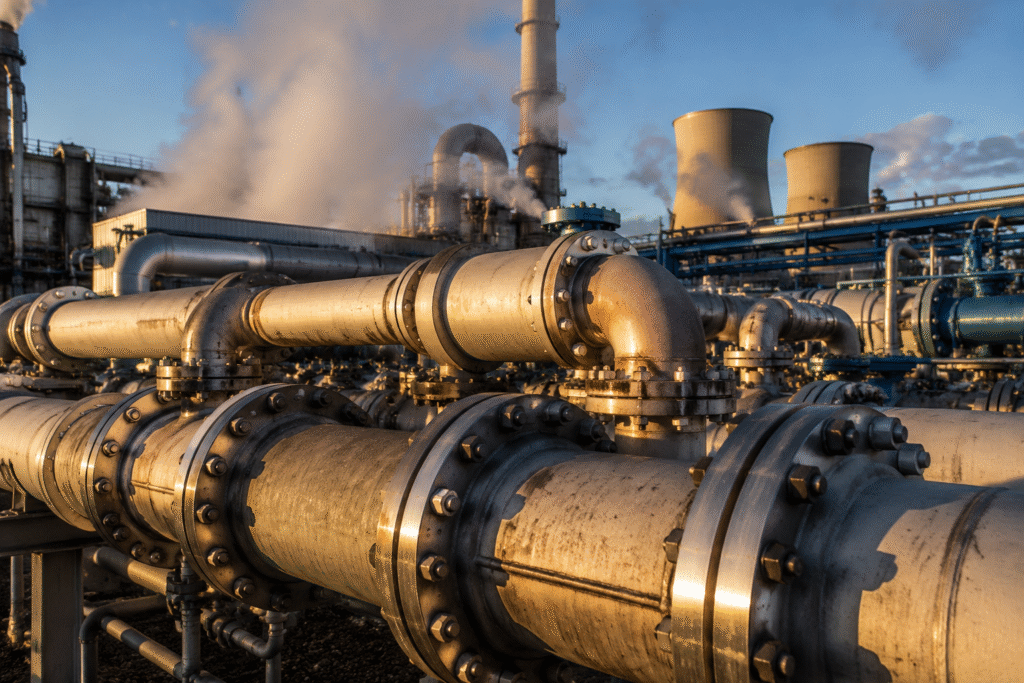
Guia de mercado de flange de tubo de aço inoxidável: 7 Vantagens baseadas em dados, Tipos, Usos, e critérios de seleção
O flange de tubo de aço inoxidável market continues to expand as engineers prioritize corrosion resistance, controle de custos do ciclo de vida, e conformidade em sistemas de tubulação críticos. De acordo com a pesquisa Grand View (2024), o mercado global de flanges industriais foi avaliado em $5.8 bilhão em 2023 e está projetado para atingir $7.2 bilhão por 2030, which highlights the intriguing and hidden advantages of stainless steel flange solutions across industrial sectors.
Para equipes de compras, the real question is not whether stainless flanges perform well. It is how to choose the right flange material, classe de pressão, enfrentando, and manufacturing standard for each pipe service condition.
Por que a demanda por flanges para tubos de aço inoxidável continua aumentando na indústria global
Industrial buyers increasingly prefer stainless steel flanges because they balance durability, process reliability, and long service life in aggressive environments. De acordo com Statista (2024), a indústria de petróleo e gás é responsável por aproximadamente 35% do consumo global de flanges, which makes material selection a strategic purchasing decision.
Adicionalmente, Asia-Pacific now leads manufacturing scale and supply depth. De acordo com IBISWorld (2024), Ásia-Pacífico é responsável por mais de 45% da produção global de flanges, sendo a China o maior fabricante.
That manufacturing concentration matters for cost, tempo de espera, and customization. It also explains why global EPC contractors often source from qualified Chinese exporters with documented quality systems and strong machining capability.
Stainless steel pipe flange demand also rises because end users need cleaner systems and lower maintenance intervals. Tratamento de água, plataformas offshore, processamento químico, and power generation all require materials that resist pitting, corrosão em fendas, and contamination.
De acordo com a Inteligência Mordor (2024), crescimento na dessalinização, GNL, and process industries is accelerating demand for corrosion-resistant piping components worldwide. Portanto, graus inoxidáveis, como 304, 316eu, 904eu, 2205, e 2507 continue to gain share in engineered piping packages.
Como o engenheiro de materiais Dr.. Helen Morris, Consultor de Corrosão, estados: “Na seleção de flange, the lowest purchase price rarely delivers the lowest lifecycle cost. Proper alloy choice prevents leakage, unplanned shutdowns, and premature replacement.”
This is where supplier qualification becomes essential. Com ISO 9001:2015 e certificações PED 2014/68/EU, SASA FLANGE supports international buyers who need traceable stainless steel and alloy flange manufacturing for demanding industrial service.
Beyond certifications, procurement teams now evaluate documentation packages more carefully. EN 10204 3.1 certificados de inspeção, Teste PMI, inspeção dimensional, hydrostatic controls, and marking traceability all influence approved vendor status.
According to ISO guidance and PED compliance practice, documentation quality directly affects acceptance in regulated pressure equipment projects (ISO, 2023; PED 2014/68/EU). Como resultado, manufacturers that combine CNC machining with full quality records hold a clear commercial advantage.
The competitor content focuses heavily on alloy listings, which is useful. No entanto, buyers also need a clearer framework for types, usa, aulas de pressão, acabamentos de superfície, and standards alignment.
That broader view reveals the true versatility of stainless steel pipe flange products. It also helps engineers choose the correct flange for corrosive media, ciclagem térmica, vibração, and frequent maintenance access.
Tipos de flange de tubo de aço inoxidável, Vantagens ocultas, and Material Selection Logic
Um flange de tubo de aço inoxidável não é uma categoria única de produto. Inclui pescoço de solda, escorregar, cego, solda de soquete, junta sobreposta, and threaded flange designs, each suited to different stress profiles and installation methods.
De acordo com ASME B16.5, dimensões do flange, perfuração, classificações de pressão-temperatura, and tolerances must align with defined classes such as 150, 300, 600, 900, 1500, e 2500 (ASME, 2023). Portanto, selecting a flange means matching both material grade and pressure class to actual service conditions.
Como David Kumar, Engenheiro de Tubulação Sênior, estados: “A flange failure usually starts with a mismatch between process conditions and specification details, not with the flange geometry itself.”
The hidden advantages of stainless steel pipe flange systems become clear when teams compare lifecycle behavior instead of only invoice cost. Stainless materials reduce rust contamination, support hygienic service, and often simplify maintenance planning.
Por exemplo, 304 and 304L remain the most common general-purpose choices for mild corrosion environments. No entanto, 316 and 316L perform better in chloride-bearing service because molybdenum improves pitting resistance.
ASTM A182 covers forged or rolled alloy and stainless steel pipe flanges for high-temperature service, enquanto ASTM A240 applies to plate products used in related fabrication (ASTM, 2024). These standards matter because they establish chemistry, propriedades mecânicas, and heat treatment expectations.
- 304/304Flange de aço inoxidável L: Strong general corrosion resistance, boa soldabilidade, and broad availability for food, água, e serviço de química leve.
- 316/316Flange de aço inoxidável L: Better resistance to chlorides and marine exposure, widely specified in offshore, químico, and pharmaceutical plants.
- 904Flange L: Enhanced resistance to sulfuric acid and severe corrosion, often chosen for high-value chemical systems.
- 2205 flange duplex: Higher strength and improved chloride stress corrosion cracking resistance than austenitic grades.
- 2507 flange super duplex: Premium choice for offshore, submarino, and seawater systems requiring very high pitting resistance.
Pressure class and flange facing are equally important. Face levantada é comum no serviço ASME, while flat face fits some cast iron or low-load systems, and ring type joint supports higher-pressure sealing applications.
The most common flange types and uses include the following:
- Flange de pescoço soldado: Melhor para alta pressão, ciclagem térmica, e serviço crítico porque o cubo cônico reduz a concentração de tensão.
- Deslizar no flange: Easier alignment and lower initial cost, often used in low to moderate pressure systems.
- Flange cega: Used to terminate a pipe end, isolar equipamento, or provide access for testing and maintenance.
- Flange de solda de soquete: Adequado para furo pequeno, high-pressure piping where strong alignment is needed.
- Flange roscada: Útil onde a soldagem é impraticável, although service limitations must be reviewed carefully.
- Flange de junta sobreposta: Good for systems requiring frequent dismantling or special alloy stub ends.
De acordo com a Pesquisa de Mercado Futuro (2024), corrosion-resistant alloy components are seeing above-average growth in energy transition and water infrastructure projects. Além disso, duplex stainless usage continues to expand where buyers need higher strength-to-weight performance.
Para equipes de compras, material selection should follow media chemistry, temperatura, pressão, e requisitos de inspeção. A 316L slip on flange may suit a low-pressure water treatment skid, while a 2205 weld neck flange may be more appropriate for offshore chloride service.
Manufacturing method also matters. Forged flanges generally offer better grain structure and mechanical integrity than cut plate alternatives for many pressure services.
Apoiado por usinagem CNC avançada e testes de qualidade abrangentes, SASA FLANGE fabrica flanges em 304, 316, 904eu, 2205, 2507 e outras notas premium. Buyers can also request elbows, camisetas, redutores, and caps as part of a complete stainless flanges and fittings package through their product portfolio.
Another intriguing advantage is sourcing flexibility. Oferecendo tamanhos personalizados de 1/2" para 60" com preços competitivos direto da fábrica, manufacturers with broad machining range can support both MRO orders and EPC project schedules.
ASME, ASTM, DIN, e EN para conformidade com flanges de tubos de aço inoxidável
Standards compliance is not a paperwork formality. It defines whether a stainless steel pipe flange will fit correctly, seal correctly, and pass project inspection.
ASME B16.5 governs pipe flanges and flanged fittings for NPS 1/2 através 24, enquanto ASME B16.47 cobre flanges de diâmetro maior, comumente NPS 26 através 60 (ASME, 2023). Portanto, engineers must identify the correct dimensional standard before issuing a purchase order.
ASTM standards define material properties. ASTM A182 applies to forged stainless and alloy flanges, enquanto ASTM A105 applies to forged carbon steel flanges for ambient and higher-temperature service.
Os projectos europeus especificam frequentemente EN 1092 flange dimensions and PED conformity requirements. DIN legacy dimensions may still appear in replacement work, and JIS or GOST may apply in regional or mixed-standard systems.
The following comparison helps clarify common standards:
- ASME B16.5: Standard for common industrial flange dimensions, classificações, revestimentos, e tolerâncias.
- ASME B16.47: Large-diameter flange standard, often used in pipelines and bulk transfer systems.
- ASME B16.9: Covers factory-made wrought buttwelding fittings such as elbows, camisetas, e redutores.
- ASTM A182: Material specification for forged stainless and alloy flanges and forged fittings.
- EN 1092: European dimensional flange standard widely used in EU projects.
- NACE MR0175/ISO 15156: Critical for sour service material selection in H2S-containing environments.
According to NACE and ISO 15156 orientação, dureza do material, química, and heat treatment must be controlled carefully for sour service to reduce sulfide stress cracking risk (NACE, 2023). In oil and gas projects, that requirement can eliminate otherwise acceptable stainless choices.
Inspection documents are equally important for approval. Many end users require EN 10204 3.1 certificados, Relatórios PMI, pressure rating verification, and dimensional records for each heat number.
According to DNV project quality guidance (2023), traceability and documented conformity remain among the most frequent audit focus areas in pressure component supply chains. Consequentemente, reliable flange manufacturers invest heavily in marking systems and inspection discipline.
Com ISO 9001:2015, PED 2014/68/EU, e ANÚNCIO 2000 credenciais, SASA FLANGE aligns well with projects that require export-ready documentation and certified manufacturing controls. Servindo 50+ países em todo o petróleo & Gás, Petroquímica, Poder, e indústrias marítimas, the company supports both standard and custom flange specifications through seu histórico de fabricação.
Procurement managers should also compare facing, perfuração, and pressure class conventions before approving substitutes. An incorrect standard cross-reference can delay site installation even when the base material grade is correct.
Por exemplo, a stainless steel threaded pipe flange ordered under one dimensional system may not match a mating component built to another standard. Portanto, approved drawings and datasheets should always confirm NPS, aula, enfrentando, padrão, and bore schedule together.
How to Choose Stainless Steel Pipe Flange by Industry, Service Conditions, e custo
Choosing the right stainless steel pipe flange starts with operating conditions. Media type, nível de cloreto, pressão de projeto, process temperature, and inspection class should lead the decision.
No serviço de petróleo e gás, pressure containment and corrosion control dominate specification logic. De acordo com Statista (2024), o setor representa cerca de 35% do consumo global de flanges, então solde o pescoço, RTJ, and duplex options remain common in upstream and midstream projects.
Em plantas petroquímicas, buyers often specify 316L, 321, 347, or higher alloys where heat and corrosion act together. Thermal fatigue and gasket seating reliability can make weld neck flange geometry preferable to lower-cost alternatives.
Para sistemas marítimos e de construção naval, chloride exposure changes the material equation quickly. 316L works in many moderate environments, mas 2205 ou 2507 often provides better durability in seawater or splash-zone service.
Power generation applications frequently involve higher temperatures, serviço de vapor, and shutdown cycling. Nestes sistemas, tipo de flange, carga do parafuso, and gasket compatibility matter as much as base alloy choice.
Water treatment and desalination projects focus heavily on corrosion, limpeza, and long operating intervals. De acordo com a Pesquisa de Mercado Futuro (2024), investment in water infrastructure continues to support robust demand for stainless and duplex piping products.
Use the following checklist when you choose a flange:
- Confirme a química do fluido do processo, especialmente cloretos, ácidos, compostos de enxofre, e conteúdo de sólidos.
- Match design pressure and temperature to ASME or EN pressure-temperature limits.
- Select the proper flange type for stress profile, frequência de manutenção, e método de instalação.
- Verify material grade against ASTM or equivalent standard requirements.
- Check bore and schedule compatibility with the mating pipe.
- Review facing type, material de junta, and bolting package as a complete sealing system.
- Specify documentation, testando, and traceability before production begins.
Buyers also need practical guidance on sizes and pricing. Stainless steel pipe flange sizes commonly range from 1/2 polegada para 24 inch in ASME B16.5, while larger sizes fall under ASME B16.47 or project-specific standards.
UM 4 inch stainless steel pipe flange may vary significantly in cost depending on grade, aula, enfrentando, rota de forjamento, e quantidade. Portanto, price comparisons should always include material certificates, tolerâncias de usinagem, e requisitos de acabamento superficial.
As procurement analyst James Porter notes: “The cheapest flange quote often excludes the tests, documentos, and delivery terms that determine whether the item is actually usable on site.”
This is why many buyers prefer integrated supply from experienced vendors. Além dos flanges, SASA FLANGE can support elbows, camisetas, redutores, e bonés, which simplifies multi-line sourcing for complete pipe package procurement.
Custom manufacturing also plays a major role in project execution. Flanges de grande diâmetro, perfuração fora do padrão, acabamentos de revestimento especiais, and exotic materials such as Inconel, Monel, Hastelloy, and Titanium are often required in high-value process systems.
For projects requiring certified stainless, duplex, or alloy components, trabalhando com SASA FLANGE helps buyers align material, padrão, and documentation from one source. That reduces coordination risk and improves schedule control.
Perspectivas futuras para fornecimento de flanges para tubos de aço inoxidável, Preços, e Estratégia de Aquisições
The outlook for stainless steel pipe flange demand remains positive because global infrastructure, energia, and water investments continue to grow. De acordo com a pesquisa Grand View (2024), espera-se que o mercado suba de $5.8 bilhão em 2023 para $7.2 bilhão por 2030.
That growth will not affect all categories equally. Higher-performance materials such as duplex, superduplex, and corrosion-resistant nickel alloys are likely to gain share in offshore, químico, e aplicações de dessalinização.
Supply chain strategy will also matter more. De acordo com IBISWorld (2024), A Ásia-Pacífico já representa mais de 45% da produção global de flanges, which means sourcing teams should build relationships with qualified manufacturers that can provide stable quality and export documentation.
Digital procurement practices are changing vendor evaluation as well. Buyers increasingly ask for mill traceability, heat-by-heat reports, Desenhos CAD, QA plans, and quick quotation turnaround before awarding orders.
Como resultado, flange manufacturers that combine engineering support with production capacity will outperform simple traders. The market increasingly rewards technical responsiveness, not just commodity pricing.
Estrategicamente, buyers should standardize approved grades for recurring services. They should also prequalify at least one certified supplier for common sizes and one supplier for engineered specials.
Another recommendation is to compare total installed cost, not just unit cost. A properly specified stainless steel pipe flange can reduce maintenance frequency, risco de vazamento, contaminação, and shutdown loss over many years.
For companies planning upcoming pipeline, skid, or plant expansion work, early flange standardization often shortens procurement cycles and improves spare-part compatibility. Manufacturers with strong technical sales teams can support that process from drawing review through inspection release.
In that context, the intriguing value of stainless steel flanges becomes practical and measurable. When buyers need durability, versatilidade, qualidade documentada, and global supply confidence, engaging early with established producers such as SASA FLANGE is a commercially sound next step.
Perguntas frequentes
Quais são os diferentes tipos de flanges de aço inoxidável?
●Os tipos comuns de flange de aço inoxidável incluem pescoço de solda, escorregar, cego, solda de soquete, rosqueado, e projetos de juntas sobrepostas, e ASME B16.5 remains the leading dimensional reference for sizes up to NPS 24.
●Each flange type serves a different purpose because weld neck flanges suit high-pressure and thermal cycling service, while slip on and threaded options are more common in lower-pressure or easier-install systems.
●Para projetos críticos, buyers should match flange type to media, classe de pressão, e necessidades de manutenção, and companies requiring certified production can work with established manufacturers like SASA FLANGE for compliant stainless steel pipe flange supply.
O que é melhor 304 ou 420 aço inoxidável?
●Para a maioria das aplicações industriais de flange, 304 stainless is usually better than 420 because it offers stronger corrosion resistance and broader weldability, enquanto 420 is a martensitic grade used more often where hardness is the priority.
●ASTM and general piping practice favor 304 e 316 families for flange manufacturing because process systems typically need corrosion performance, integridade de pressão, and fabrication reliability rather than cutting-edge hardness.
●If the application involves water, produtos químicos, processamento de alimentos, or general industrial pipe service, engineers should usually choose 304 ou 316 grade flanges and confirm the exact specification with a qualified flange vendor before purchase.
Qual indústria usa mais aço inoxidável?
●Process industries, construção, transporte, processamento de alimentos, and energy all consume large volumes of stainless steel, but according to Statista (2024), só o petróleo e o gás representam aproximadamente 35% do consumo global de flanges.
●That high share reflects the sector’s need for corrosion-resistant pipe flanges, acessórios, and pressure components in upstream, meio do caminho, and refining environments.
●Buyers in oil and gas, petroquímico, and water treatment should specify material grade, testando, and standards together because a stainless steel pipe flange performs best when alloy choice and service conditions are aligned.
Quais são os três tipos de flanges?
●The three most widely used flange types in many industrial systems are weld neck, escorregar, and blind flanges because they cover the majority of piping connection, isolamento, e requisitos de manutenção.
●Weld neck flanges provide the best stress distribution for severe service, slip on flanges simplify alignment and fabrication, and blind flanges close pipe ends or equipment nozzles for inspection and testing.
●Para uma seleção precisa, engineers should review ASME B16.5 aula, enfrentando, and bore details together and obtain quotations from experienced flange manufacturers that can confirm dimensional and material compatibility.
O que afeta o preço do flange do tubo de aço inoxidável?
●O preço do flange do tubo de aço inoxidável depende principalmente do grau da liga, tamanho, classe de pressão, rota de forjamento, complexidade de usinagem, escopo de teste, e volume de pedidos, e graus de liga superior, como 904L ou 2507 can cost substantially more than 304 ou 316L.
●De acordo com a pesquisa Grand View (2024), the broader industrial flange market is growing steadily, which keeps demand strong and can influence raw material and lead-time conditions across global supply chains.
●To compare offers correctly, buyers should request pricing with ASTM or ASME standard references, EN 10204 3.1 documentação, and delivery terms clearly listed so the quote reflects actual project requirements.
Como escolho um fabricante ou fornecedor de flange confiável?
●A reliable flange manufacturer should provide ISO 9001:2015 controle de qualidade, clear material traceability, registros de inspeção dimensional, and the ability to supply to ASME, ASTM, DIN, e normas EN.
●De acordo com IBISWorld (2024), Ásia-Pacífico é responsável por mais de 45% da produção global de flanges, so supplier evaluation should focus on certification, experiência de exportação, and documentation quality rather than geography alone.
●For projects involving stainless steel flanges and fittings, buyers should shortlist vendors that can support custom sizes, notas premium, e requisitos de inspeção, and they should request drawings, certificados, and lead times before approving a purchase order.
Posts Relacionados
Acabamento da face do flange: Serrilhas concêntricas vs espirais explicadas
As serrilhas concêntricas e espirais são acabamentos de face de flange usinados…
Dúplex 2205 vs Flanges 316L: Qual material você deve escolher?
Resposta rápida: Dúplex 2205 flanges são geralmente o candidato mais forte…

Definição de flange de orifício, Detalhes e visão geral dos flanges ASME B16.36: Dados de mercado, Guia de seleção e insights de conformidade
O mercado global de flanges industriais foi avaliado em $5.8 bilhão…

Guia de mercado de flange de descarte preto: Materiais, 3.5″ Compatibilidade, e dados de fornecimento B2B para flanges de pia de cozinha
A demanda por flanges descartáveis pretos está aumentando à medida que os compradores de utensílios de cozinha…