
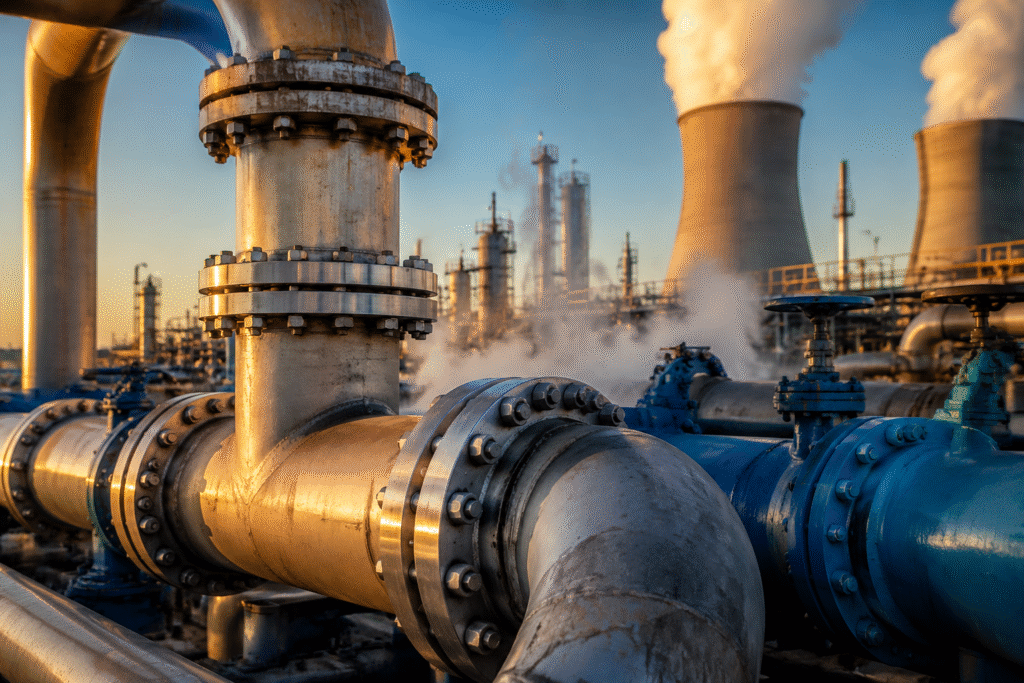
Guia de engenharia de flange de tubo de aço inoxidável: Dados de mercado, ASME B16.5 & B16.47 Tipos, Usos, e como escolher
De acordo com a pesquisa Grand View (2024), o mercado global de flanges industriais foi avaliado em $5.8 bilhão em 2023 e está projetado para atingir $7.2 bilhão por 2030. Esse crescimento faz com que flange de tubo de aço inoxidável a critical component for engineers and buyers who need corrosion resistance, integridade de pressão, e longa vida útil.
Para equipes de compras, the real challenge is not finding a flange supplier. É escolher o tipo de material certo, classe de pressão, enfrentando, and standard for a specific process line.
Tendências de demanda global moldando a aquisição de flanges para tubos de aço inoxidável
Industrial flange demand remains closely tied to capital spending in energy, água, e indústrias de processo. De acordo com Statista (2024), a indústria de petróleo e gás é responsável por aproximadamente 35% do consumo global de flanges.
That number matters because oil and gas projects often require higher alloy content, traceable documentation, and strict compliance with ASME and ASTM specifications. Portanto, buyers increasingly evaluate total lifecycle value instead of unit price alone.
De acordo com IBISWorld (2024), Ásia-Pacífico é responsável por mais de 45% da produção global de flanges, sendo a China o maior fabricante. Como resultado, global sourcing strategies now depend on supplier quality systems, capacidade de usinagem, and export experience as much as geographic cost advantage.
Em termos práticos, buyers want faster lead times, broader grade availability, and consistent dimensional accuracy. Além disso, they want mill test reports, EN 10204 3.1 documentação, and predictable communication from quotation through shipment.
The stainless steel segment remains especially strong because corrosion-related failure still drives major maintenance costs across pipelines and process systems. According to NACE International, corrosion costs the global economy more than $2.5 trilhão anualmente, que equivale aproximadamente 3.4% do PIB mundial (NACE, cited widely in industry literature).
That is why stainless grades such as 304, 316, 316eu, 904eu, 2205, e 2507 remain standard choices in desalination, refinar, processamento químico, e serviço marítimo. In contrast to carbon steel, these materials typically offer better pitting resistance, cleaner service performance, and lower replacement frequency in aggressive media.
Como SASA FLANGE atende clientes em todo o petróleo & Gás, Petroquímica, Geração de energia, Construção naval & Marinho, Tratamento de Água, e Construção, the company aligns its production with these global demand patterns. Com ISO 9001:2015 e certificações PED 2014/68/EU, SASA FLANGE supports export-oriented projects that require documented quality assurance and dimensional compliance.
Buyers also increasingly request broader sourcing from a single partner. That includes flanges, cotovelos, camisetas, redutores, and caps in matching metallurgy for complete piping packages.
Por esse motivo, manufacturers with both flange and pipe fitting capability often reduce procurement complexity. Além disso, integrated supply can improve heat traceability and streamline inspection coordination.
Stainless Steel Flanges Types, Usos, and How to Choose for Engineering Performance
The best flange selection starts with process conditions, não conveniência de catálogo. Engineers must evaluate pressure class, temperatura de projeto, nível de cloreto, composição de mídia, método de soldagem, and required inspection level before locking in a material or facing.
De acordo com ASME B16.5, dimensões, tolerâncias, classificações de pressão-temperatura, and marking requirements form the baseline for flanges up to NPS 24. Para diâmetros maiores, ASME B16.47 governs dimensions and ratings for large diameter steel flanges (ASME, latest edition).
Como John Reynolds, a materials and corrosion specialist in the refining sector, estados: “Most flange failures are selection failures before they become product failures.” That observation highlights why material grade and service environment must be evaluated together.
Para serviços industriais em geral, 304 and 304L remain common because they combine good corrosion resistance, soldabilidade, e eficiência de custos. No entanto, 316 and 316L usually perform better in chloride-bearing environments because molybdenum improves pitting resistance.
Para um serviço mais agressivo, 904eu, duplex 2205, e superduplex 2507 offer stronger resistance to localized corrosion and stress corrosion cracking. Portanto, they often appear in offshore, água do mar, and chemical dosing systems where 300-series stainless may be insufficient.
De acordo com a Pesquisa de Mercado Futuro (2024), demand for corrosion-resistant alloy components in energy and desalination projects is rising at a CAGR above 4% in several regional subsegments. Adicionalmente, offshore specification packages now more frequently include duplex and super duplex materials for reduced maintenance risk.
Engineers typically compare stainless steel flanges by several core factors:
- Grau do material: 304, 304eu, 316, 316eu, 904eu, 2205, 2507, Inconel, Monel, Hastelloy, Titânio.
- Tipo de flange: pescoço de solda, escorregar, cego, solda de soquete, rosqueado, junta sobreposta, pescoço de solda longo.
- Classe de pressão: Aula 150, 300, 600, 900, 1500, 2500.
- Enfrentando: rosto levantado, cara plana, junta tipo anel.
- Dimensions and standard: ASME B16.5, ASME B16.47, DIN, JIS, GOST, EN 1092.
- Documentos de inspeção: CTM, PMI, relatórios de hidroteste, EN 10204 3.1, and third-party inspection release.
Each flange type serves a different purpose in piping design. Weld neck flanges provide a tapered hub that distributes stress efficiently, while slip on flanges offer easier alignment and lower fabrication cost for lower pressure services.
Blind flanges isolate systems for maintenance, futuros vínculos, or hydrotesting. Enquanto isso, socket weld and threaded flanges can suit smaller bore lines where installation conditions justify those designs.
Como Dr.. M. Kannan, a metallurgical consultant, estados: “Quando a concentração de cloreto, temperatura, and fabrication details intersect, duplex grades often deliver the best balance of strength and corrosion resistance.” That quote reflects the engineering logic behind rising duplex adoption in marine and water treatment systems.
Para compradores comparando Intriguing Stainless Steel Flanges Types Uses Choose ASME B16.5 B16.47 Pipe Flanges? Flange Engineering Guide style searches, the real value lies in matching flange geometry to process risk. UM 4 flange de tubo de aço inoxidável de polegada na classe 150 for clean water requires a very different specification than a 4 inch weld neck flange in Class 600 for sour hydrocarbon service.
Material pairing also matters across the entire line. Por exemplo, a 316L flange connected to 304 piping in chloride service may undermine the corrosion strategy if weld filler, compatibilidade da junta, and bolting are not reviewed together.
No SASA FLANGE, manufacturing covers stainless steel flanges, flanges de aço carbono, flanges de liga, e acessórios para tubos em 304, 316, 316eu, 904eu, 2205, 2507, A105, A182, Inconel, Monel, Hastelloy, e titânio. Apoiado por usinagem CNC avançada e testes de qualidade abrangentes, a empresa oferece suporte a tamanhos personalizados de 1/2" para 60" com preços competitivos direto da fábrica.
De acordo com a Inteligência Mordor (2024), industrial water treatment infrastructure investment continues to expand worldwide, especially in regions facing water stress and discharge regulation upgrades. Como resultado, stainless and duplex flange packages are increasingly specified for desalination skids, RO trains, e linhas de dosagem de produtos químicos.
Quando os engenheiros escolhem um flange de tubo de aço inoxidável, they should review these questions first:
- What is the design pressure and temperature?
- Does the media contain chlorides, sulfetos, or acidic compounds?
- Is low carbon material needed for welding and sensitization control?
- É NACE MR0175 or sour service compliance required?
- Will the flange operate outdoors, offshore, or in splash-zone exposure?
- What testing and traceability documents must the supplier provide?
That approach reduces late-stage redesign and field mismatch. Além disso, it improves bid accuracy and lowers the chance of unplanned shutdowns.
ASME B16.5, B16.47, ASTM, DIN, e conformidade EN para flanges de aço inoxidável
A conformidade com as normas é a base do desempenho seguro do flange. It controls dimensions, tolerâncias, perfuração, classificações de pressão-temperatura, and material chemistry across the supply chain.
For most process piping projects, ASME B16.5 cobre flanges de NPS 1/2 através do NPS 24. ASME B16.47 applies to large diameter steel flanges from NPS 26 através do NPS 60, and it includes Series A and Series B dimensional options (ASME, latest edition).
Os padrões de materiais são igualmente importantes. ASTM A182 commonly governs forged or rolled alloy and stainless steel pipe flanges, acessórios forjados, e válvulas para serviço em alta temperatura, enquanto ASTM A240 covers chromium and chromium-nickel stainless plate used in various fabricated products (ASTM International, latest edition).
European and global projects often call for EN 1092 ou dimensões do flange DIN, especialmente na água, construção naval, and industrial utility networks. Portanto, procurement teams must verify whether the project basis is ASME or EN before ordering to avoid drilling or facing mismatch.
- ASME B16.5: Padrão para flanges de tubos e conexões flangeadas até NPS 24.
- ASME B16.47: Standard for large diameter steel flanges from NPS 26 para NPS 60.
- ASME B16.9: Standard for factory-made wrought buttwelding fittings.
- ASTM A182: Standard specification for forged or rolled alloy and stainless steel flanges and fittings.
- EN 1092: European flange standard widely used in industrial and water systems.
- NACE MR0175: Material requirements for sour service resistance in H2S-containing environments.
De acordo com ISO, documented quality management systems improve process consistency, rastreabilidade, and corrective action effectiveness across manufacturing operations (ISO, quality management guidance). Portanto, accredited systems are not simply commercial badges. They are practical tools for reducing variation in machining, marcação, e inspeção.
For image planning, the alt text should include the keyphrase flange de tubo de aço inoxidável. That supports both accessibility and on-page SEO alignment.
Pressure Equipment Directive requirements also affect sourcing for EU-bound projects. PED 2014/68/EU requires conformity assessment for pressure equipment and related assemblies sold into the European market, depending on category and application.
SASA FLANGE detém ISO 9001:2015, PED 2014/68/EU, e ANÚNCIO 2000 certificações, which supports projects requiring European compliance pathways. Adicionalmente, customers can request EN 10204 3.1 documentation and project-specific inspection coordination through SASA FLANGE.
Procurement teams should also compare the commercial impact of standards selection:
- ASME systems often dominate refinery, petroquímico, and power plant EPC packages.
- EN and DIN systems are common in European utility, marinho, and mechanical projects.
- NACE requirements become critical in sour oil and gas service.
- Duplex and super duplex often need stricter PMI and heat traceability controls.
For direct reference, engineers can verify current standards at ASME.org. That step is valuable because revisions, addenda, and project specifications can alter the acceptable dimensional basis.
As Laura Bennett, um engenheiro de tubulação sênior, estados: “Dimensional compliance prevents installation issues, but document compliance prevents project claims.” In large EPC work, both are equally important.
Application-Based Selection Guide for Oil, Gás, Químico, Poder, e Projetos Marítimos
Application-specific selection creates better outcomes than one-size-fits-all purchasing. The same nominal pipe size can require different flange types, notas, and facings across industries.
Em petróleo e gás, the specification often begins with pressure class, condições de serviço ácidas, e filosofia de tolerância à corrosão. De acordo com Statista (2024), este setor consome cerca de 35% de flanges globais, which explains why API-adjacent requirements and stringent traceability often shape market expectations.
Typical oil and gas guidance includes:
- Use weld neck flanges for higher pressure and cyclic loading.
- Análise NACE MR0175 when H2S exposure is possible.
- Consider 316L, duplex 2205, ou super duplex 2507 in chloride-rich offshore systems.
- Use RTJ facings for critical high-pressure sealing where specified.
No processamento petroquímico e químico, media compatibility drives the decision. Por exemplo, 316L works well in many general corrosive environments, enquanto 904L, Hastelloy, or Monel may be needed for stronger acids or mixed chemical streams.
Power generation introduces another set of variables. Alta temperatura, ciclagem térmica, serviço de vapor, and shutdown frequency can all affect flange performance and gasket reliability.
For marine and shipbuilding, seawater exposure and splash-zone corrosion often justify duplex selection. According to DNV guidance used widely in marine practice, material resistance and traceability are essential where seawater and cyclic service intersect (DNV, industry guidance).
Water treatment and desalination systems often combine stainless and duplex components across skids, variedades, and pump lines. Portanto, buyers should check chloride level, temperatura operacional, and cleaning chemical exposure before finalizing 304 versus 316L versus duplex.
A practical selection matrix often looks like this:
- Clean water and low chloride utility lines: 304 or 304L slip on or weld neck.
- General chemical and moderate chloride service: 316 ou 316L, usually raised face.
- Offshore and seawater service: 2205 ou 2507, often with stricter PMI requirements.
- High temperature aggressive service: alloy grades such as Inconel or Hastelloy where specified.
- Shutdown isolation and terminal ends: blind flange in matching metallurgy and class.
In addition to standard production, SASA FLANGE supports custom manufacturing for project drawings, dimensões fora do padrão, and mixed piping packages. Servindo 50+ países em todo o petróleo & Gás, Petroquímica, Poder, e indústrias marítimas, the company helps buyers consolidate flange and fitting procurement under one source.
Custom capability matters when projects require special bore, facing modification, drilled pattern changes, or uncommon grades. Além disso, factory-side CNC machining shortens revision cycles compared with multi-vendor sourcing.
Buyers should request these details during supplier evaluation:
- Size range and pressure class coverage.
- Available grades in forged and plate flange forms.
- PMI, ultrasonic, hidrostático, and dimensional inspection options.
- Lead time for standard and made-to-order items.
- Acabamento de superfície, marcação, embalagem, and export documentation practices.
When these points are clarified early, bid comparisons become more accurate. Como resultado, procurement managers can avoid hidden costs from rework, schedule delays, or inspection rejection.
Perspectivas Futuras para Flanges de Aço Inoxidável e Recomendações Estratégicas de Compra
The flange market outlook remains positive as infrastructure renewal, projetos de transição energética, and water treatment investment continue. De acordo com a pesquisa Grand View (2024), espera-se que o mercado suba de $5.8 bilhão em 2023 para $7.2 bilhão por 2030.
That growth will likely favor suppliers who combine technical support, broad metallurgy coverage, e conformidade de exportação. Em contraste, purely price-driven sourcing may create larger lifecycle costs when traceability or corrosion performance falls short.
Digital procurement is also changing buyer behavior. Engineers increasingly expect faster RFQ turnaround, downloadable documentation, and direct access to dimensional and material support before issuing a purchase order.
According to industry analysts at Mordor Intelligence (2024), project owners are placing more emphasis on reliability, maintenance reduction, and corrosion-resistant materials in long-life assets. Portanto, stainless and duplex flanges should remain a strategic category rather than a commodity purchase in critical systems.
Recommended actions for B2B buyers include:
- Standardize approved flange types and grades by application.
- Require ASME, ASTM, DIN, or EN dimensional confirmation before release.
- Specify documentation such as MTC, EN 10204 3.1, and PMI where needed.
- Review lifecycle corrosion risk instead of comparing only unit price.
- Qualify suppliers with ISO 9001:2015 and project-relevant certifications.
For teams sourcing a stainless steel pipe flange for global projects, the strongest procurement strategy combines technical clarity with supplier validation. When material expertise, compliance documentation, and machining quality are aligned, buyers gain lower risk and better installation performance.
For current projects involving ASME B16.5, ASME B16.47, or custom stainless flange packages, engineers can streamline evaluation by discussing specifications directly with SASA FLANGE. That approach helps convert design intent into manufacturable, rastreável, and commercially efficient supply.
Perguntas frequentes
Quais são os tamanhos de flange de tubo de aço inoxidável?
●Os tamanhos de flanges de tubos de aço inoxidável normalmente variam de 1/2 polegada para 60 inches under standards such as ASME B16.5 e ASME B16.47.
●ASME B16.5 geralmente cobre NPS 1/2 através do NPS 24, enquanto ASME B16.47 cobre flanges de grande diâmetro da NPS 26 através do NPS 60.
●Buyers should confirm whether the project follows ASME, DIN, ou PT 1092 dimensions before ordering because bolt drilling and flange thickness can differ by standard.
Qual é o preço típico de flange de tubo de aço inoxidável?
●Stainless steel pipe flange price depends heavily on size, classe de pressão, grau de material, e escopo de teste, com ligas duplex e de níquel custando significativamente mais do que 304 ou 316L.
●De acordo com a pesquisa Grand View (2024), o mercado global de flanges industriais atingiu $5.8 bilhão em 2023, which reflects strong demand and ongoing raw material sensitivity in industrial supply chains.
●Para um orçamento preciso, buyers should request quotes that include material grade, padrão, enfrentando, documentação, and inspection requirements from established manufacturers like SASA FLANGE.
Quais são os principais tipos de flanges de aço inoxidável?
●Os principais tipos de flange de aço inoxidável são pescoço de solda, escorregar, cego, solda de soquete, rosqueado, junta sobreposta, e flanges de pescoço de solda longos.
●Flanges com pescoço soldado são preferidos para pressões mais altas e serviços cíclicos, while slip on flanges are often used in lower pressure lines where fabrication simplicity matters.
●Engineers should choose flange type based on pressure class, método de soldagem, acesso de manutenção, and process criticality rather than selecting by price alone.
Como faço para escolher entre 304, 316eu, e flanges duplex de aço inoxidável?
●304 suits general service, 316L performs better in chloride-bearing environments, e qualidades duplex, como 2205 offer higher strength and stronger resistance to pitting and stress corrosion cracking.
●De acordo com a Pesquisa de Mercado Futuro (2024), corrosion-resistant alloy demand continues to rise in water treatment and energy projects, which supports greater use of duplex materials in aggressive service.
●Para ricos em cloreto, offshore, or critical process conditions, buyers should review operating temperature, química da mídia, and welding requirements with a qualified supplier before selecting the final grade.
Qual é a diferença entre ASME B16.5 e ASME B16.47 flanges?
●ASME B16.5 cobre flanges de tubos e conexões flangeadas até NPS 24, enquanto ASME B16.47 applies to large diameter steel flanges from NPS 26 para NPS 60.
●ASME B16.47 also includes Series A and Series B designs, which differ in dimensions, padrões de parafusos, and weight depending on the application.
●Procurement teams should verify the exact standard and series on project drawings because an incorrect dimensional basis can cause field installation failure.
How do I find a reliable flange manufacturer or flange vendor?
●A reliable flange manufacturer should offer standards compliance, materiais rastreáveis, precisão de usinagem, apoio à inspeção, and certifications such as ISO 9001:2015 or PED 2014/68/EU.
●De acordo com IBISWorld (2024), A Ásia-Pacífico produz mais de 45% de flanges globais, so supplier qualification is essential when sourcing internationally from high-volume manufacturing regions.
●Para projetos que exigem tamanhos personalizados, EN 10204 3.1 documentos, and broad grade availability, working with experienced suppliers like SASA FLANGE helps reduce commercial and technical risk.
Posts Relacionados
Acabamento da face do flange: Serrilhas concêntricas vs espirais explicadas
As serrilhas concêntricas e espirais são acabamentos de face de flange usinados…
Dúplex 2205 vs Flanges 316L: Qual material você deve escolher?
Resposta rápida: Dúplex 2205 flanges são geralmente o candidato mais forte…

Definição de flange de orifício, Detalhes e visão geral dos flanges ASME B16.36: Dados de mercado, Guia de seleção e insights de conformidade
O mercado global de flanges industriais foi avaliado em $5.8 bilhão…

Guia de mercado de flange de descarte preto: Materiais, 3.5″ Compatibilidade, e dados de fornecimento B2B para flanges de pia de cozinha
A demanda por flanges descartáveis pretos está aumentando à medida que os compradores de utensílios de cozinha…