
ステンレス鋼管フランジエンジニアリングガイド: 市場データ, ASME B16.5 & B16.47タイプ, 用途, と選び方
グランドビューリサーチによると (2024), 世界の工業用フランジ市場は次のように評価されました。 $5.8 億で 2023 に達すると予測されています $7.2 10億まで 2030. その成長により、 ステンレス鋼管フランジ a critical component for engineers and buyers who need corrosion resistance, 圧力の完全性, そして長寿命.
調達チーム向け, the real challenge is not finding a flange supplier. 適切なグレードの材料を選択することです, 圧力クラス, 直面している, and standard for a specific process line.
世界の需要動向に合わせたステンレス鋼管フランジの調達
Industrial flange demand remains closely tied to capital spending in energy, 水, およびプロセス産業. 統計局によると (2024), 石油・ガス産業が約 35% 世界のフランジ消費量の.
That number matters because oil and gas projects often require higher alloy content, traceable documentation, and strict compliance with ASME and ASTM specifications. したがって, buyers increasingly evaluate total lifecycle value instead of unit price alone.
IBISWorldによると (2024), アジア太平洋地域が占める割合は超過 45% 世界のフランジ生産量の, 中国が最大の製造国である. 結果として, global sourcing strategies now depend on supplier quality systems, 加工能力, and export experience as much as geographic cost advantage.
実務的には, buyers want faster lead times, broader grade availability, and consistent dimensional accuracy. さらに, they want mill test reports, EN 10204 3.1 ドキュメント, and predictable communication from quotation through shipment.
The stainless steel segment remains especially strong because corrosion-related failure still drives major maintenance costs across pipelines and process systems. According to NACE International, corrosion costs the global economy more than $2.5 年間1兆兆, これはほぼ等しい 3.4% 世界のGDPの (ネイス, cited widely in industry literature).
That is why stainless grades such as 304, 316, 316l, 904l, 2205, そして 2507 remain standard choices in desalination, 精製, 化学処理, および海洋サービス. In contrast to carbon steel, these materials typically offer better pitting resistance, よりクリーンなサービスパフォーマンス, and lower replacement frequency in aggressive media.
として SASA FLANGE 石油業界全体の顧客にサービスを提供する & ガス, 石油化学, 発電, 造船 & 海兵隊, 水処理, と建設, the company aligns its production with these global demand patterns. と ISO 9001:2015 および PED 2014/68/EU 認証, SASA FLANGE supports export-oriented projects that require documented quality assurance and dimensional compliance.
Buyers also increasingly request broader sourcing from a single partner. That includes flanges, 肘, ティー, 減速機, and caps in matching metallurgy for complete piping packages.
そのため, manufacturers with both flange and pipe fitting capability often reduce procurement complexity. さらに, integrated supply can improve heat traceability and streamline inspection coordination.
Stainless Steel Flanges Types, 用途, and How to Choose for Engineering Performance
The best flange selection starts with process conditions, カタログの利便性ではない. Engineers must evaluate pressure class, 設計温度, 塩化物濃度, メディア構成, 溶接方法, and required inspection level before locking in a material or facing.
によると ASME B16.5, 寸法, 公差, 圧力温度定格, and marking requirements form the baseline for flanges up to NPS 24. より大きな直径の場合, ASME B16.47 governs dimensions and ratings for large diameter steel flanges (ASME, latest edition).
ジョン・レイノルズ役, a materials and corrosion specialist in the refining sector, 州: “Most flange failures are selection failures before they become product failures.” That observation highlights why material grade and service environment must be evaluated together.
一般産業用サービス, 304 and 304L remain common because they combine good corrosion resistance, 溶接性, とコスト効率. しかし, 316 and 316L usually perform better in chloride-bearing environments because molybdenum improves pitting resistance.
より積極的なサービスを目指して, 904l, デュプレックス 2205, そしてスーパーデュプレックス 2507 offer stronger resistance to localized corrosion and stress corrosion cracking. したがって, they often appear in offshore, 海水, and chemical dosing systems where 300-series stainless may be insufficient.
マーケットリサーチの将来によると (2024), demand for corrosion-resistant alloy components in energy and desalination projects is rising at a CAGR above 4% in several regional subsegments. さらに, offshore specification packages now more frequently include duplex and super duplex materials for reduced maintenance risk.
Engineers typically compare stainless steel flanges by several core factors:
- 材質グレード: 304, 304l, 316, 316l, 904l, 2205, 2507, インコネル, モネル, ハステロイ, チタン.
- フランジタイプ: ウェルドネック, スリップオン, 盲目, ソケット溶接, ねじ切りされた, ラップジョイント, 長い溶接ネック.
- 圧力クラス: クラス 150, 300, 600, 900, 1500, 2500.
- 対面: 上げられた顔, 平らな面, リングタイプジョイント.
- Dimensions and standard: ASME B16.5, ASME B16.47, DIN, JIS, ゴスト, EN 1092.
- 検査書類: MTC, PMI, hydrotest reports, EN 10204 3.1, and third-party inspection release.
Each flange type serves a different purpose in piping design. Weld neck flanges provide a tapered hub that distributes stress efficiently, while slip on flanges offer easier alignment and lower fabrication cost for lower pressure services.
Blind flanges isolate systems for maintenance, future tie-ins, or hydrotesting. その間, socket weld and threaded flanges can suit smaller bore lines where installation conditions justify those designs.
博士として. M. Kannan, a metallurgical consultant, 州: “塩素濃度が高い場合, 温度, and fabrication details intersect, duplex grades often deliver the best balance of strength and corrosion resistance.” That quote reflects the engineering logic behind rising duplex adoption in marine and water treatment systems.
比較検討する購入者向け Intriguing Stainless Steel Flanges Types Uses Choose ASME B16.5 B16.47 Pipe Flanges? Flange Engineering Guide style searches, the real value lies in matching flange geometry to process risk. あ 4 クラスのインチステンレス鋼管フランジ 150 for clean water requires a very different specification than a 4 inch weld neck flange in Class 600 for sour hydrocarbon service.
Material pairing also matters across the entire line. 例えば, a 316L flange connected to 304 piping in chloride service may undermine the corrosion strategy if weld filler, ガスケットの互換性, and bolting are not reviewed together.
で SASA FLANGE, manufacturing covers stainless steel flanges, 炭素鋼フランジ, 合金フランジ, とパイプ継手 304, 316, 316l, 904l, 2205, 2507, A105, A182, インコネル, モネル, ハステロイ, とチタン. 高度な CNC 加工と包括的な品質テストに裏付けられています, the company supports custom sizes from 1/2" 60まで" 競争力のある工場直販価格.
モルドール情報局によると (2024), industrial water treatment infrastructure investment continues to expand worldwide, especially in regions facing water stress and discharge regulation upgrades. 結果として, stainless and duplex flange packages are increasingly specified for desalination skids, RO trains, および化学薬品投与ライン.
エンジニアがステンレス鋼管フランジを選択する場合, they should review these questions first:
- What is the design pressure and temperature?
- Does the media contain chlorides, 硫化物, or acidic compounds?
- Is low carbon material needed for welding and sensitization control?
- は NACE MR0175 or sour service compliance required?
- Will the flange operate outdoors, オフショア, or in splash-zone exposure?
- What testing and traceability documents must the supplier provide?
That approach reduces late-stage redesign and field mismatch. さらに, it improves bid accuracy and lowers the chance of unplanned shutdowns.
ASME B16.5, B16.47, ASTM, DIN, ステンレス鋼フランジの EN 準拠
Standards compliance is the foundation of safe flange performance. It controls dimensions, 公差, 掘削, 圧力温度定格, and material chemistry across the supply chain.
For most process piping projects, ASME B16.5 NPS のフランジをカバーします 1/2 NPSを通じて 24. ASME B16.47 applies to large diameter steel flanges from NPS 26 NPSを通じて 60, and it includes Series A and Series B dimensional options (ASME, latest edition).
材料規格も同様に重要です. ASTM A182 commonly governs forged or rolled alloy and stainless steel pipe flanges, 鍛造継手, および高温用バルブ, その間 ASTM A240 covers chromium and chromium-nickel stainless plate used in various fabricated products (ASTM International, latest edition).
European and global projects often call for EN 1092 or DIN flange dimensions, 特に水中では, 造船, and industrial utility networks. したがって, procurement teams must verify whether the project basis is ASME or EN before ordering to avoid drilling or facing mismatch.
- ASME B16.5: NPSまでの管フランジおよびフランジ付き継手の標準 24.
- ASME B16.47: Standard for large diameter steel flanges from NPS 26 NPSへ 60.
- ASME B16.9: Standard for factory-made wrought buttwelding fittings.
- ASTM A182: Standard specification for forged or rolled alloy and stainless steel flanges and fittings.
- EN 1092: European flange standard widely used in industrial and water systems.
- NACE MR0175: Material requirements for sour service resistance in H2S-containing environments.
ISOによると, documented quality management systems improve process consistency, トレーサビリティ, and corrective action effectiveness across manufacturing operations (ISO, quality management guidance). したがって, accredited systems are not simply commercial badges. They are practical tools for reducing variation in machining, マーキング, そして検査.
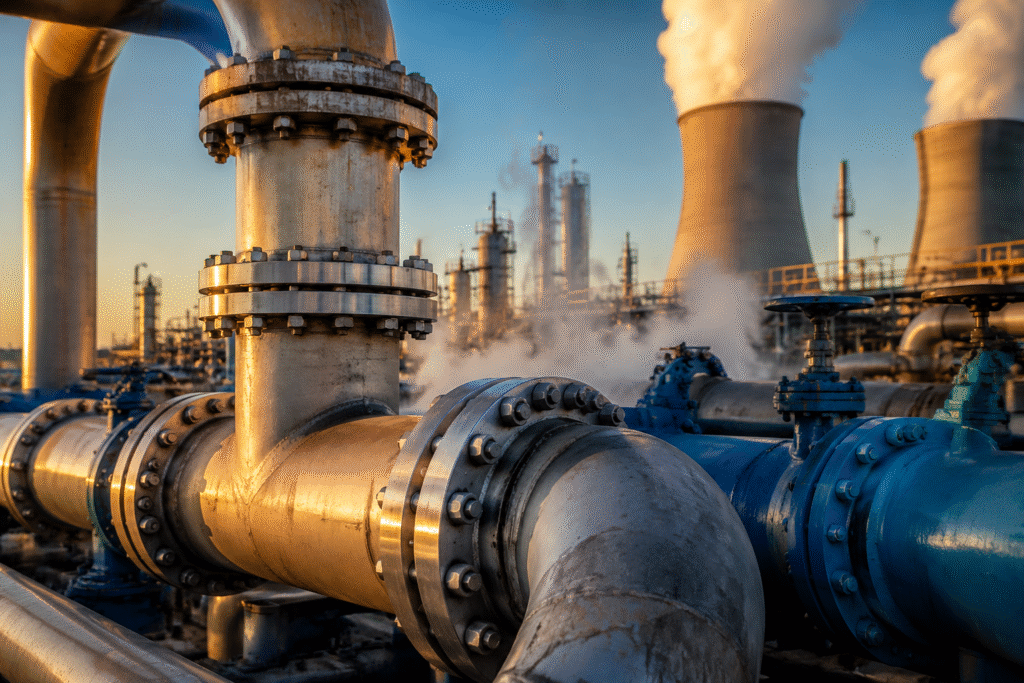
For image planning, the alt text should include the keyphrase ステンレス鋼管フランジ. That supports both accessibility and on-page SEO alignment.
Pressure Equipment Directive requirements also affect sourcing for EU-bound projects. PED 2014/68/EU requires conformity assessment for pressure equipment and related assemblies sold into the European market, depending on category and application.
SASA FLANGE 保持します ISO 9001:2015, PED 2014/68/EU, とAD 2000 認証, which supports projects requiring European compliance pathways. さらに, customers can request EN 10204 3.1 documentation and project-specific inspection coordination through SASA FLANGE.
Procurement teams should also compare the commercial impact of standards selection:
- ASME systems often dominate refinery, 石油化学, and power plant EPC packages.
- EN and DIN systems are common in European utility, 海洋, and mechanical projects.
- NACE requirements become critical in sour oil and gas service.
- Duplex and super duplex often need stricter PMI and heat traceability controls.
For direct reference, engineers can verify current standards at ASME.org. That step is valuable because revisions, addenda, and project specifications can alter the acceptable dimensional basis.
As Laura Bennett, 上級配管エンジニア, 州: “Dimensional compliance prevents installation issues, but document compliance prevents project claims.” In large EPC work, both are equally important.
Application-Based Selection Guide for Oil, ガス, 化学薬品, 力, 海洋プロジェクト
Application-specific selection creates better outcomes than one-size-fits-all purchasing. The same nominal pipe size can require different flange types, 成績, and facings across industries.
石油とガスにおいて, the specification often begins with pressure class, sour service conditions, と腐食代の考え方. 統計局によると (2024), この部門は約を消費します 35% グローバルフランジの, which explains why API-adjacent requirements and stringent traceability often shape market expectations.
Typical oil and gas guidance includes:
- Use weld neck flanges for higher pressure and cyclic loading.
- レビュー NACE MR0175 when H2S exposure is possible.
- Consider 316L, デュプレックス 2205, またはスーパーデュプレックス 2507 in chloride-rich offshore systems.
- Use RTJ facings for critical high-pressure sealing where specified.
石油化学および化学処理において, media compatibility drives the decision. 例えば, 316L works well in many general corrosive environments, 一方904L, ハステロイ, or Monel may be needed for stronger acids or mixed chemical streams.
Power generation introduces another set of variables. 高温, 熱サイクル, スチームサービス, and shutdown frequency can all affect flange performance and gasket reliability.
海洋・造船用, seawater exposure and splash-zone corrosion often justify duplex selection. According to DNV guidance used widely in marine practice, material resistance and traceability are essential where seawater and cyclic service intersect (DNV, industry guidance).
Water treatment and desalination systems often combine stainless and duplex components across skids, 多様体, and pump lines. したがって, buyers should check chloride level, 動作温度, and cleaning chemical exposure before finalizing 304 versus 316L versus duplex.
A practical selection matrix often looks like this:
- Clean water and low chloride utility lines: 304 or 304L slip on or weld neck.
- General chemical and moderate chloride service: 316 または316L, usually raised face.
- Offshore and seawater service: 2205 または 2507, often with stricter PMI requirements.
- High temperature aggressive service: alloy grades such as Inconel or Hastelloy where specified.
- Shutdown isolation and terminal ends: blind flange in matching metallurgy and class.
In addition to standard production, SASA FLANGE supports custom manufacturing for project drawings, 標準外の寸法, and mixed piping packages. 給仕 50+ 石油を巡る国々 & ガス, 石油化学, 力, 海洋産業, the company helps buyers consolidate flange and fitting procurement under one source.
Custom capability matters when projects require special bore, facing modification, drilled pattern changes, or uncommon grades. さらに, factory-side CNC machining shortens revision cycles compared with multi-vendor sourcing.
Buyers should request these details during supplier evaluation:
- Size range and pressure class coverage.
- Available grades in forged and plate flange forms.
- PMI, ultrasonic, 静水圧, and dimensional inspection options.
- Lead time for standard and made-to-order items.
- 表面仕上げ, マーキング, 梱包, and export documentation practices.
When these points are clarified early, bid comparisons become more accurate. 結果として, procurement managers can avoid hidden costs from rework, schedule delays, or inspection rejection.
ステンレス鋼フランジの将来の見通しと戦略的な購入の推奨事項
The flange market outlook remains positive as infrastructure renewal, エネルギー転換プロジェクト, and water treatment investment continue. グランドビューリサーチによると (2024), 市場は~から上昇すると予想される $5.8 億で 2023 に $7.2 10億まで 2030.
That growth will likely favor suppliers who combine technical support, broad metallurgy coverage, および輸出コンプライアンス. 対照的に, purely price-driven sourcing may create larger lifecycle costs when traceability or corrosion performance falls short.
デジタル調達は購入者の行動も変える. Engineers increasingly expect faster RFQ turnaround, downloadable documentation, and direct access to dimensional and material support before issuing a purchase order.
Mordor Intelligence の業界アナリストによると (2024), project owners are placing more emphasis on reliability, メンテナンスの削減, and corrosion-resistant materials in long-life assets. したがって, stainless and duplex flanges should remain a strategic category rather than a commodity purchase in critical systems.
B2B バイヤーに推奨されるアクションは次のとおりです。:
- Standardize approved flange types and grades by application.
- Require ASME, ASTM, DIN, or EN dimensional confirmation before release.
- Specify documentation such as MTC, EN 10204 3.1, and PMI where needed.
- Review lifecycle corrosion risk instead of comparing only unit price.
- サプライヤーを認定する ISO 9001:2015 and project-relevant certifications.
For teams sourcing a stainless steel pipe flange for global projects, the strongest procurement strategy combines technical clarity with supplier validation. When material expertise, compliance documentation, and machining quality are aligned, buyers gain lower risk and better installation performance.
For current projects involving ASME B16.5, ASME B16.47, or custom stainless flange packages, engineers can streamline evaluation by discussing specifications directly with SASA FLANGE. That approach helps convert design intent into manufacturable, 追跡可能, and commercially efficient supply.
よくある質問
ステンレス鋼製管フランジのサイズとは何ですか?
●ステンレス鋼のパイプ フランジのサイズは通常、次のとおりです。 1/2 インチから 60 inches under standards such as ASME B16.5 そして ASME B16.47.
●ASME B16.5 一般的に NPS をカバーします 1/2 NPSを通じて 24, その間 ASME B16.47 NPSの大径フランジをカバー 26 NPSを通じて 60.
●Buyers should confirm whether the project follows ASME, DIN, またはEN 1092 dimensions before ordering because bolt drilling and flange thickness can differ by standard.
What is the typical stainless steel pipe flange price?
●Stainless steel pipe flange price depends heavily on size, 圧力クラス, 材質グレード, およびテスト範囲, with duplex and nickel alloys costing significantly more than 304 または316L.
●グランドビューリサーチによると (2024), 世界の工業用フランジ市場に到達 $5.8 億で 2023, which reflects strong demand and ongoing raw material sensitivity in industrial supply chains.
●正確な予算編成のために, buyers should request quotes that include material grade, 標準, 直面している, ドキュメント, and inspection requirements from established manufacturers like SASA FLANGE.
ステンレス製フランジの主な種類は何ですか?
●ステンレス鋼フランジの主なタイプはウェルドネックです。, スリップオン, 盲目, ソケット溶接, ねじ切りされた, ラップジョイント, 長いウェルドネックフランジ.
●Weld neck flanges are preferred for higher pressure and cyclic service, while slip on flanges are often used in lower pressure lines where fabrication simplicity matters.
●Engineers should choose flange type based on pressure class, 溶接方法, メンテナンスアクセス, and process criticality rather than selecting by price alone.
どちらかを選択するにはどうすればよいですか 304, 316l, および二相ステンレス鋼フランジ?
●304 suits general service, 316L performs better in chloride-bearing environments, などの二重グレード 2205 offer higher strength and stronger resistance to pitting and stress corrosion cracking.
●マーケットリサーチの将来によると (2024), corrosion-resistant alloy demand continues to rise in water treatment and energy projects, which supports greater use of duplex materials in aggressive service.
●塩化物が豊富な場合, オフショア, or critical process conditions, buyers should review operating temperature, メディア化学, and welding requirements with a qualified supplier before selecting the final grade.
違いは何ですか ASME B16.5 そして ASME B16.47 フランジ?
●ASME B16.5 NPS までのパイプ フランジとフランジ付き継手をカバーします 24, その間 ASME B16.47 applies to large diameter steel flanges from NPS 26 NPSへ 60.
●ASME B16.47 also includes Series A and Series B designs, which differ in dimensions, ボルトパターン, and weight depending on the application.
●Procurement teams should verify the exact standard and series on project drawings because an incorrect dimensional basis can cause field installation failure.
How do I find a reliable flange manufacturer or flange vendor?
●A reliable flange manufacturer should offer standards compliance, 追跡可能な材料, 加工精度, 検査サポート, および次のような認証 ISO 9001:2015 or PED 2014/68/EU.
●IBISWorldによると (2024), アジア太平洋地域では以上のものを生産しています 45% グローバルフランジの, so supplier qualification is essential when sourcing internationally from high-volume manufacturing regions.
●カスタムサイズが必要なプロジェクト向け, EN 10204 3.1 書類, and broad grade availability, working with experienced suppliers like SASA FLANGE helps reduce commercial and technical risk.
関連投稿

オリフィスフランジの定義, 詳細と ASME B16.36 フランジの概要: 市場データ, 選択ガイドとコンプライアンスに関する洞察
世界の工業用フランジ市場は次のように評価されました。 $5.8 十億…

ブラックディスポフランジ市場ガイド: 材料, 3.5″ 互換性, キッチン シンク フランジの B2B 調達データ
キッチン設備の購入者として黒色の使い捨てフランジの需要が高まっています…