
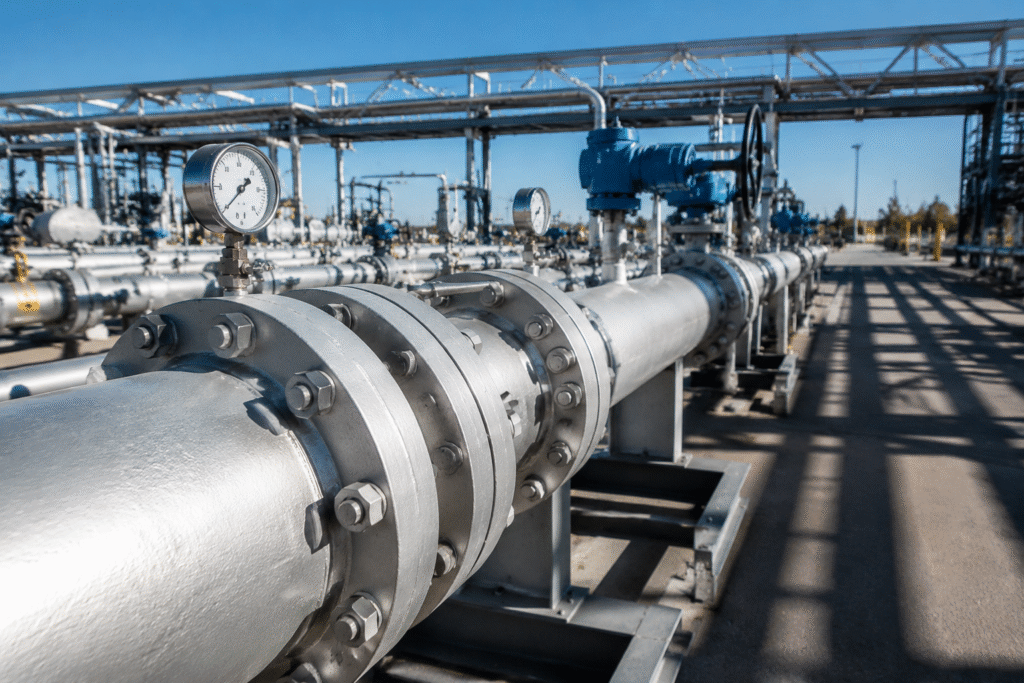
คำจำกัดความหน้าแปลนปาก, รายละเอียดและภาพรวมหน้าแปลน ASME B16.36: ข้อมูลการตลาด, คู่มือการคัดเลือกและข้อมูลเชิงลึกด้านการปฏิบัติตามข้อกำหนด
ตลาดหน้าแปลนอุตสาหกรรมทั่วโลกมีมูลค่าอยู่ที่ $5.8 พันล้านใน 2023 และคาดว่าจะไปถึง $7.2 พันล้านโดย 2030, ตามการวิจัยของ Grand View (2024). In that expanding market, ที่ หน้าแปลนปาก remains a critical component for differential pressure flow measurement, โดยเฉพาะในน้ำมัน, แก๊ส, เคมี, and power piping systems.
Engineers searching for the definition, details, ปาก, ASME, บ16.36, หน้าแปลน, They, B16.36.pdf, แอนซี่, ORIFICE, หน้าแปลน, overview usually need more than a basic glossary. They need a practical, standards-based guide that connects design, วัสดุ, ขนาด, การติดตั้ง, and procurement decisions.
This article provides that overview with a technical focus for engineers and buyers. It also explains how manufacturers such as SASA FLANGE support demanding projects with ISO 9001:2015 and PED 2014/68/EU certified production.
Industrial Demand for Orifice Flange Systems in Modern Piping Networks
ตามสถิติของสตาติสต้า (2024), อุตสาหกรรมน้ำมันและก๊าซมีสัดส่วนประมาณ 35% ของการบริโภคหน้าแปลนทั่วโลก. ดังนั้น, components designed for reliable pressure tapping and repeatable flow measurement have strong relevance in upstream, กลางน้ำ, and refining applications.
อ้างอิงจาก IBISWorld (2024), บัญชีเอเชียแปซิฟิกมีมากกว่า 45% ของการผลิตหน้าแปลนทั่วโลก, โดยจีนเป็นผู้ผลิตรายใหญ่ที่สุด. ส่งผลให้, procurement teams increasingly compare lead time, ความแม่นยำของเครื่องจักร, การตรวจสอบย้อนกลับ, and testing capability when sourcing specialized ASME B16.36 หน้าแปลน.
An orifice flange is a specialty flange assembly designed to hold an orifice plate and provide pressure tappings for differential pressure measurement. ในทางปฏิบัติ, they simplify installation because they eliminate the need for separate tapping points on the pipe wall.
The core design logic is straightforward. A restriction element, usually an orifice plate, creates a pressure drop, and paired pressure taps measure the differential pressure across that restriction.
That pressure signal then supports flow calculation when combined with instrumentation and calibrated equations. This is why orifice flange assemblies remain common in process plants that prioritize robust, standardized measurement hardware.
ASME B16.36 defines the dimensional and tolerancing framework for many of these products, while related requirements often reference ASME B16.5, ASME B1.20.1, และมาตรฐานวัสดุ ASTM ที่บังคับใช้. นอกจากนี้, project specifications may add API, เนซ, DIN, or EN requirements depending on geography and service conditions.
สำหรับมืออาชีพด้านการจัดซื้อจัดจ้าง, the issue is not only the definition of ORIFICE FLANGES. The real concern is whether they meet pressure class, ความเข้ากันได้ของวัสดุ, tapping configuration, หันหน้าไปทางประเภท, ระดับการตรวจสอบ, and documentation needs.
That is where manufacturing competence matters. ได้รับการสนับสนุนจากเครื่องจักร CNC ขั้นสูงและการทดสอบคุณภาพที่ครอบคลุม, SASA FLANGE supplies stainless steel, เหล็กกล้าคาร์บอน, โลหะผสม, ดูเพล็กซ์, โลหะผสมนิกเกิล, and titanium flanges for industrial service.
With production in grades such as 304, 316, 316ล, 904ล, 2205, 2507, A105, A182, อินโคเนล, โมเนล, ฮาสเตลลอย, และไทเทเนียม, the company supports projects across Oil & แก๊ส, ปิโตรเคมี, การผลิตไฟฟ้า, การต่อเรือ & มารีน, การบำบัดน้ำ, และการก่อสร้าง. นอกจากนี้, buyers can review broader manufacturing capability through SASA FLANGE ข้อมูลบริษัท.
ตามข้อมูลของ Mordor Intelligence (2024), process automation investments continue to rise across energy and chemicals, reinforcing demand for dependable flow metering hardware. เพราะเหตุนี้, the details behind orifice flange dimensions, tapping orientation, and assembly method now influence both measurement reliability and total lifecycle cost.
คำจำกัดความหน้าแปลนปาก, Details and Technical Design Under ASME B16.36
The standard technical definition is precise. Orifice flanges are usually installed in pairs and machined with radial pressure tappings so operators can connect transmitters or gauges directly to the flange set.
Most designs also include jack screws. These allow safe flange separation during maintenance, which makes orifice plate inspection or replacement significantly easier.
ดังเช่นจอห์น คาร์เตอร์, วิศวกรท่ออาวุโส, รัฐ: “A properly machined orifice flange pair reduces field variability because the tapping geometry is controlled at the flange rather than improvised in the line.” That observation aligns with common field practice in refineries and gas processing facilities.
From a construction standpoint, the most common forms resemble weld neck, ลื่นบน, หรือหน้าแปลนเกลียว, but they include added machining features. These usually include two pressure tap holes and threaded tapping outlets, often 1/2 inch NPT, ตาม ASME B1.20.1 ข้อกำหนดของเธรด.
ASME notes that dimensional consistency is essential where measurement repeatability matters (ASME, 2023). ดังนั้น, buyers should verify not only nominal size and class, but also tapping size, tapping centerline orientation, และเผชิญรายละเอียด.
ในโครงการอุตสาหกรรมส่วนใหญ่, the following design variables define suitability:
- ขนาดท่อที่กำหนดและความเข้ากันได้ของกำหนดการ
- Pressure class such as Class 300, 600, 900, 1500, หรือ 2500
- ชนิดหน้าแปลนรวมทั้งคอเชื่อม, ลื่นบน, หรือเกลียว
- Facing type such as Raised Face or RTJ
- Material grade based on corrosion, ความดัน, และอุณหภูมิ
- Tapping thread and instrument connection details
- Jack screw quantity and positioning
- Inspection and certification requirements such as EN 10204 3.1
ตามการวิจัยตลาดอนาคต (2024), industrial instrumentation demand is increasing in line with process efficiency targets and emissions monitoring programs. ส่งผลให้, more end users expect flange assemblies to integrate cleanly with modern transmitters and digital monitoring systems.
An orifice flange assembly is not only a pressure boundary item. It is also a measurement interface, and that dual role makes machining quality especially important.
ตัวอย่างเช่น, poor concentricity or inaccurate tapping locations can affect measurement repeatability. เช่นเดียวกัน, incorrect facing finish or gasket selection can lead to leakage, maintenance downtime, or unstable readings.
ในฐานะดร. Emily Huang, Materials and Flow Systems Specialist, รัฐ: “In corrosive and high-pressure service, flange material selection is inseparable from metering performance because corrosion at the bore or tapping points can shift accuracy over time.” That is particularly relevant in sour service, สภาพแวดล้อมของคลอไรด์, และระบบนอกชายฝั่ง.
Common material selections include the following:
- ASTM A105 for general carbon steel service
- ASTM A182 F304 and F316 for corrosion-resistant process systems
- ASTM A182 F316L for improved weldability and lower carbon exposure
- ดูเพล็กซ์ 2205 และซูเปอร์ดูเพล็กซ์ 2507 for chloride and seawater resistance
- 904L for aggressive chemical environments
- โลหะผสมนิกเกิล เช่น อินโคเนล, โมเนล, and Hastelloy for severe corrosion and temperature conditions
ตามคำแนะนำของ NACE, material compatibility remains a leading factor in sour and corrosive applications (เนซ, 2023). ดังนั้น, buyers in oil and gas projects should review NACE MR0175 หรือ ISO 15156 requirements where applicable.
Manufacturers with broad machining and metallurgy capability offer a clear advantage here. SASA FLANGE manufactures flanges in premium grades from 1/2 นิ้วถึง 60 นิ้ว, and supports customized pressure tapping, หันหน้าไปทาง, and inspection requirements for international projects.
When reviewing a B16.36.pdf file or ANSI project drawing, engineers should also confirm whether the assembly includes the orifice plate or only the flange pair. In many RFQs, scope ambiguity leads to avoidable delays during purchasing and installation.
ด้วยเหตุผลนั้น, technical datasheets should clearly state:
- Whether the order includes flange pair only or full orifice flange assembly
- Plate material, ความหนา, and bore details if included
- Gasket type and bolting scope
- Pressure tapping thread standard and plug requirements
- Required hydrostatic, พีเอ็มไอ, ความแข็ง, or NDE testing
- การทำเครื่องหมาย, การตรวจสอบย้อนกลับ, และชุดรับรอง
ASME B16.36, ASTM Materials and Global Compliance Requirements for Orifice Flanges
ASME B16.36 is the primary standard for orifice flanges, ในขณะที่ ASME B16.5 often governs dimensions for related flange geometry. นอกจากนี้, ASME B1.20.1 applies where NPT tapping threads are specified.
ASTM standards define the material framework. ตัวอย่างเช่น, ASTM A105 covers forged carbon steel flanges, และ ASTM A182 covers forged alloy and stainless steel grades widely used in process piping.
European and international projects may also reference DIN, EN 1092, พีอีดี 2014/68/สหภาพยุโรป, และโฆษณา 2000. ดังนั้น, export manufacturers must understand not only ASME and ANSI expectations, but also documentary and conformity requirements for multiple regions.
The following standards appear frequently in orifice flange procurement packages:
- ASME B16.36 for orifice flange dimensions and tolerances
- ASME B16.5 สำหรับหน้าแปลนท่อและอุปกรณ์หน้าแปลน
- ASME B1.20.1 for NPT thread dimensions and gaging
- ASME B16.47 for larger diameter flange systems where applicable
- ASTM A105 และ ASTM A182 for forging materials
- EN 1092 for European flange requirements in selected projects
- PED 2014/68/EU สำหรับการปฏิบัติตามข้อกำหนดอุปกรณ์แรงดันในสหภาพยุโรป
- NACE MR0175 หรือ ISO 15156 for sour service materials
ในแง่การปฏิบัติ, compliance means more than stamping a standard number on the flange rim. It requires documented control of raw materials, การปลอม, การรักษาความร้อน, เครื่องจักรกล, การตรวจสอบ, การตรวจสอบย้อนกลับ, และการปล่อยครั้งสุดท้าย.
ตามมาตรฐานไอเอสโอ, quality management systems improve process consistency and corrective action discipline (ISO, 2023). This is one reason ISO 9001:2015 certification remains important for critical piping supply chains.
สำหรับทีมงานจัดซื้อ, a compliant orifice flange package should usually include:
- ใบรับรองการทดสอบวัสดุถึง EN 10204 3.1
- รายงานการตรวจสอบมิติ
- Pressure class and marking verification
- PMI reports for alloy and stainless grades when required
- Hydrostatic or supplementary test records if specified
- PED or other regulatory documentation for export projects
ตามข้อมูลของ DNV (2024), documentation quality is a recurring issue in international industrial procurement audits. ส่งผลให้, manufacturers that provide traceable records reduce project risk and expedite approval cycles.
This is particularly important in regulated sectors such as offshore, ปิโตรเคมี, และการผลิตไฟฟ้า. A flange that is dimensionally correct but poorly documented can still delay commissioning.
กับ ISO 9001:2015, พีอีดี 2014/68/สหภาพยุโรป, และโฆษณา 2000 การรับรอง, SASA FLANGE supports customers that need both technical conformity and export-ready documentation. นอกจากนี้, its product range covers stainless steel flanges, หน้าแปลนเหล็กคาร์บอน, หน้าแปลนโลหะผสม, and pipe fittings for integrated package supply.
From a specification perspective, engineers should distinguish between Raised Face and RTJ designs. Raised Face suits many general industrial duties, while RTJ is often preferred for higher pressure and more demanding sealing performance.
The standards comparison below helps simplify selection:
- เงยหน้าขึ้น: common in process plants, broad gasket availability, simpler maintenance
- RTJ: stronger metal-to-metal style sealing interface for severe pressure service
- หน้าแปลนปากเชื่อมคอ: เหมาะสำหรับแรงดันสูง, วงจร, หรือบริการที่สำคัญ
- Slip On Orifice Flange: used where economy and lower pressure dominate
- Threaded Orifice Flange: useful where welding is undesirable in smaller sizes
Engineers should always check project specifications before substituting flange type. Even when dimensions appear similar, service category and piping code requirements may prohibit informal substitution.
How to Select Orifice Flanges for Oil and Gas, เคมี, การใช้งานด้านพลังงานและทางทะเล
Application-specific selection is where many RFQs become more complex. The same nominal size may require a different material, หันหน้าไปทาง, or tapping arrangement depending on the medium, ความดัน, อุณหภูมิ, และปรัชญาการบำรุงรักษา.
ในระบบน้ำมันและก๊าซ, corrosion resistance and pressure class are usually the first screening criteria. ตามสถิติของสตาติสต้า (2024), ภาคนี้กินประมาณ 35% ของหน้าแปลนทั่วโลก, so proven configurations dominate engineering specifications.
สำหรับการบริการต้นน้ำและกลางน้ำ, ผู้ซื้อมักจะระบุ ASTM A105, ASTM A182 F316/F316L, ดูเพล็กซ์ 2205, or Super Duplex 2507 depending on pressure and fluid chemistry. ในบริการเปรี้ยว, NACE compliance becomes essential, and documentation must be checked carefully.
สำหรับการแปรรูปทางเคมี, alloy selection often drives lifecycle value more than purchase price. คลอไรด์, กรด, and oxidizing media can quickly punish under-specified materials, especially around tapping points and gasket seating areas.
สำหรับการผลิตไฟฟ้า, thermal cycling and reliability matter. ดังนั้น, weld neck designs, controlled bore finish, and strong dimensional consistency are often preferred for long-term plant performance.
สำหรับระบบทางทะเลและการต่อเรือ, salt exposure changes the selection logic. Duplex stainless steel and corrosion-resistant alloys often provide the best balance between strength and seawater durability.
The following checklist supports practical selection:
- Confirm fluid type, รายละเอียดการกัดกร่อน, and impurity content
- Define design pressure, อุณหภูมิ, and piping code basis
- Select flange type based on service severity and maintenance needs
- Choose Raised Face or RTJ based on sealing requirement
- Specify tapping size, ปฐมนิเทศ, and thread standard
- Verify whether jack screws are supplied and how they are positioned
- Clarify if the scope includes the orifice plate, ปะเก็น, สลักเกลียว, and plugs
- ขอ EN 10204 3.1, พีเอ็มไอ, and NDE where applicable
Installation quality is equally important. Even the best-machined orifice flange can underperform if the plate is misaligned, the upstream straight run is insufficient, or the instrument impulse lines are poorly configured.
อย่างไมเคิล ตอร์เรส, Flow Measurement Consultant, รัฐ: “Most field problems with orifice systems come from installation shortcuts, not from the basic flange concept.” That is why engineering teams should treat assembly discipline as part of measurement design.
Common installation concerns include:
- Correct flow direction and plate bevel orientation
- Adequate upstream and downstream straight lengths
- Proper transmitter line routing and condensate management
- Uniform bolt tightening and gasket compression
- Clean tapping ports without burrs or contamination
Custom manufacturing also matters in retrofit work. Older plants may require nonstandard tapping positions, special bore finishes, matching spools, or mixed standards between ASME and DIN interfaces.
That is where factory-direct support can save engineering time. SASA FLANGE เสนอขนาดที่กำหนดเองจาก 1/2 นิ้วถึง 60 นิ้วด้วยราคาที่แข่งขันได้จากโรงงานโดยตรง, และให้บริการลูกค้าได้มากกว่า 50 ประเทศทั่วน้ำมัน & แก๊ส, ปิโตรเคมี, พลัง, และอุตสาหกรรมทางทะเล.
Buyers sourcing full line packages can also review product scope through SASA FLANGE สินค้า. This helps EPC contractors consolidate flanges and pipe fittings such as elbows, เสื้อยืด, ตัวลด, and caps under one qualified supplier.
แนวโน้มในอนาคต, Procurement Strategy and Practical Recommendations for Orifice Flange Buyers
แนวโน้มตลาดสำหรับหน้าแปลนอุตสาหกรรมยังคงเป็นบวก. จากการวิจัยของแกรนด์วิว (2024), the sector is expected to grow from $5.8 พันล้านใน 2023 ถึง $7.2 พันล้านโดย 2030, ได้รับการสนับสนุนจากพลังงาน, process manufacturing, and infrastructure spending.
ในเวลาเดียวกัน, buyers face higher expectations for quality assurance, เวลานำสั้นลง, และความพร้อมของวัสดุที่กว้างขึ้น. ดังนั้น, supplier evaluation now extends beyond unit price to include documentation performance, CNC capability, test capacity, และการปฏิบัติตามข้อกำหนดในการส่งออก.
Several trends are shaping procurement decisions for orifice flange assemblies:
- Higher demand for duplex and nickel alloy materials in corrosive service
- More traceability requirements from EPCs and end users
- Greater preference for suppliers with integrated flange and fitting capability
- Continued demand for ASME, พีอีดี, and EN documentation packages
- Stronger focus on lifecycle cost rather than lowest initial cost
According to McKinsey industrial procurement analysis (2024), strategic sourcing programs increasingly reward suppliers that reduce schedule risk and quality escapes. In piping packages, that usually favors manufacturers with stable quality systems and strong technical communication.
สำหรับวิศวกร, คำแนะนำในทางปฏิบัตินั้นเรียบง่าย. Define scope clearly, reference the governing standards precisely, and request all inspection and document requirements in the RFQ.
สำหรับผู้จัดการฝ่ายจัดซื้อ, supplier selection should consider more than the base flange forging. It should also evaluate machining precision, tapping quality, ความพร้อมใช้งานของโลหะผสม, ความน่าเชื่อถือของเวลานำ, and responsiveness during drawing review.
ในหลายโครงการ, a technically complete quotation saves more money than the cheapest initial offer. That is especially true where shutdown windows are short and rework costs are high.
Manufacturers that combine standards knowledge with flexible production offer the strongest long-term value. For companies needing ASME B16.36 orifice flange support, customized materials, หรือเอกสารการส่งออก, discussing the project early with SASA FLANGE can simplify both technical review and procurement planning.
คำถามที่พบบ่อย
What is an orifice flange?
●An orifice flange is a specialty flange designed to hold an orifice plate and provide pressure tapping points for differential pressure flow measurement, and this category remains relevant in a market projected to reach $7.2 พันล้านโดย 2030 (การวิจัยแกรนด์วิว, 2024).
●It is usually supplied in pairs with two tapped holes, often 1/2 inch NPT, and may include jack screws that help separate the flanges for plate inspection or replacement.
●สำหรับโครงการที่ต้องการ ASME B16.36 การปฏิบัติตาม, buyers should confirm flange type, ระดับ, หันหน้าไปทาง, tapping thread, and material certificates before ordering from established manufacturers like SASA FLANGE.
What is the purpose of the orifice?
●The purpose of the orifice is to create a controlled restriction that generates a measurable pressure drop, which instruments use to calculate flow rate in accordance with differential pressure principles recognized in process engineering practice.
●ตามการวิจัยตลาดอนาคต (2024), process instrumentation demand is rising as plants pursue efficiency and monitoring improvements, which supports continued use of orifice-based flow systems.
●When specifying an orifice assembly, engineers should match plate design, flange tapping geometry, and installation layout to the process fluid and piping standard to achieve stable readings.
หน้าแปลนสามประเภทคืออะไร?
●The three common orifice flange styles are weld neck, ลื่นบน, และเกลียว, กับ ASME B16.36 commonly covering weld neck classes 300 ถึง 2500 and slip on or threaded versions in more limited ranges.
●Weld neck designs suit higher pressure and cyclic duty, slip on designs support more economical lower-pressure service, and threaded designs help where welding is restricted.
●Procurement teams should select the type based on pressure class, ความต้องการการบำรุงรักษา, and piping code requirements rather than on appearance alone.
What is the difference between orifice plate and orifice flange?
●The orifice plate is the flow-restricting measurement element, while the orifice flange is the piping connection component that holds the plate and provides pressure tapping access.
●In most assemblies, the plate creates the differential pressure signal and the flange pair provides the mechanical support, พื้นผิวปิดผนึก, tapping ports, and maintenance access through features such as jack screws.
●To avoid RFQ confusion, buyers should clearly state whether they need only the flange pair or a complete assembly including plate, ปะเก็น, สลักเกลียว, และเอกสารประกอบ.
How are orifice flange dimensions specified?
●Orifice flange dimensions are generally specified by nominal pipe size, ระดับความดัน, หันหน้าไปทางประเภท, เบื่อ, tapping size, และมาตรฐานการปกครอง, กับ ASME B16.36 และที่เกี่ยวข้อง ASME B16.5 references being the most common basis.
●ตามข้อมูลของ ASME (2023), dimensional consistency is essential where standardization and interchangeability affect system performance and maintenance planning.
●Engineers should review project drawings, flange schedules, and thread details carefully, especially when comparing ASME systems with DIN or EN project requirements.
What should buyers check before installing an orifice flange assembly?
●ก่อนการติดตั้ง, buyers should verify material grade, class marking, tapping cleanliness, เผชิญกับสภาพ, ความเข้ากันได้ของปะเก็น, plate orientation, and certificate package including EN 10204 3.1 ในกรณีที่จำเป็น.
●ตามข้อมูลของ DNV (2024), documentation and verification gaps remain a common cause of delay in international industrial supply chains, which makes pre-installation checks commercially important.
●For critical oil, แก๊ส, เคมี, or marine service, working with qualified suppliers that offer traceable quality systems and technical support helps reduce startup risk and rework.
โพสต์ที่เกี่ยวข้อง
หน้าแปลนเสร็จสิ้น: อธิบาย Serrations แบบศูนย์กลางและแบบเกลียว
ฟันปลาแบบศูนย์กลางและแบบเกลียวมีทั้งการตกแต่งผิวหน้าแปลนด้วยเครื่องจักร…
ดูเพล็กซ์ 2205 เทียบกับหน้าแปลน 316L: คุณควรเลือกวัสดุใด?
ตอบด่วน: ดูเพล็กซ์ 2205 หน้าแปลนมักจะเป็นตัวเลือกที่แข็งแกร่งกว่า…

คู่มือการตลาดหน้าแปลนการกำจัดสีดำ: วัสดุ, 3.5″ ความเข้ากันได้, และการจัดหาข้อมูล B2B สำหรับหน้าแปลนอ่างล้างจาน
ความต้องการหน้าแปลนกำจัดสีดำเพิ่มขึ้นเนื่องจากผู้ซื้ออุปกรณ์ติดตั้งในครัว…
คู่มือประเภทหน้าแปลน: 2024 ข้อมูล, มาตรฐาน, และแนวทางปฏิบัติในการเลือกที่ดีที่สุดสำหรับท่ออุตสาหกรรม
ตลาดโลกสำหรับประเภทหน้าแปลนยังคงขยายตัวอย่างต่อเนื่อง…