
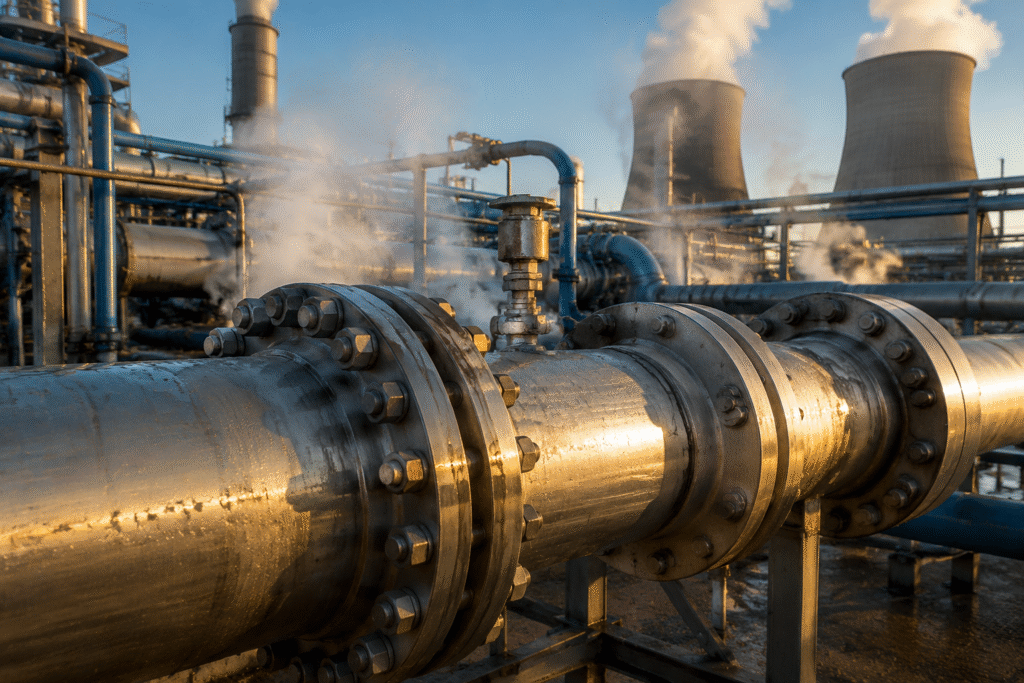
Paslanmaz Çelik Boru Flanş Pazarı: 2024 Veri, Gizli Avantajlar, Türler, Kullanım Alanları, ve ASME B16.5 Nasıl Seçilir? & B16.47 Flanşlar
Grand View Araştırmasına göre (2024), küresel endüstriyel flanş pazarı şu şekilde değerlendi: $5.8 milyar 2023 ulaşılması öngörülüyor ve $7.2 milyar tarafından 2030. That growth explains why the stainless steel pipe flange has become a strategic component for engineers and procurement teams balancing corrosion resistance, basınç bütünlüğü, ve yaşam döngüsü maliyeti.
Endüstriyel alıcılar için, the most intriguing point is not only product availability. The hidden advantages of stainless steel pipe flange selection often appear later in service life through lower maintenance, stronger media compatibility, and better compliance with ASME, ASTM, DIN, ve EN standartları.
Why the stainless steel pipe flange market keeps expanding in critical industries
IBISWorld'e göre (2024), Asya-Pasifik'in hesapları 45% küresel flanş üretimi, Çin'in en büyük üretici olduğu. Sonuç olarak, buyers now expect broader grade availability, daha hızlı teslimat süreleri, and more competitive factory-direct sourcing for stainless steel flanges and fittings.
Statista'ya göre (2024), Petrol ve gaz endüstrisi yaklaşık olarak 35% küresel flanş tüketiminin. Öyleyse, flange suppliers that serve upstream, orta akıntı, and downstream users must support high-integrity applications, izlenebilirlik, and pressure-temperature compliance.
Demand is also rising in water treatment, enerji üretimi, gemi yapımı, ve petrokimya tesisleri. Bu sektörlerde, a stainless steel pipe flange often outperforms coated carbon steel when chloride exposure, nem, or aggressive chemicals shorten maintenance cycles.
Mordor İstihbaratına göre (2024), the industrial pipe components market continues to benefit from refinery upgrades and infrastructure modernization across Asia and the Middle East. Dahası, Alıcılar giderek daha fazla talep ediyor EN 10204 3.1 muayene belgeleri, PMI testi, and PED-compliant manufacturing records before purchase approval.
That shift has changed how engineers evaluate flanges. Fiyat hala önemli, Yine de, procurement teams now compare machining accuracy, sealing face finish, material heat number traceability, and whether the flange vendor can manufacture both standard and custom dimensions.
SASA FLANGE bu ortamda faaliyet göstermektedir ISO 9001:2015 ve PED 2014/68/EU sertifikaları. With stainless steel, karbon çeliği, alaşım, dubleks, nikel alaşımı, and titanium options, the company supports projects that require ASME B16.5, ASME B16.47, DIN, JIS, GOST, ve TR 1092 uyumluluk.
For many EPC contractors, a supplier’s product range matters as much as unit cost. A manufacturer that can supply weld neck, giymek, kör, soket kaynağı, kucak eklemi, and threaded flange styles alongside elbows, tişört, redüktörler, and caps reduces vendor complexity.
Pazar Araştırması Geleceğine Göre (2024), stainless and alloy piping components are seeing above-average demand growth in corrosive processing environments due to durability and lower replacement frequency. Sonuç olarak, lifecycle economics now play a larger role in bidding decisions than initial purchase price alone.
Gibi SASA FLANGE Petrol servisi & Gaz, Petrokimya, Güç Üretimi, Gemi yapımı & Deniz, Su Arıtma, ve İnşaat sektörleri, its positioning aligns with the segments driving most industrial flange demand. Gelişmiş CNC işleme ve kapsamlı kalite testleri ile desteklenmektedir, the company supports custom sizes from 1/2" 60'a kadar" küresel projeler için.
Technical guide to stainless steel pipe flange types, gizli avantajlar, ve malzeme seçimi
A stainless steel pipe flange is not a commodity in demanding service. The correct flange type, karşı karşıya, basınç sınıfı, and metallurgy directly affect gasket sealing, cıvata yükü tutma, korozyon performansı, ve uzun vadeli güvenilirlik.
John Reynolds olarak, piping reliability specialist and former refinery corrosion engineer, eyaletler: “Most flange failures are selection failures before they become mechanical failures in service.” That expert view reflects a common reality in refineries and chemical plants where material mismatch can trigger leakage, çatlak korozyonu, or premature shutdowns.
En yaygın paslanmaz kaliteler kaldı 304, 304L, 316, ve 316L. Fakat, 904L, dubleks 2205, süper dubleks 2507, and nickel alloys such as Inconel, Monel, and Hastelloy are increasingly specified where chloride stress, ekşi servis, or aggressive acids exceed the capability of conventional austenitic stainless steel.
According to ASTM material specifications used across the industry, ASTM A182 covers forged or rolled alloy and stainless flanges, bağlantı parçaları, vanalar, ve yüksek sıcaklıkta servis için parçalar (ASTM, 2024). pratikte, ASTM A182 F304/F304L and F316/F316L are the benchmark grades for many stainless steel pipe flange applications.
According to NACE and plant corrosion studies cited by industry analysts, molybdenum-bearing 316/316L typically offers stronger pitting resistance than 304/304L in chloride-containing media (NACE, 2023). Öyleyse, deniz, açık deniz, and chemical users often choose 316L when process conditions include salt exposure or mild acidic service.
Flange type selection should match process duty and installation method:
- Kaynak boyunlu flanş: yüksek basınç için tercih edilir, termal bisiklet, ve kritik süreç hatları.
- Flanş üzerinde kayma: cost-effective for lower-pressure systems and easier alignment during fabrication.
- Kör flanş: used to terminate, izole etmek, or pressure-test a pipeline or nozzle opening.
- Soket kaynak flanşı: küçük çaplı yüksek basınçlı hatlar için uygundur.
- Dişli flanş: useful where welding is restricted or field hot work is undesirable.
- Bindirme flanşı: selected for systems requiring frequent dismantling and easy alignment.
The hidden advantages of premium flange machining are often overlooked during sourcing. Yet sealing face flatness, eş merkezlilik, delik hizalaması, and serration finish strongly affect gasket seating stress and leak prevention.
Dr. olarak. Milan Patel, materials scientist in corrosion-resistant alloys, eyaletler: “In flange service, metallurgy and machining quality are inseparable because poor surface control can undermine even the best alloy.” Bu nedenle, engineers often specify dimensional inspection, PMI, and hydrostatic or relevant quality tests on critical orders.
ASME B16.5 NPS'den boru flanşlarını ve flanşlı bağlantı parçalarını kapsar 1/2 NPS aracılığıyla 24, sırasında ASME B16.47 NPS'den büyük çaplı çelik flanşları kapsar 26 NPS aracılığıyla 60 (ASME, 2024). Sonuç olarak, buyers searching B16.5 and B16.47 flanges? should verify not only size range but also series, karşı karşıya, sondaj, and pressure class compatibility.
Typical stainless steel pipe flange procurement variables include:
- Boyut aralığı: 1/2" 60'a kadar" depending on standard and manufacturing route.
- Basınç sınıfları: Sınıf 150, 300, 600, 900, 1500, Ve 2500.
- Kaplama seçenekleri: RF, FF, RTJ, dil ve oluk, and male-female.
- Malzeme kaliteleri: 304, 316, 316L, 904L, 2205, 2507, A182 kaliteleri, ve nikel alaşımları.
- Belgeler: EN 10204 3.1, MTC, ısıl işlem kayıtları, boyutlu raporlar, ve PMI.
Birçok projede, the decision is not simply 304 karşı 316. Buyers may need to choose between corrosion margin and capital cost, or between standard stock and custom forged products with long-lead metallurgy.
Örneğin, 304 is widely used for water, gıda işleme, ve genel endüstriyel hizmet. Tersine, 316L is usually preferred for chlorides, marine environments, and more aggressive chemical streams.
Duplex and super duplex grades offer another set of intriguing benefits. They provide higher strength than common austenitic stainless steels, which can reduce wall thickness in some piping designs while maintaining strong resistance to chloride-related corrosion.
According to industry pricing benchmarks compiled by procurement platforms in 2024, stainless flanges can cost 2 ile 5 times more than carbon steel flanges depending on grade and size. Fakat, total installed cost may still favor stainless when repainting, aksama süresi, and replacement intervals are considered.
SASA FLANGE flanşlar üretmektedir 304, 316, 904L, 2205, 2507 ve diğer birinci sınıf kaliteler. Ek olarak, it supports elbows, tişört, redüktörler, ve büyük harfler, which helps EPC buyers consolidate sourcing under one qualified supplier.
For buyers comparing flange manufacturers or a flange vendor for export projects, documentation is a major differentiator. Birlikte çalışmak SASA FLANGE can simplify communication on dimensions, test, işaretleme, and certification for global supply chains.
ASME, ASTM, DIN, EN, and PED requirements that shape stainless steel flange purchasing
Standartlar değiştirilebilirliği belirler, safety margin, and regulatory acceptance. Öyleyse, every stainless steel pipe flange purchase should start with the governing design code, malzeme özellikleri, and end-user documentation requirements.
The main standards frequently referenced in global projects include:
- ASME B16.5 for flanges NPS 1/2 ile 24.
- ASME B16.47 for large-diameter flanges NPS 26 ile 60.
- ASME B16.9 for butt-weld fittings such as elbows, tişört, ve redüktörler.
- ASTM A182 dövme paslanmaz ve alaşımlı flanşlar için.
- EN 1092 Avrupa flanş boyutları ve basınç tanımları için.
- Bölgesel boyut uyumluluğu için DIN ve JIS standartları.
- NACE MR0175 for sour service material requirements in applicable environments.
Basınçlı Ekipmanlar Direktifine göre, PED 2014/68/EU requires conformity assessment for pressure equipment placed on the EU market when thresholds are met (Avrupa Komisyonu, 2024). Sonuç olarak, many European buyers ask for PED declarations, malzeme izlenebilirliği, and documented manufacturing controls before approving a flange supplier.
ASME and EN systems are not interchangeable by assumption. Even when nominal size looks similar, cıvata deliği desenleri, basınç tanımları, kalınlık, and facing details may differ.
The practical comparison below helps procurement teams avoid specification errors:
- ASME Class system: typically expressed as Class 150, 300, 600, 900, 1500, 2500.
- EN system: commonly expressed as PN ratings such as PN10, PN16, PN25, PN40.
- ASME boyutları: aligned with inch-based piping systems widely used in Oil & Gaz.
- EN/DIN dimensions: often used in European industrial and municipal systems.
Malzeme uyumu da aynı derecede önemlidir. ASTM A182 forged grades define chemistry and mechanical properties, while supplementary buyer requirements may add hardness limits, ferrit kontrolü, korozyon testi, or impact testing.
In aggressive service, users may also specify NACE MR0175, DNV, or NORSOK criteria. That is common in offshore, ekşi gaz, and subsea-linked systems where standard stainless may not be enough without tighter qualification.
According to ISO guidance and common manufacturing QA practice, traceability from raw material to finished flange remains essential for high-spec projects (ISO, 2024). Öyleyse, leading buyers ask for heat number marking, PMI doğrulaması, and final inspection records on each batch.
SASA FLANGE destekler ISO 9001:2015, PED 2014/68/AB, ve AD 2000 requirements for relevant projects. Üstelik, its production scope covers stainless steel flanges, karbon çelik flanşlar, alaşım flanşlar, Ve ASME B16.9 pipe fittings for integrated package supply.
Engineers should also confirm facing type and gasket compatibility. A raised face flange paired with the wrong gasket style can compromise seal load, even when the material grade and pressure class are correct.
Referans için, buyers can review official technical information directly from ASME. That step is particularly useful when reviewing pressure-temperature ratings, B16.5 versus B16.47 scope, or deviations in project specifications.
When a project combines multiple standards, supplier capability becomes critical. Birlikte çalışmak SASA FLANGE gives buyers access to custom manufacturing, multi-standard production, and coordinated inspection support for export orders.
How to choose the right flange for Oil & Gaz, kimyasal, güç, deniz, ve su arıtma projeleri
Choosing the right flange starts with service conditions rather than catalog convenience. Medya bileşimi, çalışma basıncı, sıcaklık döngüsü, korozyon mekanizması, and maintenance accessibility should shape the final decision.
Yağda & Gaz, weld neck flange designs remain the preferred choice for critical pressure service. Because the oil and gas industry consumes about 35% of all flanges globally (Devlet adamı, 2024), this segment strongly influences best practice in material selection and inspection rigor.
For petrochemical and chemical processing, corrosion mechanism matters more than generic stainless labeling. Klorürler, kükürt bileşikleri, and acidic media can quickly separate acceptable performance from premature leakage risk.
Power generation buyers often focus on temperature, tükenmişlik, and long-term mechanical stability. Öyleyse, ASTM A182 stainless and alloy grades are specified with greater scrutiny for boilers, ısı değiştiriciler, and auxiliary piping systems.
Marine and shipbuilding users usually prioritize seawater resistance and external corrosion durability. Bu uygulamalarda, 316L, dubleks 2205, ve süper dubleks 2507 often provide stronger long-term value than general-purpose grades.
Water treatment systems present a different balance. Korozyon direnci, temizlenebilirlik, and total ownership cost usually matter more than extreme pressure class.
Use this selection checklist before issuing a purchase order:
- Confirm design standard: ASME B16.5, ASME B16.47, EN 1092, DIN, veya JIS.
- Verify size and class: Örneğin 4 inç paslanmaz çelik boru flanşı, Sınıf 300 RF.
- Match alloy to media: 304, 316L, 904L, 2205, 2507, veya nikel alaşımı.
- Define flange type: kaynak boynu, giymek, kör, dişli, kucak eklemi, veya soket kaynağı.
- Specify testing: PMI, boyutsal muayene, sertlik, ÖYD, hydrotest if applicable.
- Request documents: EN 10204 3.1, MTC, paket listesi, and compliance certificates.
For practical use cases:
- Yağ & Gas gathering line: A182 F316L weld neck flange, ASME B16.5 Sınıf 600 RF.
- Desalination skid: dubleks 2205 slip on or weld neck depending design pressure.
- Chemical reactor nozzle: 904L or Hastelloy flange where high chloride or acid exposure exists.
- Marine ballast line: 316L or duplex flange with verified corrosion-resistant finishing.
- Power plant auxiliary piping: A182 stainless or alloy flange selected to thermal duty.
Kurşun zamanı, hisse senedi stratejisi, and packaging are also important. A flange manufacturer that offers both standard and custom machining can reduce schedule risk when EPC drawings change late in the project cycle.
SASA FLANGE 1/2'den itibaren özel boyutlar sunar" 60'a kadar" rekabetçi fabrika doğrudan fiyatlandırmasıyla. Servis 50+ Petrol genelindeki ülkeler & Gaz, Petrokimya, Güç, ve Denizcilik endüstrileri, the company is positioned for buyers needing repeatable quality and export-ready documentation.
Procurement managers should compare more than the stainless steel pipe flange price. They should evaluate machining tolerance, coating or pickling condition, identification marking, and after-sales responsiveness if field questions arise.
As Sarah Kim, senior sourcing analyst in industrial flow control, eyaletler: “The lowest flange quote often becomes the highest project cost when documentation, tolerance control, or delivery discipline fails.” That is why approved-vendor status usually depends on quality systems as much as on unit price.
Future outlook for stainless steel pipe flange sourcing and strategic buying recommendations
Grand View Araştırmasına göre (2024), flanş pazarının büyümesi bekleniyor $5.8 milyar 2023 ile $7.2 milyar tarafından 2030. Dahası, enerji geçiş projeleri, LNG infrastructure, tuzdan arındırma, and industrial retrofits will keep demand firm for corrosion-resistant flanges and fittings.
Asia-Pacific will likely remain the dominant production base over the next several years. Fakat, buyers will continue shifting toward suppliers that can combine cost efficiency with certified quality systems, metallurgical breadth, and faster engineering communication.
Digital procurement is also changing supplier evaluation. Engineers increasingly request CAD support, inspection photos, ısı izlenebilirliği, and real-time production updates before placing larger annual contracts.
Öyleyse, strategic buyers should take four actions. Birinci, standardize approved grades and flange types by service category. Saniye, prequalify suppliers by certification and export experience. Üçüncü, request clear testing and documentation packages. Dördüncü, compare lifecycle cost instead of focusing only on initial flange price.
For companies managing global projects, dual-sourcing standard items while reserving complex custom flanges for a qualified specialist is often the most resilient approach. That model improves supply continuity without compromising critical application control.
A reliable stainless steel pipe flange partner should support technical clarification as well as shipment execution. gerektiren projeler için ASME B16.5, B16.47, ASTM A182, EN 1092, and premium grades such as 316L, 904L, 2205, veya 2507, buyers can discuss specifications directly with SASA FLANGE for practical manufacturing guidance and quotation support.
Sıkça Sorulan Sorular
Paslanmaz çelik flanşlar ne için kullanılır??
●Boruyu bağlamak için paslanmaz çelik flanşlar kullanılır, vanalar, pompalar, Güç gerektiren sistemlerde ekipman ve ekipmanlar, korozyon direnci, and repeatable sealing performance.
●Statista'ya göre (2024), Petrol ve gaz endüstrisi yaklaşık olarak 35% küresel flanş tüketiminin, which shows how important flanged joints remain in critical process service.
●Petrokimya tesislerinde yaygın olarak kullanılırlar., deniz boruları, su arıtma kızakları, gıda işleme hatları, and power generation facilities because grades like 304, 316L, ve çift yönlü 2205 handle different media and temperature conditions.
●Engineers usually select them when they need easier maintenance access than welded-only systems, because flanges allow disassembly for inspection, conta değişimi, ve ekipman izolasyonu.
●gerektiren projeler için ASME B16.5 veya TR 1092 uyumluluk, gibi yerleşik üreticilerle çalışmak SASA FLANGE helps ensure the flange type, karşı karşıya, and material match the real process duty.
Paslanmaz çelik boru bağlantı parçaları yapıyorlar mı?
●Evet, manufacturers that produce stainless steel flanges often also supply stainless steel pipe fittings such as elbows, tişört, redüktörler, ve büyük harflerle ASME B16.9 boyutlar.
●Pazar Araştırması Geleceğine Göre (2024), corrosion-resistant piping components are seeing sustained demand growth because buyers want longer service life and lower replacement frequency in aggressive environments.
●Pratik satın almada, buying flanges and fittings from one qualified source can simplify dimensional coordination, malzeme izlenebilirliği, and documentation control for the entire piping package.
●Common fitting grades include 304, 316, 316L, 904L, 2205, Ve 2507, while special projects may specify Inconel, Monel, Hastelloy, or titanium for more severe service.
●For integrated packages that need flanges and fittings with EN 10204 3.1 sertifikasyon, alıcılar iletişime geçebilir SASA FLANGE to reduce vendor complexity and improve project coordination.
En güçlü boru flanşı türü nedir?
●The weld neck flange is generally considered the strongest standard piping flange for high-pressure and high-temperature service because its tapered hub distributes stress more evenly into the pipe.
●ASME B16.5 recognizes weld neck flanges across multiple pressure classes up to Class 2500, which is one reason they are preferred in refineries, enerji santralleri, ve açık deniz sistemleri.
●Kuvvet, Yine de, does not depend on design alone, because alloy choice, duvar kalınlığı, gasket load, bolt tightening, and service conditions all affect final performance.
●Örneğin, a duplex 2205 or A182 F316L weld neck flange in the correct class will usually outperform a lower-grade slip on flange in severe cyclic service, even if both meet nominal dimensional requirements.
●Kritik uygulamalar için, buyers should verify design standard, malzeme özellikleri, and inspection scope before ordering from any flange manufacturer or flange vendor.
Farklı paslanmaz çelik flanş türleri nelerdir??
●Ana paslanmaz çelik flanş tipleri kaynak boyunludur, giymek, kör, soket kaynağı, dişli, ve kucak eklemi, and each type serves a different installation and service requirement.
●ASME'ye göre (2024), ASME B16.5 covers common flange configurations for NPS 1/2 başından sonuna kadar 24, sırasında ASME B16.47 NPS'den daha büyük çaplar için geçerlidir 26 başından sonuna kadar 60.
●Weld neck flanges suit severe service, slip on flanges support economical fabrication, blind flanges isolate systems, threaded flanges avoid welding, and lap joint flanges simplify alignment and dismantling.
●Selection should also include facing style such as RF, FF, veya RTJ, because a mismatch between flange face and gasket style can cause leakage even when material and class are correct.
●When evaluating stainless steel flange types for a new project, it is best to review pressure, sıcaklık, medya, and maintenance needs before finalizing the bill of materials.
arasında nasıl seçim yapabilirim? ASME B16.5 Ve ASME B16.47 flanşlar?
●ASME B16.5 is generally used for pipe flanges from NPS 1/2 ile 24, sırasında ASME B16.47 is used for large-diameter steel flanges from NPS 26 ile 60.
●ASME'ye göre (2024), the two standards differ not only in size scope but also in dimensional conventions, which means buyers must confirm drilling, kalınlık, karşı karşıya, and series details before ordering.
●Pratik açıdan, B16.5 is common in refinery and process piping, whereas B16.47 becomes essential for larger headers, su hatları, and plant utility mains.
●Engineers should also verify whether the project requires Series A or Series B under B16.47, because interchangeability cannot be assumed across all large-diameter flange designs.
●For export projects with mixed standards, a qualified supplier can help review drawings and prevent costly specification mismatches before production begins.
Paslanmaz çelik boru flanşı fiyatını neler etkiler??
●Paslanmaz çelik boru flanşı fiyatı esas olarak alaşım kalitesinden etkilenir, boyut, basınç sınıfı, dövme rotası, işleme kapsamı, muayene gereksinimleri, ve sipariş hacmi.
●According to industry pricing benchmarks referenced in 2024 procurement reports, stainless flanges can cost 2 ile 5 times more than carbon steel flanges depending on grade and dimensions.
●Örneğin, A 4 inç paslanmaz çelik boru flanşı 304 may be significantly less expensive than the same item in 316L, 904L, veya çift yönlü 2205 because alloying elements and manufacturing controls increase cost.
●Additional requirements such as PMI, EN 10204 3.1 sertifikasyon, PED belgeleri, special packing, or custom drilling will also raise total price but often reduce project risk.
●Buyers should compare delivered value instead of unit price alone, especially when corrosion resistance, çalışma süresi, and compliance documentation are important to plant performance.
İlgili Mesajlar
Flanş Yüzü Kaplaması: Eşmerkezli ve Spiral Tırtıkların Açıklaması
Eşmerkezli ve spiral tırtılların her ikisi de işlenmiş flanş yüzeyidir…
Dubleks 2205 316L Flanşlara Karşı: Hangi Malzemeyi Seçmelisiniz?
Hızlı cevap: Dubleks 2205 flanşlar genellikle daha güçlü adaydır…

Orifis Flanşı Tanımı, Ayrıntılar ve ASME B16.36 Flanşlara Genel Bakış: Piyasa Verileri, Seçim Kılavuzu ve Uyumluluk Bilgileri
Küresel endüstriyel flanş pazarı şu şekilde değerlendi: $5.8 milyar…

Siyah Bertaraf Flanşı Pazar Rehberi: Malzemeler, 3.5″ Uyumluluk, Mutfak Lavabo Flanşları için B2B Kaynak Verileri
Mutfak armatürü alıcıları nedeniyle siyah atık flanş talebi artıyor…