
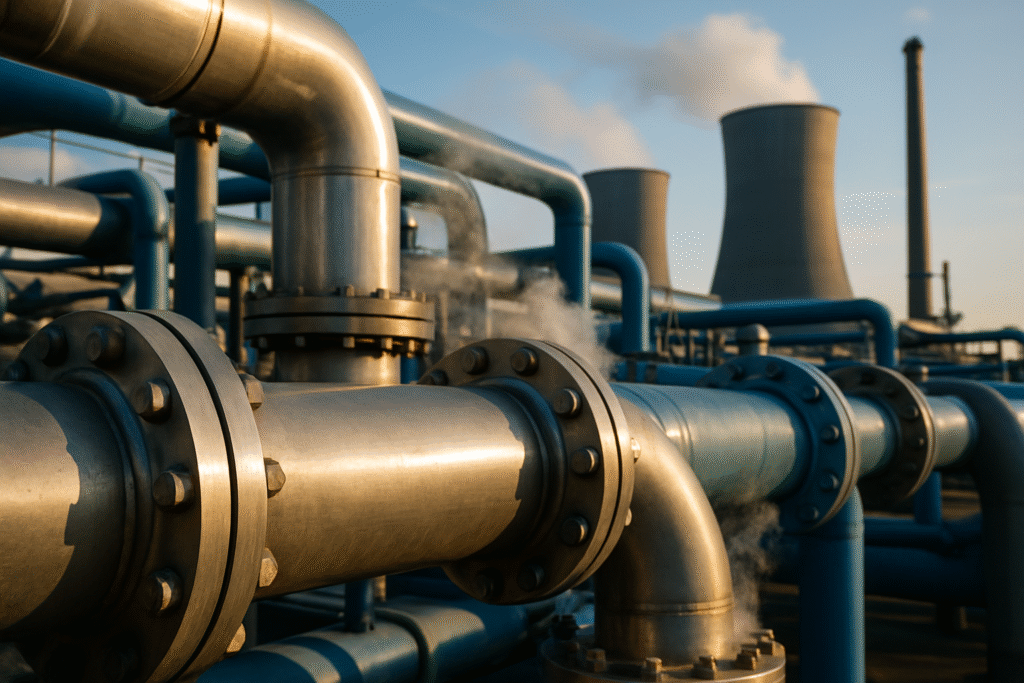
Paslanmaz Çelik Boru Flanşı: Türlere İlişkin Tam Kılavuz, Kullanım Alanları, ASME B16.5 & B16.47 Seçimi
Paslanmaz çelik boru flanşı pazarı güvenilirliği nedeniyle son derece cazip olmaya devam ediyor, korozyon direnci, ve standartlara uygunluk tesisin çalışma süresini doğrudan etkiler. Grand View Araştırmasına göre (2024), küresel endüstriyel flanş pazarı şu şekilde değerlendi: $5.8 milyar 2023 ulaşılması öngörülüyor ve $7.2 milyar tarafından 2030, which confirms sustained demand across process industries.
Tedarik yöneticileri ve boru mühendisleri için, choosing the right stainless steel pipe flange means balancing material grade, basınç sınıfı, karşı karşıya, ve kod gereksinimleri. This complete guide explains the different flange types, core uses, and practical selection factors for industrial projects.
Industrial Demand for Stainless Steel Pipe Flange in Global Projects
Industrial operators continue to prioritize stainless components where corrosion, hijyen, and lifecycle cost matter more than initial purchase price. Statista'ya göre (2024), Petrol ve gaz endüstrisi yaklaşık olarak 35% küresel flanş tüketiminin, which shows how critical flange reliability is in high-risk service.
Üretim düzeyinde, regional capacity also shapes sourcing strategy. IBISWorld'e göre (2024), Asya-Pasifik'in hesapları 45% küresel flanş üretimi, Çin'in en büyük üretici olduğu, therefore buyers increasingly evaluate supplier quality systems alongside cost.
Demand is not driven by one sector alone. Su arıtma, petrokimya işleme, enerji üretimi, deniz inşaatı, and pharmaceutical manufacturing all use stainless steel pipe flange assemblies to connect valves, pompalar, gemiler, and pipelines.
Birçok projede, flange specification errors create more cost than the flange itself. A mismatch in pressure rating, raised face dimensions, or corrosion allowance can trigger rework, sızıntı, shutdowns, and delayed commissioning.
That is why standards-led purchasing has become the norm. ASME B16.5 NPS'den boru flanşlarını ve flanşlı bağlantı parçalarını kapsar 1/2 başından sonuna kadar 24, sırasında ASME B16.47 addresses larger diameter flanges from NPS 26 başından sonuna kadar 60 (ASME, 2023).
Ek olarak, buyers are paying closer attention to documentation and traceability. EN 10204 3.1 sertifikasyon, PMI, boyutsal muayene, hydro testing support, and heat treatment records now play a bigger role in approved vendor selection.
As Mark Holloway, Kıdemli Boru Mühendisi, eyaletler: “Kritik hizmette, flange failure rarely comes from the drawing alone; it usually comes from poor alignment between material selection, basınç sınıfı, and manufacturing control.” That observation reflects why technical procurement has become more data-driven.
Manufacturers with robust quality systems are better positioned in this market. İle ISO 9001:2015 ve PED 2014/68/EU sertifikaları, SASA FLANGE supports industrial buyers that need compliant stainless, karbon çeliği, and alloy flanges for export projects.
Dahası, global project owners increasingly request multi-standard supply. Many EPC and MRO buyers require ASME, DIN, JIS, GOST, ve TR 1092 dimensional familiarity because brownfield and multinational projects often combine legacy and modern systems.
Kaynak açısından bakıldığında, lead time and customization matter almost as much as price. Gelişmiş CNC işleme ve kapsamlı kalite testleri ile desteklenmektedir, SASA FLANGE 1/2'den itibaren özel boyutlar sunar" 60'a kadar" petrol ve gaz için, petrokimya, güç, ve denizcilik projeleri.
Stainless steel remains especially important where chloride exposure, yıkama döngüleri, agresif kimyasallar, and elevated temperatures affect long-term performance. Öyleyse, understanding the different material grades and flange types is essential before issuing RFQs.
Paslanmaz Çelik Boru Flanş Çeşitleri, Malzemeler, ve Teknik Seçim Faktörleri
Paslanmaz çelik boru flanşı tek bir ürün kategorisi değildir. Kaynak boynu içerir, bağcıksız, kör, soket kaynağı, kucak eklemi, ve dişli tasarımlar, each suited to different pressure, tükenmişlik, ve bakım koşulları.
Pazar Araştırması Geleceğine Göre (2024), demand for corrosion-resistant piping components is rising steadily in water treatment and chemical processing as operators target longer asset life. That trend supports wider adoption of 304, 316L, dubleks, and nickel alloy flange materials.
Material selection starts with service environment. ASTM A182 F304 gibi dövme paslanmaz kaliteler, F304L, F316, F316L, F321, F347, and duplex F51/F53 are common for flanges, sırasında ASTM A240 typically governs plate products used in related applications (ASTM, 2023).
Dr. olarak. Elena Ruiz, Malzeme Bilimcisi, eyaletler: “The right stainless grade is chosen by chloride level, sıcaklık, and fabrication route, not by popularity alone.” That principle is especially important when comparing 304 versus 316L or duplex versus super duplex.
The most widely specified stainless steel pipe flange grades include:
- 304 and 304L for general corrosion resistance and strong formability.
- 316 and 316L for improved pitting resistance due to molybdenum content.
- 321 Ve 347 for stabilized high-temperature service.
- 2205 dubleks ve 2507 super duplex for high strength and chloride resistance.
- 904L, Monel, İnkonel, Hastelloy, and Titanium for severe corrosion or high-temperature duty.
Seviye 304 is often selected for general industrial service, gıda işleme, ve hafif kimyasal maruziyet. Fakat, 316L is usually preferred in marine, klorürler, and more aggressive media because its molybdenum content improves resistance to pitting and crevice corrosion.
Duplex grades provide another advantage. Mordor İstihbaratına göre (2024), duplex stainless demand in industrial process systems continues to grow because higher strength can reduce wall thickness and weight in selected applications.
The main stainless steel flange types differ as follows:
- Kaynak boyunlu flanş: yüksek basınç için en iyisi, sıcaklık döngüsü, and vibration because the tapered hub improves stress distribution.
- Geçmeli flanş: easier to align and lower in fabrication cost, but less ideal for severe cyclic service.
- Kör flanş: used to terminate lines, pressure-test systems, veya gelecekteki genişlemeye izin verin.
- Soket kaynak flanşı: daha küçük çapta yaygın, high-pressure piping where smooth bore and compact layout matter.
- Dişli flanş: kaynağın pratik olmadığı durumlarda faydalıdır, though pressure and leak considerations must be reviewed carefully.
- Bindirme flanşı: paired with a stub end, ideal where frequent dismantling and alignment flexibility are needed.
Pressure class must match design conditions. ASME B16.5 classes such as 150, 300, 600, 900, 1500, Ve 2500 define dimensional and pressure-temperature relationships, and those ratings vary by material group (ASME, 2023).
Facing style also affects sealing performance. Raised face remains common in refinery and general process service, while ring type joint is preferred for higher pressure and more demanding leak-tightness requirements.
Procurement teams should also review these technical details before placing an order:
- Nominal boru boyutu ve program uyumluluğu.
- Flange standard such as ASME B16.5, ASME B16.47, DIN, veya TR 1092-1.
- Material grade and supplementary testing requirements.
- Kaplama tipi: RF, FF, RTJ, dil ve oluk, veya erkek ve dişi.
- Basınç sınıfı ve tasarım sıcaklığı.
- Yüzey kalitesi, delme deseni, ve toleranslar.
- Aşağıdakileri içeren muayene belgeleri EN 10204 3.1.
Örneğin, A 4 inch stainless steel pipe flange for a water treatment skid may use ASME B16.5 Sınıf 150 RF in 316L. Tersine, a sour service hydrocarbon line may require a higher class forged flange, tighter NDE controls, Ve NACE MR0175 review depending on the system.
Ek olarak, corrosion margin should be considered together with process chemistry. NACE guidance and plant corrosion data often justify moving from 304L to 316L, 2205, veya 2507 when chlorides, sülfürler, or temperature levels rise (NACE, 2023).
Servis 50+ Petrol ve gazdaki ülkeler, petrokimya, güç, ve denizcilik endüstrileri, SASA FLANGE flanşlar üretmektedir 304, 316, 904L, 2205, 2507, A105, A182, İnkonel, Monel, Hastelloy, ve Titanyum. That broad range helps buyers consolidate suppliers without compromising on specification accuracy.
Engineers also compare total installed cost, not only the unit price. A slightly higher-grade stainless steel pipe flange can cut replacement frequency, reduce leakage risk, and lower shutdown exposure over the asset life.
ASME B16.5, B16.47, ASTM, DIN, Paslanmaz Çelik Flanşlar için EN Gereksinimleri
Compliance is central to flange performance because dimensions, cıvatalama, karşı karşıya, and tolerances must fit the mating system precisely. Öyleyse, any complete guide to stainless steel flange selection must start with standards.
ASME B16.5 governs flanges and flanged fittings up to NPS 24. ASME B16.47 NPS'den büyük çaplı çelik flanşları kapsar 26 ile 60, and it is divided into Series A and Series B with different bolt circle and weight characteristics (ASME, 2023).
Pratik açıdan, ASME B16.47 Series A usually has fewer, larger bolts and heavier construction, while Series B often offers a more compact and economical pattern. Fakat, they are not interchangeable, so drawings and mating equipment must be checked carefully.
The core standards most buyers review include:
- ASME B16.5 for standard pipe flanges and flanged fittings.
- ASME B16.47 for large diameter flanges.
- ASME B16.9 for butt weld fittings used with flange-connected piping systems.
- ASTM A182 dövme veya haddelenmiş alaşım ve paslanmaz çelik boru flanşları için.
- EN 1092-1 Avrupa flanş boyutları ve basınç tanımları için.
- DIN standards for legacy and regional European applications.
- PED 2014/68/EU for pressure equipment compliance in the EU market.
Material and documentation requirements are equally important. ASTM specifications define chemistry and mechanical properties, while project specifications may add PMI, ferrite limits, darbe testi, sertlik sınırları, or corrosion testing.
Below is a quick comparison of widely referenced flange standards:
- ASME B16.5: NPS'ler 1/2 ile 24, common in oil and gas, petrokimya, güç, and export process systems.
- ASME B16.47: NPS'ler 26 ile 60, used for large diameter transmission, depolamak, ve su sistemleri.
- EN 1092-1: PN-rated flanges common in European projects and OEM packages.
- DIN: widely recognized in replacement parts and regional industrial systems.
According to ISO guidance and PED compliance frameworks, traceability and documented conformity reduce procurement risk for pressure-containing components (ISO, 2023). Sonuç olarak, reputable suppliers provide heat number traceability from raw material to finished flange.
When projects involve corrosive media, buyers may request NACE MR0175 veya ISO 15156 consideration for sour service applications. This does not replace flange dimensional standards, but it affects acceptable materials and hardness limits in the full system design.
Quality assurance should extend beyond dimensional checks. Kimyasal analiz, mekanik test, pozitif malzeme tanımlama, görsel muayene, marking verification, and packing control all influence final acceptance at site.
İle ISO 9001:2015, PED 2014/68/AB, ve AD 2000 kimlik bilgileri, SASA FLANGE supports projects that need internationally recognized compliance. Buyers looking for quote support on forged stainless and alloy flange packages can contact SASA FLANGE for technical review and documentation alignment.
It is also good practice to verify whether the project requires forged, plaka, or special-machined flanges. Dövme ASTM A182 products are often preferred in higher pressure and critical applications because grain flow and mechanical integrity are generally superior to fabricated alternatives.
Engineers should also remember that dimensions alone do not ensure interchangeability. Yüz kaplama, conta tipi, cıvatalama malzemesi, cıvata gerilimi, and flange rotation all influence real-world leak performance.
For standards reference, readers can review official code information at ASME.org. Using authoritative code sources helps procurement teams avoid outdated tables or mixed-standard ordering errors.
How to Choose Different Stainless Steel Flange Options by Industry Use
Paslanmaz çelik boru flanşı seçmenin en iyi yolu servis koşullarıyla başlamaktır, then narrow the selection by standard, malzeme, ve flanş tipi. Different industries prioritize different risk factors, so one flange design never fits every application.
Petrol ve gazda, pressure containment and corrosion resistance are dominant concerns. Statista'ya göre (2024), bu sektör yaklaşık olarak temsil ediyor 35% küresel flanş tüketiminin, therefore weld neck flanges in forged stainless or alloy grades are common in critical lines.
Petrokimya ve kimya tesisleri için, media compatibility is usually the first filter. Klorürler, asitler, and cleaning regimes may push selection from 304L to 316L, 904L, dubleks, or nickel alloy grades depending on temperature and corrosion profile.
Power generation systems often combine elevated temperature with cyclic loading. Bu durumlarda, engineers evaluate flange class, conta oturma gerilimi, cıvata yükü tutma, and thermal expansion behavior before finalizing design.
Marine and shipbuilding projects require strong chloride resistance and reliable long-term sealing. Öyleyse, 316L, 2205, Ve 2507 are frequently reviewed for seawater, balast, tuzdan arındırma, and offshore support systems.
Water treatment plants present another distinct use case. Stainless flanges are selected where hygiene, chemical dosing, and corrosion from treated or brackish water make carbon steel less attractive over the lifecycle.
Key selection criteria should include:
- Process media and chloride level.
- Tasarım basıncı ve çalışma sıcaklığı.
- Flange standard and mating dimensions.
- Need for welding, dismantling, or frequent maintenance.
- Korozyon payı ve beklenen hizmet ömrü.
- Required test certificates and end-user approvals.
- Bütçe, kurşun zamanı, and custom machining requirements.
Here is a practical selection approach for common industries:
- Petrol ve Gaz: choose weld neck or RTJ configurations for severe pressure and cyclic service.
- Kimyasal İşleme: prioritize media resistance, often moving toward 316L, 904L, veya özel alaşımlar.
- Enerji Santralleri: verify pressure class and thermal performance under startup and shutdown cycling.
- Deniz: favor 316L or duplex grades for chloride-rich environments.
- Su Arıtma: use corrosion-resistant grades that support long maintenance intervals.
Fiyat önemini koruyor, especially for high-volume projects. Fakat, stainless steel pipe flange price should always be evaluated against maintenance cost, replacement intervals, downtime exposure, and inspection burden.
As James Turner, Endüstriyel Pazar Analisti, eyaletler: “Procurement teams that compare only piece price often miss the bigger economics of corrosion failure, delayed shutdowns, and unplanned replacement labor.” That is why lifecycle costing has become a standard part of technical bid evaluation.
Custom manufacturing also matters when standard catalogs do not fit. 1/2'den başlayan özel boyutlar sunar" 60'a kadar" rekabetçi fabrika doğrudan fiyatlandırmasıyla, SASA FLANGE supports non-standard drilling, special facing, and material-specific requirements for EPC and OEM buyers.
Ek olarak, buyers should ask about machining capability, delivery condition, ambalajlama, ve ihracat tecrübesi. Gelişmiş CNC işleme ve kapsamlı kalite testleri ile desteklenmektedir, SASA FLANGE can support integrated supply of stainless steel flanges and fittings such as elbows, tişört, redüktörler, ve büyük harfler.
If your project includes different flange types across multiple units, supplier consistency becomes a hidden advantage. A manufacturer that can align dimensions, test records, and packing standards across the package reduces receiving and installation errors.
Geleceğin Trendleri, Market Outlook, and Strategic Buying Recommendations
The outlook for stainless steel pipe flange demand remains positive because industrial replacement cycles and new infrastructure continue in parallel. Grand View Araştırmasına göre (2024), endüstriyel flanş pazarının şu seviyeye ulaşması bekleniyor: $7.2 milyar tarafından 2030, which indicates stable long-term demand for compliant suppliers.
Regional sourcing will remain a major factor in competitiveness. Since Asia-Pacific already accounts for more than 45% küresel flanş üretimi (IBISWorld, 2024), buyers will continue to compare total cost, qualification depth, and logistics resilience rather than origin alone.
Aynı zamanda, digital procurement is changing buyer behavior. Engineers now expect faster access to MTCs, boyutlu çizimler, pressure class data, and response times during RFQ evaluation.
Several trends are shaping future purchasing decisions:
- Greater demand for corrosion-resistant grades in desalination, kimyasal işleme, ve açık deniz sistemleri.
- Higher scrutiny of traceability, PED uyumluluğu, ve üçüncü taraf denetimi.
- Increased use of duplex and super duplex in chloride service.
- More package sourcing of flanges together with ASME B16.9 bağlantı parçaları.
- Preference for suppliers that can support custom machining and short lead times.
Öyleyse, strategic buyers should standardize a flange qualification checklist. It should cover code compliance, not doğrulama, boyutsal tolerans, dokümantasyon, test kapsamı, ambalajlama, ve teslimat güvenilirliği.
It also helps to issue RFQs with clear data points. Malzeme derecesini dahil et, standart, basınç sınıfı, karşı karşıya, boyut aralığı, miktar, muayene seviyesi, and end-use service so the supplier can quote accurately and avoid later revisions.
For framework agreements and project tenders, buyers often gain efficiency by working with manufacturers that can supply both standard and custom items. This is especially useful when a package includes stainless flanges, karbon çelik flanşlar, alaşım flanşlar, and fittings across several units.
For companies planning upcoming piping projects, early technical alignment can shorten procurement cycles and reduce field issues. Teams needing compliant stainless steel pipe flange solutions, dokümantasyon desteği, and custom manufacturing can review options with SASA FLANGE during specification and RFQ planning.
Sıkça Sorulan Sorular
Paslanmaz çelik flanşlar ne için kullanılır??
●Boruları bağlamak için paslanmaz çelik flanşlar kullanılır, vanalar, pompalar, gemiler, and equipment in systems that require leak-tight joints, korozyon direnci, and easier maintenance access.
●Statista'ya göre (2024), Petrol ve gaz endüstrisi yaklaşık olarak 35% küresel flanş tüketiminin, which shows how widely flanges are used in critical industrial piping.
●pratikte, engineers specify them for petrochemical lines, su arıtma kızakları, deniz boruları, food processing systems, and power plant auxiliaries because stainless grades resist corrosion better than many carbon steel options.
●Common uses include joining process lines, isolating equipment for inspection, closing pipe ends with blind flanges, and supporting pressure testing before commissioning.
●gerektiren projeler için ASME B16.5 veya B16.47 uyumluluğu, choosing the right pressure class, karşı karşıya, and grade is more important than selecting by price alone.
Paslanmaz çelik boru bağlantı parçaları yapıyorlar mı?
●Evet, üreticiler dirsek gibi paslanmaz çelik boru bağlantı parçaları üretiyor, tişört, redüktörler, and caps to match stainless piping and flange systems in pressure service.
●ASME B16.9 is a common standard for butt weld fittings, while ASTM material specifications define the chemistry and mechanical properties required for stainless grades.
●Pazar Araştırması Geleceğine Göre (2024), corrosion-resistant piping components are seeing steady demand growth in water treatment and chemical processing, which supports continued use of stainless fittings with stainless flanges.
●Buyers usually source fittings and flanges together so that material traceability, duvar kalınlığı uyumluluğu, and documentation remain consistent across the package.
●For projects that need coordinated supply of stainless steel flanges and fittings, gibi yerleşik üreticilerle çalışmak SASA FLANGE helps simplify quality control and procurement scheduling.
En güçlü boru flanşı türü nedir?
●Weld neck flanges are generally considered the strongest standard piping flange type for high-pressure and high-temperature service because their tapered hub distributes stress more effectively.
●ASME B16.5 kaynak boyunlu flanşlar rafineride yaygın olarak kullanılmaktadır, petrokimya, and power applications where vibration, termal bisiklet, and severe loading are present.
●As Mark Holloway, Kıdemli Boru Mühendisi, eyaletler: “Kritik hizmet için, weld neck remains the preferred flange because it handles stress transition far better than simpler connection styles.”
●Blind flanges can also be extremely robust in pressure containment, but they serve a different function because they terminate a line rather than connect a mating pipe spool.
●For severe duty applications, engineers should verify material grade, basınç sınıfı, bakan tip, and gasket system instead of assuming one flange type is strongest in every condition.
What is the difference between MS flange and SS flange?
●MS flange usually refers to mild steel flange, while SS flange refers to stainless steel flange, and the biggest difference is corrosion resistance, followed by composition, strength retention, ve yaşam döngüsü maliyeti.
●Stainless steel flanges contain chromium and often nickel or molybdenum, which improves resistance to rust, kimyasallar, and washdown exposure compared with mild steel.
●Grand View Araştırmasına göre (2024), küresel endüstriyel flanş pazarının ulaştığı $5.8 milyar 2023, and a major share of premium-value demand comes from corrosion-resistant and specialty material applications.
●Mild steel flanges may be more economical for non-corrosive service, but stainless steel usually performs better in marine, kimyasal, sanitary, and outdoor environments where corrosion drives maintenance cost.
●Procurement teams should compare not just purchase price, but also coating needs, muayene sıklığı, replacement intervals, and expected service life before deciding between MS and SS flanges.
How do I choose the right stainless steel flange type for my project?
●You should choose the right stainless steel flange type by reviewing service media, tasarım basıncı, sıcaklık, bakım ihtiyaçları, and the required standard such as ASME B16.5, ASME B16.47, veya TR 1092-1.
●Weld neck flanges suit severe service, slip-on flanges suit lower-cost general applications, blind flanges close line ends, and threaded flanges help where welding is not practical.
●Mordor İstihbaratına göre (2024), demand for higher-performance stainless and duplex components continues to grow, which means more projects now optimize both flange type and alloy grade together.
●Engineers should also verify facing style, basınç sınıfı, conta uyumluluğu, and whether the line requires forged ASTM A182 malzeme, NACE incelemesi, veya EN 10204 3.1 sertifikasyon.
●For projects requiring custom dimensions, special grades, veya çok standartlı tedarik, consulting an experienced manufacturer like SASA FLANGE can reduce specification errors and delays.
What standards apply to stainless steel pipe flange dimensions and ratings?
●ASME B16.5 Ve ASME B16.47 are the leading standards for stainless steel pipe flange dimensions and ratings in many industrial markets, IN iken 1092-1 and DIN standards are also widely used.
●ASME B16.5 genellikle NPS'yi kapsar 1/2 başından sonuna kadar 24, halbuki ASME B16.47 NPS'den daha büyük çapları kapsar 26 başından sonuna kadar 60 and includes Series A and Series B designs.
●ASTM A182 commonly applies to forged stainless flange materials, and PED 2014/68/EU may apply when equipment is supplied into regulated European pressure systems.
●According to ISO compliance guidance (2023), documented traceability and conformity records reduce quality risk for pressure-containing components used in regulated industrial service.
●Buyers should always confirm the exact dimensional standard, sınıf, karşı karşıya, cıvata deseni, and certification package before ordering because visually similar flanges may not be interchangeable.
İlgili Mesajlar
Flanş Yüzü Kaplaması: Eşmerkezli ve Spiral Tırtıkların Açıklaması
Eşmerkezli ve spiral tırtılların her ikisi de işlenmiş flanş yüzeyidir…
Dubleks 2205 316L Flanşlara Karşı: Hangi Malzemeyi Seçmelisiniz?
Hızlı cevap: Dubleks 2205 flanşlar genellikle daha güçlü adaydır…

Orifis Flanşı Tanımı, Ayrıntılar ve ASME B16.36 Flanşlara Genel Bakış: Piyasa Verileri, Seçim Kılavuzu ve Uyumluluk Bilgileri
Küresel endüstriyel flanş pazarı şu şekilde değerlendi: $5.8 milyar…

Siyah Bertaraf Flanşı Pazar Rehberi: Malzemeler, 3.5″ Uyumluluk, Mutfak Lavabo Flanşları için B2B Kaynak Verileri
Mutfak armatürü alıcıları nedeniyle siyah atık flanş talebi artıyor…