
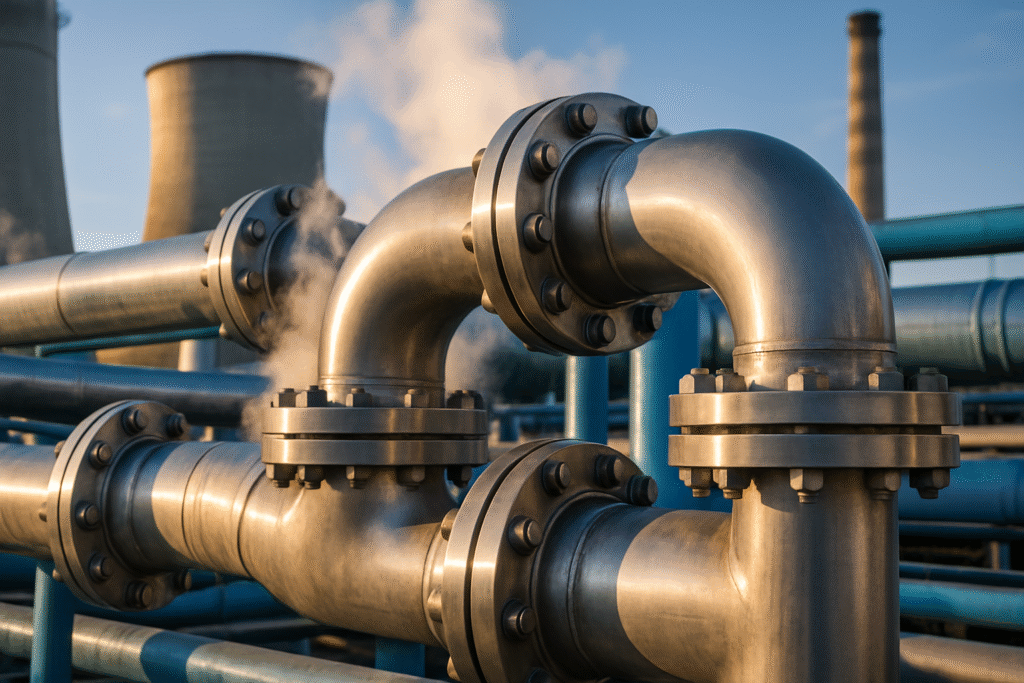
Paslanmaz Çelik Boru Flanş Pazar Rehberi: Gizli Avantajlar, Türler, Kullanım Alanları, ve Flanş Nasıl Seçilir
Grand View Araştırmasına göre (2024), küresel endüstriyel flanş pazarı şu şekilde değerlendi: $5.8 milyar 2023 ulaşılması öngörülüyor ve $7.2 milyar tarafından 2030. That growth explains why the stainless steel pipe flange remains one of the most specified components in modern piping systems across oil and gas, petrokimya, deniz, ve su arıtma projeleri.
Tedarik ekipleri için, the most common flange questions are no longer only about price. Buyers now compare material traceability, ASME uyumluluğu, korozyon performansı, basınç sınıfları, and delivery reliability before they choose flanges for critical service.
Industrial Demand Trends Shaping the Stainless Steel Pipe Flange Market
The stainless steel pipe flange market is expanding because industrial operators need longer service life and lower maintenance risk. IBISWorld'e göre (2024), Asya-Pasifik'in hesapları 45% küresel flanş üretimi, Çin'in en büyük üretici olduğu.
That regional concentration matters for sourcing strategy. Teslim sürelerini etkiler, hammadde kullanılabilirliği, and factory-direct pricing for standard and custom flanges.
Demand is also concentrated in process industries. Statista'ya göre (2024), Petrol ve gaz endüstrisi yaklaşık olarak 35% küresel flanş tüketiminin, which makes material integrity and dimensional consistency essential for project success.
Tersine, water treatment and marine buyers often prioritize chloride resistance, welding quality, ve yaşam döngüsü maliyeti. Öyleyse, grades such as 316L, 2205, Ve 2507 often receive more attention than general-purpose 304 agresif ortamlarda.
Mordor İstihbaratına göre (2024), industrial piping components are seeing steady demand growth from refinery upgrades, LNG terminalleri, and desalination infrastructure. Dahası, stricter shutdown cost controls are pushing buyers toward higher-performance stainless and duplex solutions.
Malzeme mühendisi Dr.. Helen Mercer, Korozyon Uzmanı, eyaletler: “A flange is a small percentage of total project cost, but it can drive a large percentage of leak and maintenance risk if the grade is misapplied.” That insight explains the hidden advantages of selecting the correct stainless steel pipe flange at the design stage.
Buyers should also evaluate manufacturing quality, not just alloy chemistry. According to ISO-related quality benchmarking cited by Market Research Future (2024), certified process control and documented inspection significantly reduce non-conformance risk in pressure components.
SASA FLANGE bu gereksinimi desteklemektedir ISO 9001:2015, PED 2014/68/AB, ve AD 2000 kimlik bilgileri. Gelişmiş CNC işleme ve kapsamlı kalite testleri ile desteklenmektedir, şirket paslanmaz çelik flanşlar tedarik ediyor, karbon çelik flanşlar, alaşım flanşlar, and pipe fittings for global industrial applications.
For engineering teams comparing sources, product breadth matters as much as certification. SASA FLANGE flanşlar üretmektedir 304, 316, 316L, 904L, 2205, 2507, A182 kaliteleri, and high-performance alloys including Inconel, Monel, Hastelloy, ve Titanyum.
That range helps EPC contractors simplify vendor qualification. It also supports mixed-material projects where elbows, tişört, redüktörler, büyük harfler, and mating flanges must align with common standards and inspection requirements.
To review sourcing options, buyers can explore the company’s ürün yelpazesi Ve manufacturing background. For project-specific quotations, boyutlar, veya EN 10204 3.1 dokümantasyon, teams can also temas etmek SASA FLANGE.
Paslanmaz Çelik Boru Flanş Çeşitleri, Gizli Avantajlar, ve Teknik Seçim Faktörleri
The most common stainless steel pipe flange categories include weld neck, bağcıksız, kör, soket kaynağı, dişli, ve bindirme eklemi tasarımları. Fakat, the best option depends on pressure class, döngüsel yükleme, korozyon mekanizması, kaynak kısıtlamaları, ve bakım erişimi.
ASME B16.5 NPS'den flanşları ve flanşlı bağlantı parçalarını kapsar 1/2 başından sonuna kadar 24, sırasında ASME B16.47 addresses large diameter flanges from NPS 26 başından sonuna kadar 60 (ASME, 2023). Öyleyse, size range and rating class should always be checked against the project piping specification before a purchase order is released.
Boru mühendisi Mark Ellison olarak, Senior Process Piping Consultant, eyaletler: “The right flange selection balances mechanical integrity, imalat verimliliği, and service environment rather than simply choosing the lowest initial cost.” This is especially true in sour service, açık deniz sistemleri, ve yüksek sıcaklık proses hatları.
Malzeme kalitesi seçimi de aynı derecede önemlidir. ASTM A182 is commonly specified for forged stainless steel and alloy flanges, sırasında ASTM A240 is often referenced for plate material used in some flange applications and associated components (ASTM, 2024).
Aşındırıcı servis seçimi için NACE kılavuzuna göre (NACE, 2023), klorüre maruz kalma, H2S varlığı, sıcaklık, and crevice conditions can sharply change alloy suitability. Sonuç olarak, 316L may outperform 304 in coastal and chemical service, while duplex grades can deliver higher strength and improved pitting resistance.
Procurement teams evaluating the most common flange options should compare these factors:
- Pressure class requirements such as Class 150, 300, 600, 900, 1500, Ve 2500.
- RF dahil kaplama tipi, FF, and RTJ for sealing performance and gasket compatibility.
- Pipe schedule alignment for weld neck bore matching and stress distribution.
- Corrosion environment including chlorides, asitler, kostikler, and seawater exposure.
- PMI gibi denetim gereklilikleri, hidrotest desteği, sertlik testi, Ve EN 10204 3.1 sertifikasyon.
Weld neck flanges remain the preferred design for severe service. Their tapered hub improves stress transition, and therefore they are widely specified for high-pressure and high-temperature lines.
Slip-on flanges are easier to align and often reduce fabrication cost in lower-pressure systems. Fakat, their fatigue performance usually does not match a weld neck flange in demanding cyclic service.
Blind flanges isolate future tie-ins, pressure boundaries, and maintenance points. Birçok bitkide, a blind flange is a practical safety component rather than only a line-end closure.
Threaded flanges support systems where welding is restricted. Örneğin, small-bore utilities, temporary installations, and certain hazardous locations may benefit from threaded connections if the code and service permit them.
Socket weld flanges are common on smaller high-pressure lines. They provide a compact configuration, although crevice concerns should be considered in corrosive fluid service.
When comparing stainless grades, these are the hidden advantages buyers often overlook:
- 304 offers good general corrosion resistance and competitive cost for indoor or mild process environments.
- 316 and 316L provide better molybdenum-enhanced resistance to chlorides and many chemical media.
- 904L improves resistance in highly corrosive acid service where standard austenitic grades may struggle.
- 2205 duplex combines high strength with strong pitting and stress corrosion resistance.
- 2507 super duplex is often selected for offshore, tuzdan arındırma, and aggressive chloride systems.
According to DNV offshore material guidance (DNV, 2023), duplex and super duplex alloys can reduce wall thickness requirements because of their higher strength. That can improve system weight efficiency in marine and offshore topside projects.
Lead time and customization also influence total project cost. SASA FLANGE özel boyutlar sunuyor 1/2 inç ila 60 rekabetçi fabrika doğrudan fiyatlandırmasıyla inç, which helps contractors manage both standard maintenance orders and non-standard EPC packages.
The company also supports common standards such as ANSI B16.5, ANSI B16.47, DIN, JIS, GOST, EN 1092, Ve ASME B16.9 for matching pipe fittings. Dahası, manufacturing flanges in 304, 316, 904L, 2205, 2507 and other premium grades allows procurement teams to consolidate sourcing under one qualified supplier.
For technical review, project teams can send drawings or datasheets to SASA FLANGE boyutsal onay için, material recommendation, and compliance support. That approach is especially useful when buyers need stainless steel flanges and fittings in one shipment.
Standartlar, Test, Paslanmaz Çelik Boru Flanş Temini ve Uygunluğu
Standartlar değiştirilebilirliği tanımlar, basınç bütünlüğü, ve denetim kapsamı. Öyleyse, every stainless steel pipe flange purchase should link material grade, flanş boyutları, karşı karşıya, sondaj, and documentation to the governing code.
For dimensional standards, ASME B16.5 Ve ASME B16.47 are the most common references in inch-based systems. Tersine, EN 1092 and DIN standards are widely used in European and international projects.
For materials, ASTM A182 commonly applies to forged stainless flanges. ASTM A240 may support related stainless plate applications, sırasında ASTM A276 and other specifications may appear in material traceability chains depending on the component design.
Basınçlı Ekipmanlar Direktifine göre, pressure-retaining products placed on applicable EU markets must meet essential safety requirements under PED 2014/68/EU. Sonuç olarak, dokümantasyon, izlenebilirlik, and conformity assessment become commercial requirements as well as technical ones.
Common compliance checkpoints include:
- Malzeme standardı gibi ASTM A182 F304, F304L, F316, F316L, F904L, or duplex equivalents.
- Boyutsal standart gibi ASME B16.5, ASME B16.47, DIN, veya TR 1092-1.
- Testing and reports including PMI, görsel muayene, boyutsal muayene, Ve EN 10204 3.1 sertifikasyon.
- Additional service criteria such as NACE MR0175 for sour environments where applicable.
- Marking requirements for heat number, seviye, basınç sınıfı, boyut, and manufacturer identification.
Engineers also compare standards by service region and end-user specification. The following summary is useful during bid evaluation:
- ASME: dominant in oil and gas, petrokimya, güç, and many global EPC projects.
- DIN ve EN: Avrupa'da yaygın, OEM ekipmanı, and many industrial utility systems.
- JIS: widely referenced in Japanese industrial projects and related supply chains.
- GOST: relevant for CIS-region specifications and replacement part compatibility.
According to ASME dimensional standard practice, flange interchangeability depends on exact compliance, not nominal similarity (ASME, 2023). Öyleyse, buyers should never assume a visually similar flange from another system will align with bolt pattern, yükseltilmiş yüz yüksekliği, or pressure-temperature rating.
As materials consultant David Kline, Metallurgy Advisor, eyaletler: “Traceability is the commercial language of industrial quality, because test certificates convert claims into verifiable compliance.” That is why mill test reports and positive material identification are often mandatory for refinery and offshore projects.
SASA FLANGE strengthens buyer confidence with ISO 9001:2015 ve PED 2014/68/EU sertifikaları. Servis 50+ Petrol genelindeki ülkeler & Gaz, Petrokimya, Güç, ve Denizcilik endüstrileri, the company supports inspection-driven procurement with documented quality systems and export experience.
Satıcıları karşılaştıran alıcılar için, certification alone is not enough. The supplier should also demonstrate machining capability, hammadde kontrolü, dimensional inspection discipline, and familiarity with customer-approved ITP requirements.
These details directly affect fit-up, sızdırmazlık güvenilirliği, and commissioning speed. In large shutdowns or modular fabrication projects, even small dimensional deviations can create rework costs far above the unit price of a flange.
To confirm technical documentation and compliance requirements for a new project, alıcılar yapabilir temas etmek SASA FLANGE with the required standard, seviye, sınıf, ve test kapsamı. This is particularly useful for PED, Reklam 2000, or multi-standard export orders.
Başvuru Kılavuzu: How to Choose Flanges for Oil and Gas, Kimyasal, Güç, ve Denizcilik Hizmeti
Engineers choose flanges based on fluid, basınç, sıcaklık, korozyon mekanizması, ve kurulum yöntemi. Fakat, procurement managers also weigh stock availability, fabrication complexity, and supplier documentation performance.
Petrol ve gaz sistemleri için, pressure class and sour service compatibility often dominate the specification. Öyleyse, ASTM A182 F316L, dubleks 2205, or higher alloys may be preferred where chlorides, H2S, and aggressive condensates are present.
Petrokimya tesislerinde, chemical resistance and gasket compatibility become critical. A stainless steel pipe flange in 316L or 904L can improve service life in certain acid and solvent applications, although exact media review remains essential.
Enerji üretimi için, temperature cycling and pressure integrity are major concerns. Weld neck flange designs are often selected for steam, yoğunlaşma, and auxiliary high-pressure piping because they better distribute stress.
Shipbuilding and marine projects face continuous salt exposure. Sonuç olarak, 316L, 2205, Ve 2507 are frequently considered for seawater, balast, ve açık deniz hizmet sistemleri.
Water treatment and desalination systems often require a balance of corrosion resistance and budget control. Bu ortamlarda, duplex grades can deliver attractive lifecycle value when chloride concentration is high.
Pratik seçim kriterleri şunları içermelidir::
- Service fluid and chloride level.
- Tasarım baskısı, tasarım sıcaklığı, and flange rating.
- Connection type such as weld neck, bağcıksız, kör, dişli, veya soket kaynağı.
- Material grade including 304, 316L, 904L, 2205, veya 2507.
- Required standards such as ASME B16.5, EN 1092-1, veya DIN.
- Certificate level including EN 10204 3.1 and third-party inspection if specified.
- Need for matching fittings such as elbows, tişört, redüktörler, ve büyük harfler.
Stainless steel pipe flange sizes also influence sourcing decisions. Small-bore threaded or socket weld flanges may suit utility lines, sırasında 4 inch stainless steel pipe flange demand is especially common in process piping, skid fabrication, and replacement maintenance orders.
For larger systems, ASME B16.47 dimensions become relevant. Buyers should confirm whether Series A or Series B applies, because bolt circle and flange mass can differ significantly.
Cost evaluation should move beyond unit price. According to industry maintenance benchmarking referenced by Market Research Future (2024), premature corrosion and leak-related downtime can outweigh initial component savings by a wide margin over the asset lifecycle.
That is why the most common sourcing mistake is selecting by nominal price alone. A lower-cost flange with weaker traceability, poor flatness, or incorrect bore finish can delay installation and increase total ownership cost.
SASA FLANGE supports custom manufacturing for standard and non-standard projects. With advanced CNC machining and broad material capability, the company can supply stainless steel flanges and fittings for integrated piping packages across industrial sectors.
This is valuable when buyers need reducing flanges, large-diameter blind flanges, or mixed-standard orders in one shipment. It also simplifies inspection coordination and document control for EPC contractors and distributors.
When teams choose flanges for replacement work, they should verify more than material name. Yüz tipi, delme deseni, maç programı, basınç sınıfı, and gasket seating surface must all align with the installed system.
For buyers seeking stainless steel pipe flange for sale in export markets, logistics support matters as well. Ambalaj, işaretleme, anti-rust protection for machined faces, and clear documentation all contribute to smooth customs clearance and site handling.
Geleceğe Bakış, Satın Alma Stratejisi, and Competitive Recommendations
The outlook for stainless steel pipe flange demand remains positive because industrial investment continues in LNG, energy transition infrastructure, gemi yapımı, ve su arıtma. Grand View Araştırmasına göre (2024), the global flange market is expected to reach $7.2 milyar tarafından 2030, which indicates sustained procurement activity.
Aynı zamanda, Alıcılar daha seçici hale geliyor. They expect faster quotations, daha net sertifikalar, and application-specific material recommendations rather than generic catalog responses.
Statista'ya göre (2024), energy-related industries continue to represent a large share of flange consumption. Öyleyse, suppliers that can meet oil and gas documentation standards while supporting power, deniz, and chemical requirements will be better positioned.
Digital sourcing is also changing buyer behavior. Engineers now compare standards, boyutlar, and alloy suitability online before they request quotations, so technical SEO and GEO-ready content increasingly influence the vendor shortlist.
The most effective buying strategy includes several actions:
- Her hizmet ortamı için onaylanmış kaliteleri standartlaştırın.
- Pre-qualify suppliers with ISO 9001:2015 and relevant export certifications.
- Request complete documentation scope before order placement.
- Compare total delivered value, not only ex-works pricing.
- Koordinasyon riskini azaltmak için mümkün olan yerlerde flanşları ve bağlantı parçalarını paketleyin.
Ek olarak, buyers should develop a shortlist for urgent shutdown demand and another for engineered project packages. This improves resilience when alloy availability or freight conditions change.
For companies looking to improve supply continuity, SASA FLANGE offers a practical sourcing option backed by broad alloy coverage, international standards support, and manufacturing experience. For upcoming RFQs involving stainless steel pipe flange requirements, özel boyutlar, or matching fittings, procurement teams can review products and connect with the factory through the company website as part of a structured vendor evaluation.
Sıkça Sorulan Sorular
Paslanmaz çelik flanşlar ne için kullanılır??
●Boruları bağlamak için paslanmaz çelik flanşlar kullanılır, vanalar, pompalar, Mukavemet gerektiren sistemlerde basınçlı ekipmanlar, korozyon direnci, ve güvenilir sızdırmazlık.
●Statista'ya göre (2024), Petrol ve gaz endüstrisi yaklaşık olarak 35% küresel flanş tüketiminin, which shows how important flanges are in critical process piping.
●They are commonly installed in petrochemical plants, elektrik santralleri, shipbuilding projects, su arıtma tesisleri, and food process systems where maintenance access and leak control matter.
●The most common uses include line connection, ekipman izolasyonu, muayene erişimi, and future system expansion through blind or mating flange assemblies.
●For projects requiring certified materials and dimensional accuracy to ASME B16.5 veya TR 1092, gibi yerleşik üreticilerle çalışmak SASA FLANGE helps ensure traceability and reliable fit-up.
Paslanmaz çelik boru bağlantı parçaları yapıyorlar mı?
●Evet, üreticiler dirsek gibi paslanmaz çelik boru bağlantı parçaları üretiyor, tişört, redüktörler, and caps to match stainless steel piping and flange systems.
●Pazar Araştırması Geleceğine Göre (2024), demand for corrosion-resistant piping components continues to rise with investment in chemical processing, tuzdan arındırma, and offshore infrastructure.
●These fittings are typically made in grades such as 304, 316, 316L, 904L, 2205, Ve 2507, and they often follow standards like ASME B16.9 alın kaynak bağlantı parçaları için.
●Alıcılar programı onaylamalı, duvar kalınlığı, son hazırlık, and material certificates so that the fittings match the flange bore and the design code of the piping system.
●For integrated projects that need stainless steel flanges and fittings from one source, manufacturers such as SASA FLANGE can simplify procurement and document control.
Paslanmaz çelik flanşlar için standart nedir?
●Paslanmaz çelik flanşlar için ana boyut standartları şunlardır: ASME B16.5 NPS için 1/2 ile 24 Ve ASME B16.47 NPS için 26 ile 60, IN iken 1092 and DIN are also widely used internationally.
●ASTM A182 is one of the most common material standards for forged stainless steel flanges, and specification details usually include grade, sınıf, bakan tip, ve muayene belgeleri.
●ASME'ye göre (2023), interchangeability depends on exact compliance with dimensions, toleranslar, and pressure-temperature ratings rather than general visual similarity.
●Engineers should also review project-specific requirements for PED 2014/68/EU, NACE MR0175, veya EN 10204 3.1 certificates where service conditions or export destinations require them.
●For orders involving mixed standards such as ASME, DIN, ve TR, it is best to verify every item with a qualified supplier before manufacturing begins.
Üç tip flanş nedir?
●The three types of flanges most often discussed in basic industrial piping are weld neck, bağcıksız, ve kör flanşlar.
●Weld neck flanges are preferred for high-pressure or high-temperature service, slip-on flanges are common in less severe systems, and blind flanges are used to close or isolate a line.
●ASME uygulama pratiğine göre, flange type selection should consider mechanical loading, kaynak yöntemi, bakım ihtiyaçları, and system pressure class.
●Gerçek projelerde, engineers also frequently specify threaded, soket kaynağı, ve bindirme bağlantı flanşları, so the full selection is broader than these three basic categories.
●Procurement teams should match flange type to service duty rather than treating all stainless steel flange designs as interchangeable.
How do buyers choose between 304, 316L, 2205, Ve 2507 paslanmaz çelik flanşlar?
●Buyers choose between these grades by comparing corrosion environment, sıcaklık, basınç, imalat yöntemi, and total lifecycle cost rather than alloy price alone.
●Seviye 304 genel hizmet için yaygındır, 316L offers better chloride resistance, 2205 duplex adds higher strength, Ve 2507 super duplex is often selected for severe seawater or offshore conditions.
●DNV'ye göre (2023), duplex and super duplex materials can provide weight and strength advantages in marine and offshore applications when properly specified.
●Engineers should also consider weldability, available size range, and whether the line will operate in crevice-prone or sour service conditions.
●For critical duties, the safest recommendation is to review fluid chemistry and code requirements with the flange manufacturer before final grade selection.
How are stainless steel pipe flange sizes and pressure classes specified?
●Stainless steel pipe flange sizes are specified by nominal pipe size, basınç sınıfı, bakan tip, delik, and the governing dimensional standard such as ASME B16.5 veya ASME B16.47.
●Ortak basınç sınıfları şunları içerir: 150, 300, 600, 900, 1500, Ve 2500, and the correct bore must match the pipe schedule to maintain flow and weld integrity.
●ASME'ye göre (2023), dimensional compliance is essential because bolt holes, face height, and outside diameter determine interchangeability in the field.
●Buyers looking for a 4 inch stainless steel pipe flange should still confirm rating, yüz tipi, ve not, because a 4 inç Sınıfı 150 RF flange is very different from a 4 inç Sınıfı 600 RTJ flanşı.
●For replacement work or export procurement, submitting the exact standard, boyut, sınıf, and material designation prevents costly mismatch and delivery delays.
İlgili Mesajlar
Flanş Yüzü Kaplaması: Eşmerkezli ve Spiral Tırtıkların Açıklaması
Eşmerkezli ve spiral tırtılların her ikisi de işlenmiş flanş yüzeyidir…
Dubleks 2205 316L Flanşlara Karşı: Hangi Malzemeyi Seçmelisiniz?
Hızlı cevap: Dubleks 2205 flanşlar genellikle daha güçlü adaydır…

Orifis Flanşı Tanımı, Ayrıntılar ve ASME B16.36 Flanşlara Genel Bakış: Piyasa Verileri, Seçim Kılavuzu ve Uyumluluk Bilgileri
Küresel endüstriyel flanş pazarı şu şekilde değerlendi: $5.8 milyar…

Siyah Bertaraf Flanşı Pazar Rehberi: Malzemeler, 3.5″ Uyumluluk, Mutfak Lavabo Flanşları için B2B Kaynak Verileri
Mutfak armatürü alıcıları nedeniyle siyah atık flanş talebi artıyor…