
Paslanmaz Çelik Boru Flanş Pazarı: 7 Türlere İlişkin Veriye Dayalı Bilgiler, Kullanım Alanları, ve ASME B16.5 Seçimi
Grand View Araştırmasına göre (2024), küresel endüstriyel flanş pazarı şu şekilde değerlendi: $5.8 milyar 2023 ulaşılması öngörülüyor ve $7.2 milyar tarafından 2030. Bu büyüme, paslanmaz çelik boru flanşı a strategic purchasing category for EPC contractors, tesis mühendisleri, and industrial procurement teams seeking corrosion resistance, kod uyumluluğu, ve yaşam döngüsü değeri.
Dahası, stainless steel flanges support critical piping reliability in oil and gas, petrokimya, enerji üretimi, deniz, ve su arıtma sistemleri. When buyers understand the Hidden Advantages, Türler, Kullanım Alanları, and how to Choose Flanges under ASME B16.5 ve B16.47, they reduce rework, sızıntı riski, ve toplam kurulu maliyet.
Why the Stainless Steel Pipe Flange Market Matters for Industrial Buyers
The stainless steel pipe flange category sits at the intersection of safety, sürdürülebilirlik, and material performance. In high-consequence Pipe systems, the right Flange specification affects sealing integrity, korozyon ömrü, denetim planlaması, and shutdown frequency.
IBISWorld'e göre (2024), Asya-Pasifik'in hesapları 45% küresel flanş üretimi, Çin'in en büyük üretici olduğu. Öyleyse, global buyers increasingly evaluate not only price, but also documentation quality, izlenebilirlik, işleme hassasiyeti, ve ihracat uyumluluğu.
Statista'ya göre (2024), Petrol ve gaz endüstrisi yaklaşık olarak 35% küresel flanş tüketiminin. This demand concentration explains why ASME, ASTM, API, NACE, and PED requirements have become central in flange procurement decisions.
Fakat, many competitor pages focus only on material grades such as 304/304L or 316/316L. They often overlook pressure class selection, bakan türleri, korozyon mekanizmaları, muayene kayıtları, and dimensional compatibility across ASME B16.5, ASME B16.47, DIN, JIS, GOST, ve TR 1092 sistemler.
That gap creates procurement risk. A technically correct stainless steel pipe flange must align with media chemistry, tasarım sıcaklığı, çizgi sınıfı, conta tipi, cıvata yükü, ve belge gereksinimleri gibi EN 10204 3.1 sertifikasyon.
Mordor İstihbaratına göre (2024), global investment in industrial process infrastructure continues to expand across refining, kimyasallar, tuzdan arındırma, and energy transition projects. Sonuç olarak, demand is rising for premium Stainless and duplex Flanges that balance corrosion resistance with strength.
Örneğin, 304 Ve 316 grades remain standard choices for many utility and process services. Tersine, 904L, 2205, 2507, İnkonel, Monel, Hastelloy, and Titanium are selected for chloride exposure, ekşi servis, agresif kimyasallar, or elevated-temperature conditions.
Malzeme mühendisi Dr.. Helen Mercer states: “A flange is not a commodity when the service is corrosive, döngüsel, or safety-critical; metallurgy and dimensional accuracy directly influence leak prevention and service life.” That principle is especially relevant in offshore and chemical duty, where flange failure can trigger costly production losses.
SASA FLANGE serves industrial buyers with stainless steel flanges, karbon çelik flanşlar, alaşım flanşlar, ve boru bağlantı parçaları 304, 316, 316L, 904L, 2205, 2507, A105, A182, İnkonel, Monel, Hastelloy, ve Titanyum. İle ISO 9001:2015 ve PED 2014/68/EU sertifikaları, the company supports global projects that require dimensional consistency, malzeme izlenebilirliği, and factory-direct supply.
Ek olarak, procurement teams increasingly expect more than a catalogue listing. They want clear information on sizes, basınç sınıfları, yüzey bitirmeleri, işleme toleransları, test kapsamı, PMI kullanılabilirliği, packing methods, and realistic lead times.
That is why a data-driven selection process matters. It helps buyers move beyond Intriguing marketing claims and focus on measurable performance criteria, standart uyumluluk, ve yaşam döngüsü ekonomisi.
Teknik Derinlemesine İnceleme: Gizli Avantajlar, Türler, and How to Choose Flanges for Demanding Service
A stainless steel pipe flange provides a detachable mechanical connection between Pipe sections, vanalar, pompalar, ve ekipman nozulları. Its Hidden Advantages include easier maintenance, cleaner alignment control, stronger sealing reliability, and better long-term corrosion resistance than many carbon steel alternatives in wet or chemical service.
Pazar Araştırması Geleceğine Göre (2024), corrosion-related maintenance can account for a significant share of lifecycle costs in industrial fluid systems, özellikle denizcilik ve kimya uygulamalarında. Öyleyse, material choice often has a larger financial impact than the initial flange price.
The most common Stainless grades are 304/304L and 316/316L. Seviye 304 is widely used for general industrial service, sırasında 316 adds molybdenum for improved chloride and chemical resistance.
Fakat, grade selection should never rely on popularity alone. Buyers should review chloride concentration, pH, çalışma sıcaklığı, temizlik kimyasalları, yalıtım durumu, and the possibility of crevice or pitting corrosion.
Boru mühendisi Mark Ellison olarak, PE, eyaletler: “The best flange selection starts with the process medium and the gasket system, not with the cheapest available alloy.” This is why experienced manufacturers ask for line specifications before quoting a Flange.
Common stainless steel pipe flange Types include weld neck, giymek, kör, soket kaynağı, dişli, ve kucak eklemi. Each design serves different pressure, titreşim, Bakım, and fabrication needs under ASME B16.5 or B16.47 dimensional rules.
- Kaynak boyunlu flanş: Yüksek basınç için tercih edilir, döngüsel yükleme, and severe temperature swings because the long hub improves stress distribution.
- Flanş üzerinde kayma: Cost-effective for moderate service and easier alignment, ancak genellikle kaynak boyunlu tasarımlara göre yorulmaya karşı daha az dirençlidir.
- Kör flanş: Satır sonlarını kapatmak için kullanılır, sistemleri izole et, or allow future expansion and hydrotest arrangements.
- Soket kaynak flanşı: Common on smaller bore, higher-pressure utility and process lines.
- Dişli flanş: Kaynağın pratik olmadığı durumlarda kullanışlıdır, especially for low-pressure services and retrofit work.
- Bindirme flanşı: Suitable where frequent dismantling or expensive alloy pipe spools justify a stub-end configuration.
Buna göre ASME B16.5, standard pipe flanges cover NPS 1/2 başından sonuna kadar 24 for many pressure classes. ASME B16.47 extends large-diameter Flanges, tipik olarak NPS 26 başından sonuna kadar 60, which are common in water, deniz, and bulk process systems (ASME, 2023).
Basınç sınıfı seçimi de aynı derecede önemlidir. Sınıf 150, 300, 600, 900, 1500, Ve 2500 ratings determine dimensional thickness, cıvatalama, and pressure-temperature capability.
Örneğin, A 4 Sınıfta inç paslanmaz çelik boru flanşı 150 differs significantly from a 4 inç Sınıfı 600 unit. The outside diameter, cıvata dairesi, stud size, and gasket seating loads all change, so interchangeability cannot be assumed.
Dahası, facing style affects sealing performance. Yükseltilmiş yüz, düz yüz, halka tipi eklem, and tongue-and-groove configurations must match the gasket type and mating flange design.
Buna göre ASTM A182/A182M, forged or rolled alloy and stainless steel pipe flanges for high-temperature service are supplied under strict chemical and mechanical property requirements (ASTM, 2024). This standard is particularly relevant for forged Stainless Steel Flange products used in refinery, kimyasal, ve güç uygulamaları.
The following selection factors help engineers Choose the right stainless steel pipe flange:
- Base material grade: 304, 316, 316L, 904L, 2205, 2507, veya nikel alaşımı.
- Pressure-temperature rating per ASME B16.5 veya B16.47.
- Flanş tipi: kaynak boynu, kör, giymek, dişli, kucak eklemi, veya soket kaynağı.
- Kaplama tipi: RF, FF, RTJ, or special facing.
- Boru programı ve delik uyumluluğu.
- Corrosion allowance and expected process contaminants.
- Gerekli testler: PMI, hidrotest desteği, sertlik, ferrit, or NDE.
- Dokümantasyon: MTC, ısı izlenebilirliği, EN 10204 3.1, PED, NACE MR0175 eğer uygulanabilirse.
Ek olarak, buyers should evaluate manufacturing capability. Gelişmiş CNC işleme ve kapsamlı kalite testleri ile desteklenmektedir, SASA FLANGE 1/2'den itibaren özel boyutlar sunar" 60'a kadar" with competitive factory-direct pricing for project and replacement demand.
Şirket aynı zamanda dirsek de tedarik ediyor, tişört, redüktörler, ve altındaki kapaklar ASME B16.9, which helps buyers consolidate sourcing for piping packages. That integrated approach can reduce supplier management time and improve dimensional consistency across the system.
According to ISO guidance on quality management, process control and traceability improve repeatability in manufacturing environments (ISO, 2015). Öyleyse, certified production systems matter when projects require repeat orders, üçüncü taraf denetimi, veya belgeleri dışa aktarın.
Pratik açıdan, the Hidden Advantages of a well-specified stainless steel pipe flange are fewer leaks, lower maintenance frequency, longer service intervals, and easier shutdown planning. Those benefits often outweigh a higher purchase price, especially in corrosive service or high-value production lines.
ASME, ASTM, DIN, EN, and PED Compliance for Stainless Steel Flanges
Standards compliance is one of the strongest differentiators in the industrial flange market. Engineers need assurance that dimensions, metalurji, basınç değerleri, and inspection records align with the project specification.
For most North American and international process projects, ASME B16.5 Ve ASME B16.47 are the key dimensional standards for Flanges. Avrupa'da ve birçok ihracat projesinde, EN 1092 and PED requirements also influence design, material approval, ve dokümantasyon.
ASTM standartları malzeme kimyasını ve mekanik özelliklerini tanımlar, while ASME standards define dimensions and pressure-temperature relationships. This distinction matters because a flange can match the right size standard yet still fail the wrong material specification.
- ASME B16.5: NPS için boru flanşları ve flanşlı bağlantı parçaları 1/2 ile 24.
- ASME B16.47: NPS için büyük çaplı çelik flanşlar 26 ile 60.
- ASTM A182: Forged or rolled alloy and stainless steel pipe flange materials.
- ASME B16.9: Dirsekler gibi fabrika yapımı dövme alın kaynağı bağlantı parçaları, tişört, ve redüktörler.
- EN 1092: Avrupa flanş boyutları ve basınç sınıfları.
- NACE MR0175/ISO 15156: Ekşi hizmet ortamları için malzeme kılavuzu.
Basınçlı Ekipmanlar Direktifi 2014/68/EU'ya göre, pressure components entering the EU market must satisfy safety and conformity requirements appropriate to their category (PED, 2014). Sonuç olarak, manufacturers serving Europe need robust material control, izlenebilirlik, and technical documentation.
Buyers should also verify certificate expectations early in the RFQ stage. Typical project packages may require EN 10204 3.1 malzeme sertifikaları, PMI raporları, hardness results, boyutsal inceleme raporları, and third-party witness records.
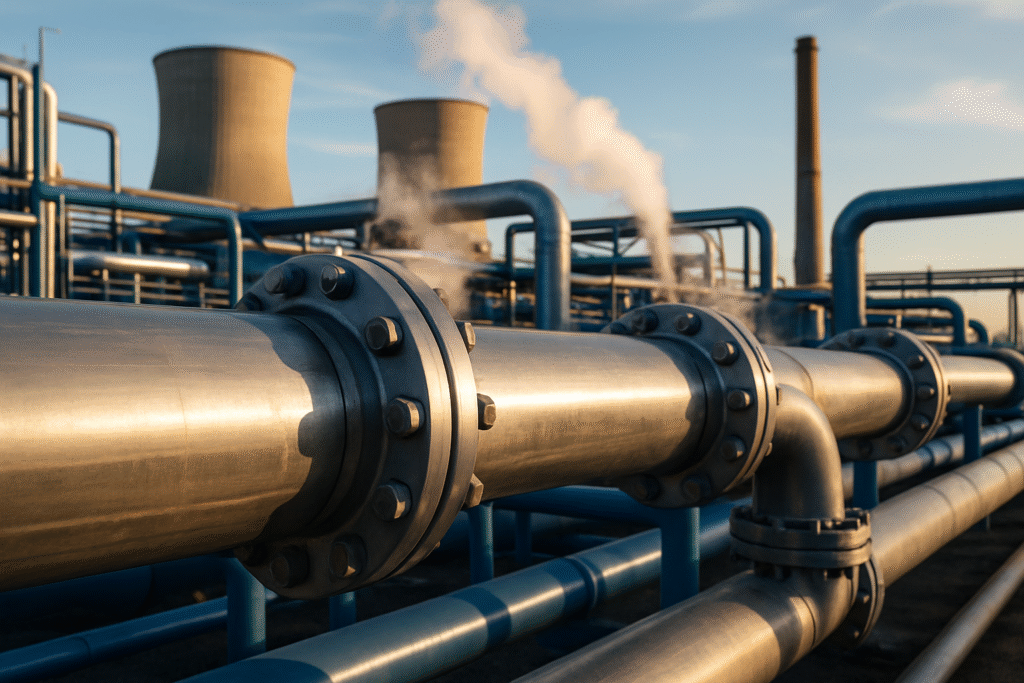
Image alt: stainless steel pipe flange inspection under ASME B16.5 ve B16.47 standartları
Here is a practical comparison of common standards used in global projects:
- ASME sistemi: Common in oil and gas, arıtma, güç, and EPC projects with inch-based piping systems.
- DIN/EN sistemi: Frequent in European process plants, water utilities, and OEM exports.
- JIS system: Often specified for Japanese equipment and regional industrial installations.
- GOST system: Still relevant in selected CIS and legacy infrastructure projects.
Ek olarak, buyers should understand that not all standards are directly interchangeable. Cıvata desenleri, basınç sınıfları, yüzleşme ayrıntıları, and thicknesses can differ, even where nominal size appears similar.
Korozyon uzmanı Prof.. Daniel Reeves'in notları: “Most flange problems in the field are specification mismatches, not machining defects.” That observation reinforces the need to align Pipe, conta, cıvatalar, and Flange standards from the start.
ASME publishes the core dimensional references used by engineers worldwide. Benzer şekilde, ASTM and ISO standards provide the material and quality framework needed for repeatable supply.
İle ISO 9001:2015, PED 2014/68/AB, ve AD 2000 kimlik bilgileri, SASA FLANGE supports buyers that need export-ready manufacturing and documented compliance. Flanş imalatı 304, 316, 904L, 2205, 2507 ve diğer birinci sınıf kaliteler, the company aligns supply with both standard and custom project requirements.
Üstelik, code compliance supports commercial performance. Many operators now treat documentation quality as a supplier qualification metric because poor traceability can delay installation, inspection release, and final payment.
Başvuru Kılavuzu: Kullanım Alanları, Seçim Kriterleri, and Best Fit by Industry
The Uses of a stainless steel pipe flange vary by media, basınç sınıfı, maintenance philosophy, and regulatory environment. Fakat, the core objective remains the same: achieve a safe, leak-resistant, serviceable connection point in a piping system.
Petrol ve gazda, stainless and duplex Flanges are widely used in produced water, utility water, kimyasal enjeksiyon, açık deniz kızakları, and selected process lines. Statista'ya göre (2024), petrol ve gaz yaklaşık olarak temsil edilir 35% küresel flanş tüketiminin, which underscores the sector’s influence on specification practices.
Petrokimya ve kimya tesislerinde, 316/316L often serves mild to moderate corrosive duty, 904L ise, Hastelloy, Monel, and duplex grades cover more aggressive media. Aralık korozyon direnci, conta uyumluluğu, and cleaning chemistry all matter in these environments.
Enerji üretiminde, stainless steel flanges support condensate systems, water treatment loops, instrument air, and selected high-temperature services. Thermal cycling and maintenance access frequently influence whether buyers Choose weld neck, kör, or slip on designs.
Marine and shipbuilding projects present a different challenge because chlorides accelerate corrosion. Öyleyse, 316L, 2205, Ve 2507 are often preferred where seawater splash, ballast service, or deck exposure can degrade lower-alloy materials.
Water treatment and desalination systems require long life with controlled maintenance budgets. Sonuç olarak, engineers often balance initial cost against expected pitting resistance, cleaning frequency, ve değiştirme aralıkları.
Key criteria for choosing the right stainless steel pipe flange include:
- Sıvı bileşimi, klorür içeriği, and contamination risk.
- Çalışma ve tasarım sıcaklık aralığı.
- Pressure class and surge conditions.
- Korozyon mekanizması, çukurlaşma dahil, yarık, galvanic, or SCC risk.
- Flange type and access needs for maintenance.
- Boru boyutu, takvim, and welding procedure compatibility.
- Regional standards such as ASME, DIN, EN, veya JIS.
- Required certifications, denetim noktaları, and end-user approvals.
Örneğin, a stainless steel threaded pipe flange may suit a low-pressure utility line where hot work is restricted. Tersine, an Api weld neck flange or ASME weld neck design is usually more appropriate for severe service and high-integrity joints.
Buyers also ask about stainless steel pipe flange sizes and price. Size ranges typically start at 1/2 inç ve uzatın 60 inç, while price depends on grade, basınç sınıfı, karşı karşıya, dövme rotası, machining hours, ve sertifikasyon kapsamı.
According to procurement benchmarks from industrial sourcing platforms and manufacturer quotations, premium alloys can cost several times more than standard 304 veya 316 items. Yine de, lower failure rates and longer service life often justify the premium in corrosive duty.
Manufacturing flexibility matters as much as metallurgy. Offering custom manufacturing, işleme, sondaj, and matching fittings supply, SASA FLANGE supports project packages across Oil & Gaz, Petrokimya, Güç, and Marine sectors in more than 50 ülkeler.
The company can help buyers compare standard Stainless options with duplex, nikel alaşımı, or titanium alternatives based on service conditions. That consultative approach is especially useful when replacing legacy components or qualifying substitute materials during tight project schedules.
Ek olarak, bundled sourcing improves consistency. When one supplier provides flanges, dirsekler, tişört, redüktörler, and caps to coordinated standards, dimensional fit-up risk usually declines.
Geleceğe Bakış: Strategic Recommendations for Buyers of Stainless Steel Pipe Flange Products
The industrial flange market will remain resilient because energy, su, kimyasallar, and infrastructure sectors continue to invest in new and upgraded Pipe systems. Grand View Araştırmasına göre (2024), pazarın bundan sonra büyümesi bekleniyor $5.8 milyar 2023 ile $7.2 milyar tarafından 2030.
Aynı zamanda, buyer expectations are changing. Procurement managers now demand shorter lead times, clearer mill traceability, stronger QA records, and better support for multi-standard projects.
IBISWorld'e göre (2024), Asya-Pasifik daha fazlasını üretiyor 45% küresel flanş üretiminin, which means supplier selection in China remains strategically important for international sourcing. Fakat, the winning supplier is not always the cheapest; it is the one that ships compliant products, complete documents, and consistent dimensions.
Stratejik olarak, buyers should standardize their RFQ checklist. Include alloy grade, standart, basınç sınıfı, flanş tipi, karşı karşıya, miktar, inspection needs, dokümantasyon paketi, and delivery terms in every inquiry.
They should also qualify suppliers by manufacturing depth rather than website claims alone. Review CNC capacity, PMI control, ısı numarası izlenebilirliği, calibration records, and export packing methods before placing large or safety-critical orders.
Üstelik, project teams should compare lifecycle value instead of unit price only. A lower-priced Flange that corrodes early, arrives without documents, or fails fit-up can create far greater cost than an initially higher quote.
For global buyers evaluating stainless steel pipe flange supply, the most effective approach combines technical scrutiny with supplier reliability. ASME gerektiren projeler için, ASTM, DIN, EN, PED, and custom alloy support, iletişim kurmak SASA FLANGE early in the specification stage can improve both sourcing speed and engineering confidence.
Sıkça Sorulan Sorular
Paslanmaz çelik flanşlar ne için kullanılır??
●Boruyu bağlamak için paslanmaz çelik flanşlar kullanılır, vanalar, pompalar, ve korozyon direnci gerektiren sistemlerde basınçlı kaplar, kullanışlılık, and dimensional reliability.
●Statista'ya göre (2024), the oil and gas sector alone accounts for approximately 35% küresel flanş tüketiminin, which shows how critical flange connections are in process infrastructure.
●They are commonly installed in petrochemical, deniz, su arıtma, gıda işleme, and power applications because grades such as 304, 316, 316L, 2205, Ve 2507 perform well in wet, kimyasal, or chloride-bearing environments.
●Tam kullanım flanş tipine bağlıdır, basınç sınıfı, karşı karşıya, and material standard, so buyers should match ASME B16.5 or B16.47 dimensions with ASTM A182 material requirements before ordering.
●Korozyona dayanıklılık gerektiren projeler için, izlenebilir, and export-ready supply, gibi yerleşik üreticilerle çalışmak SASA FLANGE helps ensure compliant material certificates and consistent machining quality.
Hangi flanşlar paslanmaz çelikten yapılmıştır??
●Yaygın paslanmaz çelik flanşlar kaynak boynunu içerir, giymek, kör, dişli, soket kaynağı, ve gibi kalitelerde üretilen bindirme bağlantı tasarımları 304, 304L, 316, 316L, 904L, 2205, Ve 2507.
●Buna göre ASTM A182/A182M (2024), forged stainless steel flanges for high-temperature and pressure service must meet controlled chemical and mechanical property limits, which is why ASTM grade verification matters.
●pratikte, 304 Ve 316 dominate general industrial service, dubleks iken, süper dubleks, and nickel alloys are chosen for seawater, ekşi servis, or aggressive chemical duty.
●Large-diameter stainless steel flange products are typically made to ASME B16.47, while standard process sizes are usually specified to ASME B16.5, DIN, JIS, veya TR 1092 depending on project geography.
●Buyers should request flange type, boyut, basınç sınıfı, karşı karşıya, and certificate scope in the RFQ so the manufacturer can supply the correct stainless configuration without specification gaps.
Paslanmaz çelik boru bağlantı parçaları yapıyorlar mı?
●Evet, üreticiler dirsek gibi paslanmaz çelik boru bağlantı parçaları üretiyor, tişört, redüktörler, büyük harfler, saplama biter, and custom buttweld components for use with stainless steel flange systems.
●Buna göre ASME B16.9 (2023), factory-made wrought buttwelding fittings are standardized for dimensions and tolerances, which helps ensure fit-up consistency with matching piping and flange assemblies.
●These fittings are commonly manufactured in 304, 316, 316L, 904L, 2205, 2507, and other alloys to match process corrosion, basınç, and welding requirements across industrial services.
●Procurement teams should align fitting material, duvar kalınlığı, and inspection requirements with the flange specification because mixed standards can create weld mismatch and project delays.
●For integrated packages that include flanges and fittings under one quality system, gibi tedarikçiler SASA FLANGE kaynak bulma ve dokümantasyon kontrolünü basitleştirebilir.
Üç tip flanş nedir?
●Temel endüstriyel tartışmalarda en sık başvurulan üç flanş tipi kaynak boyunludur, giymek, ve kör flanşlar, although threaded, kucak eklemi, and socket weld types are also widely used.
●Buna göre ASME B16.5 (2023), each flange type has standardized dimensions that affect bore, kalınlık, cıvatalama, and facing geometry, so the selection changes both strength and sealing behavior.
●Weld neck flanges are preferred for high-pressure or cyclic service, slip on flanges are often selected for moderate-duty cost control, and blind flanges are used to isolate or terminate a line.
●Engineers should avoid selecting among these types by price alone because stress distribution, fatigue exposure, kaynak yöntemi, and maintenance access strongly influence long-term performance.
●Where service conditions are severe or uncertain, buyers should consult a qualified manufacturer before finalizing the flange type, sınıf, and alloy combination.
Paslanmaz çelik flanşlar için ASME Kodu nedir?
●The principal ASME dimensional codes for stainless steel flanges are ASME B16.5 NPS için 1/2 başından sonuna kadar 24 Ve ASME B16.47 büyük çaplar için, sırasında ASTM A182 genellikle dövme paslanmaz malzemeyi yönetir.
●ASME'ye göre (2023), B16.5 basınç-sıcaklık değerlerini tanımlar, boyutlar, toleranslar, işaretleme, and testing expectations for pipe flanges and flanged fittings used in process industries.
●Buyers should understand that ASME standards define geometry and rating, whereas ASTM standards define chemical composition and mechanical properties, so both must appear in a technically complete specification.
●Avrupa ihracatı için, PED 2014/68/EU and EN 1092 can also apply, especially when end users request CE-related conformity and EN 10204 3.1 dokümantasyon.
●The safest procurement practice is to specify ASME size standard, ASTM malzeme kalitesi, basınç sınıfı, karşı karşıya, and certificate requirements in the same purchase order line.
How do I choose the right stainless steel pipe flange for price and performance?
●The right stainless steel pipe flange balances alloy cost, korozyon direnci, basınç derecesi, bakan tip, and documentation requirements rather than focusing on lowest unit price.
●Grand View Araştırmasına göre (2024), the global industrial flange market is projected to grow from $5.8 milyar 2023 ile $7.2 milyar tarafından 2030, which indicates strong demand and continued buyer emphasis on reliable sourcing.
●Örneğin, a low-cost 304 flange may suit clean utility service, while a 316L, 2205, veya 2507 option can deliver better lifecycle value in chloride-bearing, açık deniz, or chemical environments.
●Procurement teams should compare delivered scope including machining, PMI, EN 10204 3.1 sertifikalar, paketleme, and lead time because these factors materially affect installed cost and project risk.
●Kritik uygulamalar için, request a technical review from a manufacturer that can supply standard and custom sizes, multiple alloys, and complete quality documentation before you place the order.
İlgili Mesajlar
Flanş Yüzü Kaplaması: Eşmerkezli ve Spiral Tırtıkların Açıklaması
Eşmerkezli ve spiral tırtılların her ikisi de işlenmiş flanş yüzeyidir…
Dubleks 2205 316L Flanşlara Karşı: Hangi Malzemeyi Seçmelisiniz?
Hızlı cevap: Dubleks 2205 flanşlar genellikle daha güçlü adaydır…

Orifis Flanşı Tanımı, Ayrıntılar ve ASME B16.36 Flanşlara Genel Bakış: Piyasa Verileri, Seçim Kılavuzu ve Uyumluluk Bilgileri
Küresel endüstriyel flanş pazarı şu şekilde değerlendi: $5.8 milyar…

Siyah Bertaraf Flanşı Pazar Rehberi: Malzemeler, 3.5″ Uyumluluk, Mutfak Lavabo Flanşları için B2B Kaynak Verileri
Mutfak armatürü alıcıları nedeniyle siyah atık flanş talebi artıyor…