
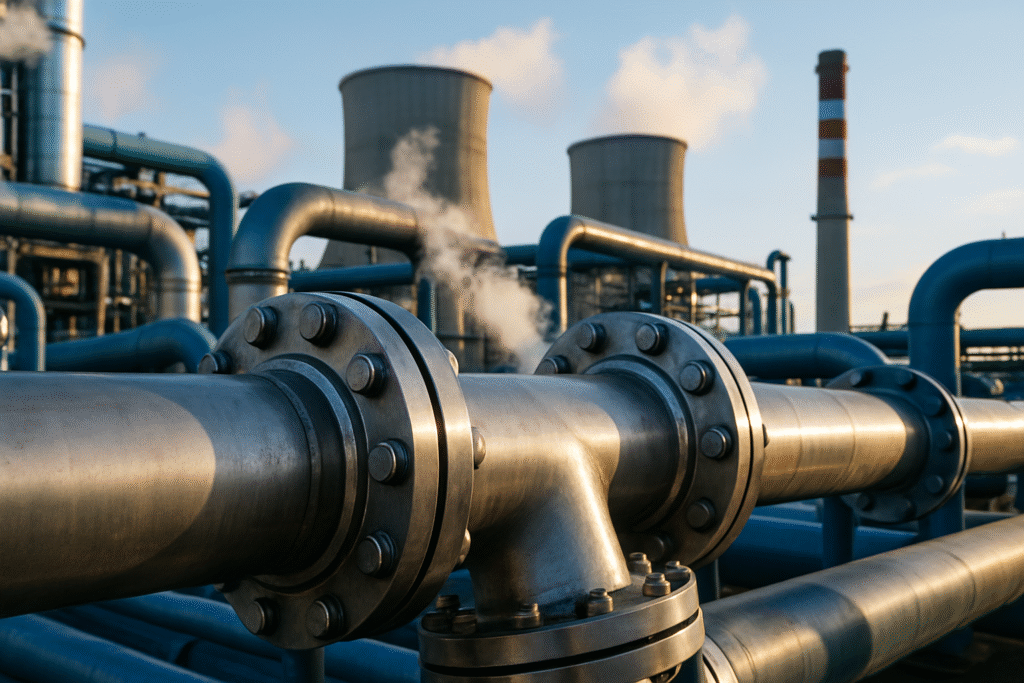
Paslanmaz Çelik Boru Flanş Pazarı 5,8 Milyar Dolar: Gizli Avantajlar, Türler, Kullanım Alanları, ve Premium Flanşlar Nasıl Seçilir?
Paslanmaz çelik boru flanşı pazarı, modern proses borularının merkezinde yer almaktadır, ve enerji genelinde talep artmaya devam ediyor, su, ve kimyasal projeler. Grand View Araştırmasına göre (2024), küresel endüstriyel flanş pazarı şu şekilde değerlendi: $5.8 milyar 2023 ulaşılması öngörülüyor ve $7.2 milyar tarafından 2030.
That growth highlights the hidden advantages of Stainless Steel Flanges in corrosive, yüksek basınç, and high-purity service. Mühendisler ve alıcılar için, the real value lies in balancing versatility, dayanıklılık, standartlara uygunluk, ve toplam yaşam döngüsü maliyeti.
Paslanmaz çelik boru flanşı tedarikini şekillendiren endüstriyel talep eğilimleri
Procurement teams are buying in a tighter, more technical market than they did five years ago. IBISWorld'e göre (2024), Asya-Pasifik'in hesapları 45% küresel flanş üretimi, Çin'in en büyük üretici olduğu.
That production concentration affects pricing, teslim süreleri, and mill availability for 304, 316, dubleks, nikel alaşımı, ve titanyum kaliteleri. Öyleyse, supplier selection now depends on quality systems, işleme kapasitesi, and documentation as much as base price.
End-use demand also remains highly concentrated. Statista'ya göre (2024), Petrol ve gaz endüstrisi yaklaşık olarak 35% küresel flanş tüketiminin.
Petrochemical and power projects follow closely because both sectors require pressure-retaining joints that can survive cyclic loads, temperature swings, ve agresif medya. Sonuç olarak, stainless steel pipe flange purchasing often involves detailed review of pressure class, bakan tip, metalurji, ve muayene gereklilikleri.
Birçok projede, stainless remains the preferred material because it provides a strong corrosion-performance ratio with broad code acceptance. ASTM A182 F304, F304L, F316, and F316L remain common choices for weld neck, bağcıksız, kör, soket kaynağı, and threaded configurations.
Fakat, buyers increasingly compare standard austenitic grades with premium materials such as 904L, 2205, 2507, İnkonel, Monel, Hastelloy, ve Titanyum. This is especially true in chloride service, sour systems, açık deniz üst kısımları, ve yüksek sıcaklık proses hatları.
Mordor İstihbaratına göre (2024), global investment in water treatment infrastructure continues to accelerate, particularly in desalination and municipal reuse systems. That trend supports stronger demand for corrosion-resistant Stainless solutions, especially in EN and DIN-based projects.
Paralel olarak, refinery upgrades and cleaner fuel projects continue to sustain flange replacement demand. Pazar Araştırmasının Geleceği (2024) notes that industrial piping component demand is growing steadily with process plant modernization and expansion across Asia and the Middle East.
B2B alıcıları için, this means the conversation has moved beyond simple catalog sourcing. Lead time certainty, EN 10204 3.1 malzeme sertifikaları, PMI testi, boyutsal doğruluk, and export packing now shape final purchase decisions.
SASA FLANGE operates in this environment with a practical manufacturing model focused on industrial buyers. İle ISO 9001:2015 ve PED 2014/68/EU sertifikaları, şirket paslanmaz çelik tedarik ediyor, karbon çeliği, alaşım, dubleks, and titanium flange products for Oil & Gaz, Petrokimya, Güç, Deniz, Su Arıtma, ve İnşaat uygulamaları.
Ek olarak, SASA FLANGE supports multiple standards including ANSI B16.5, ANSI B16.47, DIN, JIS, GOST, ve TR 1092. Buyers can review capabilities, ürünler, ve üretim geçmişi https://sasaflange.com/products/ Ve https://sasaflange.com/about-us/.
Stainless steel pipe flange technical advantages, material types, and performance factors
The intriguing part of stainless steel pipe flange selection is that similar-looking parts can deliver very different service life. Malzeme kimyası, ferrite balance, heat treatment route, and welding practice all influence in-service reliability.
John Reynolds olarak, eski korozyon uzmanı ve endüstri yazarı, eyaletler: “Most piping failures are not caused by pressure rating errors alone, but by incorrect material selection for the actual environment.” That observation applies directly to Stainless flange procurement in chloride-bearing and cyclic-temperature systems.
ASTM ve ASME malzeme uygulamalarına göre, flange material must match both mechanical and corrosion requirements for the system design (ASTM, 2024; ASME, 2023). Öyleyse, engineers must evaluate not only nominal grade but also low-carbon variants, stabilized grades, ve çift yönlü seçenekler.
The most common Stainless Steel Flanges used in industrial piping include austenitic grades such as 304, 304L, 316, ve 316L. These Types offer good fabrication characteristics and broad chemical compatibility for process, fayda, and clean service.
304 and 304L remain popular because they offer strong general corrosion resistance and competitive cost. Fakat, 316 ve 316L molibden ekler, which improves pitting resistance in chloride exposure and many marine or chemical settings.
Daha ağır koşullar için, buyers often move to premium grades. 904L offers better resistance in reducing acids, dubleks iken 2205 ve süper dubleks 2507 provide higher strength and improved chloride stress corrosion cracking resistance.
Nickel alloys also matter in strategic projects. İnkonel, Monel, and Hastelloy flange materials serve high-temperature, ekşi, and highly corrosive environments where standard stainless may not deliver sufficient margin.
According to NACE guidance for corrosive production systems, klorür konsantrasyonu, sıcaklık, pH, and sulfide exposure should all be reviewed before final material approval (NACE, 2023). Dahası, designers in upstream and offshore facilities frequently align decisions with NACE MR0175 / ISO 15156 gereksinimler.
Dr. olarak. Digby Macdonald, corrosion engineer, eyaletler: “Corrosion allowance is not a substitute for proper alloy selection.” pratikte, that means the right stainless steel pipe flange grade can reduce maintenance intervals, sızıntı riski, and shutdown losses.
Pressure class and design geometry also influence flange performance. A weld neck flange usually provides the best fatigue resistance because the hub transitions stress more smoothly into the Pipe wall.
Buna karşılık, slip-on Flanges may reduce fabrication cost in lower-pressure systems, but they are less favored in severe cyclic or high-integrity service. Blind Flanges isolate line ends and vessel nozzles, while socket weld and threaded styles are common in small-bore systems.
- Ortak konfigürasyonlar: kaynak boynu, bağcıksız, kör, soket kaynağı, dişli, kucak eklemi.
- Frequent pressure ratings: Sınıf 150, 300, 600, 900, 1500, Ve 2500.
- Typical materials: A182 F304/F304L, F316/F316L, F51, F53, 904L, Titanyum, İnkonel.
- Kaplama seçenekleri: RF, FF, RTJ, Dil ve Oluk, Erkek ve Kadın.
- Inspection options: PMI, sertlik, hidrotest desteği, UT, boyutsal kontroller, visual and surface examination.
Buna göre ASME B16.5, flanş boyutları, toleranslar, basınç-sıcaklık değerleri, and marking requirements must be controlled for sizes up to NPS 24 (ASME, 2023). ASME B16.47 expands coverage for larger diameters, which is critical for transmission, terminal, and large water applications.
For buyers evaluating Uses across multiple sectors, flange geometry should be linked to actual operating data. Sıcaklık, medya kompozisyonu, insulation, cıvatalama malzemesi, conta tipi, and external corrosion environment all affect long-term sealing performance.
This is where supplier execution becomes important. Gelişmiş CNC işleme ve kapsamlı kalite testleri ile desteklenmektedir, SASA FLANGE flanşlar üretmektedir 304, 316, 904L, 2205, 2507 and other premium grades for projects requiring consistent tolerance control and material traceability.
Ek olarak, the company can support elbows, tişört, redüktörler, and caps to simplify package procurement. That helps project teams standardize documentation and reduce coordination across multiple vendors.
ASME, ASTM, DIN, and EN standards that govern stainless steel flange compliance
Standards compliance is not a paperwork exercise. Paslanmaz çelik boru flanşının sığmasını sağlayan çerçevedir, fok, and perform in service.
For most industrial projects, ASME, ASTM, DIN, and EN requirements define the baseline. Dahası, export projects often layer PED, Reklam 2000, NACE, müşteri özellikleri, and third-party inspection protocols on top.
The primary dimensional standard in North America is ASME NPS için B16.5 1/2 başından sonuna kadar 24. ASME B16.47 daha büyük çapları kapsar, sırasında ASME B16.9 applies to butt weld fittings that connect to the flange system.
Malzeme standartları da aynı derecede önemlidir. ASTM A182 dövme veya haddelenmiş alaşım ve paslanmaz çelik boru flanşlarını yönetir, dövme bağlantı parçaları, ve yüksek sıcaklıkta servis için valfler, sırasında ASTM A240 plaka için geçerlidir, çarşaf, and strip for chromium and chromium-nickel stainless steels.
European projects commonly specify EN 1092 for flange dimensions and pressure designations. DIN legacy references still appear in many maintenance and replacement purchases, especially in mixed-installation plants.
Avrupa Komisyonu PED çerçevesine göre, pressure equipment materials and conformity assessment must align with essential safety requirements for applicable equipment categories (PED 2014/68/AB). Öyleyse, certificates and traceability records matter as much as machining quality.
The table below summarizes the most common references used by engineers and buyers.
- ASME B16.5: boyutlar, derecelendirmeler, toleranslar, karşı karşıya, marking for flanges up to NPS 24.
- ASME B16.47: large diameter steel flanges from NPS 26 ile 60.
- ASTM A182: forged stainless and alloy flange material requirements.
- ASME B16.9: dimensions for butt weld fittings used with flange systems.
- EN 1092: European flange dimensions and PN pressure designations.
- NACE MR0175 / ISO 15156: material guidance for H2S-containing environments.
- EN 10204 3.1: inspection certificate format for material traceability.
Buyers should also verify whether the project requires raised face, düz yüz, or RTJ profiles. Ek olarak, flange drilling patterns, bore schedules, and facing finish must match the mating component and gasket design.
DNV offshore rehberliğine göre, flange integrity in marine and offshore systems depends on both material selection and assembly control, including bolting and gasket installation procedures (DNV, 2023). Sonuç olarak, even the best Premium flange can fail if the joint design is not managed correctly.
SASA FLANGE supports these compliance expectations with ISO 9001:2015, PED 2014/68/AB, ve AD 2000 aligned manufacturing processes. The company can provide EN 10204 3.1 dokümantasyon, boyutsal muayene, and grade verification to support EPCs, distribütörler, ve son kullanıcılar.
Tedarikçileri karşılaştıran satın alma ekipleri için, standards knowledge should be visible in quotations and technical clarifications. A reliable manufacturer should state pressure class, standart, seviye, heat treatment status, karşı karşıya, test kapsamı, and document package without ambiguity.
That level of detail reduces RFQ friction and speeds technical approval. It also helps avoid the hidden cost of rework, rejected lots, and delayed site installation.
How to choose stainless steel pipe flanges for oil, gaz, kimyasal, güç, ve denizcilik hizmeti
Doğru paslanmaz çelik boru flanşını seçmek servis koşullarıyla başlar, katalog tercihi değil. Engineers should define pressure, sıcaklık, akışkan kimyası, korozyon mekanizması, pipeline schedule, and joining method before comparing prices.
Petrol ve gaz servisi için, sour exposure and chloride content often decide the material family. In upstream gathering and offshore topsides, 316L may work for some utility lines, ama çift yönlü 2205 or nickel alloy may be required for higher risk circuits.
Petrochemical systems demand more precise review of process media. Organik asitler, klorürler, kükürt bileşikleri, and elevated temperatures can push buyers beyond standard austenitic Stainless grades.
Enerji üretiminde, flange selection often follows steam conditions and thermal cycling. Öyleyse, high-temperature alloy flanges or chrome-moly grades such as F11 and F22 may be specified in selected lines, while stainless may serve condensate, su kimyası, ve yardımcı sistemler.
Marine and shipbuilding projects emphasize chloride resistance and long-term durability. Sonuç olarak, 316L, 2205, 2507, and Titanium become increasingly relevant in seawater handling, yıkayıcı sistemleri, tuzdan arındırma kızakları, ve güverte boruları.
Water treatment presents another important growth area. Pazar Araştırması Geleceğine Göre (2024), infrastructure upgrades and water reuse investments are expanding demand for corrosion-resistant piping components globally.
For practical selection, buyers should review the following criteria.
- Medya uyumluluğu, klorür seviyesi dahil, pH, katılar, ve temizlik kimyasalları.
- Operating and design pressure with required ASME or EN class.
- Çalışma sıcaklığı, including upset and shutdown conditions.
- Flanş tipi, such as weld neck for fatigue resistance or blind for isolation.
- Pipe schedule and bore matching to avoid flow disturbance.
- Gasket type and facing finish compatibility.
- Denetleme, izlenebilirlik, and document package requirements.
- Project standard, örneğin ASME B16.5, EN 1092, PED, veya NACE MR0175.
As Phil Hopkins, kıdemli boru mühendisi, eyaletler: “The cheapest flange is rarely the lowest-cost flange once installation, denetleme, and downtime risks are included.” That is especially true when buyers overlook dimensional control, ferrite balance, or documentation quality.
Procurement teams should also compare size range and customization capability. 1/2'den başlayan özel boyutlar sunar" 60'a kadar" rekabetçi fabrika doğrudan fiyatlandırmasıyla, SASA FLANGE supports standard and non-standard requirements for OEMs, EPC yüklenicileri, and stockists.
Birçok projede, buyers prefer one supplier that can deliver both Flanges and fittings. That package approach simplifies inspection plans and creates more consistent metallurgy across elbows, tişört, redüktörler, büyük harfler, and mating flange assemblies.
For custom or urgent requirements, buyers can discuss drawings, standartlar, and mill test expectations directly with SASA FLANGE. This is particularly useful when the RFQ includes mixed materials such as A105, A182 stainless, dubleks, İnkonel, Monel, Hastelloy, ve Titanyum.
Future outlook for stainless steel pipe flange buyers and strategic sourcing recommendations
Paslanmaz çelik boru flanşı talebine yönelik görünüm olumlu olmaya devam ediyor, çünkü enerji, su, and process infrastructure still require reliable bolted connections. Grand View Araştırmasına göre (2024), flanş pazarının büyümesi bekleniyor $5.8 milyar 2023 ile $7.2 milyar tarafından 2030.
That growth will not be uniform across materials. Higher-specification projects are likely to increase demand for duplex, süper dubleks, high-alloy stainless, and corrosion-resistant special metals as plants target longer service intervals.
Aynı zamanda, buyers will continue to face pressure on total installed cost. Öyleyse, the best sourcing strategy combines material optimization, standards alignment, and supplier qualification rather than chasing the lowest unit quote.
Several strategic actions can improve purchasing outcomes.
- Standardize approved grades and flange Types by service category.
- Ask for EN 10204 3.1 sertifikalar, ısı izlenebilirliği, and PMI on critical orders.
- Confirm ASME, ASTM, DIN, or EN compliance before commercial comparison.
- Evaluate machining capability for RF, RTJ, and special facing requirements.
- Use qualified suppliers with ISO 9001:2015 and PED manufacturing systems.
- Bundle flange and fitting purchases where possible to simplify QA and logistics.
Ek olarak, digital procurement will keep growing in industrial components. Buyers increasingly expect faster RFQ turnaround, clearer technical submittals, and more transparent production communication.
Bu nedenle, manufacturers that combine export experience with metallurgical breadth will hold an advantage. Servis 50+ Petrol genelindeki ülkeler & Gaz, Petrokimya, Güç, ve Denizcilik endüstrileri, SASA FLANGE is positioned to support buyers who need technical clarity, birinci sınıf notlar, and dependable manufacturing execution.
When evaluating your next stainless steel pipe flange package, it is worth comparing not only price but also documentation, turnaround, and compliance support. Sertifikalı paslanmaz gerektiren projeler için, dubleks, alaşım, or custom-engineered flange solutions, buyers can start technical discussions at https://sasaflange.com/contact-us/.
Sıkça Sorulan Sorular
Paslanmaz çelik flanşlar ne için kullanılır??
●Stainless steel flanges are primarily used to connect Pipe sections, vanalar, pompalar, and equipment in pressure systems, and the oil and gas sector alone accounts for about 35% Statista'ya göre küresel flanş tüketimi (2024).
●They are selected for corrosive, hijyenik, deniz, kimyasal, and high-temperature services because grades such as 304, 316, 2205, Ve 2507 offer strong durability and sealing reliability when matched to the right gasket, cıvatalama, ve basınç sınıfı.
●gerektiren projeler için ASME B16.5, EN 1092, or PED-compliant supply, gibi yerleşik üreticilerle çalışmak SASA FLANGE helps ensure material traceability, doğru boyutlar, and the correct flange type for the intended service.
Paslanmaz çelik flanşlar için ASME Kodu nedir?
●The main ASME code for stainless steel pipe flange dimensions and pressure-temperature ratings is ASME B16.5 for sizes from NPS 1/2 ile 24, sırasında ASME B16.47 daha büyük çaplar için geçerlidir.
●Material compliance is usually tied to ASTM A182 dövme paslanmaz ve alaşımlı çelik flanşlar için, and according to ASME (2023), boyutsal toleranslar, yüzleşme ayrıntıları, işaretleme, and pressure class must align with the relevant standard.
●Buyers should confirm both the dimensional code and the material standard on every RFQ, and for critical applications it is advisable to source from qualified producers such as SASA FLANGE that can provide EN 10204 3.1 certification and full inspection records.
Üç tip flanş nedir?
●The three most commonly referenced flange types in general procurement are weld neck, bağcıksız, ve kör, although threaded, kucak eklemi, and socket weld designs are also widely used in industrial systems.
●Weld neck Flanges are preferred for high-pressure and cyclic service, slip-on Flanges are often used in lower-demand installations, and blind Flanges close off a line or nozzle for maintenance or future expansion.
●When selecting among these Types, engineers should compare pressure rating, fatigue exposure, kaynak yöntemi, and fluid risk, and buyers with mixed-material or custom-size needs should consult manufacturers like SASA FLANGE uygulamaya özel rehberlik için.
What are the industrial applications of stainless steel?
●Stainless steel is used across oil and gas, petrokimya, enerji üretimi, deniz, gıda işleme, ilaç, su arıtma, and construction because it combines corrosion resistance with strong mechanical performance.
●IBISWorld'e göre (2024), Asya-Pasifik'te birden fazla yer var 45% küresel flanş üretimi, which reflects the broad industrial dependence on stainless and alloy piping components in infrastructure and process manufacturing.
●For flange and fitting applications, buyers should match the stainless grade to the medium, sıcaklık, and compliance standard, especially when comparing 304, 316, 904L, dubleks, and Titanium options for long-service or aggressive environments.
arasında nasıl seçim yapabilirim? 304 Ve 316 stainless steel pipe flange options?
●316 stainless steel pipe flange grades generally outperform 304 in chloride-containing environments because molybdenum improves pitting resistance, which is especially important in marine, kimyasal, and washdown systems.
●304 is often sufficient for general industrial service and can reduce upfront cost, Ancak 316 or 316L is usually the safer choice when exposure includes salt, temizlik maddeleri, or moderate corrosive media.
●The correct choice should be based on fluid chemistry, çalışma sıcaklığı, and lifecycle cost rather than unit price alone, and technical review with a qualified supplier is recommended for any service with uncertain corrosion risk.
Paslanmaz çelik boru flanşı fiyatını hangi faktörler etkiler??
●Stainless steel pipe flange price is affected by grade, boyut, basınç sınıfı, işleme karmaşıklığı, test kapsamı, ve piyasa koşulları, ve Grand View Araştırmasına göre (2024) endüstriyel flanş pazarına ulaştı $5.8 milyar 2023, which reflects continued demand pressure on supply chains.
●Premium materials such as 904L, 2205, 2507, İnkonel, Monel, Hastelloy, and Titanium cost more than 304 veya 316 because raw material input, forging difficulty, and inspection requirements are higher.
●To achieve better total value, buyers should compare documentation quality, standartlara uygunluk, and delivery reliability alongside quoted price, especially for projects that require PED, NACE, veya EN 10204 3.1 certified supply.
İlgili Mesajlar
Flanş Yüzü Kaplaması: Eşmerkezli ve Spiral Tırtıkların Açıklaması
Eşmerkezli ve spiral tırtılların her ikisi de işlenmiş flanş yüzeyidir…
Dubleks 2205 316L Flanşlara Karşı: Hangi Malzemeyi Seçmelisiniz?
Hızlı cevap: Dubleks 2205 flanşlar genellikle daha güçlü adaydır…

Orifis Flanşı Tanımı, Ayrıntılar ve ASME B16.36 Flanşlara Genel Bakış: Piyasa Verileri, Seçim Kılavuzu ve Uyumluluk Bilgileri
Küresel endüstriyel flanş pazarı şu şekilde değerlendi: $5.8 milyar…

Siyah Bertaraf Flanşı Pazar Rehberi: Malzemeler, 3.5″ Uyumluluk, Mutfak Lavabo Flanşları için B2B Kaynak Verileri
Mutfak armatürü alıcıları nedeniyle siyah atık flanş talebi artıyor…