
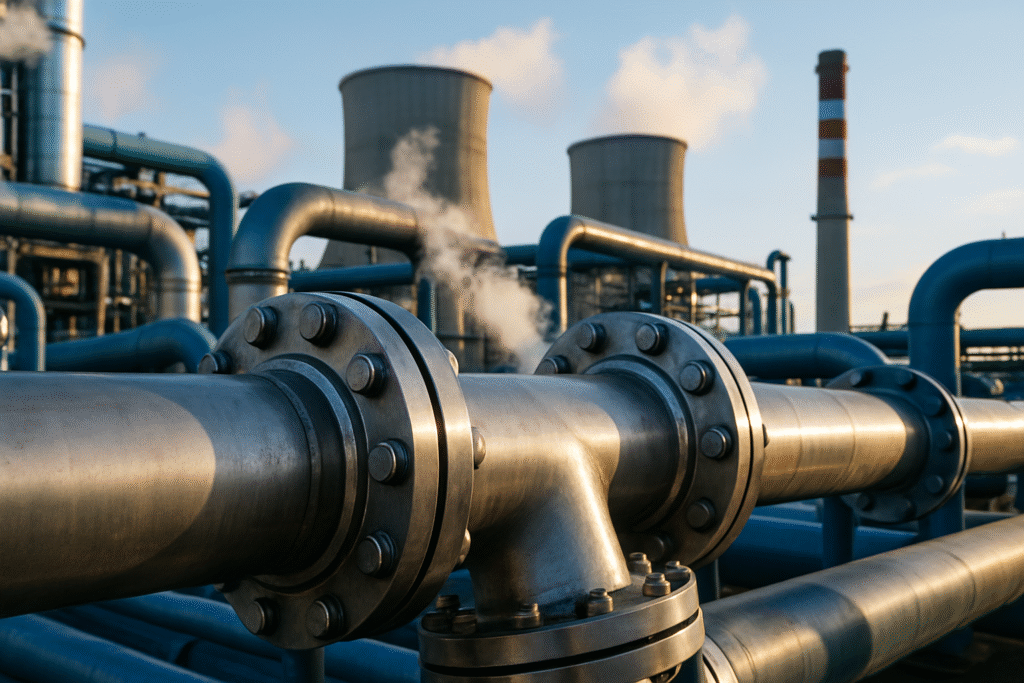
ตลาดหน้าแปลนท่อสแตนเลสที่ 5.8 พันล้านดอลลาร์: ข้อดีที่ซ่อนอยู่, ประเภท, การใช้งาน, และวิธีการเลือกหน้าแปลนแบบพรีเมียม
ตลาดหน้าแปลนท่อสแตนเลสเป็นศูนย์กลางของกระบวนการวางท่อที่ทันสมัย, และความต้องการพลังงานก็เพิ่มขึ้นเรื่อยๆ, น้ำ, และโครงการเคมี. จากการวิจัยของแกรนด์วิว (2024), ตลาดหน้าแปลนอุตสาหกรรมทั่วโลกมีมูลค่าอยู่ที่ $5.8 พันล้านใน 2023 และคาดว่าจะไปถึง $7.2 พันล้านโดย 2030.
That growth highlights the hidden advantages of Stainless Steel Flanges in corrosive, แรงดันสูง, and high-purity service. สำหรับวิศวกรและผู้ซื้อ, the real value lies in balancing versatility, ความทนทาน, การปฏิบัติตามมาตรฐาน, และต้นทุนตลอดอายุการใช้งาน.
Industrial demand trends shaping stainless steel pipe flange sourcing
Procurement teams are buying in a tighter, more technical market than they did five years ago. อ้างอิงจาก IBISWorld (2024), บัญชีเอเชียแปซิฟิกมีมากกว่า 45% ของการผลิตหน้าแปลนทั่วโลก, โดยจีนเป็นผู้ผลิตรายใหญ่ที่สุด.
That production concentration affects pricing, เวลานำ, and mill availability for 304, 316, ดูเพล็กซ์, โลหะผสมนิกเกิล, และเกรดไทเทเนียม. ดังนั้น, supplier selection now depends on quality systems, กำลังการผลิตเครื่องจักร, and documentation as much as base price.
End-use demand also remains highly concentrated. ตามสถิติของสตาติสต้า (2024), อุตสาหกรรมน้ำมันและก๊าซมีสัดส่วนประมาณ 35% ของการบริโภคหน้าแปลนทั่วโลก.
Petrochemical and power projects follow closely because both sectors require pressure-retaining joints that can survive cyclic loads, การเปลี่ยนแปลงของอุณหภูมิ, และสื่อเชิงรุก. ส่งผลให้, stainless steel pipe flange purchasing often involves detailed review of pressure class, หันหน้าไปทางประเภท, โลหะวิทยา, และข้อกำหนดในการตรวจสอบ.
ในหลายโครงการ, stainless remains the preferred material because it provides a strong corrosion-performance ratio with broad code acceptance. ASTM A182 F304, F304L, F316, and F316L remain common choices for weld neck, ลื่นบน, ตาบอด, เชื่อมซ็อกเก็ต, and threaded configurations.
อย่างไรก็ตาม, buyers increasingly compare standard austenitic grades with premium materials such as 904L, 2205, 2507, อินโคเนล, โมเนล, ฮาสเตลลอย, และไทเทเนียม. This is especially true in chloride service, ระบบเปรี้ยว, ท็อปไซด์นอกชายฝั่ง, และสายการผลิตที่มีอุณหภูมิสูง.
ตามข้อมูลของ Mordor Intelligence (2024), global investment in water treatment infrastructure continues to accelerate, particularly in desalination and municipal reuse systems. That trend supports stronger demand for corrosion-resistant Stainless solutions, especially in EN and DIN-based projects.
ในแบบคู่ขนาน, refinery upgrades and cleaner fuel projects continue to sustain flange replacement demand. อนาคตการวิจัยตลาด (2024) notes that industrial piping component demand is growing steadily with process plant modernization and expansion across Asia and the Middle East.
สำหรับผู้ซื้อ B2B, this means the conversation has moved beyond simple catalog sourcing. Lead time certainty, EN 10204 3.1 ใบรับรองวัสดุ, การทดสอบ PMI, ความแม่นยำของมิติ, and export packing now shape final purchase decisions.
SASA FLANGE operates in this environment with a practical manufacturing model focused on industrial buyers. กับ ISO 9001:2015 และการรับรอง PED 2014/68/EU, ทางบริษัทจำหน่ายสแตนเลส, เหล็กกล้าคาร์บอน, โลหะผสม, ดูเพล็กซ์, and titanium flange products for Oil & แก๊ส, ปิโตรเคมี, พลัง, มารีน, การบำบัดน้ำ, และการใช้งานก่อสร้าง.
นอกจากนี้, SASA FLANGE supports multiple standards including ANSI B16.5, ANSI B16.47, DIN, JIS, GOST, และภาษาอังกฤษ 1092. Buyers can review capabilities, สินค้า, and manufacturing background at https://sasaflange.com/products/ และ https://sasaflange.com/about-us/.
Stainless steel pipe flange technical advantages, material types, and performance factors
The intriguing part of stainless steel pipe flange selection is that similar-looking parts can deliver very different service life. เคมีวัสดุ, ความสมดุลของเฟอร์ไรต์, heat treatment route, and welding practice all influence in-service reliability.
ดังเช่นจอห์น เรย์โนลด์ส, อดีตผู้เชี่ยวชาญด้านการกัดกร่อนและนักเขียนในอุตสาหกรรม, รัฐ: “Most piping failures are not caused by pressure rating errors alone, but by incorrect material selection for the actual environment.” That observation applies directly to Stainless flange procurement in chloride-bearing and cyclic-temperature systems.
ตามแนวทางปฏิบัติของวัสดุ ASTM และ ASME, flange material must match both mechanical and corrosion requirements for the system design (ASTM, 2024; ASME, 2023). ดังนั้น, engineers must evaluate not only nominal grade but also low-carbon variants, stabilized grades, และตัวเลือกดูเพล็กซ์.
The most common Stainless Steel Flanges used in industrial piping include austenitic grades such as 304, 304ล, 316, และ 316 ลิตร. These Types offer good fabrication characteristics and broad chemical compatibility for process, คุณประโยชน์, and clean service.
304 and 304L remain popular because they offer strong general corrosion resistance and competitive cost. อย่างไรก็ตาม, 316 และ 316L เพิ่มโมลิบดีนัม, which improves pitting resistance in chloride exposure and many marine or chemical settings.
สำหรับสภาวะที่รุนแรงยิ่งขึ้น, buyers often move to premium grades. 904L offers better resistance in reducing acids, ในขณะที่ดูเพล็กซ์ 2205 และซูเปอร์ดูเพล็กซ์ 2507 provide higher strength and improved chloride stress corrosion cracking resistance.
Nickel alloys also matter in strategic projects. อินโคเนล, โมเนล, and Hastelloy flange materials serve high-temperature, เปรี้ยว, and highly corrosive environments where standard stainless may not deliver sufficient margin.
According to NACE guidance for corrosive production systems, ความเข้มข้นของคลอไรด์, อุณหภูมิ, ค่า pH, and sulfide exposure should all be reviewed before final material approval (เนซ, 2023). นอกจากนี้, designers in upstream and offshore facilities frequently align decisions with NACE MR0175 / ISO 15156 ความต้องการ.
ในฐานะดร. Digby Macdonald, corrosion engineer, รัฐ: “Corrosion allowance is not a substitute for proper alloy selection.” ในทางปฏิบัติ, that means the right stainless steel pipe flange grade can reduce maintenance intervals, ความเสี่ยงการรั่วไหล, and shutdown losses.
Pressure class and design geometry also influence flange performance. A weld neck flange usually provides the best fatigue resistance because the hub transitions stress more smoothly into the Pipe wall.
ในทางตรงกันข้าม, slip-on Flanges may reduce fabrication cost in lower-pressure systems, but they are less favored in severe cyclic or high-integrity service. Blind Flanges isolate line ends and vessel nozzles, while socket weld and threaded styles are common in small-bore systems.
- การกำหนดค่าทั่วไป: คอเชื่อม, ลื่นบน, ตาบอด, เชื่อมซ็อกเก็ต, เกลียว, ข้อต่อตัก.
- Frequent pressure ratings: ระดับ 150, 300, 600, 900, 1500, และ 2500.
- Typical materials: A182 F304/F304L, F316/F316L, F51, F53, 904ล, ไทเทเนียม, อินโคเนล.
- เผชิญกับทางเลือก: รฟ, เอฟเอฟ, RTJ, ลิ้นและร่อง, ชายและหญิง.
- ตัวเลือกการตรวจสอบ: พีเอ็มไอ, ความแข็ง, การสนับสนุนการทดสอบน้ำ, ยูทาห์, การตรวจสอบมิติ, visual and surface examination.
ตาม ASME B16.5, ขนาดหน้าแปลน, ความคลาดเคลื่อน, การจัดอันดับความดันอุณหภูมิ, and marking requirements must be controlled for sizes up to NPS 24 (ASME, 2023). ASME B16.47 expands coverage for larger diameters, which is critical for transmission, เทอร์มินัล, and large water applications.
For buyers evaluating Uses across multiple sectors, flange geometry should be linked to actual operating data. อุณหภูมิ, องค์ประกอบของสื่อ, insulation, วัสดุสลักเกลียว, ประเภทปะเก็น, and external corrosion environment all affect long-term sealing performance.
This is where supplier execution becomes important. ได้รับการสนับสนุนจากเครื่องจักร CNC ขั้นสูงและการทดสอบคุณภาพที่ครอบคลุม, SASA FLANGE ผลิตหน้าแปลนใน 304, 316, 904ล, 2205, 2507 and other premium grades for projects requiring consistent tolerance control and material traceability.
นอกจากนี้, the company can support elbows, เสื้อยืด, ตัวลด, and caps to simplify package procurement. That helps project teams standardize documentation and reduce coordination across multiple vendors.
ASME, ASTM, DIN, and EN standards that govern stainless steel flange compliance
Standards compliance is not a paperwork exercise. เป็นกรอบที่ทำให้แน่ใจว่าหน้าแปลนท่อสแตนเลสจะพอดี, ผนึก, and perform in service.
For most industrial projects, ASME, ASTM, DIN, and EN requirements define the baseline. นอกจากนี้, export projects often layer PED, ค.ศ 2000, เนซ, ข้อกำหนดของลูกค้า, and third-party inspection protocols on top.
The primary dimensional standard in North America is ASME B16.5 สำหรับกรมอุทยานฯ 1/2 ผ่าน 24. ASME B16.47 ครอบคลุมเส้นผ่านศูนย์กลางที่ใหญ่กว่า, ในขณะที่ ASME B16.9 applies to butt weld fittings that connect to the flange system.
มาตรฐานวัสดุก็มีความสำคัญไม่แพ้กัน. ASTM A182 ควบคุมโลหะผสมปลอมแปลงหรือรีดและหน้าแปลนท่อสแตนเลส, อุปกรณ์ปลอมแปลง, และวาล์วสำหรับการบริการที่อุณหภูมิสูง, ในขณะที่ ASTM A240 ใช้กับจาน, แผ่น, and strip for chromium and chromium-nickel stainless steels.
European projects commonly specify EN 1092 for flange dimensions and pressure designations. DIN legacy references still appear in many maintenance and replacement purchases, especially in mixed-installation plants.
ตามกรอบ PED ของคณะกรรมาธิการยุโรป, pressure equipment materials and conformity assessment must align with essential safety requirements for applicable equipment categories (พีอีดี 2014/68/สหภาพยุโรป). ดังนั้น, certificates and traceability records matter as much as machining quality.
The table below summarizes the most common references used by engineers and buyers.
- ASME B16.5: ขนาด, การให้คะแนน, ความคลาดเคลื่อน, หันหน้าไปทาง, marking for flanges up to NPS 24.
- ASME B16.47: large diameter steel flanges from NPS 26 ถึง 60.
- ASTM A182: ข้อกำหนดวัสดุหน้าแปลนสแตนเลสและโลหะผสมปลอมแปลง.
- ASME B16.9: dimensions for butt weld fittings used with flange systems.
- EN 1092: ขนาดหน้าแปลนยุโรปและการกำหนดแรงดัน PN.
- NACE MR0175 / ISO 15156: material guidance for H2S-containing environments.
- EN 10204 3.1: inspection certificate format for material traceability.
Buyers should also verify whether the project requires raised face, หน้าแบน, or RTJ profiles. นอกจากนี้, flange drilling patterns, bore schedules, and facing finish must match the mating component and gasket design.
ตามคำแนะนำนอกชายฝั่งของ DNV, flange integrity in marine and offshore systems depends on both material selection and assembly control, including bolting and gasket installation procedures (ดีเอ็นวี, 2023). เพราะเหตุนี้, even the best Premium flange can fail if the joint design is not managed correctly.
SASA FLANGE supports these compliance expectations with ISO 9001:2015, พีอีดี 2014/68/สหภาพยุโรป, และโฆษณา 2000 aligned manufacturing processes. The company can provide EN 10204 3.1 เอกสารประกอบ, การตรวจสอบมิติ, and grade verification to support EPCs, ผู้จัดจำหน่าย, และผู้ใช้ปลายทาง.
สำหรับทีมจัดซื้อเปรียบเทียบซัพพลายเออร์, standards knowledge should be visible in quotations and technical clarifications. A reliable manufacturer should state pressure class, มาตรฐาน, ระดับ, heat treatment status, หันหน้าไปทาง, ขอบเขตการทดสอบ, and document package without ambiguity.
That level of detail reduces RFQ friction and speeds technical approval. It also helps avoid the hidden cost of rework, rejected lots, and delayed site installation.
How to choose stainless steel pipe flanges for oil, แก๊ส, เคมี, พลัง, และบริการทางทะเล
การเลือกหน้าแปลนท่อสแตนเลสให้เหมาะสมเริ่มต้นจากเงื่อนไขการบริการ, ไม่ใช่การตั้งค่าแค็ตตาล็อก. Engineers should define pressure, อุณหภูมิ, เคมีของไหล, กลไกการกัดกร่อน, pipeline schedule, and joining method before comparing prices.
สำหรับบริการน้ำมันและก๊าซ, sour exposure and chloride content often decide the material family. In upstream gathering and offshore topsides, 316L may work for some utility lines, แต่เป็นดูเพล็กซ์ 2205 or nickel alloy may be required for higher risk circuits.
Petrochemical systems demand more precise review of process media. กรดอินทรีย์, คลอไรด์, สารประกอบกำมะถัน, and elevated temperatures can push buyers beyond standard austenitic Stainless grades.
ในการผลิตไฟฟ้า, flange selection often follows steam conditions and thermal cycling. ดังนั้น, high-temperature alloy flanges or chrome-moly grades such as F11 and F22 may be specified in selected lines, while stainless may serve condensate, เคมีของน้ำ, and auxiliary systems.
Marine and shipbuilding projects emphasize chloride resistance and long-term durability. ส่งผลให้, 316ล, 2205, 2507, and Titanium become increasingly relevant in seawater handling, ระบบเครื่องฟอก, desalination skids, และท่อดาดฟ้า.
Water treatment presents another important growth area. ตามการวิจัยตลาดอนาคต (2024), infrastructure upgrades and water reuse investments are expanding demand for corrosion-resistant piping components globally.
เพื่อการเลือกใช้งานจริง, buyers should review the following criteria.
- ความเข้ากันได้ของสื่อ, รวมทั้งระดับคลอไรด์ด้วย, ค่า pH, ของแข็ง, และสารเคมีทำความสะอาด.
- Operating and design pressure with required ASME or EN class.
- อุณหภูมิในการทำงาน, including upset and shutdown conditions.
- ประเภทหน้าแปลน, such as weld neck for fatigue resistance or blind for isolation.
- Pipe schedule and bore matching to avoid flow disturbance.
- Gasket type and facing finish compatibility.
- การตรวจสอบ, การตรวจสอบย้อนกลับ, and document package requirements.
- Project standard, เช่น ASME B16.5, EN 1092, พีอีดี, หรือ NACE MR0175.
As Phil Hopkins, วิศวกรท่ออาวุโส, รัฐ: “The cheapest flange is rarely the lowest-cost flange once installation, การตรวจสอบ, and downtime risks are included.” That is especially true when buyers overlook dimensional control, ความสมดุลของเฟอร์ไรต์, or documentation quality.
Procurement teams should also compare size range and customization capability. เสนอขนาดที่กำหนดเองตั้งแต่ 1/2" ถึง 60" ด้วยราคาที่แข่งขันได้จากโรงงานโดยตรง, SASA FLANGE supports standard and non-standard requirements for OEMs, ผู้รับเหมา EPC, and stockists.
ในหลายโครงการ, buyers prefer one supplier that can deliver both Flanges and fittings. That package approach simplifies inspection plans and creates more consistent metallurgy across elbows, เสื้อยืด, ตัวลด, หมวกแก๊ป, and mating flange assemblies.
For custom or urgent requirements, buyers can discuss drawings, มาตรฐาน, and mill test expectations directly with SASA FLANGE. This is particularly useful when the RFQ includes mixed materials such as A105, A182 stainless, ดูเพล็กซ์, อินโคเนล, โมเนล, ฮาสเตลลอย, และไทเทเนียม.
Future outlook for stainless steel pipe flange buyers and strategic sourcing recommendations
แนวโน้มความต้องการหน้าแปลนท่อสแตนเลสยังคงเป็นบวกเนื่องจากพลังงาน, น้ำ, and process infrastructure still require reliable bolted connections. จากการวิจัยของแกรนด์วิว (2024), ตลาดหน้าแปลนคาดว่าจะเติบโตจาก $5.8 พันล้านใน 2023 ถึง $7.2 พันล้านโดย 2030.
That growth will not be uniform across materials. Higher-specification projects are likely to increase demand for duplex, ซูเปอร์ดูเพล็กซ์, high-alloy stainless, and corrosion-resistant special metals as plants target longer service intervals.
ในเวลาเดียวกัน, buyers will continue to face pressure on total installed cost. ดังนั้น, the best sourcing strategy combines material optimization, การจัดตำแหน่งมาตรฐาน, and supplier qualification rather than chasing the lowest unit quote.
Several strategic actions can improve purchasing outcomes.
- Standardize approved grades and flange Types by service category.
- Ask for EN 10204 3.1 ใบรับรอง, การติดตามความร้อน, and PMI on critical orders.
- ยืนยัน ASME, ASTM, DIN, or EN compliance before commercial comparison.
- Evaluate machining capability for RF, RTJ, and special facing requirements.
- Use qualified suppliers with ISO 9001:2015 and PED manufacturing systems.
- Bundle flange and fitting purchases where possible to simplify QA and logistics.
นอกจากนี้, digital procurement will keep growing in industrial components. Buyers increasingly expect faster RFQ turnaround, clearer technical submittals, and more transparent production communication.
ด้วยเหตุนี้, manufacturers that combine export experience with metallurgical breadth will hold an advantage. เสิร์ฟ 50+ ประเทศทั่วน้ำมัน & แก๊ส, ปิโตรเคมี, พลัง, และอุตสาหกรรมทางทะเล, SASA FLANGE is positioned to support buyers who need technical clarity, เกรดพรีเมี่ยม, and dependable manufacturing execution.
When evaluating your next stainless steel pipe flange package, it is worth comparing not only price but also documentation, turnaround, and compliance support. สำหรับโครงการที่ต้องการรับรองสเตนเลส, ดูเพล็กซ์, โลหะผสม, or custom-engineered flange solutions, buyers can start technical discussions at https://sasaflange.com/contact-us/.
คำถามที่พบบ่อย
หน้าแปลนสแตนเลสใช้ทำอะไร?
●Stainless steel flanges are primarily used to connect Pipe sections, วาล์ว, ปั๊ม, and equipment in pressure systems, and the oil and gas sector alone accounts for about 35% ของการใช้หน้าแปลนทั่วโลกตาม Statista (2024).
●They are selected for corrosive, ถูกสุขลักษณะ, ทะเล, เคมี, and high-temperature services because grades such as 304, 316, 2205, และ 2507 offer strong durability and sealing reliability when matched to the right gasket, การโบลต์, และระดับความกดดัน.
●สำหรับโครงการที่ต้องการ ASME B16.5, EN 1092, or PED-compliant supply, ทำงานร่วมกับผู้ผลิตที่จัดตั้งขึ้นเช่น SASA FLANGE helps ensure material traceability, มิติข้อมูลที่แม่นยำ, and the correct flange type for the intended service.
รหัส ASME สำหรับหน้าแปลนสแตนเลสคืออะไร?
●The main ASME code for stainless steel pipe flange dimensions and pressure-temperature ratings is ASME B16.5 for sizes from NPS 1/2 ถึง 24, ในขณะที่ ASME B16.47 ใช้กับเส้นผ่านศูนย์กลางที่ใหญ่กว่า.
●Material compliance is usually tied to ASTM A182 สำหรับหน้าแปลนเหล็กสเตนเลสและโลหะผสมหลอม, and according to ASME (2023), ความคลาดเคลื่อนมิติ, หันหน้าไปทางรายละเอียด, การทำเครื่องหมาย, and pressure class must align with the relevant standard.
●Buyers should confirm both the dimensional code and the material standard on every RFQ, and for critical applications it is advisable to source from qualified producers such as SASA FLANGE that can provide EN 10204 3.1 certification and full inspection records.
หน้าแปลนสามประเภทคืออะไร?
●The three most commonly referenced flange types in general procurement are weld neck, ลื่นบน, และตาบอด, แม้ว่าจะเกลียวก็ตาม, ข้อต่อตัก, and socket weld designs are also widely used in industrial systems.
●Weld neck Flanges are preferred for high-pressure and cyclic service, slip-on Flanges are often used in lower-demand installations, and blind Flanges close off a line or nozzle for maintenance or future expansion.
●When selecting among these Types, engineers should compare pressure rating, การสัมผัสกับความเหนื่อยล้า, วิธีการเชื่อม, and fluid risk, and buyers with mixed-material or custom-size needs should consult manufacturers like SASA FLANGE สำหรับคำแนะนำเฉพาะการใช้งาน.
การใช้งานทางอุตสาหกรรมของเหล็กกล้าไร้สนิมมีอะไรบ้าง?
●Stainless steel is used across oil and gas, ปิโตรเคมี, การผลิตกระแสไฟฟ้า, ทะเล, การแปรรูปอาหาร, ยา, การบำบัดน้ำ, and construction because it combines corrosion resistance with strong mechanical performance.
●อ้างอิงจาก IBISWorld (2024), เอเชียแปซิฟิกมีสัดส่วนมากกว่า 45% ของการผลิตหน้าแปลนทั่วโลก, which reflects the broad industrial dependence on stainless and alloy piping components in infrastructure and process manufacturing.
●For flange and fitting applications, buyers should match the stainless grade to the medium, อุณหภูมิ, and compliance standard, especially when comparing 304, 316, 904ล, ดูเพล็กซ์, and Titanium options for long-service or aggressive environments.
จะเลือกยังไงระหว่าง. 304 และ 316 stainless steel pipe flange options?
●316 stainless steel pipe flange grades generally outperform 304 in chloride-containing environments because molybdenum improves pitting resistance, which is especially important in marine, เคมี, and washdown systems.
●304 is often sufficient for general industrial service and can reduce upfront cost, แต่ 316 or 316L is usually the safer choice when exposure includes salt, สารทำความสะอาด, or moderate corrosive media.
●The correct choice should be based on fluid chemistry, อุณหภูมิในการทำงาน, and lifecycle cost rather than unit price alone, and technical review with a qualified supplier is recommended for any service with uncertain corrosion risk.
What factors affect stainless steel pipe flange price?
●Stainless steel pipe flange price is affected by grade, ขนาด, ระดับความดัน, ความซับซ้อนของเครื่องจักร, ขอบเขตการทดสอบ, และสภาวะตลาด, and according to Grand View Research (2024) ถึงตลาดหน้าแปลนอุตสาหกรรมแล้ว $5.8 พันล้านใน 2023, which reflects continued demand pressure on supply chains.
●Premium materials such as 904L, 2205, 2507, อินโคเนล, โมเนล, ฮาสเตลลอย, and Titanium cost more than 304 หรือ 316 because raw material input, forging difficulty, and inspection requirements are higher.
●To achieve better total value, buyers should compare documentation quality, การปฏิบัติตามมาตรฐาน, and delivery reliability alongside quoted price, especially for projects that require PED, เนซ, หรือ EN 10204 3.1 certified supply.
โพสต์ที่เกี่ยวข้อง
หน้าแปลนเสร็จสิ้น: อธิบาย Serrations แบบศูนย์กลางและแบบเกลียว
ฟันปลาแบบศูนย์กลางและแบบเกลียวมีทั้งการตกแต่งผิวหน้าแปลนด้วยเครื่องจักร…
ดูเพล็กซ์ 2205 เทียบกับหน้าแปลน 316L: คุณควรเลือกวัสดุใด?
ตอบด่วน: ดูเพล็กซ์ 2205 หน้าแปลนมักจะเป็นตัวเลือกที่แข็งแกร่งกว่า…

คำจำกัดความหน้าแปลนปาก, รายละเอียดและภาพรวมหน้าแปลน ASME B16.36: ข้อมูลการตลาด, คู่มือการคัดเลือกและข้อมูลเชิงลึกด้านการปฏิบัติตามข้อกำหนด
ตลาดหน้าแปลนอุตสาหกรรมทั่วโลกมีมูลค่าอยู่ที่ $5.8 พันล้าน…

คู่มือการตลาดหน้าแปลนการกำจัดสีดำ: วัสดุ, 3.5″ ความเข้ากันได้, และการจัดหาข้อมูล B2B สำหรับหน้าแปลนอ่างล้างจาน
ความต้องการหน้าแปลนกำจัดสีดำเพิ่มขึ้นเนื่องจากผู้ซื้ออุปกรณ์ติดตั้งในครัว…