
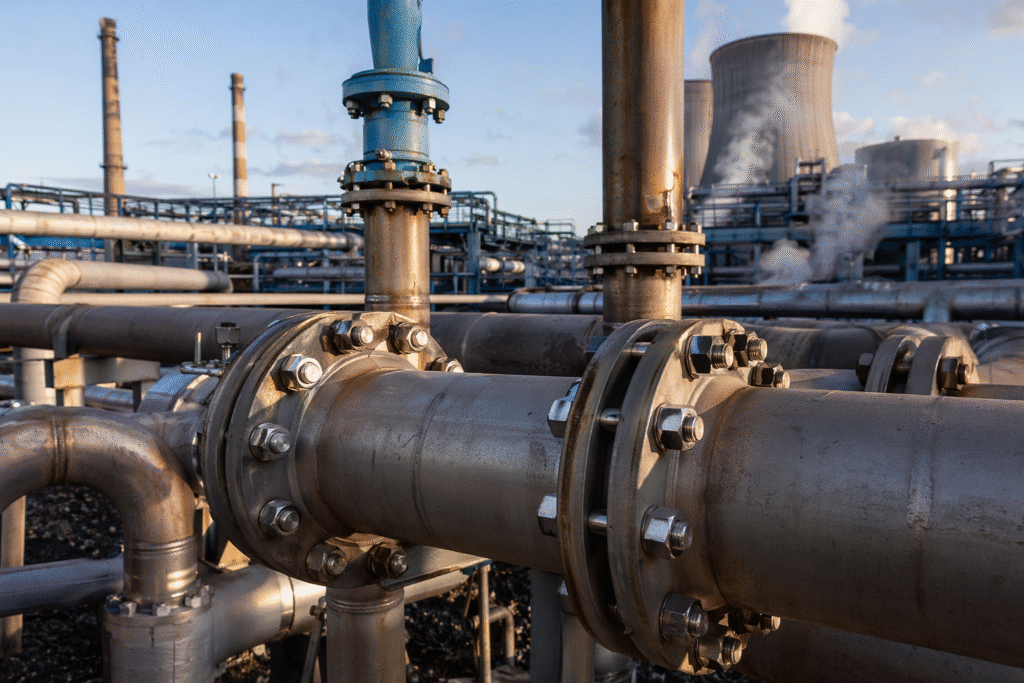
Dữ liệu thị trường mặt bích ống thép không gỉ: Ưu điểm tiềm ẩn, Các loại, Công dụng, và Cách chọn các tùy chọn phổ biến nhất
Theo nghiên cứu của Grand View (2024), thị trường mặt bích công nghiệp toàn cầu được định giá ở mức $5.8 tỷ trong 2023 và dự kiến sẽ đạt $7.2 tỷ bởi 2030. That growth explains why the stainless steel pipe flange remains a priority component for engineers and buyers who need corrosion resistance, tính toàn vẹn áp lực, và tuổi thọ dài.
Đối với các nhóm mua sắm, the most intriguing question is not whether to use stainless steel, but which grade, loại mặt bích, and standard deliver the best lifecycle value. Hơn thế nữa, the hidden advantages of stainless steel pipe flange solutions often appear in reduced maintenance, sạch sẽ hơn, and stronger performance under aggressive service conditions.
Industrial Demand for Stainless Steel Pipe Flange Solutions Is Rising Worldwide
Theo IBISWorld (2024), Châu Á - Thái Bình Dương chiếm hơn 45% sản xuất mặt bích toàn cầu, với Trung Quốc là nhà sản xuất lớn nhất. Vì thế, sourcing strategy now depends not only on price, but also on supplier qualification, kiểm soát luyện kim, và tuân thủ xuất khẩu.
Theo Statista (2024), ngành dầu khí chiếm khoảng 35% tiêu thụ mặt bích toàn cầu. Trong thực tế, that means stainless steel pipe flange demand stays closely tied to upstream, giữa dòng, tinh chế, LNG, and process plant investment cycles.
Ngoài ra, corrosion-related losses continue to shape material selection. NACE has estimated that global corrosion costs exceed $2.5 trillion annually, which equals roughly 3% ĐẾN 4% of global GDP (NACE, 2023). Kết quả là, many end users move from carbon steel to 304, 316, hai mặt, or nickel alloy flanges in critical lines.
Stainless steel flanges support leak-tight bolted joints in piping systems that carry fluids, chất khí, hơi nước, và hóa chất. They also simplify inspection, BẢO TRÌ, and line modification compared with fully welded systems. That serviceability remains one of the most common reasons buyers choose a flange instead of a permanent connection.
Trong các lĩnh vực được quản lý, documentation matters as much as metallurgy. Buyers often require mill test certificates, truy xuất nguồn gốc nhiệt, PMI, hydrostatic or dimensional verification, Và EN 10204 3.1 inspection documents before approving shipment. Vì thế, supplier quality systems directly affect project risk.
BẰNG SASA FLANGE hoạt động với ISO 9001:2015, PED 2014/68/EU, và AD 2000 thông tin xác thực, the company aligns with procurement expectations for traceable industrial components. Sản xuất mặt bích tại 304, 316, 316L, 904L, 2205, 2507, A105, A182, Inconel, Monel, Hastelloy, và Titan, it serves demanding applications across oil and gas, hóa dầu, quyền lực, hàng hải, và lĩnh vực xử lý nước.
Another market shift involves total cost of ownership rather than unit price alone. Stainless steel usually costs more upfront than carbon steel, but it often lowers replacement frequency and downtime in chloride, ẩm ướt, or chemically aggressive environments. Hơn nữa, stainless grades help support hygiene and contamination control in food, dược phẩm, and ultrapure water lines.
Tình báo Mordor (2024) reports continued growth in global water and wastewater infrastructure investment, which supports rising demand for corrosion-resistant piping components. Tương tự như vậy, shipbuilding and offshore projects increasingly specify 316L, hai mặt, and super duplex materials where seawater exposure accelerates attack on lower-grade metals.
For buyers evaluating suppliers, manufacturing breadth is increasingly important. A qualified source should offer weld neck, trượt trên, mù, ổ cắm hàn, xâu chuỗi, khớp nối, and reducing flange configurations, plus related elbows, áo thun, bộ giảm tốc, và mũ. That integrated supply model reduces lead-time friction and documentation gaps.
Được hỗ trợ bởi gia công CNC tiên tiến và kiểm tra chất lượng toàn diện, SASA FLANGE cung cấp kích thước tùy chỉnh từ 1/2 inch đến 60 inch với giá cả cạnh tranh trực tiếp tại nhà máy. Phục vụ 50+ các nước, the company supports both standardized and project-specific requirements under ANSI B16.5, ANSI B16.47, ASME B16.9, DIN, JIS, GOST, và VN 1092 frameworks.
Các loại mặt bích ống thép không gỉ, Ưu điểm tiềm ẩn, và các yếu tố lựa chọn kỹ thuật
The most common stainless steel flange types each solve a different piping problem. Tuy nhiên, selection errors still occur when teams focus only on flange price instead of bore alignment, tải theo chu kỳ, trợ cấp ăn mòn, và phương pháp cài đặt.
Như Tiến sĩ. James Patel, Kỹ sư vật liệu cao cấp, tiểu bang: “A flange joint succeeds when metallurgy, lớp áp lực, đối mặt với kết thúc, khả năng tương thích đệm, and bolting are selected as one system rather than as separate items.” That principle is especially important for stainless steel pipe flange assemblies in high-temperature and chloride-rich service.
ASME B16.5 bao gồm mặt bích ống và phụ kiện mặt bích trong NPS 1/2 bởi vì 24, trong khi ASME B16.47 addresses larger diameters up to NPS 60 (ASME, 2023). Vì thế, engineers must confirm both dimensional standard and pressure-temperature rating before issuing a purchase order.
Theo tiêu chuẩn ASTM, A182 is the core forged material specification for alloy and stainless steel pipe flanges, phụ kiện, van, và các bộ phận cho dịch vụ nhiệt độ cao (ASTM, 2023). Ngoài ra, ASTM A240 commonly governs plate products used to manufacture some stainless components, especially where plate flange production is specified.
The most common stainless steel grades for industrial flange use include:
- 304 and 304L for general corrosion resistance and good weldability.
- 316 and 316L for enhanced pitting resistance due to molybdenum content.
- 321 Và 347 for stabilized performance in elevated temperature service.
- 904L for stronger resistance in certain sulfuric and chloride environments.
- 2205 song công và 2507 super duplex for high strength and chloride stress corrosion resistance.
Each material offers hidden advantages beyond simple corrosion resistance. Ví dụ, duplex grades provide higher strength, which can reduce wall thickness in some applications. Trong khi đó, 316L remains one of the most common choices for marine, hóa chất, and offshore systems because it balances cost, sẵn có, và hiệu suất ăn mòn.
Flange type selection should match the process duty. A weld neck flange performs well in severe service because its tapered hub distributes stress more smoothly into the pipe wall. Ngược lại, a slip-on flange can reduce fabrication cost in lower-pressure lines, although its fatigue resistance is generally lower than weld neck designs.
Mặt bích mù cô lập đầu đường dây, vòi phun tàu, và các điểm mở rộng trong tương lai. Threaded flanges simplify installation where welding is restricted, while socket weld flanges often suit small-bore high-pressure piping. Lap joint flanges support frequent dismantling and alignment flexibility, especially when paired with stub ends.
Typical selection criteria include:
- Lớp áp lực như Lớp 150, 300, 600, 900, 1500, hoặc 2500.
- Pipe schedule and bore alignment, including Schedule 10S, 40S, and 80S.
- Đối mặt với loại như RF, FF, RTJ, lưỡi và rãnh, hoặc nam và nữ.
- Nhiệt độ hoạt động, áp lực thiết kế, and thermal cycling severity.
- Hóa học chất lỏng, mức độ clorua, độ pH, erosion risk, and contamination sensitivity.
- Inspection requirements including PMI, PT, UT, thử nghiệm ferit, Và EN 10204 3.1 tài liệu.
Theo Nghiên cứu thị trường Tương lai (2024), process industry automation and plant modernization continue to increase replacement demand for high-integrity components. Kết quả là, buyers increasingly ask for precision-machined flange faces and tighter dimensional consistency to reduce site fit-up problems.
Như Laura Chen, Industrial Piping Analyst, tiểu bang: “The most overlooked advantage of stainless steel flanges is lifecycle stability, because fewer corrosion failures directly improve uptime and maintenance planning.” That view aligns with the hidden advantages procurement teams seek when comparing stainless and carbon steel options.
On the manufacturing side, dimensional accuracy matters as much as raw material grade. Poor flatness, off-center bores, or incorrect drilling can create gasket stress imbalance and leak risk. Vì thế, reliable suppliers use calibrated gauges, Xác minh PMI, kiểm tra độ cứng, and final visual inspection before dispatch.
SASA FLANGE supports custom machining, multiple facing types, and a broad portfolio of stainless steel flanges and fittings for project packages. Offering weld neck, trượt trên, mù, xâu chuỗi, ổ cắm hàn, khớp nối, and reducing flange designs, the company helps buyers consolidate sourcing while maintaining technical compliance.
Đối với nhiều người mua, the most intriguing buying decision is whether premium metallurgy is justified. In most corrosive or maintenance-sensitive plants, the answer is yes. The hidden advantages include fewer shutdowns, tần số thay thế thấp hơn, and better reliability under variable process conditions.
Tiêu chuẩn, Sự tuân thủ, and Quality Assurance for Stainless Steel Flanges
Standards compliance determines interchangeability, sự an toàn, and acceptance in EPC and end-user projects. Do đó, every stainless steel pipe flange specification should identify the required dimensional standard, tiêu chuẩn vật liệu, mức độ kiểm tra, và gói chứng nhận.
Key standards and frameworks include:
- ASME B16.5 for flanges and flanged fittings up to NPS 24.
- ASME B16.47 for large diameter steel flanges from NPS 26 ĐẾN 60.
- ASTM A182 for forged or rolled alloy and stainless steel flanges.
- ASME B16.9 for factory-made wrought buttwelding fittings.
- EN 1092 for European flange dimensions and pressure classes.
- DIN and JIS standards for region-specific industrial installations.
- NACE MR0175 for sulfide stress cracking resistance in sour service.
Pressure-temperature ratings should never be assumed across standards. ASME Class ratings differ from PN designations in EN and DIN systems, and drilling patterns are not always interchangeable. Vì thế, procurement documents must specify the exact governing standard to avoid site mismatch.
The PED 2014/68/EU framework adds another compliance layer for equipment supplied into the European market. Hơn thế nữa, quality systems such as ISO 9001:2015 support process discipline across material receiving, gia công, truy xuất nguồn gốc, nonconformance handling, và bản phát hành cuối cùng.
Để tham khảo, buyers often compare requirements in this simplified format:
- ASME projects usually specify Class ratings, RF or RTJ faces, và các loại vật liệu ASTM.
- EN projects usually specify PN ratings, EN material numbers, Và EN 10204 certification language.
- Oil and gas projects may add NACE MR0175, low-temperature testing, and stricter traceability controls.
- Marine projects may require DNV or owner-specific corrosion and certification criteria.
Theo tiêu chuẩn ISO (2023), certified quality management systems improve consistency in controlled manufacturing environments by standardizing inspection, tài liệu, and corrective action. In flange production, that means better repeatability in drilling, bore machining, bevel geometry, and marking accuracy.
Material traceability is especially important for stainless steel grades that appear similar visually but differ in corrosion performance. Ví dụ, 304 Và 316 may look alike, yet 316 contains molybdenum and generally performs better in chloride service. Kết quả là, PMI and heat number tracking reduce costly substitution risks.
Surface finish and flange face quality also affect sealing reliability. ASME and gasket manufacturers specify serration ranges for raised face joints because surface roughness directly influences gasket seating. Vì thế, face finishing should be verified rather than assumed.
In severe service, supplementary tests often strengthen confidence:
- Positive Material Identification for grade verification.
- Liquid Penetrant Testing for surface discontinuities.
- Ultrasonic Testing for internal integrity in critical forgings.
- Hardness testing where service or client specifications require it.
- Ferrite measurement for duplex and certain weld-related applications.
Với ISO 9001:2015 và chứng nhận PED 2014/68/EU, SASA FLANGE aligns with the expectations of global EPC contractors and industrial distributors. The company also supports EN 10204 3.1 tài liệu, kiểm tra chiều, and project-specific testing protocols for buyers who need dependable compliance records.
Authoritative standards should always be checked at source before final engineering release. Buyers can review current requirements directly through ASME and ASTM publications. That step reduces revision errors and supports stronger specification control during tendering.
How to Choose the Most Common Stainless Steel Pipe Flange for Real Applications
Application-based selection helps engineers choose the most common and cost-effective flange without sacrificing reliability. Tuy nhiên, each industry imposes different corrosion, áp lực , nhiệt độ, and inspection demands.
Trong dầu khí, stainless steel pipe flange selection often depends on chlorides, dịch vụ chua, lớp áp lực, and maintenance accessibility. For offshore topside and produced water systems, 316L, 2205, Và 2507 are frequently evaluated because corrosion failures can trigger major downtime. Theo Statista (2024), dầu khí đại diện cho khoảng 35% tiêu thụ mặt bích toàn cầu, so this sector heavily influences preferred flange designs.
Trong chế biến hóa dầu và hóa chất, Khả năng tương thích với phương tiện truyền thông thúc đẩy sự lựa chọn vật liệu. 304L may work well in moderate service, while 316L or 904L often performs better in chloride-bearing or acidic lines. Where temperature remains high for long periods, stabilized or heat-resistant grades such as 321, 347, or specific nickel alloys may be more suitable.
Power generation systems often combine elevated temperature with cyclic load. Vì thế, weld neck flange designs are usually preferred on critical steam or high-energy lines because they provide better stress distribution. ASTM A182 grades and precise bore matching are essential to protect weld integrity and flow continuity.
Marine and shipbuilding applications demand stronger resistance to salt spray, vùng giật gân, and seawater handling systems. Trong những môi trường này, 316L remains common, but duplex and super duplex grades often deliver longer life where pitting and crevice corrosion risks are high. DNV or owner specifications may also apply.
Water treatment plants increasingly specify stainless steel flanges and fittings where corrosion, sự sạch sẽ, and low maintenance matter. Theo Mordor Intelligence (2024), wastewater infrastructure spending continues to expand globally, which supports growing demand for durable, traceable flange systems.
When evaluating flange types, buyers should compare these practical uses:
- Mặt bích cổ hàn cho áp suất cao, nhiệt độ cao, và dịch vụ theo chu kỳ.
- Slip-on flange for moderate duty and economical fabrication.
- Mặt bích mù để chấm dứt đường dây, sự cách ly, and test points.
- Threaded flange for non-welded small-bore service.
- Socket weld flange for compact high-pressure small-diameter lines.
- Mặt bích khớp nối cho các hệ thống cần tháo dỡ thường xuyên.
- Reducing flange where line size transition is needed within the flange connection.
Procurement managers should also evaluate commercial factors early in the sourcing cycle:
- Available sizes such as 2 inch, 4 inch, and larger custom dimensions.
- Pressure class availability and matching bolting requirements.
- Lead time for standard versus custom forged items.
- Documentation package including MTC, 3.1, PED, and PMI reports.
- Export packing, đánh dấu, and traceability controls.
Như Mark Ellison, Piping Consultant, tiểu bang: “The strongest flange is not simply the thickest one, but the one correctly matched to load case, luyện kim, đối mặt, miếng đệm, and bolt set.” That advice is especially useful when buyers compare weld neck, mù, and RTJ designs for demanding process lines.
Custom manufacturing becomes valuable when project drawings include nonstandard bores, mặt đặc biệt, or dual standard compliance. Cung cấp kích thước tùy chỉnh từ 1/2 inch đến 60 inch, SASA FLANGE supports these project-driven requirements with advanced CNC machining and broad material capability. That flexibility helps EPC buyers reduce supplier fragmentation.
For teams comparing suppliers, a structured RFQ should include standard, kích cỡ, lịch trình, lớp học, kiểu khuôn mặt, vật liệu, thử nghiệm, và yêu cầu về tài liệu. Ngoài ra, buyers should request any special heat treatment, NACE, or coating instructions at inquiry stage. Early clarity improves quotation accuracy and delivery performance.
The most common buying mistake is selecting stainless only by grade number. Thay vì, engineers should choose the complete flange system around process chemistry, lớp áp lực, phong cách đệm, và chi phí vòng đời. That disciplined approach reveals the hidden advantages of high-quality stainless steel flanges in long-term plant performance.
Triển vọng tương lai, Khuyến nghị mua chiến lược, and Supplier Evaluation
The industrial flange market is expanding steadily, but buyer expectations are becoming more technical. Theo nghiên cứu của Grand View (2024), thị trường được dự đoán sẽ tăng trưởng từ $5.8 tỷ trong 2023 ĐẾN $7.2 tỷ bởi 2030. Vì thế, suppliers that combine traceable quality with flexible manufacturing will gain the strongest position.
Procurement teams should expect three major trends. Đầu tiên, corrosion-resistant materials will continue gaining share in aggressive environments. Thứ hai, project owners will demand stronger documentation and compliance visibility. thứ ba, shorter lead times and integrated supply of flanges plus fittings will become more valuable.
Về mặt chiến lược, buyers should follow a few clear practices:
- Standardize approved materials by service condition rather than by habit.
- Chỉ định ASME, ASTM, DIN, or EN requirements clearly in every RFQ.
- Verify testing scope before order placement, not after production.
- Assess lifecycle cost, không chỉ đơn giá mua.
- Consolidate sourcing where flange and fitting compatibility matters.
Hơn nữa, supplier evaluation should include production capability, kinh nghiệm xuất khẩu, certification status, and responsiveness to technical clarification. A capable partner can often prevent costly mismatches before they reach site. That value becomes significant in shutdown work and EPC schedules where delays are expensive.
For buyers seeking stainless steel pipe flange solutions across the most common and specialized applications, the right source should combine engineering support, tuân thủ tiêu chuẩn, and flexible manufacturing. Với ISO 9001:2015 và chứng nhận PED 2014/68/EU, bảo hiểm cấp độ rộng, and experience serving 50+ các nước, SASA FLANGE remains a practical option for industrial projects that require reliable flanges and fittings. For technical support or RFQ review, người mua có thể kết nối thông qua SASA FLANGE and align specification, vật liệu, and lead-time requirements early in the sourcing process.
Câu hỏi thường gặp
Mặt bích thép không gỉ dùng để làm gì?
●Mặt bích inox được dùng để nối các đường ống, van, máy bơm, and vessels in systems that require corrosion resistance, sức mạnh cơ học, và truy cập bảo trì dễ dàng.
●Theo Statista (2024), dầu khí chiếm khoảng 35% tiêu thụ mặt bích toàn cầu, which shows how critical flange joints are in high-value industrial piping networks.
●Chúng phổ biến nhất trong dầu khí, hóa dầu, hàng hải, xử lý nước, chế biến thực phẩm, and power generation because they simplify inspection and replacement compared with permanent welded-only assemblies.
●Engineers typically choose flange assemblies when they need bolted joints with defined pressure classes, controlled gasket sealing, and compatibility with standards such as ASME B16.5 hoặc VN 1092.
●For projects requiring traceable stainless steel flanges and fittings, làm việc với các nhà sản xuất có uy tín như SASA FLANGE helps ensure proper material documentation and dimensional compliance.
Mặt bích nào được làm bằng thép không gỉ?
●Nhiều thiết kế mặt bích được làm bằng thép không gỉ, bao gồm cả cổ hàn, trượt trên, mù, xâu chuỗi, ổ cắm hàn, khớp nối, and reducing flange configurations.
●ASTM A182 is the primary forged material standard for stainless steel flanges in industrial service, trong khi ASME B16.5 and B16.47 define dimensions and pressure classes for many common products.
●Các lớp phổ biến bao gồm 304, 304L, 316, 316L, 321, 347, 904L, 2205, Và 2507, with grade selection depending on chlorides, nhiệt độ, áp lực , and required mechanical strength.
●Blind and weld neck designs are often preferred in severe service, while slip-on and threaded options may suit less demanding or easier-installation environments.
●For buyers comparing stainless steel flange types across multiple standards, a qualified supplier should offer both standard and custom-machined options with EN 10204 3.1 tài liệu.
Họ có sản xuất phụ kiện đường ống bằng thép không gỉ không?
●Đúng, nhà sản xuất sản xuất phụ kiện ống thép không gỉ như khuỷu tay, áo thun, bộ giảm tốc, and caps to match flange materials and maintain corrosion resistance through the full piping system.
●ASME B16.9 covers many factory-made wrought buttwelding fittings, and coordinated sourcing of flanges plus fittings often improves compatibility and project documentation control.
●Theo nghiên cứu của Grand View (2024), industrial flange demand is rising toward $7.2 tỷ bởi 2030, and that same infrastructure growth supports continued demand for matched stainless steel piping components.
●Using mixed materials can create corrosion and maintenance risks, so engineers often prefer matching or metallurgically compatible flange and fitting grades in aggressive service.
●For projects needing stainless steel flanges and fittings from one source, các nhà cung cấp như SASA FLANGE can simplify procurement and reduce lead-time coordination issues.
Mặt bích ống loại nào bền nhất?
●The weld neck flange is widely considered the strongest standard piping flange for high-pressure and high-temperature service because its tapered hub distributes stress effectively into the pipe.
●ASME B16.5 class ratings range from 150 ĐẾN 2500, but actual strength depends on flange type, lớp vật liệu, độ dày của tường, chốt, thiết kế đệm, và nhiệt độ hoạt động.
●Blind flanges can also handle severe service at line ends, while ring type joint configurations often improve sealing reliability in critical oil and gas applications.
●As piping consultants often note, the strongest flange is the one correctly matched to the load case and service environment rather than the thickest or most expensive option.
●For demanding systems, engineers should review bore match, đối mặt, lớp áp lực, Và ASTM A182 material requirements before final selection.
Các loại mặt bích thép không gỉ khác nhau là gì?
●Các loại mặt bích inox chính là cổ hàn, trượt trên, mù, xâu chuỗi, ổ cắm hàn, khớp nối, và giảm mặt bích.
●Each type serves a different use case, with weld neck favored for severe cyclic duty and slip-on often chosen for economical fabrication in moderate-pressure systems.
●Theo ASME (2023), dimensional requirements for many of these designs are standardized under B16.5 and B16.47, which supports interchangeability when specifications are written correctly.
●Face types such as raised face, mặt phẳng, and RTJ also affect sealing performance, so buyers should evaluate the complete connection rather than flange geometry alone.
●For the most common project work, engineers should confirm standard, lớp học, đối mặt, and material grade before comparing supplier pricing.
How do I choose the most common stainless steel pipe flange size and grade?
●You should choose stainless steel pipe flange size and grade by matching NPS size, lịch trình đường ống, lớp áp lực, quá trình hóa học, and temperature to the project specification.
●Common buyer searches include 2 inch và 4 inch stainless steel pipe flange sizes, but correct selection also requires bore accuracy, bolt pattern confirmation, và khả năng tương thích của miếng đệm.
●Theo IBISWorld (2024), Châu Á-Thái Bình Dương đại diện cho hơn 45% sản xuất mặt bích toàn cầu, so buyers have broad sourcing options but must still verify compliance and traceability carefully.
●Grades such as 304L and 316L cover many standard services, trong khi 2205, 2507, 904L, and nickel alloys may be better for chlorides, dịch vụ chua, hoặc phương tiện có tính ăn mòn cao.
●For projects with custom dimensions or strict documentation requirements, working with an experienced manufacturer helps avoid installation mismatch and rework.
bài viết liên quan
Mặt bích hoàn thiện: Giải thích về răng cưa đồng tâm và xoắn ốc
Các răng cưa đồng tâm và xoắn ốc đều được gia công hoàn thiện mặt bích…
song công 2205 so với mặt bích 316L: Bạn nên chọn chất liệu nào?
Trả lời nhanh: song công 2205 mặt bích thường là ứng cử viên mạnh hơn…

Định nghĩa mặt bích lỗ, Chi tiết và tổng quan về mặt bích ASME B16.36: Dữ liệu thị trường, Hướng dẫn lựa chọn và thông tin chi tiết về tuân thủ
Thị trường mặt bích công nghiệp toàn cầu được định giá ở mức $5.8 tỷ…

Hướng dẫn thị trường mặt bích xử lý màu đen: Nguyên vật liệu, 3.5″ Khả năng tương thích, và dữ liệu tìm nguồn cung ứng B2B cho mặt bích bồn rửa nhà bếp
Nhu cầu mặt bích xử lý màu đen đang tăng lên khi người mua đồ đạc nhà bếp…